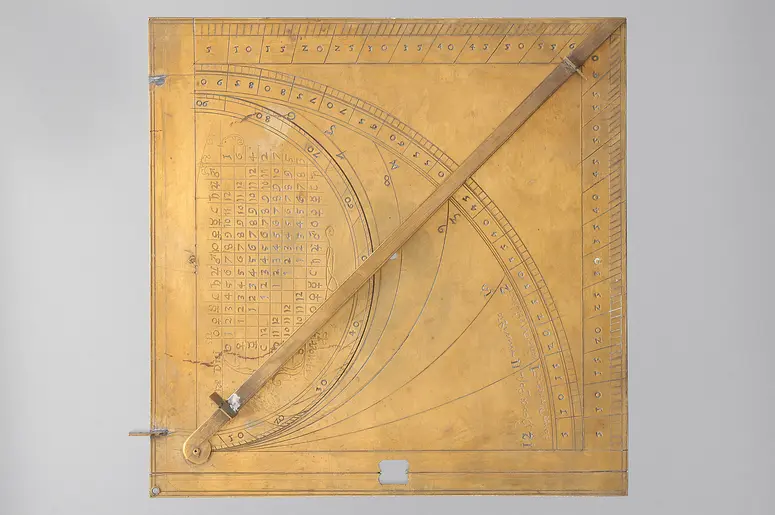
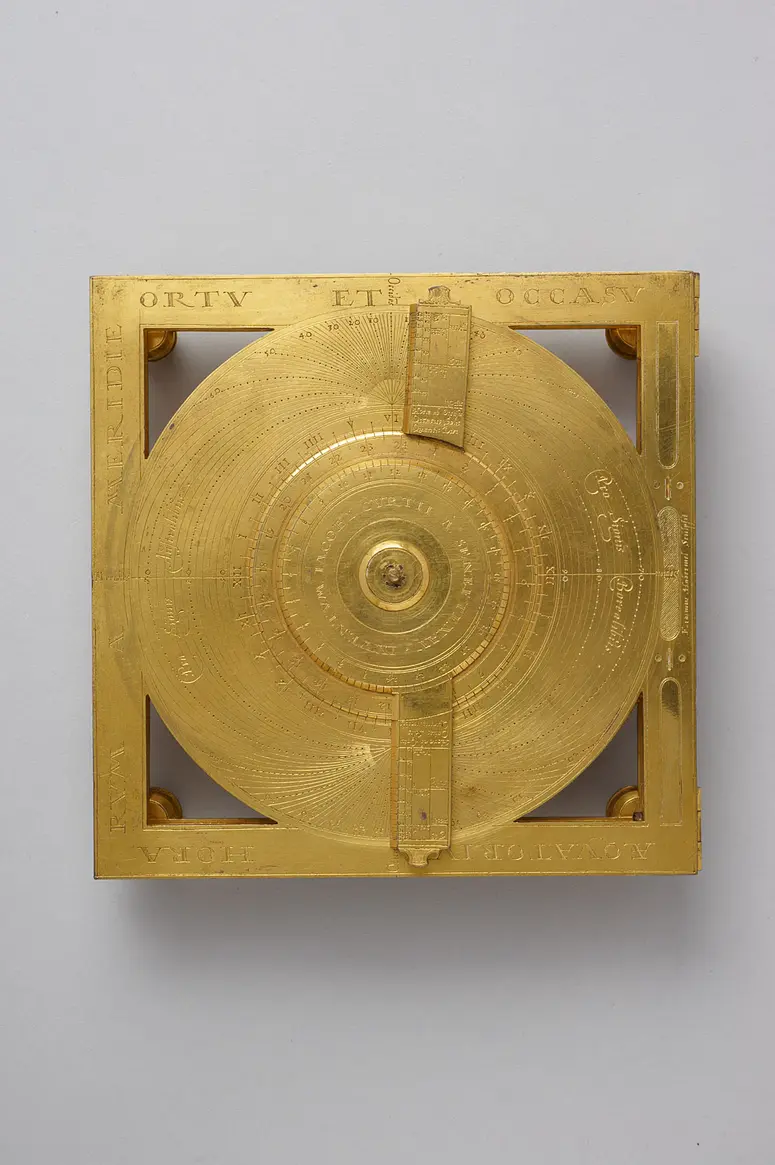
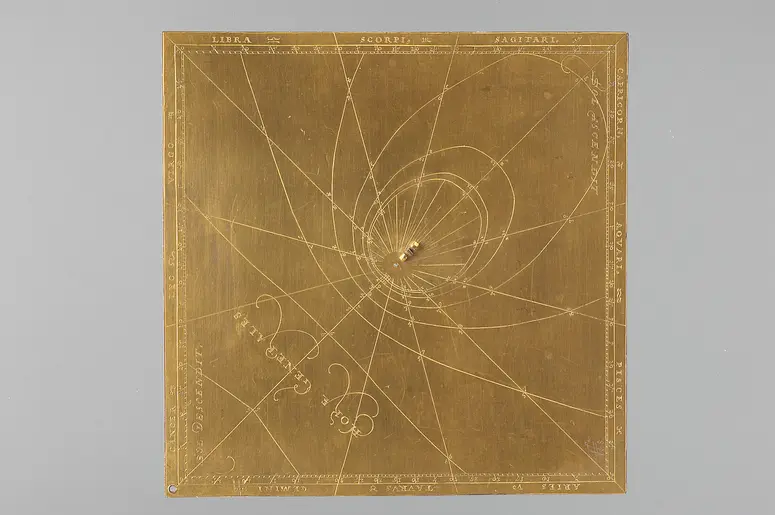
Equatorial Table Sundial
ca. 1595 | Erasmus Habermel
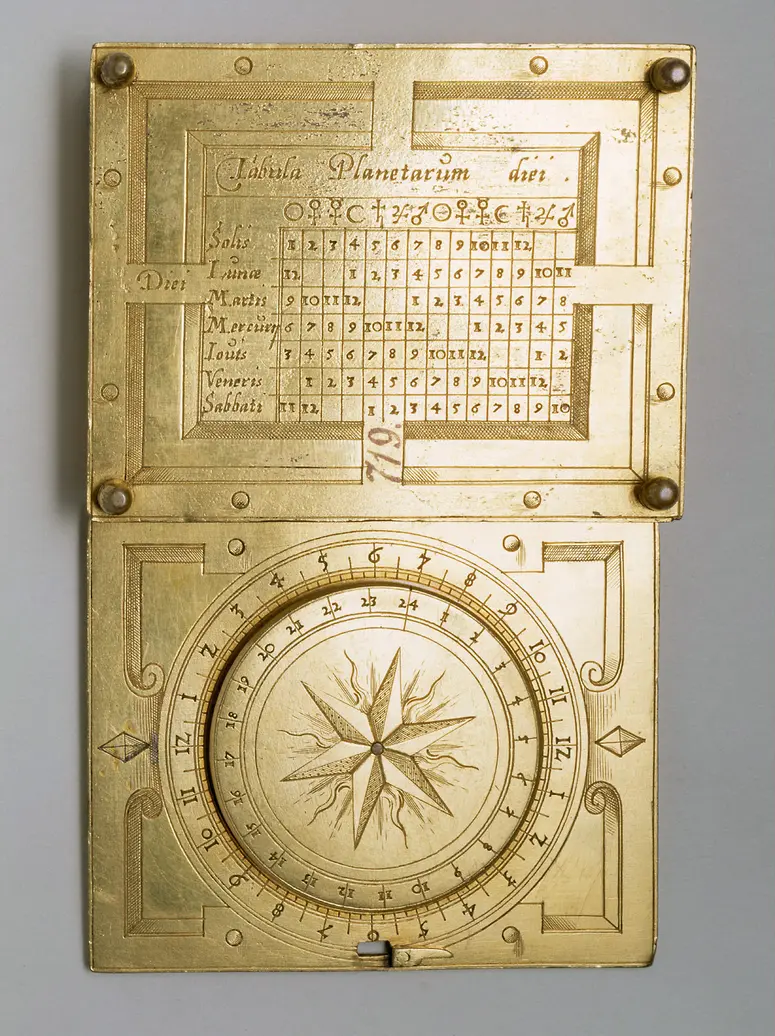
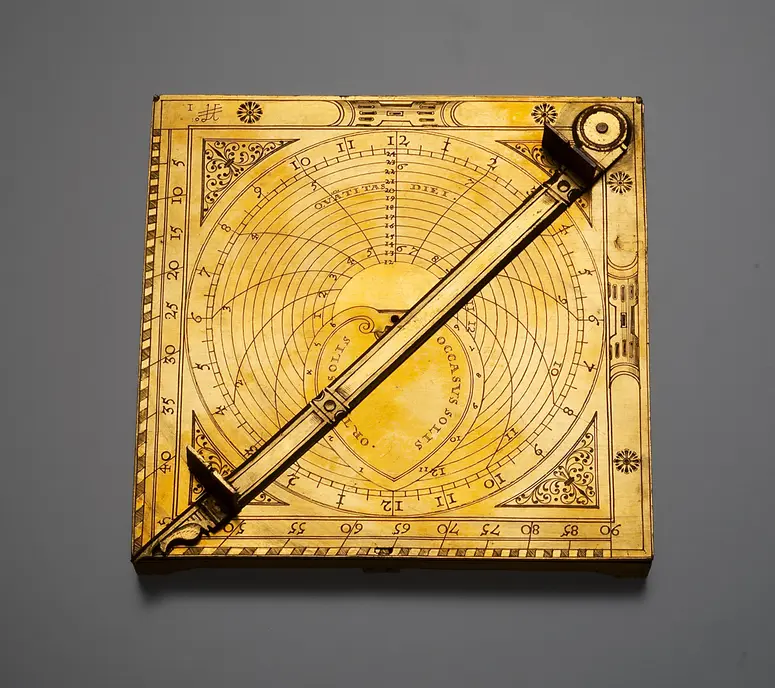
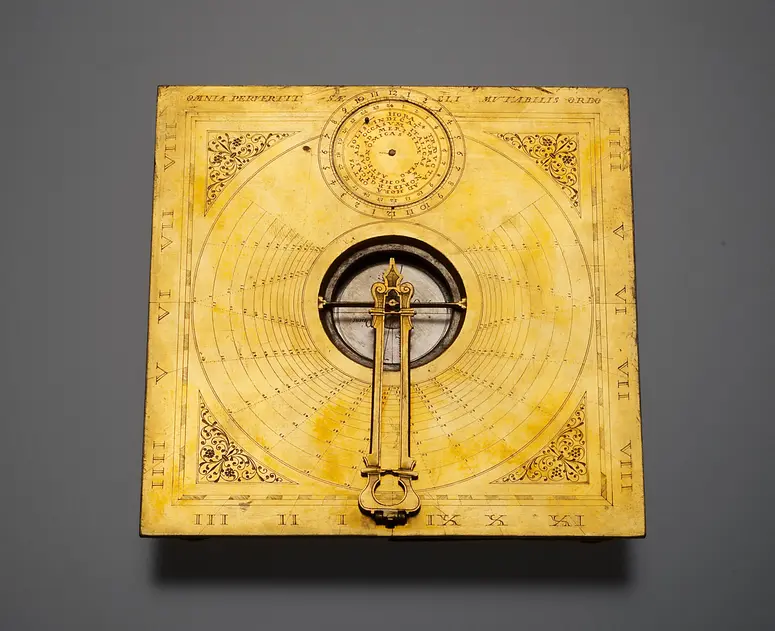
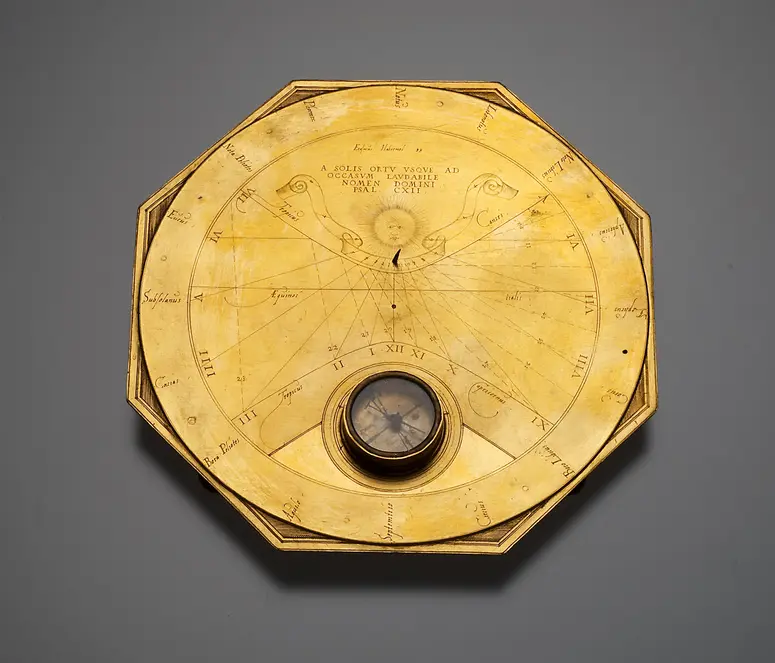
Measuring Time with the Help of the Sun Despite important new developments in the field of mechanical clockworks, sundials in a wide variety of models remained indispensable in the sixteenth and seventeenth centuries. Most of the sundials on display here bear the signature of Erasmus Habermel, instrument-maker to Emperor Rudolf II. His works combine an artistic design with the most precise craftsmanship, thus making a perfect whole.
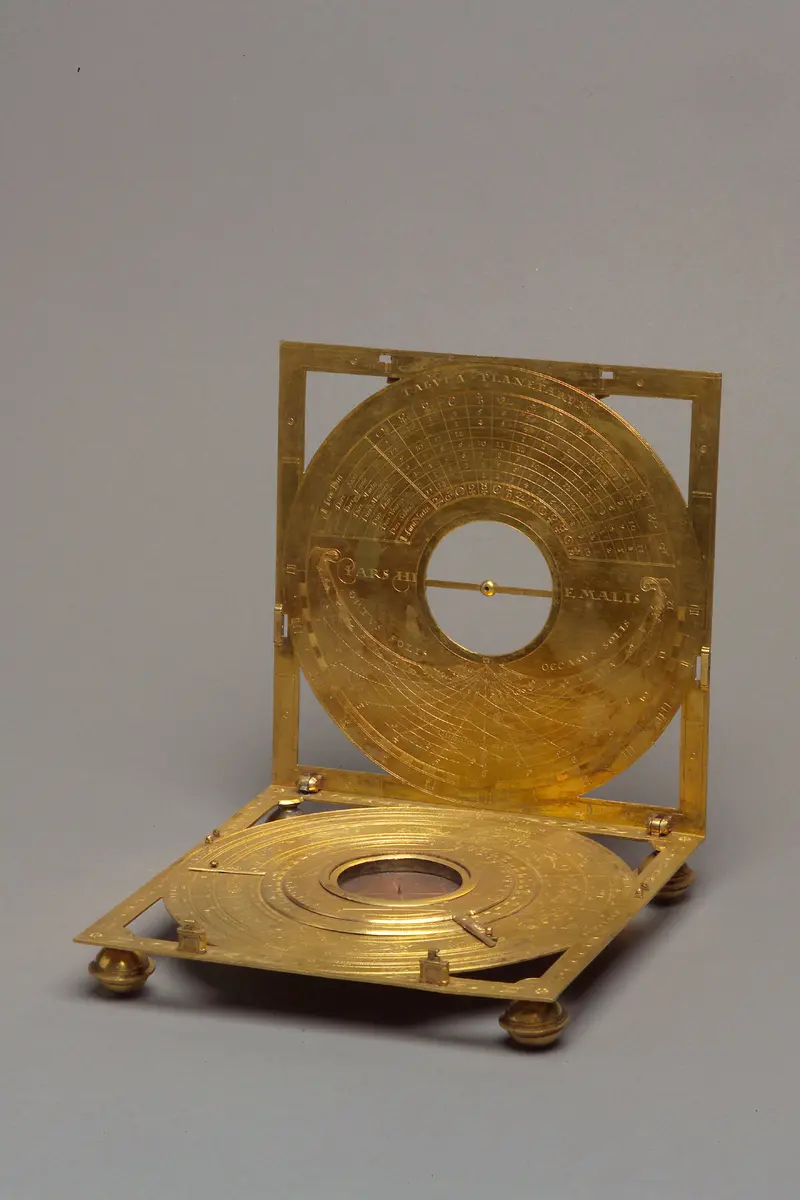
Measuring Time with the Help of the Sun Despite important new developments in the field of mechanical clockworks, sundials in a wide variety of models remained indispensable in the sixteenth and seventeenth centuries. Most of the sundials on display here bear the signature of Erasmus Habermel, instrument-maker to Emperor Rudolf II. His works combine an artistic design with the most precise craftsmanship, thus making a perfect whole.
Artist:
Erasmus Habermel (gest. 1606 Prag) DNB
Time:
ca. 1595
Object Name
Clock; scientific instrument; Sundial
Culture
Prague
Material/technology:
Gilded copper alloy
Dimensions:
20,2 cm × 18,2 cm × 18,2 cm
Signed
"Erasmus Habermel fecit 9"
Copyright
Kunsthistorisches Museum, Kunstkammer
Invs.
Kunstkammer, 713
Browse more
Similar items you might be interested in
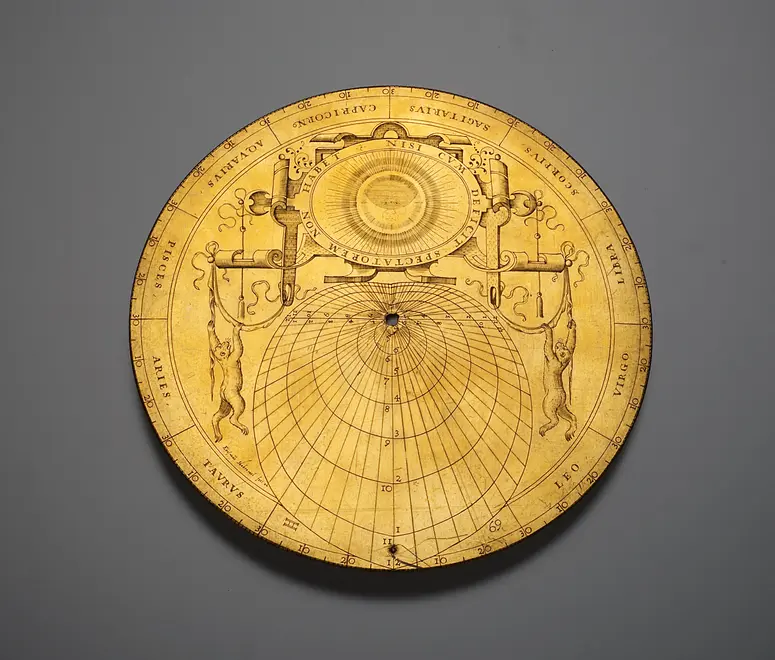
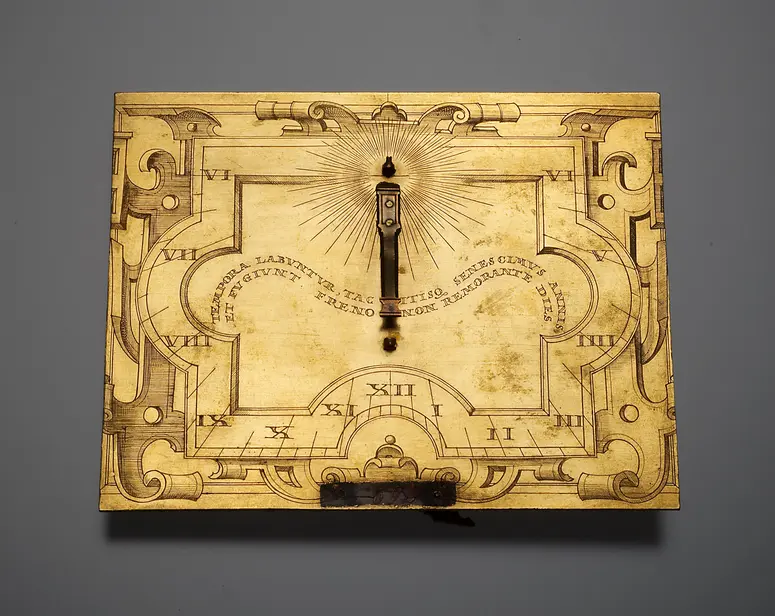
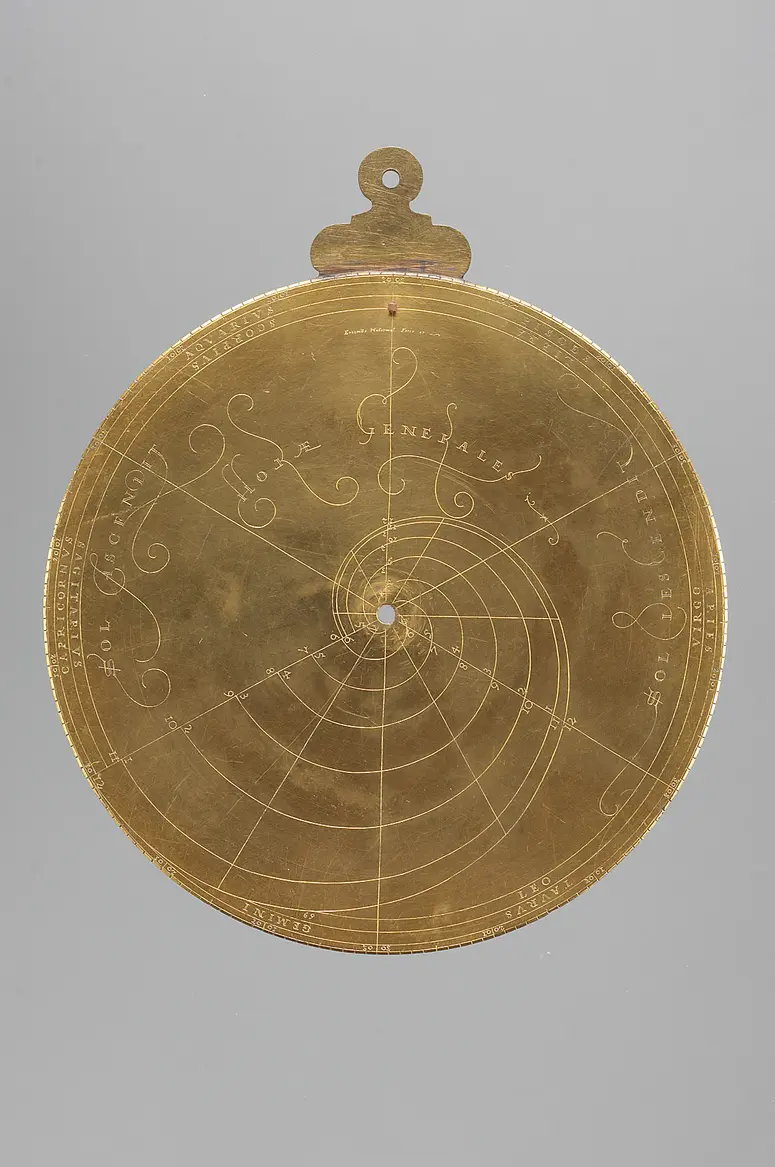
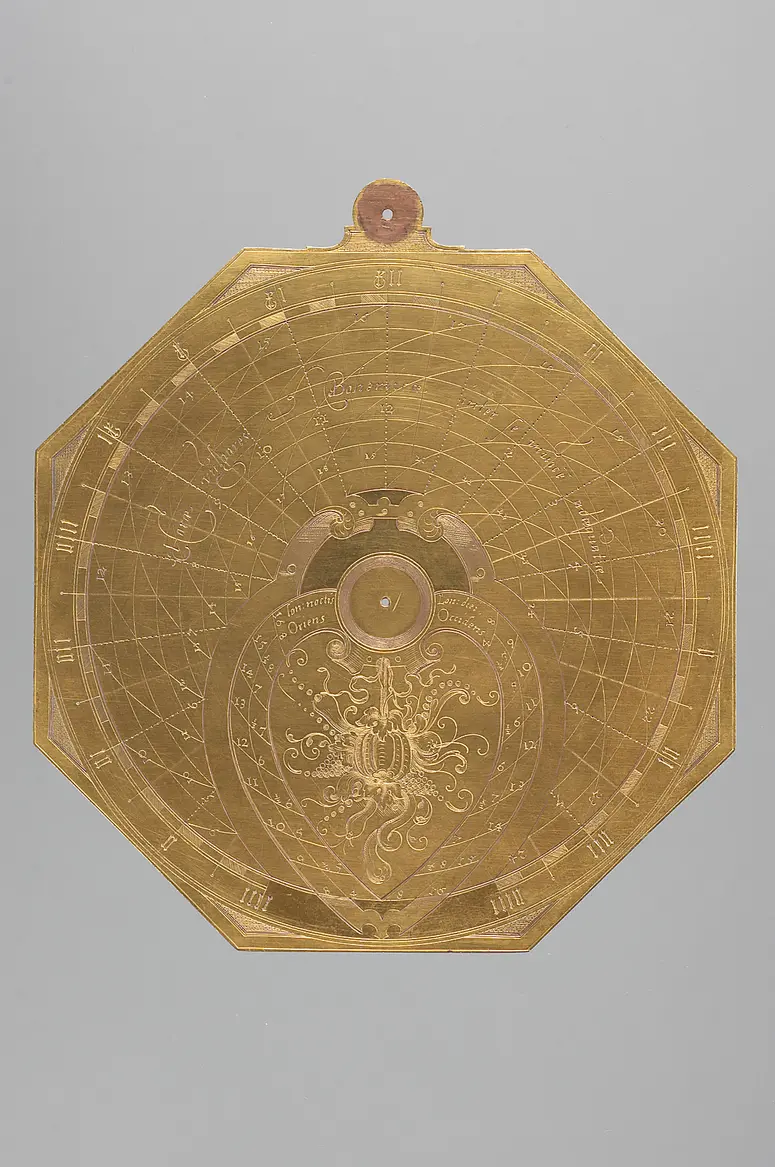
Reisesonnenuhr, Meßinstrument, wissenschaftliches Instrument Erasmus Habermel Ende 16. Jahrhundert
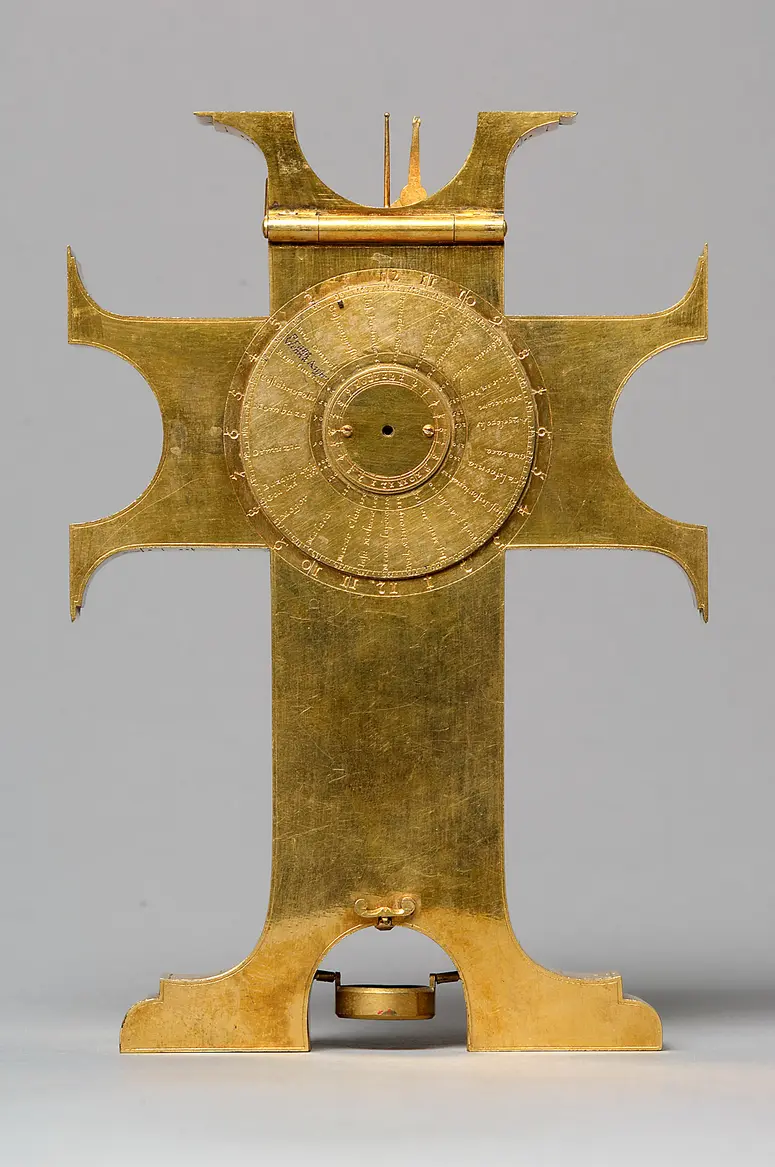
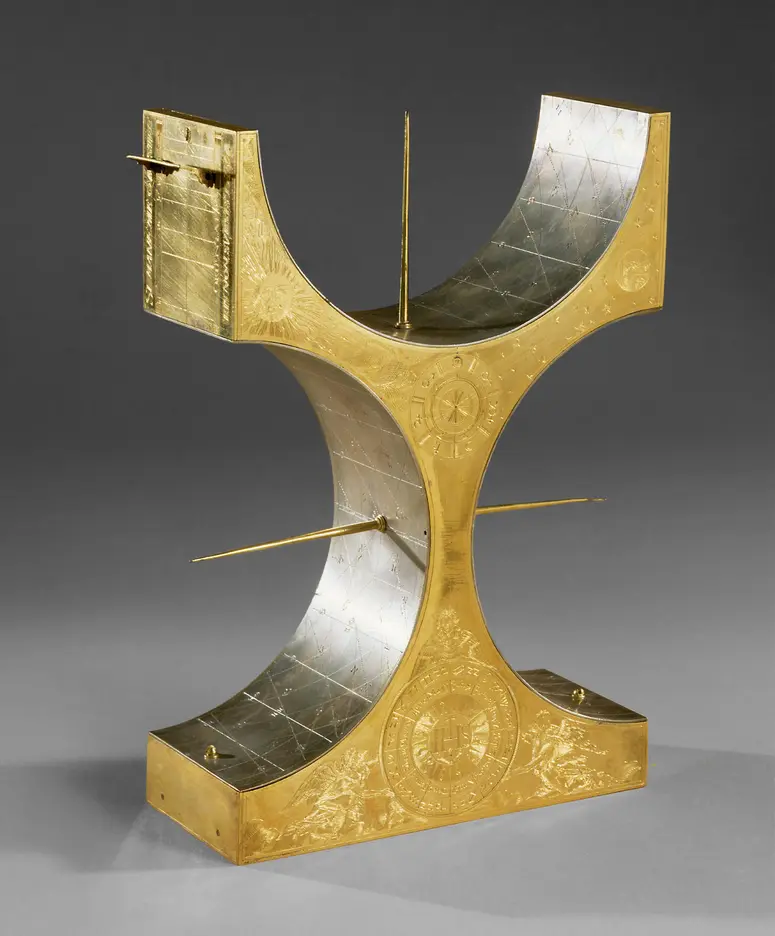
Reisesonnenuhr, wissenschatliches Instrument, Meßinstrument