Georgsaltar
vor 1519 | Sebald Bocksdorfer
The St George’s Altar was made at the behest of Emperor Maximilian I. St George was the ideal of Christian knighthood and a symbol of Maximilian’s plans for a grand crusade. Maximilian not only patronized the Knightly Order of St George that his father had instituted, but also himself created a Brotherhood of St George. The altar wings are adorned by images of saints, notably of St Agathius and St Sebastian, whose pictures are at the same time veiled portraits of Maximilian’s grandsons Charles V and Ferdinand I. The escutcheons point to the Emperor’s extensive political and territorial claims, which reached as far as Portugal, England and Naples.
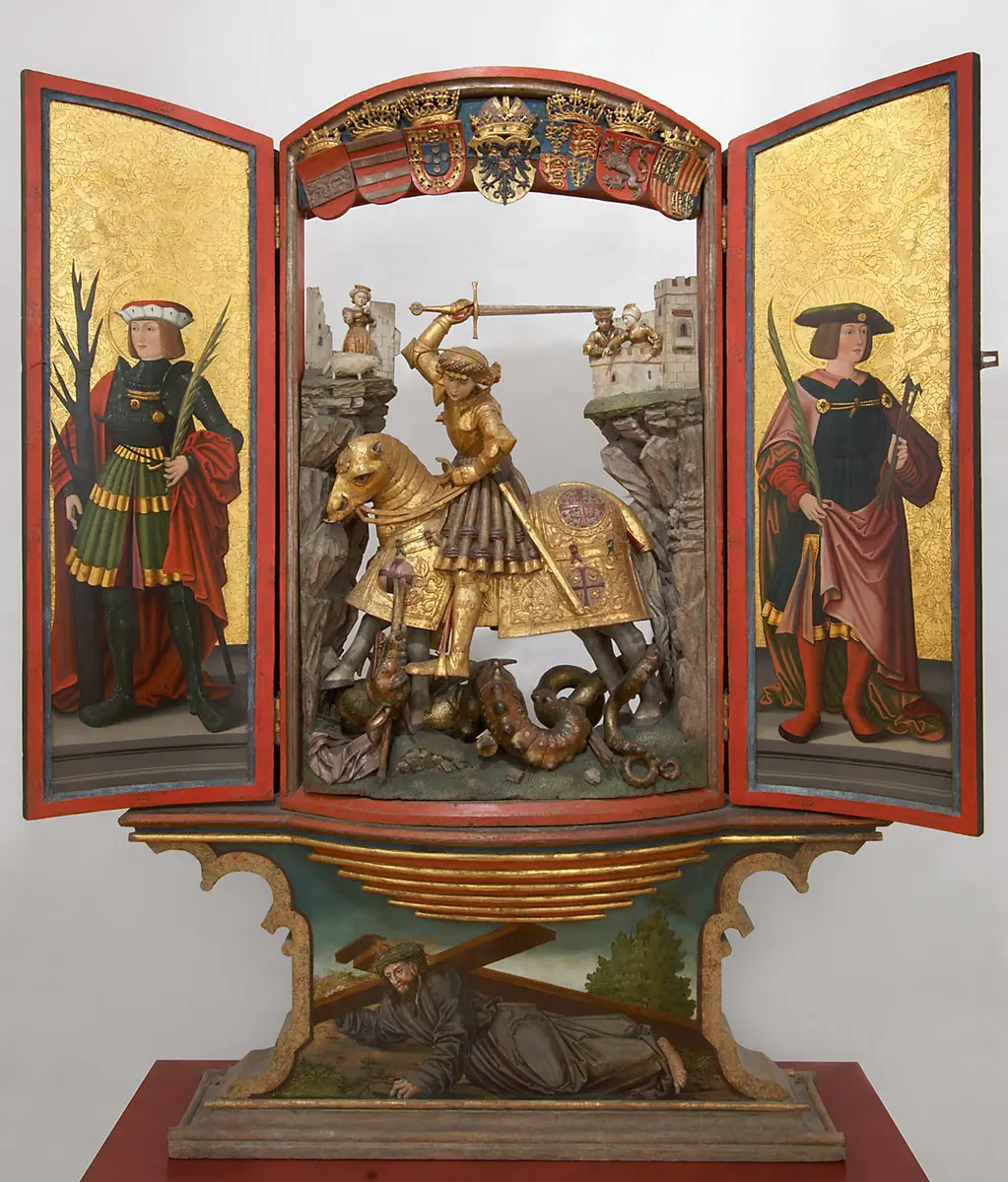
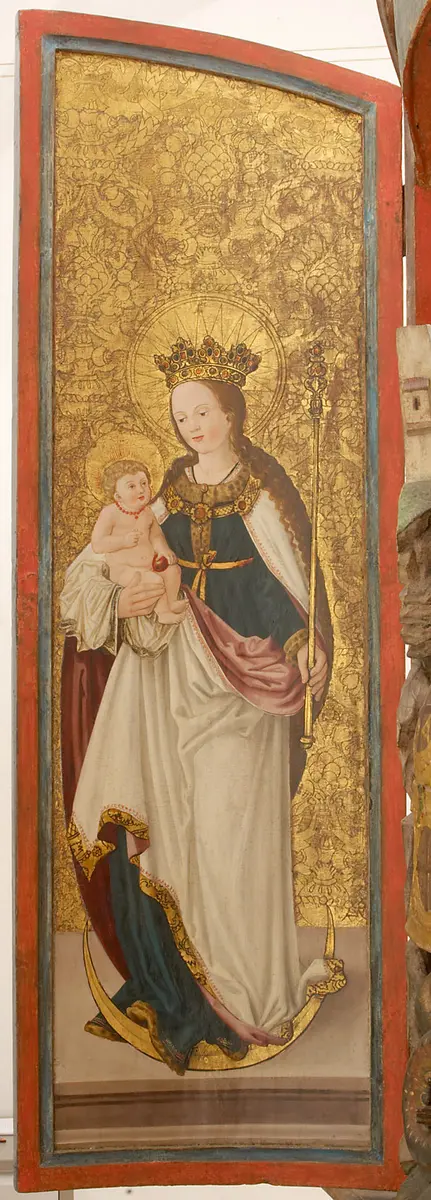
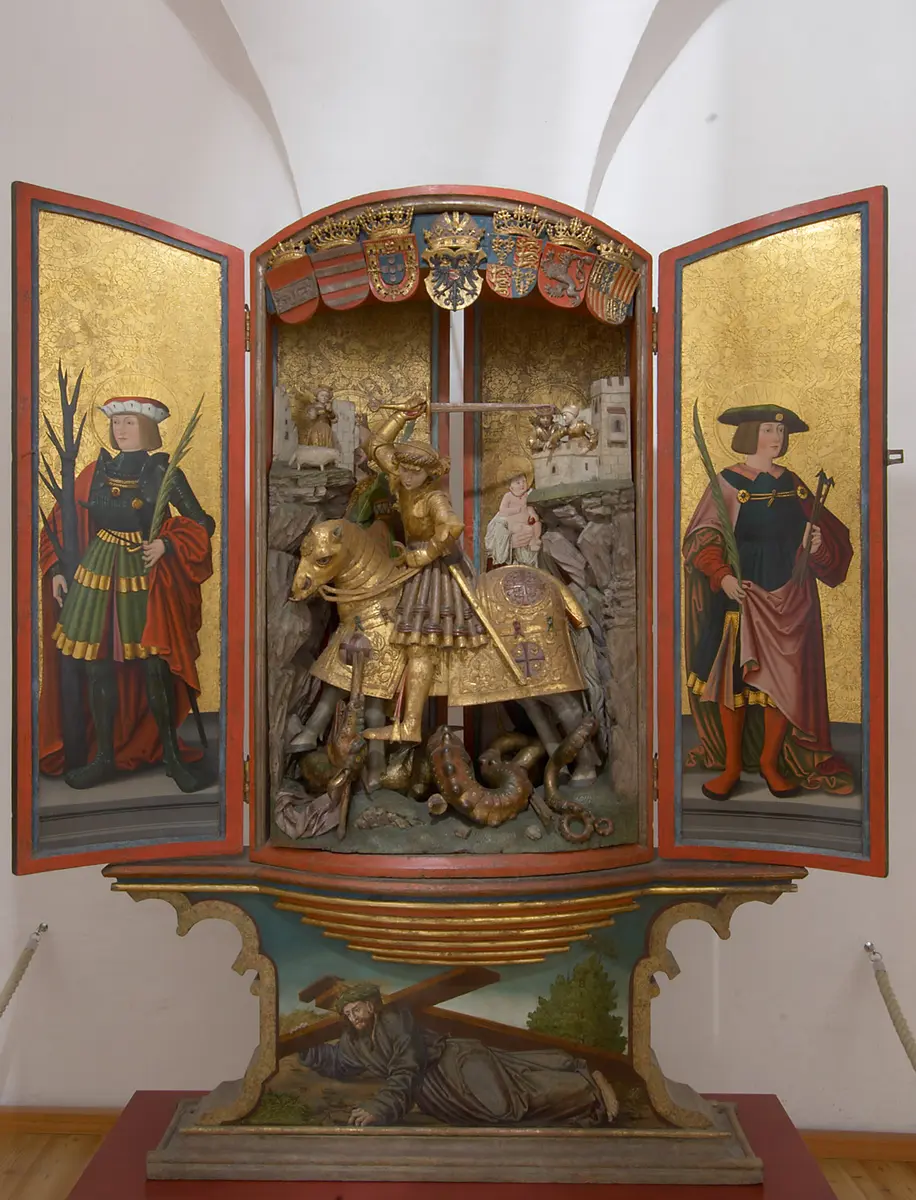
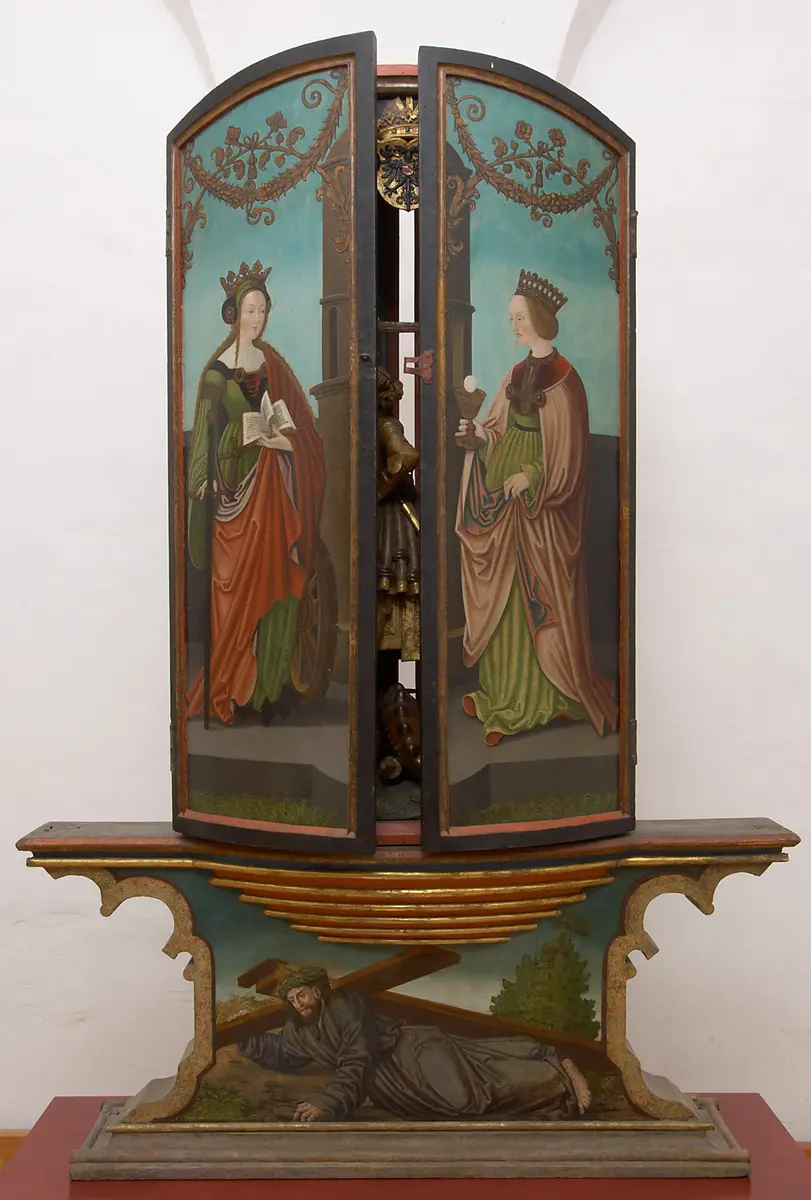
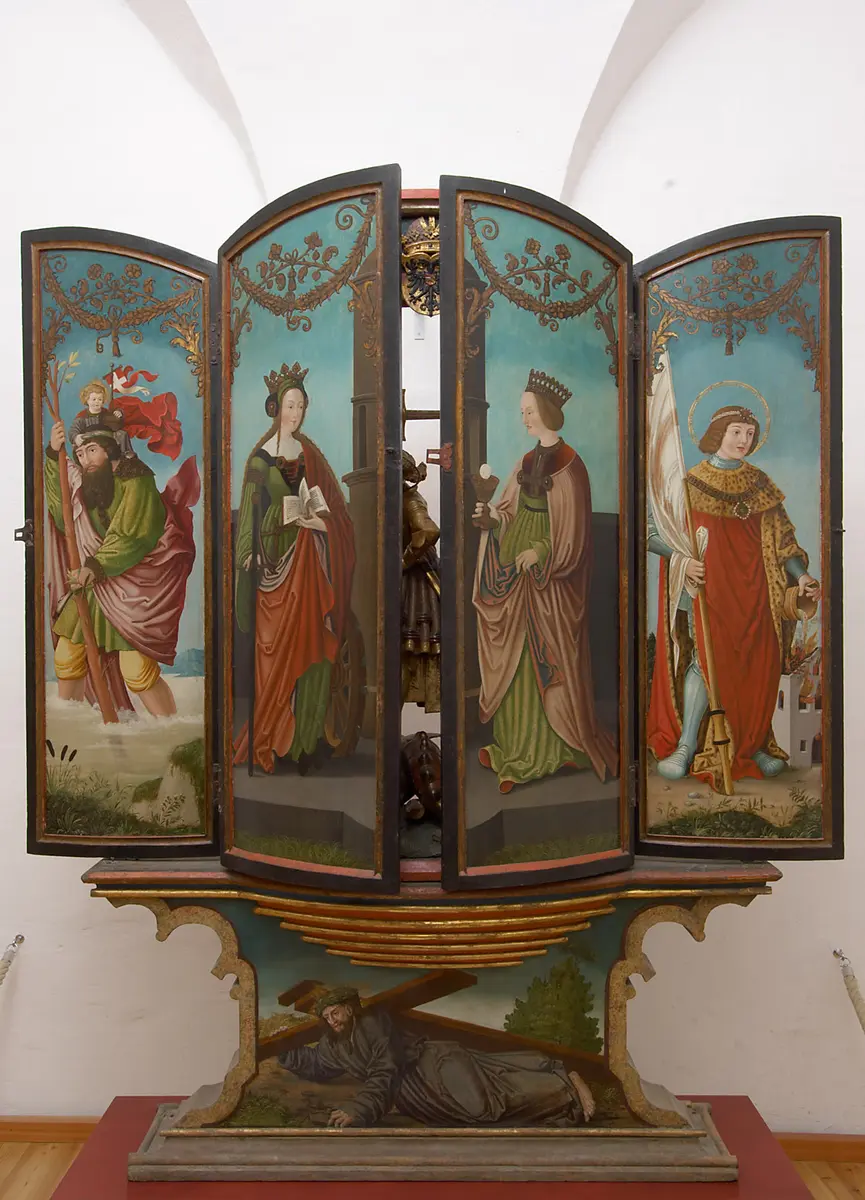
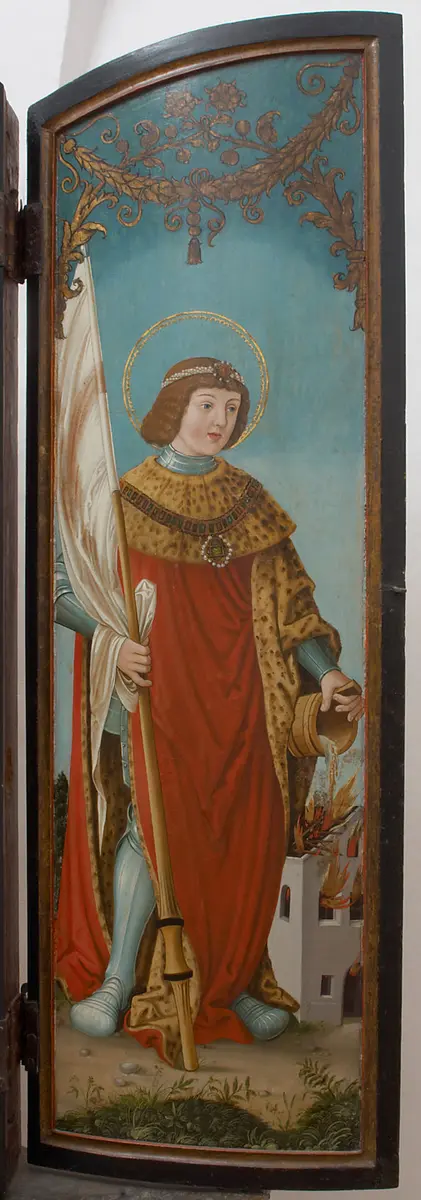
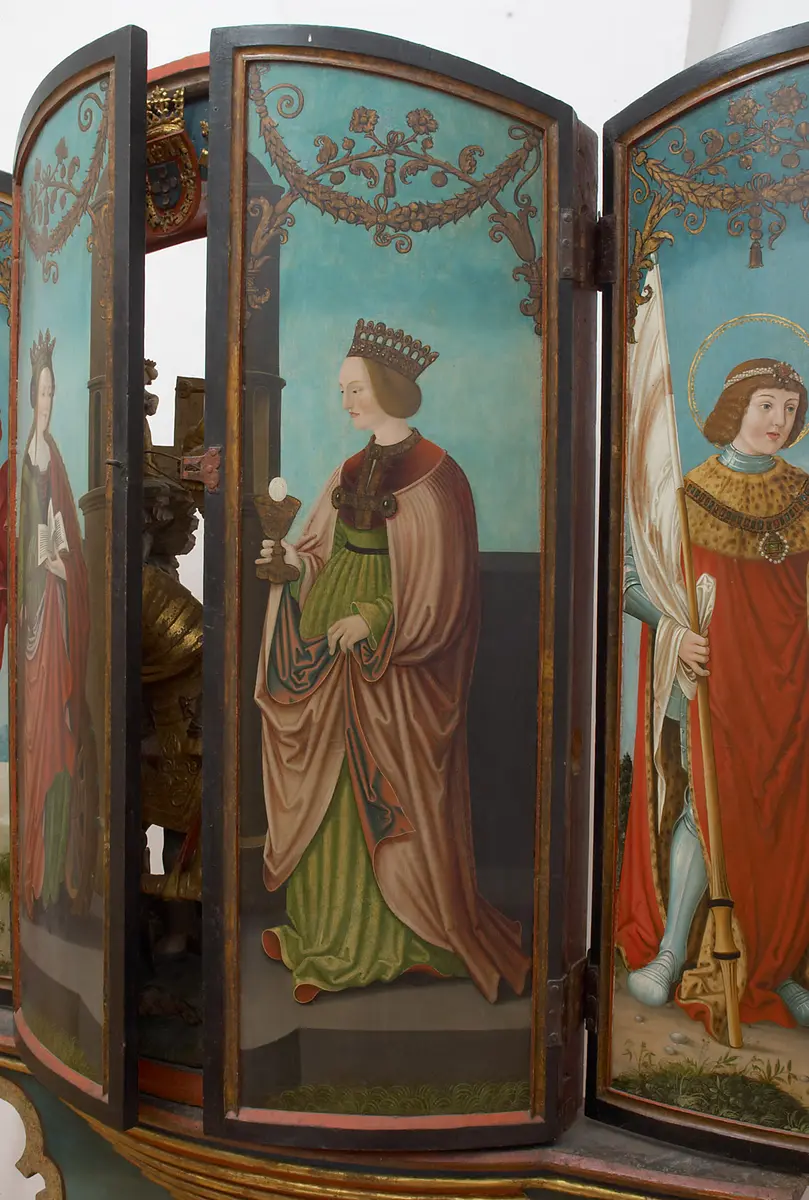
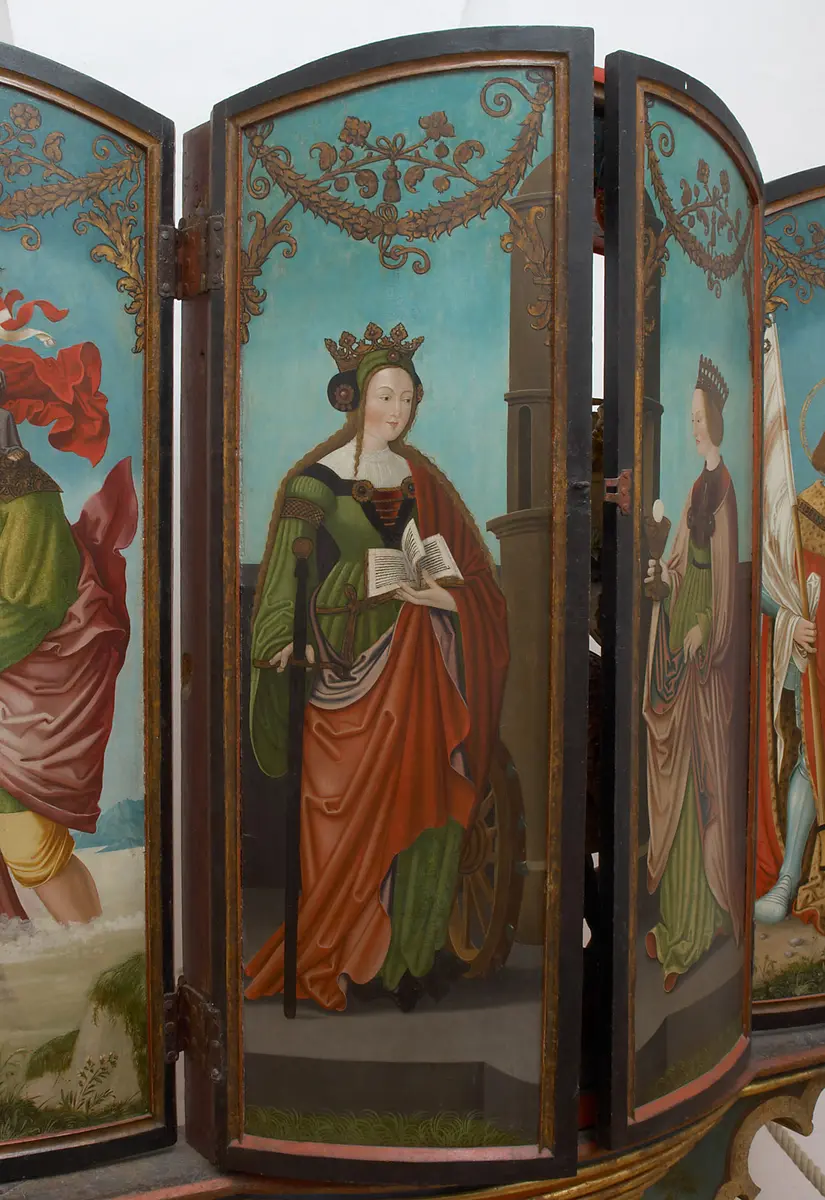
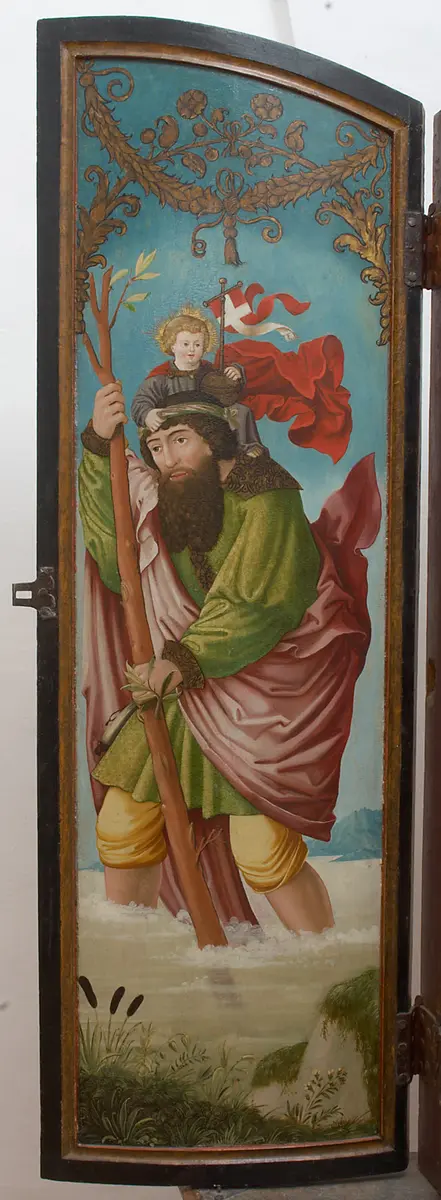
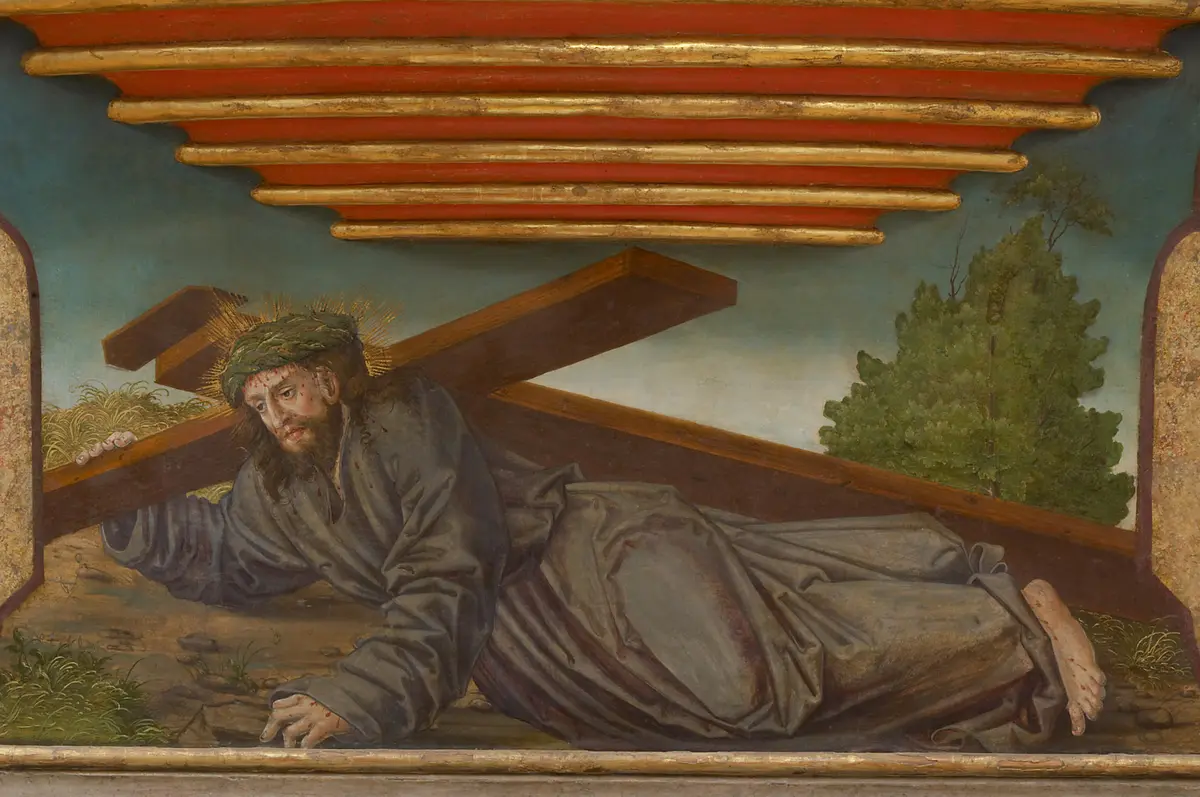
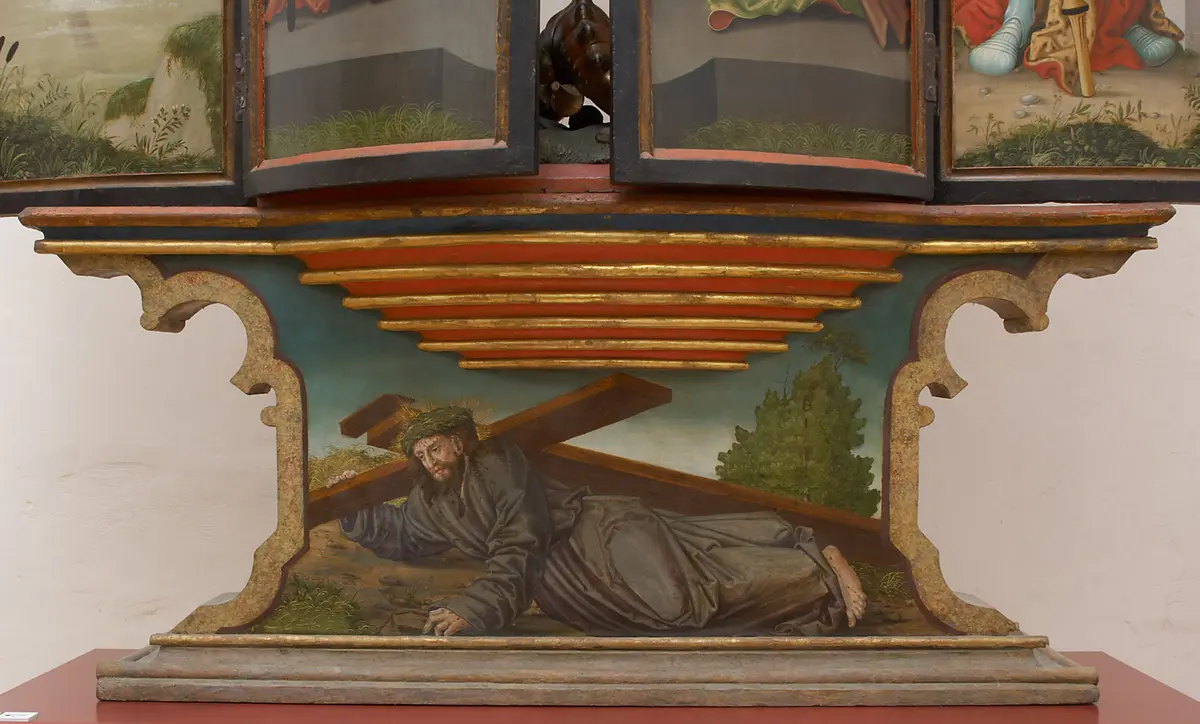
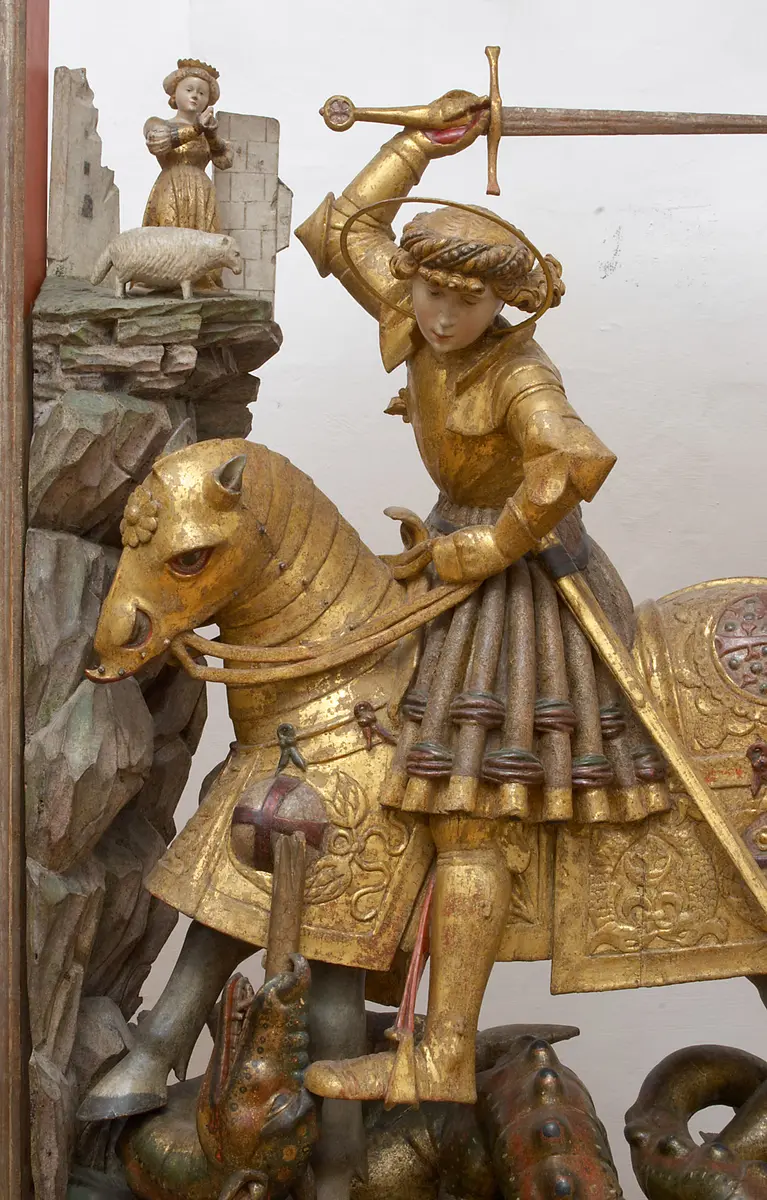
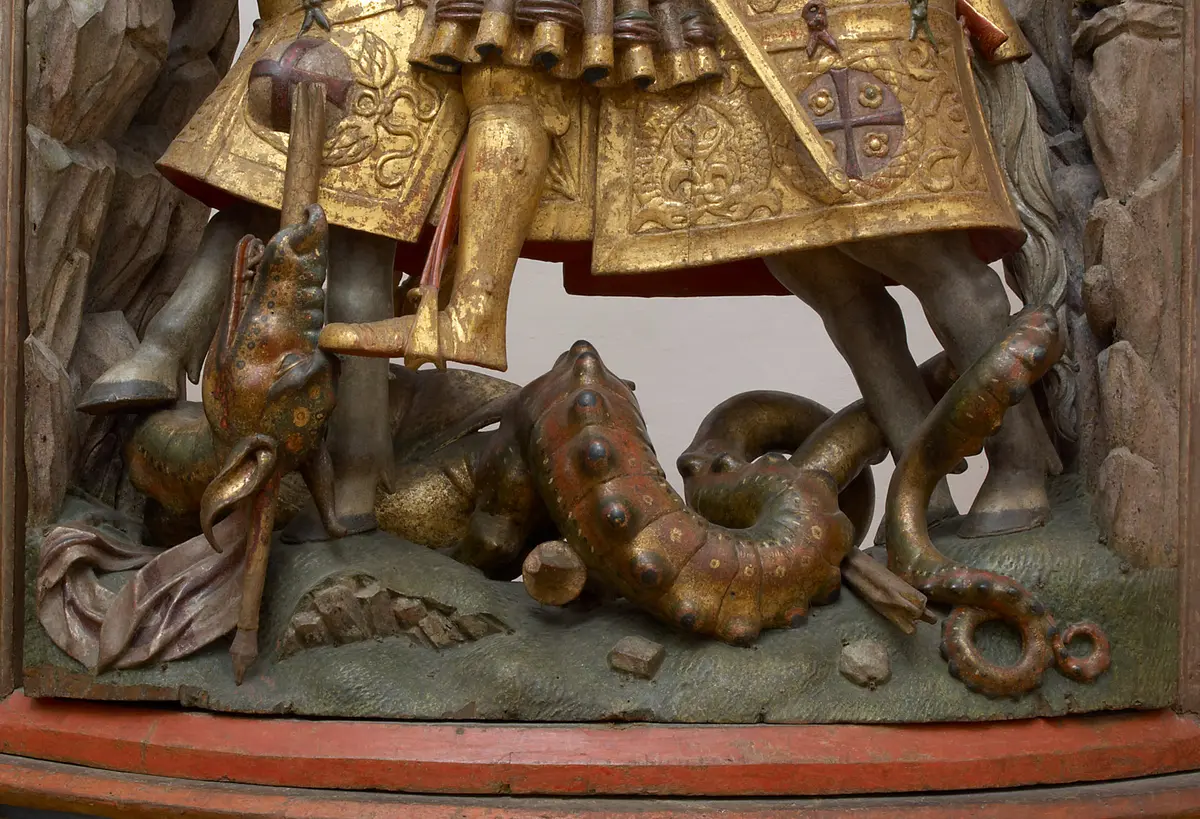
The St George’s Altar was made at the behest of Emperor Maximilian I. St George was the ideal of Christian knighthood and a symbol of Maximilian’s plans for a grand crusade. Maximilian not only patronized the Knightly Order of St George that his father had instituted, but also himself created a Brotherhood of St George. The altar wings are adorned by images of saints, notably of St Agathius and St Sebastian, whose pictures are at the same time veiled portraits of Maximilian’s grandsons Charles V and Ferdinand I. The escutcheons point to the Emperor’s extensive political and territorial claims, which reached as far as Portugal, England and Naples.
Artist:
Sebald Bocksdorfer (gest. 1519 in Innsbruck) DNB
Time:
vor 1519
Object Name
Altar
Culture
Tirol
Material/technology:
Zirbelholz
Dimensions:
bei geöffneten Flügeln: H. 223 cm, B. 196,5 cm
Schrein: H. 154cm, B. 95 cm
Sockel: H. 69 cm
Copyright
Schloss Ambras Innsbruck
Invs.
Schloss Ambras Innsbruck, PA 212
Provenance
Der Altar befand sich ursprünglich in der von Erzherzog Sigismund um 1464-65 erbauten St.Georgs-Kapelle im Schloßpark, die 1777 aufgelassen wurde
Browse more
Similar items you might be interested in
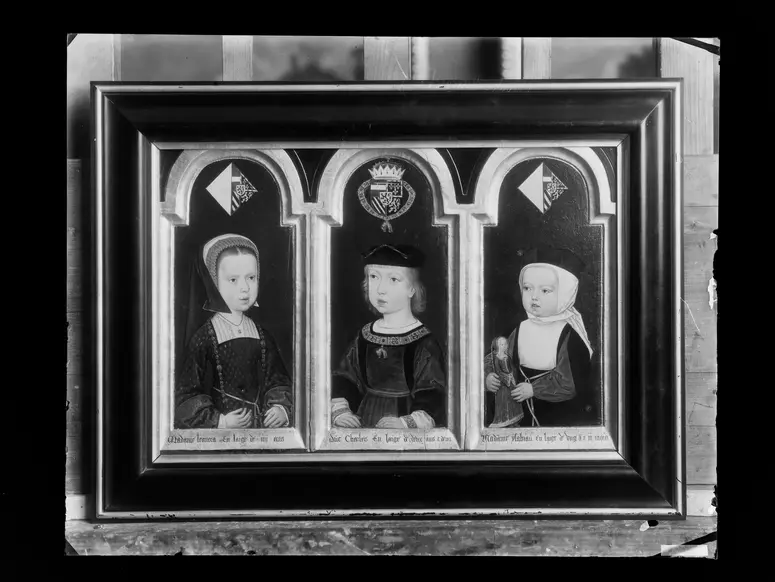
Kaiser Karl V. (1500-1558), Brustbild als Zweijähriger zusammen mit seinen Schwestern Eleonore (1498-1558) und Isabella (1501-1525) J. Löwy, K. und K. Hof-Photograph, Kunst- und Verlagsanstalt (Wien) 1888 bis 1891
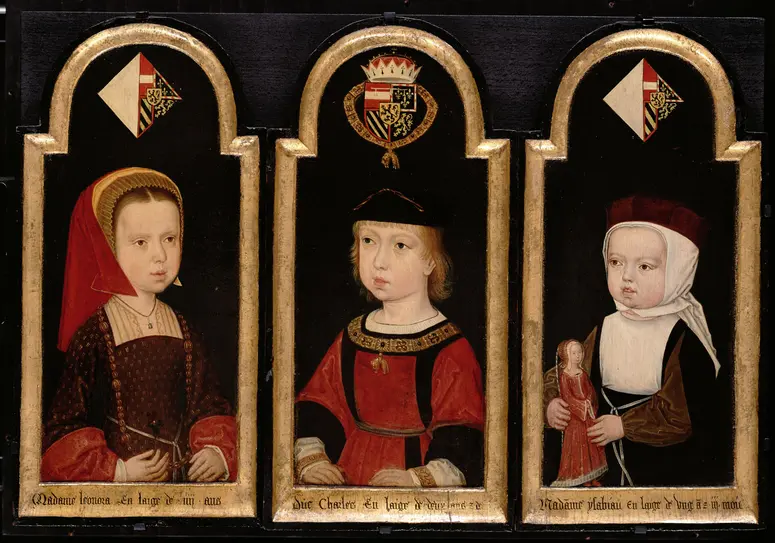
Kaiser Karl V. (1500-1558), Brustbild als Zweijähriger zusammen mit seinen Schwestern Eleonore (1498-1558) und Isabella (1501-1525) Meister der St. Georgsgilde 1502
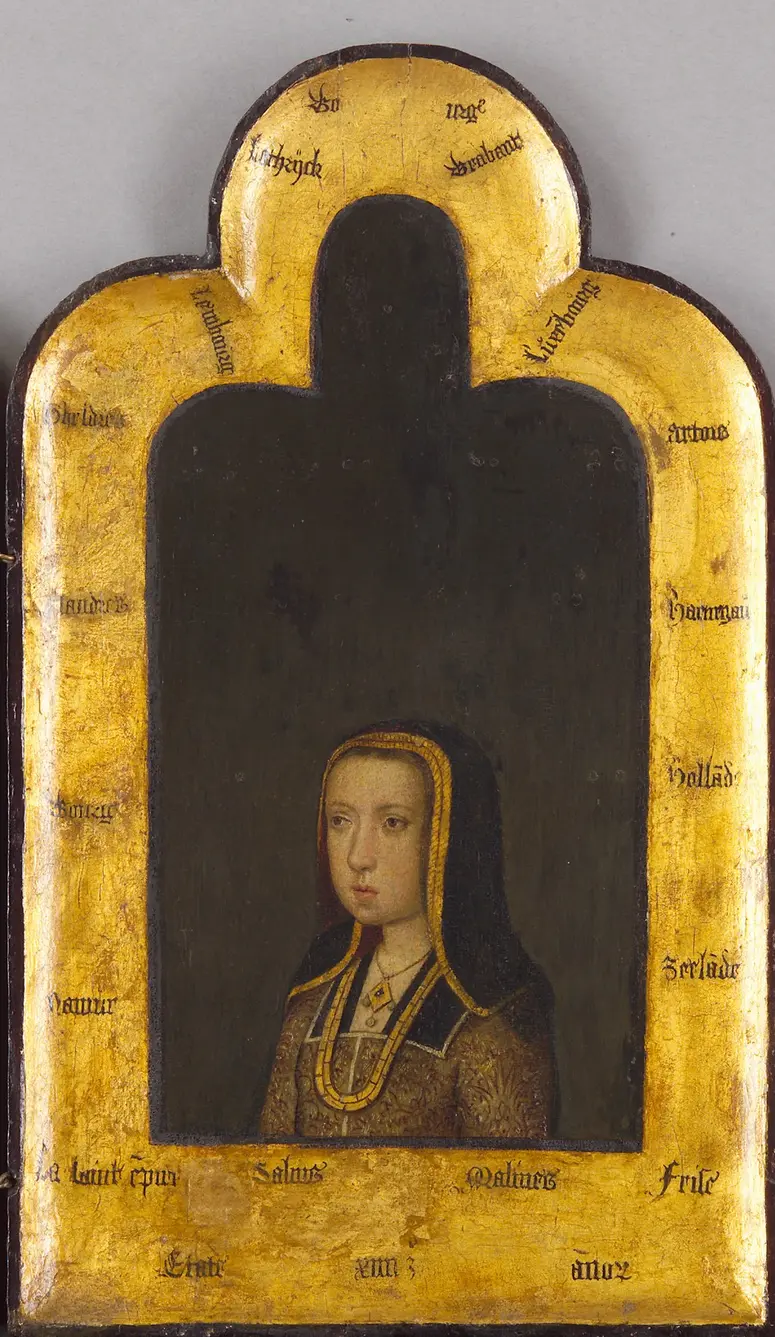
Diptychon: Margarethe, die Schwester König Philipps I. "des Schönen", im 14. Lebensjahr Meister der St. Georgsgilde um 1494
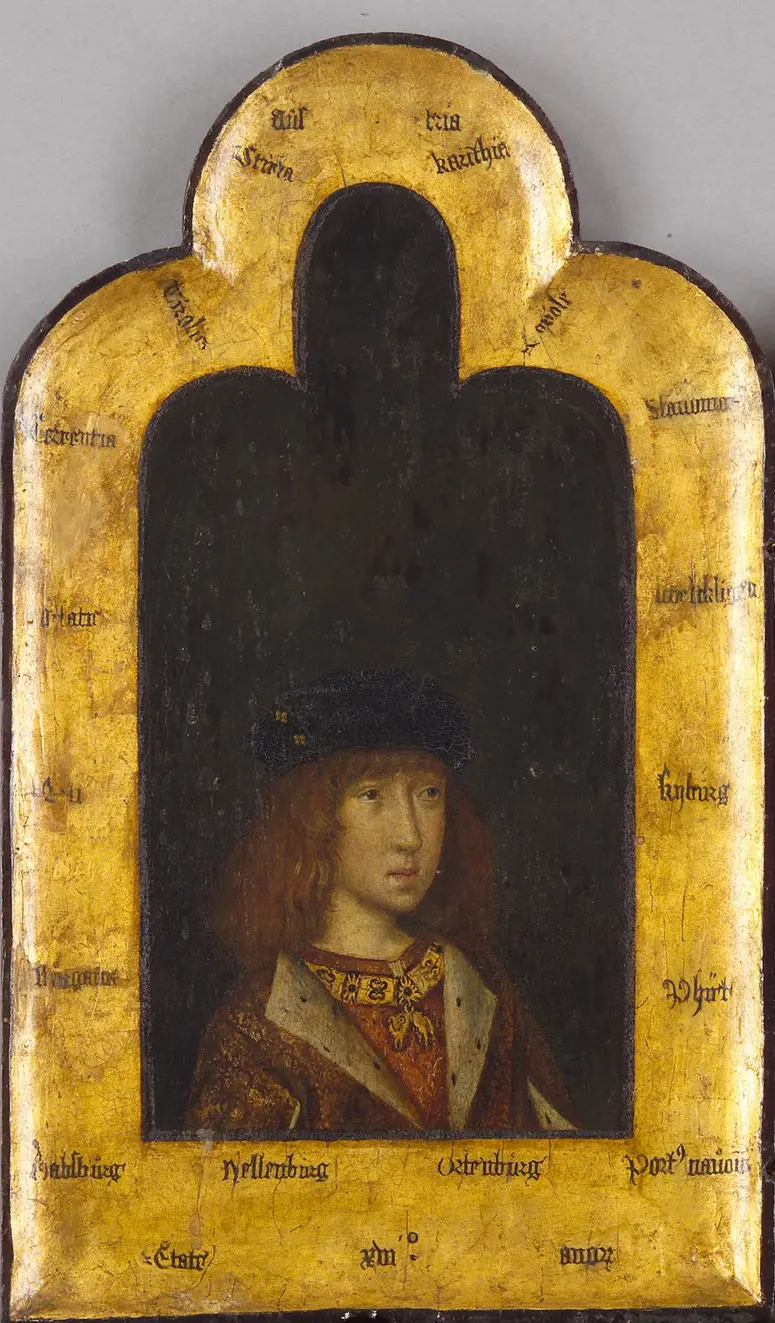
Diptychon: König Philipp I. "der Schöne" (1478-1506) als Sechzehnjähriger Meister der St. Georgsgilde um 1494
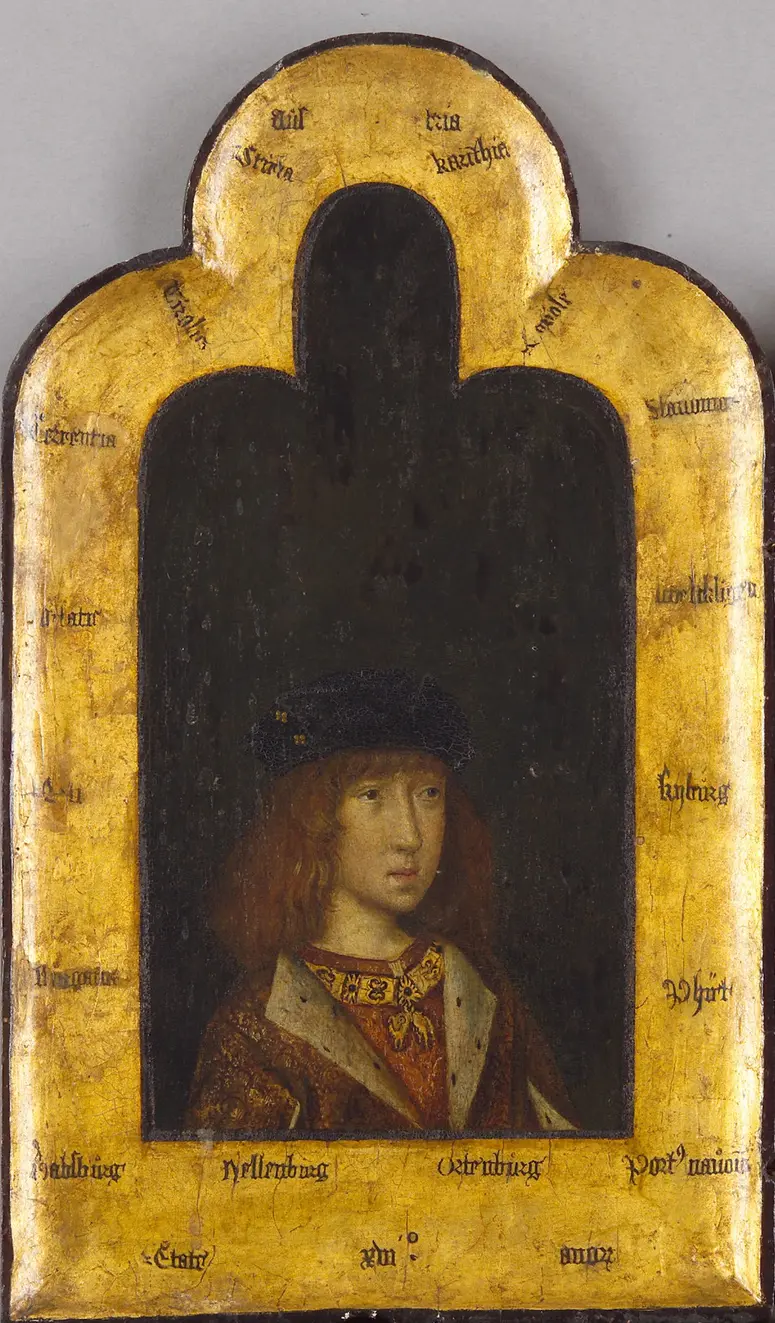
Diptychon: König Philipp I. der Schöne (1478-1506) als Sechzehnjähriger und Margarethe, die Schwester König Philipps I. des Schönen, im 14. Lebensjahr Meister der St. Georgsgilde um 1494
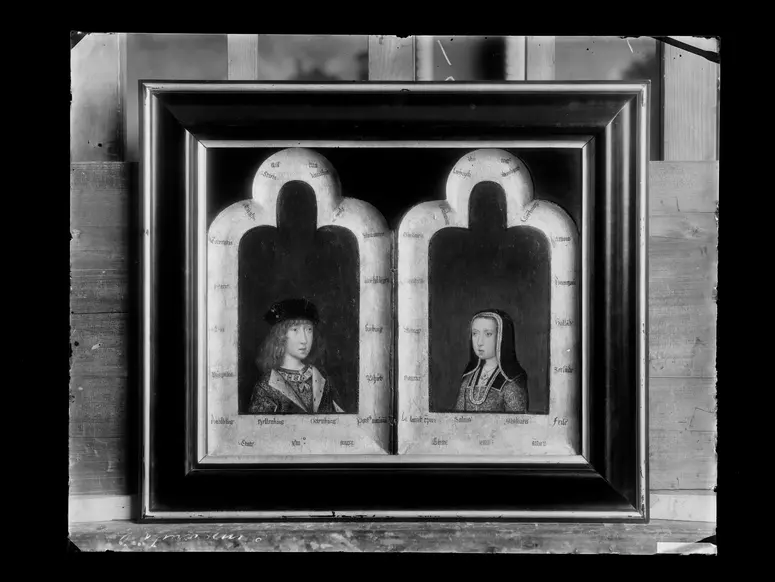
Diptychon: König Philipp I. "der Schöne" (1478-1506) als Sechzehnjähriger J. Löwy, K. und K. Hof-Photograph, Kunst- und Verlagsanstalt (Wien) 1888 bis 1891
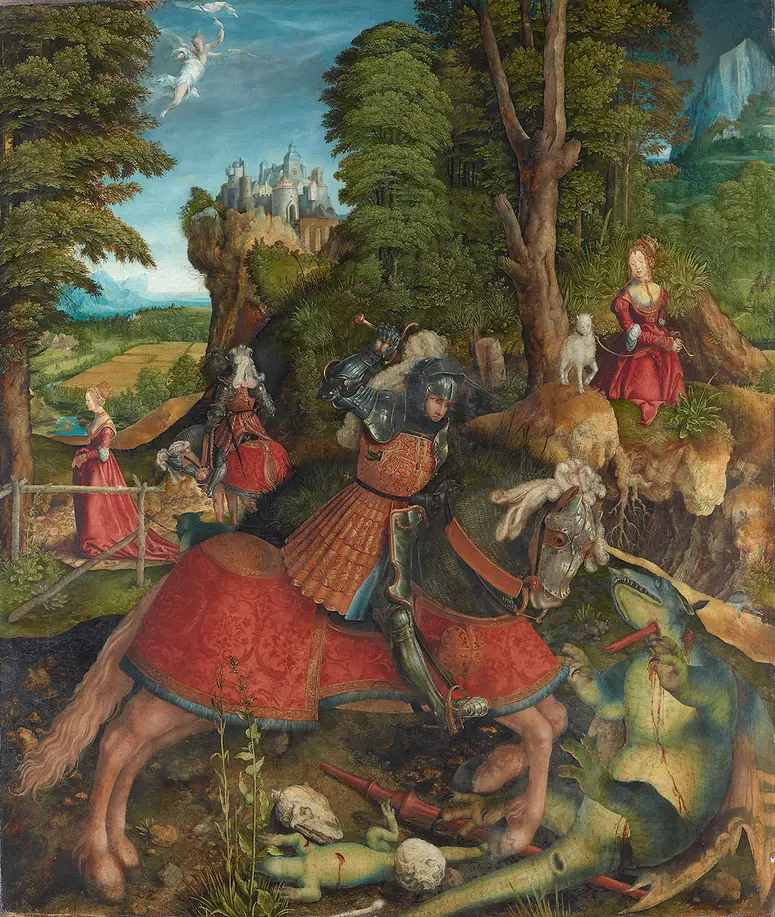
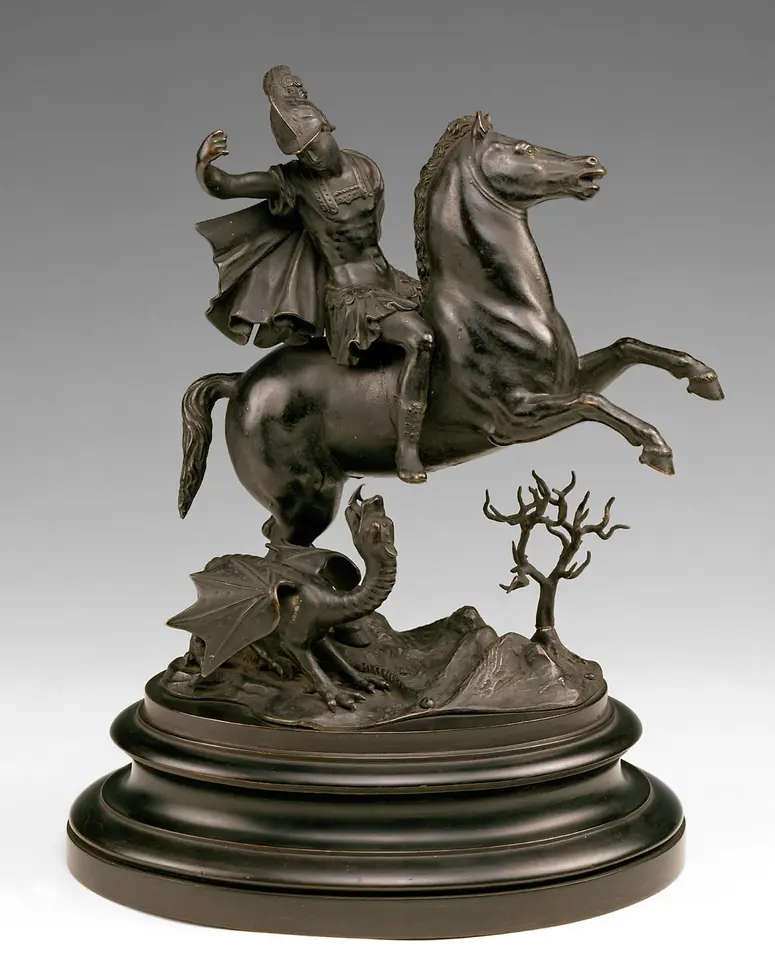
Reiterstatuette des Hl. Georg, Statuette, Kleinbronze, Bronze, Heiliger Georg Caspar Gras spätes 17. Jahrhundert (?)
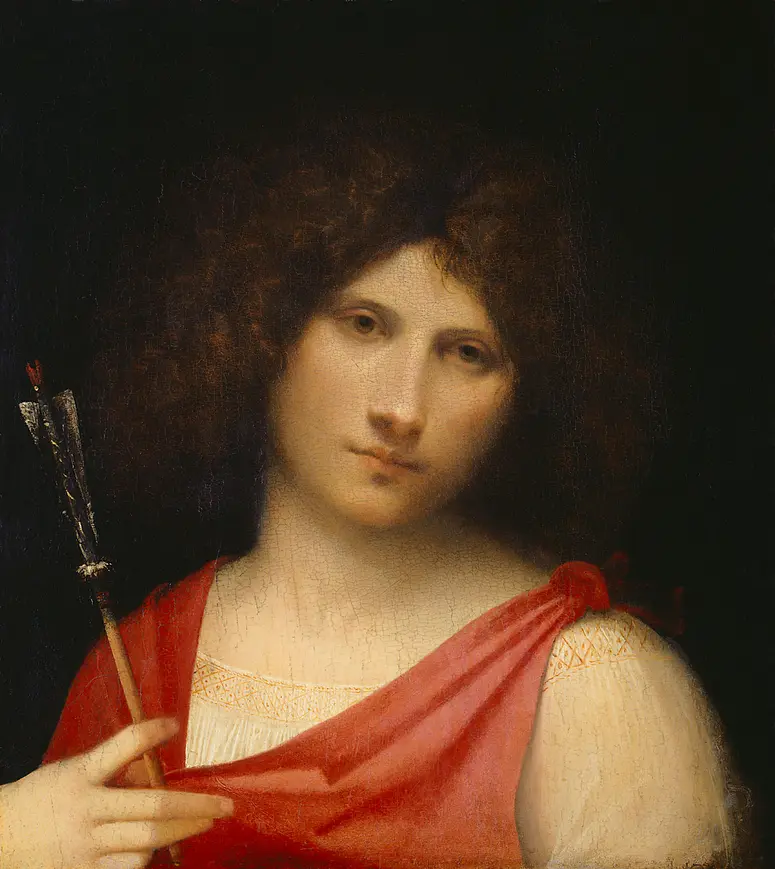

Portrait of a Boy with Helmet Giorgio da Castelfranco, gen. Giorgione around 1510 (?)
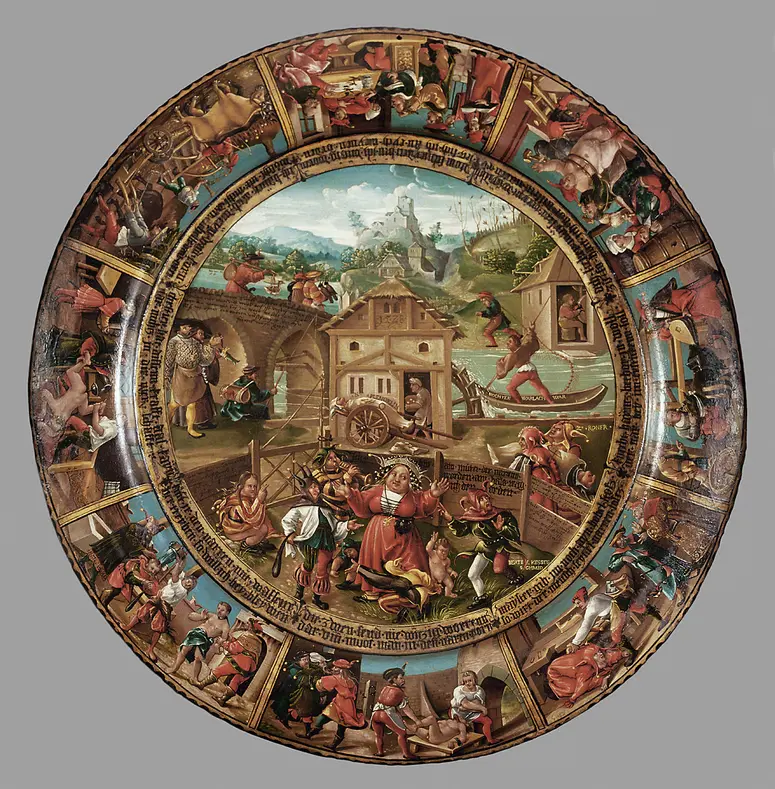
Teller; Miniatur, Narrenteller Jörg Breu d. Ä. 1528 datiert