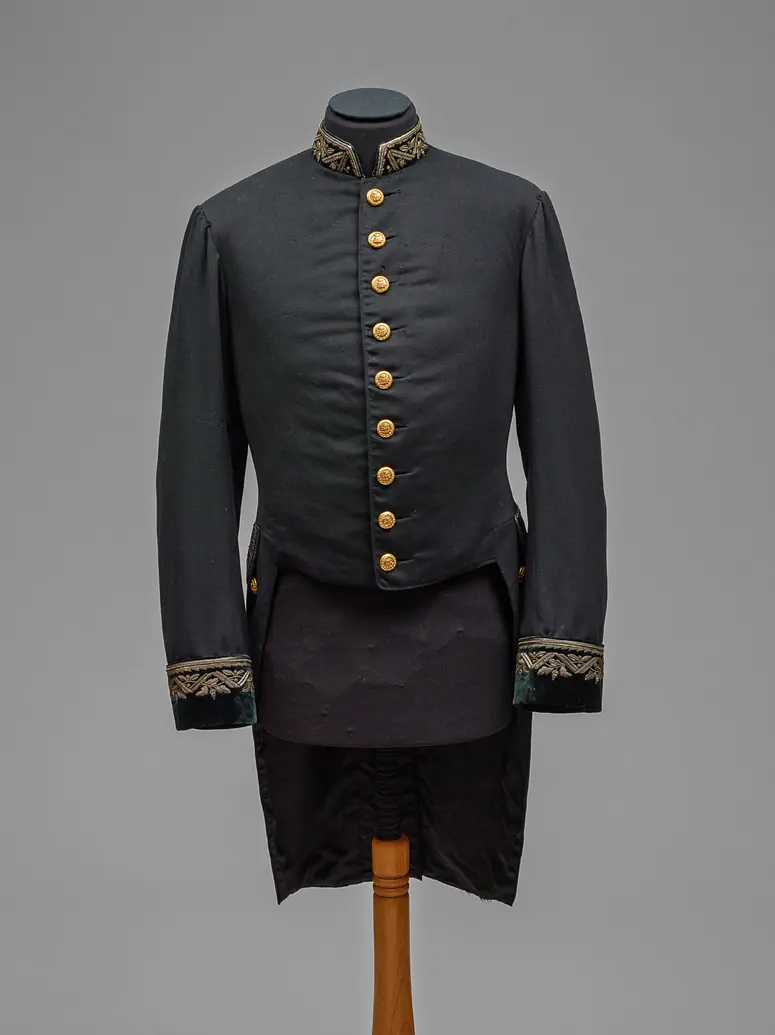
Gala uniform of a minister
1897 | Baron Michael Kast
In 1849, shortly after coming to power, Emperor Franz Joseph prescribed standardised dress resembling a military uniform for all state officials. The regulation was greatly modified in 1889 and then remained in effect unchanged until 1918. In accordance with the regulation of 1889 the dress uniform for ministers consists of a tunic and trousers ("pantalon") of dark-green cloth. The tunic is decorated with red piping. The collar and cuffs are made of red velvet, which is richly embroidered in gold as a symbol of ministerial rank. The jacket was closed with gold-plated buttons bearing the imperial double eagle. A sabre with hand-guard was attached with a leather strap beneath the jacket.
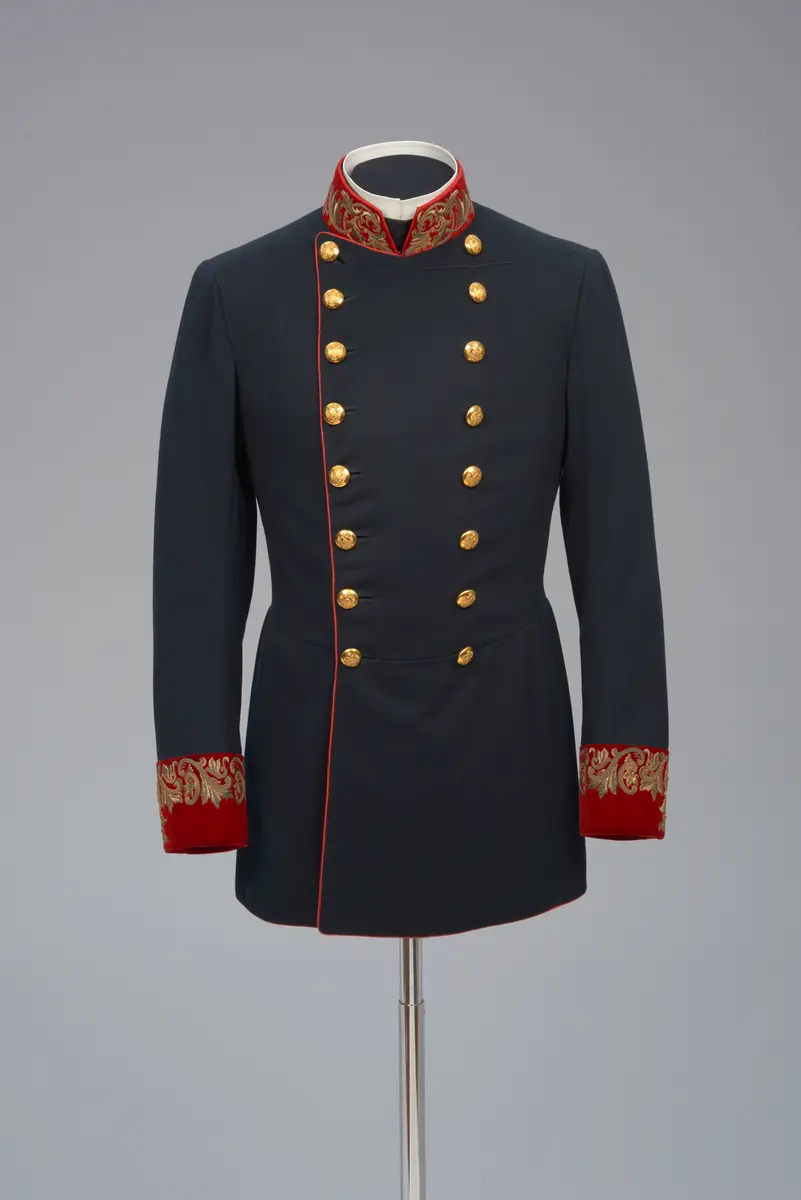
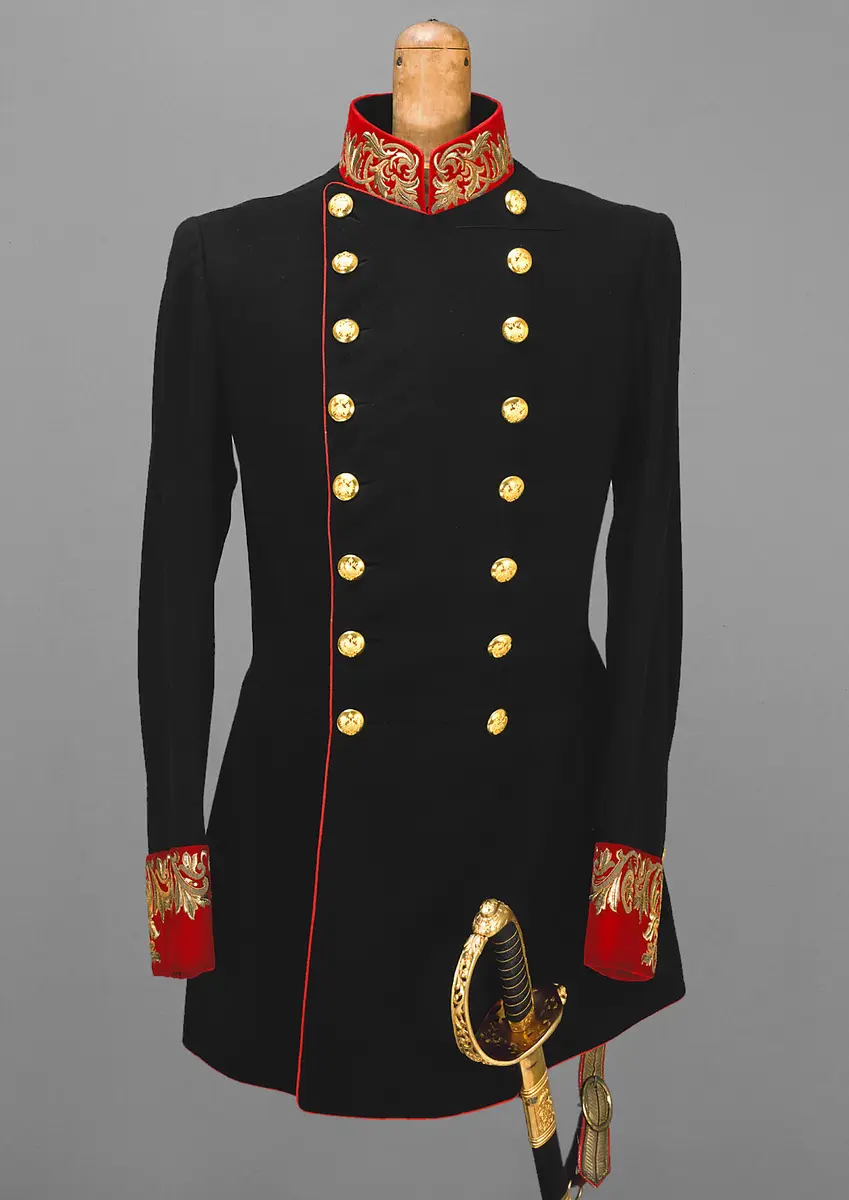
In 1849, shortly after coming to power, Emperor Franz Joseph prescribed standardised dress resembling a military uniform for all state officials. The regulation was greatly modified in 1889 and then remained in effect unchanged until 1918. In accordance with the regulation of 1889 the dress uniform for ministers consists of a tunic and trousers ("pantalon") of dark-green cloth. The tunic is decorated with red piping. The collar and cuffs are made of red velvet, which is richly embroidered in gold as a symbol of ministerial rank. The jacket was closed with gold-plated buttons bearing the imperial double eagle. A sabre with hand-guard was attached with a leather strap beneath the jacket.
worn by:
Baron Michael Kast (1859 - 1932)
Time:
1897
Object Name
Gala uniform of a minister
Copyright
Kunsthistorisches Museum, Monturdepot
Invs.
Monturdepot, N 162
Browse more
Similar items you might be interested in
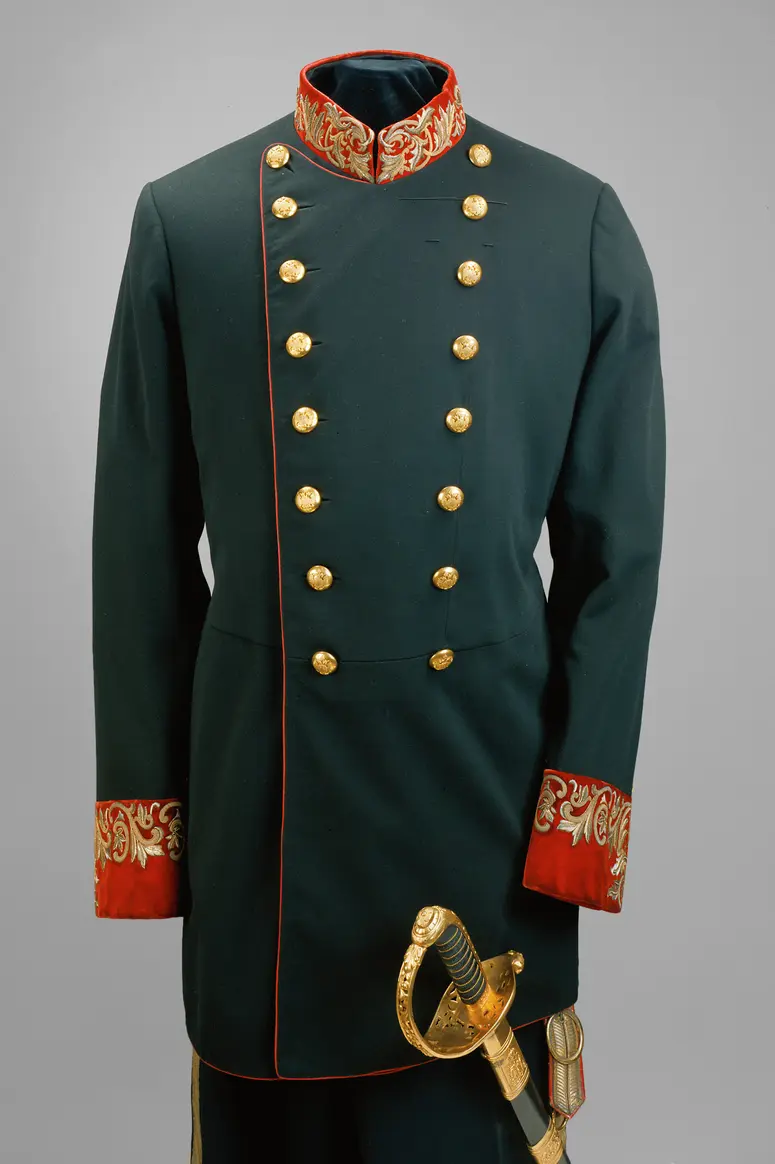
Dress Uniform of an Imperial and Royal Minister Manufacturer: Anton Uzel & Sohn around 1900

Gala uniform of a permanent secretary in the Ministry of Cultural Affairs and Education around 1900
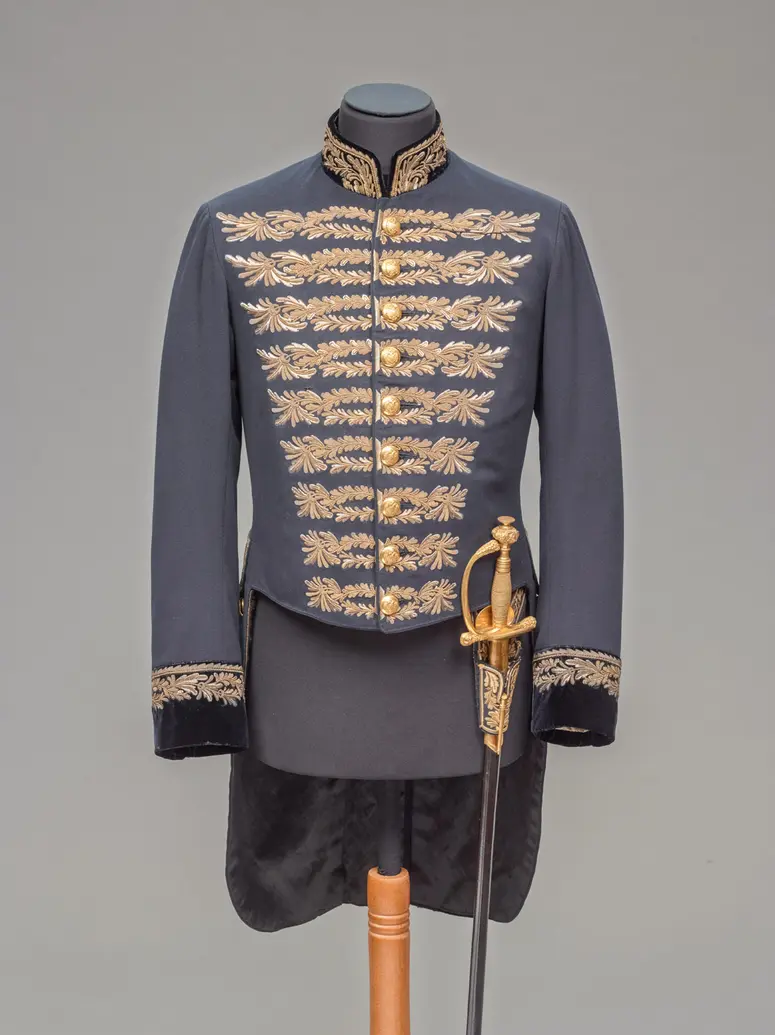
Grand uniform of a section counsellor / court and ministerial secretary / household, court and state archivist (Vienna) and of a category II legation counsellor / category II consul general / legation secretary / consul (missions)

Gala uniform of a section head in the Ministry of Trade around/after 1900
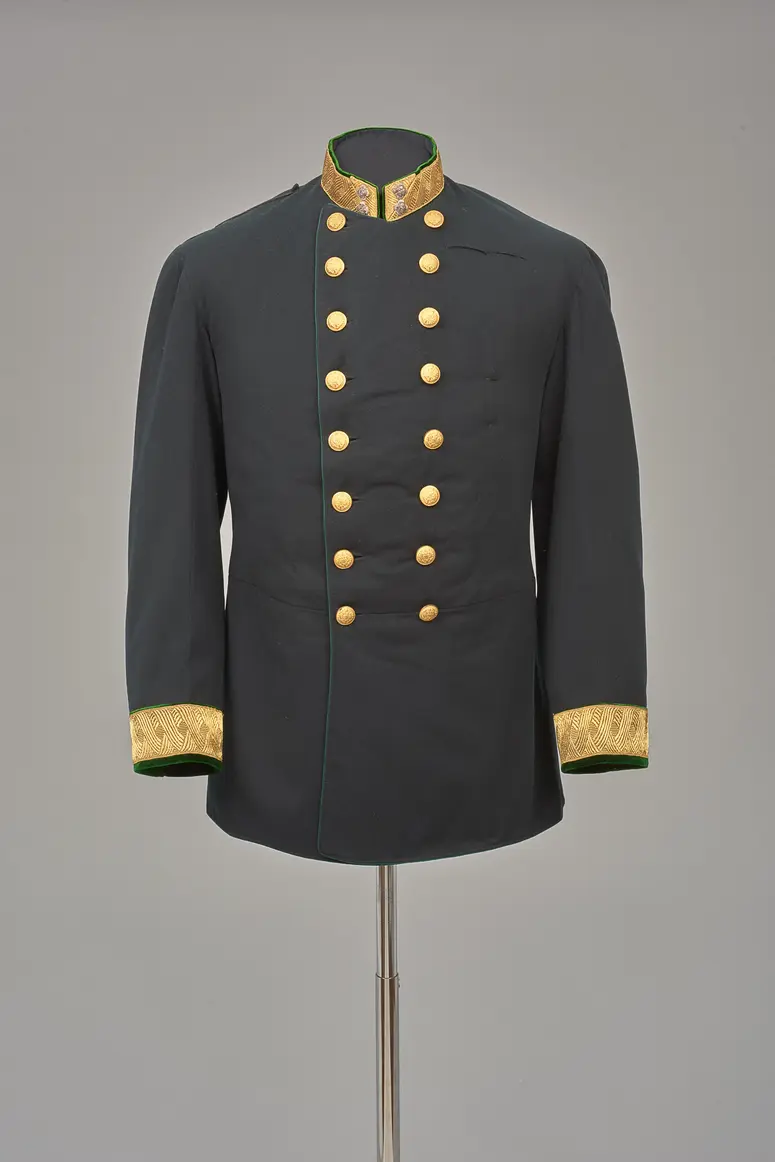
Gala uniform of a section head in the Ministry of Finance around 1880
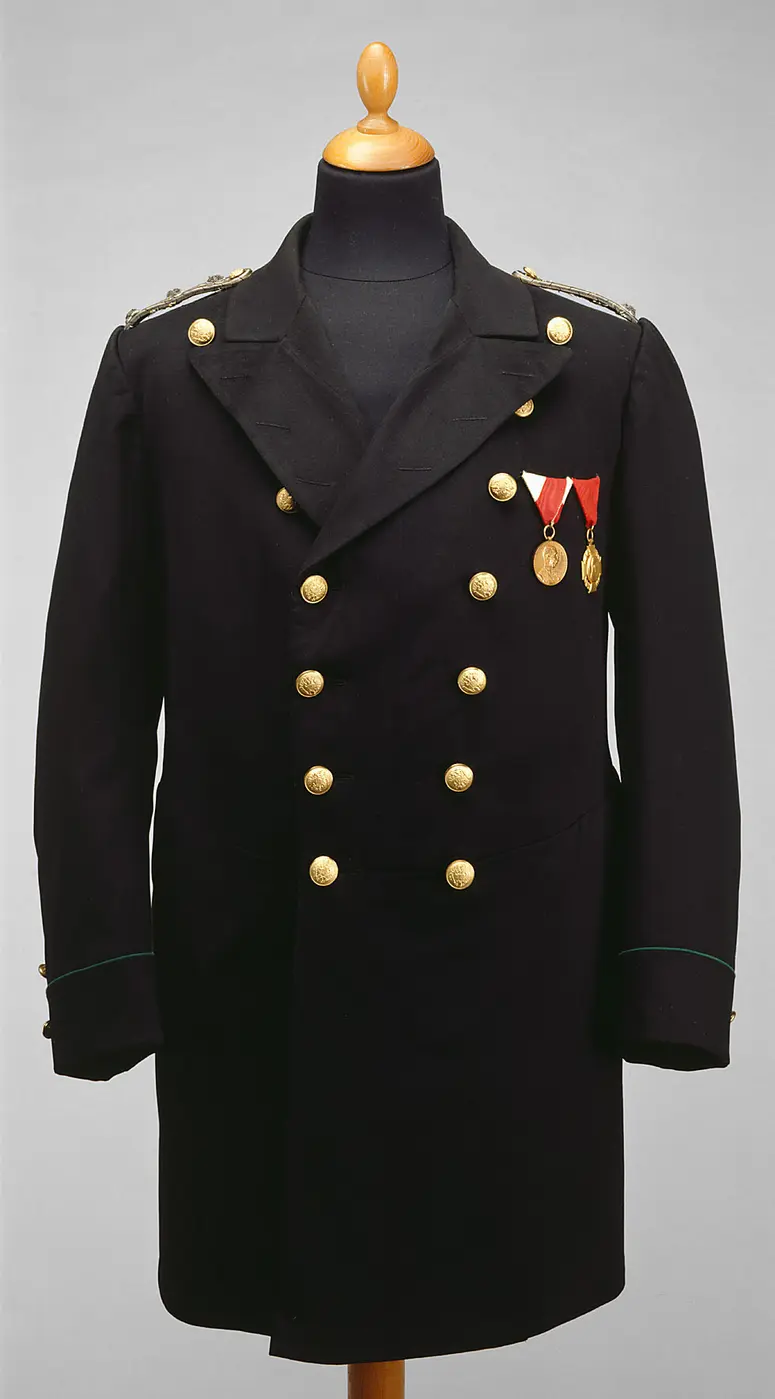
Uniformrock (“Flottenrock“) von der Dienstuniform eines Beamten (4. Kategorie, 9. Rangklasse) des k. k. Finanzministeriums Manufacturer: F. & M. Spira around 1910
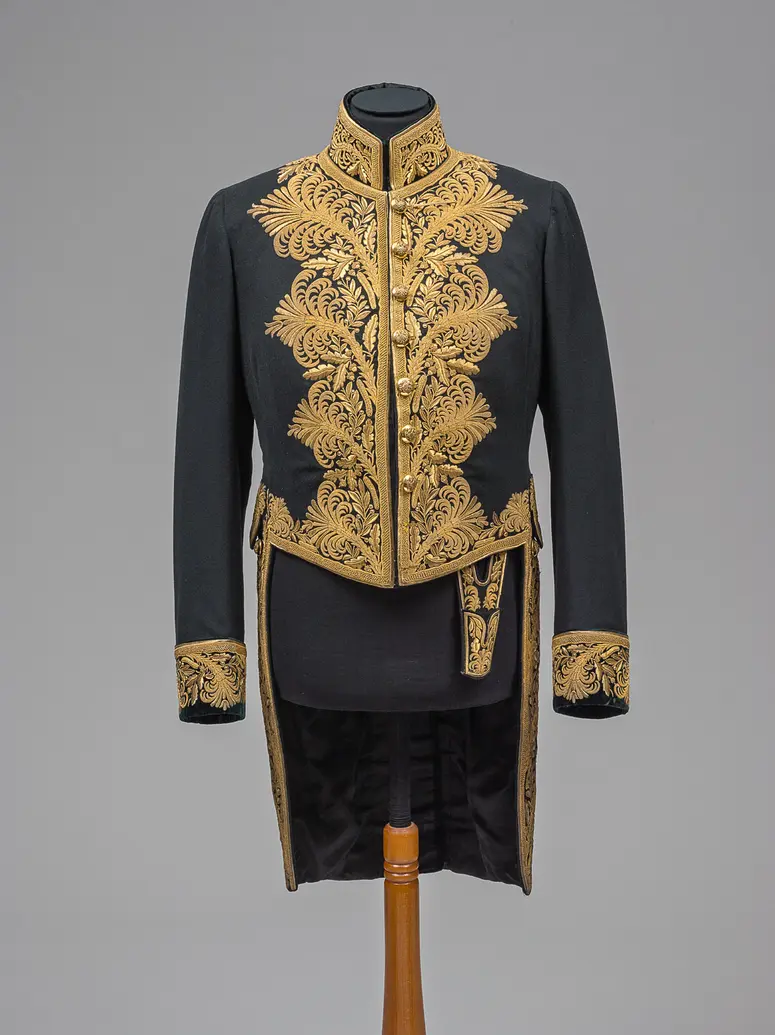
Gala uniform of a privy counsellor Manufacturer: Anton Uzel & Sohn around/after 1900

Dress Uniform of an Imperial and Royal Privy Councillor Manufacturer: Anton Uzel & Sohn 1814

Grand gala uniform of an envoy extraordinary (missions) Manufacturer: Anton Uzel & Sohn around 1910

Campaign-Uniform (Hungarian Attire) of Emperor Franz Joseph Manufacturer: Anton Uzel & Sohn 1907
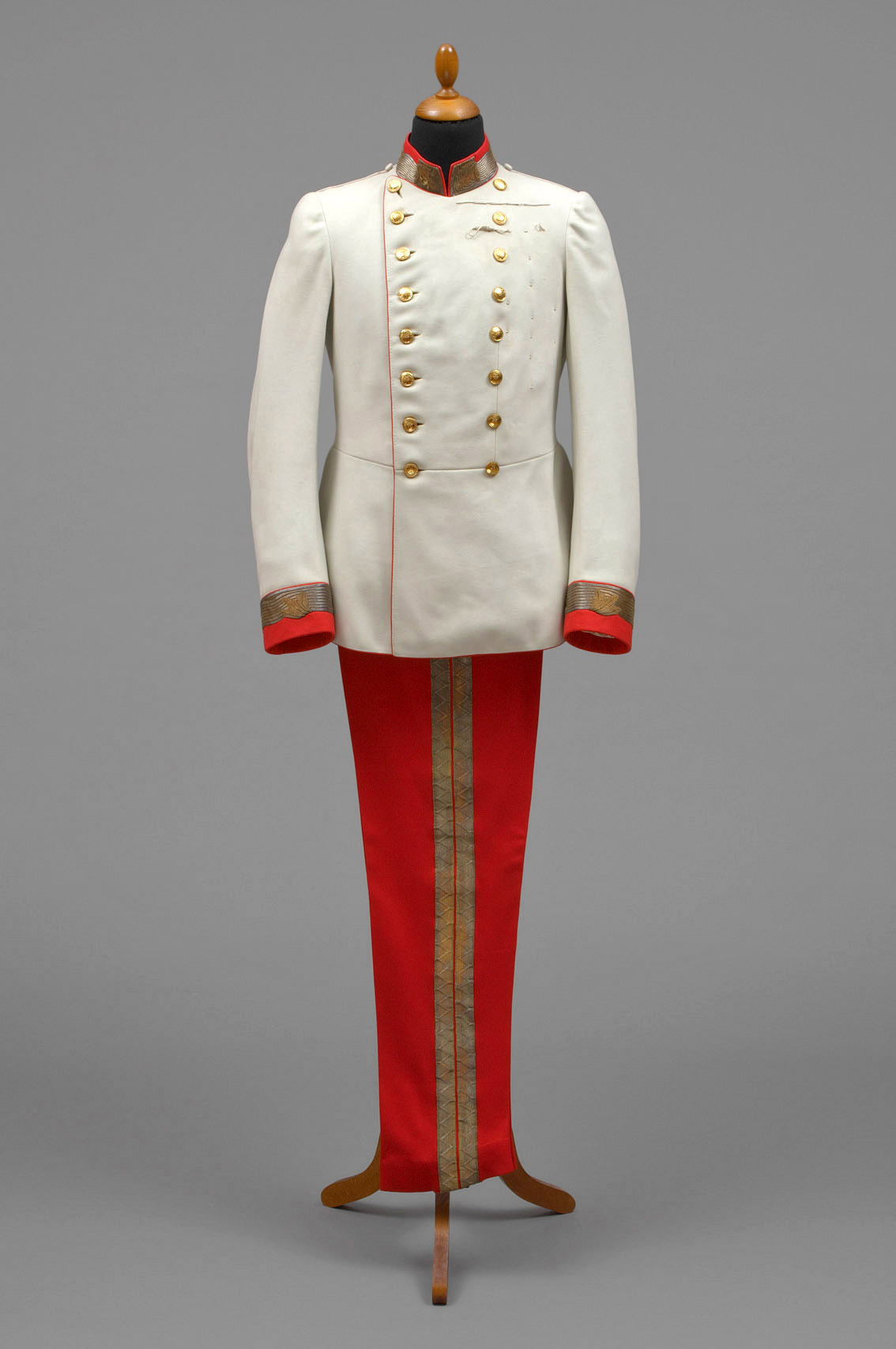
Dress Uniform (German Attire), worn by Emperor Franz Joseph Manufacturer: Anton Uzel & Sohn 1910
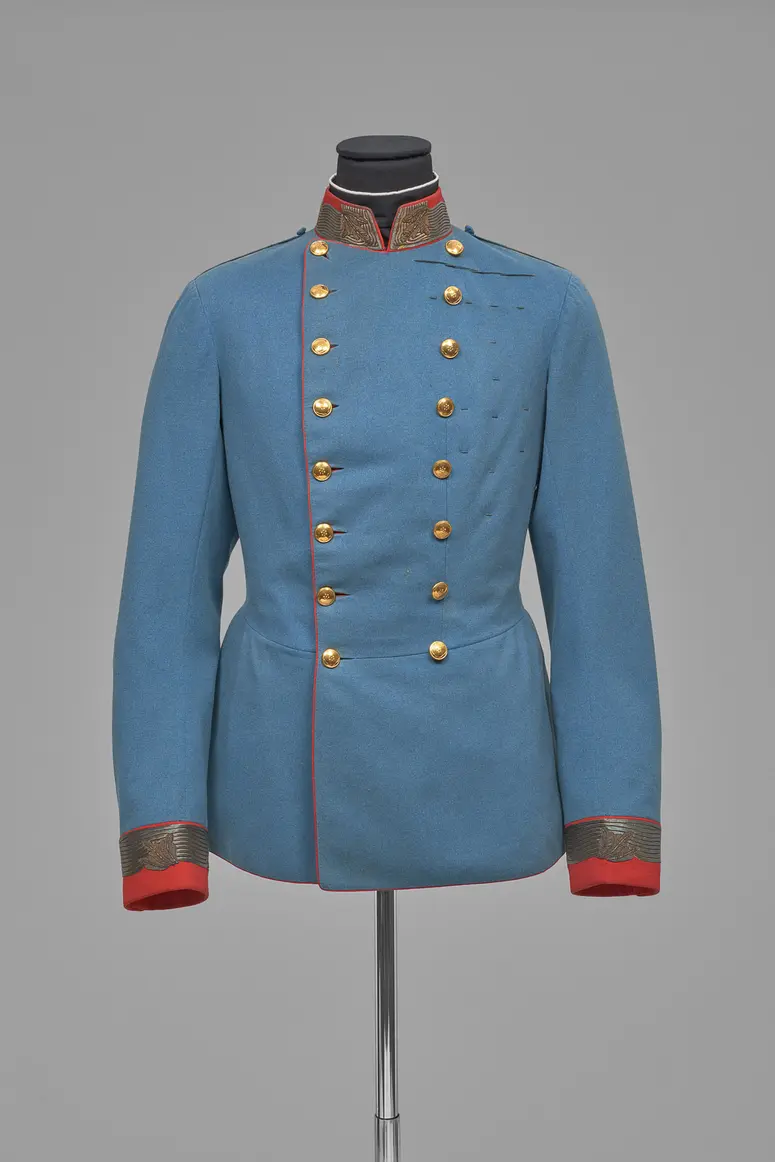
Campaign-Uniform (German Attire) of Emperor Franz Joseph Manufacturer: Anton Uzel & Sohn 1889

Gala uniform of an official of the cabinet office (cabinet director)

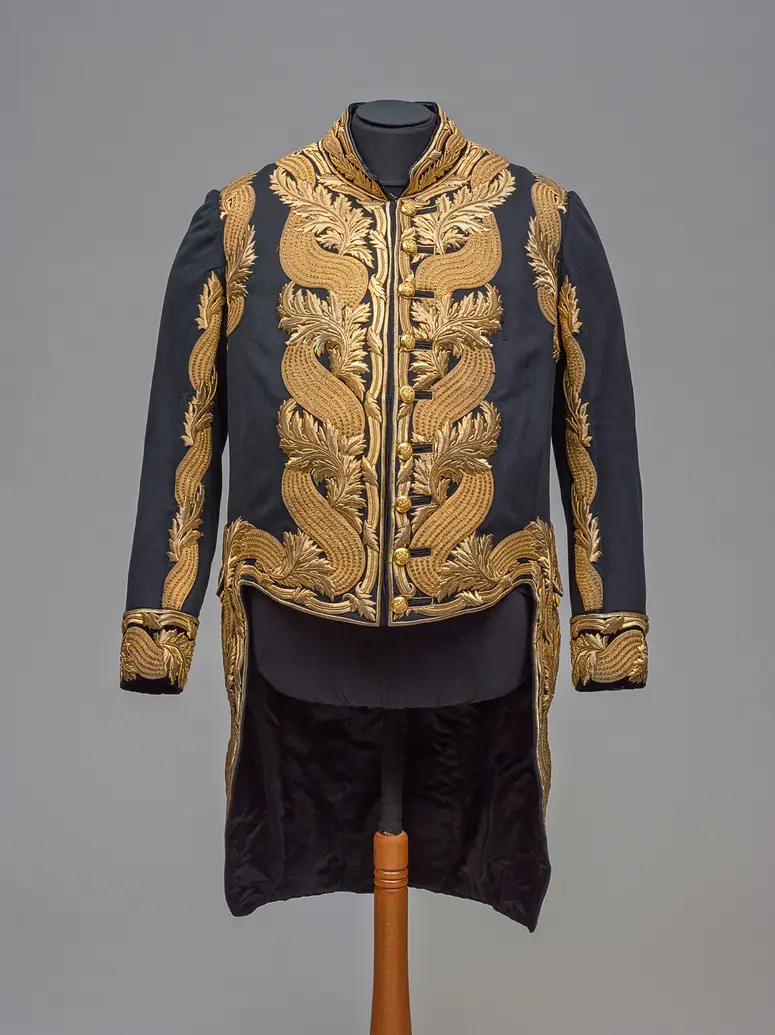
Gala uniform of a Grand Master / Grand Chamberlain / Grand Marshal / Grand Equerry Manufacturer: Josef Nesshyba around 1913
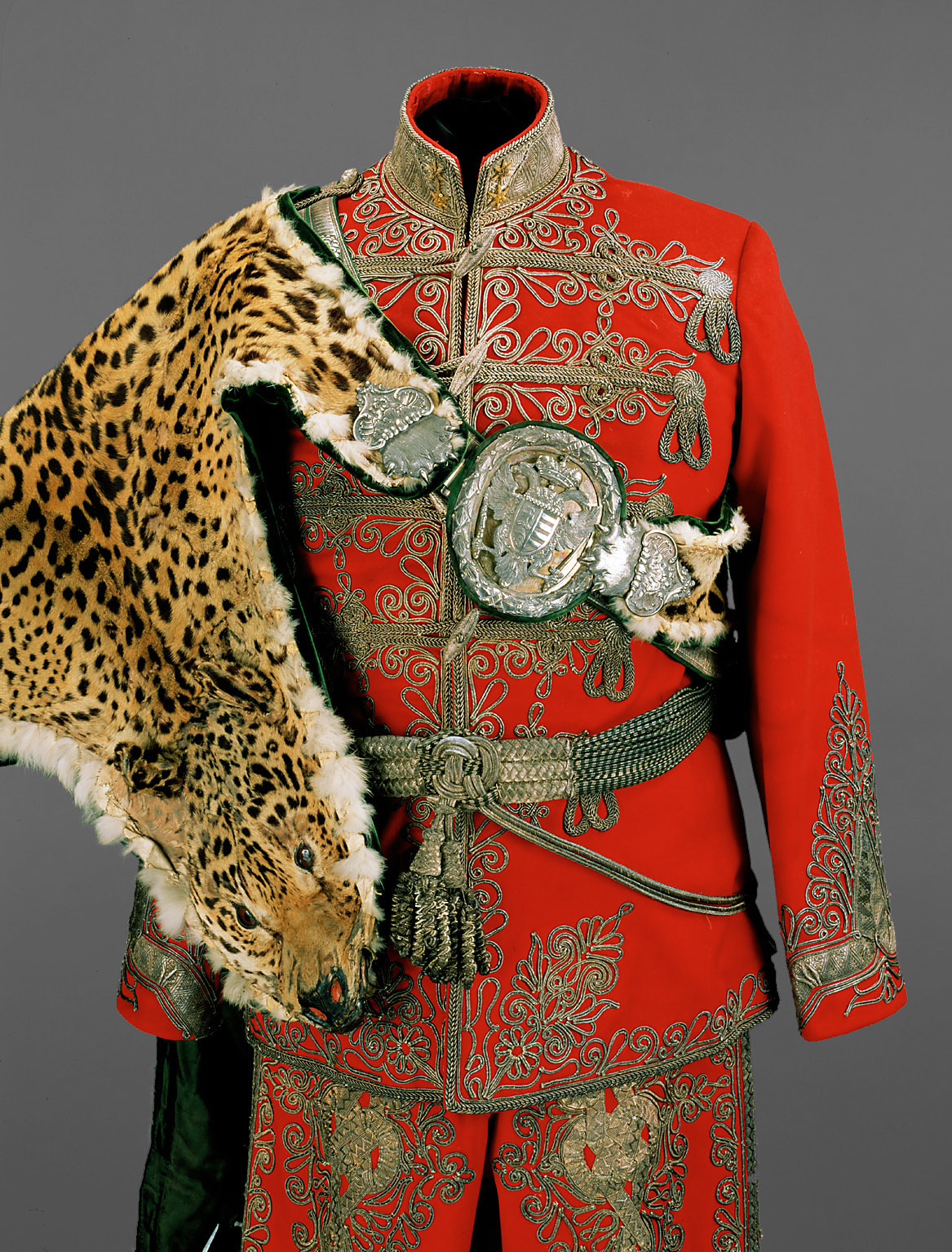
Court service uniform of an officer of the Royal Hungarian Life Guards 1905-1910

Gala uniform of an official of the cabinet office: cabinet secretary around/after 1900
