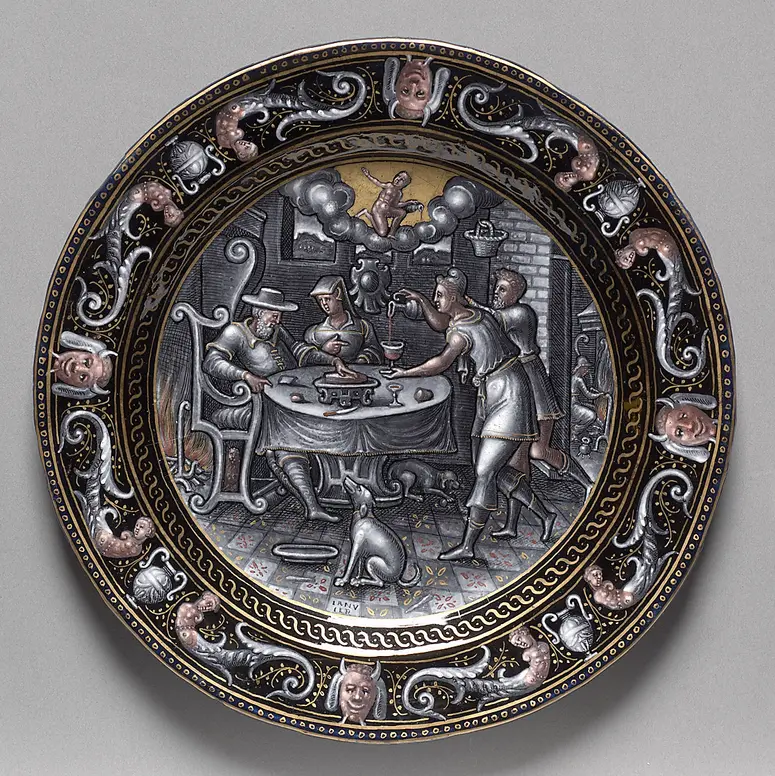
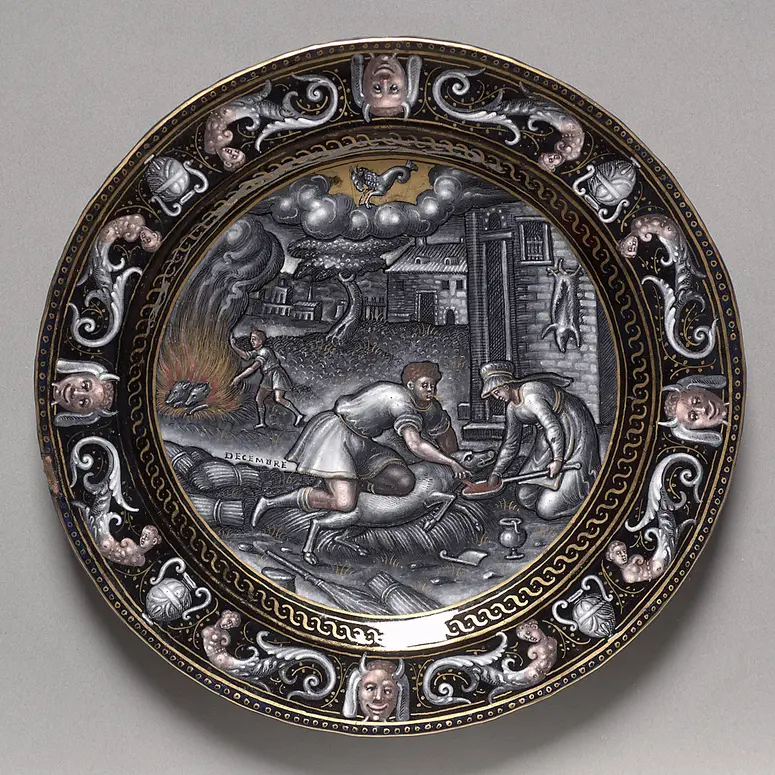
Bowl with Biblical and Mythological Scenes
2nd half 15th c.
Glass was a major Venetian export from the 13th century onwards. Crystal glass (“cristallo”), which was especially clear and thin, was produced from the 15th century onwards. The quality and elegance of vessels made from it quickly became the ideal of glass workshops all over Europe. By colouring the glass, precious stones or porcelain would be imitated; enamel painting further increased the splendour and value of these vessels.
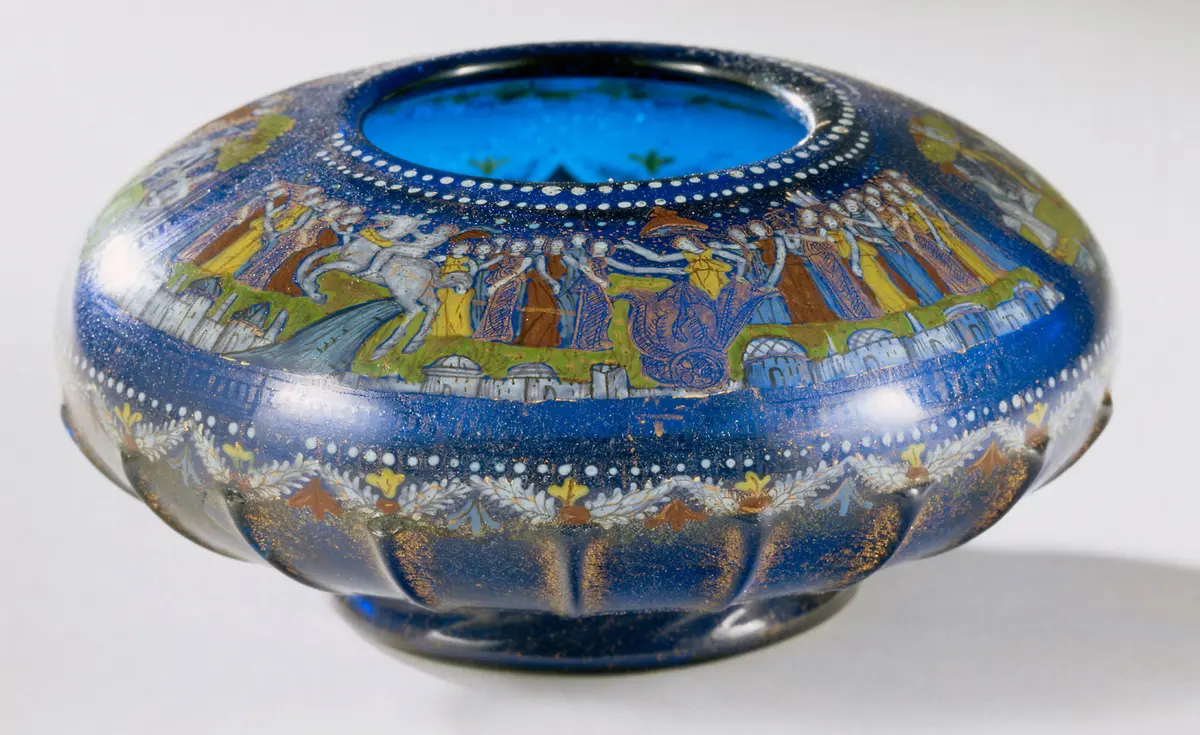
Glass was a major Venetian export from the 13th century onwards. Crystal glass (“cristallo”), which was especially clear and thin, was produced from the 15th century onwards. The quality and elegance of vessels made from it quickly became the ideal of glass workshops all over Europe. By colouring the glass, precious stones or porcelain would be imitated; enamel painting further increased the splendour and value of these vessels.
Time:
2nd half 15th c.
Object Name
Vessel; Bowl
Culture
Venice
Material/technology:
Glass with enamel painting
Dimensions:
H. 5,9 cm, D. 12,1 cm
Copyright
Kunsthistorisches Museum, Kunstkammer
Invs.
Kunstkammer, 3275
Browse more
Similar items you might be interested in
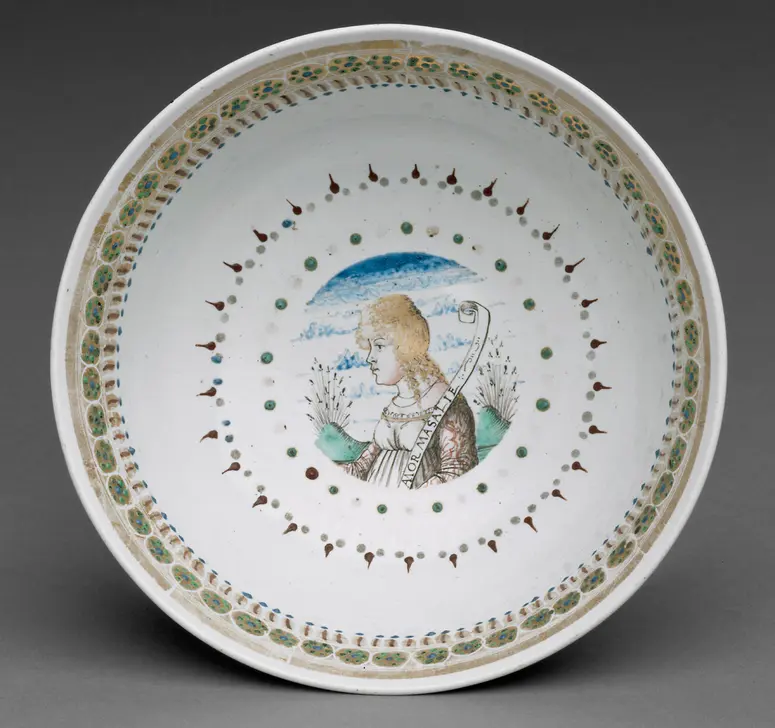
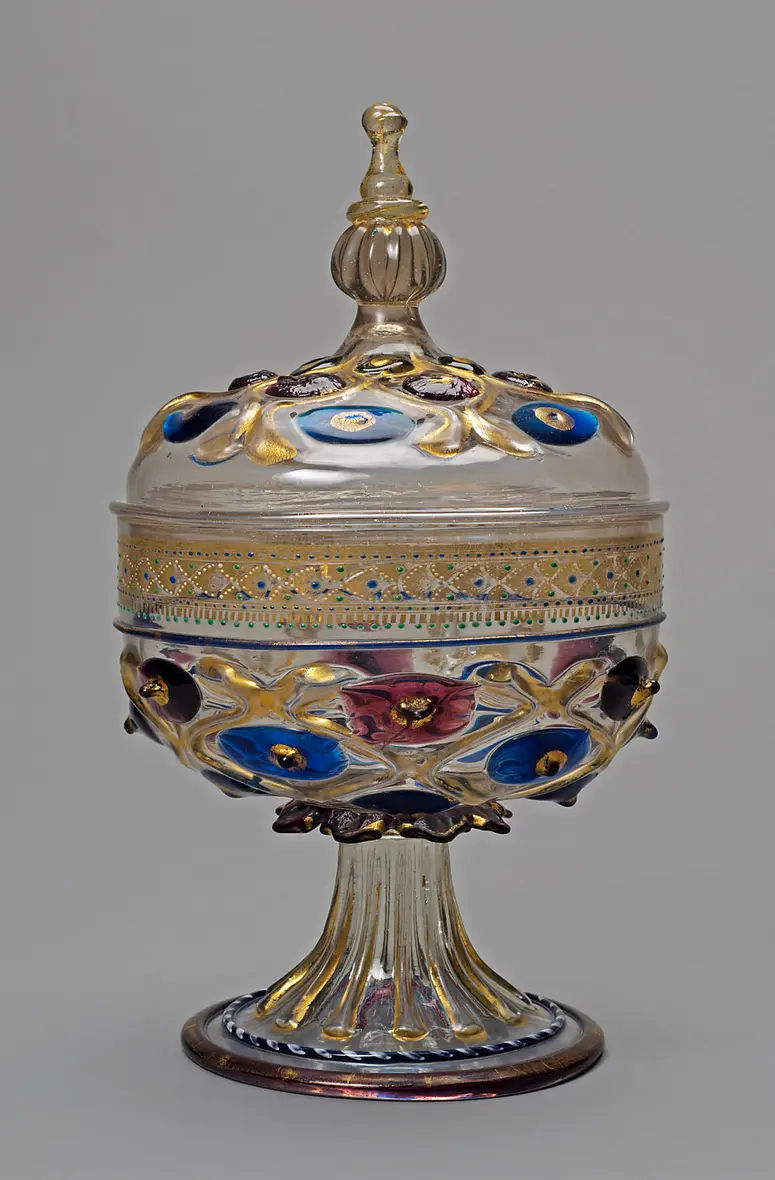
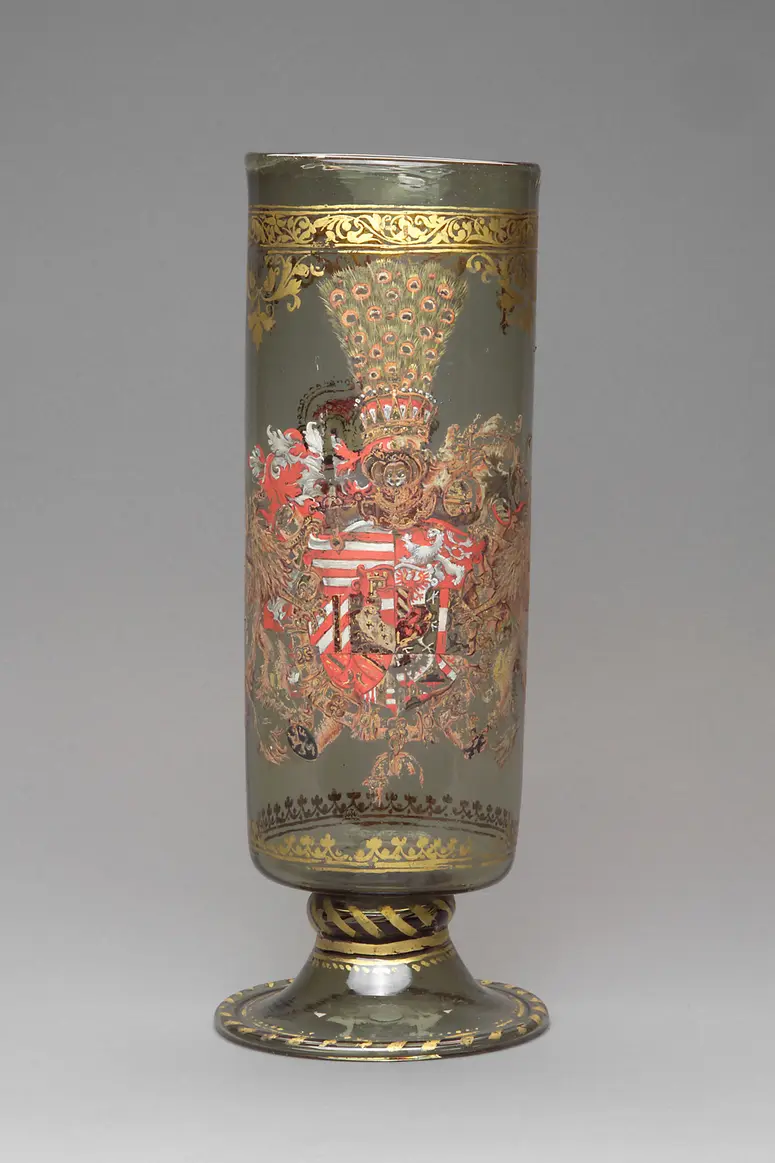
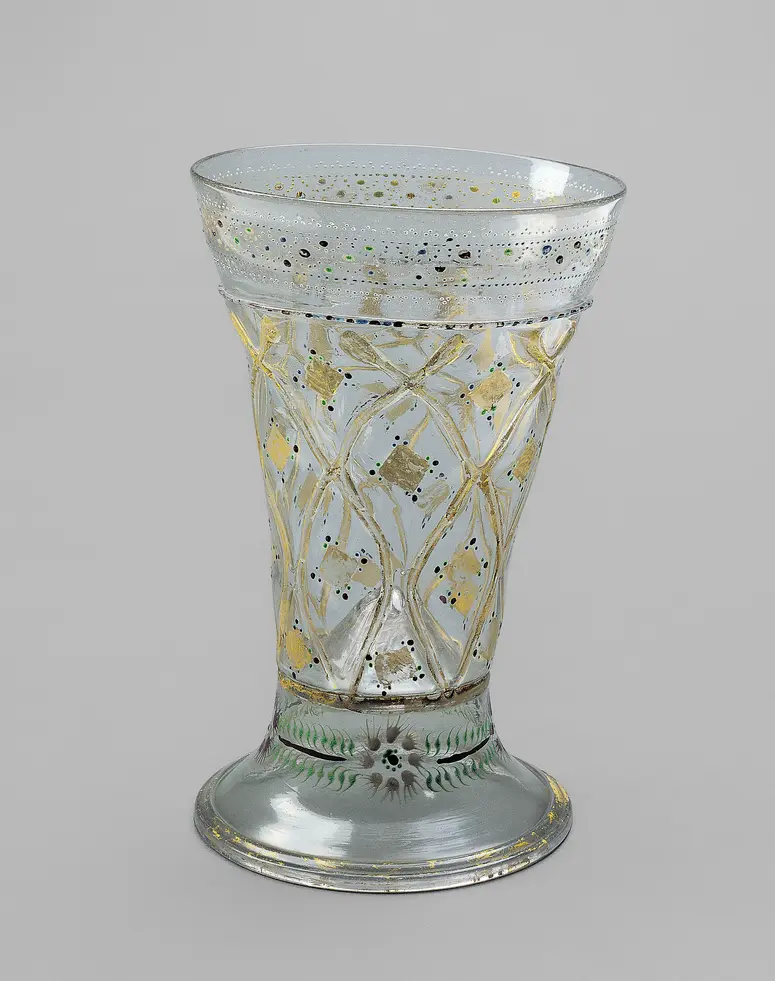
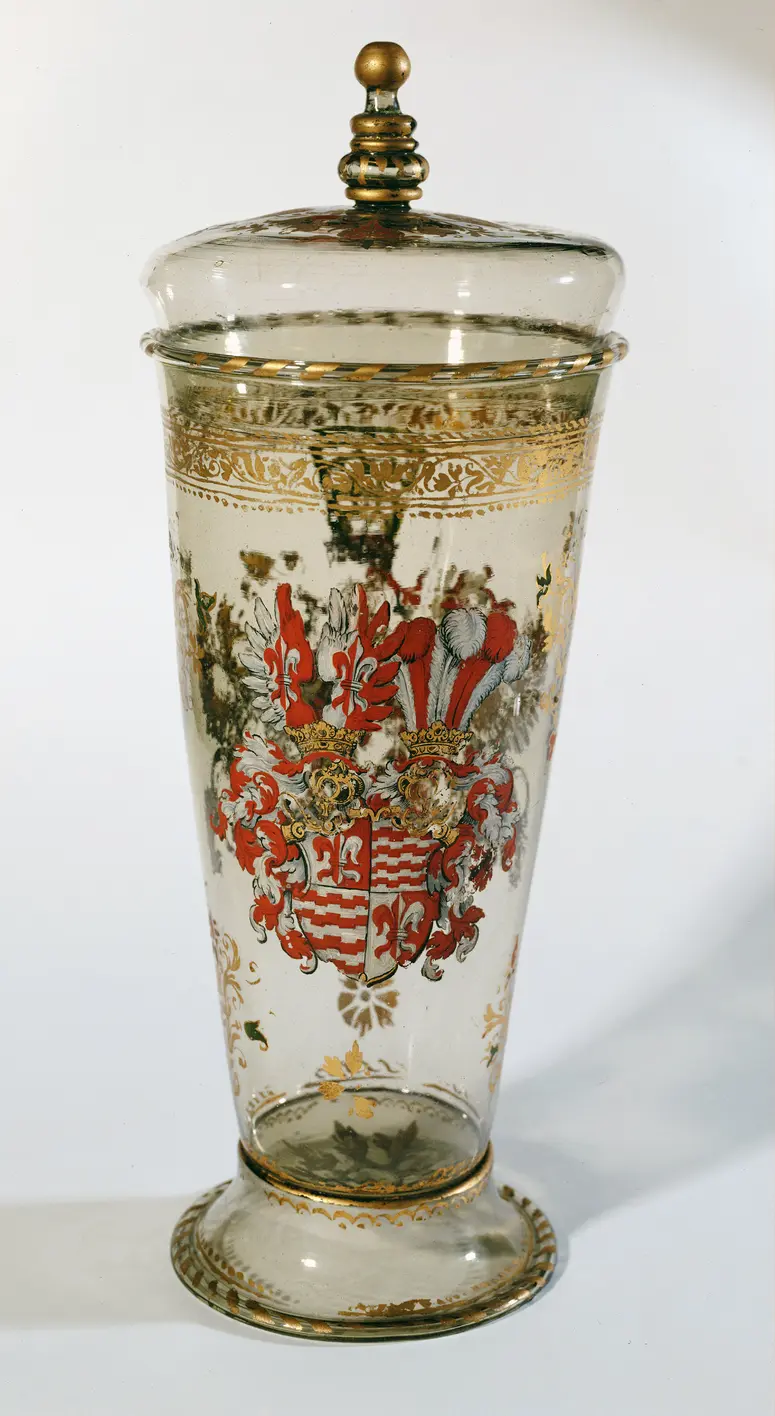
Deckelhumpen mit dem Wappen der Philippine Welser Antonio Montano vor 1580
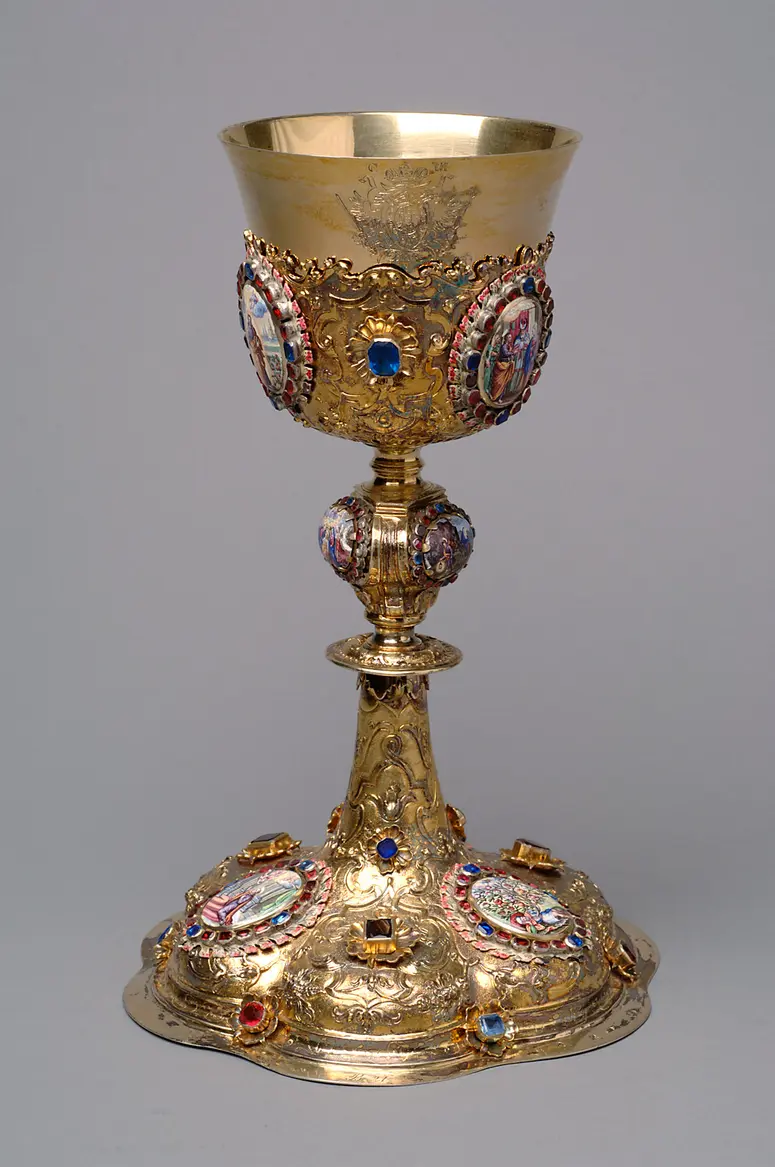
Messkelch mit dem Wappen Kaiser Karls VI. mit Patene Ludwig Schneider um 1708/10 (Kelch),1711/40 (Patene)
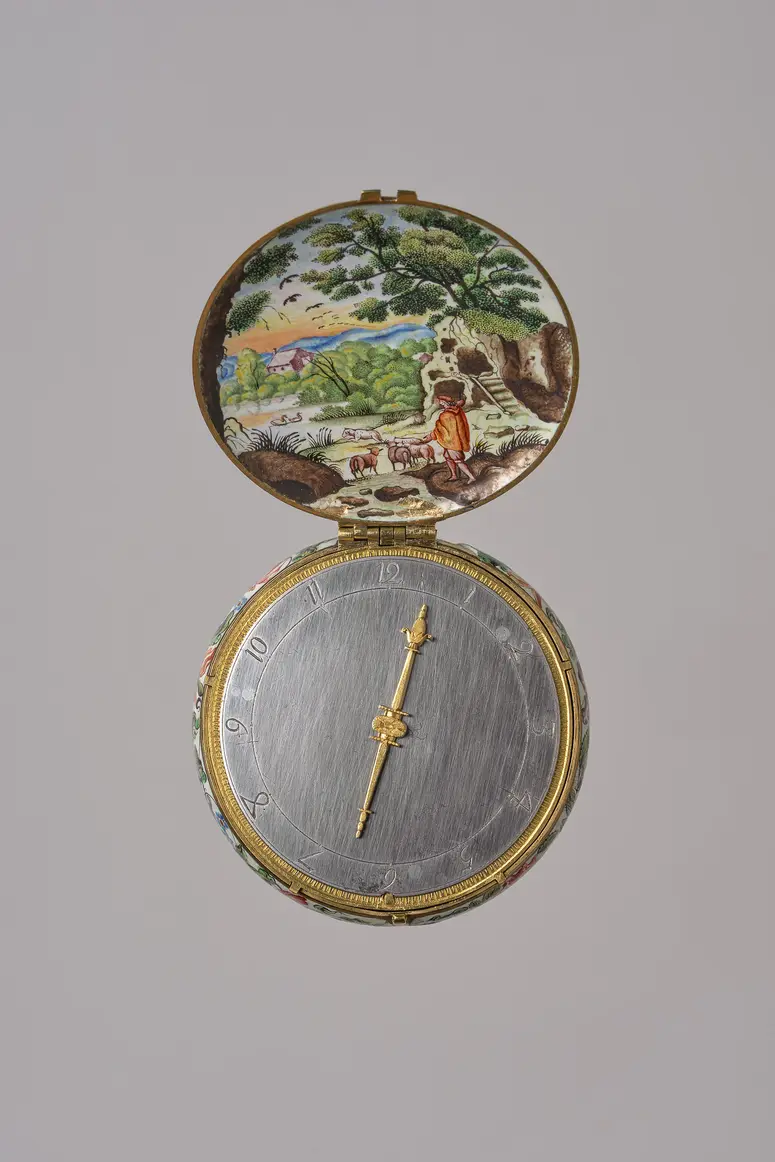
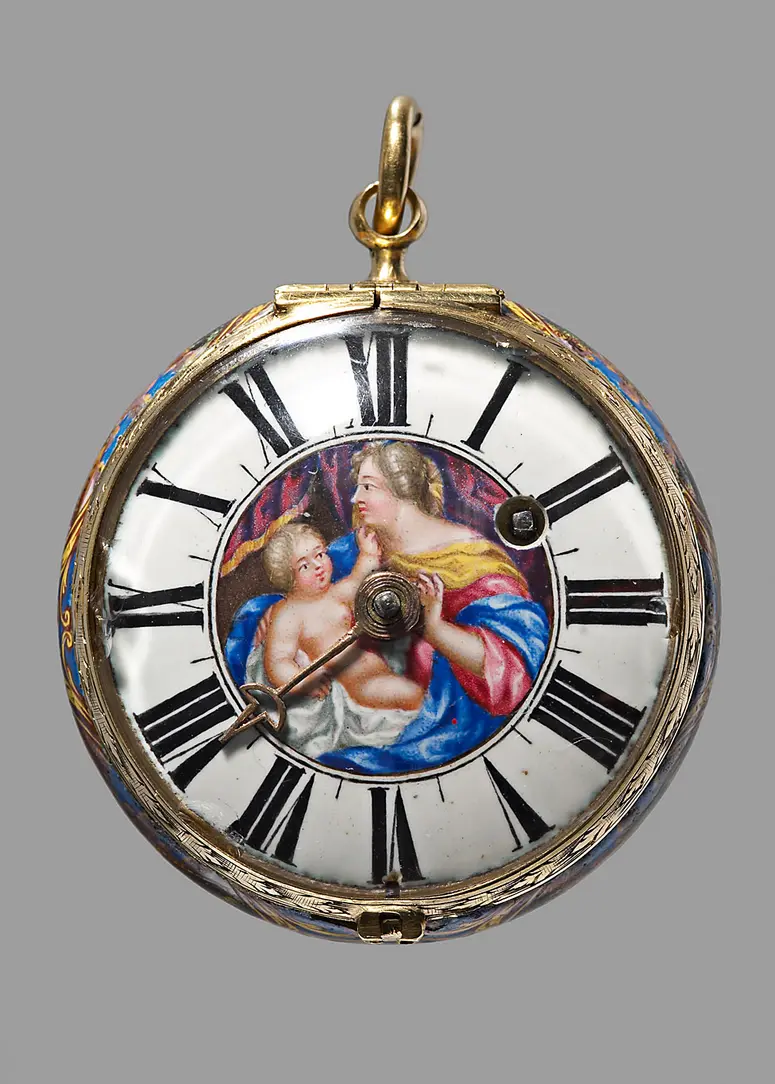
Pendant Watch Jean-Pierre Huaut ca. 1700 (goldsmith work); 2nd half 18th c. (clockwork)
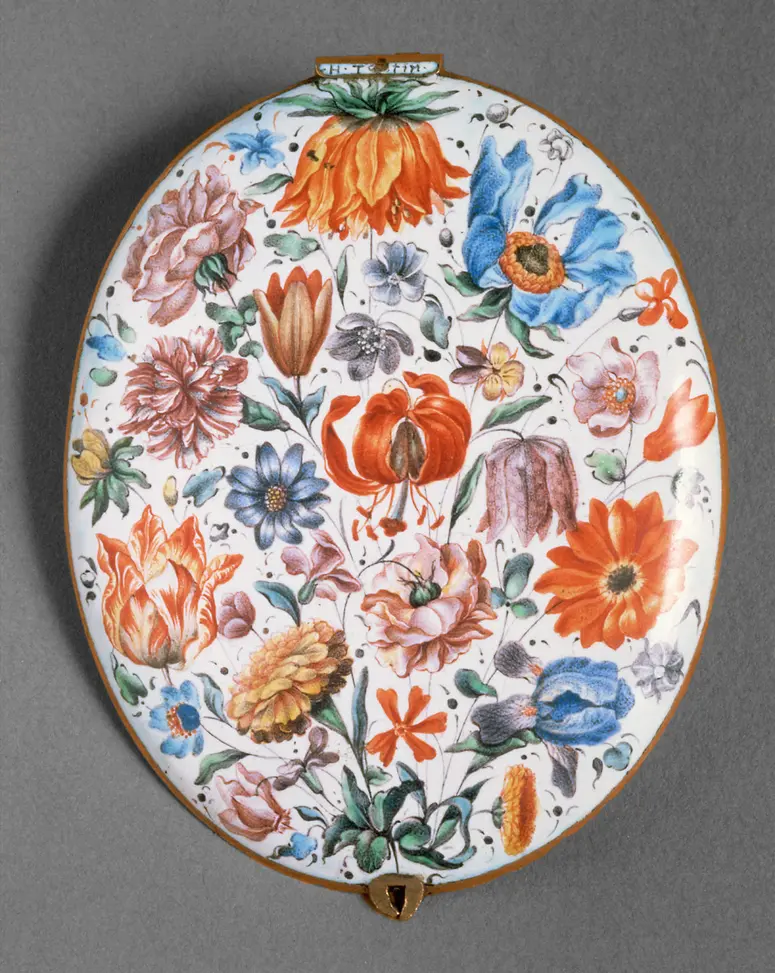
Pendant Capsule with Portraits of Anne of Austria and Her Son Louis Henry Toutin ca. 1643
Messkelch mit dem Wappen Kaiser Karls VI., mit Patene nach 1711