

Prior to the intervention, the object was in a fragile and unstable condition. Numerous older breakages and subsequent repairs threatened its survival and had made the statuette look mottled and unattractive.
The figure was carved from pale alabaster with a slight reddish tint and some dark veining. Alabaster’s specific properties make it a sensitive material; it is a mineral of fine uniform grain, appreciated since antiquity for its delicate lustre and translucent appearance and often used for portraits. Unlike marble, which looks similar, alabaster is very soft and can even be scored with a fingernail. Another characteristic that affects its conservation is its susceptibility to water. Like gypsum, alabaster is soluble in water, so cleaning interventions or storing the object in humid conditions can damage it.
The figure of Ganymede showed damages and losses typical of alabaster such as scratches and an eroded surface. Other damages to the object may have been caused by mechanical interventions, e.g. by someone touching or bumping into it, or the statuette toppling over or even falling to the ground, which led to several separate repair interventions that, from today’s point of view, have also resulted in damages to the object.
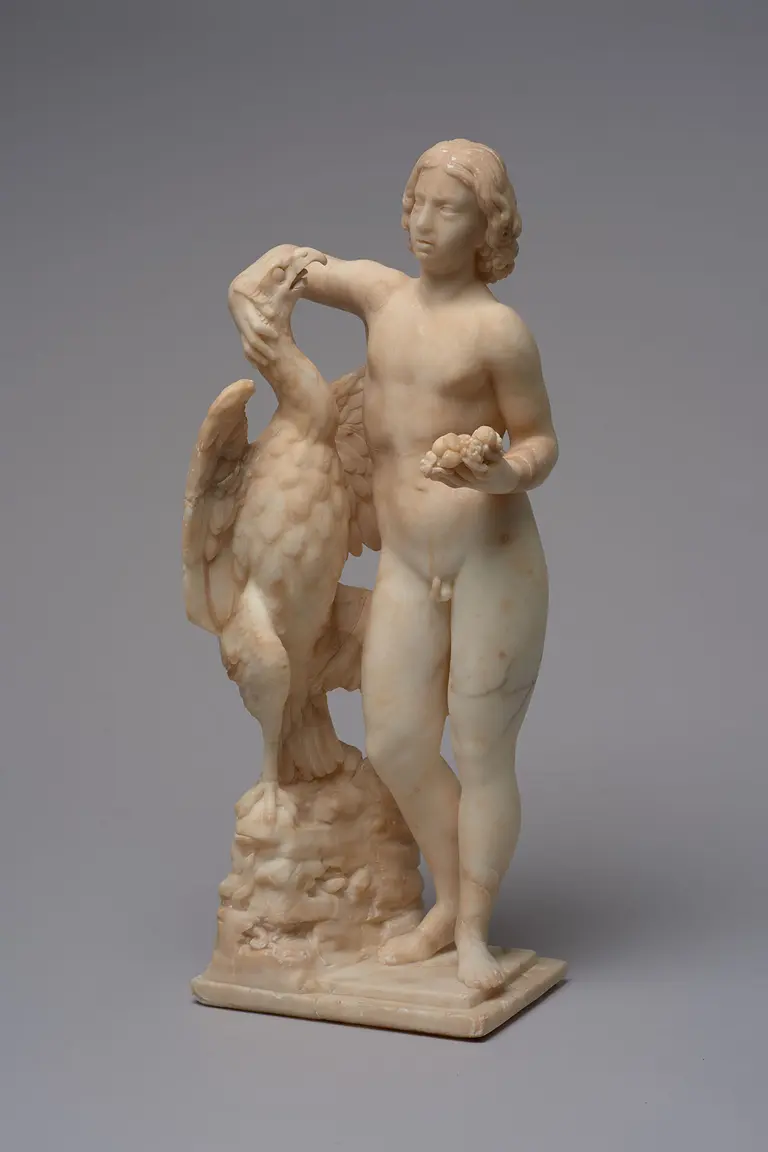
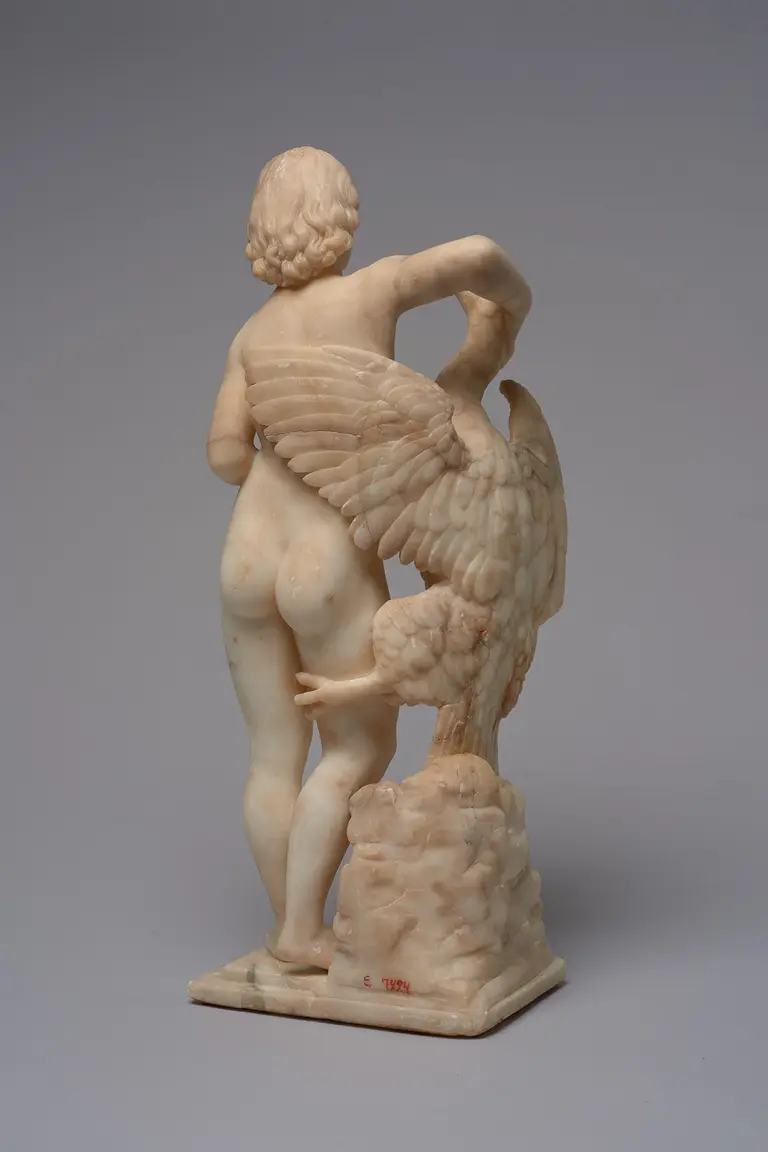
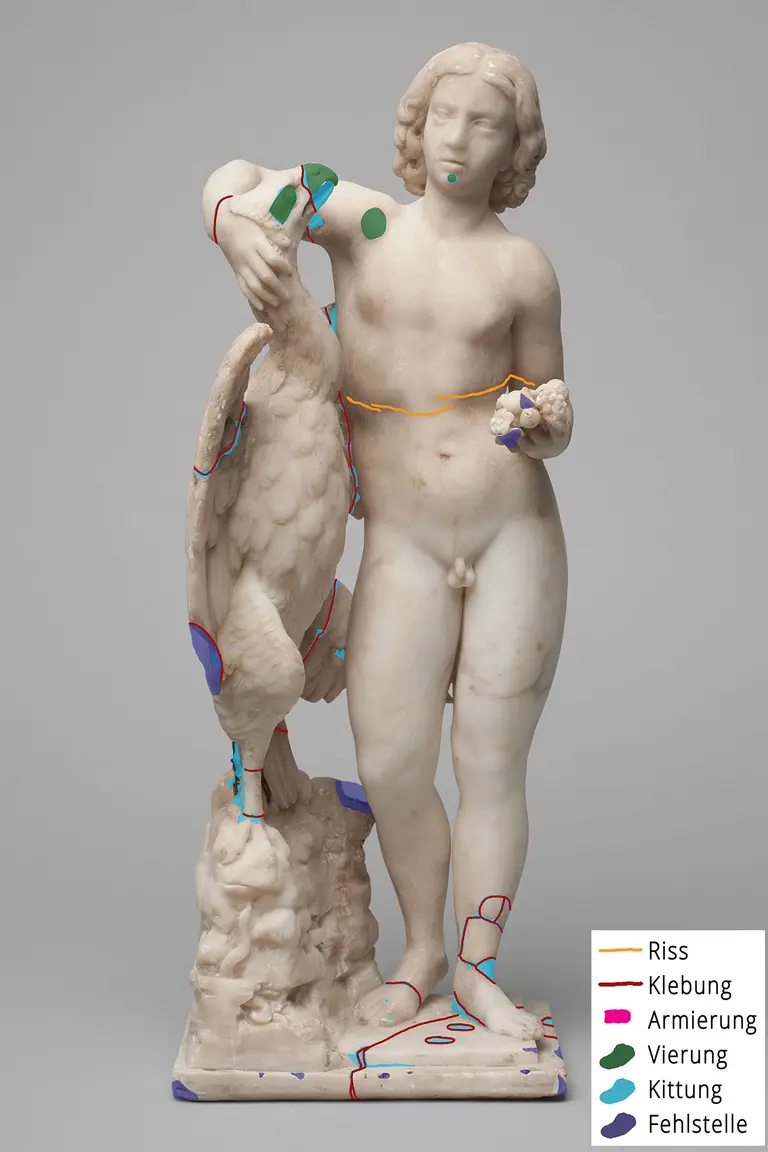
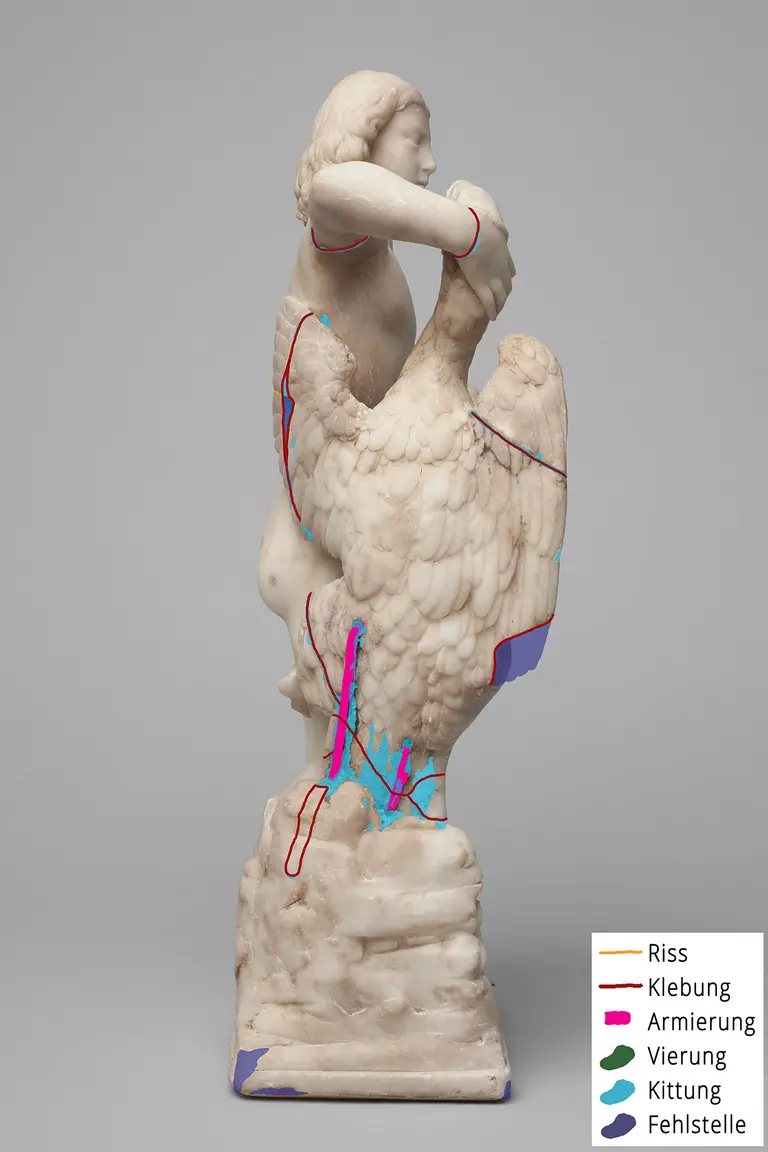
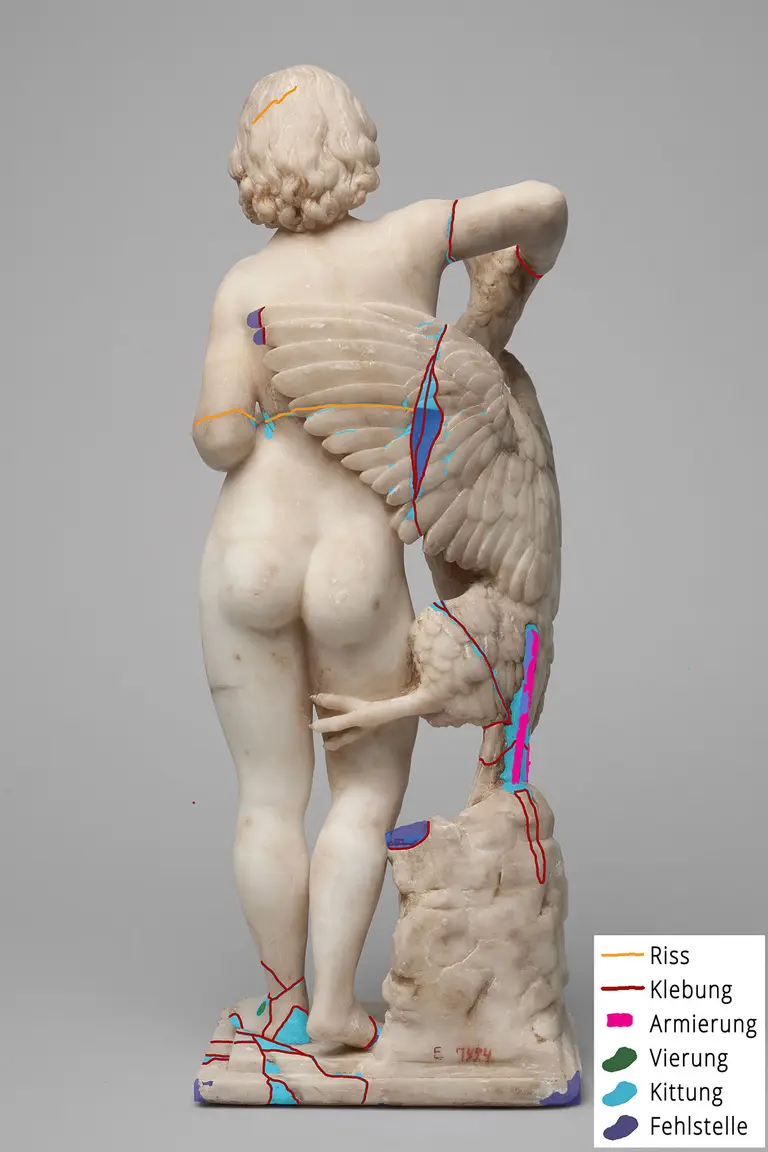
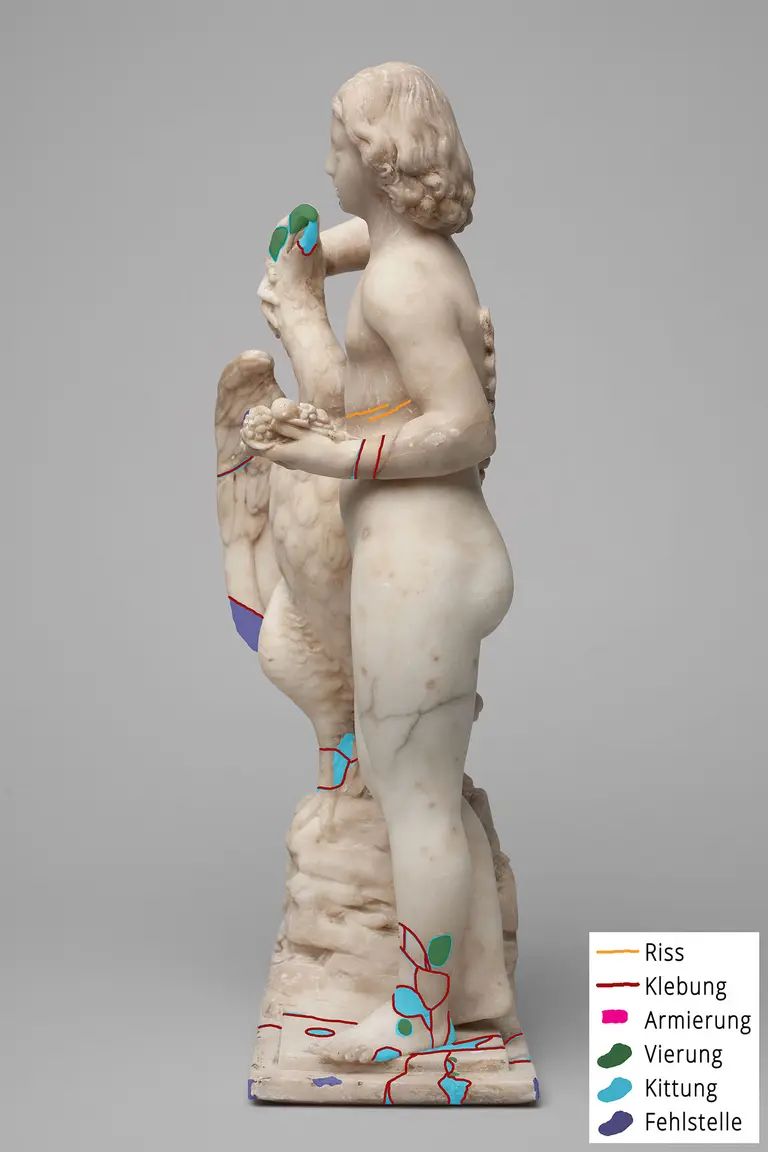
Before embarking on the conservation and restoration intervention, we carried out a comprehensive examination of the object and compiled a detailed condition report. This mapping documents some of the existing damages that will be discussed in more detail in the following texts and pictures.
The surface is soiled, scratched and degraded in areas where contact with water has resulted in alabaster crystals becoming detached from the mineral.
Some of the cracks – indicated in orange in the mapping – may be traced back to natural separation planes in the rock. They may also be the result of tensions caused by earlier repairs. Discoloration along the cracks is probably the result of earlier consolidation attempts.
We believe there were at least four earlier restorations. Entries in the museum’s restoration books and old photographs suggest that all repairs comprising gluing cracks and/or filling them with putty were carried out before 1900.
At present, a total of 19 fragments are held together with glue and reinforcements. Examinations using GC/MS (an analytical method to identify organic compounds) identified rosin (also known as colofony, a solid form of resin obtained from pines), which was used in some places as a glue to reattach fragments that had broken off. The resulting losses were then filled with a variety of putties.
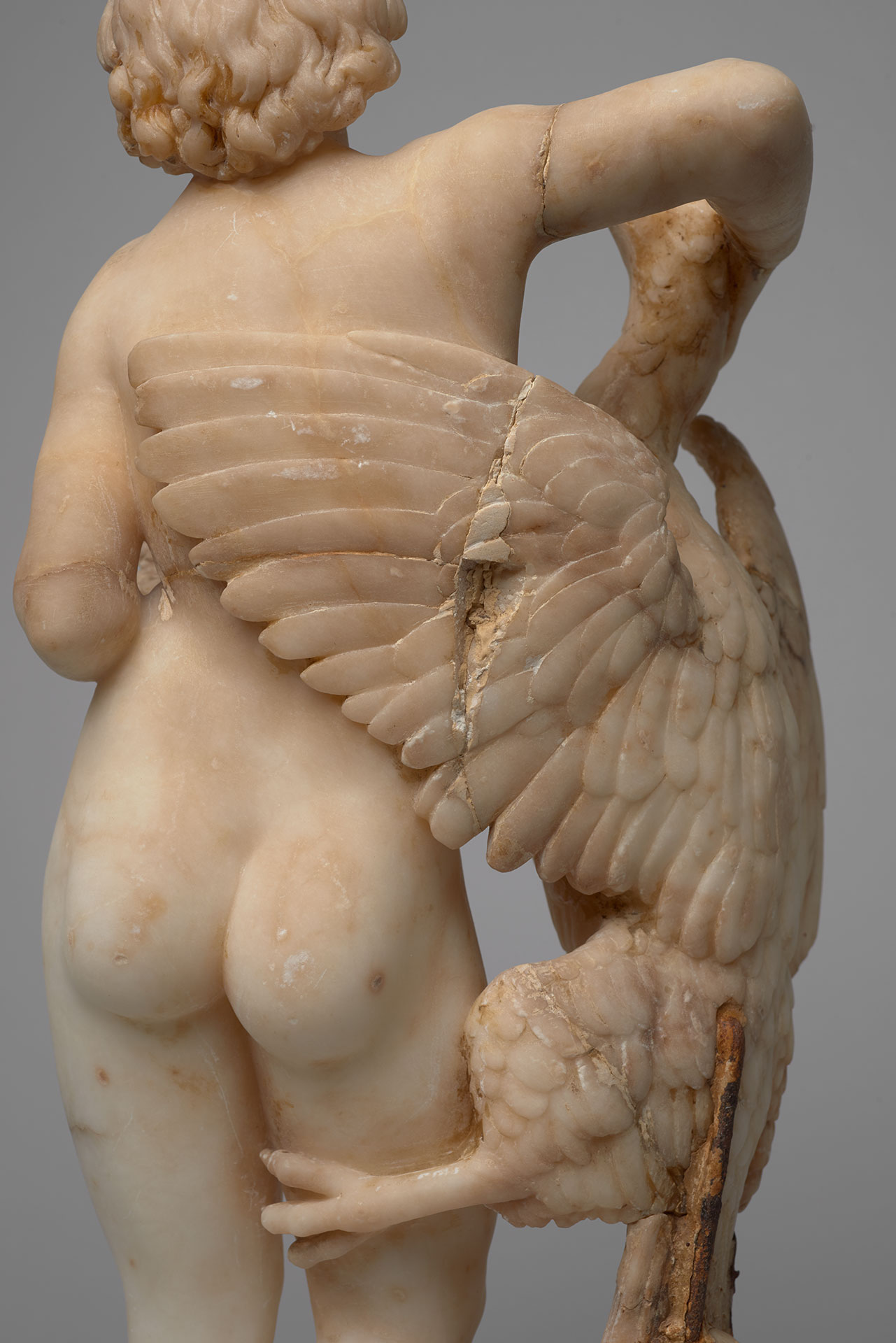
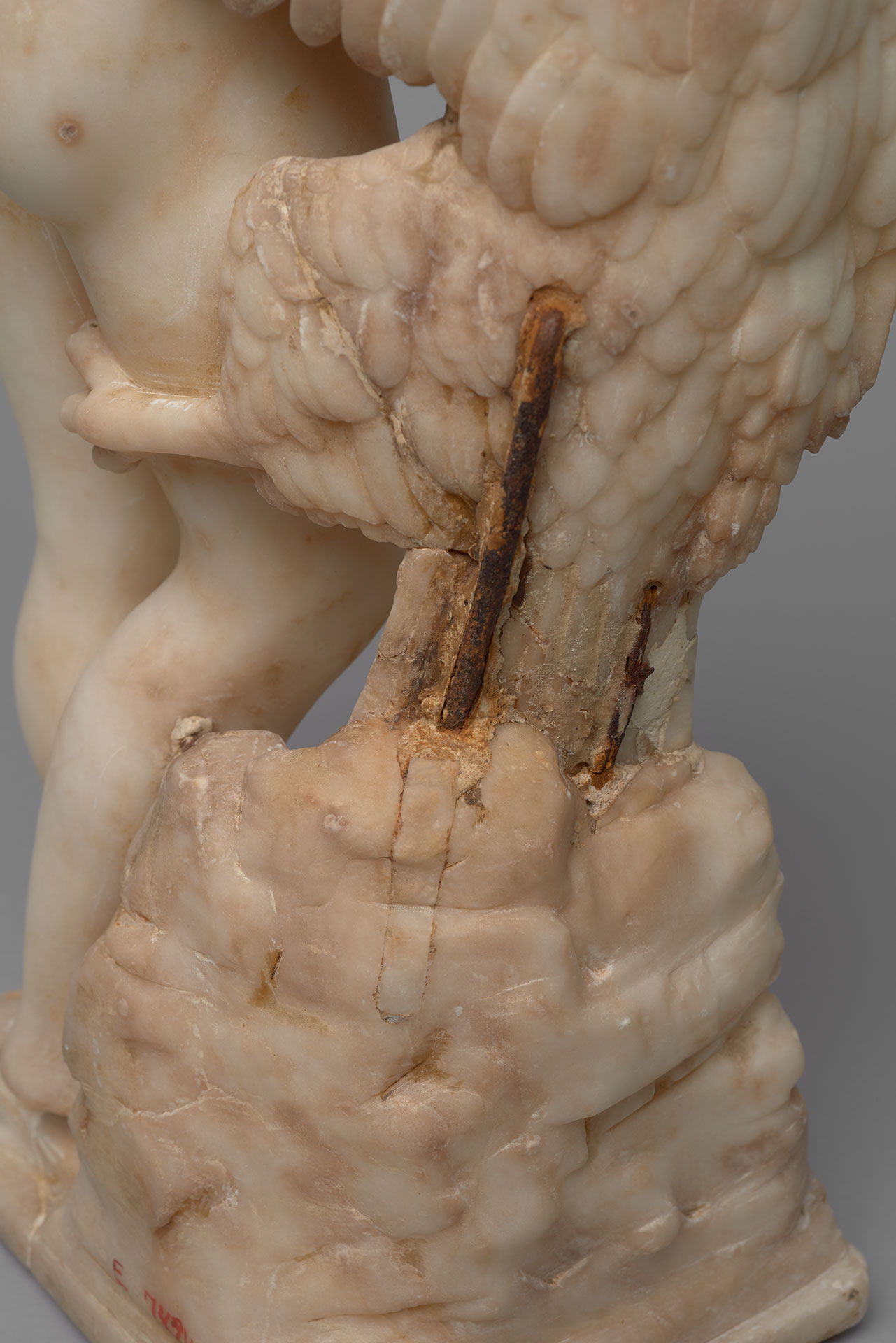
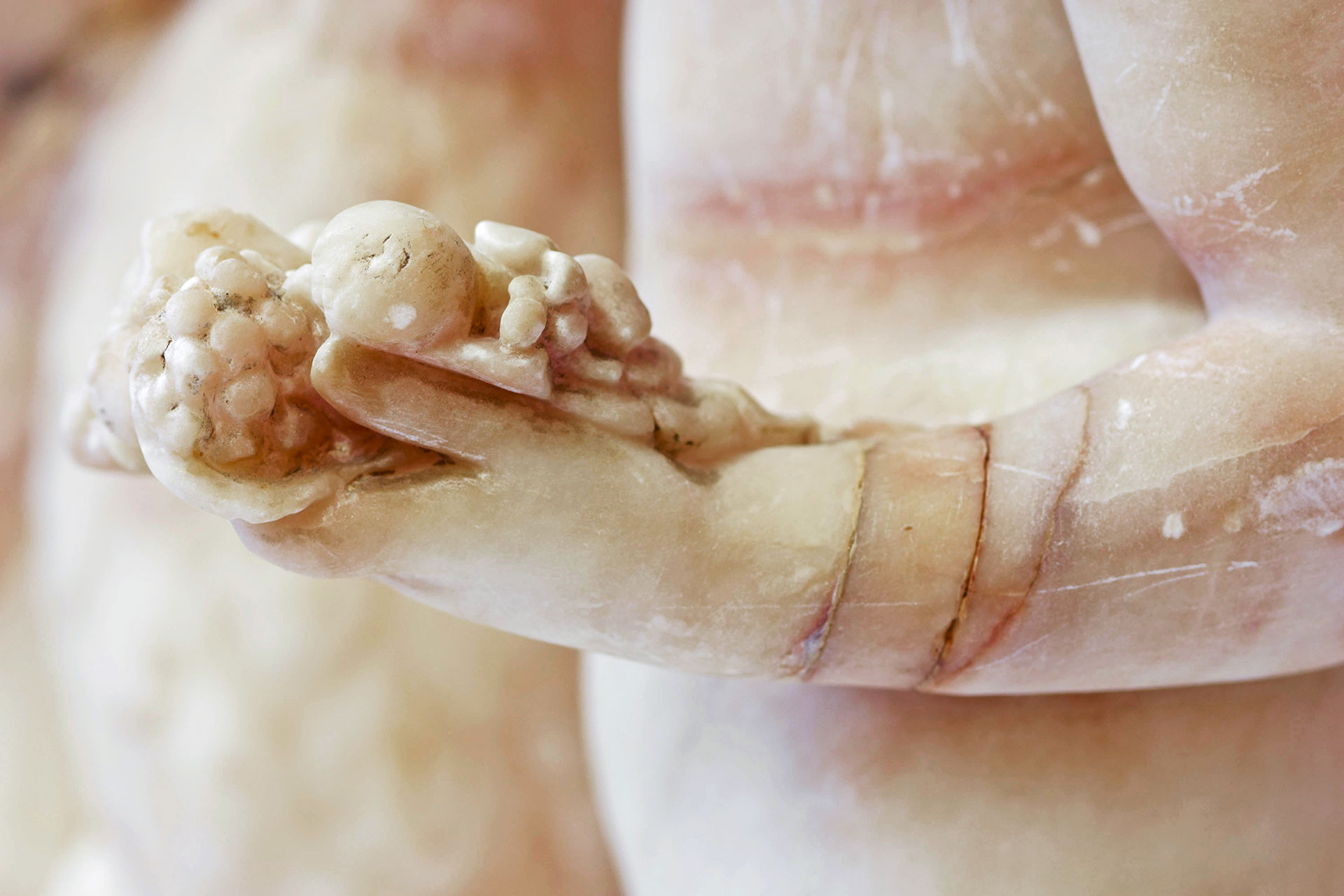
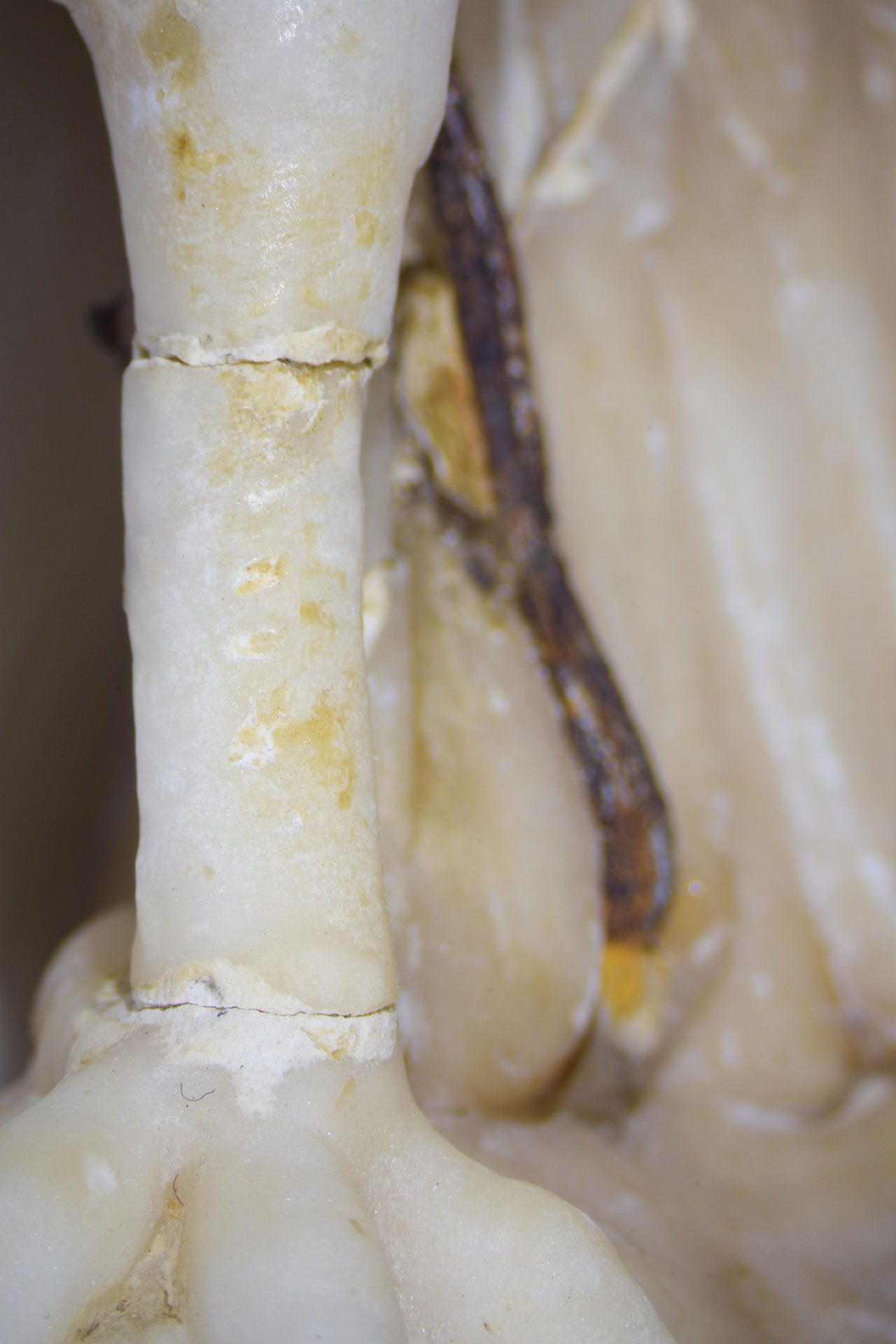
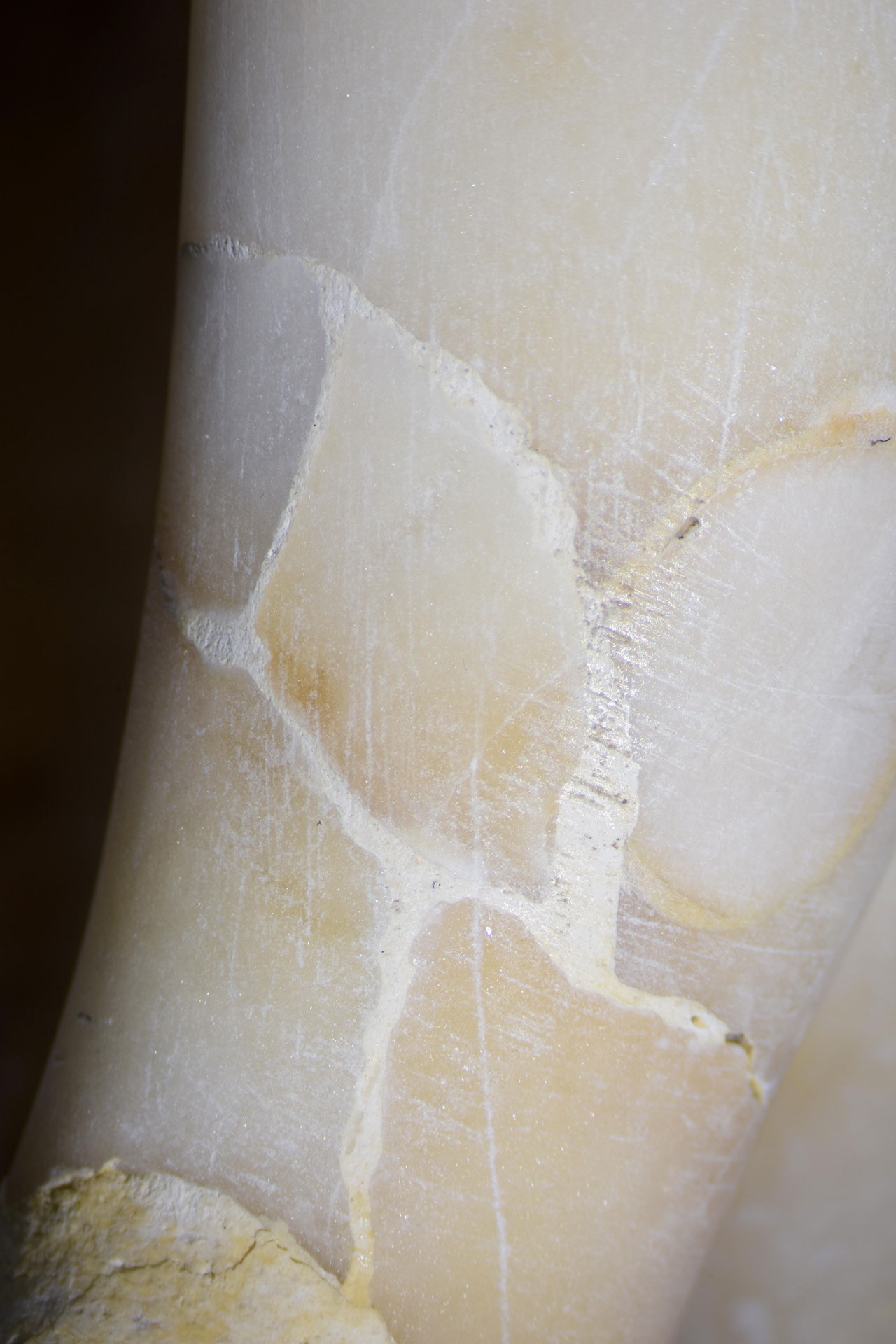
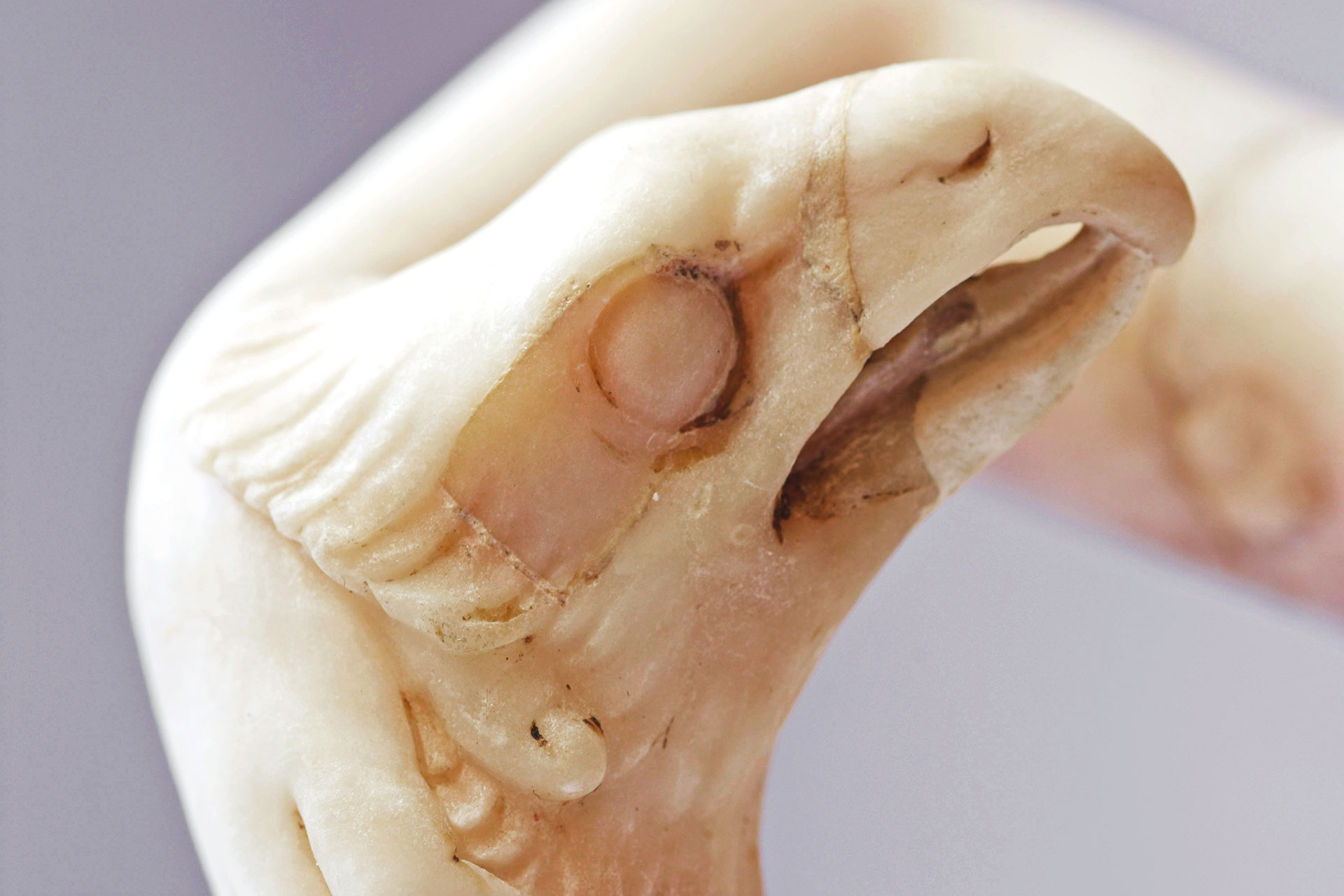
The numerous breakages and losses can be traced back to at least three major incidents. The extent of damages is shown in the mapping.
Some of the damages can be traced back to old gluings and fillings-in. Some reattached pieces were not fitted properly, distorting the object’s appearance. In some places the edges of a breakage were touch-sanded, resulting in a loss of material and the alteration of the original surface.
We can also identify seven stone replacements. These are losses that have been replaced using alabaster. Some of these inserted pieces of alabaster may have come from the statuette and were then used to repair natural losses in the mineral. This is most obvious in the case of the circular or oval stone replacement, but also in the eye of the eagle, where we cannot identify a prior loss or damage, suggesting they may have been inserted by the artist who produced the figure. Other additions are probably the result of earlier repairs. Note one such example on the beak: both its lower and upper part were missing and were replaced; the lower part was modelled in putty but the upper part was carved from a piece of alabaster.
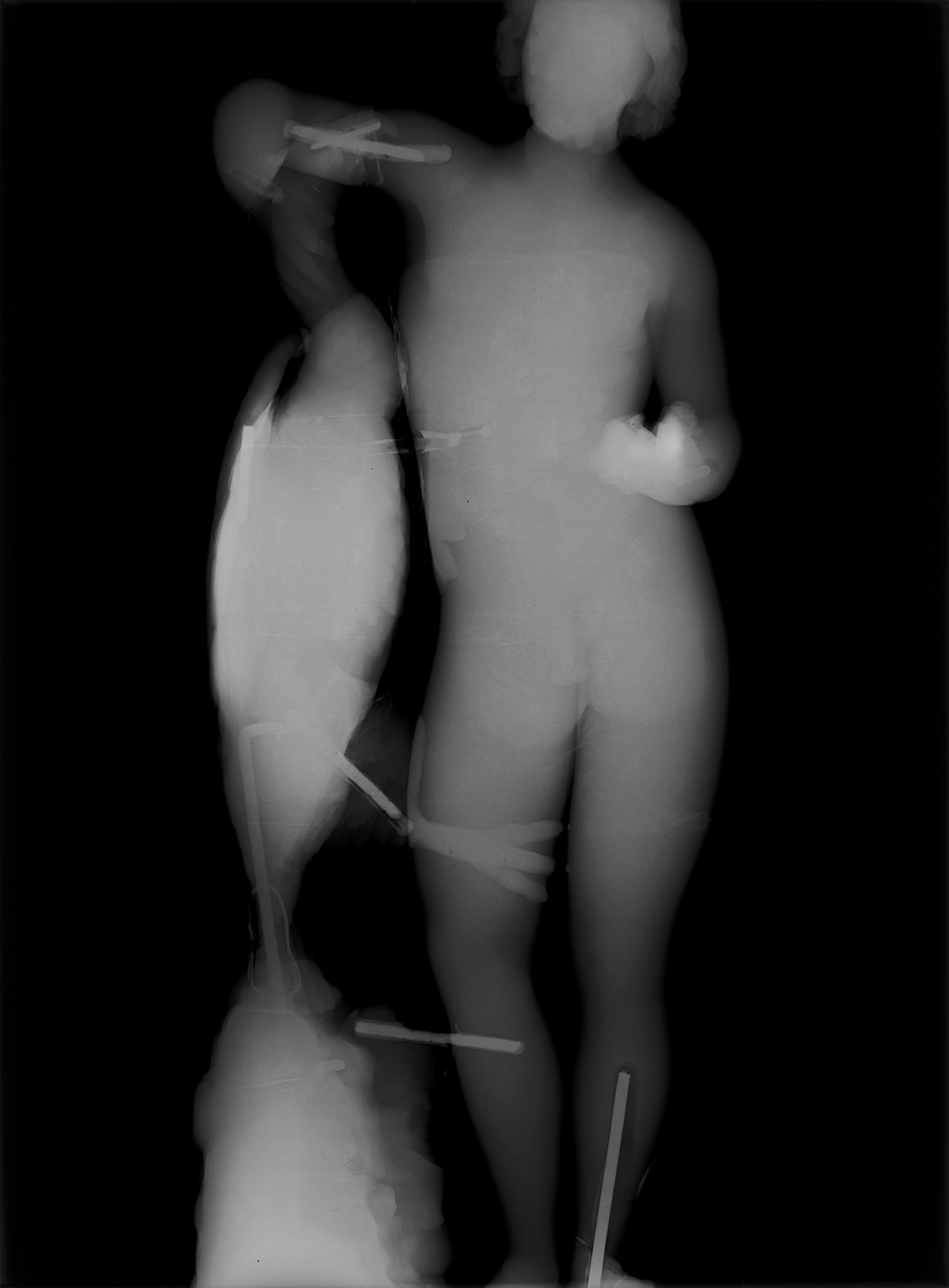
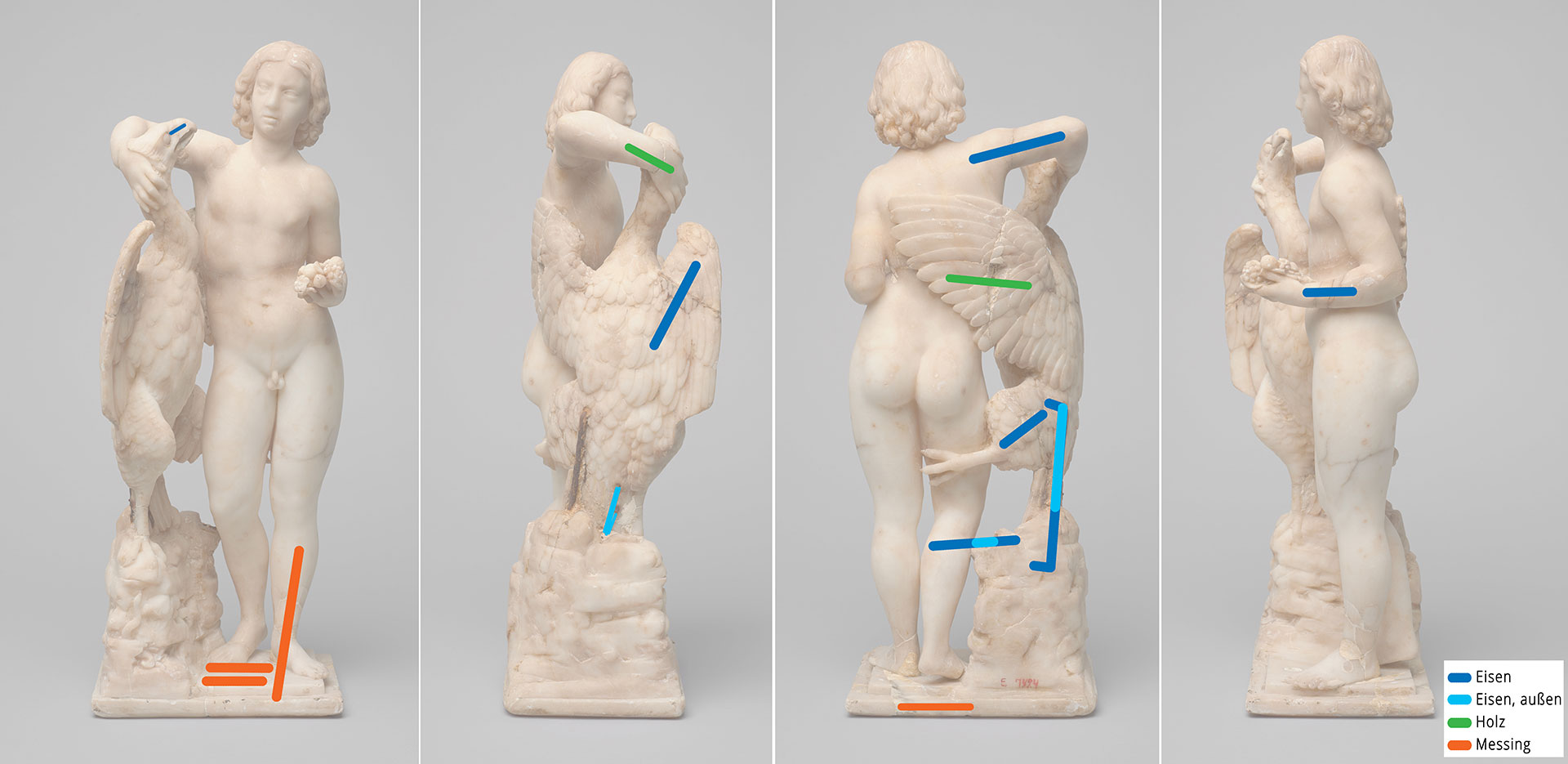
In addition to gluings, some of the breakages were repaired with reinforcements. X-rays show that they were drilled into the alabaster. These findings and a visual examination suggest that three different materials were used for these reinforcements, which are indicated in this mapping.
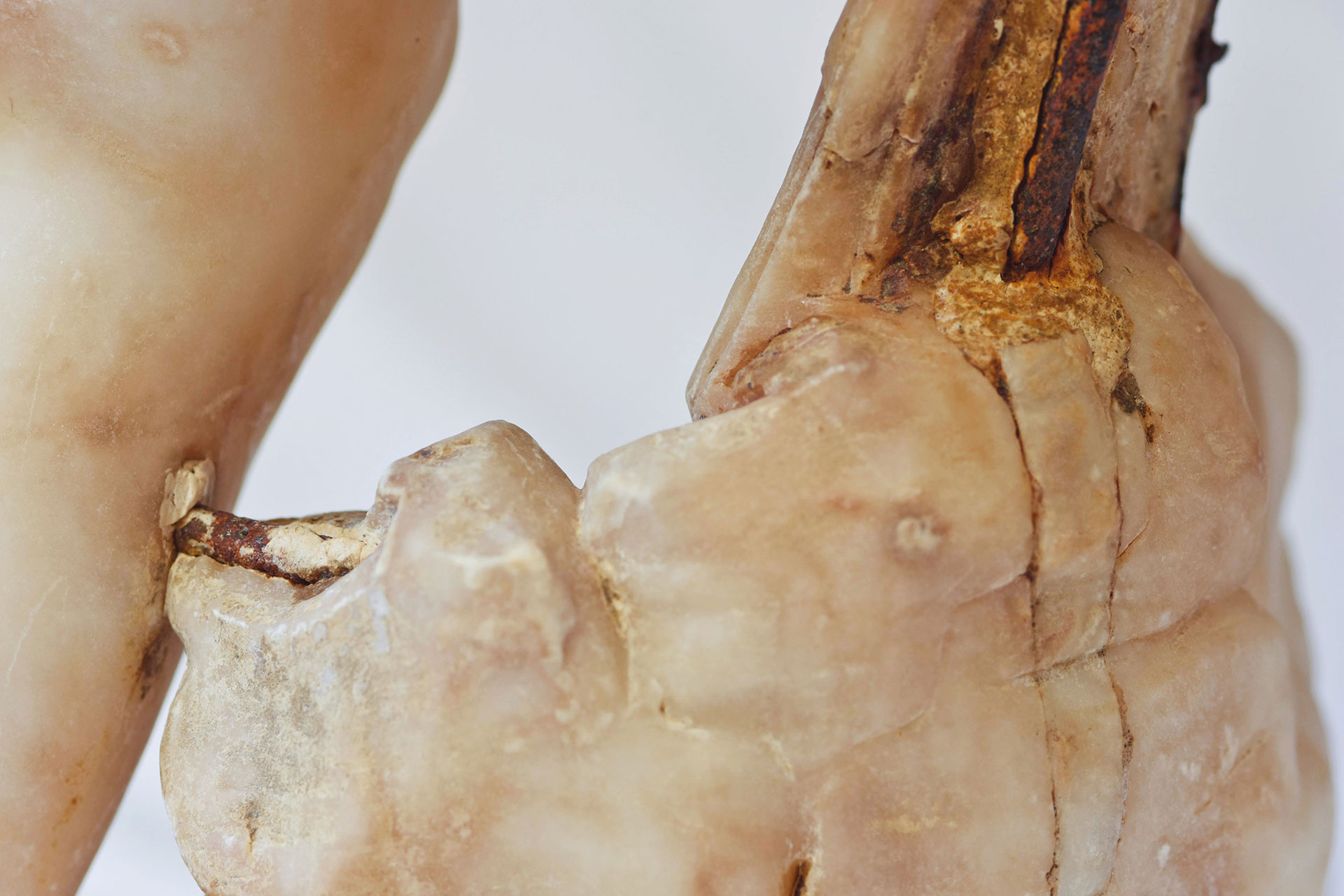
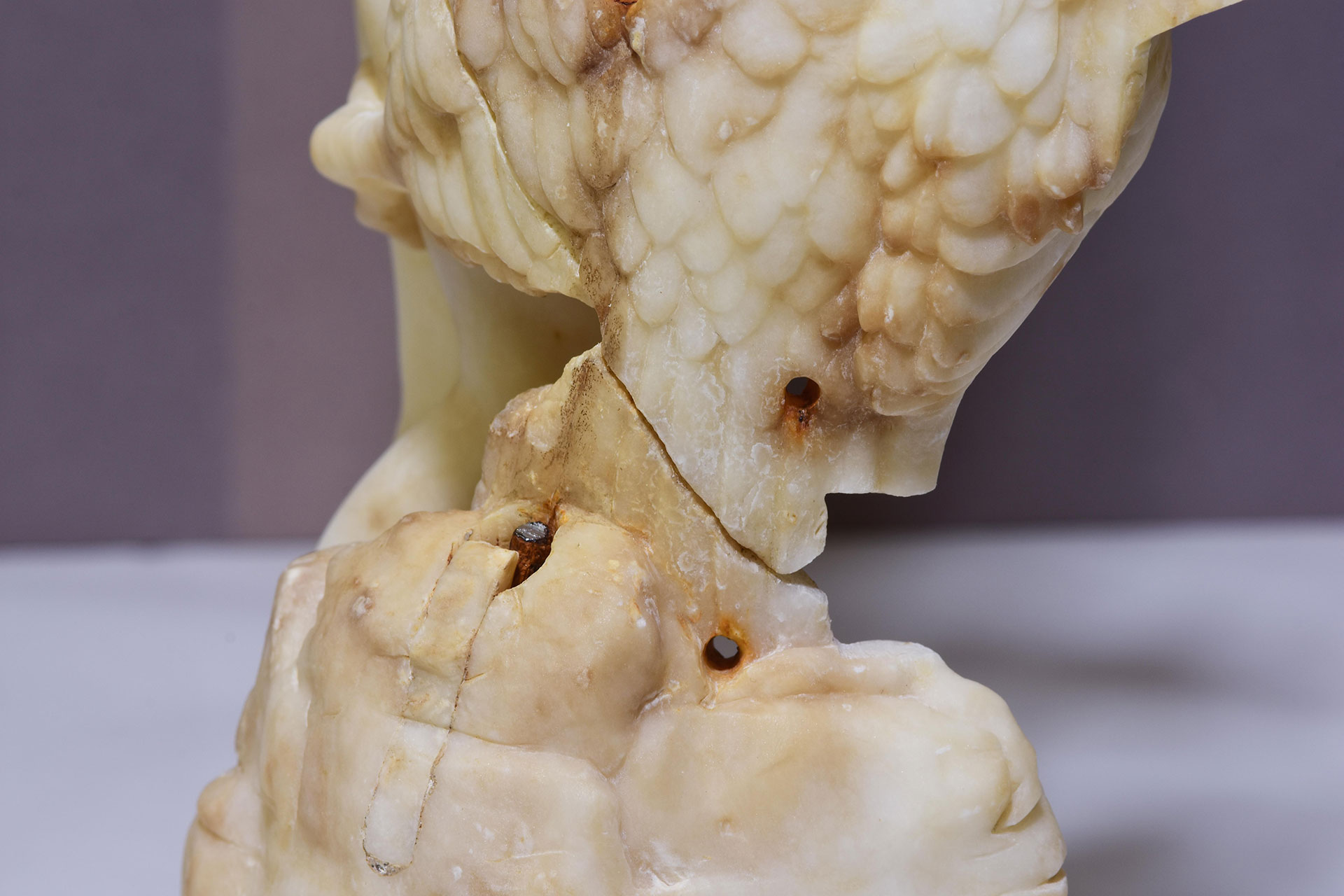
Most of the reinforcements are made of iron. In addition to classical reinforcements, which are completely hidden inside the object, the anonymous restorer also employed a visible clasp and wire for thinner areas such as the eagle’s “tail”. Two reinforcements are made of wood. In the X-rays we can easily differentiate between wooden and metal dowels, because only iron ones are clearly visible. A third material was used for reinforcements at the base, next to Ganymede’s feet. In the X-rays the clear straight edges of the brass dowels contrast with the corroding iron dowels. We may assume that these are the most recent reinforcements, carried out independently from the others and thus the result of a different incident in which the statuette was damaged.
These reinforcements were massive interventions requiring drilling that resulted in the loss of original material. Some damages (cracks, breakages and losses) can also be attributed to them. The iron reinforcements especially are potentially hazardous as the material can corrode. They also discolour the mineral. Corroding iron increases in volume, creating the danger of tension in the soft alabaster, which may even cause new cracks or breakages.
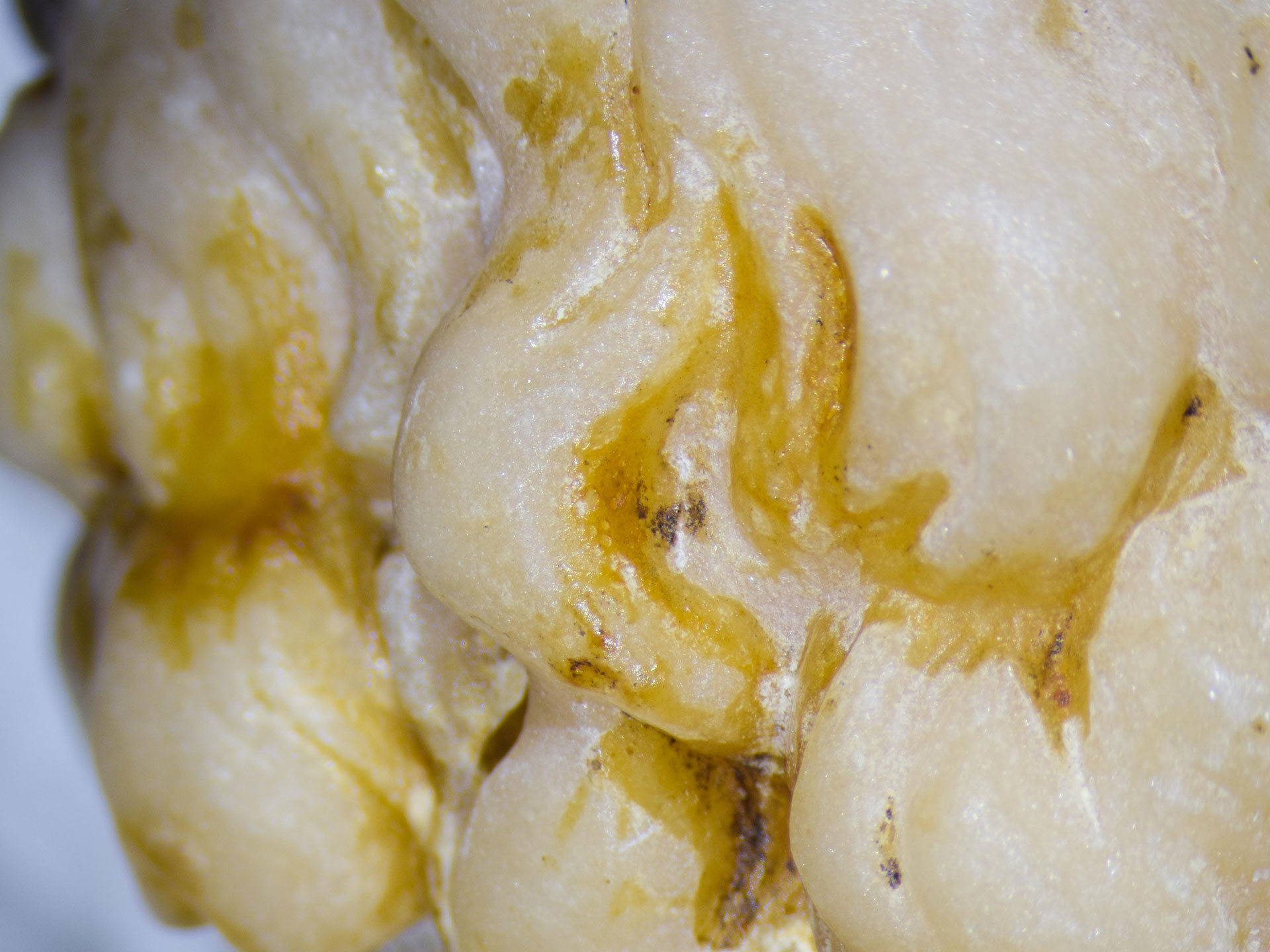
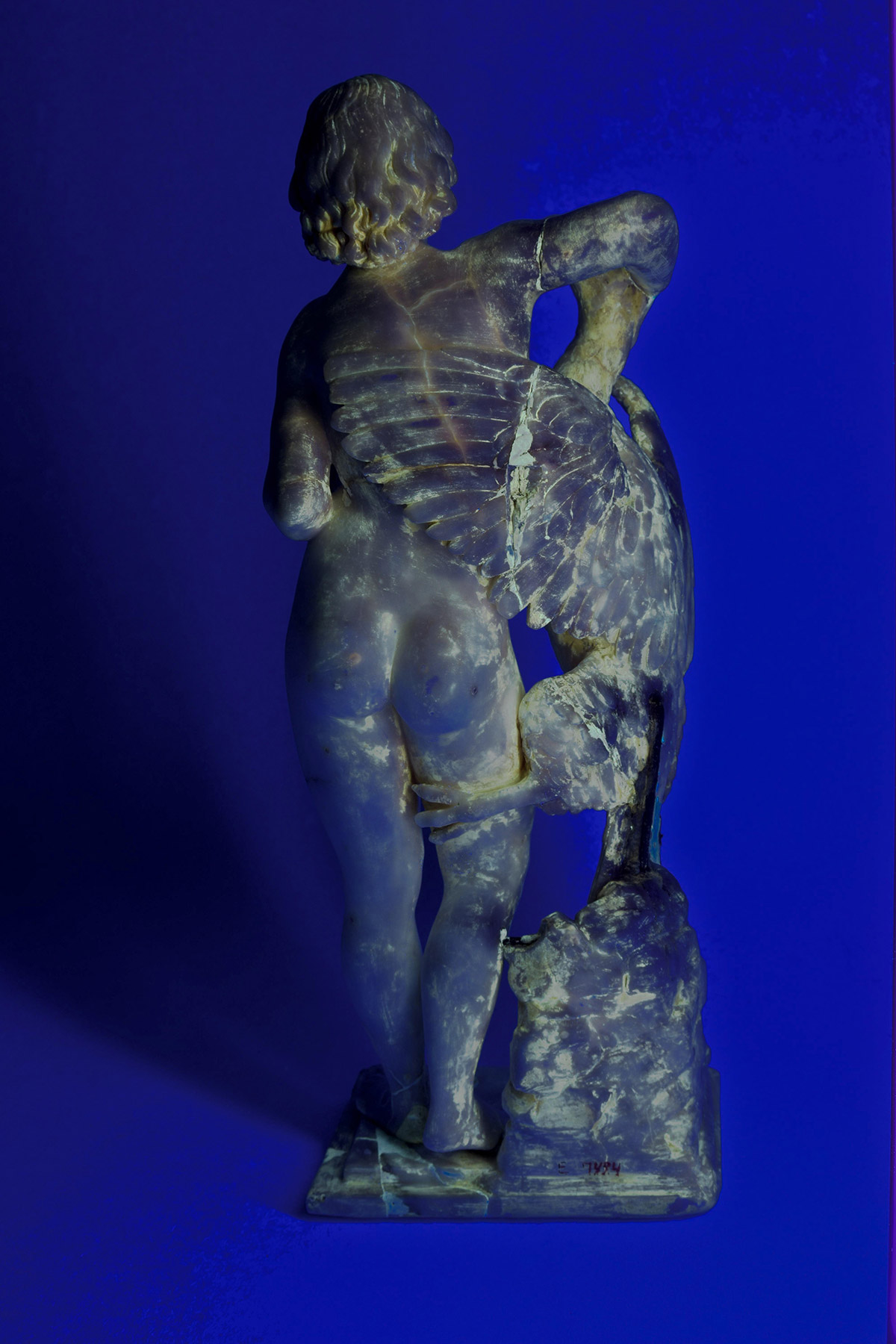
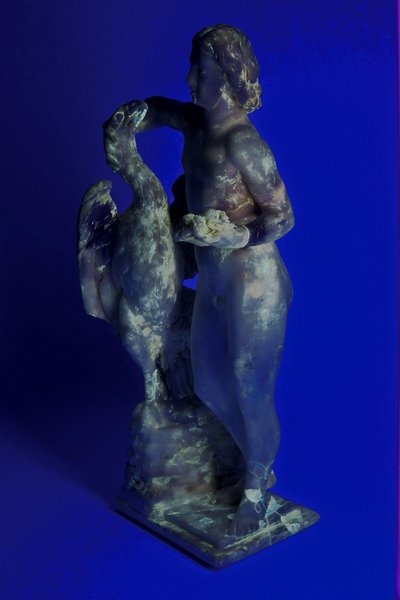
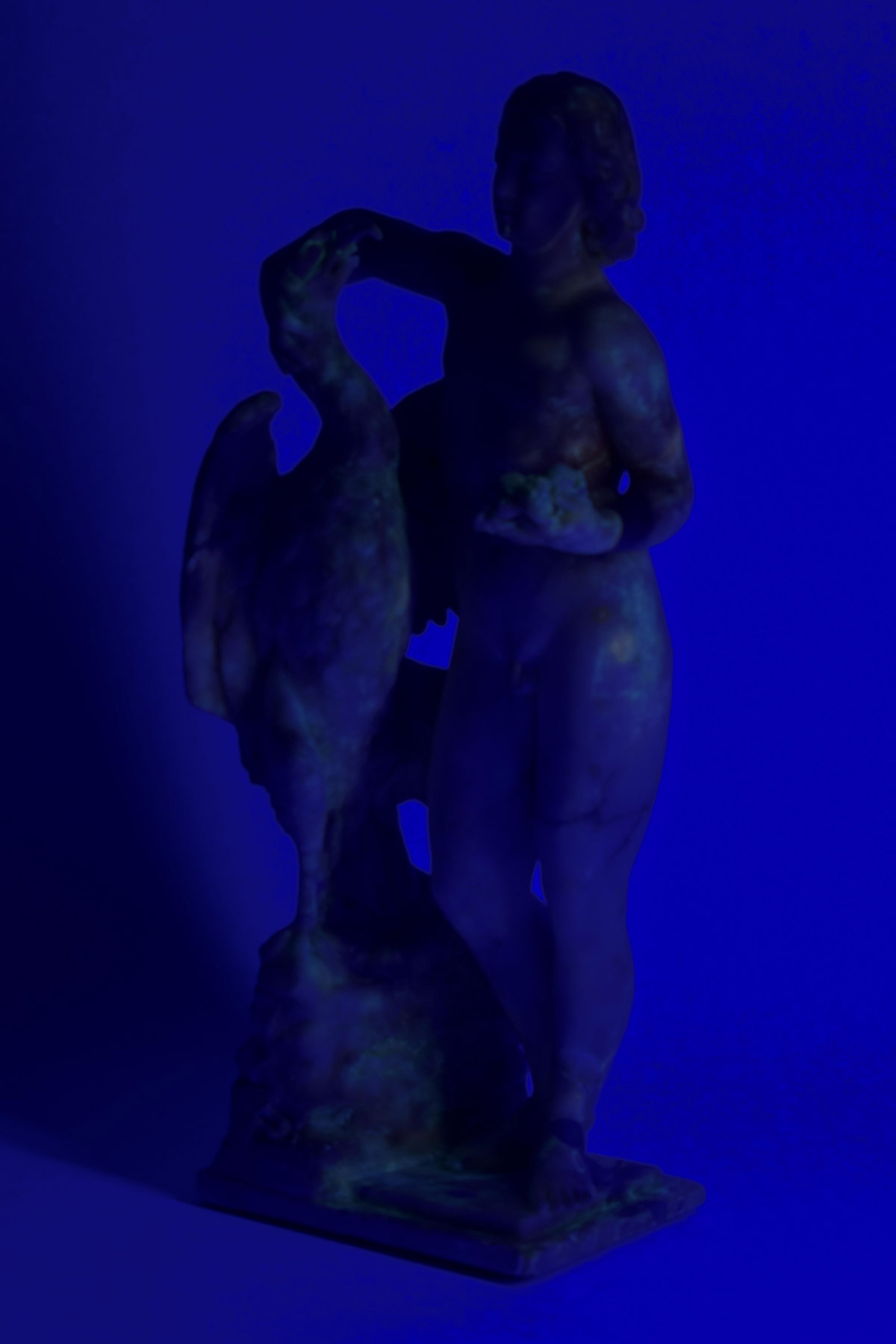
The entire surface of the statuette was covered with a residual yellowish film left over from some earlier restoration. This resulted in a mottled and distorted appearance and bore the danger that the presence of unknown materials might trigger chemical-physical processes in the alabaster.
An analysis of these residues using GC/MS has shown that the film probably consisted of bees’ wax mixed with a dry oil containing traces of resin (colofony).
An examination of the figure in UV-light told us more about its condition. The residual organic film and the various putties luminesce in different hues. In areas with iron dowels the normally pale translucent alabaster turns black. This phenomenon can be explained by iron molecules entering the porose structure of the rock.
Based on the findings of visual and analytical examinations, we devised a concept for the necessary conservation and restoration interventions; the work took around six months in total.
One of the first conservation measures we undertook was to remove the residual film. The appropriate mix of solvents and the use of a system of compresses proved successful, as documented by the before and after images of the statuette taken in UV-light.
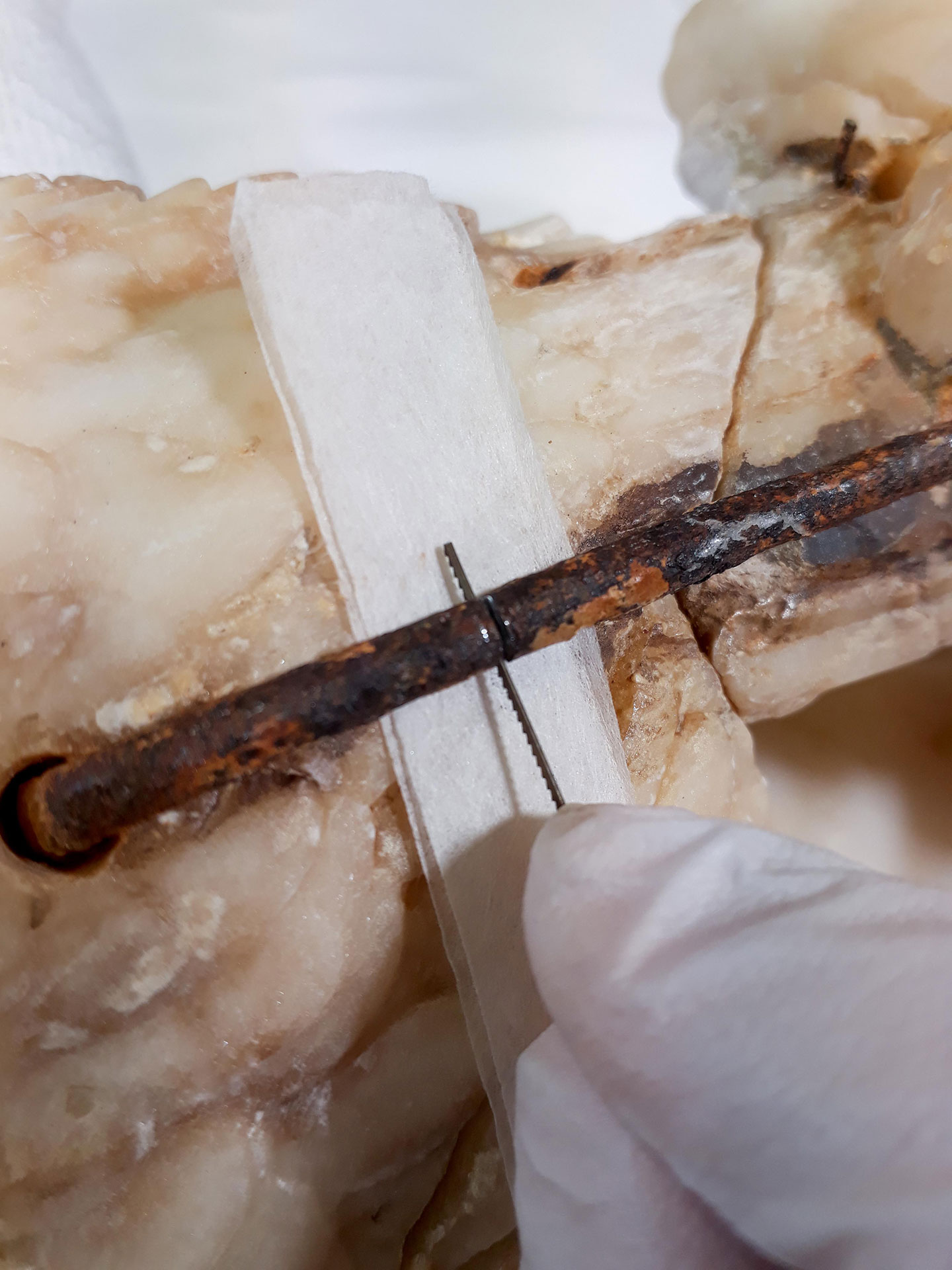
The danger to the object caused by the corroding iron meant we had to remove gluings and reinforcements. The iron dowels were carefully cut using tiny saw blades.
As far as possible we removed all old putties, glues and iron reinforcements. However, before every intervention to repair a breakage or remove a reinforcement we had to evaluate the respective dangers of acting and not acting. This is why some gluings and reinforcements remain.
The fragments were then glued together again using a synthetic state-of-the-art glue.
In order to create a homogenous appearance, we decided to replace some of the losses. Both the recipe for the material used and the method of application were the result of a series of tests: it needed to be similar in colour and transparency to the original alabaster but also to be reversable and to age well.
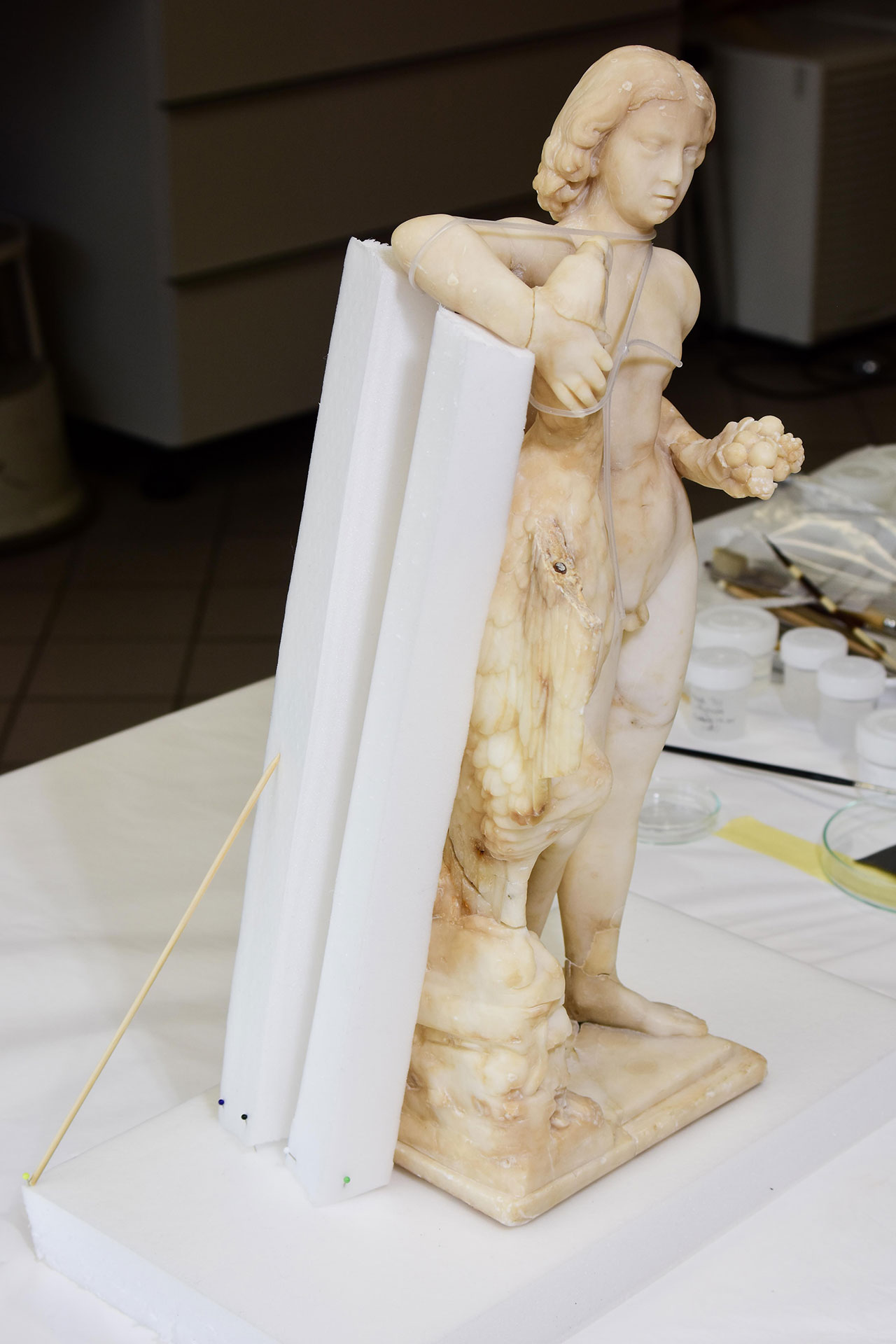
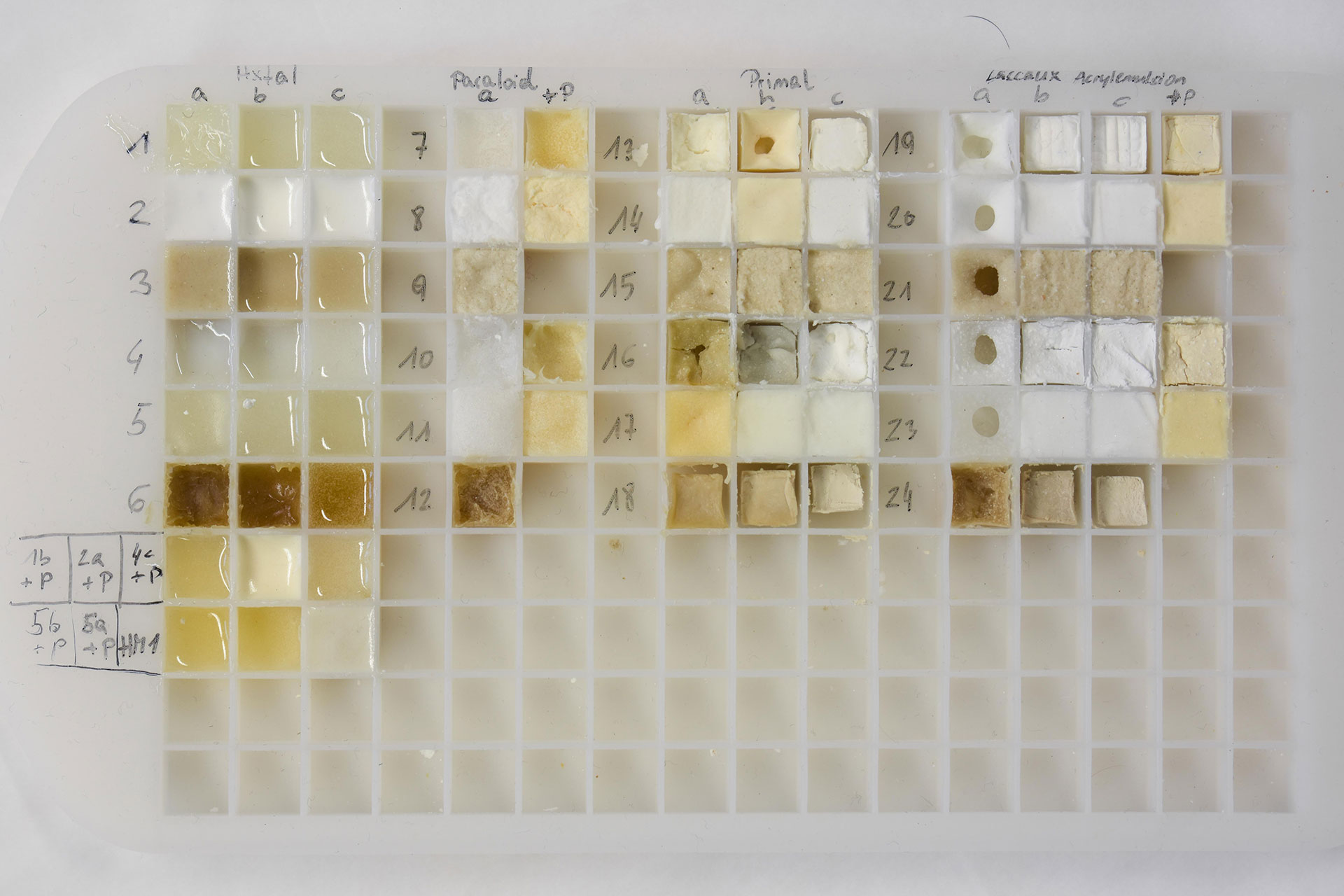
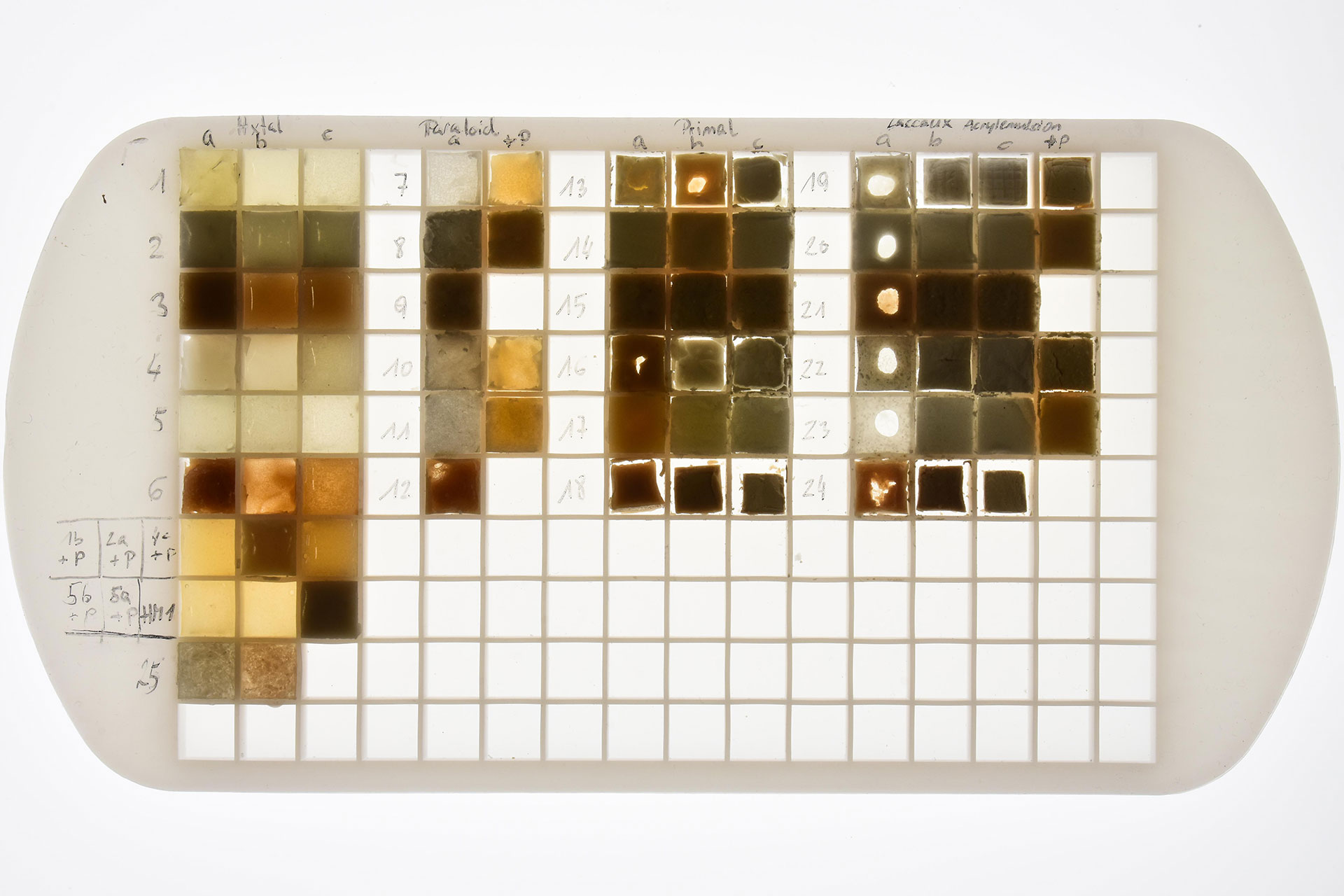
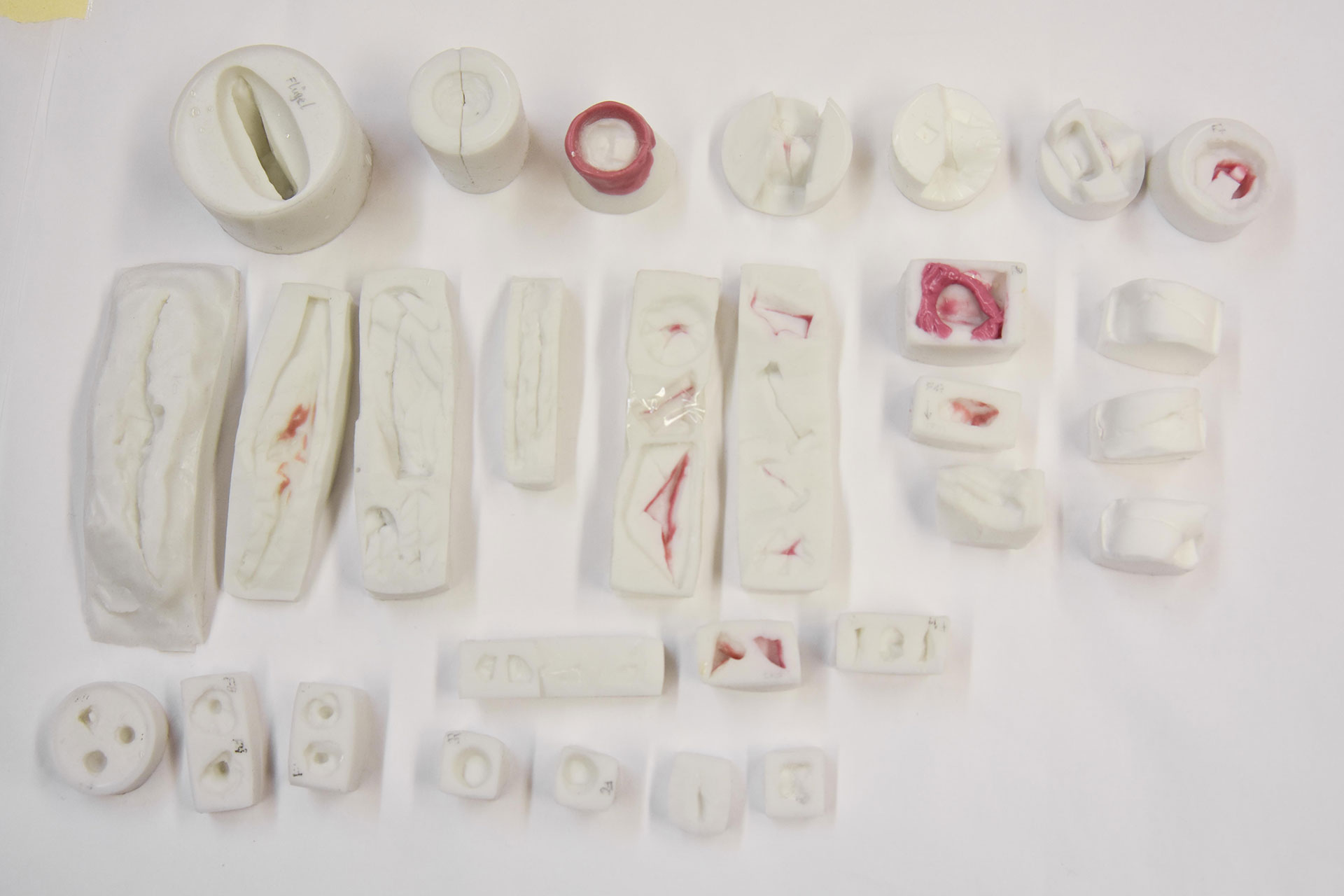
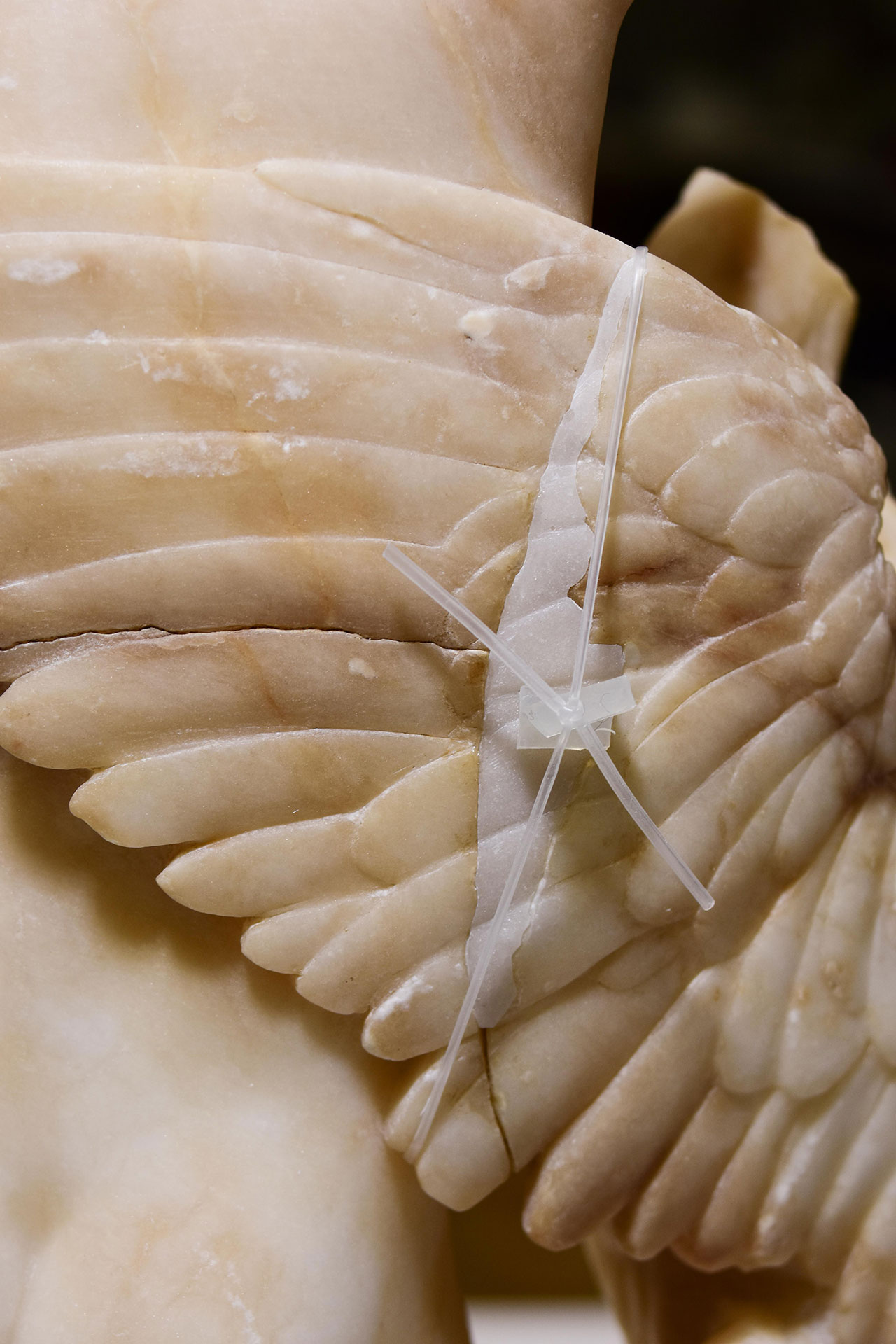
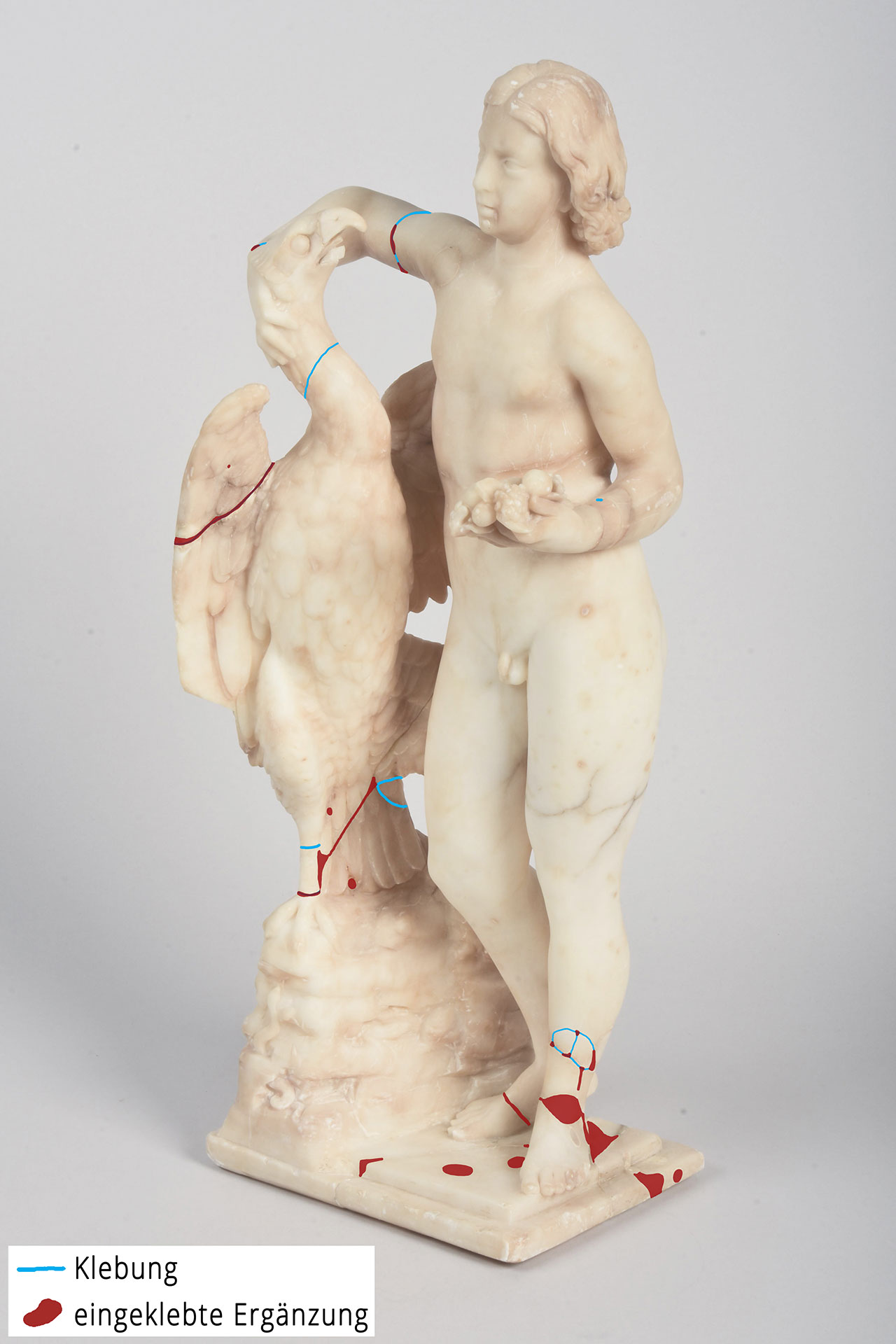
For every loss we produced an individual silicone negative form to cast the required replacement in the bespoke material developed in the series of tests.
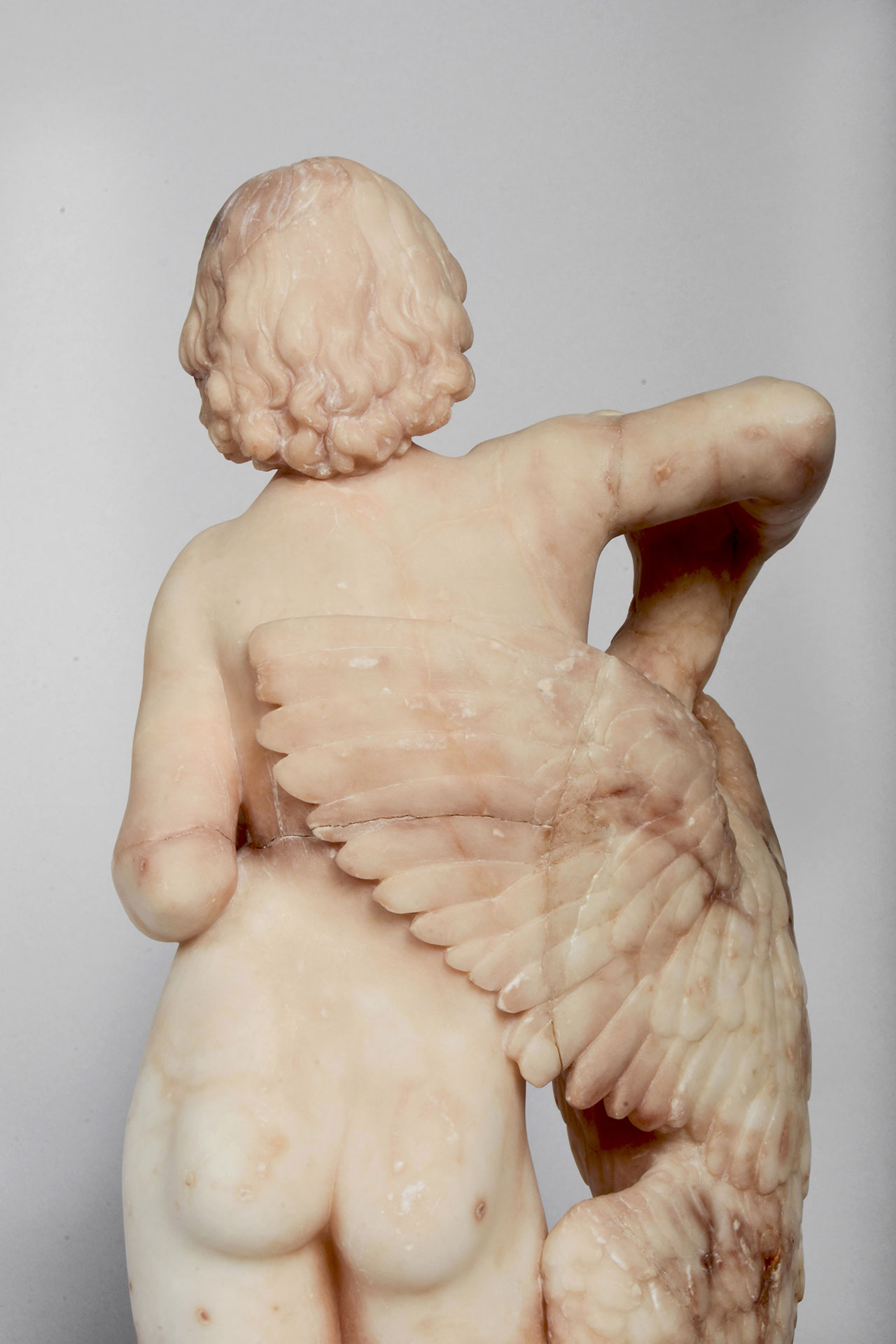
Once a separately-cast replacement had dried and hardened, it was carefully fitted and glued in place and then retouched.
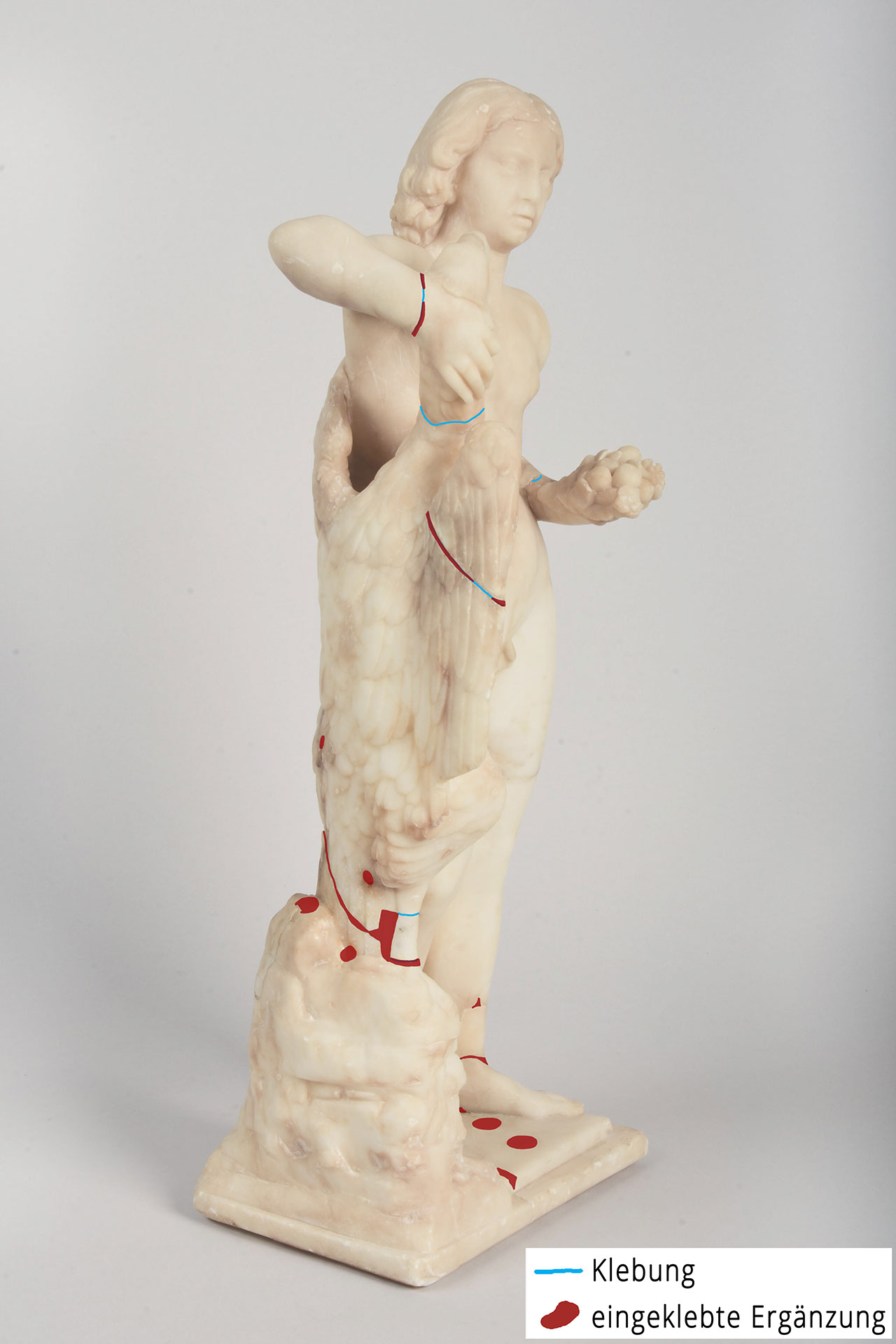
Mapping documenting all the gluings and replacements carried out during our conservation and restoration intervention.
The object before (left) and after (right) the conservation and restoration intervention.
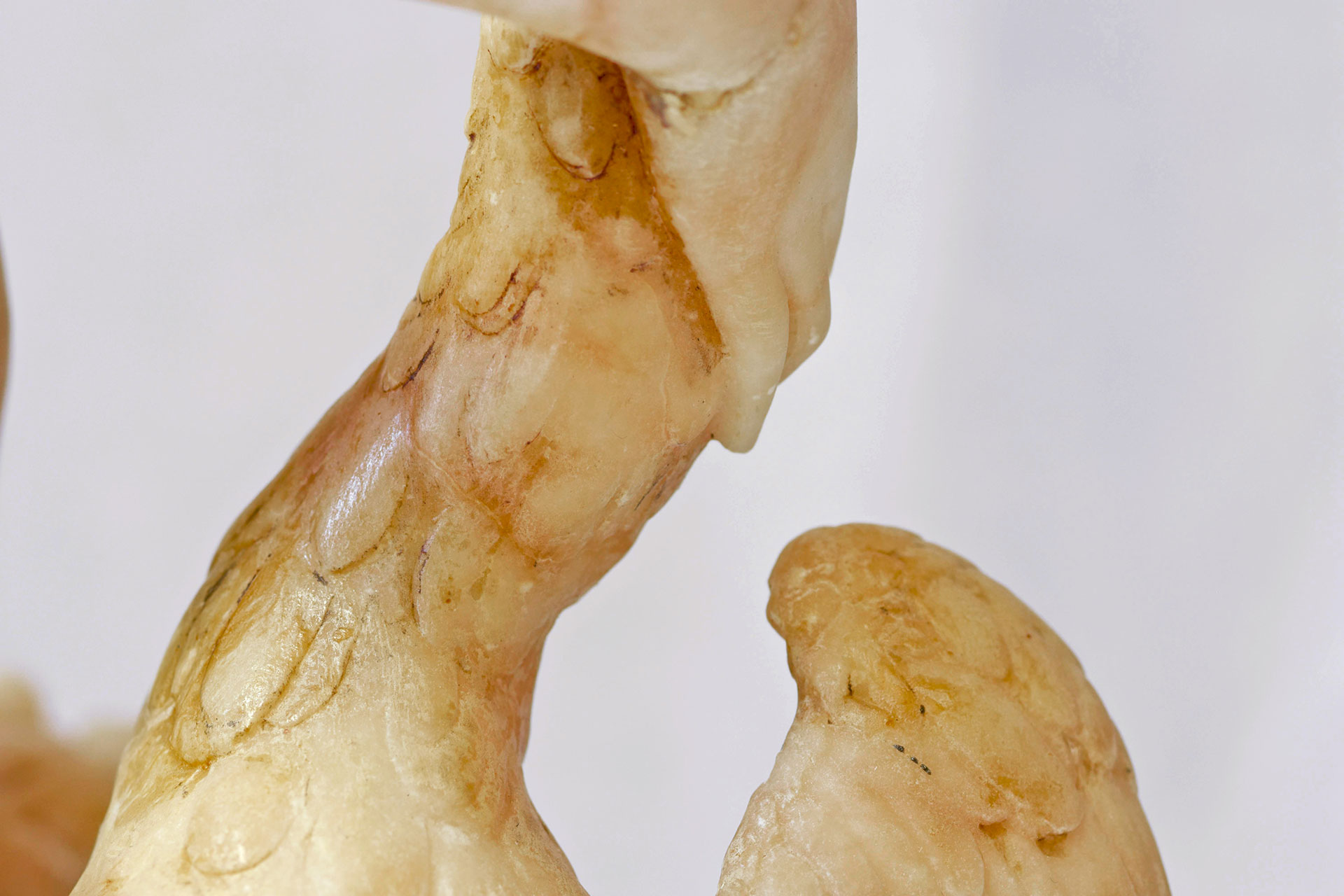
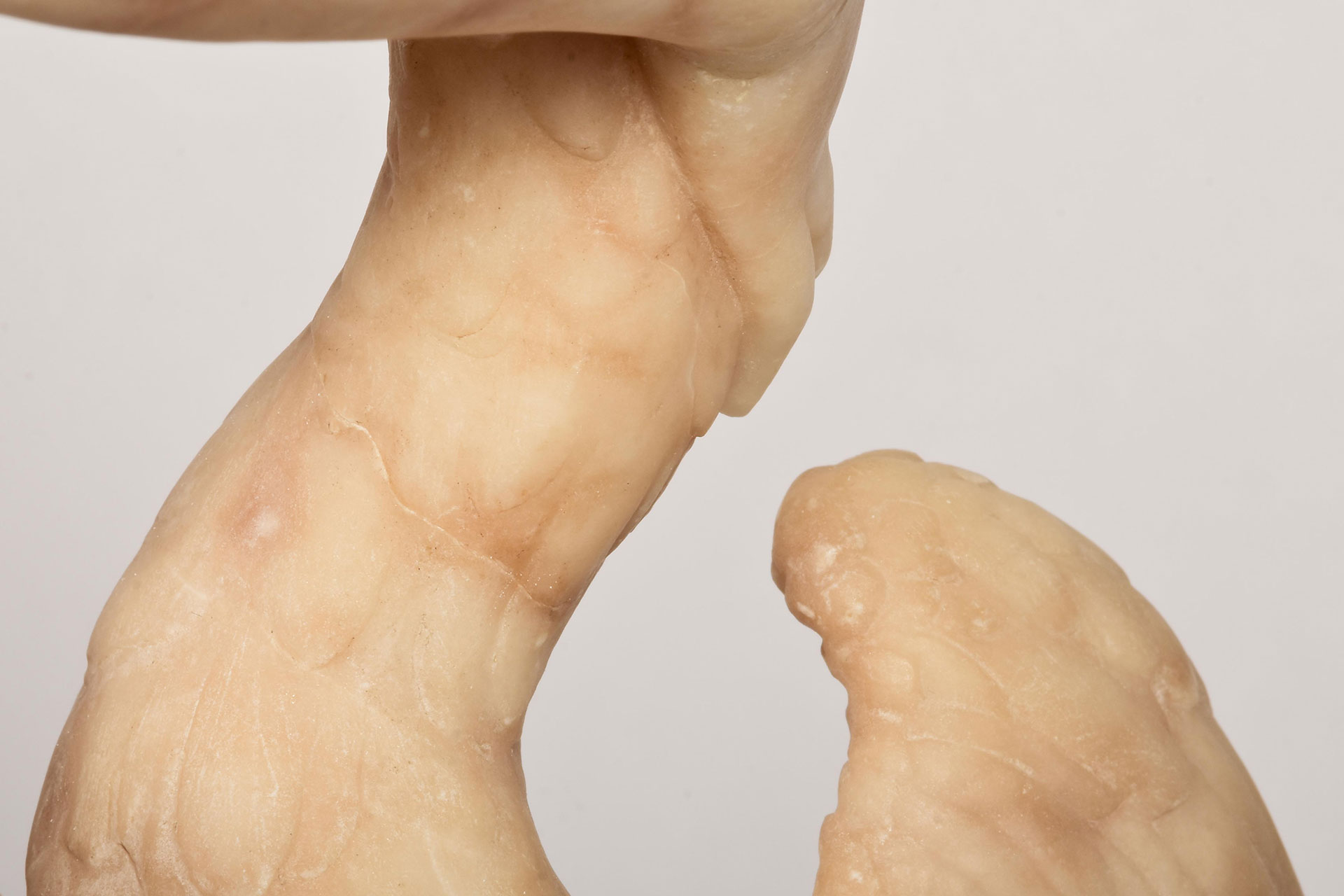
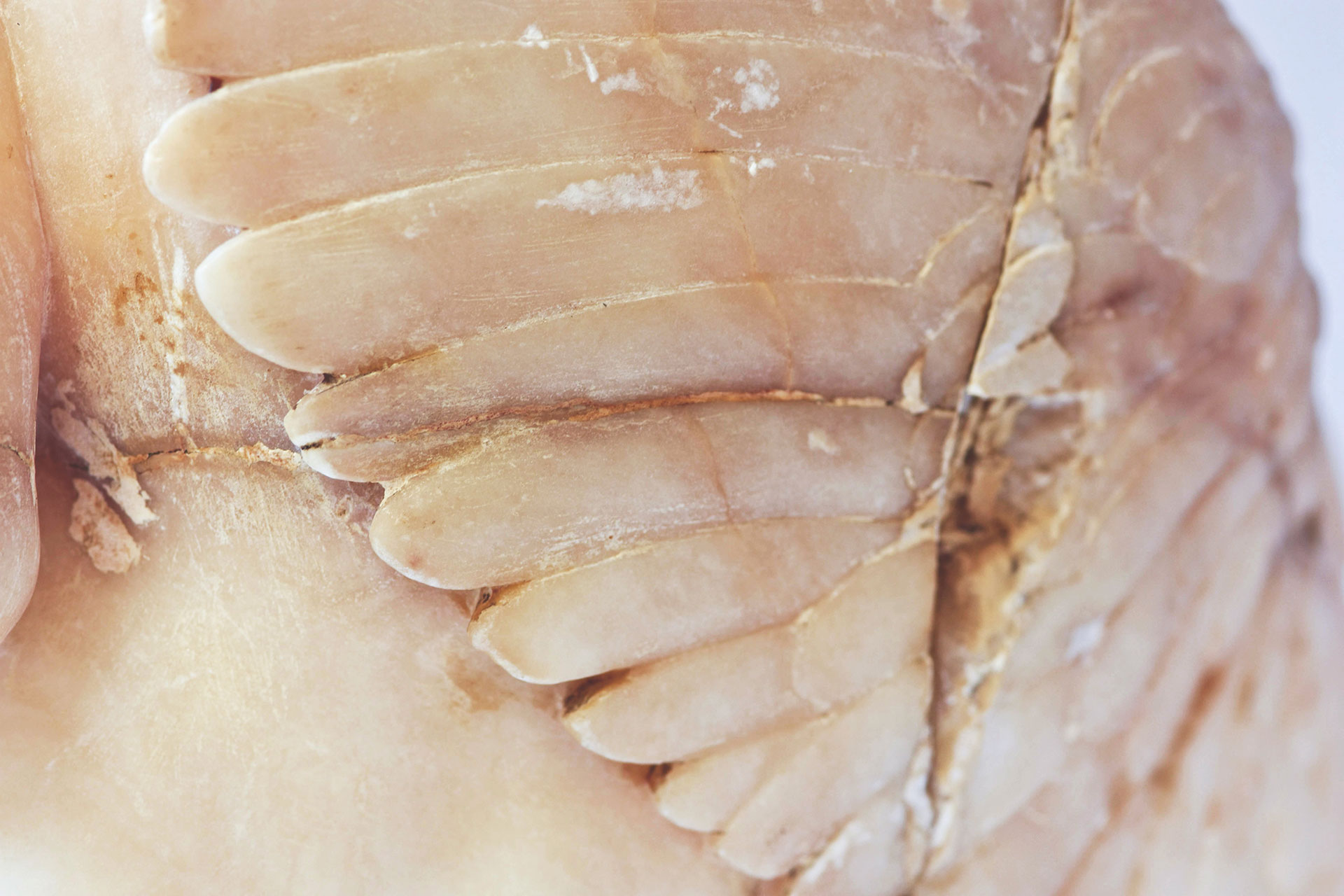
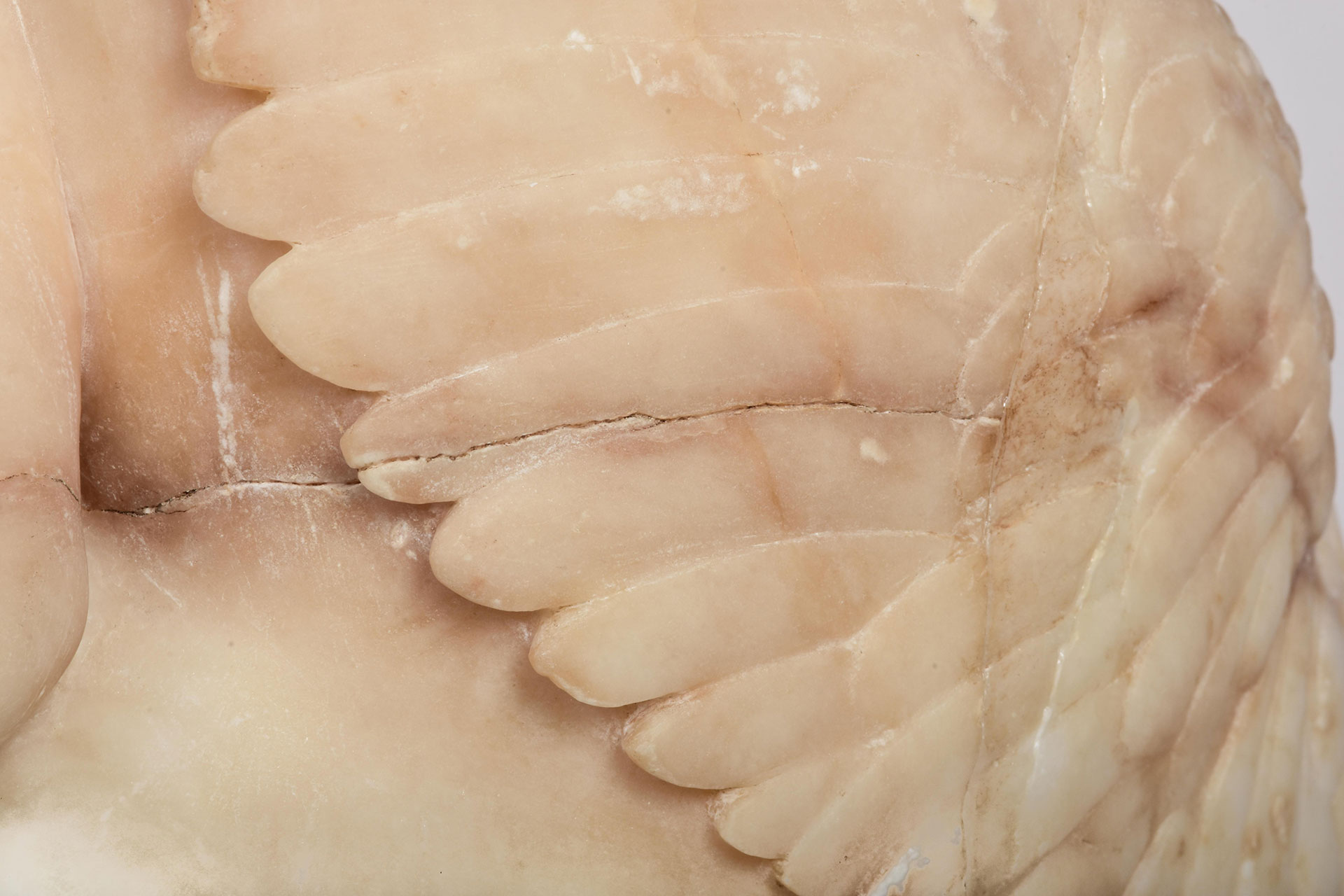
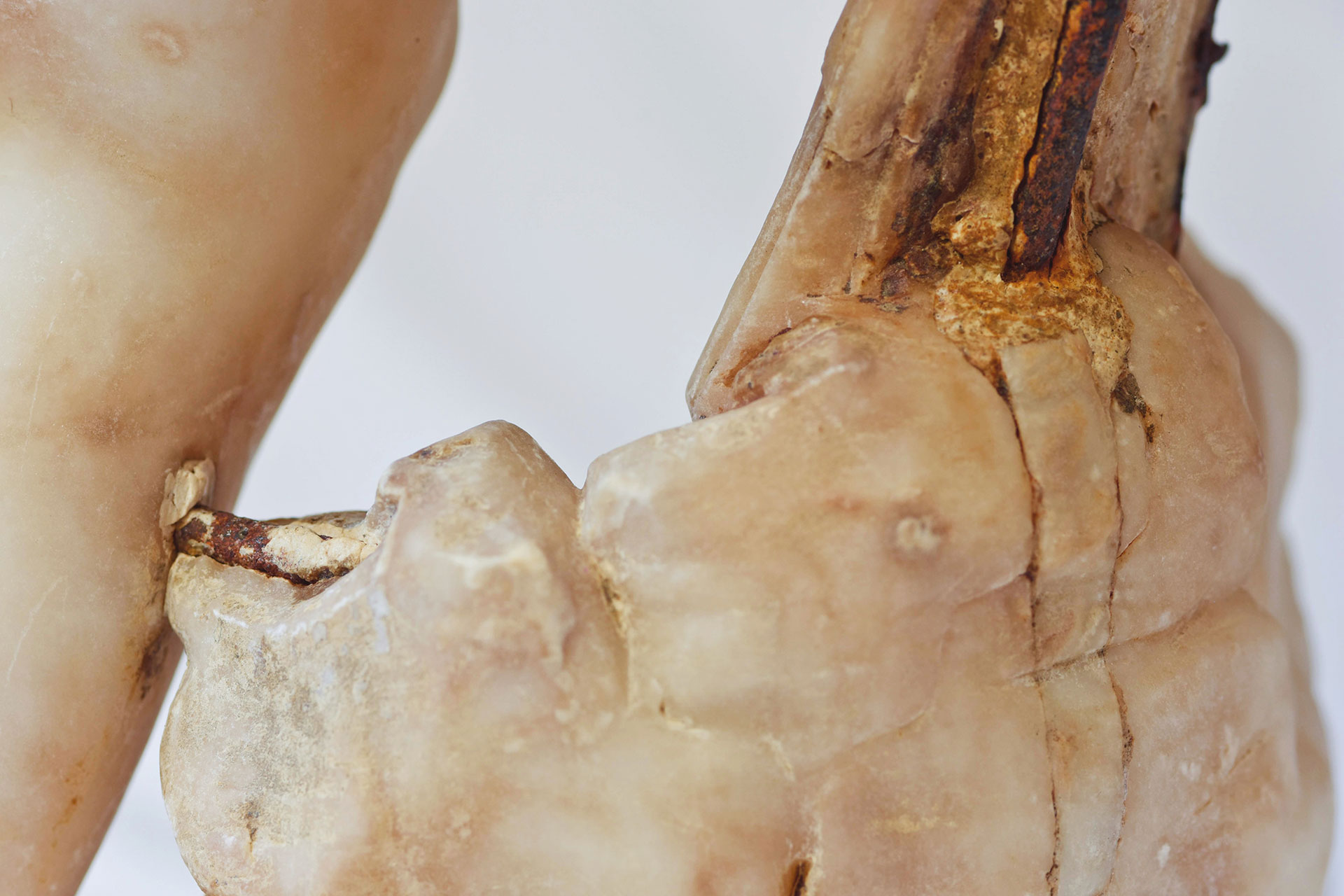
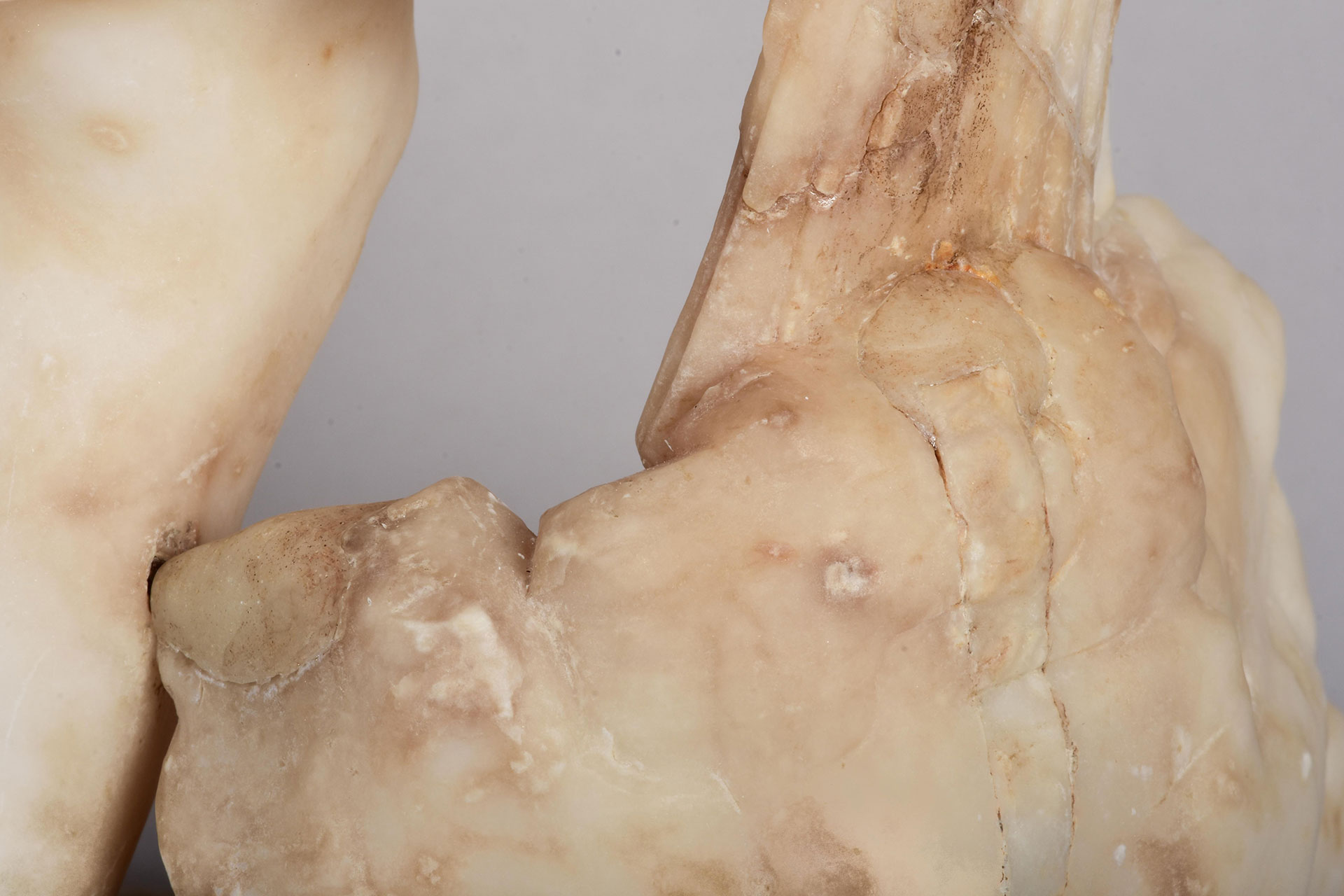
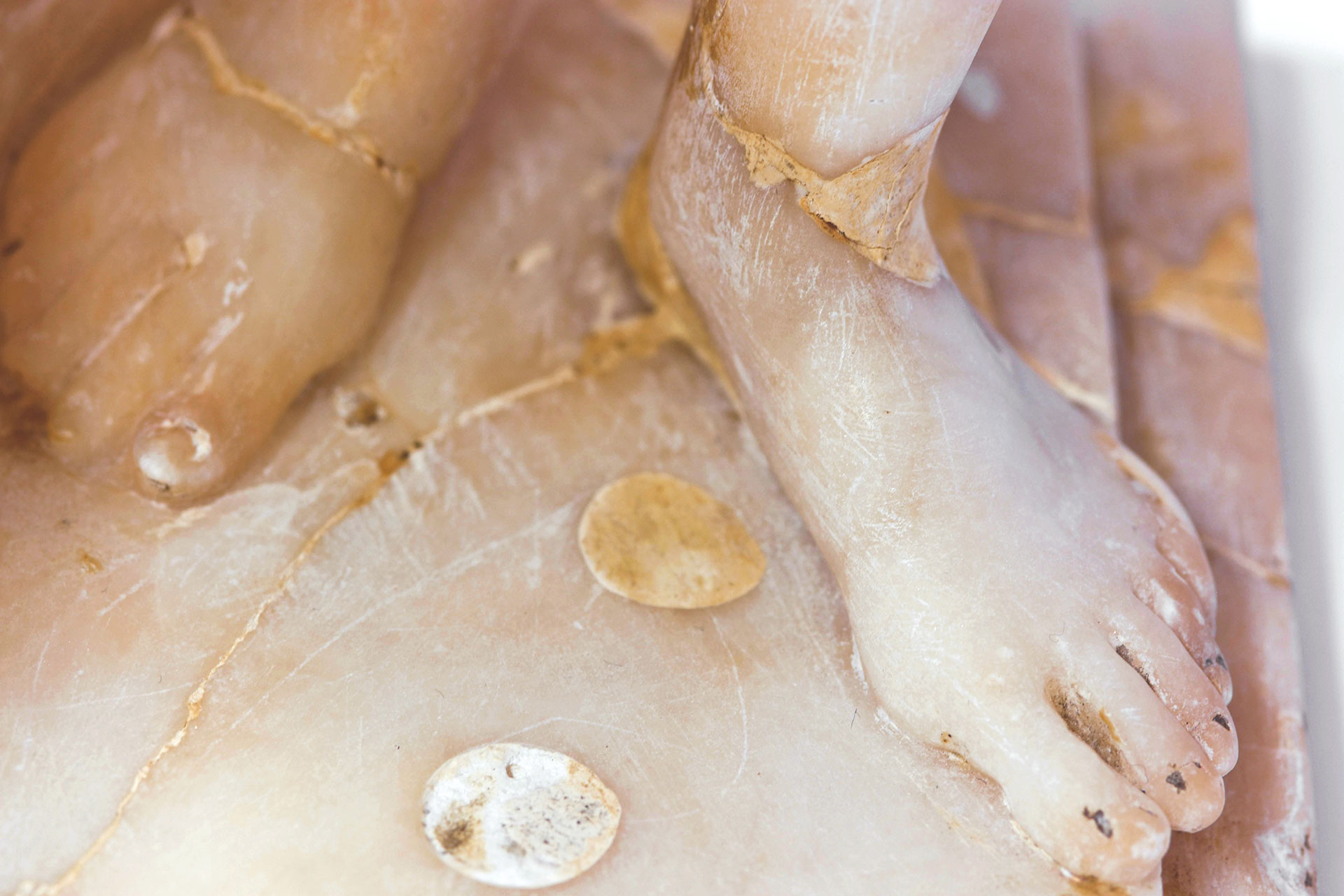
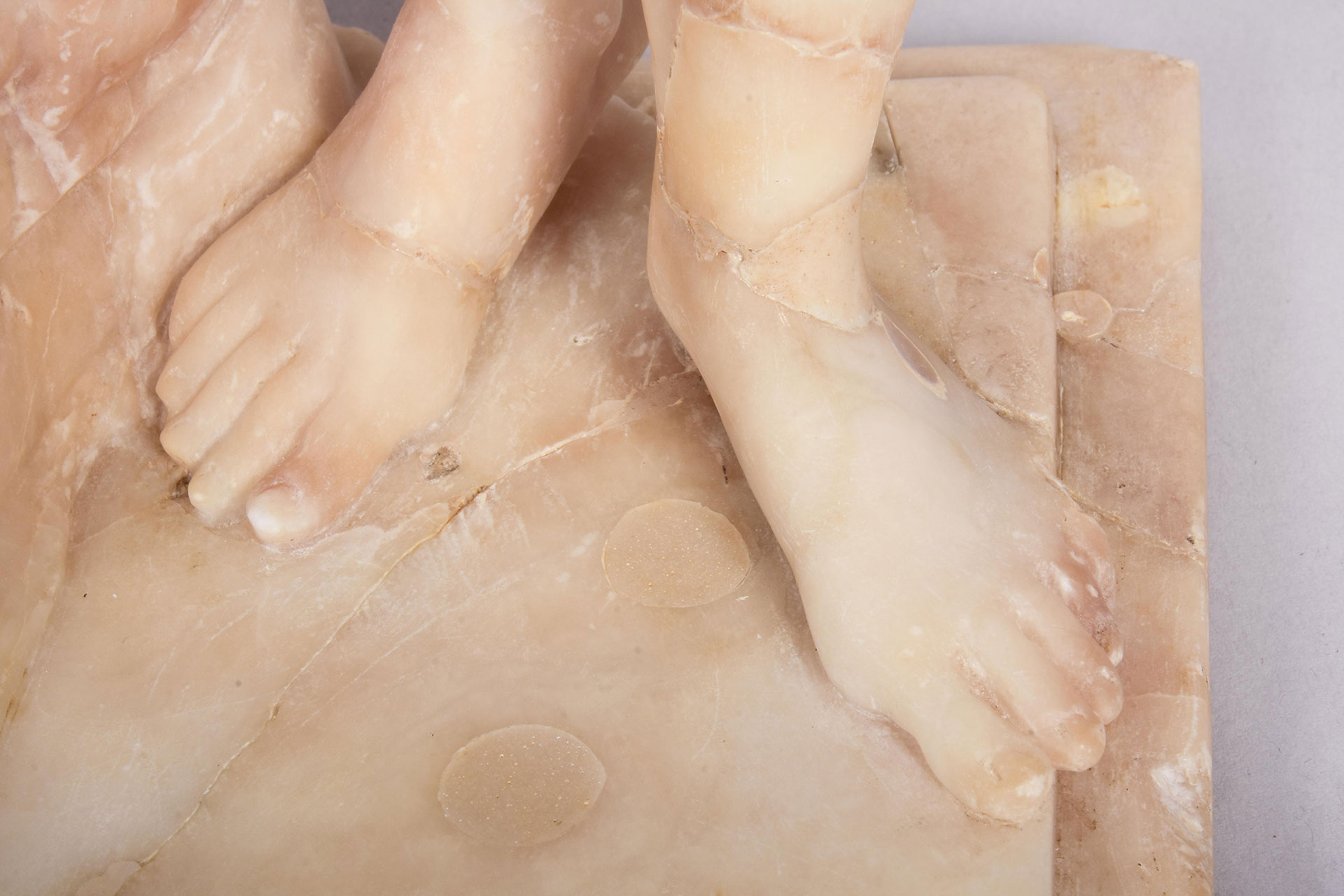
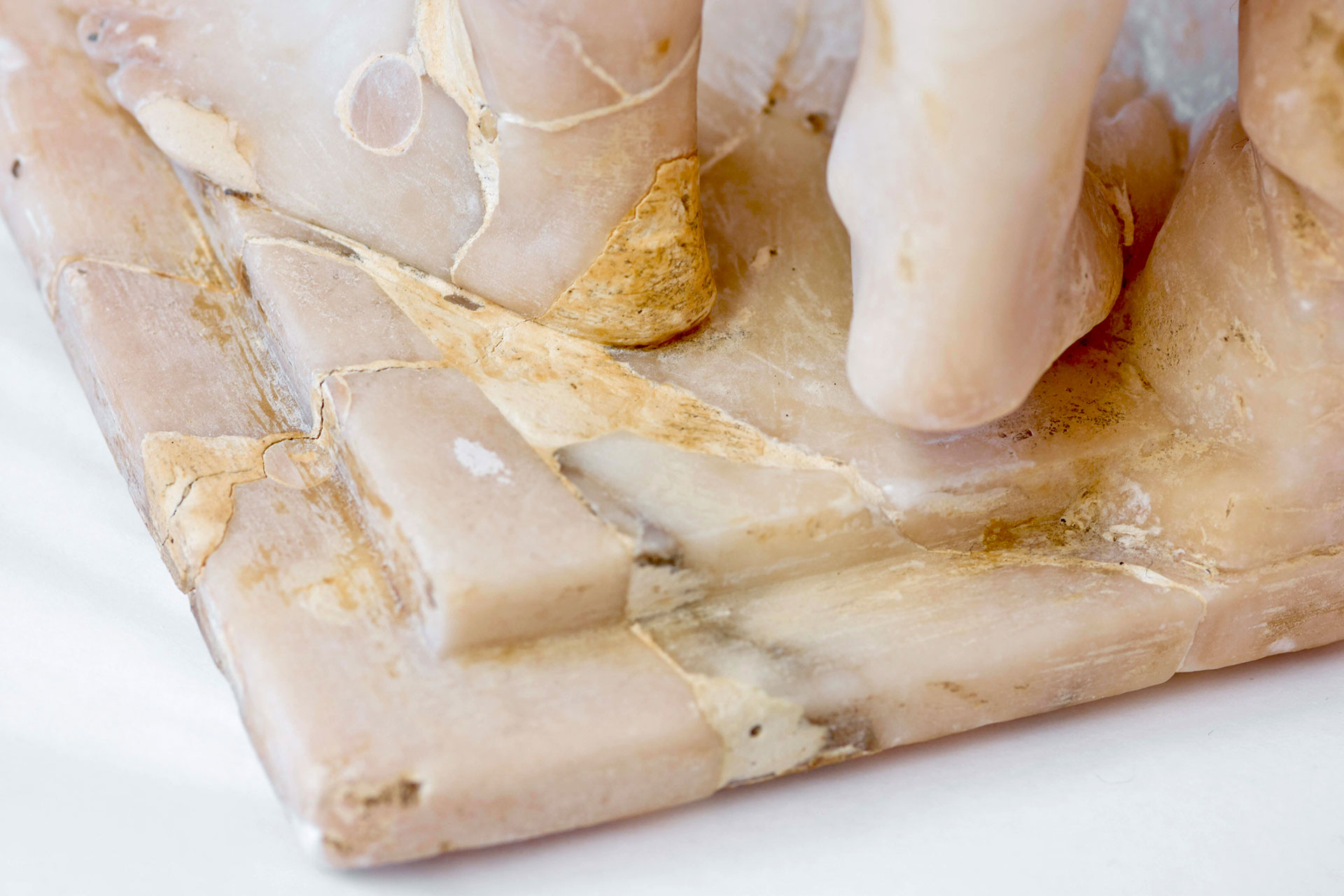
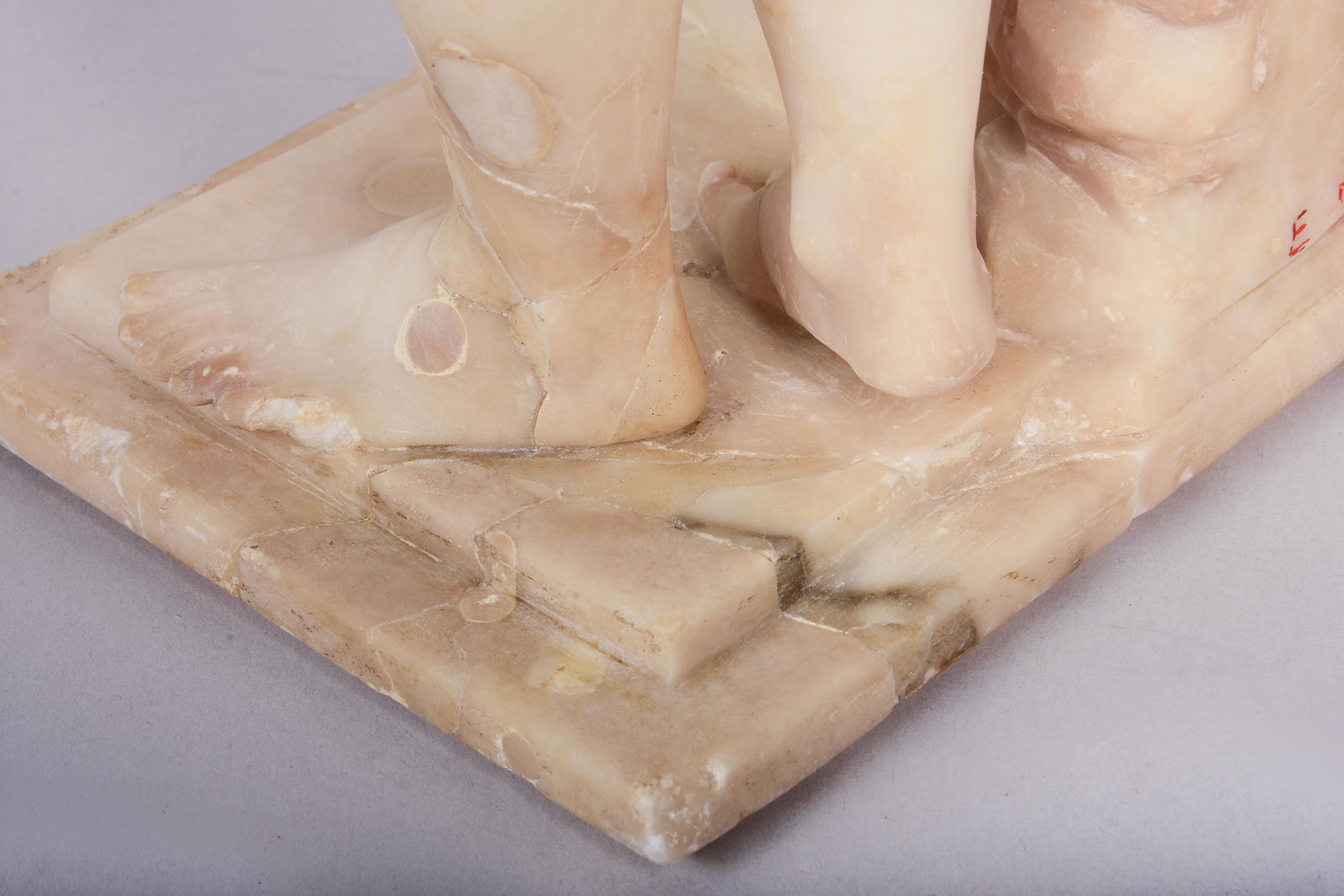
Following the completion of the conservation and restoration intervention, the statuette is now in a stable condition. Removing materials used in earlier restorations reduced potential hazards to the alabaster. By removing putties and reinforcements and by re-gluing breakages, we created a homogenous surface. By replacing losses, we created an aesthetically pleasing appearance that allows museum visitors to see and appreciate the object anew.
