Alba
1181 mit späteren Ergänzungen | Palermo, Königliche Hofwerkstätten
The Alba is a garment with a complicated history. While the precious trimming can be dated to the 12th century, the white silk dates from the 18th century. The square yoke as well as the small additions on the cuffs are alterations that were probably made under Frederick II shortly before 1220. All the trimming is decorated with hammered gold embroidery and lines of pearls. The ornamental bands on the upper arms, the cuffs and the front border on the hem are made of dark-violet velvet. Rows of pearls have been used to create medallions in which griffons and lions are embroidered in gold wire. On the borders on the hem are Latin and Arabic inscriptions indicating that the garment was made in Palermo in 1181 on a commission from King William II of Sicily. Between the various layers of lining, there are the remains of what may be the original fabric, which was not removed during refurbishing but rather preserved like a relic and covered with new fabric. There are inscriptions beneath the bands on the upper arms and one of the cuffs that name the embroiderers who were involved in refurbishing the garment. Formally the Alba is not comparable with albs intended for liturgical use. Originally it was an outer garment, similar to that worn by a Byzantine basileus (king), who wore it with a loros (stole). It is thus possible that the precious trimming was originally on a red garment (red being the colour of the basileus), because in these matters the Sicilian kings imitated the court in Byzantium. The garment was probably adapted to create the Alba for the coronation of Frederick II. It would have been girded around the middle with the Cingulum (Inv. No. SK_WS_XIII_10) and worn under the Coronation Mantle (Inv. No. SK_WS_XIII_14).
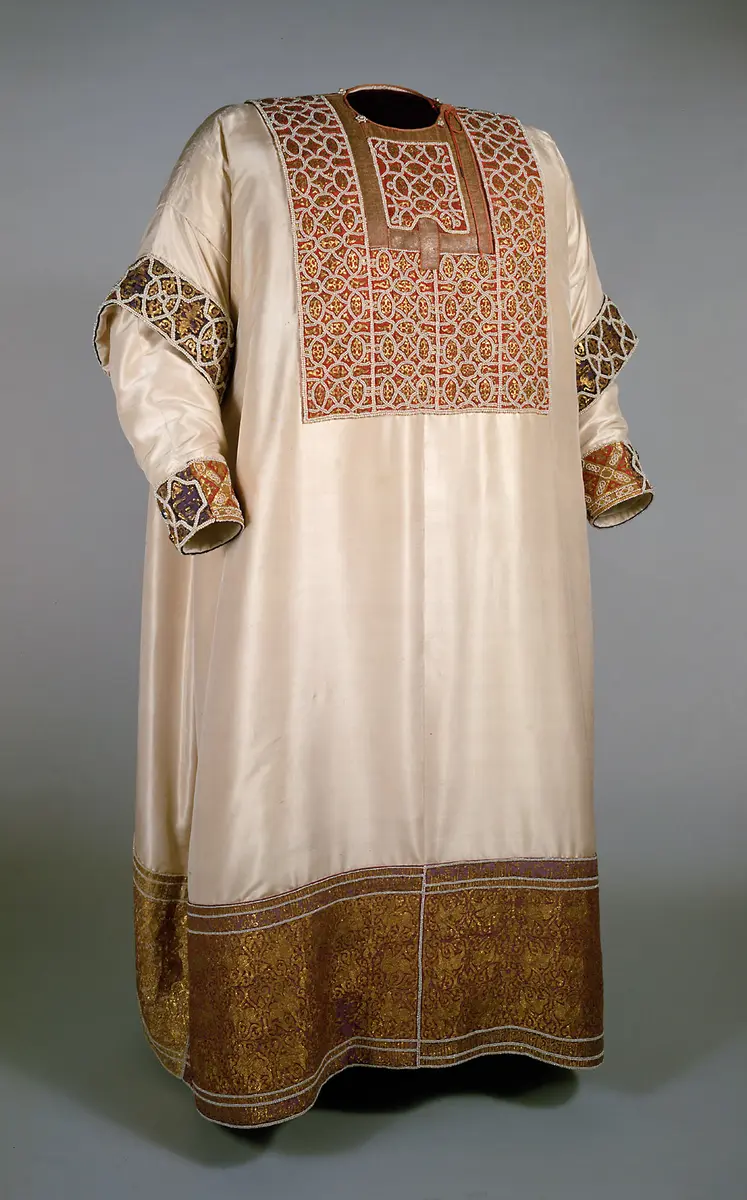
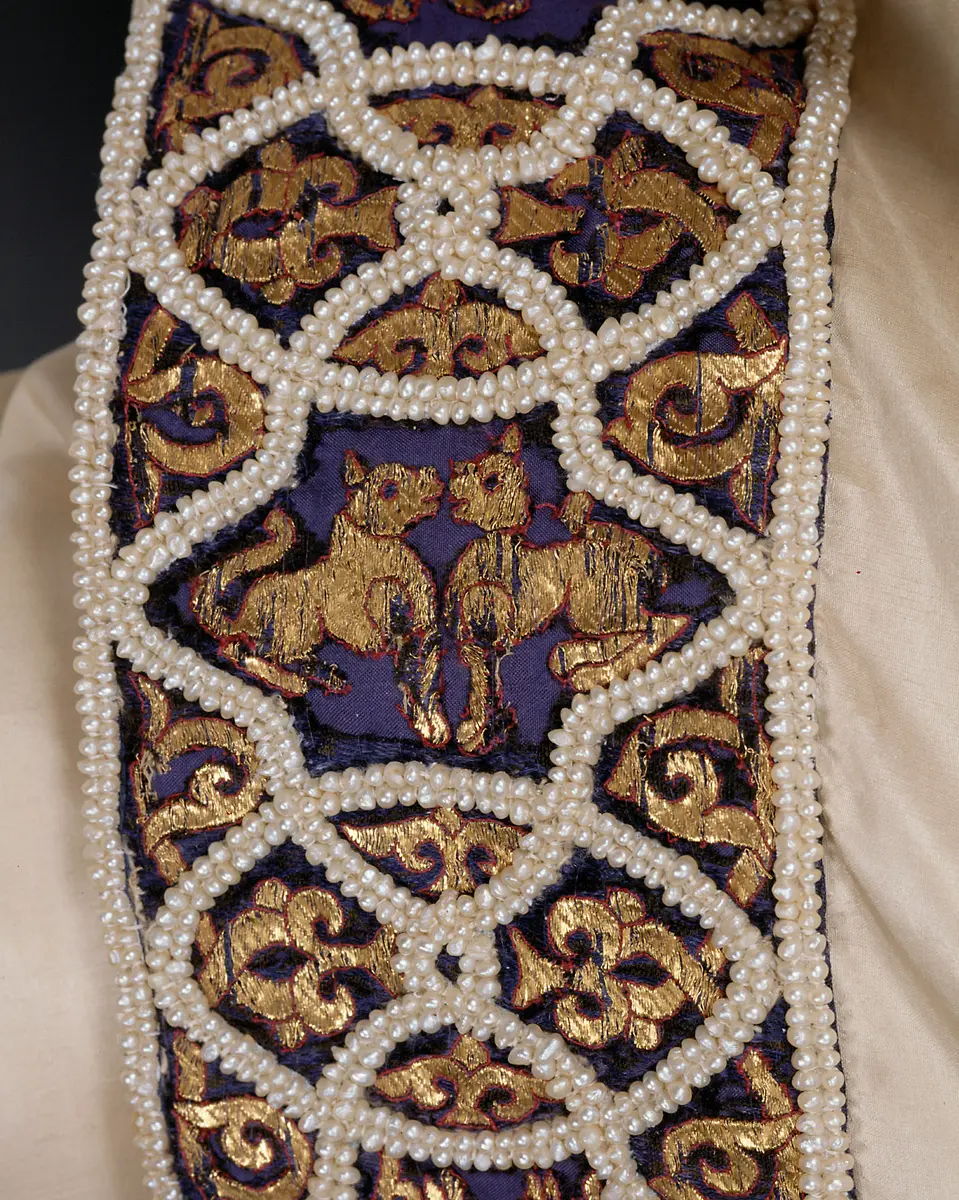
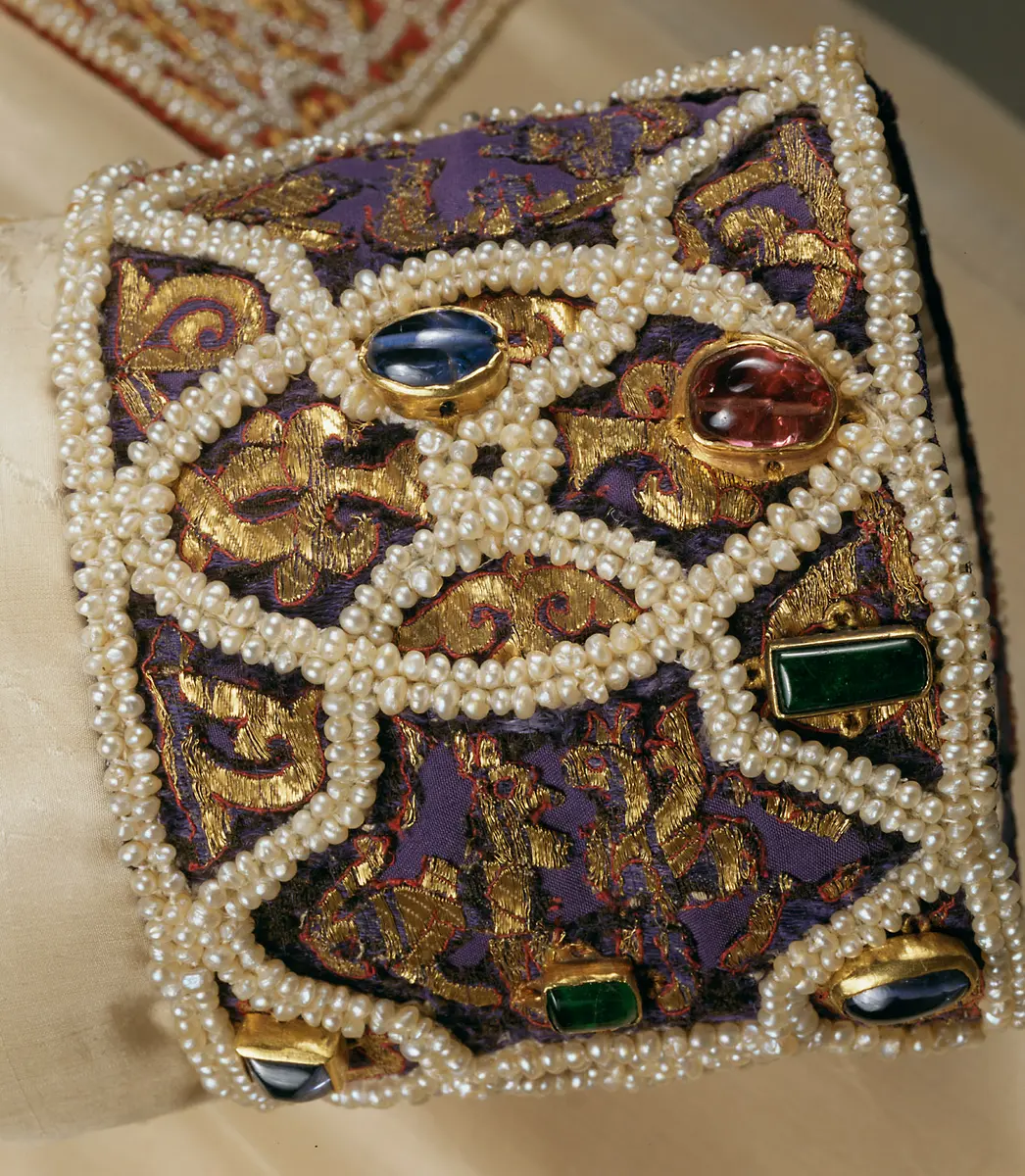
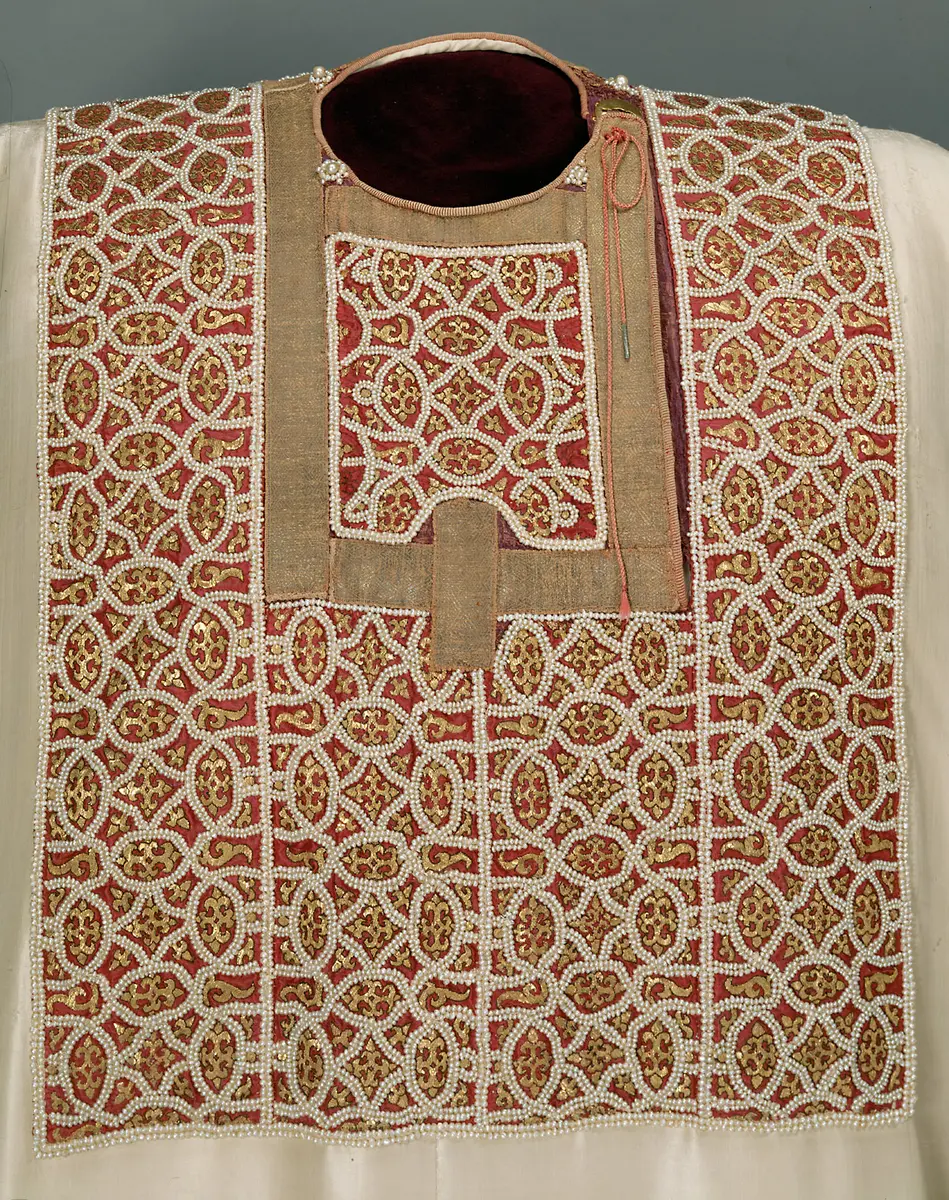
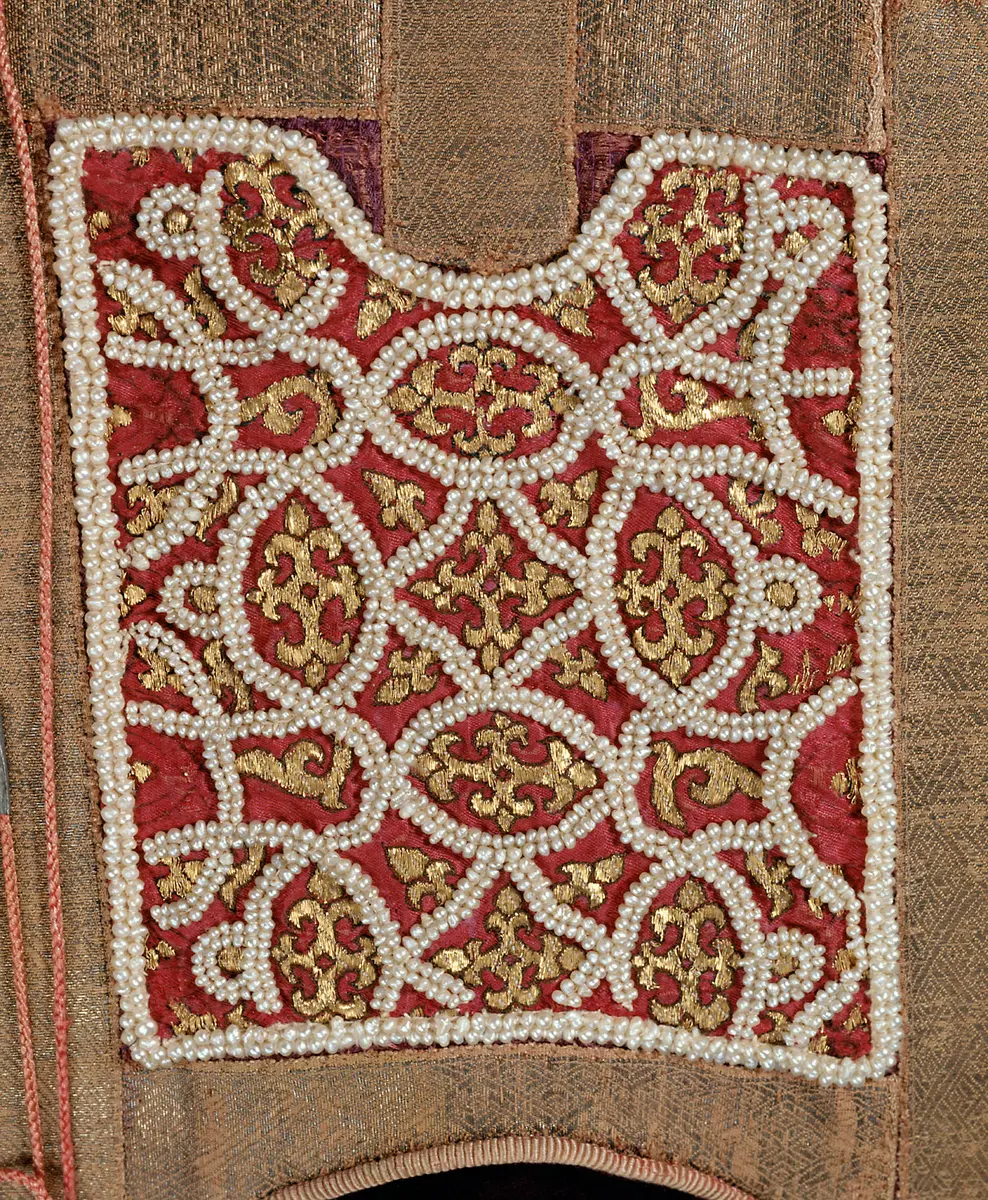
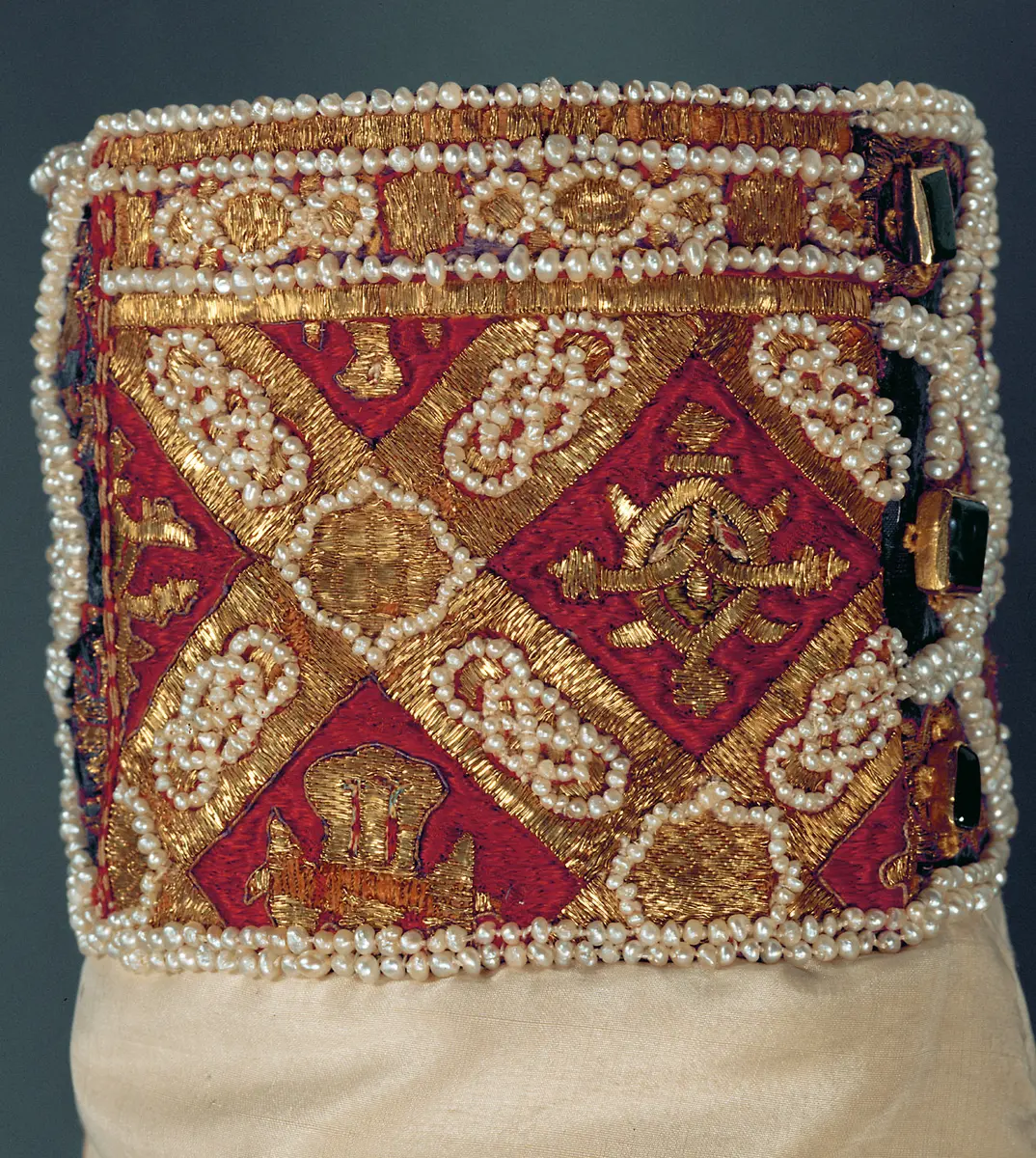
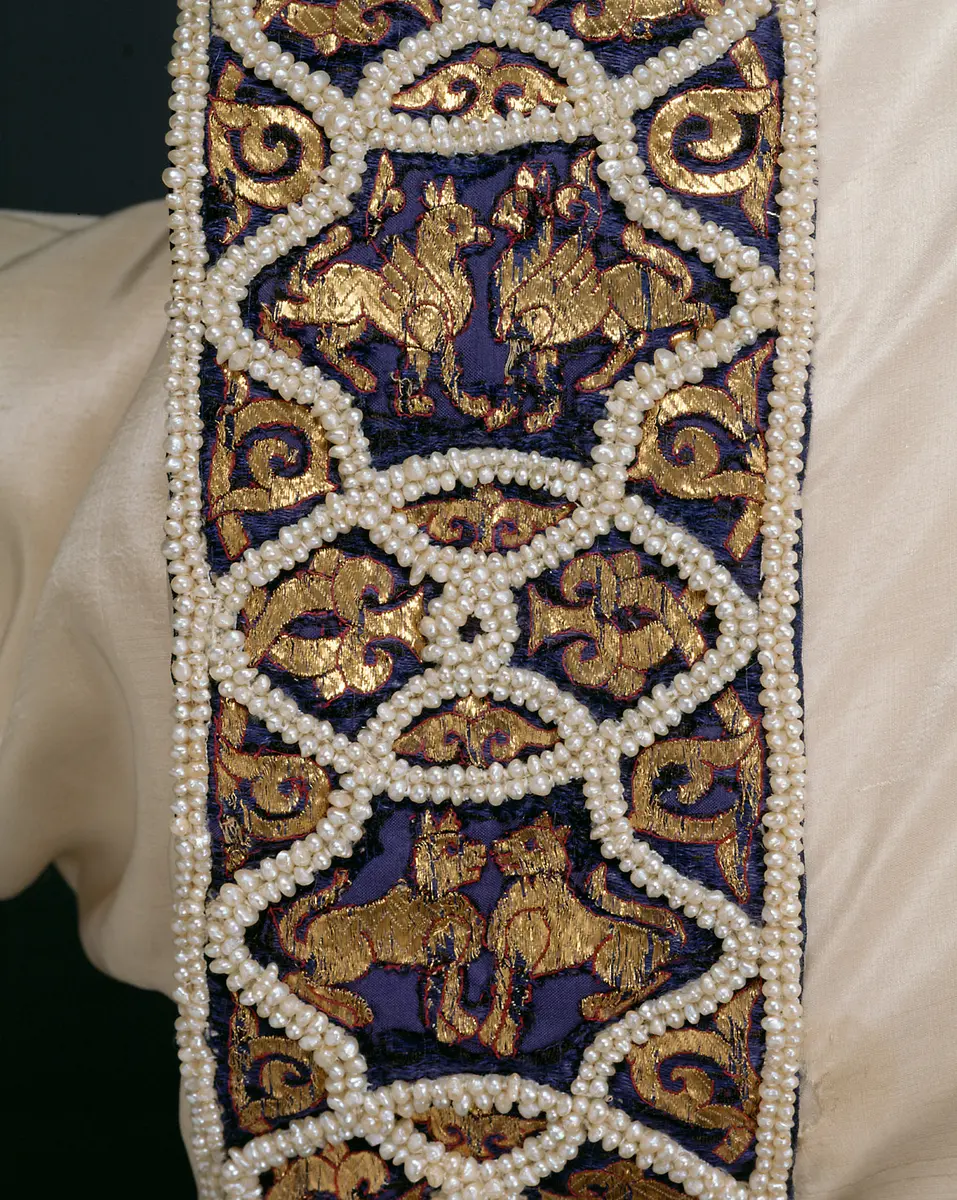
The Alba is a garment with a complicated history. While the precious trimming can be dated to the 12th century, the white silk dates from the 18th century. The square yoke as well as the small additions on the cuffs are alterations that were probably made under Frederick II shortly before 1220. All the trimming is decorated with hammered gold embroidery and lines of pearls. The ornamental bands on the upper arms, the cuffs and the front border on the hem are made of dark-violet velvet. Rows of pearls have been used to create medallions in which griffons and lions are embroidered in gold wire. On the borders on the hem are Latin and Arabic inscriptions indicating that the garment was made in Palermo in 1181 on a commission from King William II of Sicily. Between the various layers of lining, there are the remains of what may be the original fabric, which was not removed during refurbishing but rather preserved like a relic and covered with new fabric. There are inscriptions beneath the bands on the upper arms and one of the cuffs that name the embroiderers who were involved in refurbishing the garment. Formally the Alba is not comparable with albs intended for liturgical use. Originally it was an outer garment, similar to that worn by a Byzantine basileus (king), who wore it with a loros (stole). It is thus possible that the precious trimming was originally on a red garment (red being the colour of the basileus), because in these matters the Sicilian kings imitated the court in Byzantium. The garment was probably adapted to create the Alba for the coronation of Frederick II. It would have been girded around the middle with the Cingulum (Inv. No. SK_WS_XIII_10) and worn under the Coronation Mantle (Inv. No. SK_WS_XIII_14).
Time:
1181 mit späteren Ergänzungen
Object Name
Textil; liturgisches Gewand; Krönungsornat
Culture
Palermo
Material/technology:
Textil; Seide, Golddrahtstickerei, Perlen, Smaragde, Saphire, Amethyst, Spinell, Granat, Opal, Brettchengewebe
Dimensions:
H. 154 cm, B. 127 cm
Inscribed
"+OPERATV(M) FELICI VRBE PANORMI XV. ANNO D(OMI)NI W(ILLELMI) D(E)I GR(ATIA) REGIS SICILIE DVCAT(VS) APVLIE ET PRINCIPAT(VS) CAP(VE) FILII REGIS W(ILLELMI) INDICTIO(N)E XIIII."; arabische Tulut-Schrift (Übersetzung s. Kat. Schatzkammer 1987)
Copyright
Kunsthistorisches Museum, Weltliche Schatzkammer
Invs.
Schatzkammer, WS XIII 7
Browse more
Similar items you might be interested in
Der Tod Kaiser Ferdinands III. als Sinnbild der Vergänglichkeit Daniel Neuberger um 1660
Kreuz des Militär-Maria-Theresien-Ordens Johann Michael Grosser 1757 datiert
Stern des ungarischen St. Stephans-Ordens Joseph und Anton Biedermann 1. Hälfte 19.Jahrhundert
Großkreuz des Militär-Maria-Theresien-Ordens J. A. Schöll 1765 datiert
Das Schweißtuch der Veronika; Vera Icon 1617, um 1721
Hyazinth "La Bella" frühes 15. Jahrhundert (Fassung des Steines); 1687
Schrank zur Aufbewahrung der Schlüssel zu den Särgen der Habsburger Alexander Albert 1895
Sogenannter Beutel König Stephans von Ungarn 2. Hälfte 11. / 12.- Jahrhundert
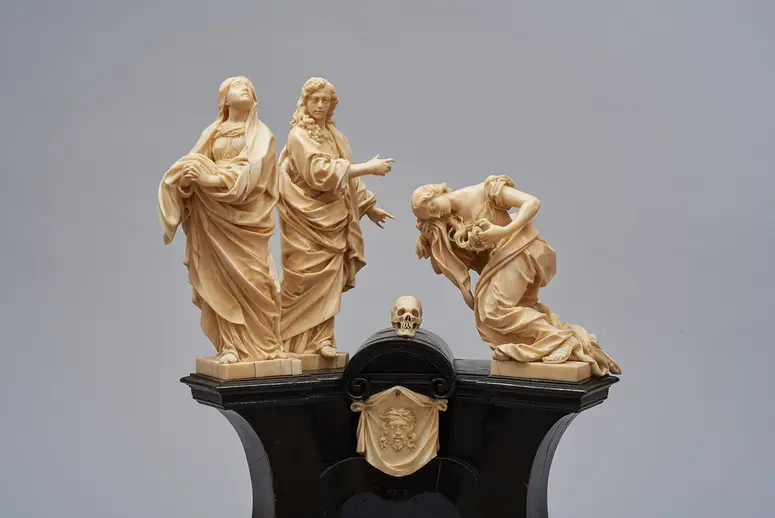
Fragment einer Kreuzigungsgruppe Matthias Steinl um 1685/87
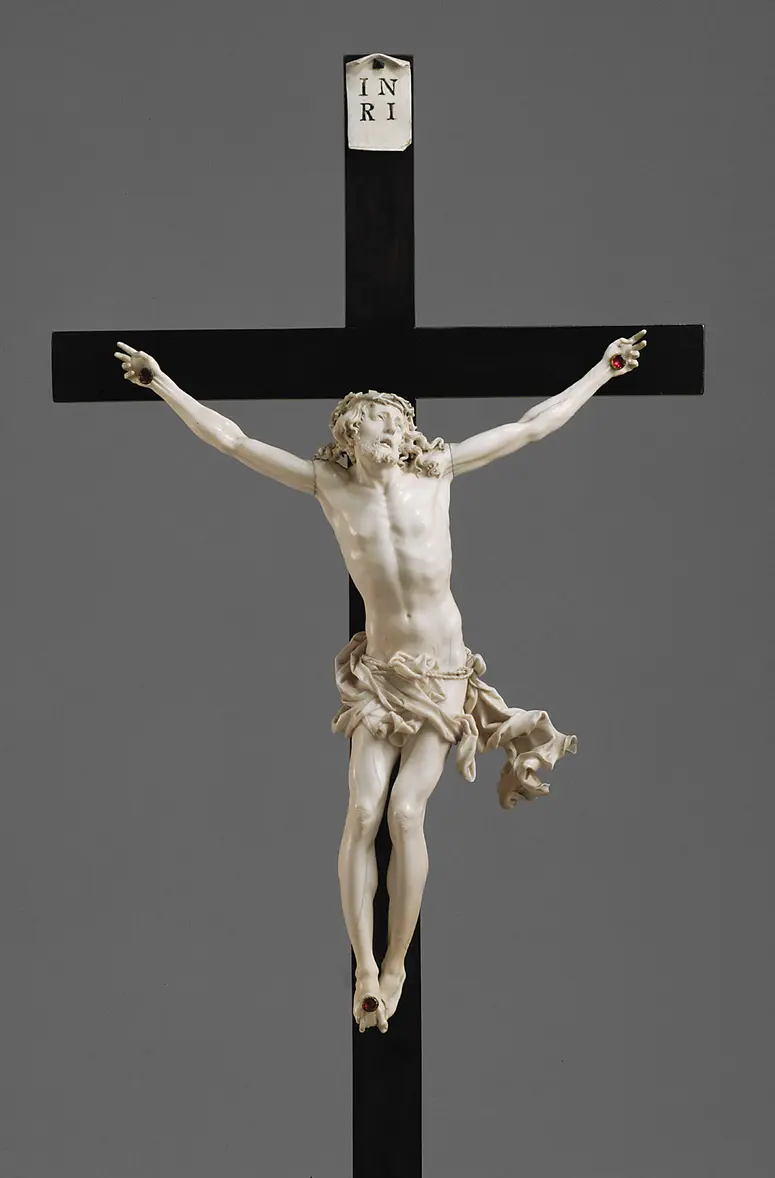
Kruzifix Gabriel Grupello Mitte 18. Jahrhundert
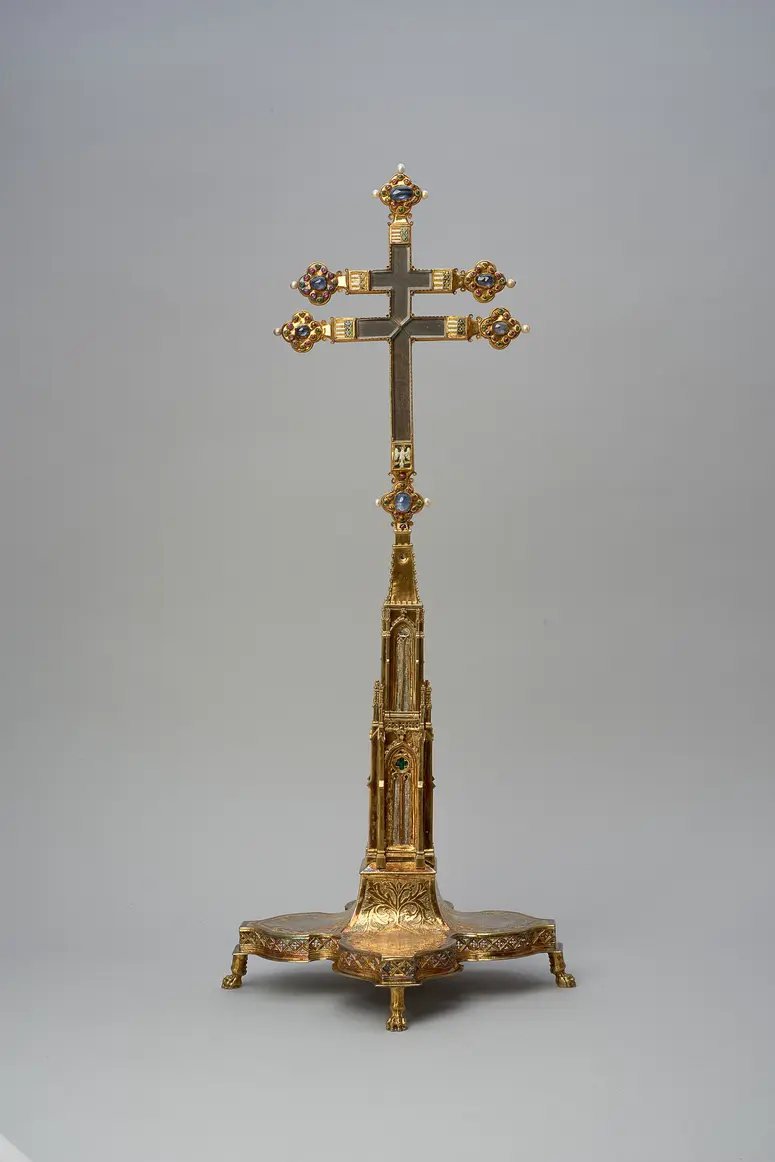
Reliquienkreuz König Ludwigs des Großen von Ungarn; sogenanntes Anjou - Kreuz Pietro di Simone da Siena 1370/82
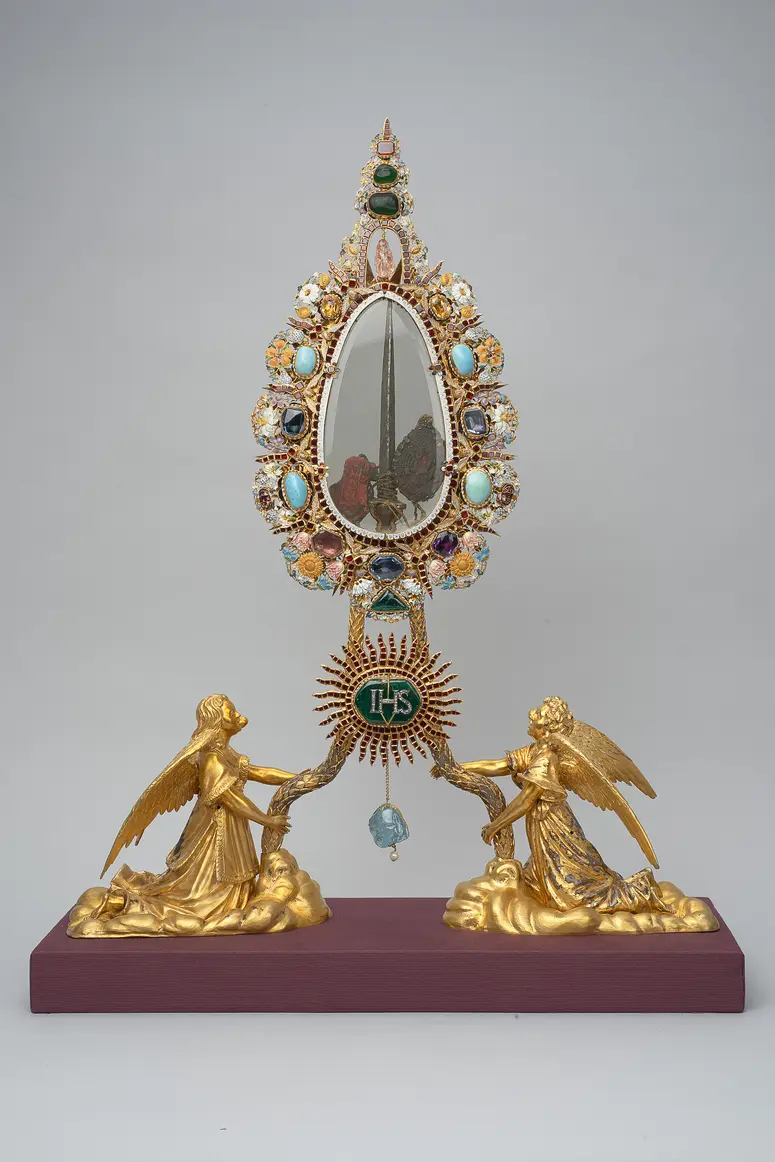
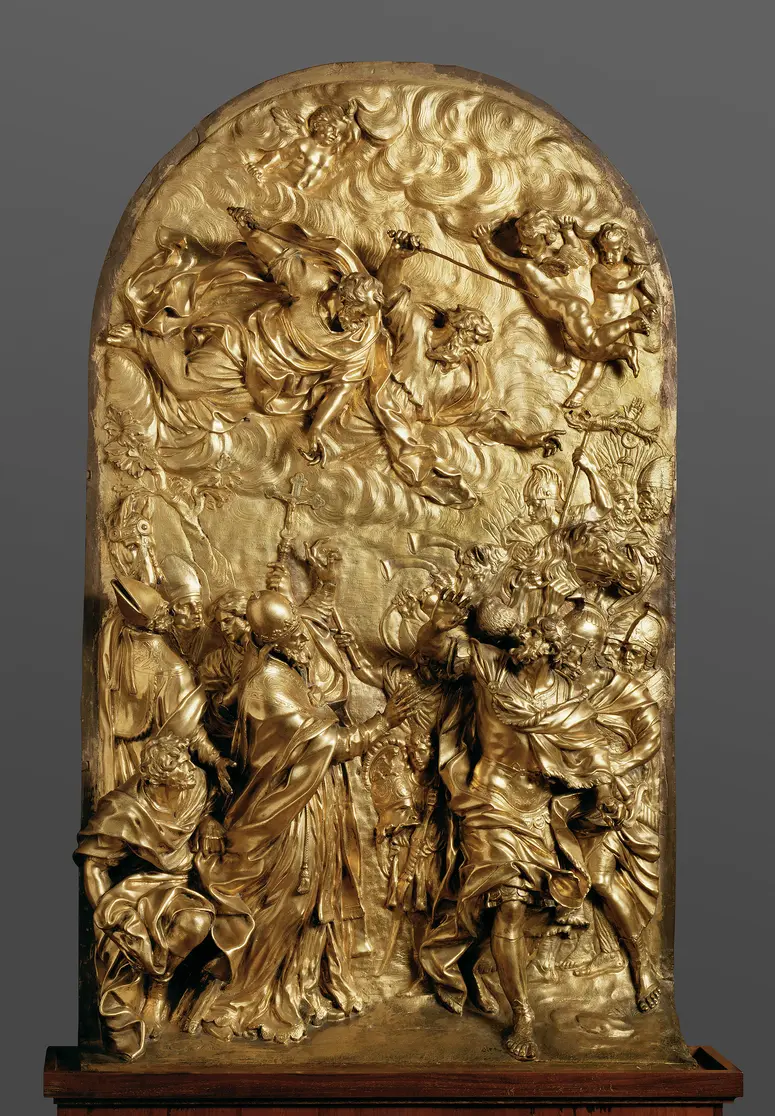
Die Begegnung von Papst Leo des Großen mit dem Hunnenkönig Attila Ercole Ferrata nach 1657
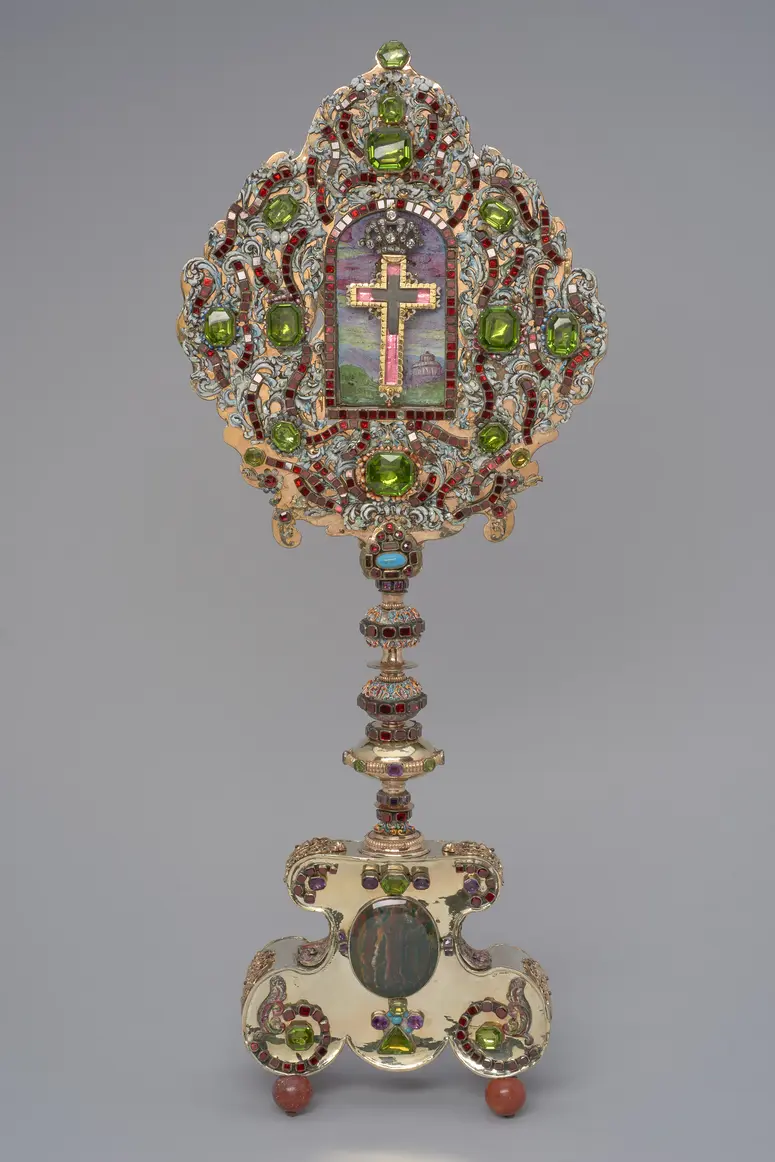
Sternkreuzordensmonstranz Hans Jakob Mair um 1668
