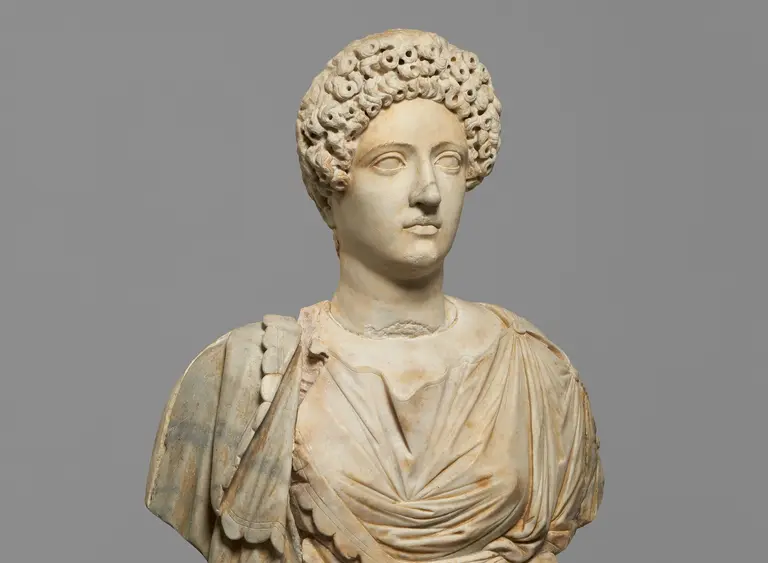
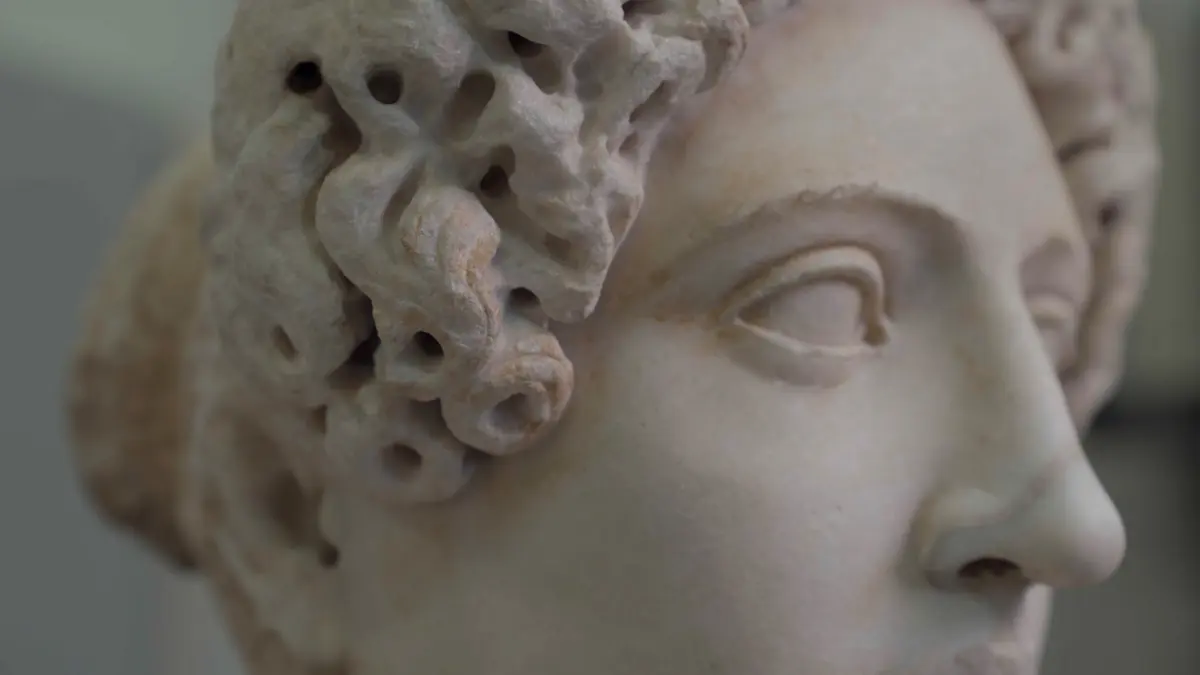
Ancient portraits often bring to life, in a strikingly vivid and immediate way, people who lived long ago. In our special exhibition, we let these sculptures speak for themselves. They tell us about their appearance and the important role played by an often underestimated detail: the hairstyle. It is through this that key questions in portrait research can be explored – from dating to the identity of the subjects.
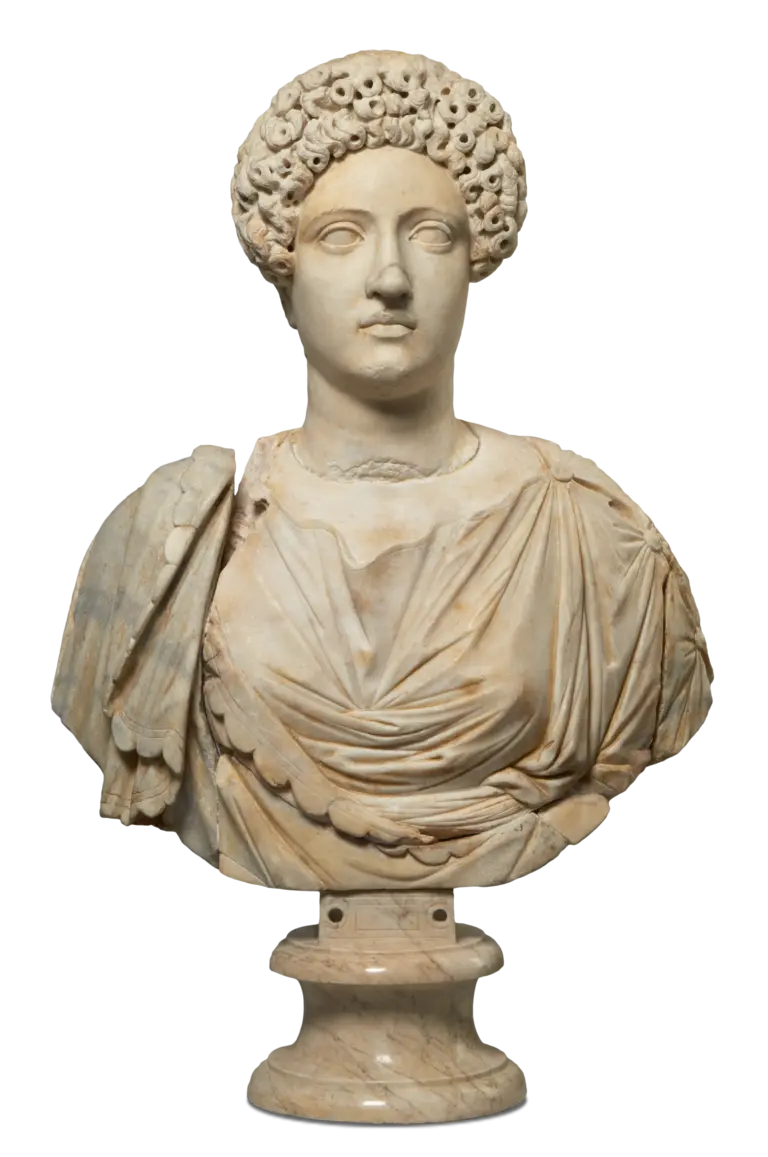
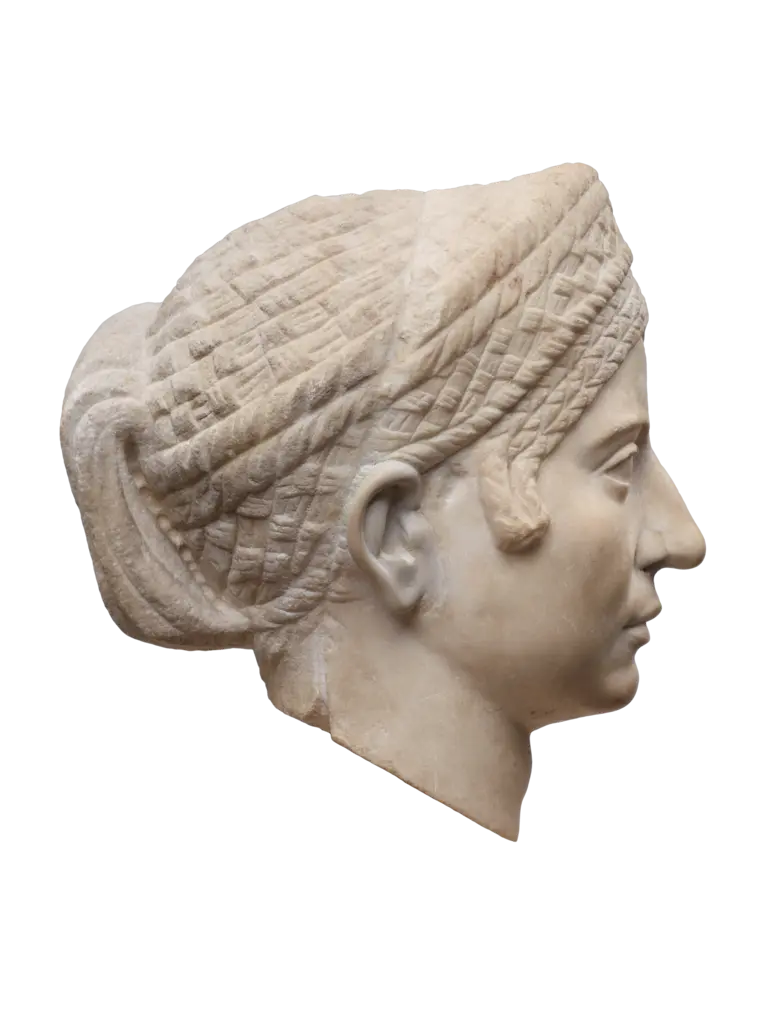
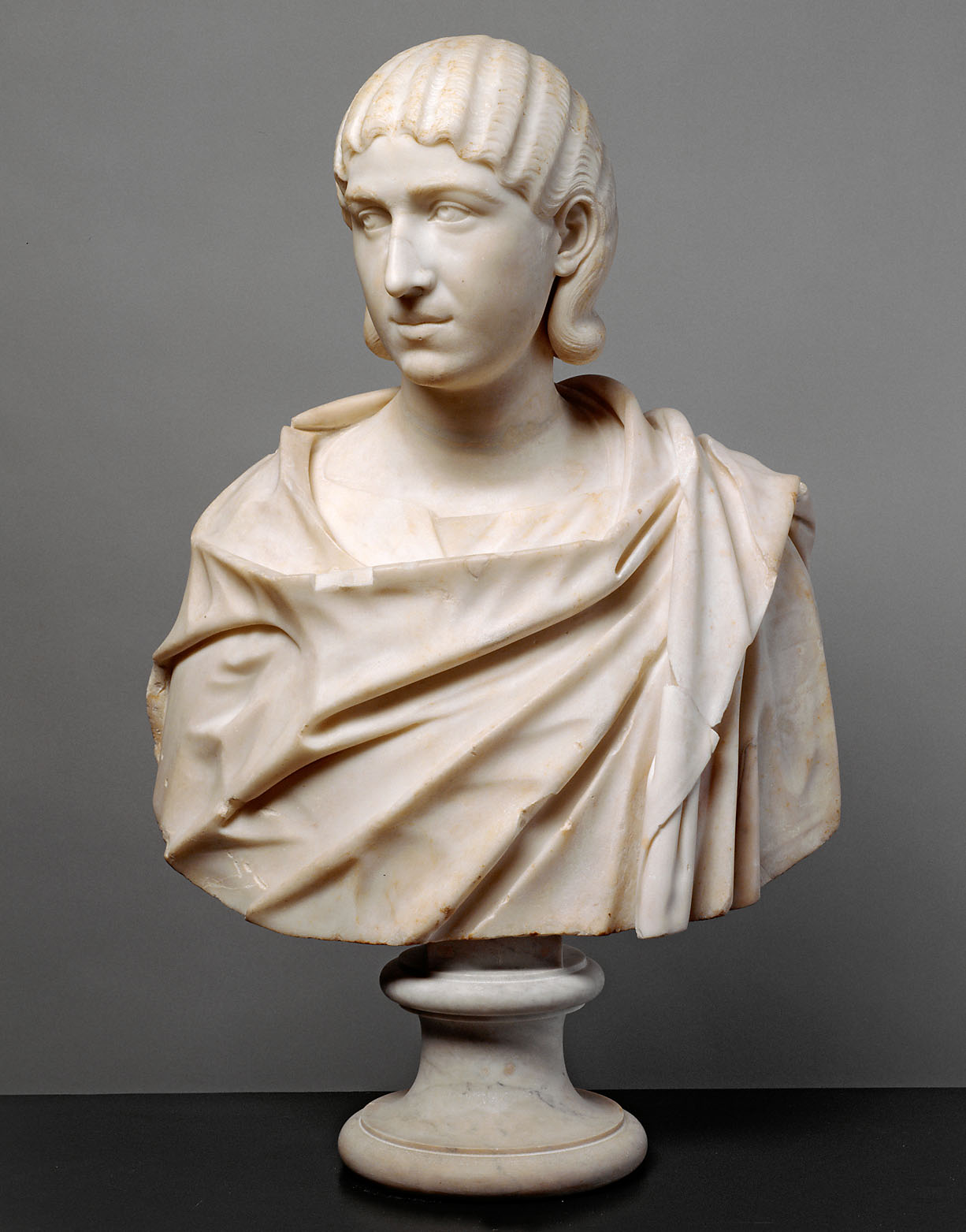
At the heart of the exhibition are two portraits of women. One is a marble bust, which probably depicts the deified Julia (61–89 CE) (image below), daughter of Emperor Titus and niece of Emperor Domitian of the Flavian dynasty. She wears a distinctive hairstyle with curls above her forehead, behind which a metal diadem was presumably concealed, a feature that points to her social rank and the era.
Address
Collection of Greek and Roman Antiquities, Hochparterre
Maria-Theresien-Platz, 1010 Vienna
Google Maps
Opening times
Open Daily, 10 a.m. – 6 p.m.
Thu, 10 a.m. - 9 p.m.
On average, visitors spend around 1.5 hours in the Collection of Greek and Roman Antiquities.
Marble
‘I am the beautiful granddaughter, daughter, and niece of three emperors. After my death at the age of 28, my uncle elevated me to the status of a goddess – imagine! Statues of me were set up throughout the entire empire. When this one of me was destroyed, my head fell onto its face and then rolled onto the back of its head. It lay that way for a long time in the earth. Many centuries later, somebody found it, recognised its beauty, and created a bust for it out of three different marble blocks […].’
An antique capital fragment and a piece featuring architectural ornamentation were used for the central section of the bust. Both pieces were so skilfully incorporated in the sixteenth century that the addition went unnoticed until the recent restoration.

The second exhibit is a funerary relief depicting an elderly woman in the style of the ‘Great Herculaneum Woman’. She, too, wears a hairstyle typical of her time, which identifies her as a contemporary of Julia. Her clothing suggests she was a person of means. Unfortunately, however, the original frame and the figure on her right – likely her spouse – are now missing.
In the tomb relief shown next to it, the couple are depicted together, in marital harmony.


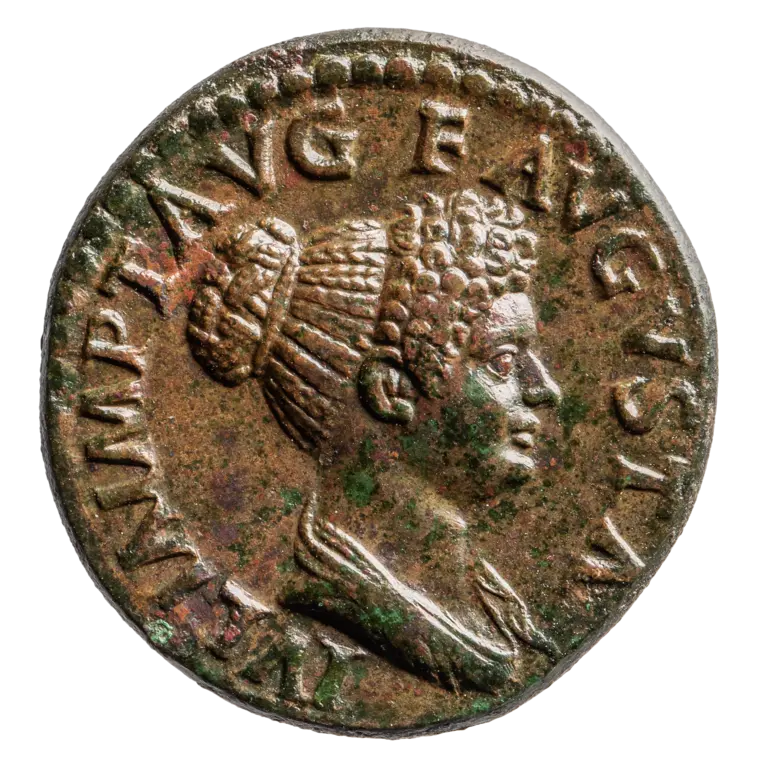
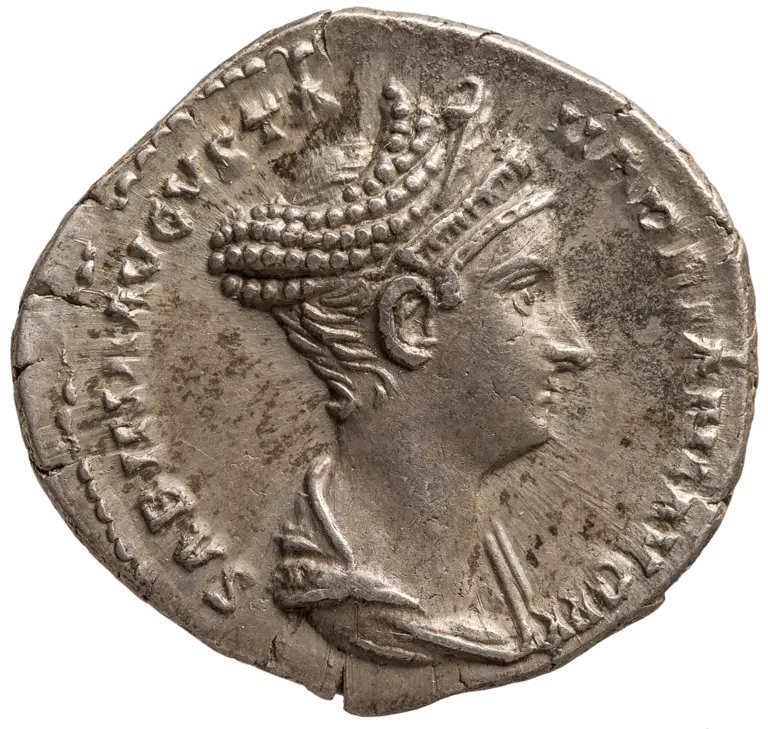
But we don’t just let our marble sculptures speak for themselves: in a screen presentation, they are shown alongside their portraits as depicted on coins.
During the Roman Empire, coins were used to disseminate portraits of the emperor and their family. The hairstyles, in particular, were rendered with impressive accuracy. Since the Renaissance, researchers have used these coins to identify marble portraits.

Marble
For private individuals, the depictions of these precisely rendered hairstyles served as models for their own portraits on busts, funerary reliefs, or sarcophagi.

![[Translate to English:]](/fileadmin/_processed_/2/b/csm_MK_RO_032195_1_303bb51b33.webp)
