The Parable of the Prodigal Son
after 1550 | Meister des verlorenen Sohnes
At the centre of this New Testament scene is the prodigal son among the prostitutes. The vagrant placing a die on the table in the foreground is a symbol of the poverty that gamblers bring on themselves. The prostitute giving stolen money to a fool symbolises wasteful extravagance. The couple at the extreme left probably represents “Frau Welt” (a woman beautiful from the front, loathsome from behind) and “comfort”, which the prodigal son loses as soon as he has squandered his money. At the back of the picture the repentant son is reaccepted by his father.
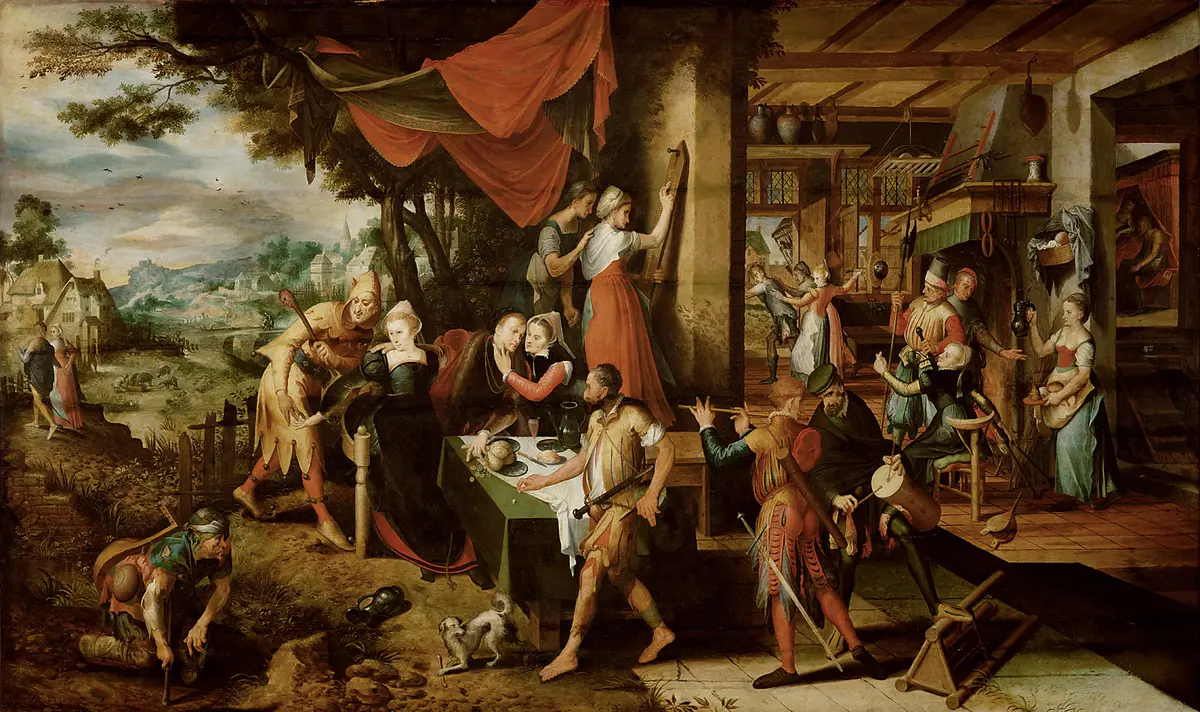
At the centre of this New Testament scene is the prodigal son among the prostitutes. The vagrant placing a die on the table in the foreground is a symbol of the poverty that gamblers bring on themselves. The prostitute giving stolen money to a fool symbolises wasteful extravagance. The couple at the extreme left probably represents “Frau Welt” (a woman beautiful from the front, loathsome from behind) and “comfort”, which the prodigal son loses as soon as he has squandered his money. At the back of the picture the repentant son is reaccepted by his father.
Artist:
Meister des verlorenen Sohnes (tätig in Antwerpen um 1530 - 1560) DNB
Time:
after 1550
Object Name
Painting
Culture
Netherlandish
Material/technology:
oak wood
Dimensions:
128,5 cm × 214,5 cm
Framed (gallery frame): 144,3 cm × 227,5 cm × 9,5 cm
Copyright
Kunsthistorisches Museum, Gemäldegalerie
Invs.
Gemäldegalerie, 986
Provenance
1635-1649 Coll. Hamilton (?); Coll. Leopold Wilhelm