Sexfoil Bowl with Handle
3rd quarter 14th c. (cutting); 17th c. (mounting)
Emperor Charles IV and Glyptic Art in Bohemia The mineral resources of Bohemia offered its ruler, Emperor Charles IV (1316–1378), special opportunities to use precious stones for representational purposes. In view of the exceeding difficulties of working these stones, he had stonecutters from Paris and Venice brought to Prague. From the minerals typically found at Bohemian sites they created vessels for use and display at court as well as panels which the emperor used to line the walls of some of his chapels.
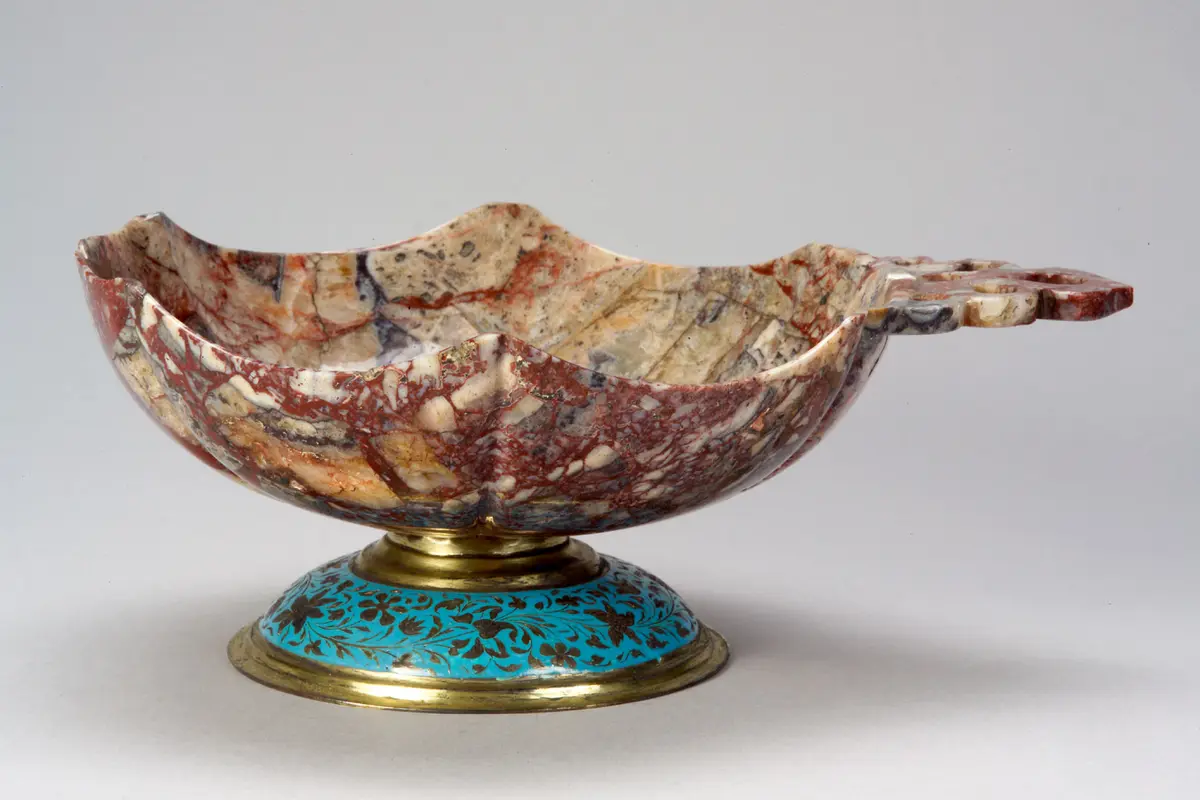
Emperor Charles IV and Glyptic Art in Bohemia The mineral resources of Bohemia offered its ruler, Emperor Charles IV (1316–1378), special opportunities to use precious stones for representational purposes. In view of the exceeding difficulties of working these stones, he had stonecutters from Paris and Venice brought to Prague. From the minerals typically found at Bohemian sites they created vessels for use and display at court as well as panels which the emperor used to line the walls of some of his chapels.
Time:
3rd quarter 14th c. (cutting); 17th c. (mounting)
Object Name
Vessel; Bowl
Culture
Prague (?)
Material/technology:
Agate, gold, enamel
Dimensions:
H. 8 cm, L. 21,7 cm
Copyright
Kunsthistorisches Museum, Kunstkammer
Invs.
Kunstkammer, 2030
Browse more
Similar items you might be interested in

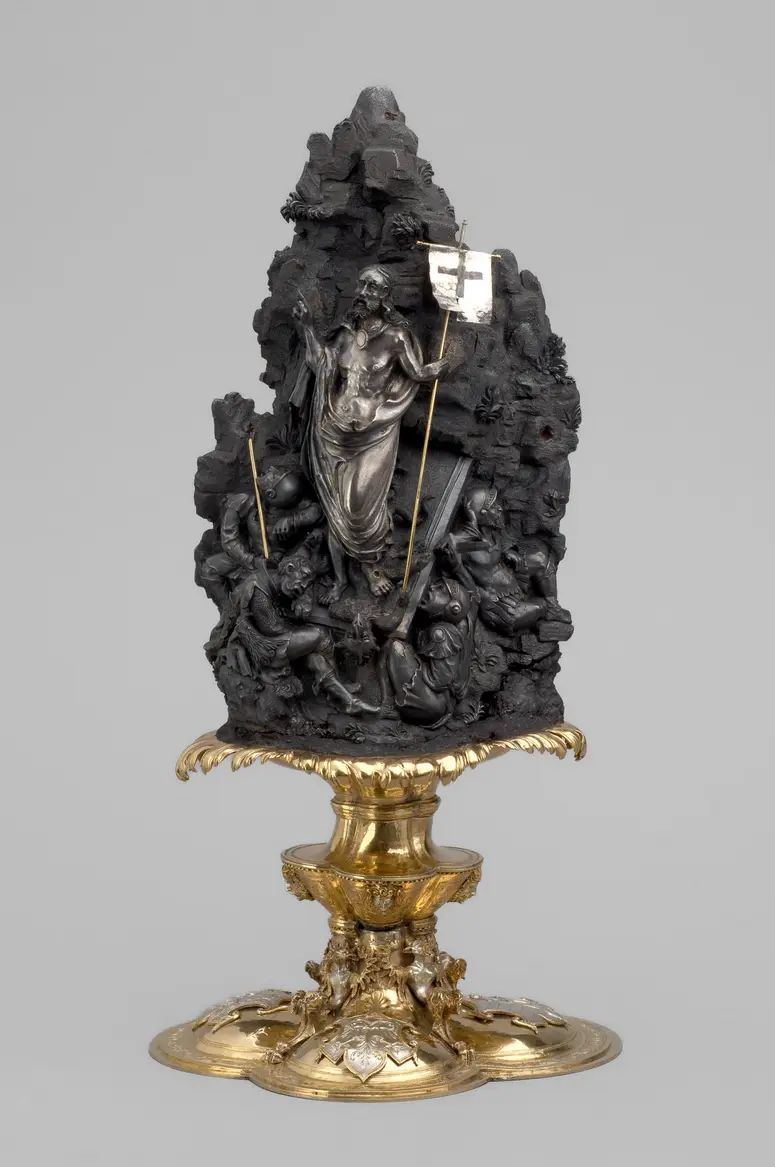
Handstone with the Resurrection and Emperor Charles V after the Battle of Pavia Caspar Ulich ca. 1560
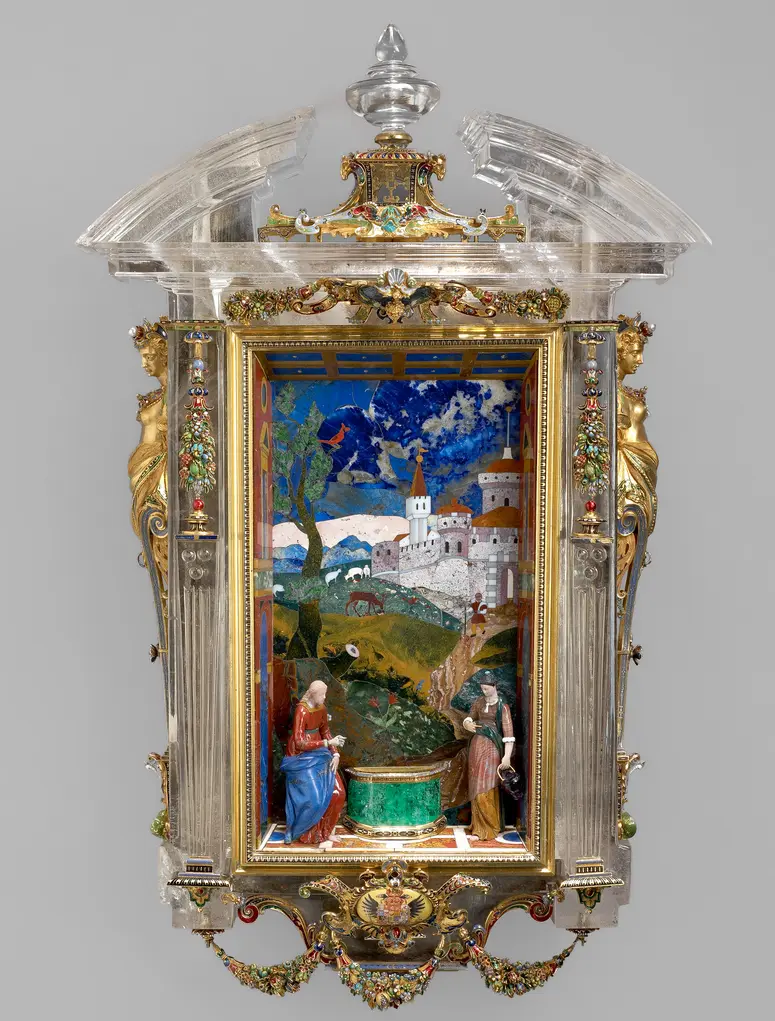
Small Private Altar with Christ and the Woman of Samaria Cristofano Gaffuri ca. 1590/1600
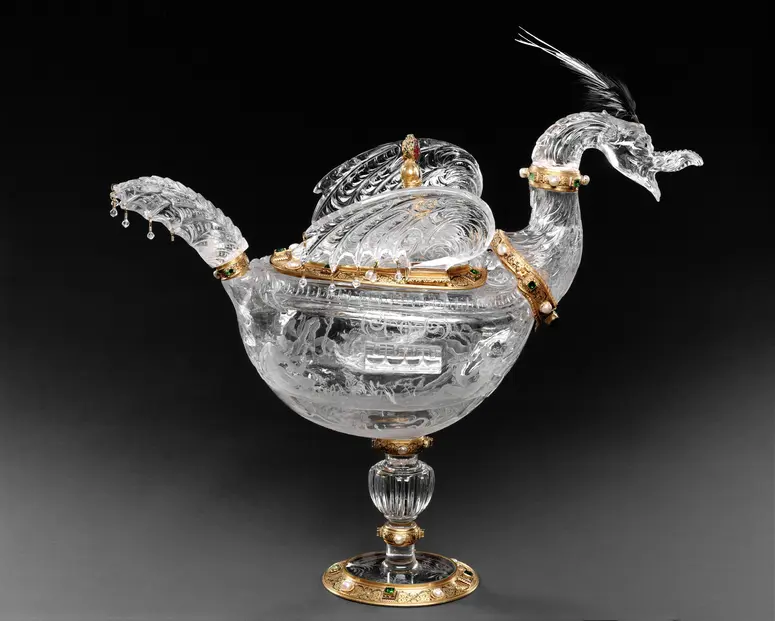
Large Centrepiece in the Shape of a Dragon-bird Saracchi - Werkstatt ca. 1590
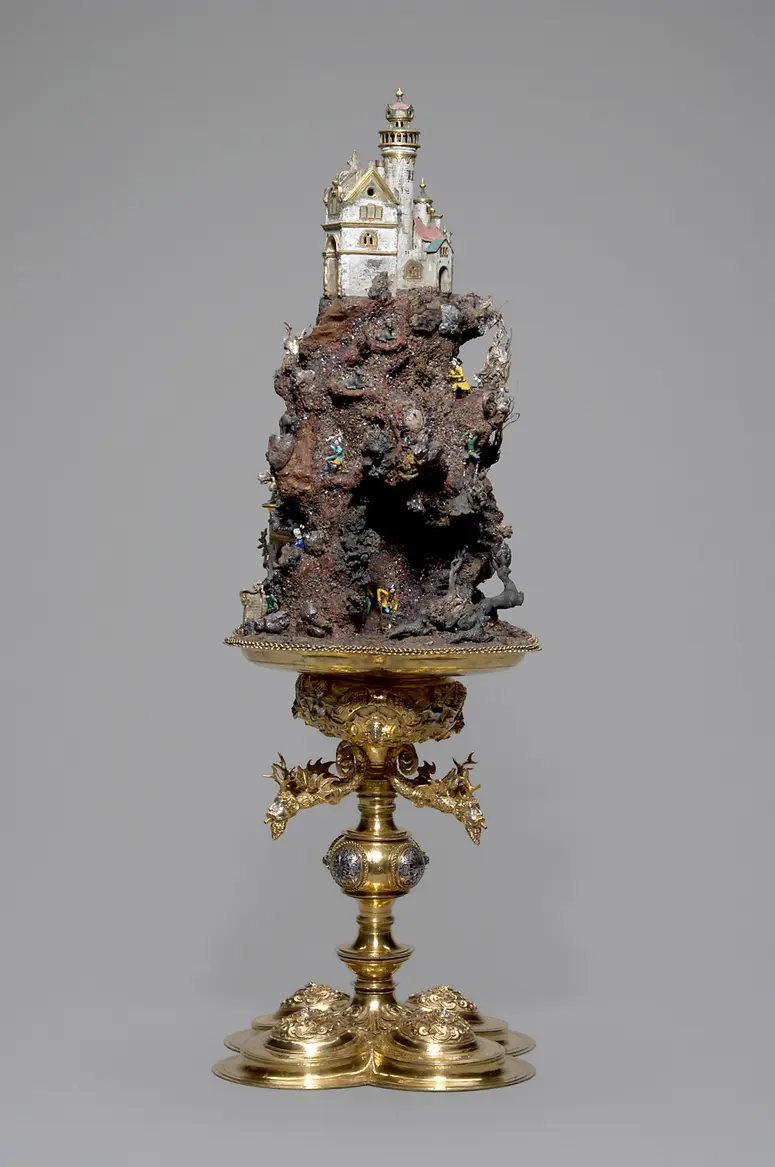
Handstone in the Form of a Table Fountain with David and Bathsheba Caspar Ulich 3rd quarter 16th c.