Landscape with Antique Ruins and Bathing Women
about 1552/53 | Lambert Sustris
Born in Amsterdam, the Netherlands painter Sustris went to Italy at and early age and, following a stay in Rome, settled in Venice in around 1545. Here we find impressions of the art of those two cities combined with a preference found in northern Europe for depicting landscapes. The ruins reflect the artist’s first-hand experience of still extant ancient buildings in Rome: from the Pantheon to the baths, the Temple of Vespasian and the Obelisk.
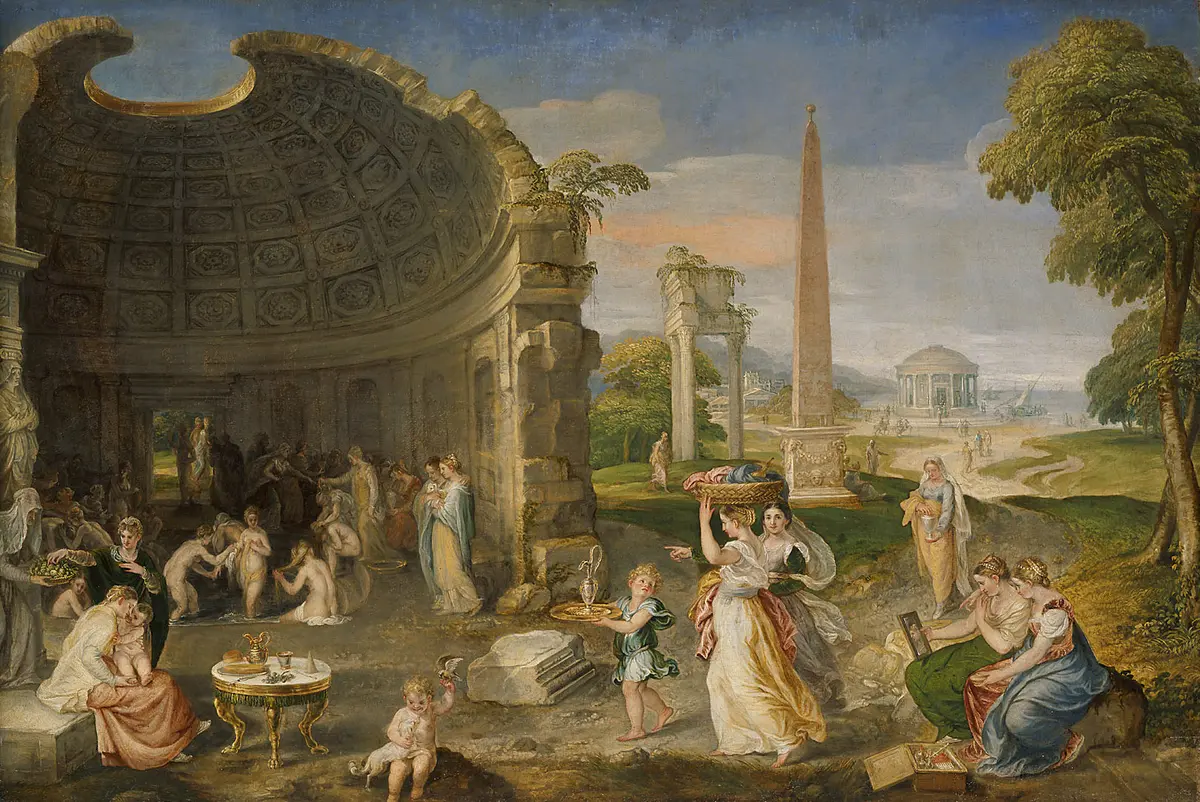
Born in Amsterdam, the Netherlands painter Sustris went to Italy at and early age and, following a stay in Rome, settled in Venice in around 1545. Here we find impressions of the art of those two cities combined with a preference found in northern Europe for depicting landscapes. The ruins reflect the artist’s first-hand experience of still extant ancient buildings in Rome: from the Pantheon to the baths, the Temple of Vespasian and the Obelisk.
Artist:
Lambert Sustris (zw. 1515 und 1520 Amsterdam - nach 1568 oder 1591 Venedig) DNB
Time:
about 1552/53
Object Name
Painting
Culture
Italian, Venetian
Material/technology:
Canvas
Dimensions:
101 x 150 cm
Framed: 122,8 cm × 170,8 cm × 6,5 cm
Copyright
Kunsthistorisches Museum, Gemäldegalerie
Invs.
Gemäldegalerie, 1540
Provenance
From the treasury Prague; 1730 in the gallery in Vienna
Browse more
Similar items you might be interested in
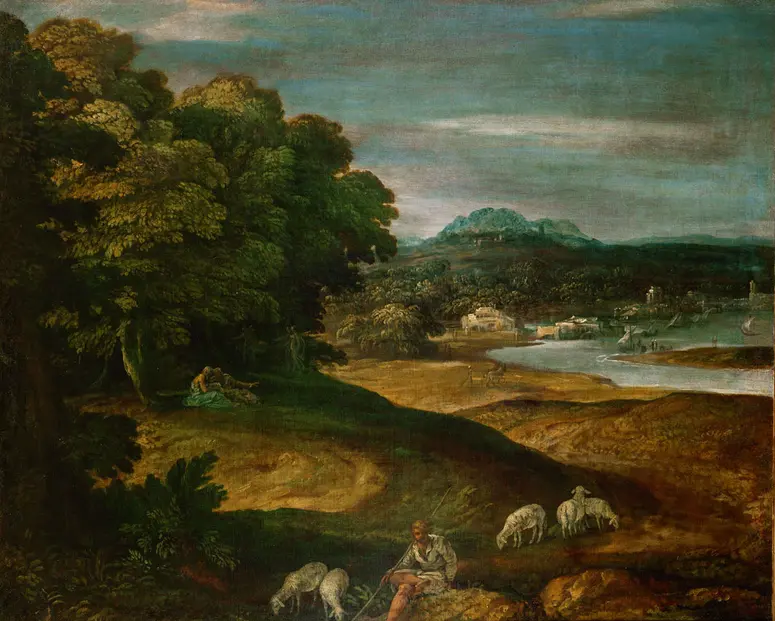
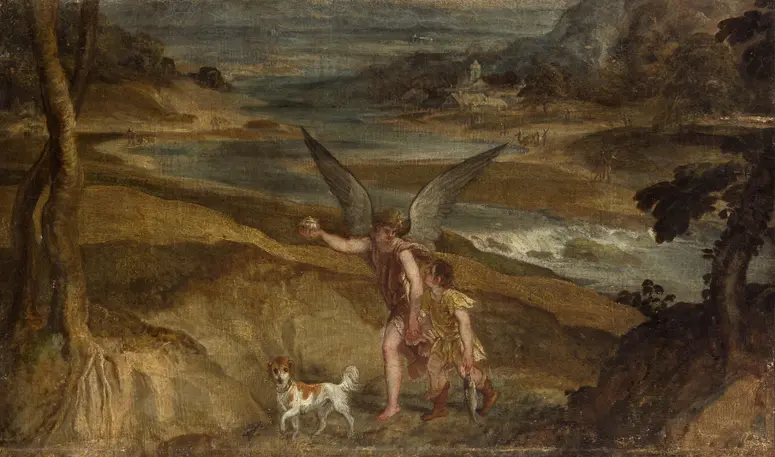
Tobias und der Erzengel Raphael auf Wanderschaft Lambert Sustris 60er Jahre 16. Jahrhundert
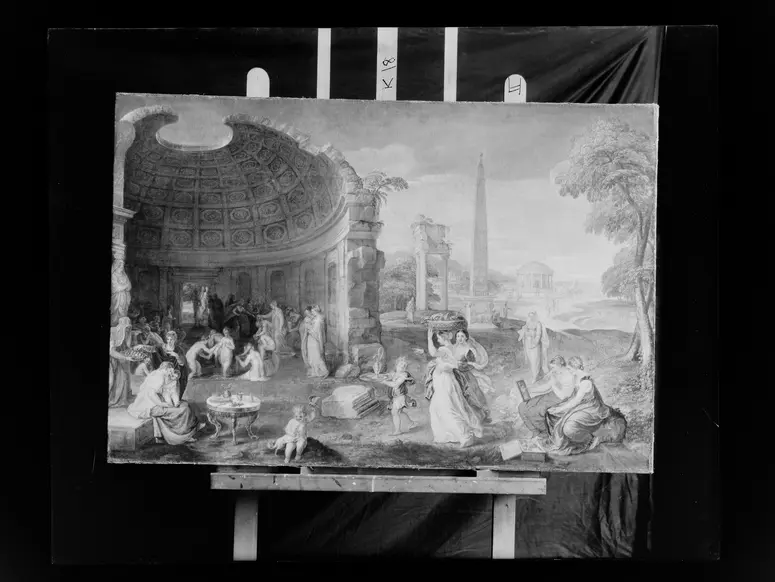
Landschaft mit antiken Ruinen und badenden Frauen J. Löwy, K. und K. Hof-Photograph, Kunst- und Verlagsanstalt (Wien) 1888 bis 1891
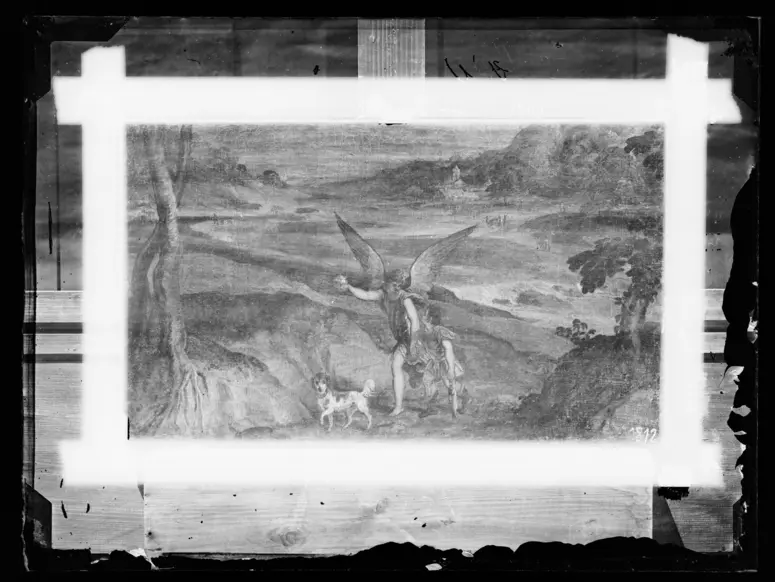
Tobias und der Erzengel Raphael auf Wanderschaft J. Löwy, K. und K. Hof-Photograph, Kunst- und Verlagsanstalt (Wien) 1888 bis 1891

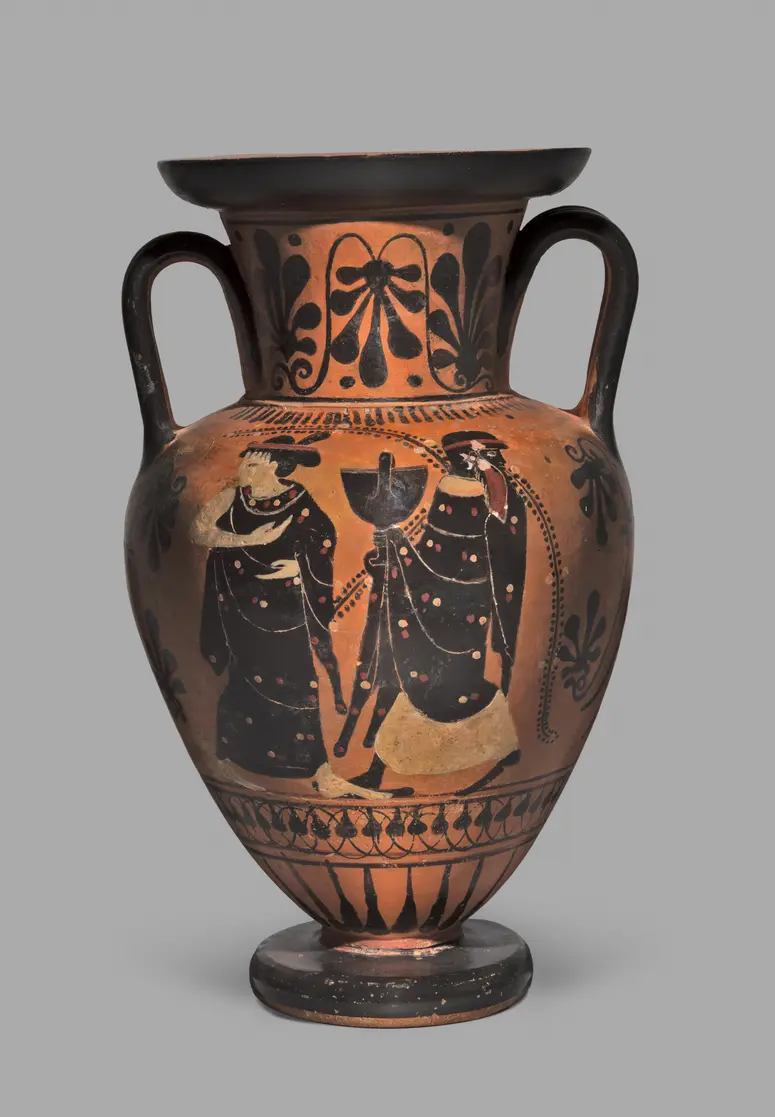
Halsamphora: Dionysos und Mänade Griechisch, Attisch, schwarzfigurig 1. Viertel 5. Jh. v. Chr.
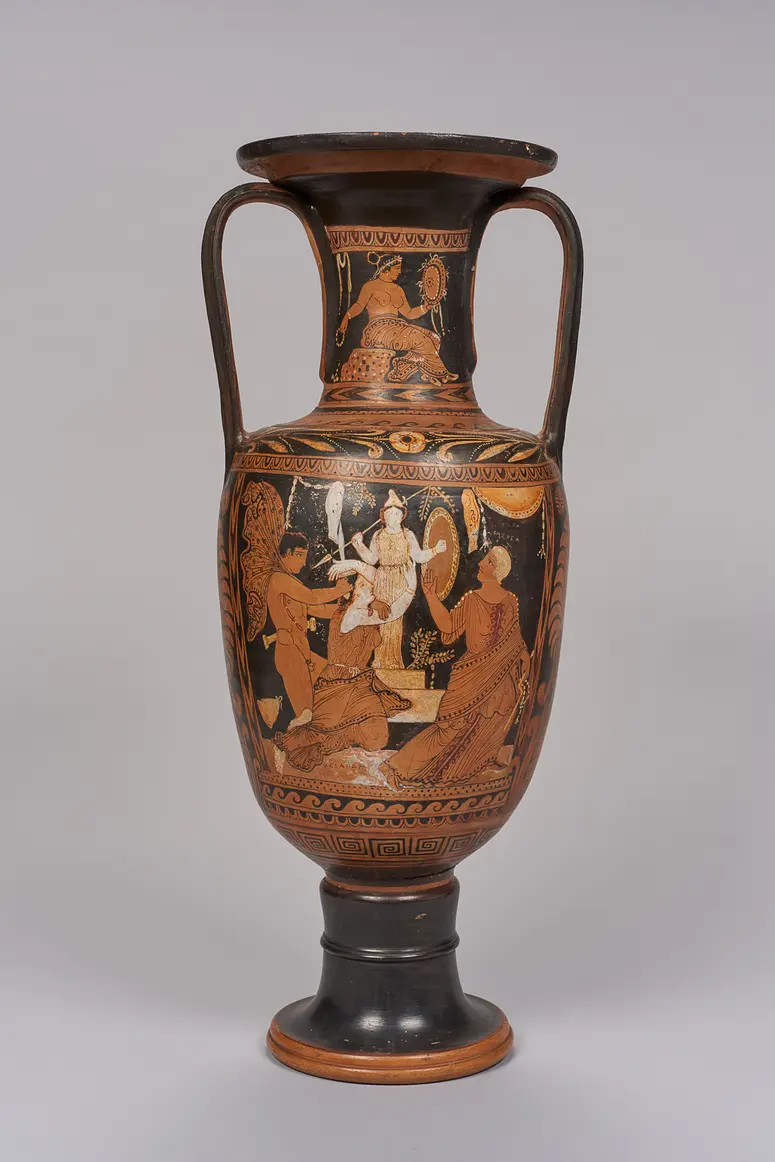
Halsamphora: Raub der Kassandra Unteritalisch, Paestanisch, rotfigurig um 350 v. Chr.