Feldherrenstab
Mitte 16. Jahrhundert
The commander's baton consists of a cylindrical wooden core, which is covered with a formerly golden yellow silk velvet. This was worked in three parts: First, the two ends of the staff were each covered with a piece of fabric, followed by the staff itself. An approx. 5 cm wide metal bobbin lace was wrapped around the baton in a spiral and sewn to the velvet along its serrated outer edges.along its jagged outer edges. The pattern of the border consists of two interlocking rows of diamonds, one of which is worked with silver threads and the other with gold threads. At the two ends of the staff, the border was run parallel to the edge for one turn so that it protruded a few centimetres beyond the staff. This overhang was folded over onto the end of the rod and fixed there with four or five decorative nails. The nails used are probably made of brass, have a diameter of approx. 1 cm and a domed head that is slightly flattened at the top.
According to house tradition, the commander's baton is associated with the armour of Archduke Ferdinand II (A 767). The affiliation is confirmed in the copperplate engraving of Archduke Ferdinand II in the Armamentarium Heroicum. The rank insignia may be connected with Ferdinand's military activities during the siege of the Hungarian town of Sziget by the Ottomans.

The commander's baton consists of a cylindrical wooden core, which is covered with a formerly golden yellow silk velvet. This was worked in three parts: First, the two ends of the staff were each covered with a piece of fabric, followed by the staff itself. An approx. 5 cm wide metal bobbin lace was wrapped around the baton in a spiral and sewn to the velvet along its serrated outer edges.along its jagged outer edges. The pattern of the border consists of two interlocking rows of diamonds, one of which is worked with silver threads and the other with gold threads. At the two ends of the staff, the border was run parallel to the edge for one turn so that it protruded a few centimetres beyond the staff. This overhang was folded over onto the end of the rod and fixed there with four or five decorative nails. The nails used are probably made of brass, have a diameter of approx. 1 cm and a domed head that is slightly flattened at the top.
According to house tradition, the commander's baton is associated with the armour of Archduke Ferdinand II (A 767). The affiliation is confirmed in the copperplate engraving of Archduke Ferdinand II in the Armamentarium Heroicum. The rank insignia may be connected with Ferdinand's military activities during the siege of the Hungarian town of Sziget by the Ottomans.
Time:
Mitte 16. Jahrhundert
Object Name
Feldherrenstab
Culture
Deutsch (Prag, Innsbruck ?)
Material/technology:
Holz, Seidensamt, Messing, Goldfäden, Metallklöppelborte
Dimensions:
Länge: 72,5 cm; Dm. ca. 3,7 cm
Copyright
Hofjagd- und Rüstkammer/ Ambras
Invs.
Hofjagd- und Rüstkammer, A 767d
Browse more
Similar items you might be interested in
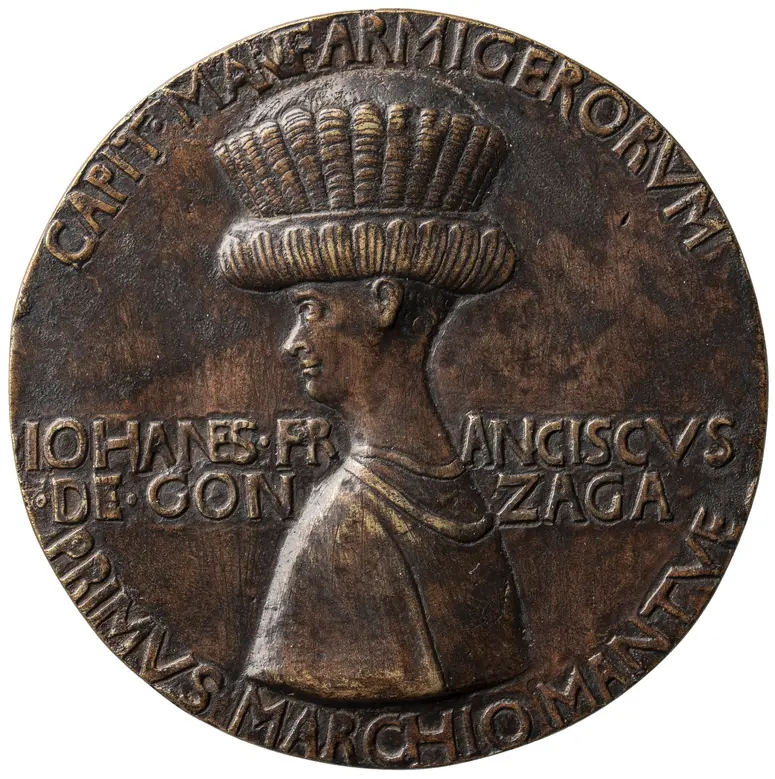
Gianfrancesco Gonzaga (1479-1496), Graf von Sabbioneta, Herr von Bozzolo ca. 1439–1444

Kaiser Matthias (1557-1619), Bildnis als Erzherzog im Harnisch in ganzer Figur, mit einem Feldherrenstab Lucas I. van Valckenborch 1579 datiert
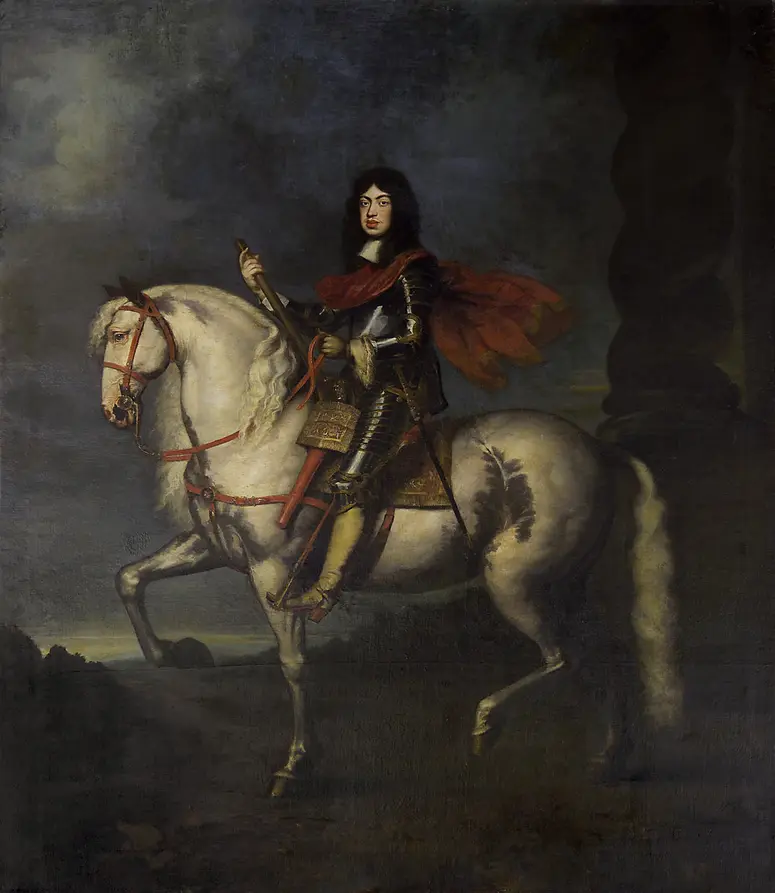
Reiterbildnis von Kaiser Leopold I. (1640-1705) Mattäus Merian d. J. um 1658
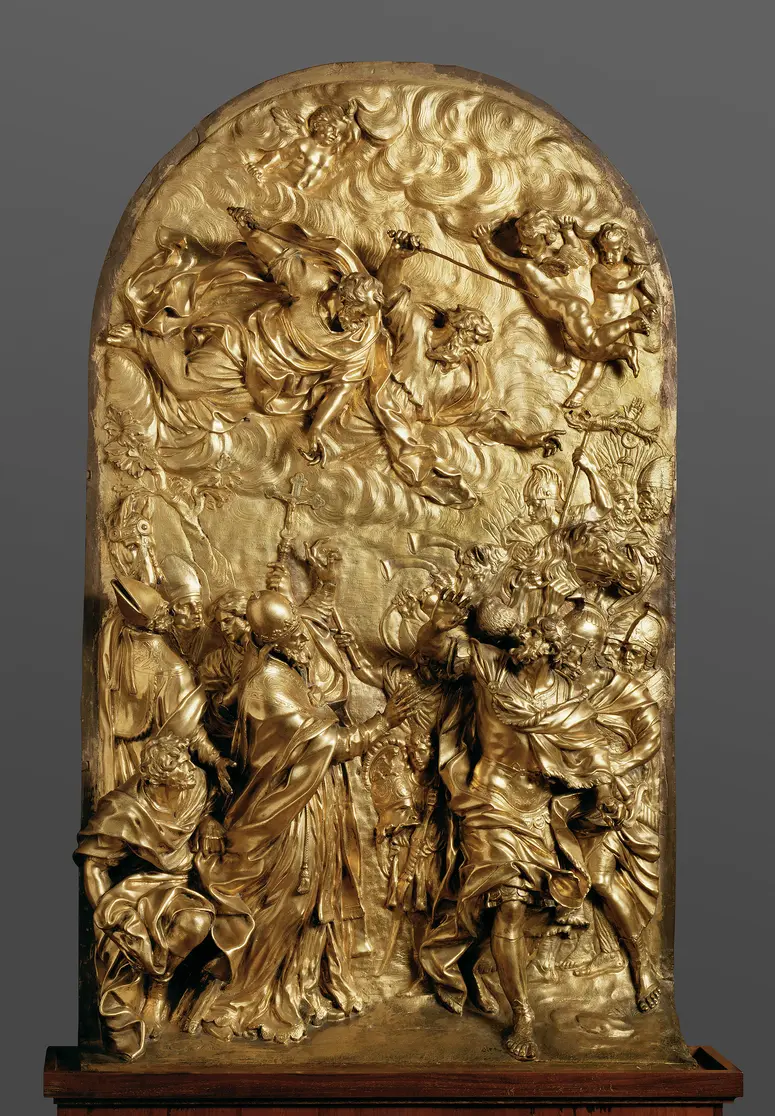
Die Begegnung von Papst Leo des Großen mit dem Hunnenkönig Attila Ercole Ferrata nach 1657

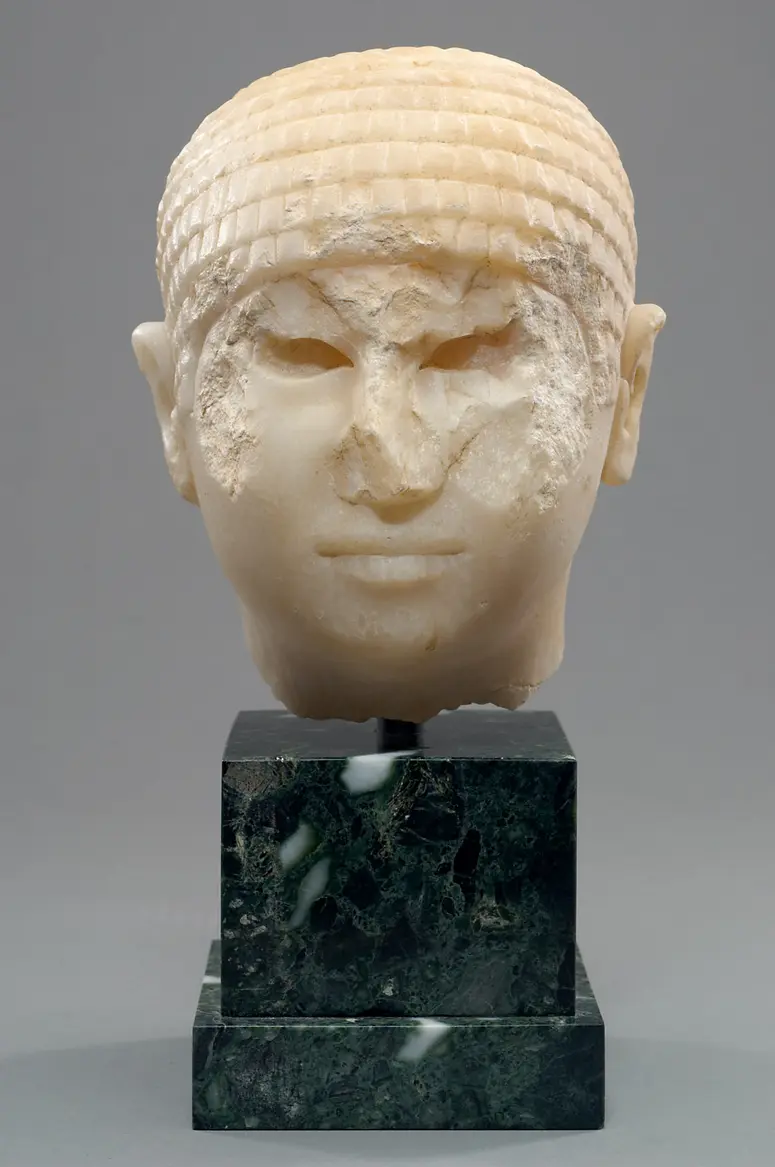
Kopf einer Statue des Ba-ba-ef Giza, Mastaba des Ba-ba-ef (G. 5230), Schutt der Nordwand Frühe 5. Dynastie, um 2500 v. Chr.
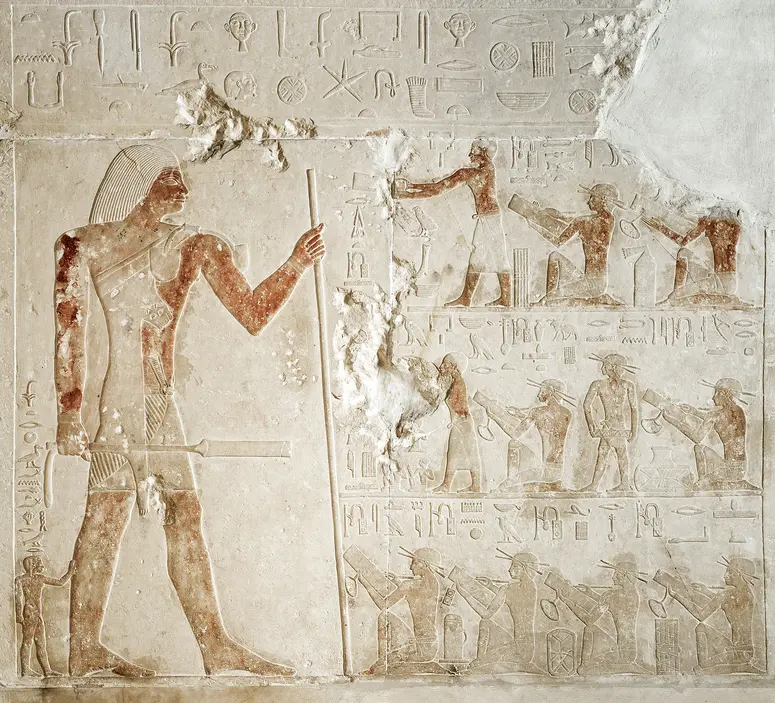
Chapel of Ka-ni-nisut Giza, Westfriedhof, Mastaba des Ka-ni-nisut early 5th Dynasty, ca. 2500 BC