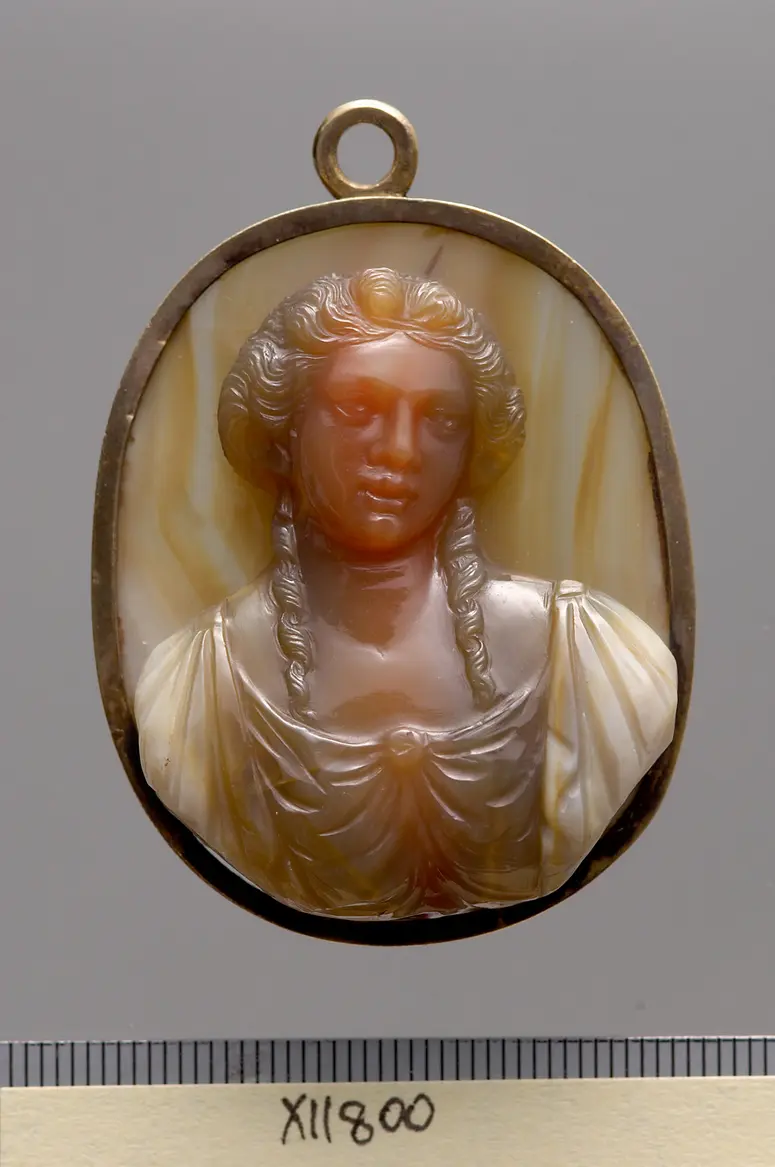
Emperor Rudolf II
ca. 1612 (?) | Ottavio Miseroni
Precious stones have always played an important role in the representation of power. In the case of Rudolf II, a great passion for such stones was combined with the desire to use them in the portrayal of his imperial majesty. In the tradition of ancient Roman imperators, cameos were to preserve his image for posterity. Panels assembled from a variety of stones depict his capital of Prague or symbols of his rule.
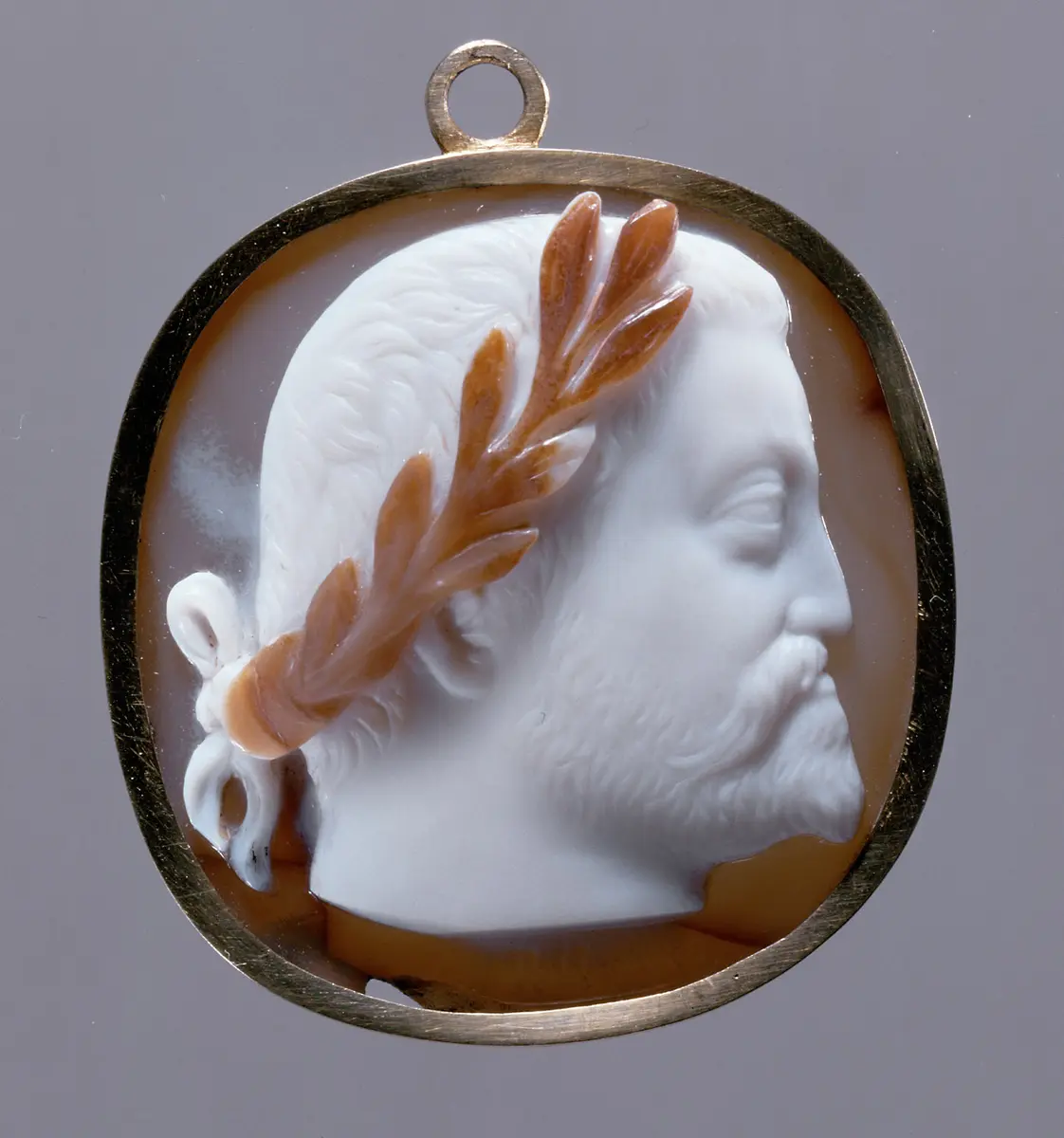
Precious stones have always played an important role in the representation of power. In the case of Rudolf II, a great passion for such stones was combined with the desire to use them in the portrayal of his imperial majesty. In the tradition of ancient Roman imperators, cameos were to preserve his image for posterity. Panels assembled from a variety of stones depict his capital of Prague or symbols of his rule.
Artist:
Ottavio Miseroni , (Schnitt) (1567 Mailand - 1624 Prag) DNB
Workshop:
Prager Hofwerkstatt , (Fassung) (Anfang 17. Jahrhundert)
Depiction/Person:
Rudolf II. (1576-1612), Kaiser, römischer König ab 1575, König von Ungarn ab 1572, von Böhmen se (1552 - 1612) DNB
Time:
ca. 1612 (?)
Object Name
Cameo
Culture
Prague
Material/technology:
Onyx, gilded silver
Dimensions:
H. 4,8 cm, B. 4,2 cm
Inscribed
R II
Copyright
Kunsthistorisches Museum, Kunstkammer
Invs.
Antikensammlung, XII 60
Browse more
Similar items you might be interested in
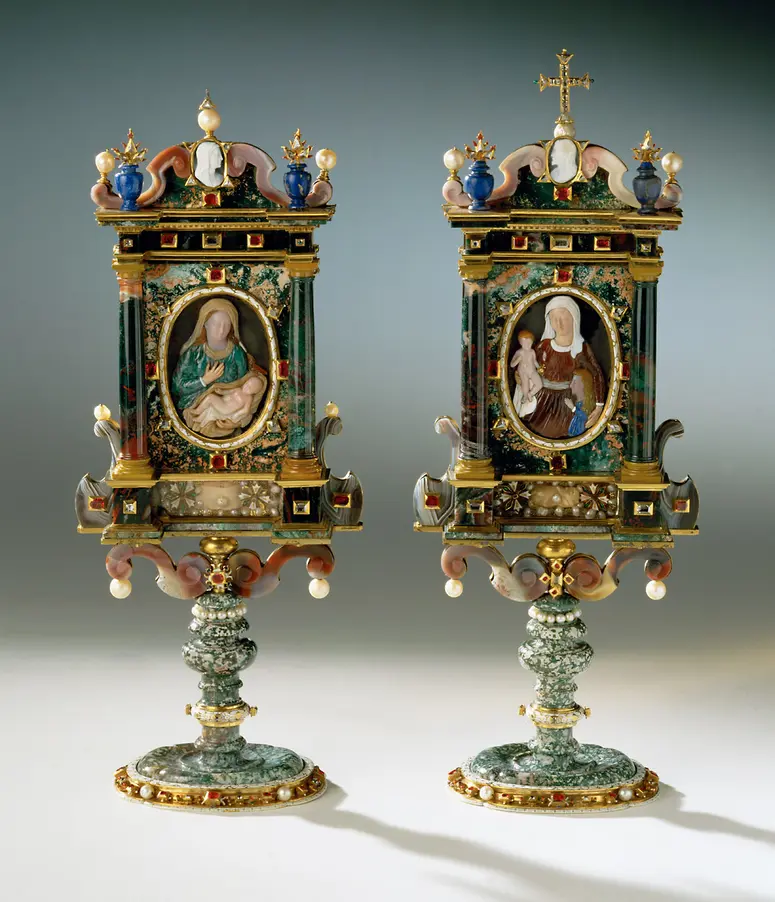
Zwei Reliquienmonstranzen Ottavio Miseroni um 1620
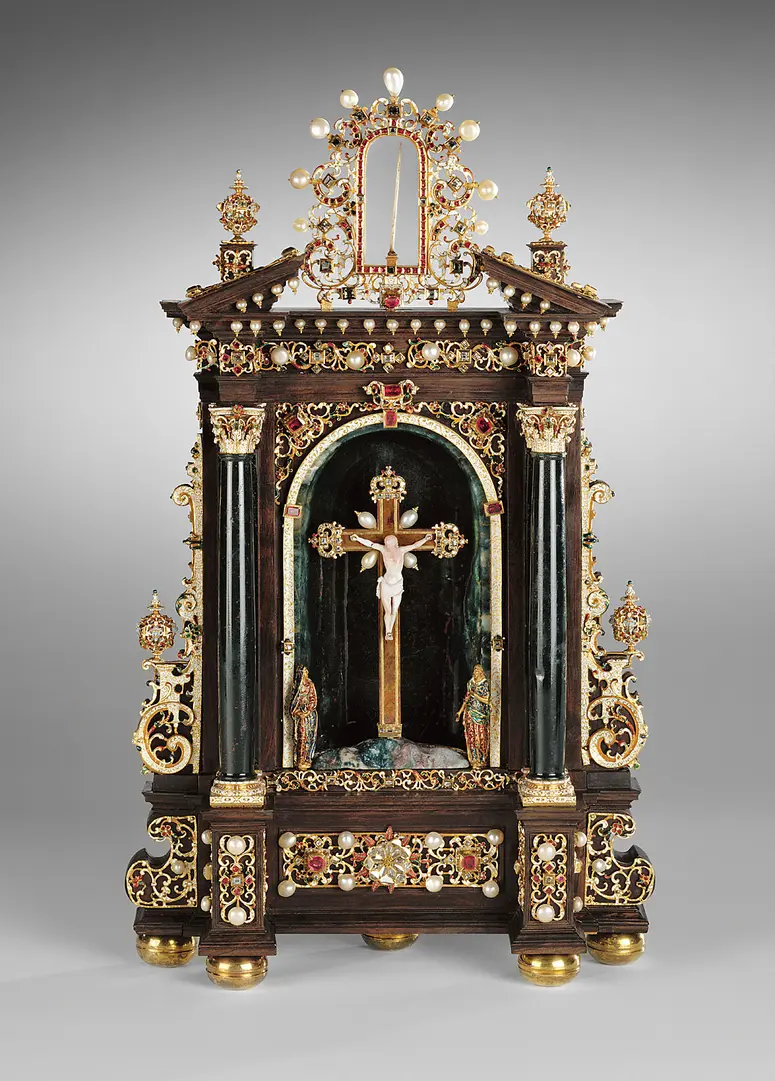
Reliquienaltärchen für einen Dorn der Krone Christi, mit Kreuzigungsgruppe Ottavio Miseroni Anfang 17. Jahrhundert