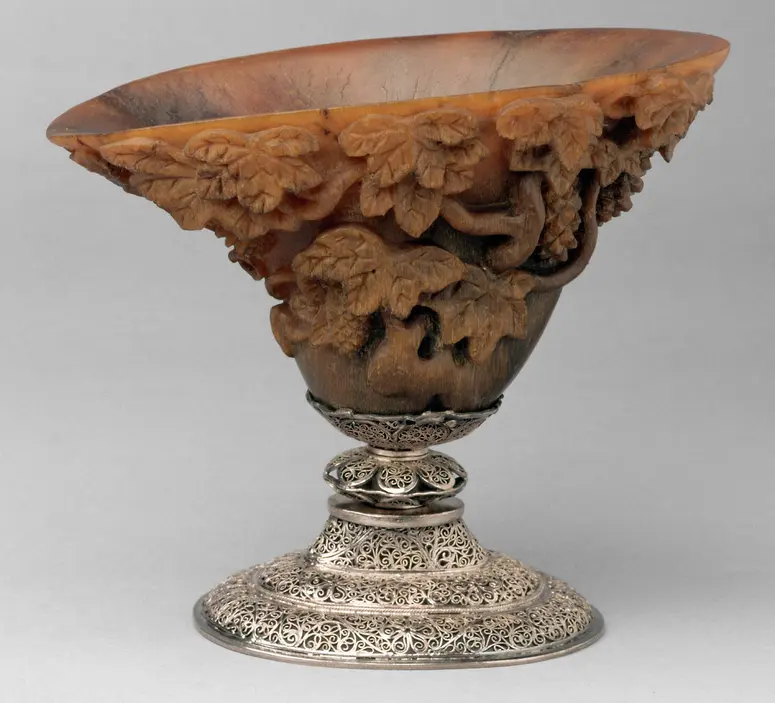
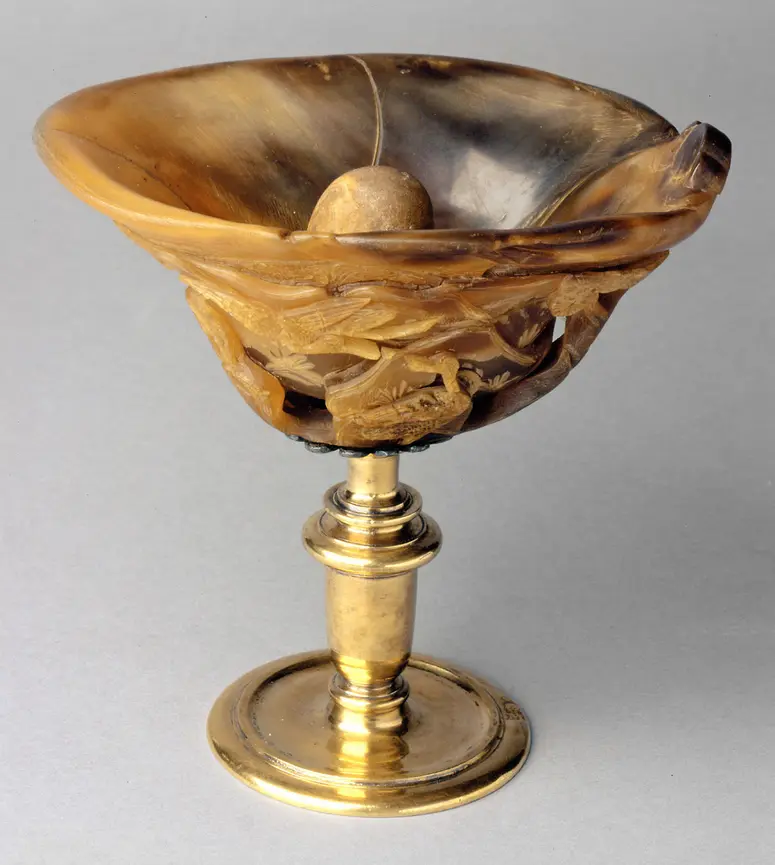
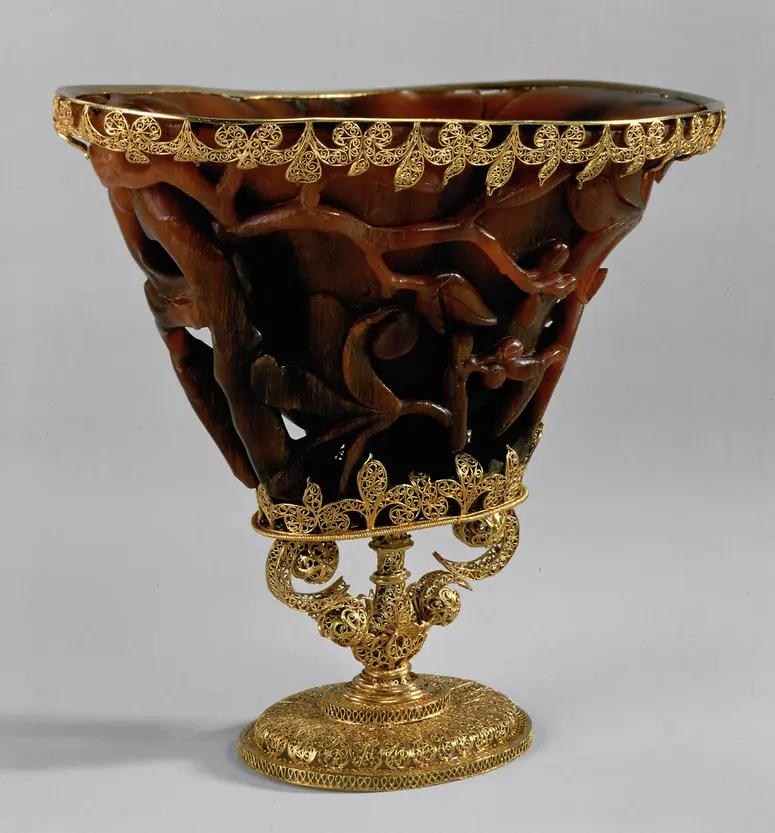
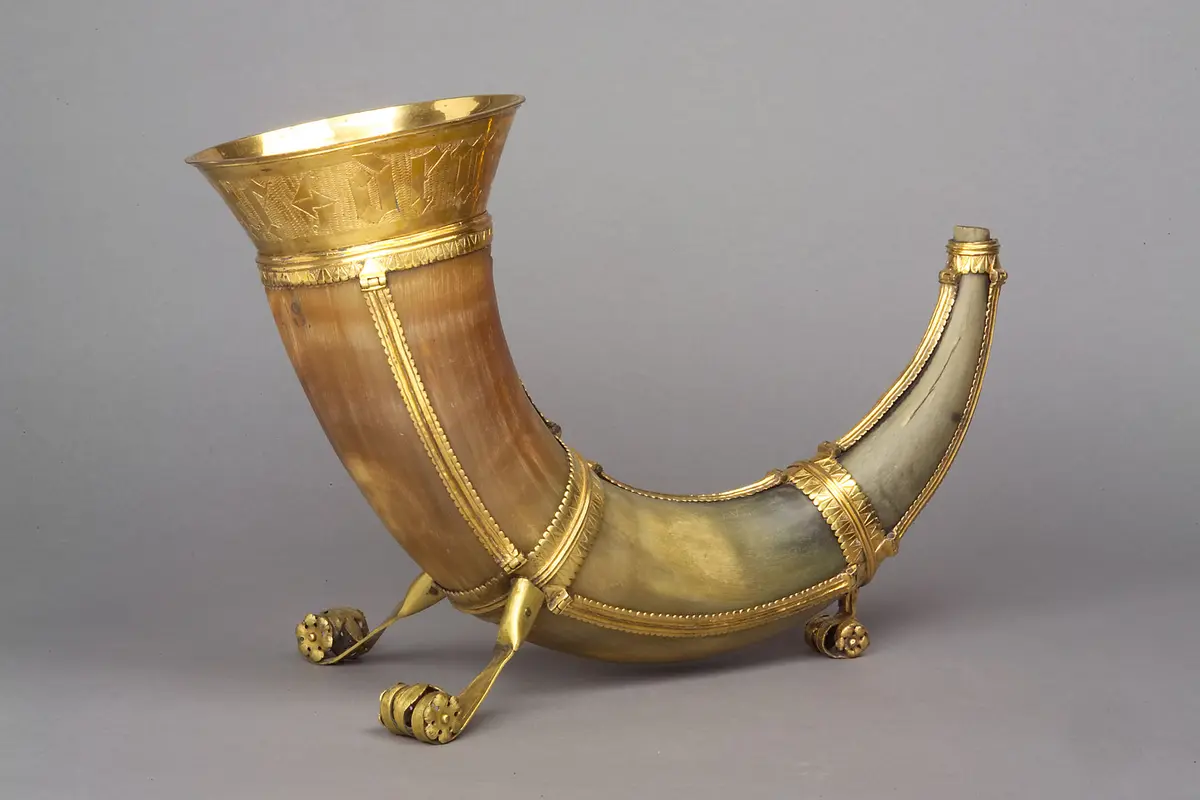
Drinking Horn, so-called Griffon’s Claw
2nd half 14th c.
Secular Treasures in an Ecclesiastical Context As bishops and abbots of important monasteries held court like secular princes they, too, owned precious tableware that was stored in their treasuries. Decorative objects and ornamental vessels were also frequently donated to religious institutions by the faithful so that originally secular artefacts often acquired new functions as liturgical instruments or reliquaries.
Secular Treasures in an Ecclesiastical Context As bishops and abbots of important monasteries held court like secular princes they, too, owned precious tableware that was stored in their treasuries. Decorative objects and ornamental vessels were also frequently donated to religious institutions by the faithful so that originally secular artefacts often acquired new functions as liturgical instruments or reliquaries.
Time:
2nd half 14th c.
Object Name
Vessel; Drinking Horn
Culture
Northern German (?)
Material/technology:
Horn, gilded silver
Dimensions:
29,4 cm × 45,4 cm, 1673 g
Inscribed
benedicite dews (Mundrand)
Copyright
Kunsthistorisches Museum, Kunstkammer
Invs.
Kunstkammer, 111
Browse more
Similar items you might be interested in
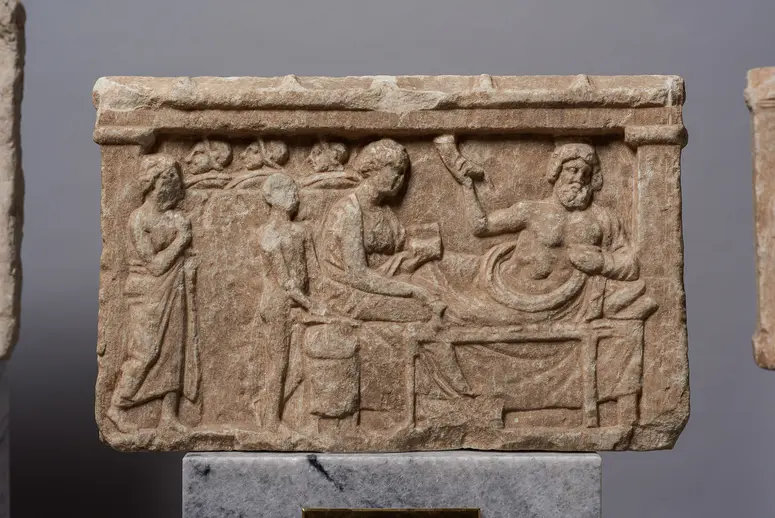
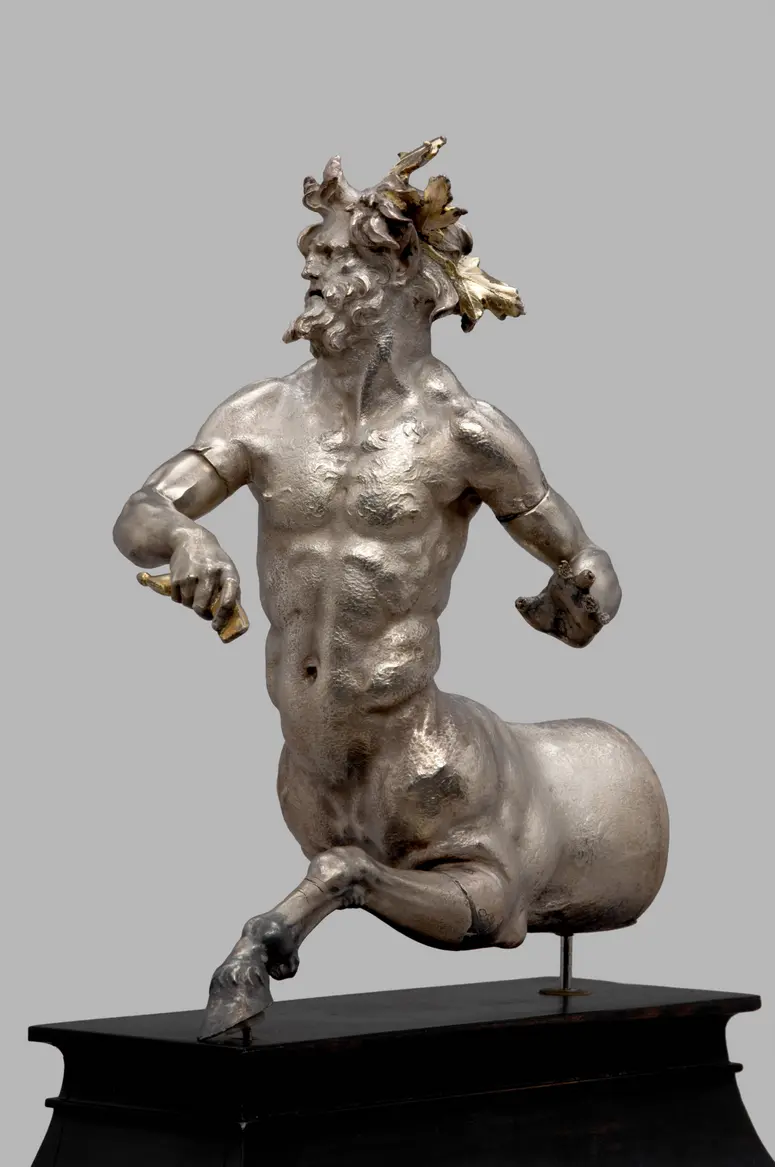
Teil eines Rhyton: Silberkentaur Griechisch, Hellenistisch (seleukidisch) um 160 v. Chr.
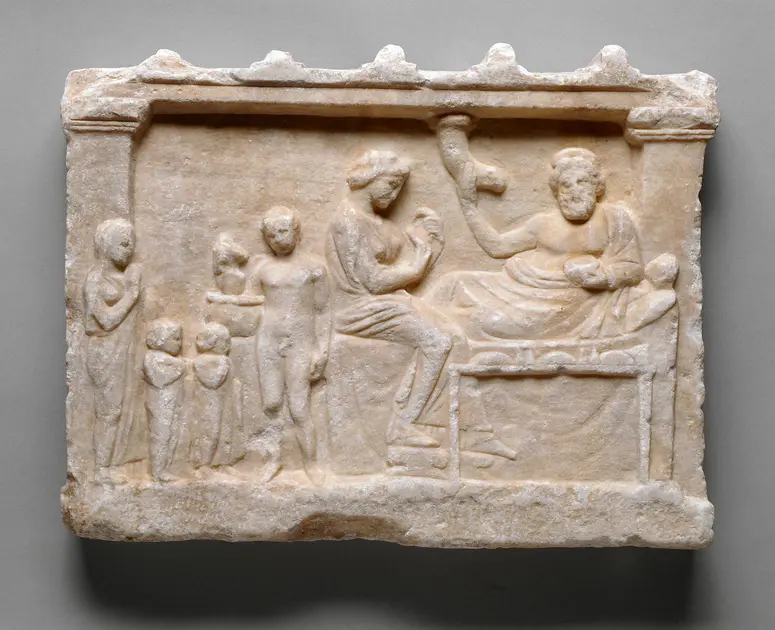
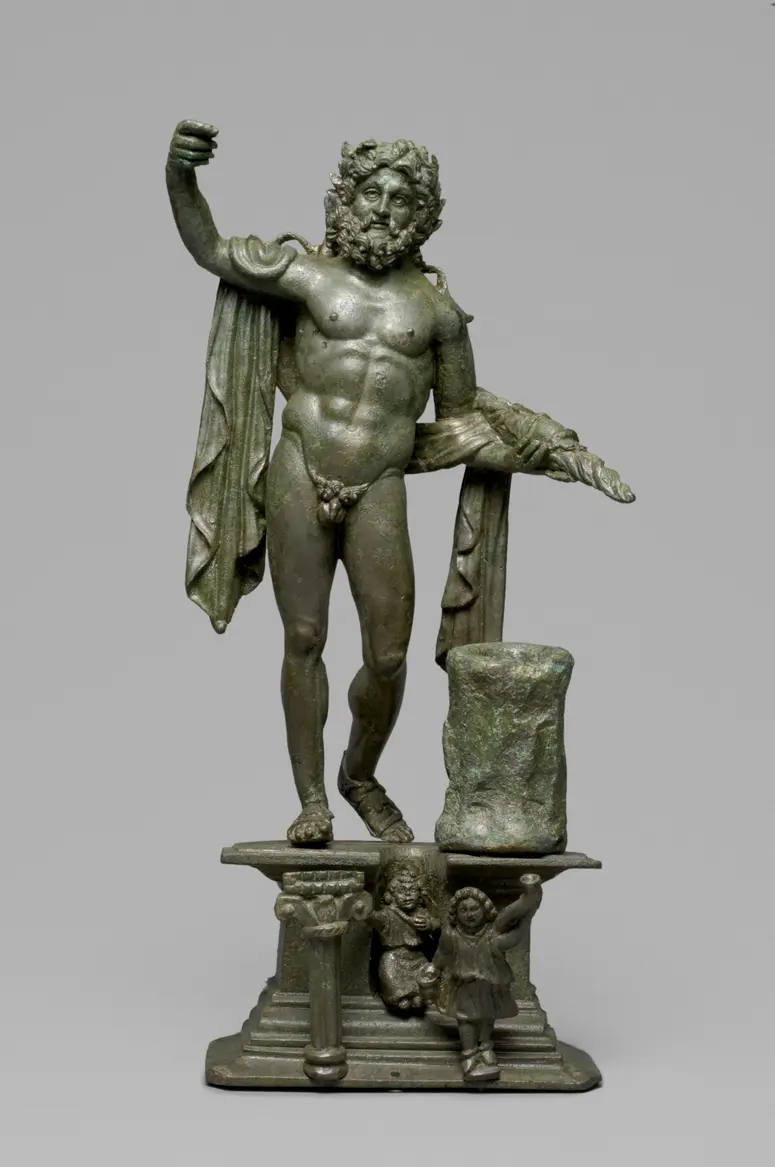
Statuette: Jupiter mit Blitzbündel und Szepter Römisch, Mittlere Kaiserzeit 2. Hälfte 2. Jh. n. Chr.
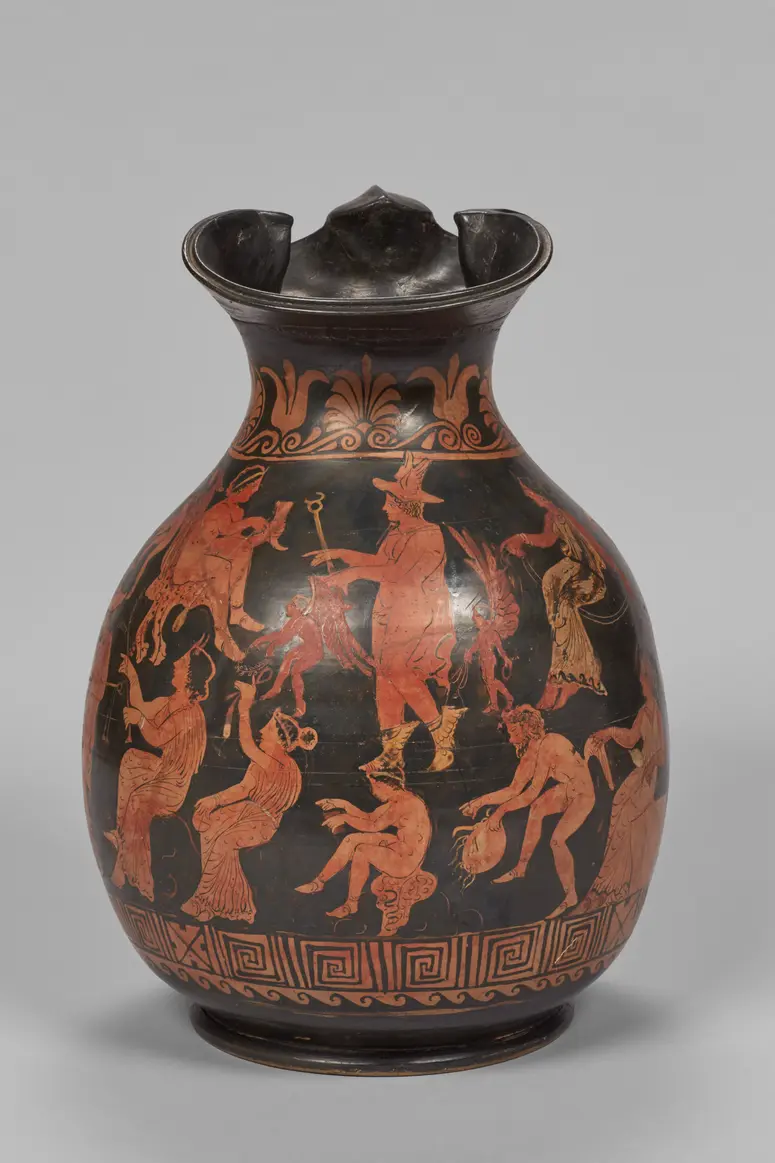
Oinochoe (Weinkanne): Io und die Danaiden Unteritalisch, Kampanisch, rotfigurig Mitte 4. Jh. v. Chr.