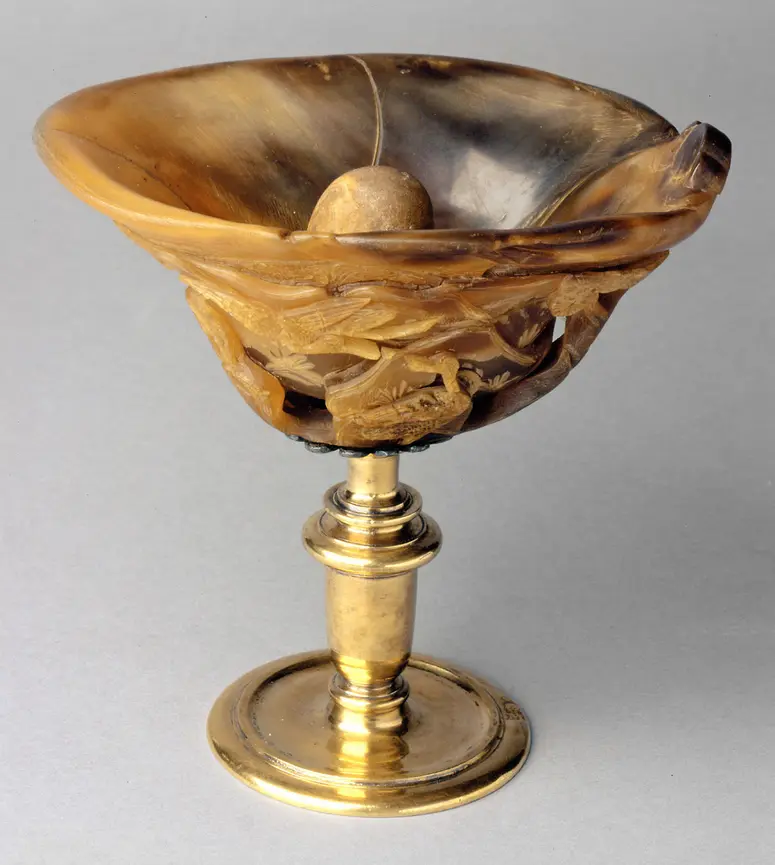
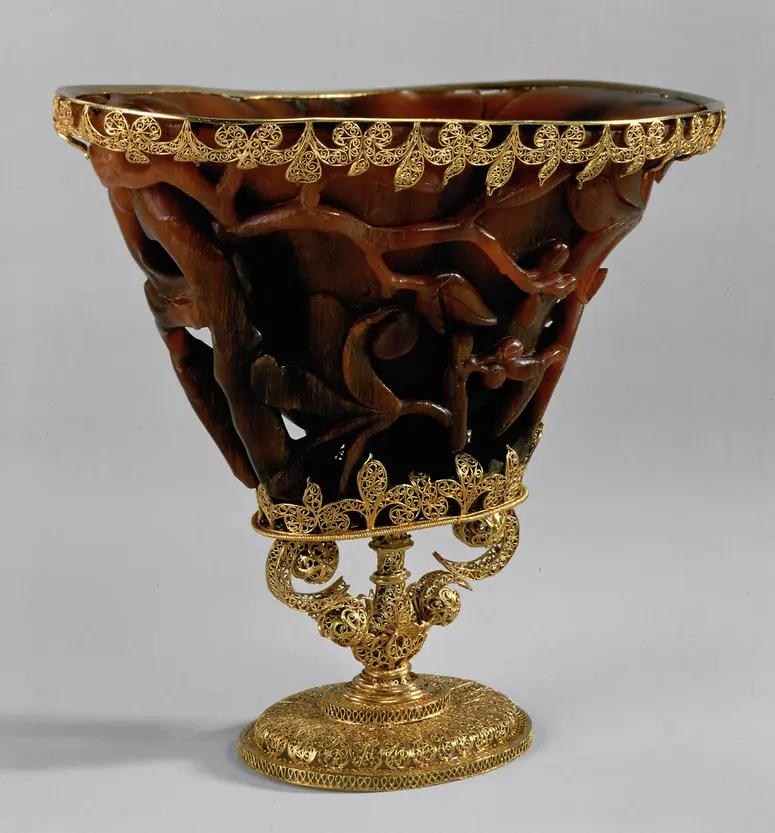
Drinking Horn, so-called Griffin’s Claw
1st half 15th c.
Pomp and Circumstance: Sumptuous Sideboards Court festivities have always served to demonstrate a host’s status and wealth to the admitted members of the public. In the 15th century, sideboards set with precious objects were a prominent feature of such occasions: gold, silver, and rock crystal vessels were placed next to griffin’s claws, so-called Natternzungenkredenzen (table decorations set with “adders’ tongues”) or burr-wood cups: all of them materials credited with magical powers to protect from poison.
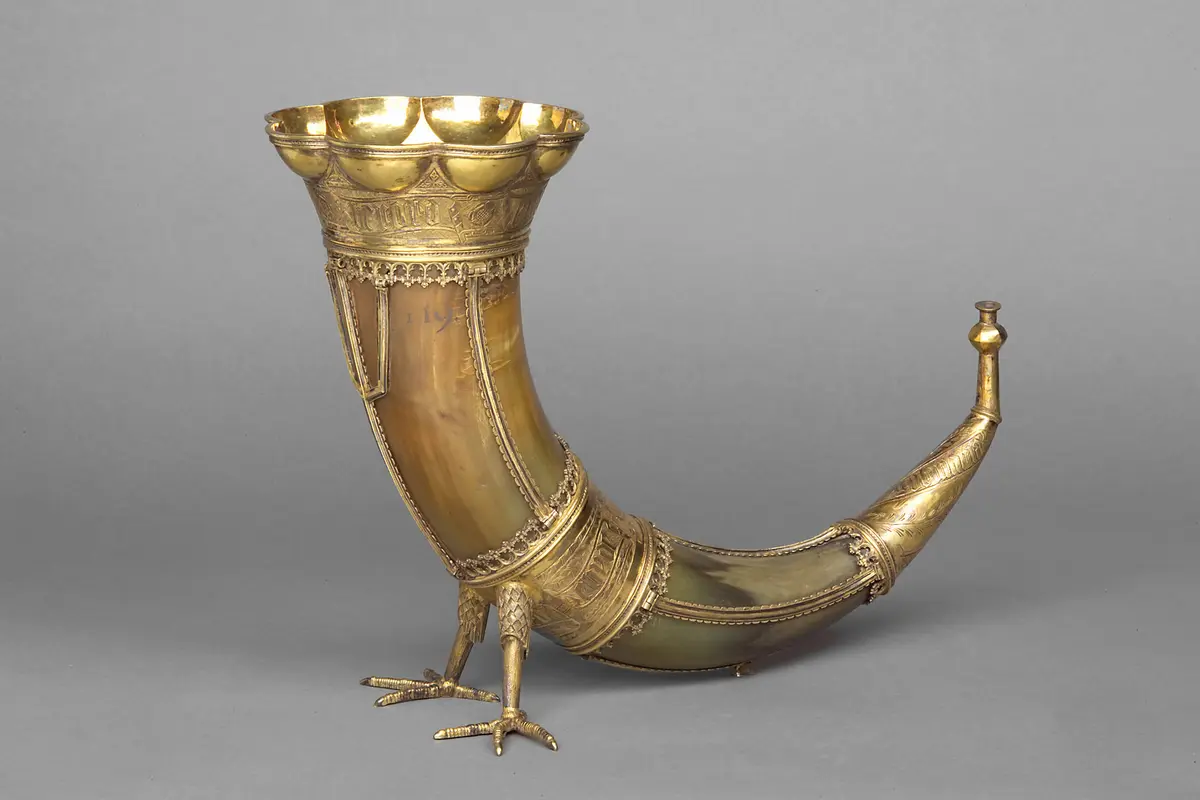
Pomp and Circumstance: Sumptuous Sideboards Court festivities have always served to demonstrate a host’s status and wealth to the admitted members of the public. In the 15th century, sideboards set with precious objects were a prominent feature of such occasions: gold, silver, and rock crystal vessels were placed next to griffin’s claws, so-called Natternzungenkredenzen (table decorations set with “adders’ tongues”) or burr-wood cups: all of them materials credited with magical powers to protect from poison.
Time:
1st half 15th c.
Object Name
Vessel; Drinking Horn
Culture
Scandinavian or Northern German
Material/technology:
Horn, gilded silver
Dimensions:
32 cm × 42,2 cm, 2035 g
Inscribed
maria / berotd / emlyle / hilf got (Mundrand); maria / m / berot / m / demlyb / w / ehyde / (Mittelreifen); hilf got maria / dem lybe byder (Spitze)
Copyright
Kunsthistorisches Museum, Kunstkammer
Invs.
Kunstkammer, 108
Browse more
Similar items you might be interested in
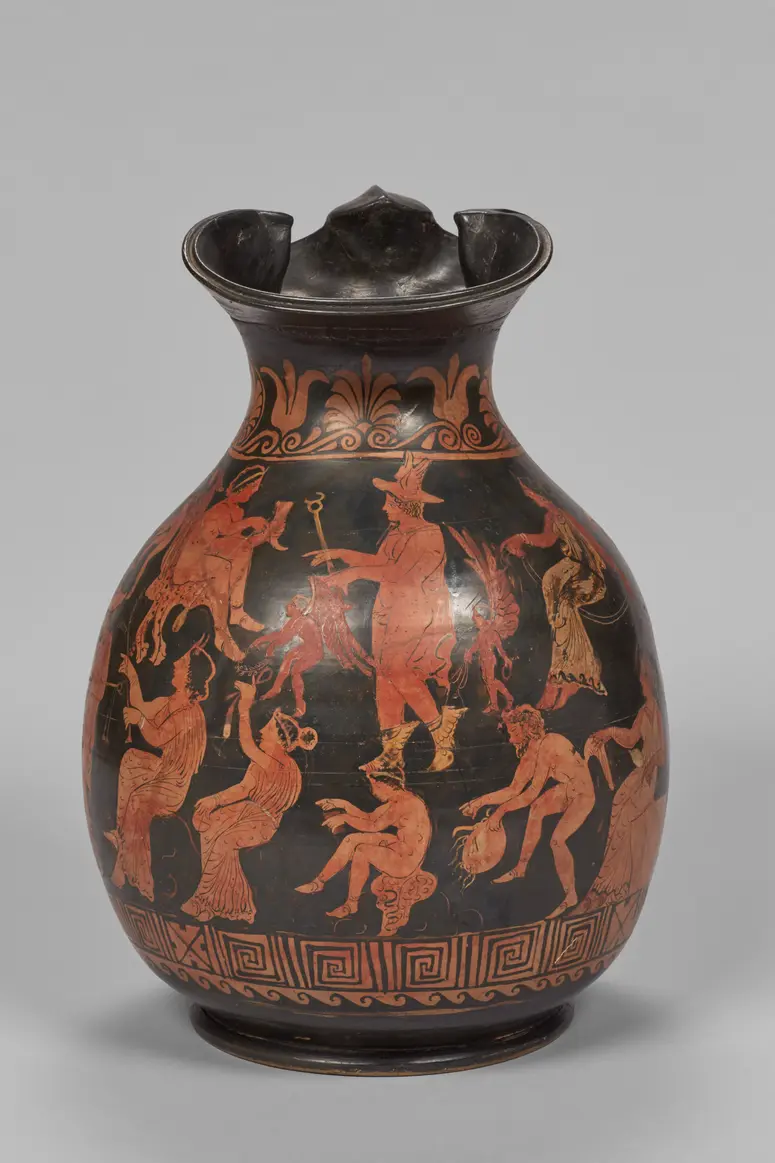
Oinochoe (Weinkanne): Io und die Danaiden Unteritalisch, Kampanisch, rotfigurig Mitte 4. Jh. v. Chr.
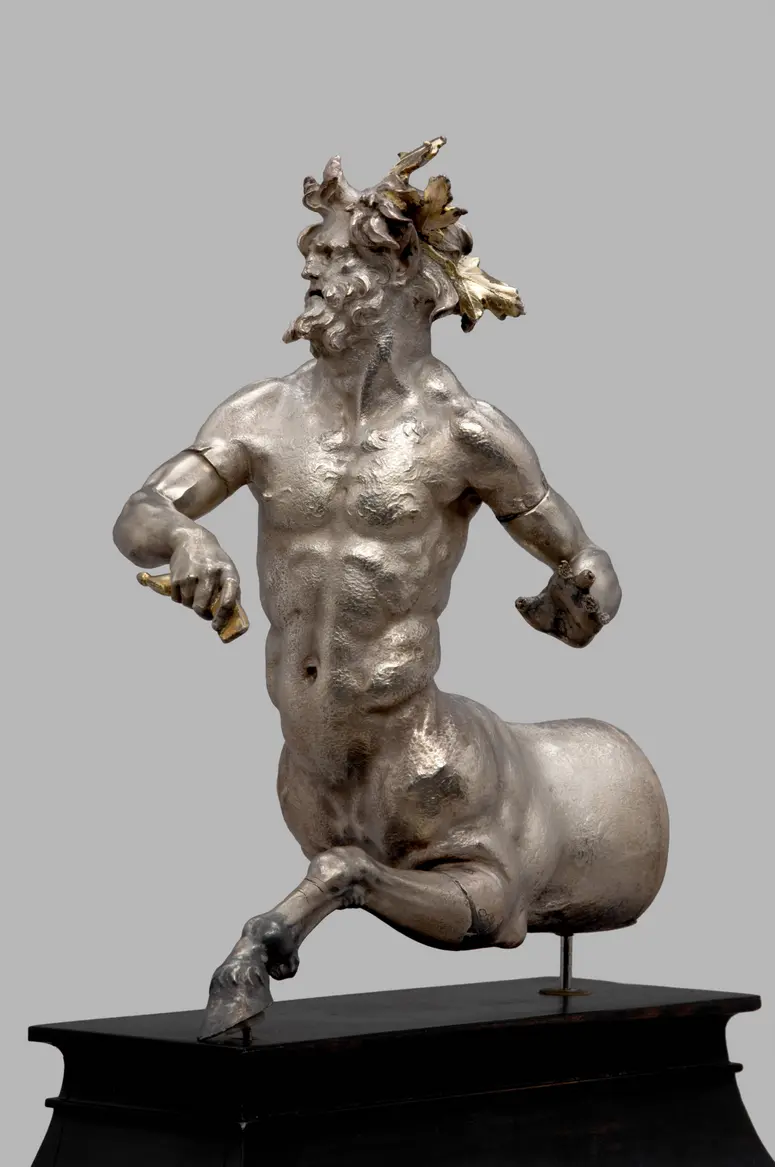
Teil eines Rhyton: Silberkentaur Griechisch, Hellenistisch (seleukidisch) um 160 v. Chr.
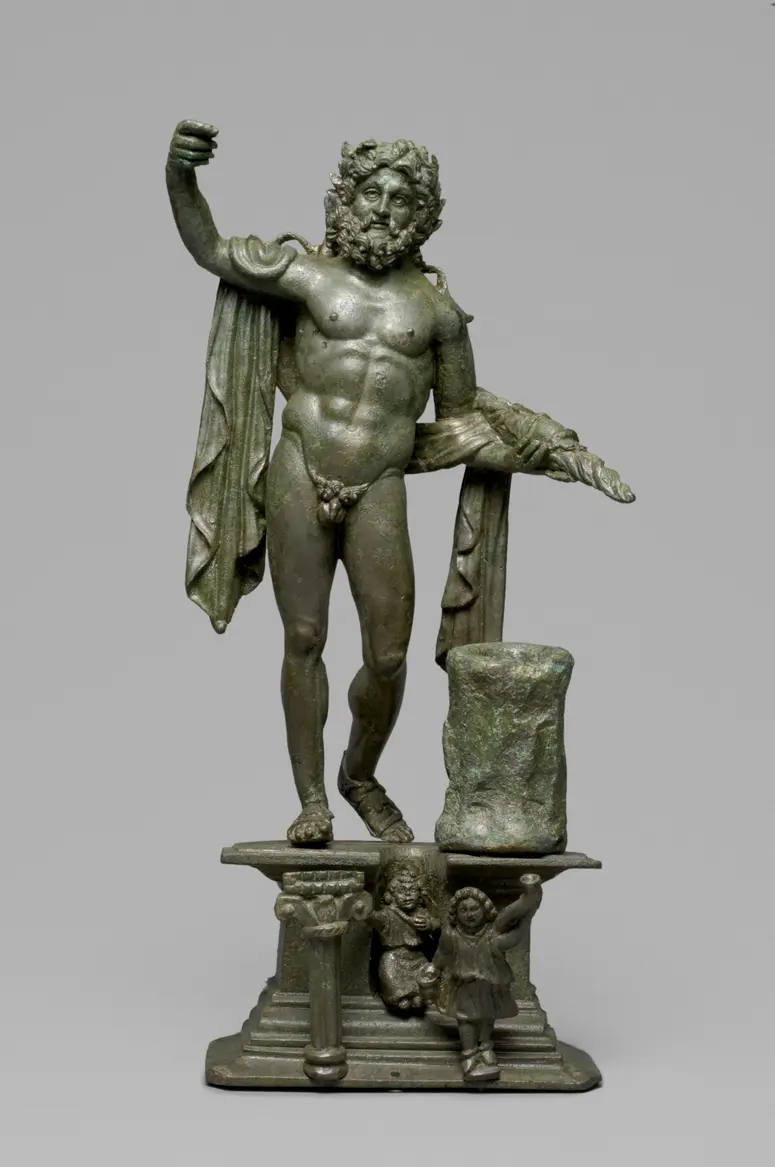
Statuette: Jupiter mit Blitzbündel und Szepter Römisch, Mittlere Kaiserzeit 2. Hälfte 2. Jh. n. Chr.
Ferdinand III. (1637-1657), Kaiser Mitte 17. Jahrhundert
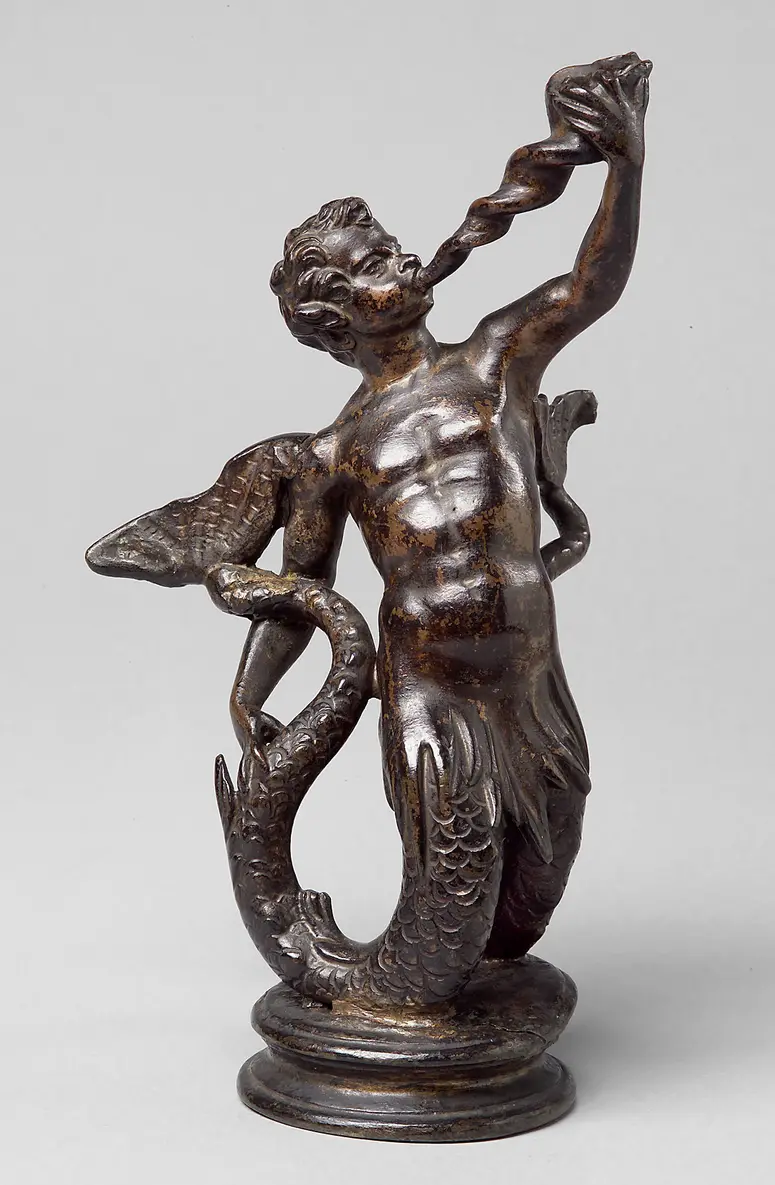
Muschelblasender Triton, Statuette, Bronze Nicolo Roccatagliata 1. Viertel 17. Jahrhundert