Dionysos
1. Hälfte 1. Jh. n. Chr.
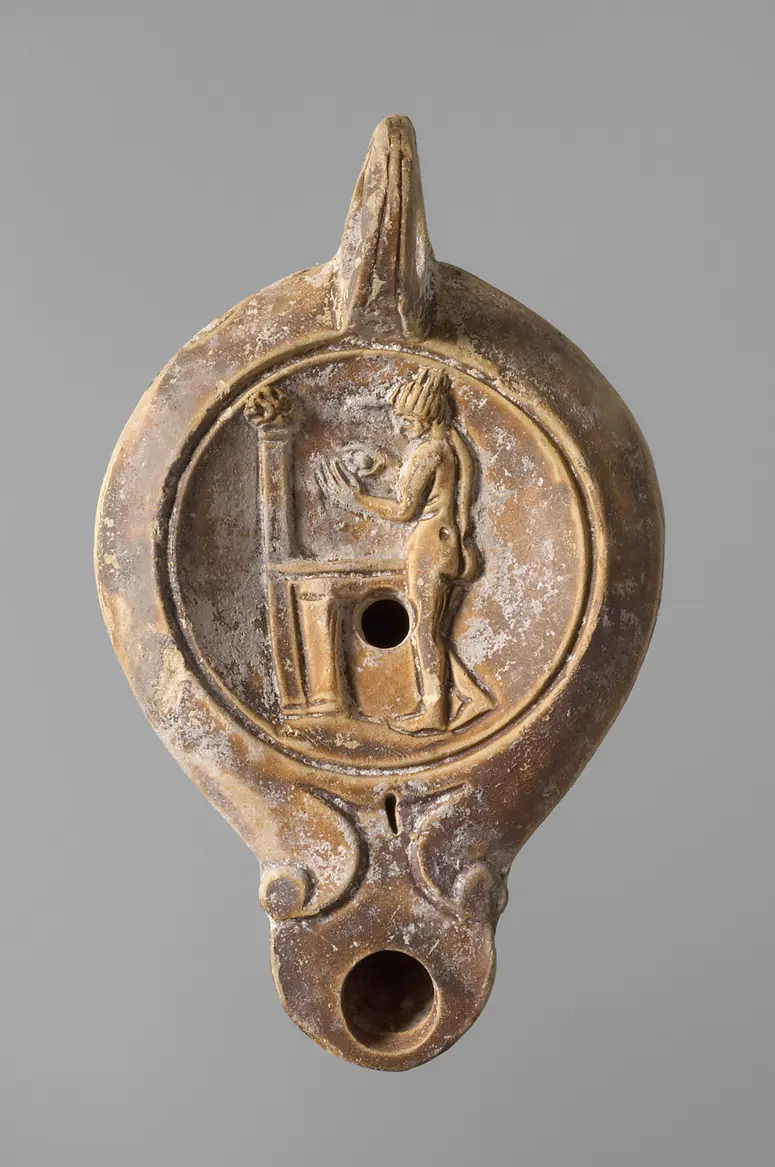
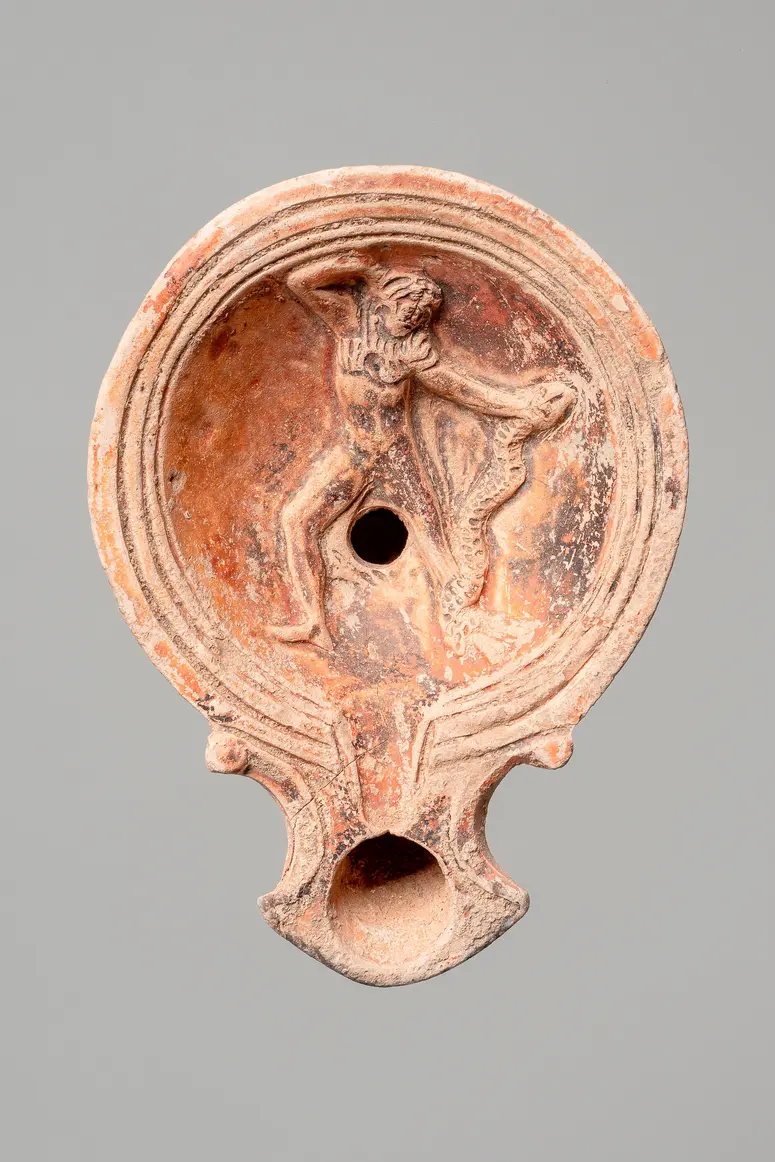
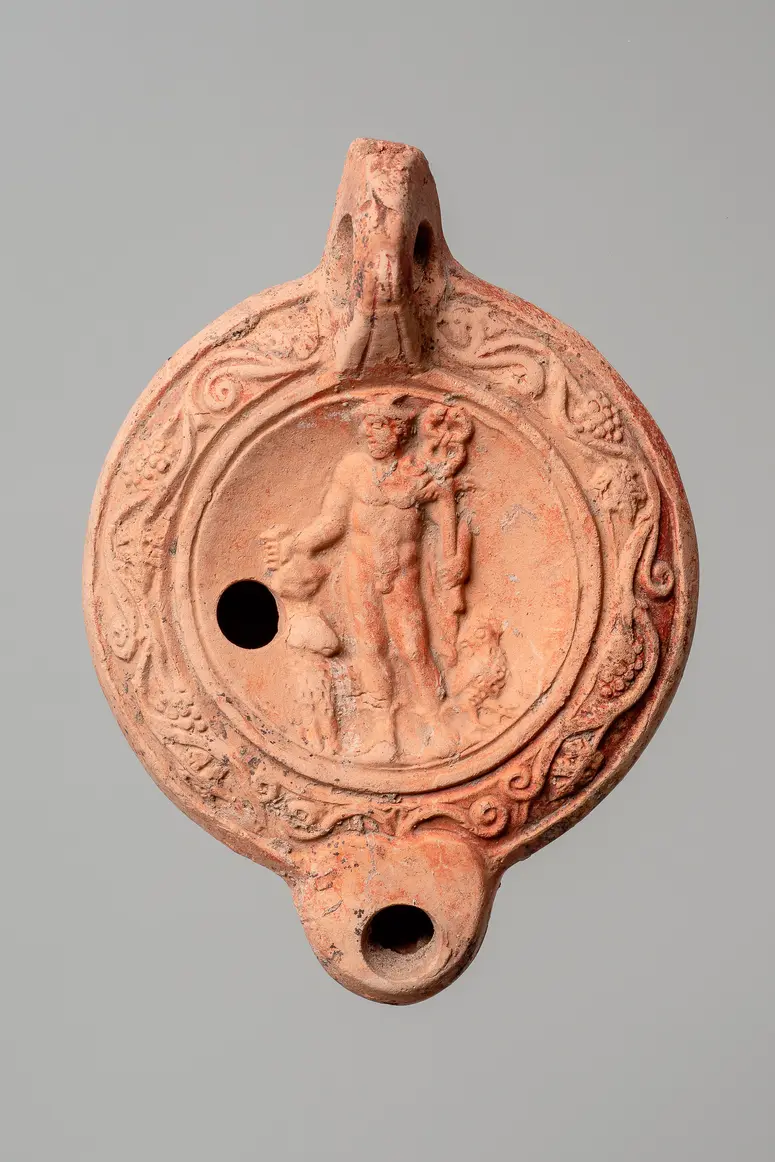
Der bacchische Lebensraum wird hier auf idyllische Weise vorgeführt: Der Gott des Weines, Theaters und der Vegetation steht nackt und bekränzt in bukolischer Landschaft, seinen Stab (Thyrsos) und ein Trinkgefäß (Kantharos) haltend. Ein Panther erhebt den Blick zu ihm nach oben, links ist ein Weinstock mit reichen Trauben zu sehen. S. Stoss, in: Seperate but Inseperable: Mythology and Culture of Ancient Greece and Rome. Ausstellungskatalog National Museum of Korea (Seoul 2023).
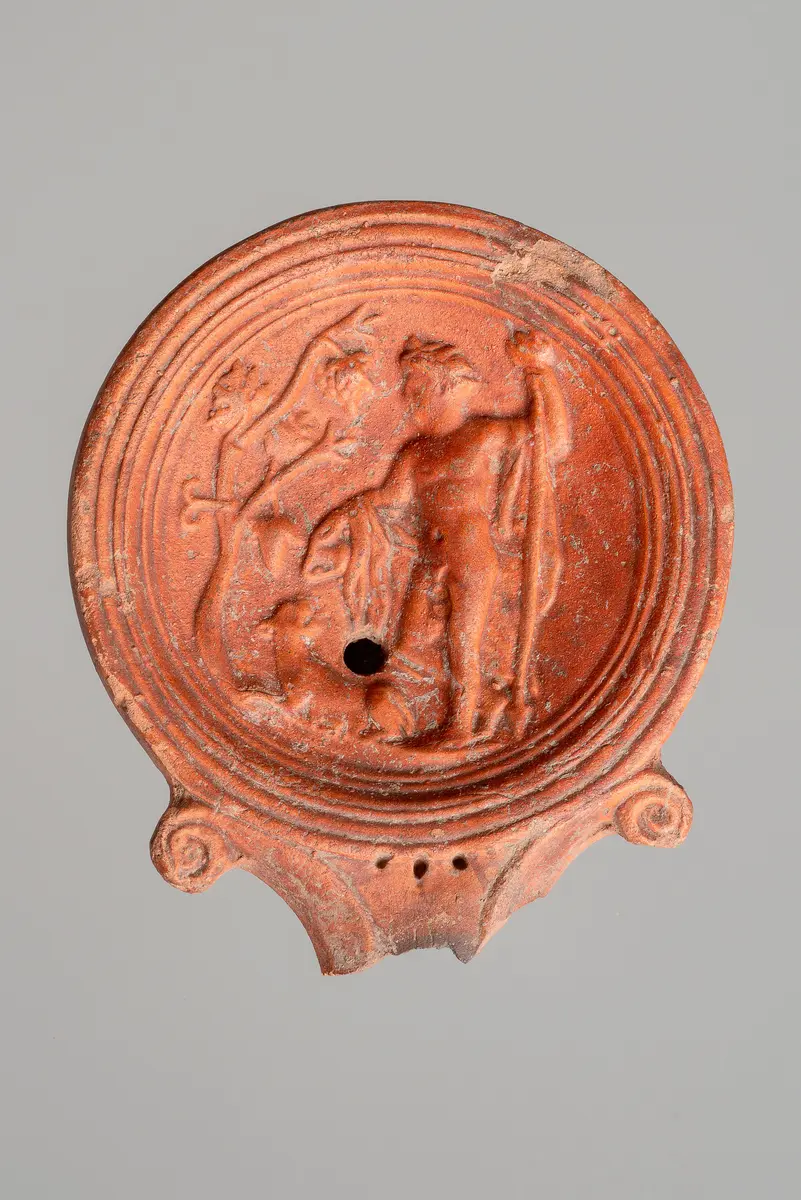
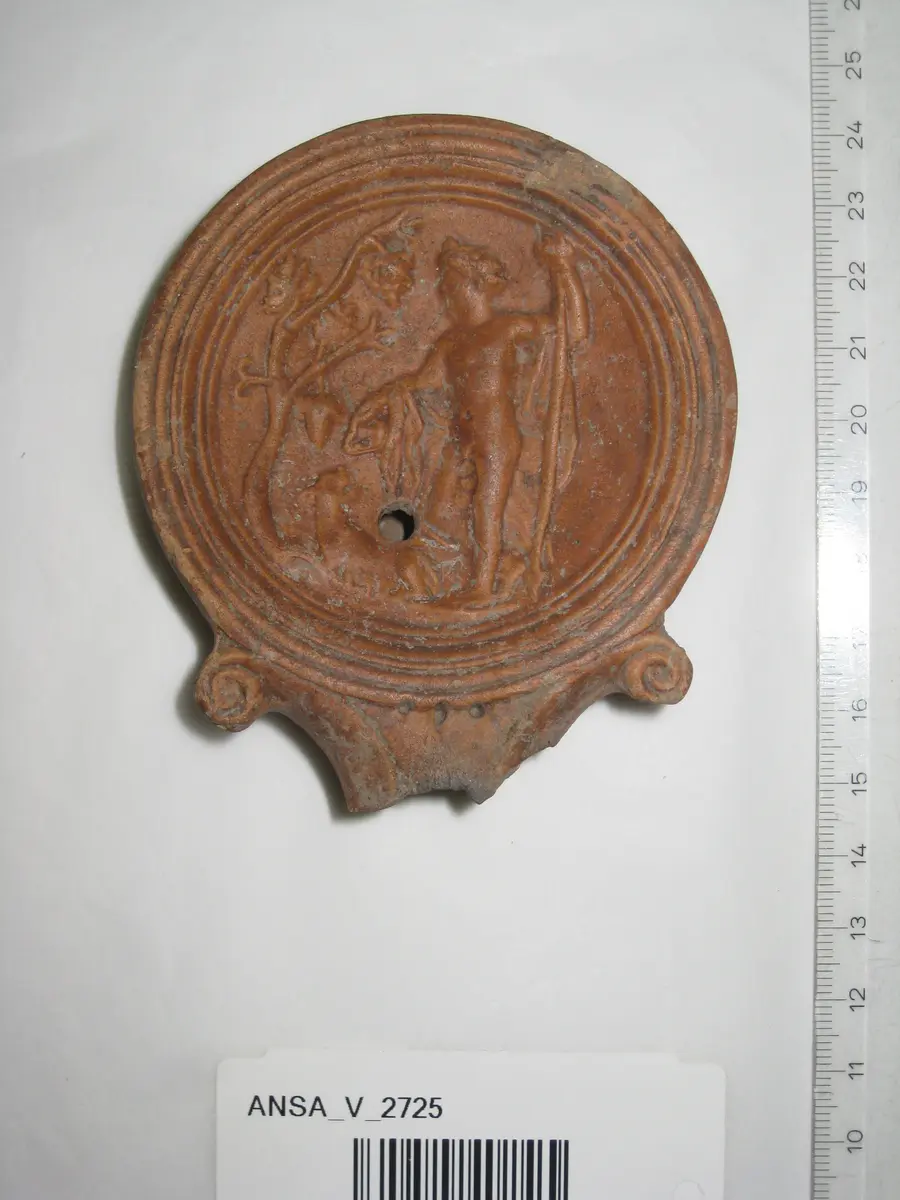
Der bacchische Lebensraum wird hier auf idyllische Weise vorgeführt: Der Gott des Weines, Theaters und der Vegetation steht nackt und bekränzt in bukolischer Landschaft, seinen Stab (Thyrsos) und ein Trinkgefäß (Kantharos) haltend. Ein Panther erhebt den Blick zu ihm nach oben, links ist ein Weinstock mit reichen Trauben zu sehen. S. Stoss, in: Seperate but Inseperable: Mythology and Culture of Ancient Greece and Rome. Ausstellungskatalog National Museum of Korea (Seoul 2023).
Time:
1. Hälfte 1. Jh. n. Chr.
Object Name
Lampe
Culture
Römisch
Location of discovery:
Unbekannt
Material/technology:
Ton hellbraun, brauner Überzug
Dimensions:
L/H 3 × B 8,7 × D 7,5 cm
Copyright
Kunsthistorisches Museum, Antikensammlung
Invs.
Antikensammlung, V 2725
Provenance
Kallai, David, Kunsthandel, Wien; 1937 Tausch
Browse more
Similar items you might be interested in
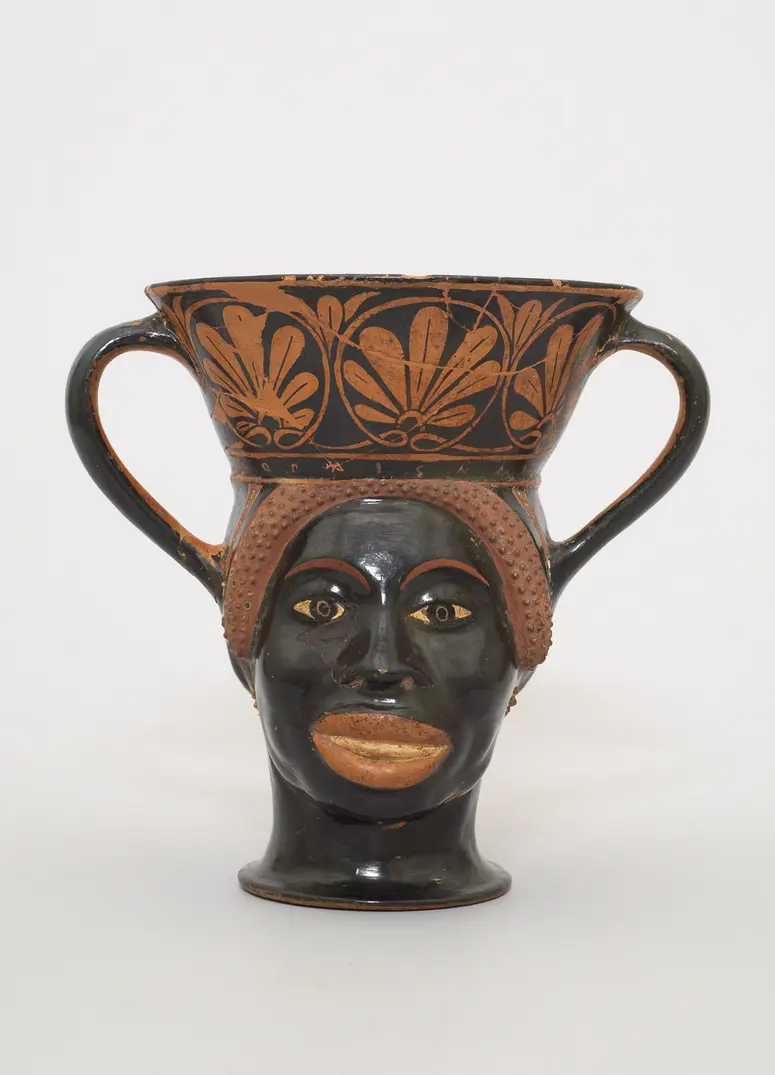
Kantharos: Kopf einer Schwarzafrikanerin Griechisch, Attisch, rotfigurig Ende 6. Jh. v. Chr.
Glockenkrater: Nackter Silen und Mänade (A), Drei Manteljünglinge (B) Griechisch, Attisch, rotfigurig 430 - 420 v. Chr.

Statuette: Knabe mit Keule (Herakliskos) Römisch, Mittlere Kaiserzeit 2. Jh. n. Chr., nach hellenistischem Vorbild