Aphrodite
1. Hälfte 1. Jh. n. Chr.
Die Liebesgöttin Venus zeigt sich in der Mitte des Bildfeldes in einem bekannten ikonografischen Motiv: Nackt stehend fasst sie sich mit beiden Händen in die Haare. Diese Darstellung geht auf eine berühmte mythologische Erzählung des griechischen Dichters Hesiod zurück, wonach die Göttin bei ihrer Geburt nackt dem Schaum des Meeres entstieg. Die Lampe ist mit zwei Schnauzen versehen. S. Stoss, in: Seperate but Inseperable: Mythology and Culture of Ancient Greece and Rome. Ausstellungskatalog National Museum of Korea (Seoul 2023).
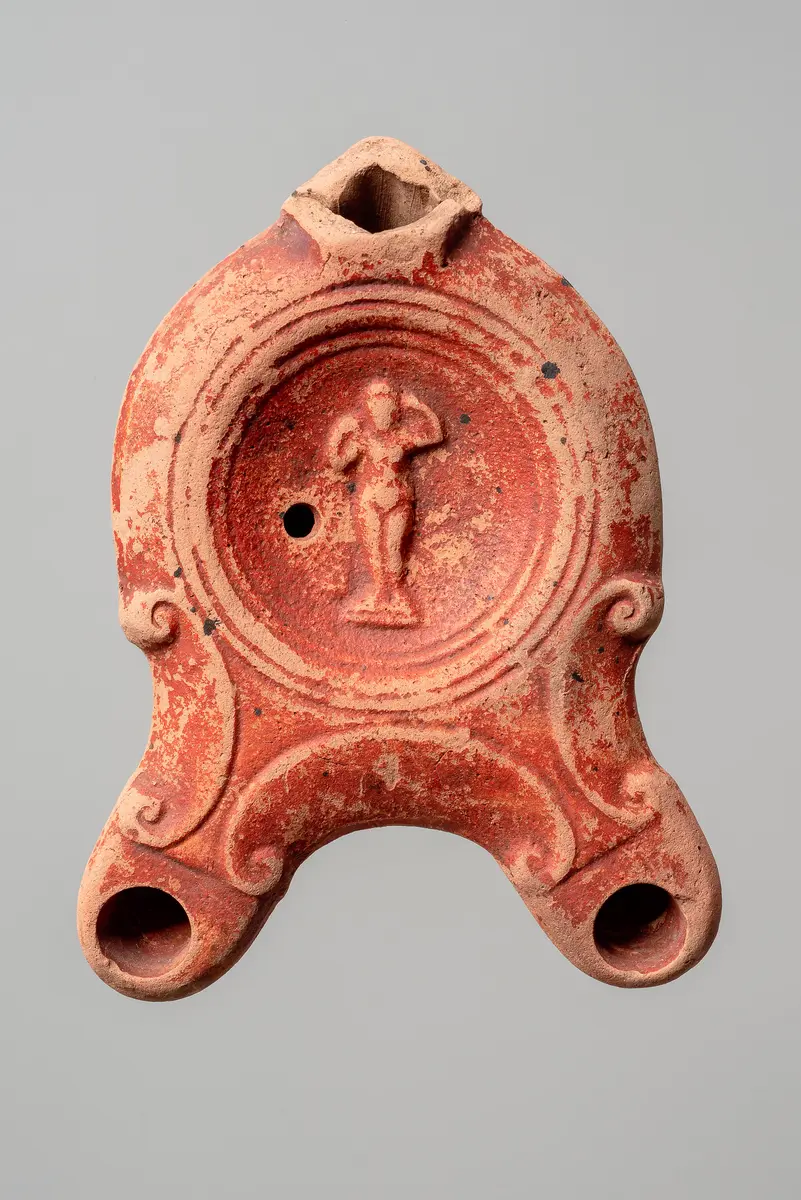

Die Liebesgöttin Venus zeigt sich in der Mitte des Bildfeldes in einem bekannten ikonografischen Motiv: Nackt stehend fasst sie sich mit beiden Händen in die Haare. Diese Darstellung geht auf eine berühmte mythologische Erzählung des griechischen Dichters Hesiod zurück, wonach die Göttin bei ihrer Geburt nackt dem Schaum des Meeres entstieg. Die Lampe ist mit zwei Schnauzen versehen. S. Stoss, in: Seperate but Inseperable: Mythology and Culture of Ancient Greece and Rome. Ausstellungskatalog National Museum of Korea (Seoul 2023).
Time:
1. Hälfte 1. Jh. n. Chr.
Object Name
Lampe
Culture
Römisch
Location of discovery:
Ägypten
Material/technology:
Ton braungrau, Überzug dunkelrot
Dimensions:
L/H 3,4 × B 12,9 × D 8,2 cm
Copyright
Kunsthistorisches Museum, Antikensammlung
Invs.
Antikensammlung, V 484
Provenance
Burghart, Ernst August Dr.; 1821 Kauf
Browse more
Similar items you might be interested in




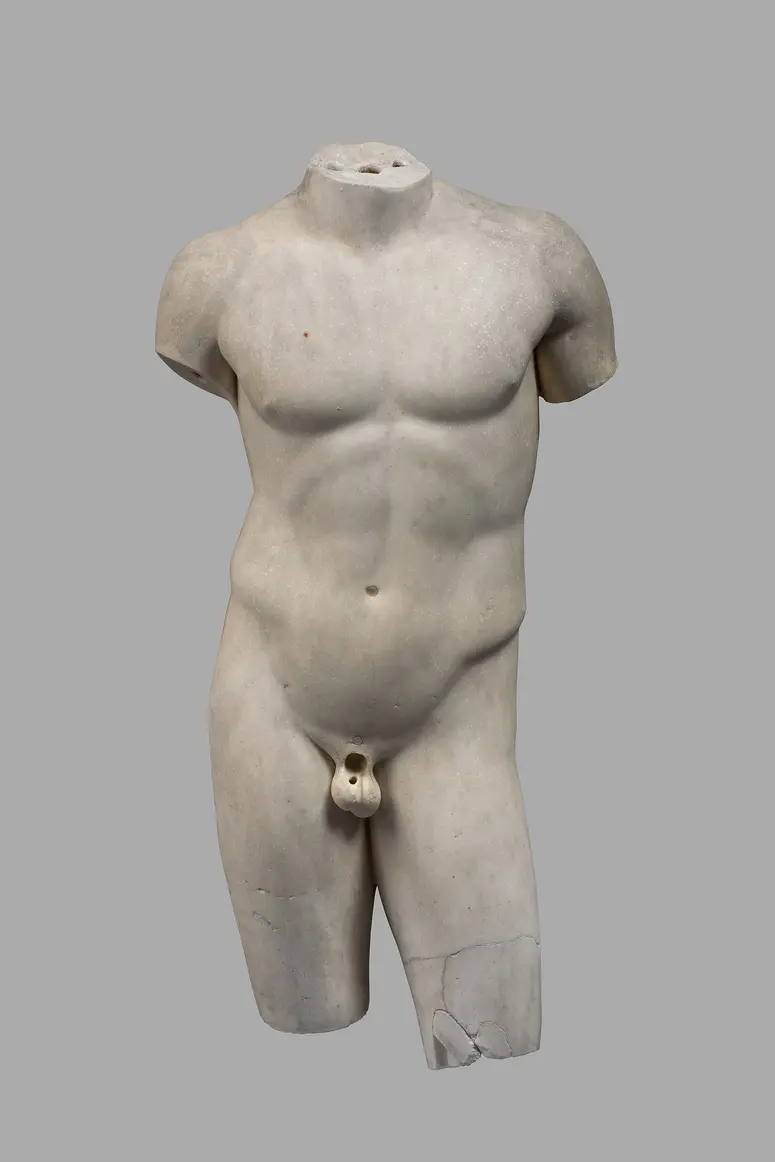
Statue: Statuentorso eines nackten Jünglings Römisch, Kaiserzeit 1.Jh. n. Chr., nach griechischem Vorbild des 5. Jh. v. Chr.
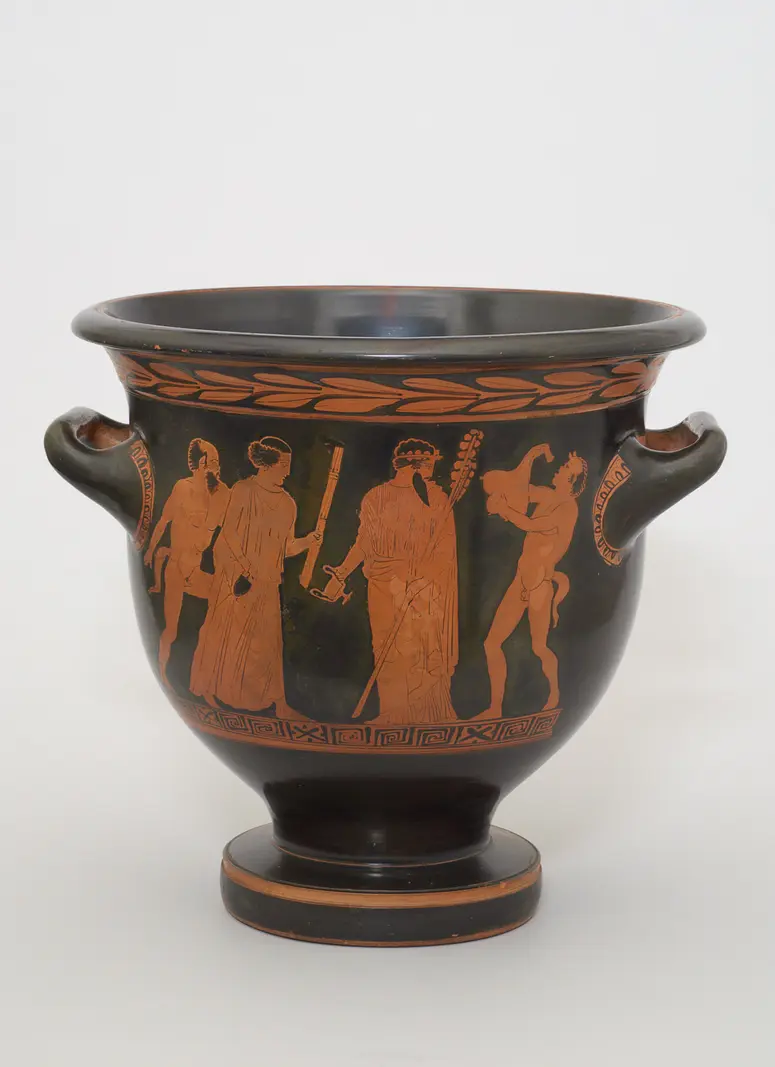
Glockenkrater: Nackter Silen und Mänade (A), Drei Manteljünglinge (B) Griechisch, Attisch, rotfigurig 430 - 420 v. Chr.

Sarkophag: Fragment eines Sarkophages: Knabenbüste Römisch, Kaiserzeit 2. - 3. Jh. n. Chr.