Die Strümpfe
2. Hälfte 12. Jahrhundert | Palermo, Königliche Hofwerkstätten
Each of the Hose is essentially made out of a single piece of red samite in the shape of pontifical stockings. Only the toe has been sewn on separately. The Hose are decorated with gold wire embroidery, with the fine wires of pure gold couched to the fabric with silk threads. They create a pattern of overlapping quatrefoils, at the centre of which are small four-pointed flowers or stars. The pattern covers the entire stocking like a net, except for the heel and toe. In places where the gold wire has fallen out, the dark preliminary drawing for the embroidery design can be seen. A green silk band in tapestry technique has been sewn to the upper edge of the Hose. There is an inscription in Arabic Thuluth script on gold leaf attached with white and red silk threads. It states that the Hose were made for King William (= William II of Sicily, reigned 1166-1189). The inventory of 1246 lists "two scarlet stockings", which may refer to the Hose. The red silk ribbons to secure the Hose date from the 19th century.
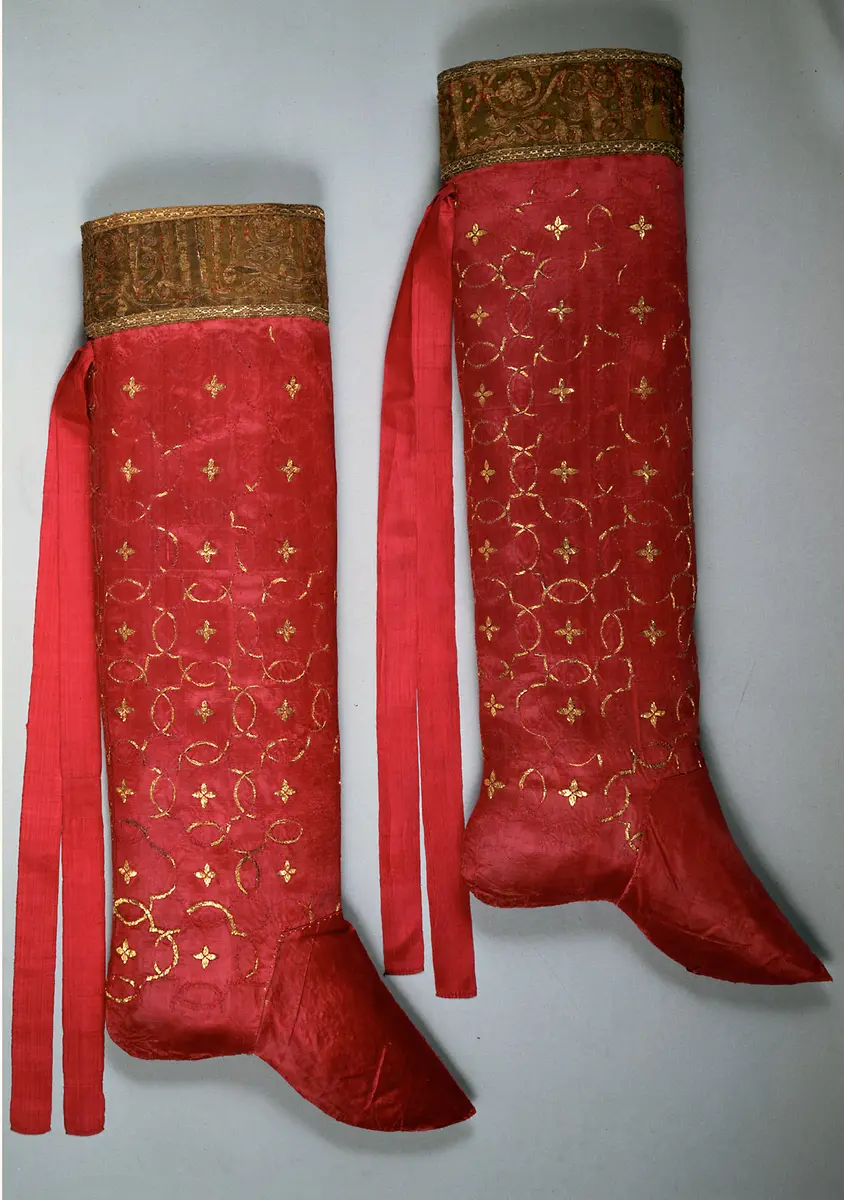
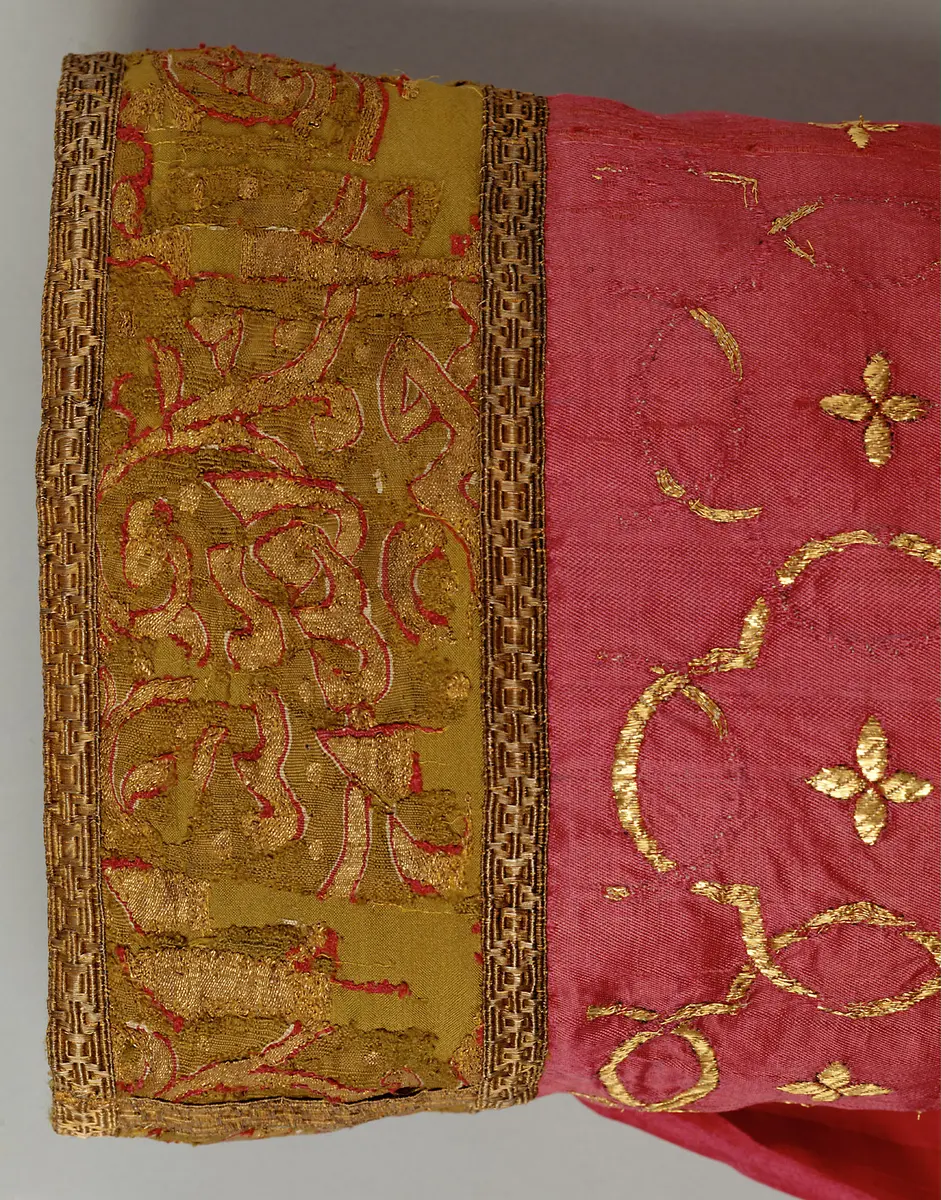
Each of the Hose is essentially made out of a single piece of red samite in the shape of pontifical stockings. Only the toe has been sewn on separately. The Hose are decorated with gold wire embroidery, with the fine wires of pure gold couched to the fabric with silk threads. They create a pattern of overlapping quatrefoils, at the centre of which are small four-pointed flowers or stars. The pattern covers the entire stocking like a net, except for the heel and toe. In places where the gold wire has fallen out, the dark preliminary drawing for the embroidery design can be seen. A green silk band in tapestry technique has been sewn to the upper edge of the Hose. There is an inscription in Arabic Thuluth script on gold leaf attached with white and red silk threads. It states that the Hose were made for King William (= William II of Sicily, reigned 1166-1189). The inventory of 1246 lists "two scarlet stockings", which may refer to the Hose. The red silk ribbons to secure the Hose date from the 19th century.
Time:
2. Hälfte 12. Jahrhundert
Object Name
Textil; liturgisches Gewand; Krönungsornat
Culture
Palermo
Material/technology:
Textil; Roter Seidenkörper, Golddraht, grüne Seidenborte in Tapisserietechnik mit Tulut-Schrift in Häutchengold, Goldborte
Dimensions:
L. 60 cm, B. 17 bzw. 18 cm
Inscribed
Tulut-Schrift (Übersetzung): "Im Auftrage des prächtigen, heiligen Königs Gulyalm, der durch Gott Hochgeehrte, durch seine Macht Unterstützte, durch seine Kraft Siegreiche"
Copyright
Kunsthistorisches Museum, Weltliche Schatzkammer
Invs.
Schatzkammer, WS XIII 12
Browse more
Similar items you might be interested in
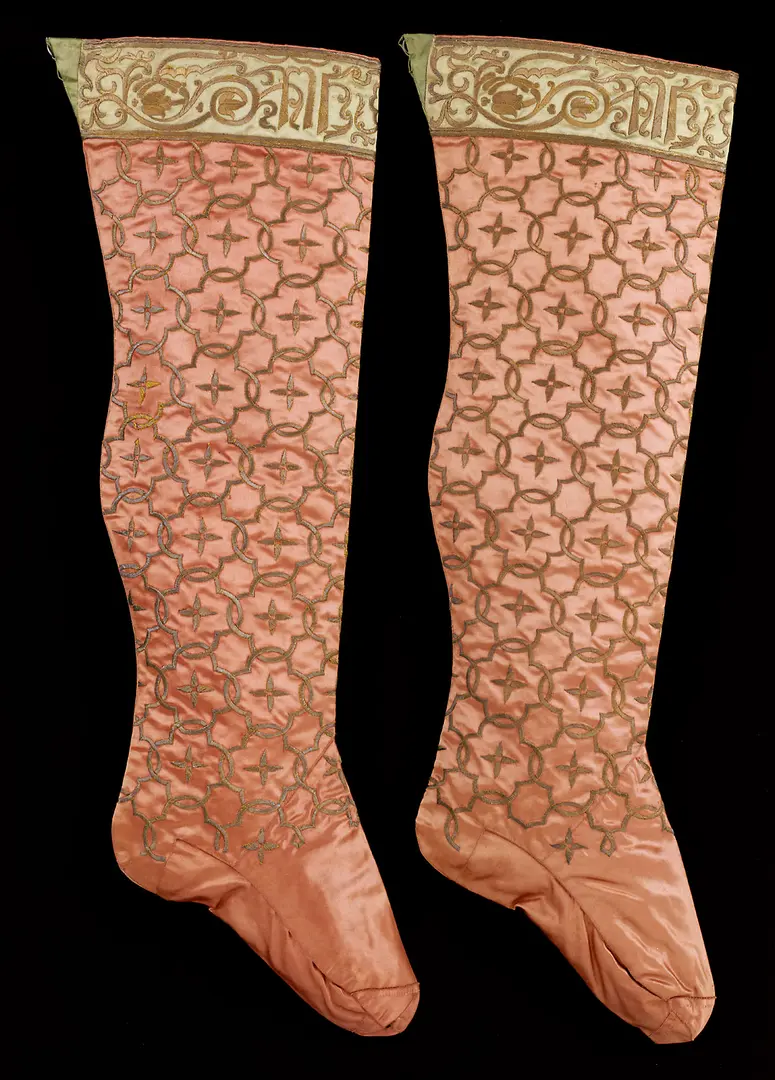
Die Strümpfe des Ornats Kaiser Franz I. Stephan von Lothringen (Barockkopien nach den Gewändern des Krönungsornates des Heiligen Römischen Reiches) 1763/64
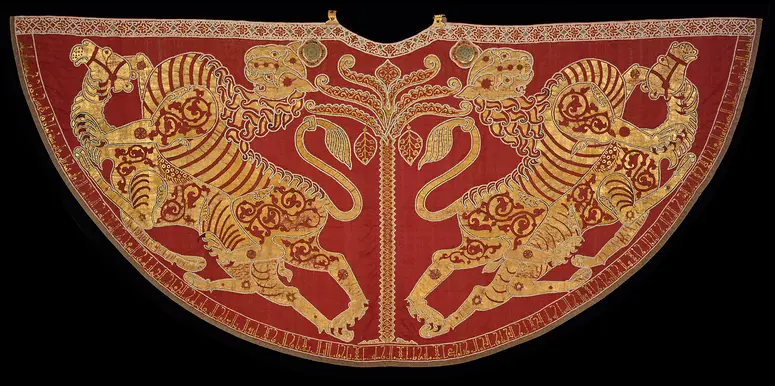
Der Krönungsmantel Palermo, Königliche Hofwerkstätten 1133/1134
Nachbildung der Mariensäule am Hof in Wien Philipp Küsel 1677-1679
Campagne-Livree eines Kutschers des Wiener Hofes Manufacturer: Anton Uzel & Sohn around 1915

Reliquienkassette Georg (Joris) Hoefnagel Ende 16. Jahrhundert
Wappenrock für den Herold des Königreichs Lombardo-Venezien Philipp von Stubenrauch 1838
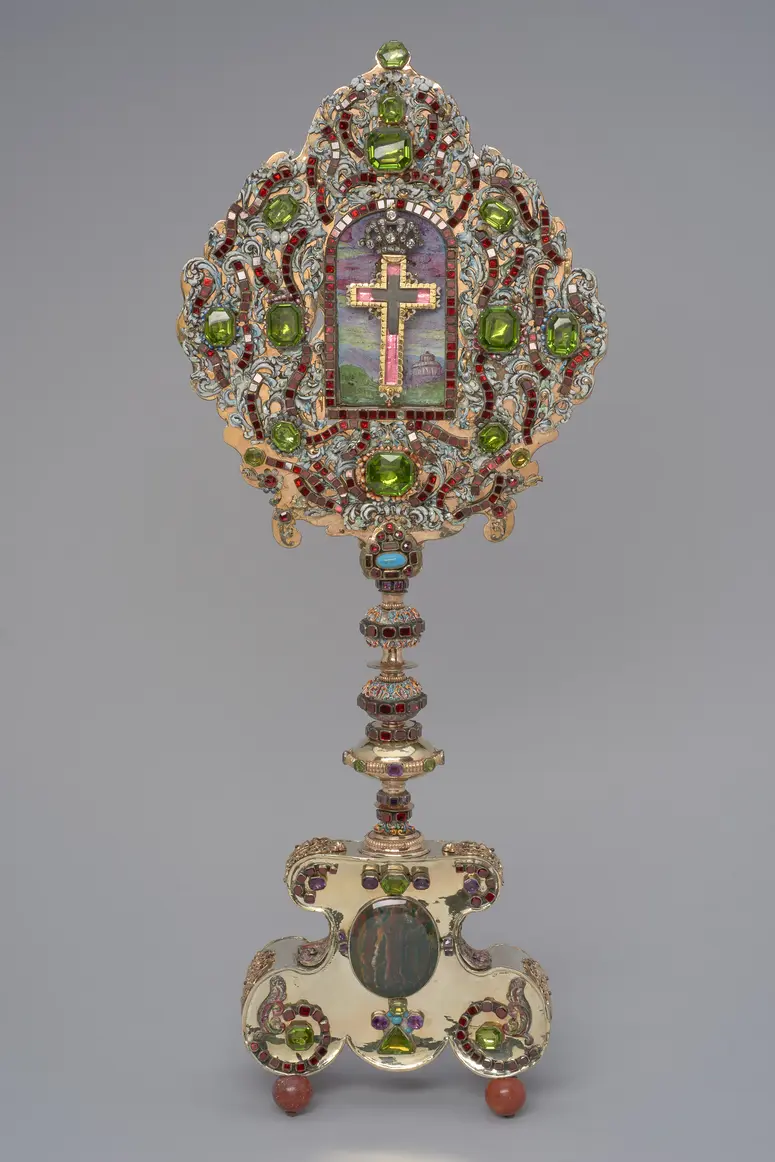
Sternkreuzordensmonstranz Hans Jakob Mair um 1668
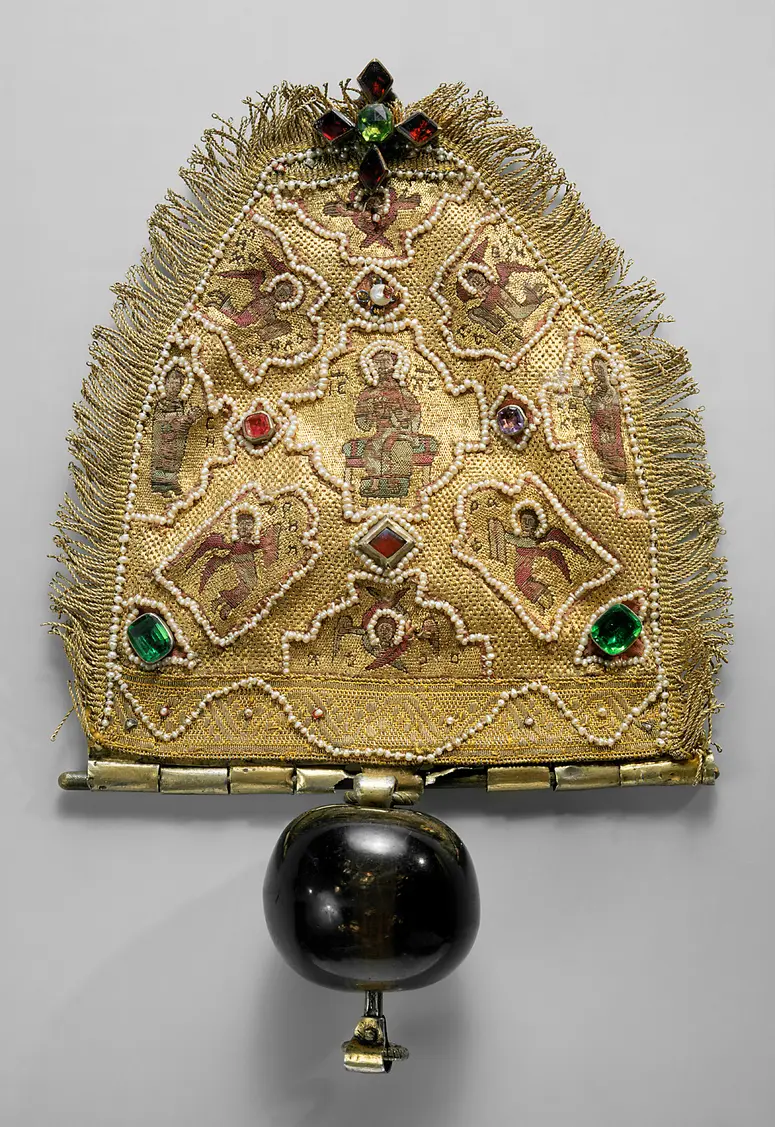
Sogenannter Beutel König Stephans von Ungarn 2. Hälfte 11. / 12.- Jahrhundert
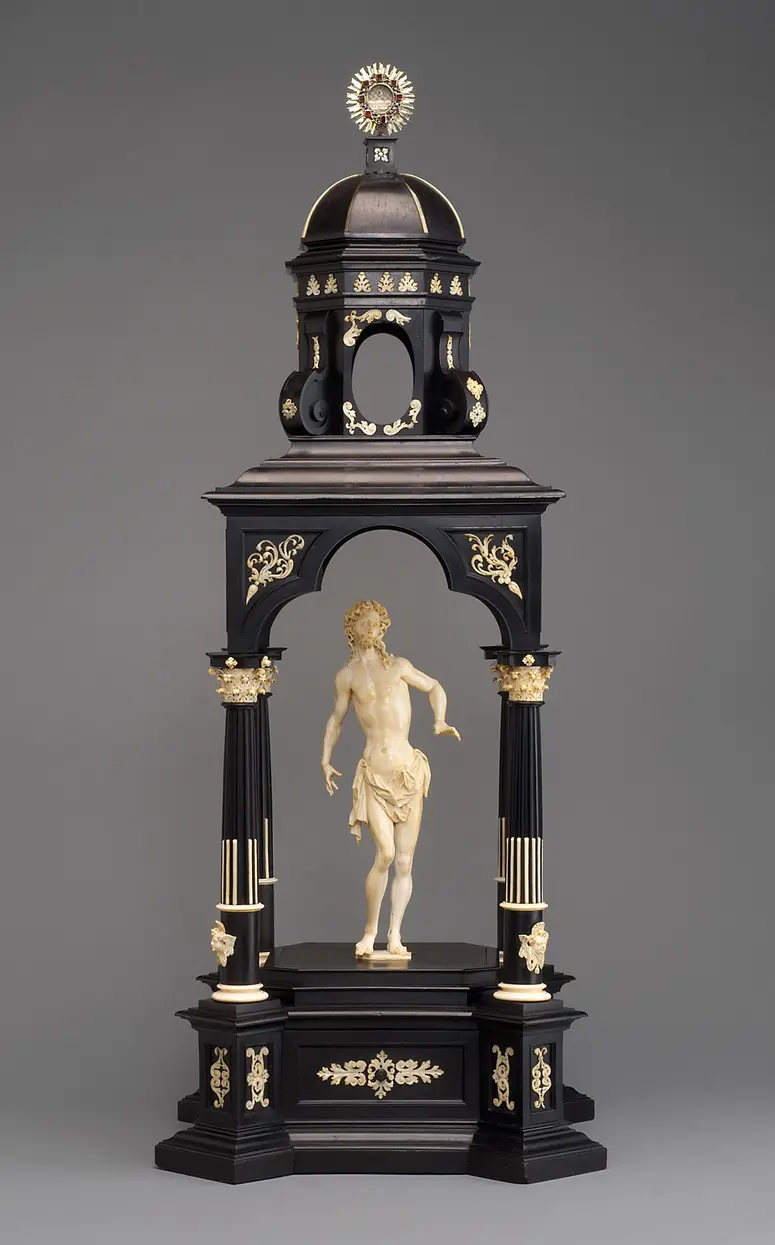
Tempietto mit Schmerzensmann Christoph Angermair um 1613/20
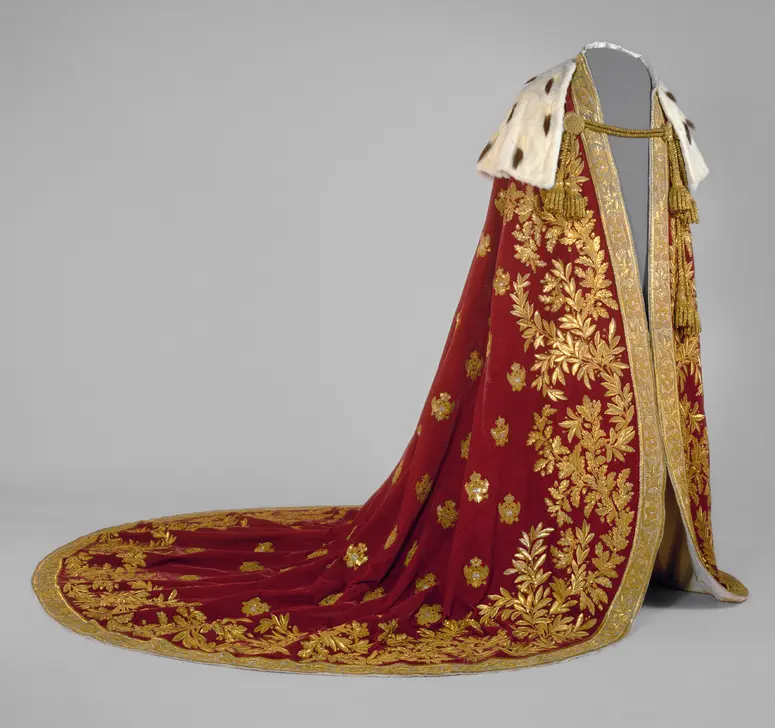
Der Mantel des österreichischen Kaisers Philipp von Stubenrauch 1830
Der ungarische Opalschmuck Gebrüder Egger 1881 datiert
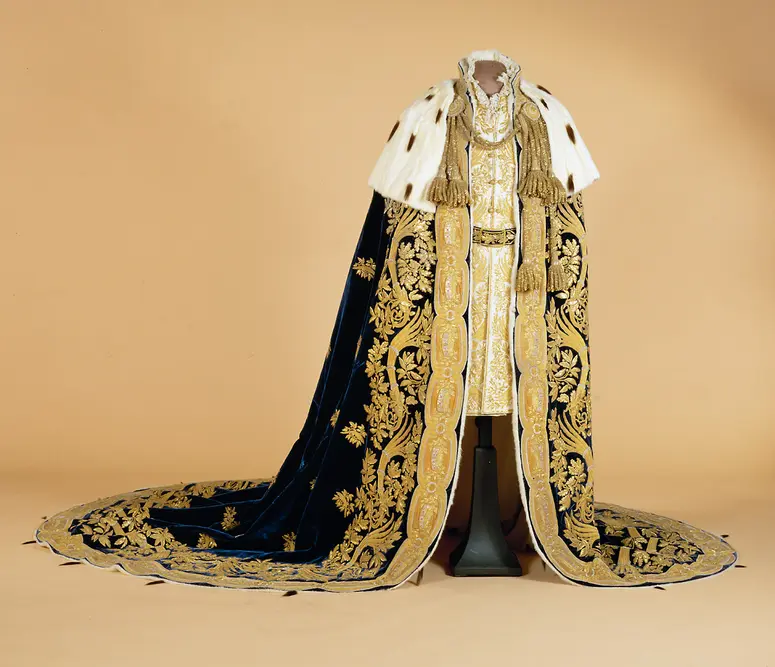
Der Mantel des Krönungsornats des Lombardo-Venezianischen Königreichs Philipp von Stubenrauch 1838