Die Potence (Wappenkette) für den Herold des Ordens vom Goldenen Vlies
um 1517
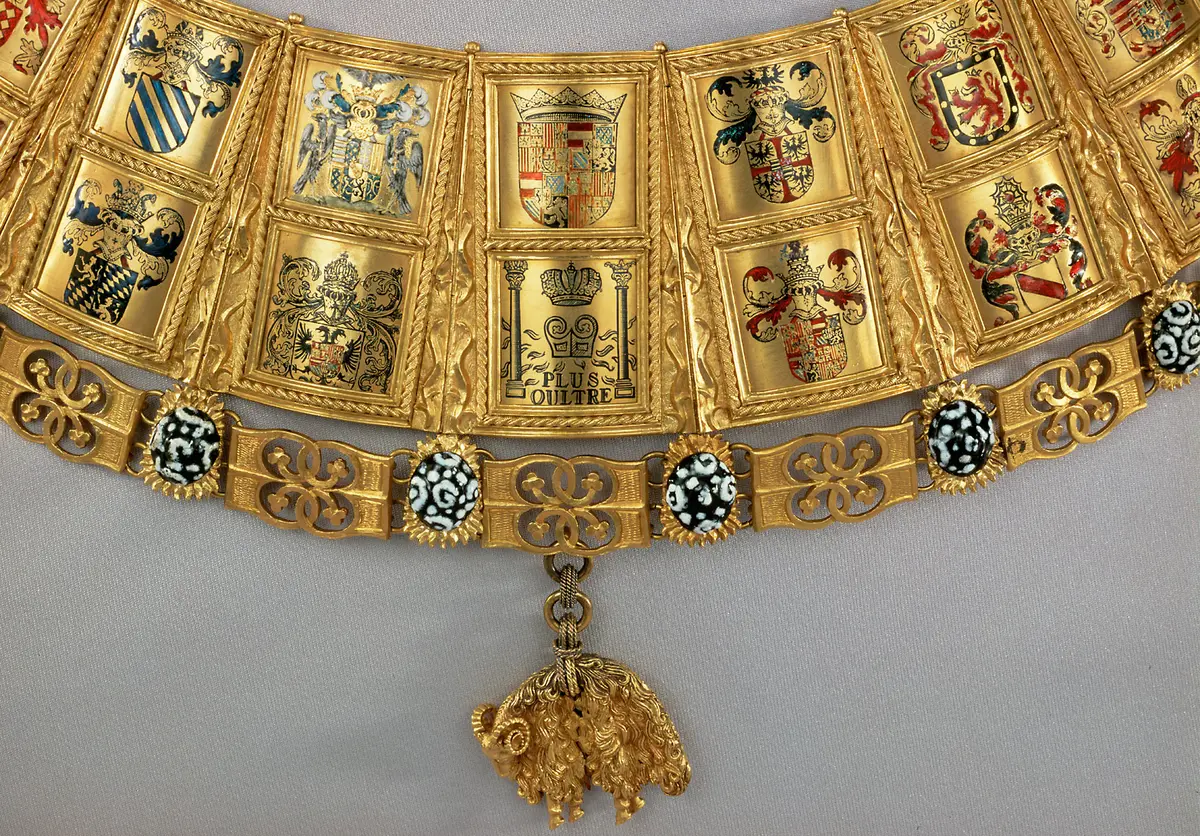
The chain of arms consists of a neck chain of the order (Inv. No. SK_WS_XIV_263) and a collar made up of 26 pairs of convex, slightly trapezoid-shaped plates, arranged in two horizontal rows. Each plate serves as a frame into which an armorial plaque can be inserted. The pairs of plates are joined to each other by hinges, which in turn are fastened to the collar's flints. The armorial plaques are interchangeable so that all living members of the order can be represented on the Potence with their arms; however, this rule was not always observed. Two armorial plaques were reserved for the sovereign, indicating a total of 51 knights of the order, the number ordained by Emperor Charles V at the chapter meeting of 1516. The sovereign's two plaques display the arms and emblem of Charles V above and his motto "PLUS OULTRE" ("further beyond") below. Charles's maxim is illustrated by the two so-called Pillars of Hercules, representing the cliffs of Ceuta and Gibraltar and thus the Spanish heritage. But Gibraltar also marks the western boundaries of the Old World, and with his motto Charles expressed his intent of extending his rule "further beyond". The potence replaced an older chain of arms with 16 links, representing the previous number of 31 knights of the order (16 x 2 = 32, indicating 31 members, since the sovereign required two plates). It was worn on festive occasions by the so-called king-at-arms, the head of the order's heralds.
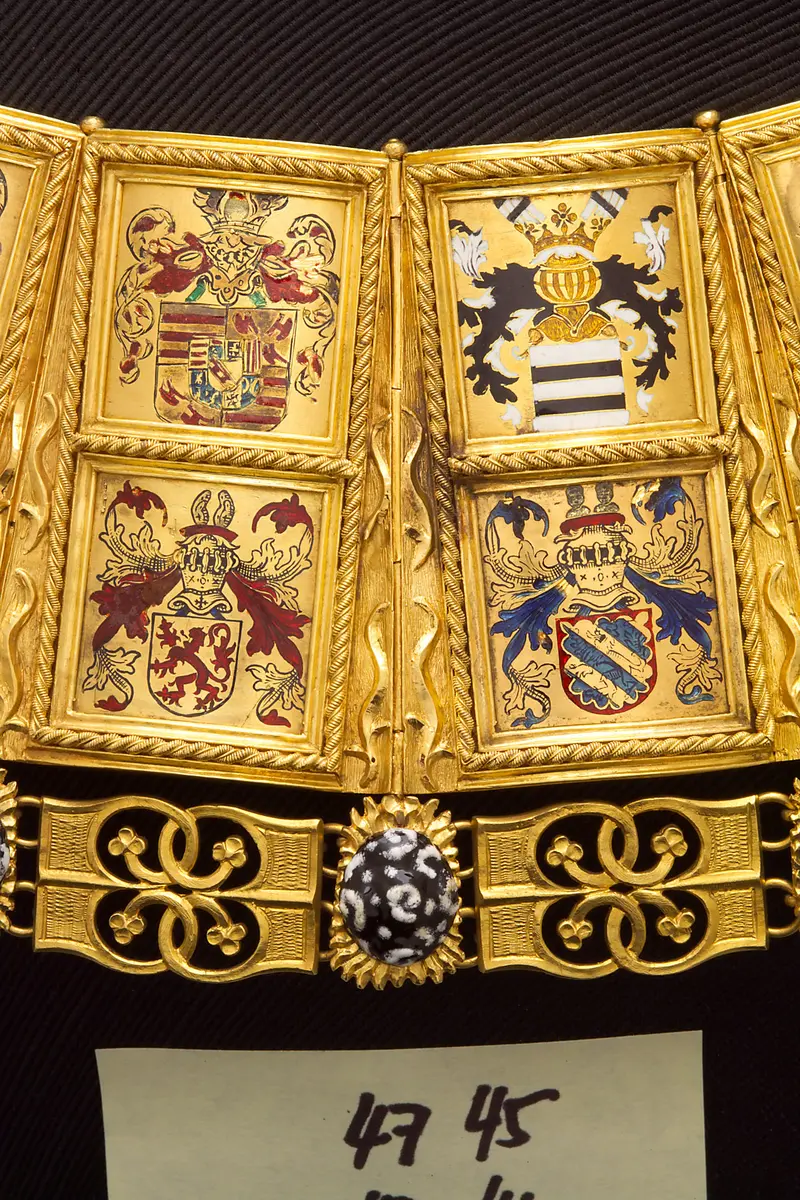
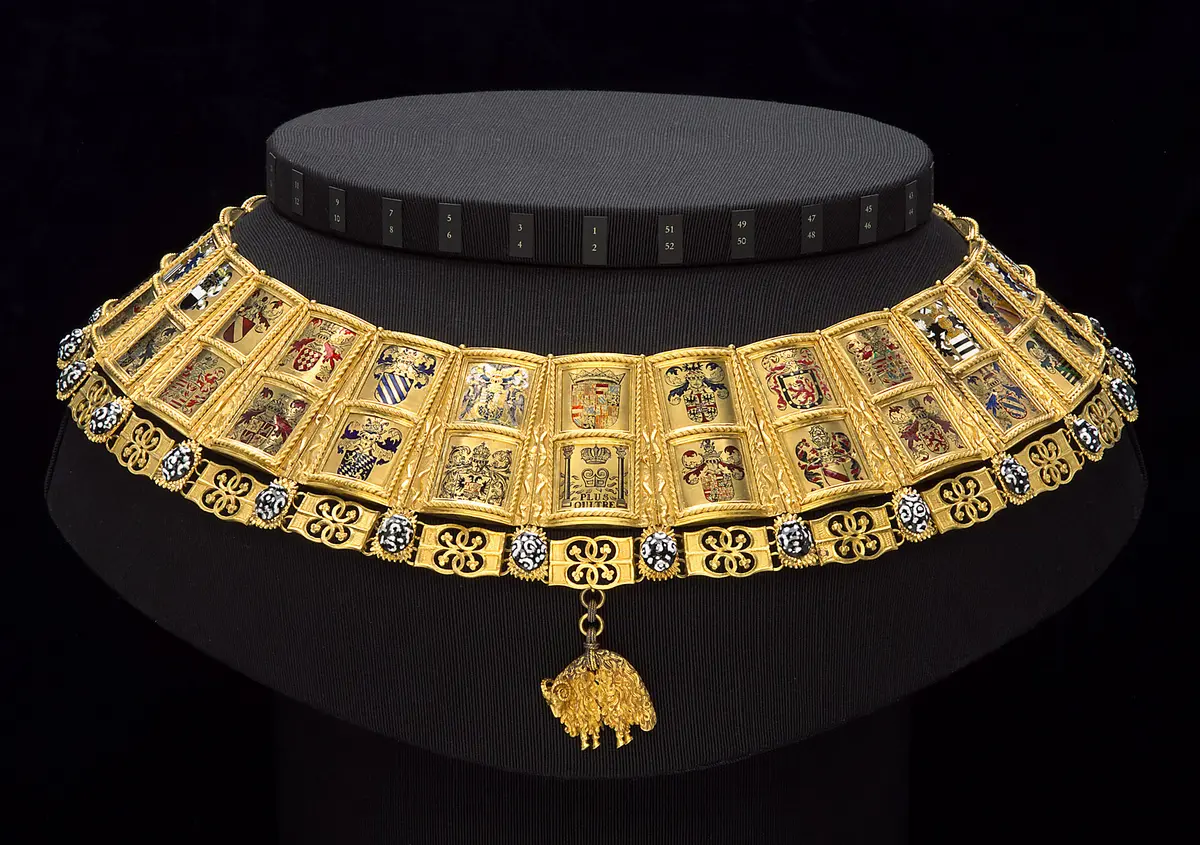
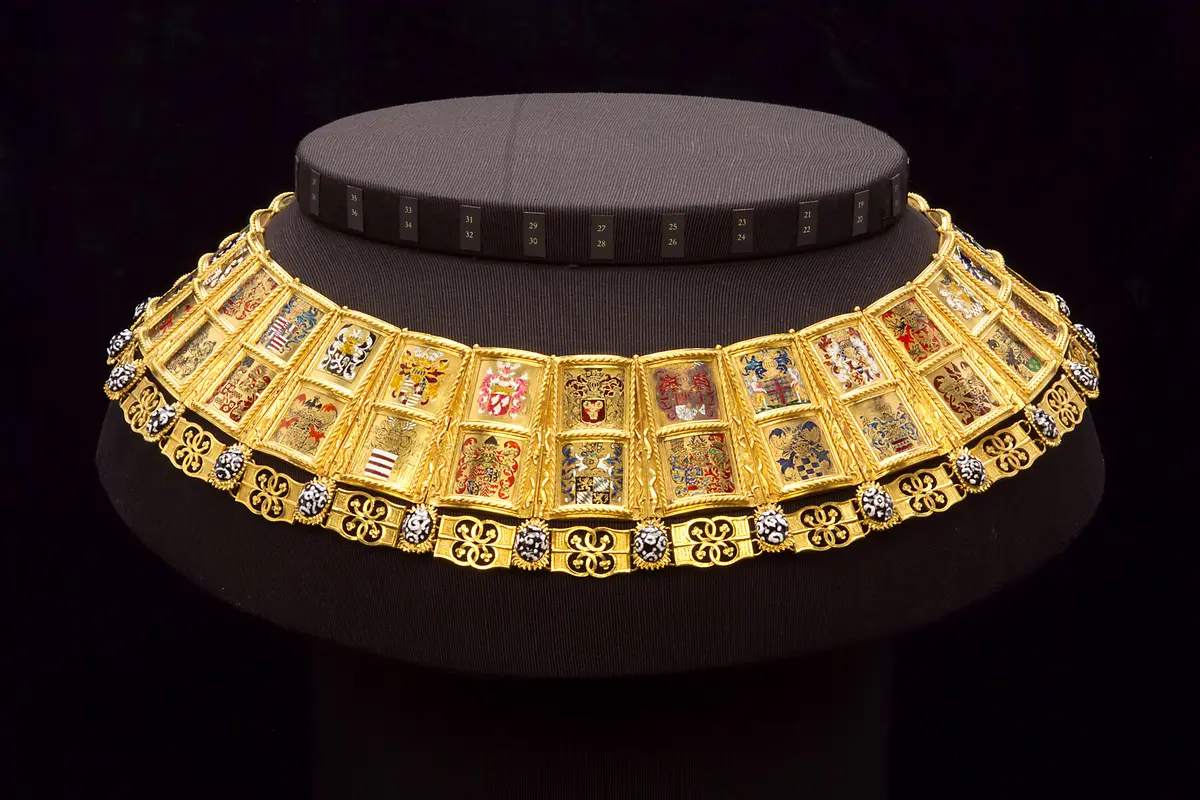
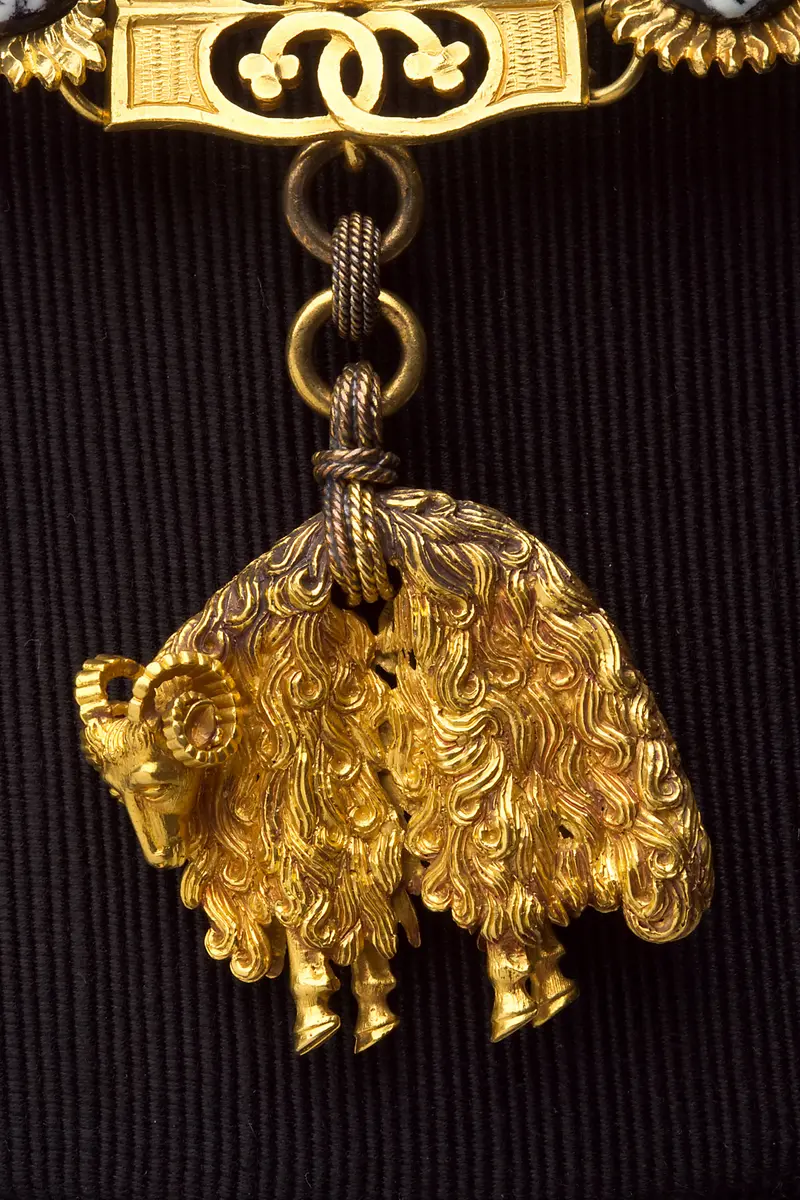
The chain of arms consists of a neck chain of the order (Inv. No. SK_WS_XIV_263) and a collar made up of 26 pairs of convex, slightly trapezoid-shaped plates, arranged in two horizontal rows. Each plate serves as a frame into which an armorial plaque can be inserted. The pairs of plates are joined to each other by hinges, which in turn are fastened to the collar's flints. The armorial plaques are interchangeable so that all living members of the order can be represented on the Potence with their arms; however, this rule was not always observed. Two armorial plaques were reserved for the sovereign, indicating a total of 51 knights of the order, the number ordained by Emperor Charles V at the chapter meeting of 1516. The sovereign's two plaques display the arms and emblem of Charles V above and his motto "PLUS OULTRE" ("further beyond") below. Charles's maxim is illustrated by the two so-called Pillars of Hercules, representing the cliffs of Ceuta and Gibraltar and thus the Spanish heritage. But Gibraltar also marks the western boundaries of the Old World, and with his motto Charles expressed his intent of extending his rule "further beyond". The potence replaced an older chain of arms with 16 links, representing the previous number of 31 knights of the order (16 x 2 = 32, indicating 31 members, since the sovereign required two plates). It was worn on festive occasions by the so-called king-at-arms, the head of the order's heralds.
Time:
um 1517
Object Name
Insigne
Culture
Südliche Niederlande
Material/technology:
Gold, Email en ronde bosse, Grubenschmelz
Dimensions:
Umfang außen: 143 cm
Umfang innen: 98,8 cm
B. 10,3 cm
Copyright
Kunsthistorisches Museum, Weltliche Schatzkammer
Invs.
Schatzkammer, WS Dep Prot 4