Deckelpokal; sog. Burgundischer Hofbecher
1453/1467 | Duc Philippe III le Bon de Jean sans Peur Valois
Cup, lid, knob, shaft and base of this magnificent vessel are made of clear, masterfully cut rock crystal and are a supreme achievement of medieval hardstone cutting. The outer sides of the high, conical cup and the curved lid boast sixteen facets, while the knob, shaft and base feature ten-sided faceting. The entire surface is decorated with round, evenly arranged indentations. The individual parts are elegantly mounted in gold to create a whole, giving the magnificent Burgundian cup its graceful outline, culminating in a knob with shining pearls appearing to spray from a fountain. On the gold setting around the base, mouth and lid as well as at the base of the richly decorative element on the lid are the personal emblems of Duke Philip the Good, i.e., the fire-steel and sparking flint as well as the small letter "e", which is connected to its mirror image by a cord. The bands of the base and lid are filled alternately with precious stones and groups of pearls, while a cut-diamond configuration that was new at the time was used to create the heraldic lilies of the House of Valois, each of which consists of five diamonds. The Burgundian Court Goblet came into French possession from the estate of Charles the Bold. In 1570, along with the Saltcellar ("Saliera") by Benvenuto Cellini, the Michael's Goblet and the Onyx Jug (Kunsthistorisches Museum, Vienna), it was given as a present by King Charles IX to Archduke Ferdinand II of Tyrol, who had represented the French king at his marriage to an Austrian archduchess.
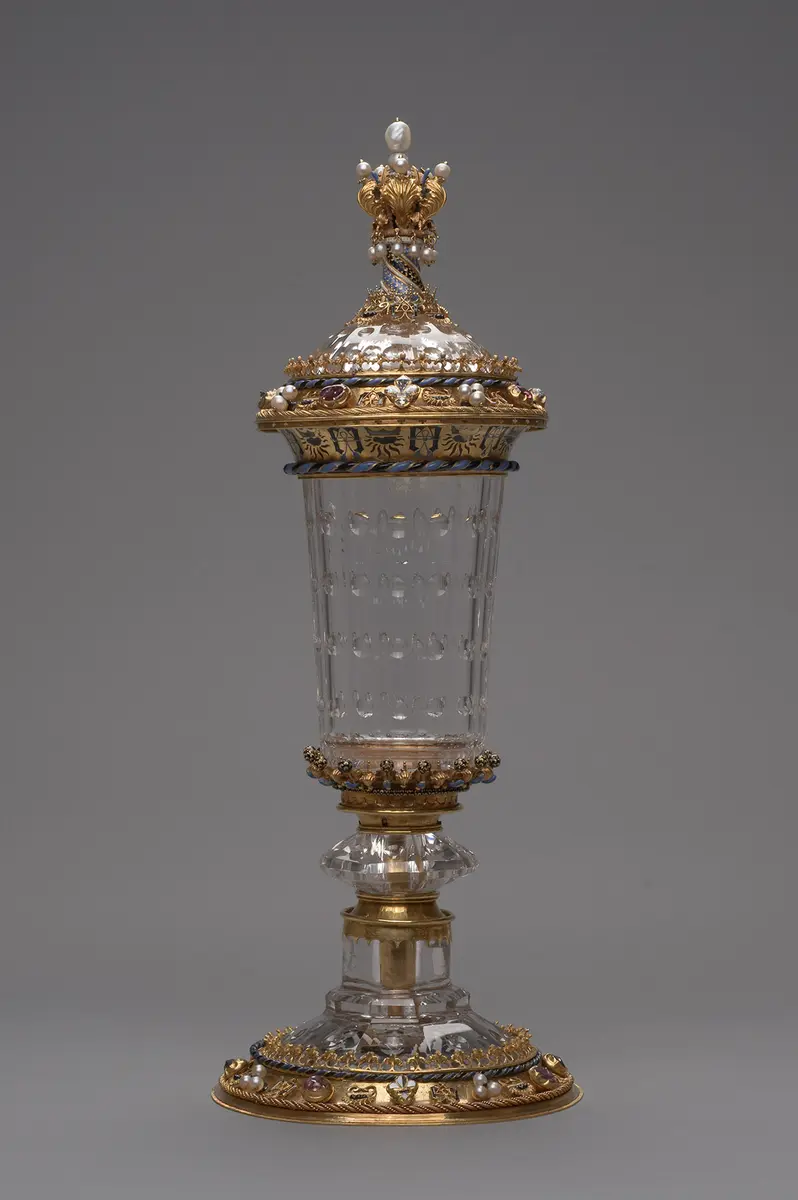
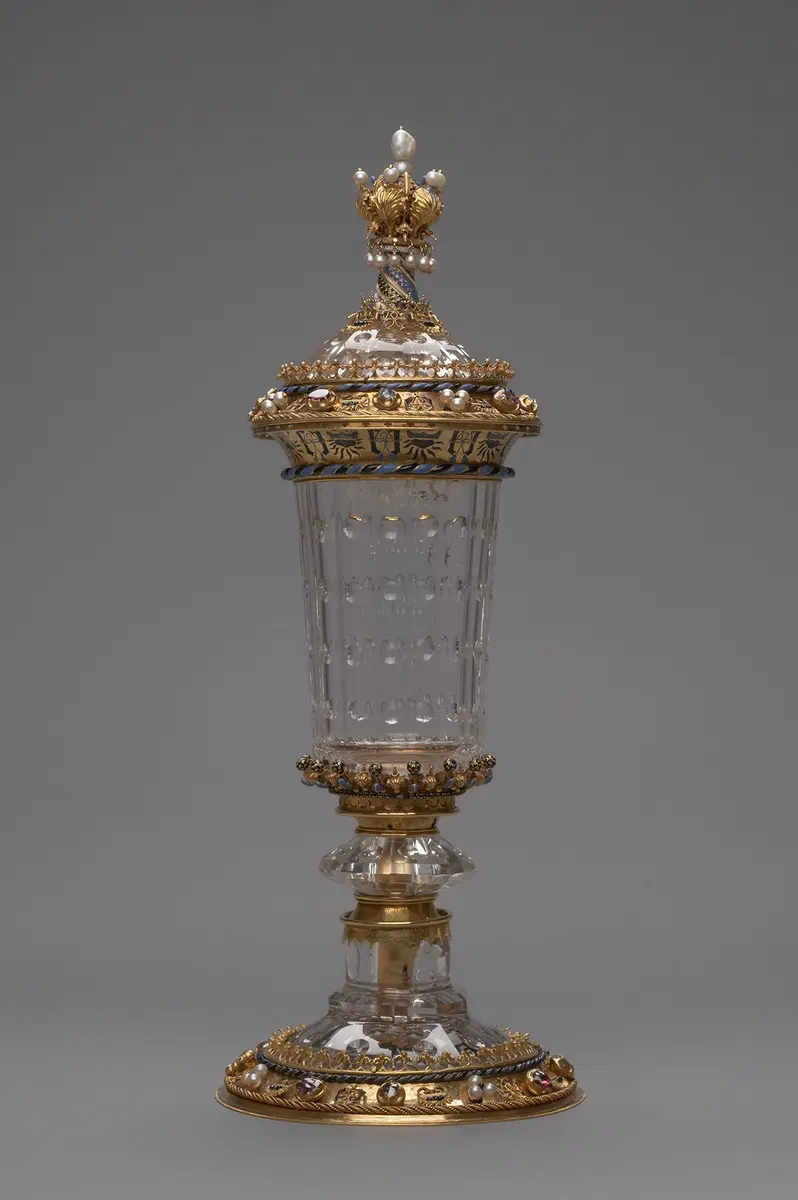
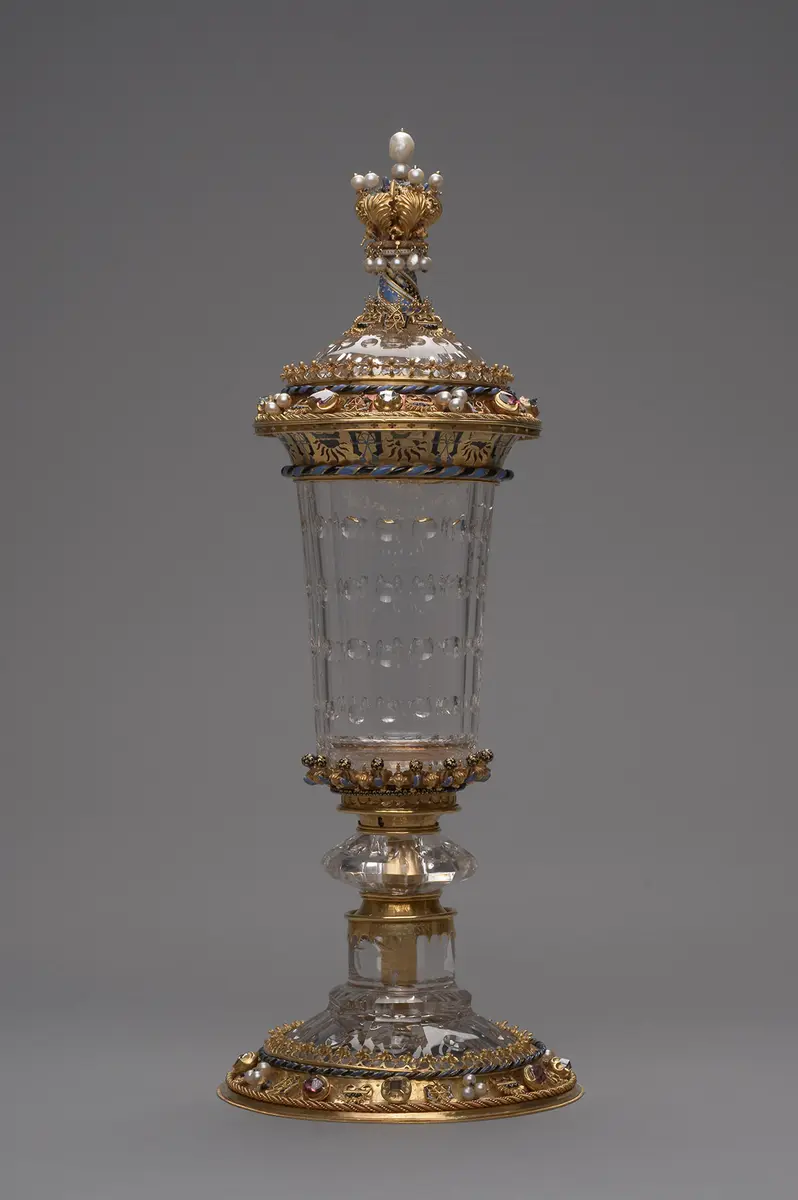
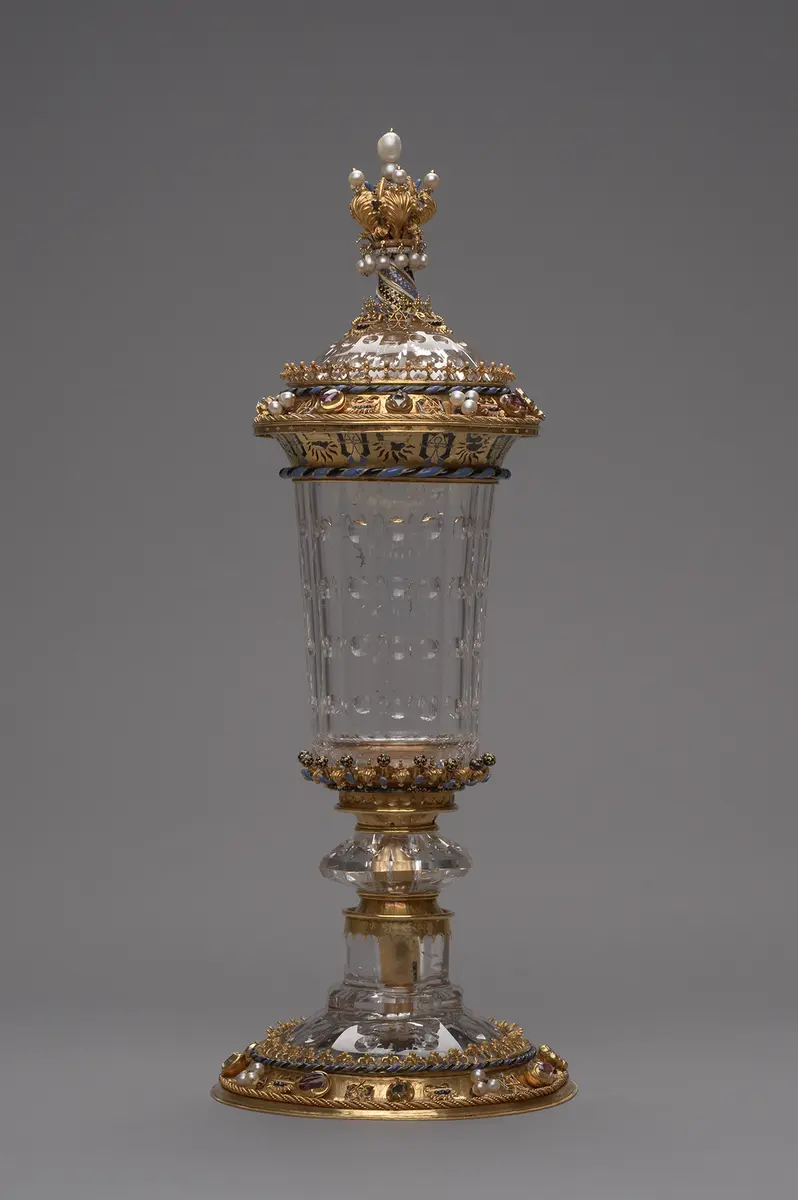
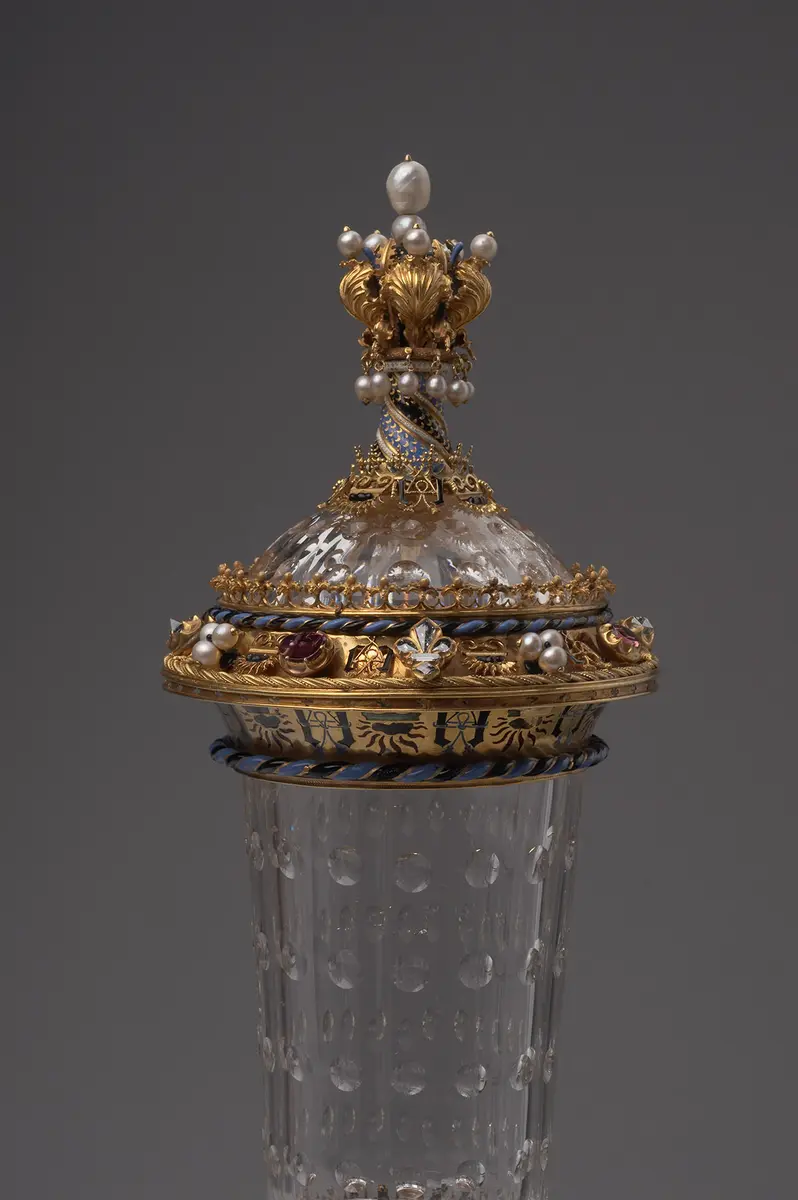
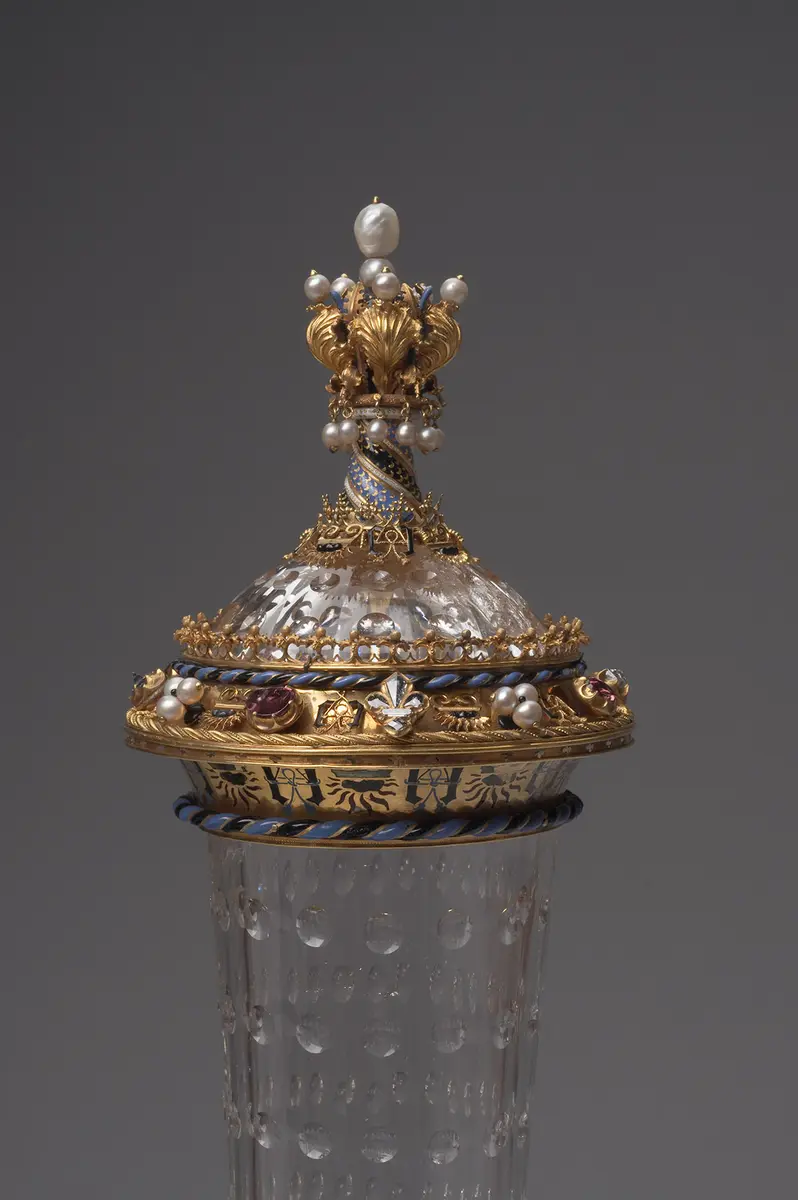
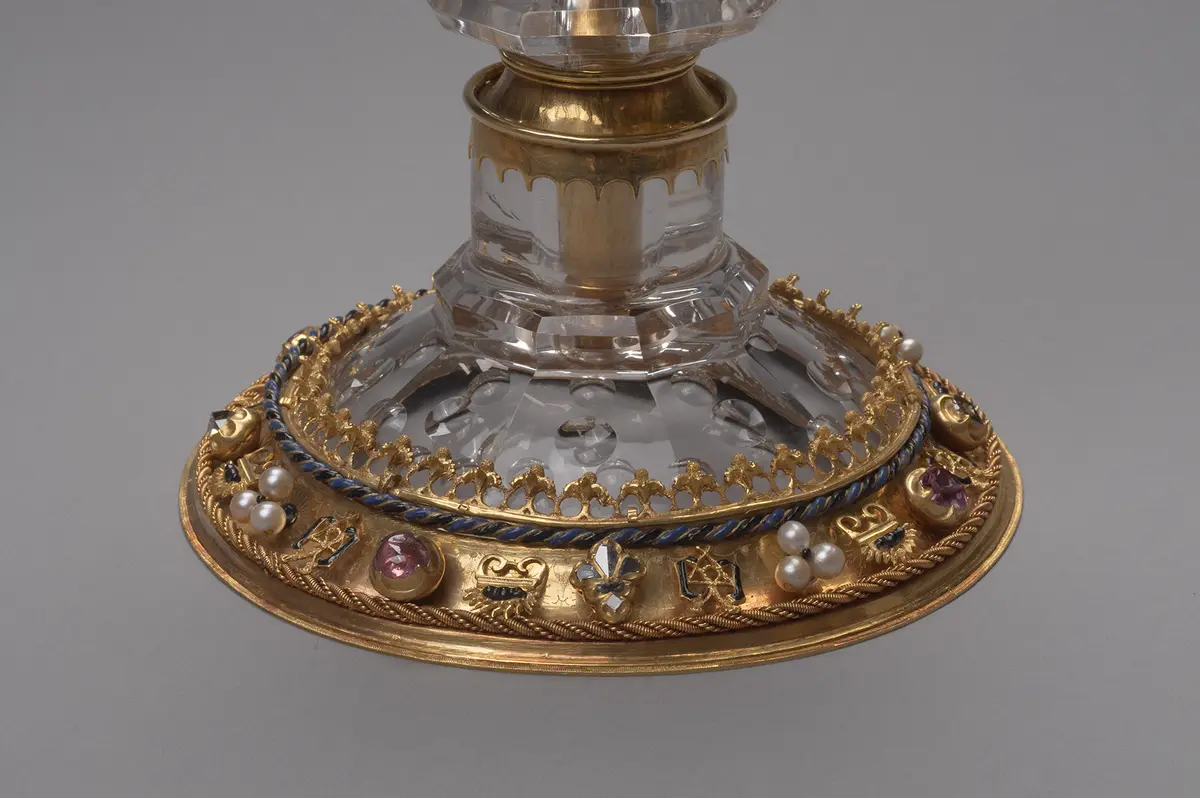
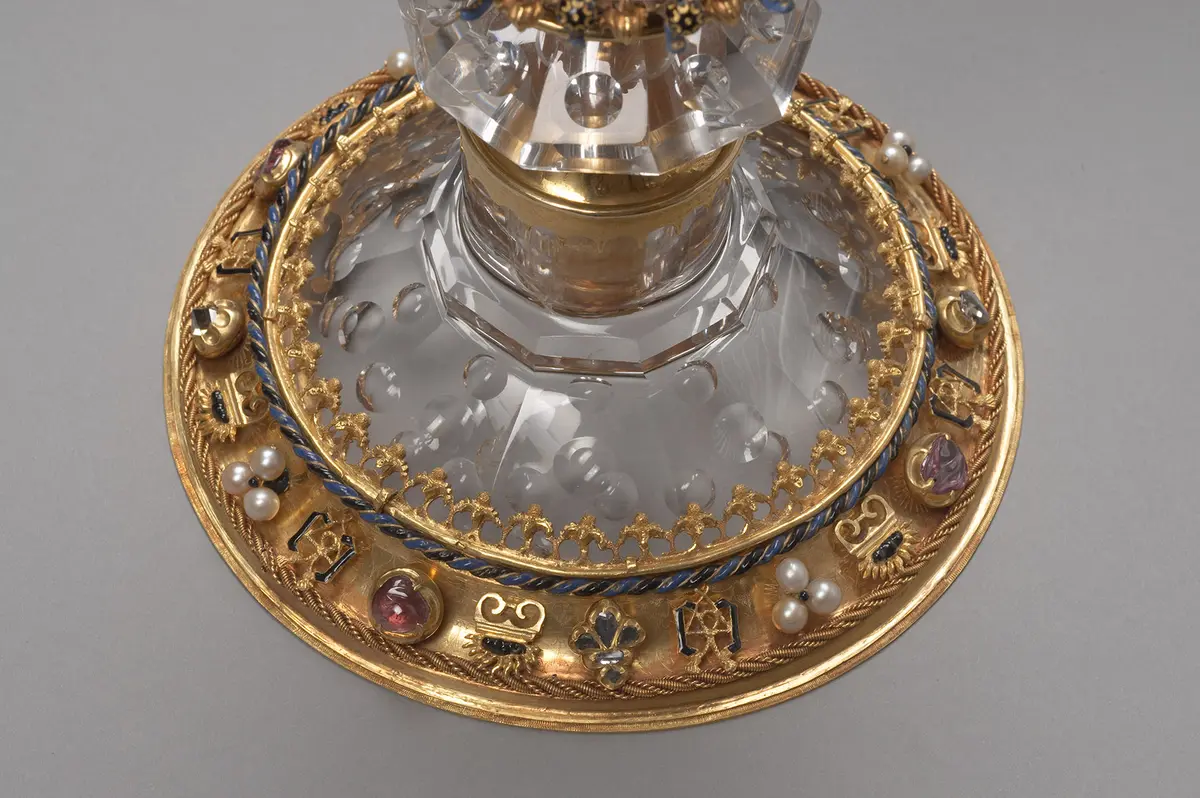
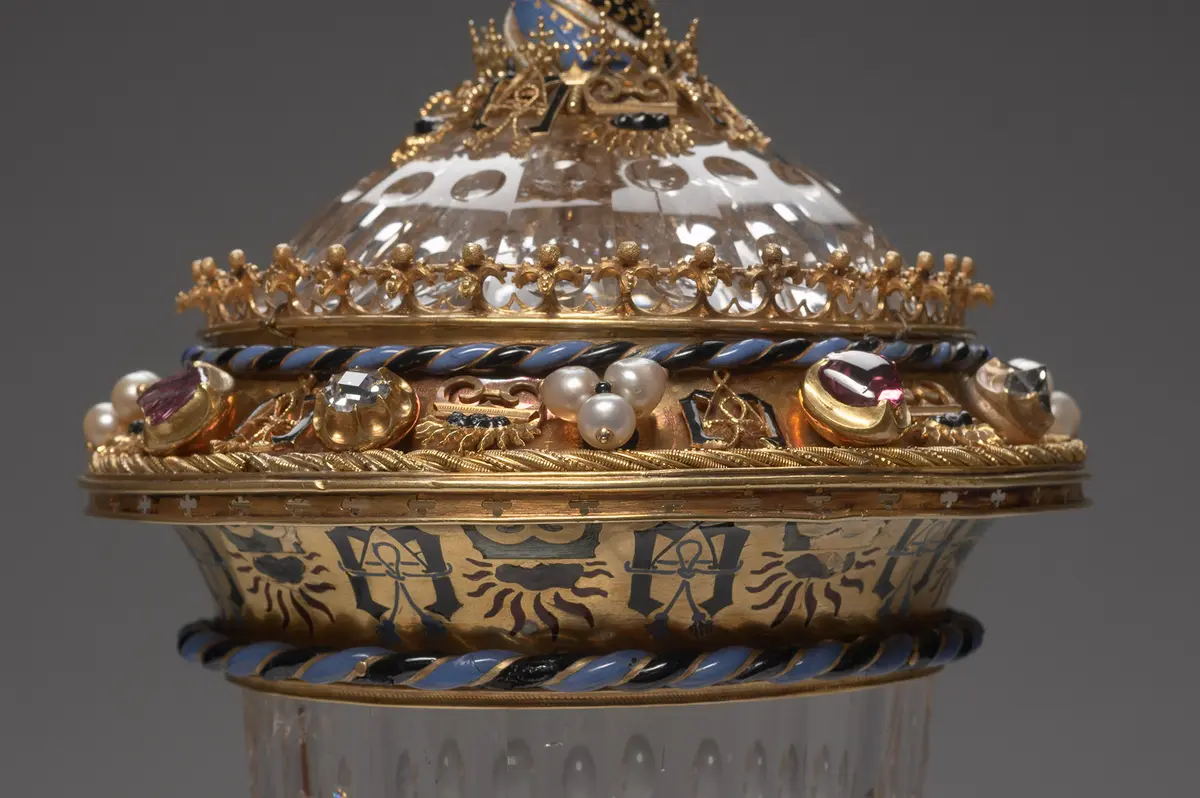
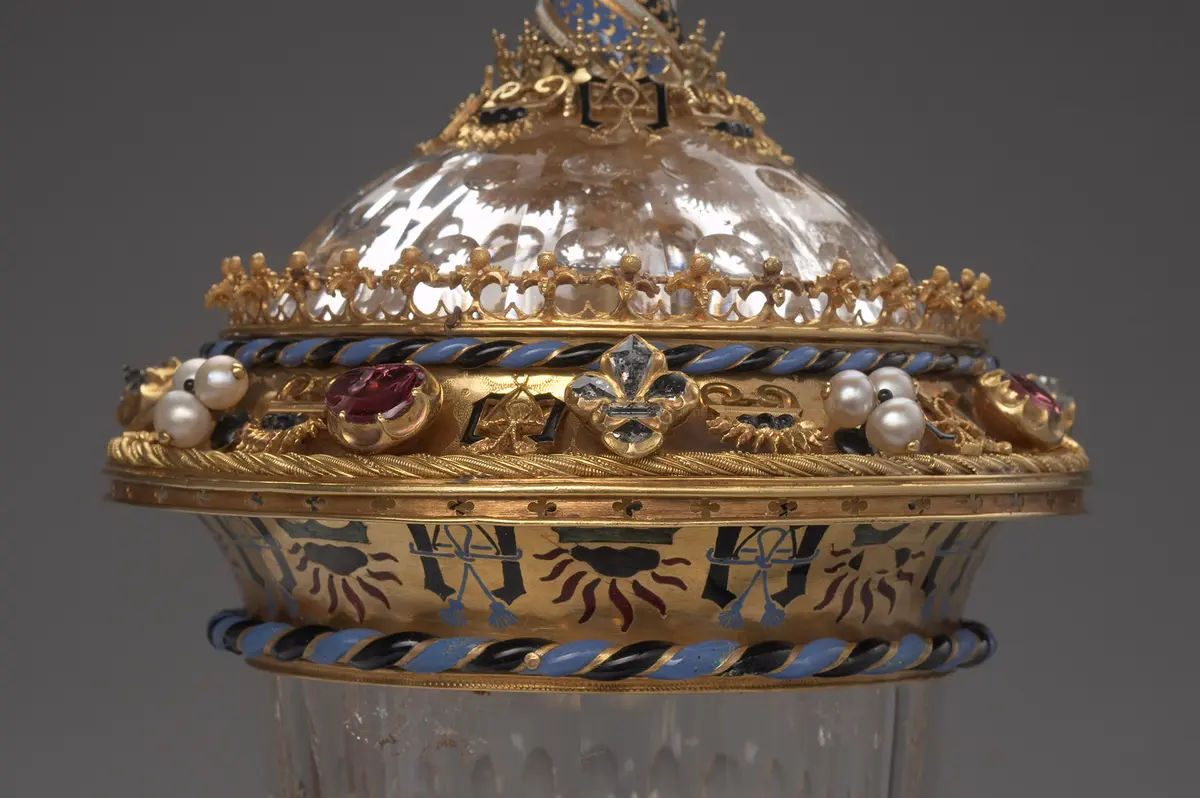
Cup, lid, knob, shaft and base of this magnificent vessel are made of clear, masterfully cut rock crystal and are a supreme achievement of medieval hardstone cutting. The outer sides of the high, conical cup and the curved lid boast sixteen facets, while the knob, shaft and base feature ten-sided faceting. The entire surface is decorated with round, evenly arranged indentations. The individual parts are elegantly mounted in gold to create a whole, giving the magnificent Burgundian cup its graceful outline, culminating in a knob with shining pearls appearing to spray from a fountain. On the gold setting around the base, mouth and lid as well as at the base of the richly decorative element on the lid are the personal emblems of Duke Philip the Good, i.e., the fire-steel and sparking flint as well as the small letter "e", which is connected to its mirror image by a cord. The bands of the base and lid are filled alternately with precious stones and groups of pearls, while a cut-diamond configuration that was new at the time was used to create the heraldic lilies of the House of Valois, each of which consists of five diamonds. The Burgundian Court Goblet came into French possession from the estate of Charles the Bold. In 1570, along with the Saltcellar ("Saliera") by Benvenuto Cellini, the Michael's Goblet and the Onyx Jug (Kunsthistorisches Museum, Vienna), it was given as a present by King Charles IX to Archduke Ferdinand II of Tyrol, who had represented the French king at his marriage to an Austrian archduchess.
Owner:
Duc Philippe III le Bon de Jean sans Peur Valois (1396 - 1467) DNB
Time:
1453/1467
Object Name
Gefäß; Deckelpokal
Culture
Burgundisch - Niederländisch
Material/technology:
Bergkristall, Gold, Körperschmelz (émail en ronde-bosse) mit aufgeschmolzenen Goldappliken, Grubenschmelz (émail champlevé), Punktpunzierungen (pointillé), Perlen, Diamanten, Rubine
Dimensions:
H. 46 cm
Copyright
Kunsthistorisches Museum, Kunstkammer
Invs.
Kunstkammer, 27