Das Reliquiar mit den Kettengliedern
um 1368 | Italienisch, Florenz (?)
The simple gold box was designed to store the three chain links venerated as parts of the iron chains with which the Apostles Peter, Paul and John the Evangelist were bound. On each iron link hangs a small gold chain with an appropriate inscription with a gold ring attached to it. The decorative engraving on the lid depicts the Apostles crouching in chains and identified by name. On the front is Pope Urban V presenting an iron chain to Emperor Charles IV, an event that took place in Rome in 1368, when the emperor met the pope who had returned from exile in Avignon. On this occasion Charles IV received among other things a piece of Christ's loincloth, a fragment of the tunic of St. John the Evangelist and a link of the chain with which the saint was bound. For these three relics three different containers were designed, among which the present Reliquary box was intended to also hold two other chain links that were already in the emperor's possession. The cross reliquary with Christ's loincloth was transferred from Karlstejn Castle in Prague to the Treasury of that city's cathedral, while the reliquary with the tunic of St. John as well as the chain reliquary were taken with the other imperial regalia to Nuremberg in 1424. In order to improve legibility, the engravings on the present reliquary were blackened (this is not niello). With regard to their spatiality, realism and the liveliness of the scenes and figures, the engravings are among the most outstanding and modern of their time. No other comparable examples of the art of the goldsmith have been preserved. There can be no doubt that the reliquary is the work of an Italian master. The artistic provenance (Rome, Avignon, Prague), however, has not yet been precisely determined.
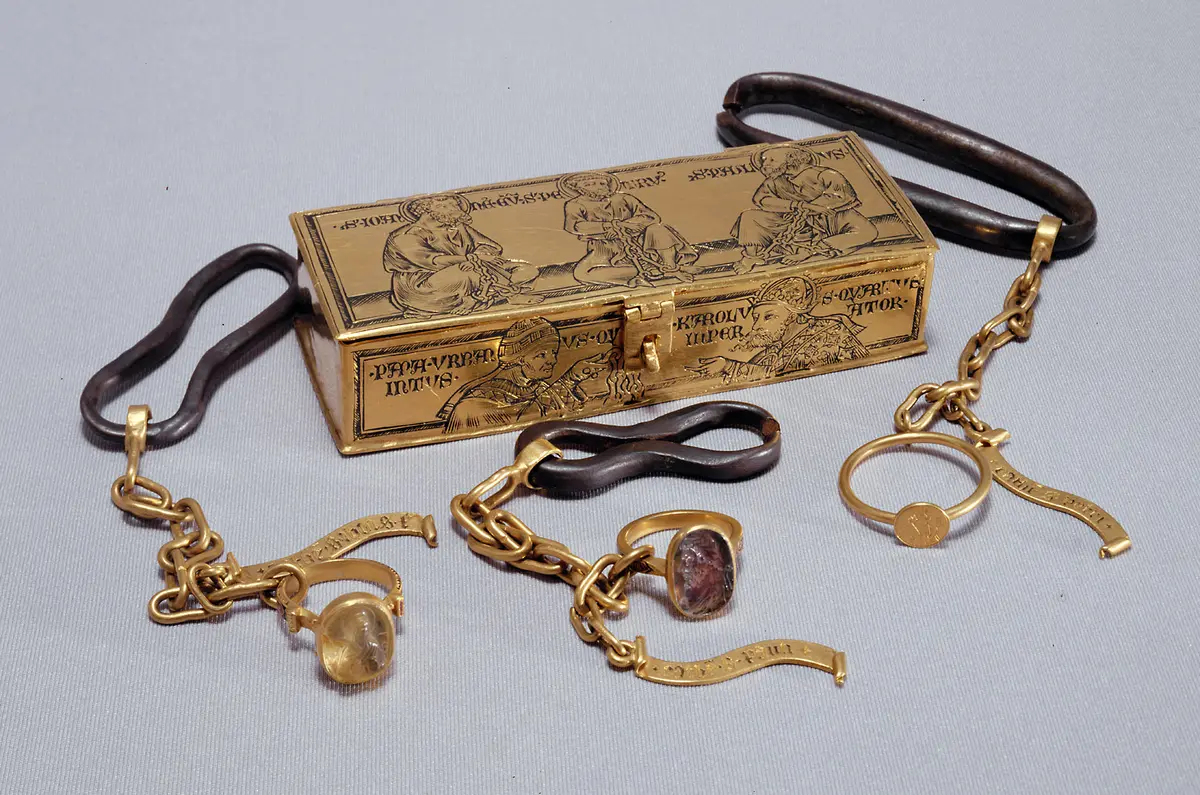
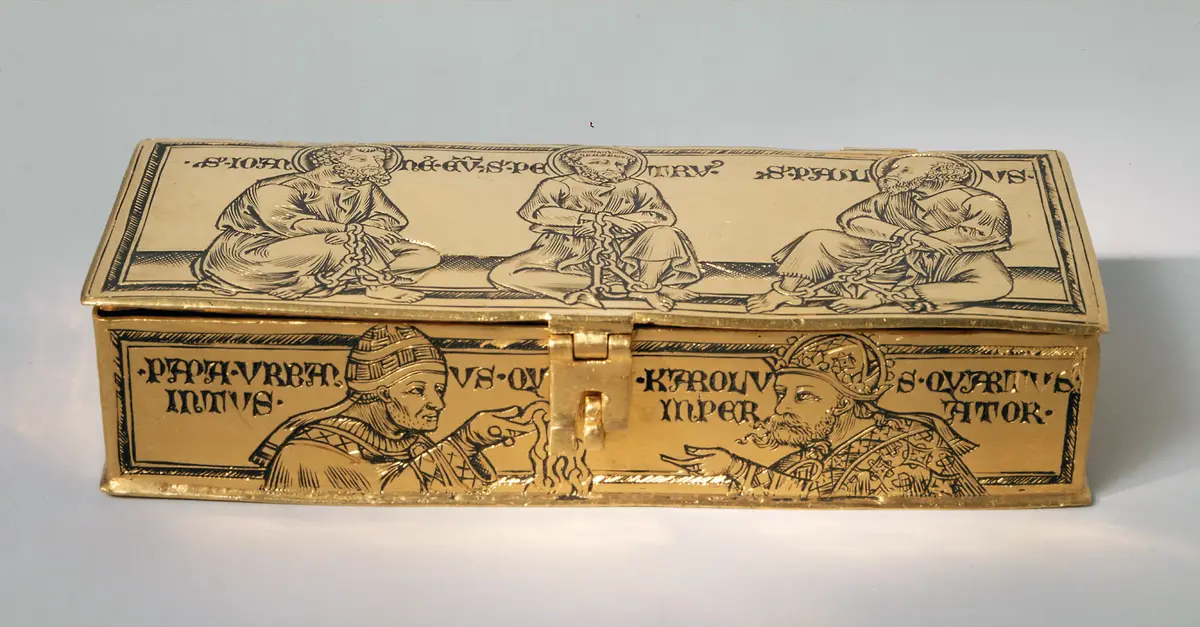
The simple gold box was designed to store the three chain links venerated as parts of the iron chains with which the Apostles Peter, Paul and John the Evangelist were bound. On each iron link hangs a small gold chain with an appropriate inscription with a gold ring attached to it. The decorative engraving on the lid depicts the Apostles crouching in chains and identified by name. On the front is Pope Urban V presenting an iron chain to Emperor Charles IV, an event that took place in Rome in 1368, when the emperor met the pope who had returned from exile in Avignon. On this occasion Charles IV received among other things a piece of Christ's loincloth, a fragment of the tunic of St. John the Evangelist and a link of the chain with which the saint was bound. For these three relics three different containers were designed, among which the present Reliquary box was intended to also hold two other chain links that were already in the emperor's possession. The cross reliquary with Christ's loincloth was transferred from Karlstejn Castle in Prague to the Treasury of that city's cathedral, while the reliquary with the tunic of St. John as well as the chain reliquary were taken with the other imperial regalia to Nuremberg in 1424. In order to improve legibility, the engravings on the present reliquary were blackened (this is not niello). With regard to their spatiality, realism and the liveliness of the scenes and figures, the engravings are among the most outstanding and modern of their time. No other comparable examples of the art of the goldsmith have been preserved. There can be no doubt that the reliquary is the work of an Italian master. The artistic provenance (Rome, Avignon, Prague), however, has not yet been precisely determined.
Time:
um 1368
Object Name
Reliquiar
Culture
Prag (früher: Rom oder Prag)
Material/technology:
Gold, Email, Schmucksteine, Eisen / graviert, geschwärzt
Dimensions:
L. 12,5 cm, B. 5,1 cm, H. 2,8 cm
Inscribed
"IEXVS AVTEM TRANSIENS PER M(ARE)"; "M(I)S(ER)IATVR"
Copyright
Kunsthistorisches Museum, Weltliche Schatzkammer
Invs.
Schatzkammer, WS XIII 29
Browse more
Similar items you might be interested in
Reliquienostensorium Matthäus Walbaum um 1600/05
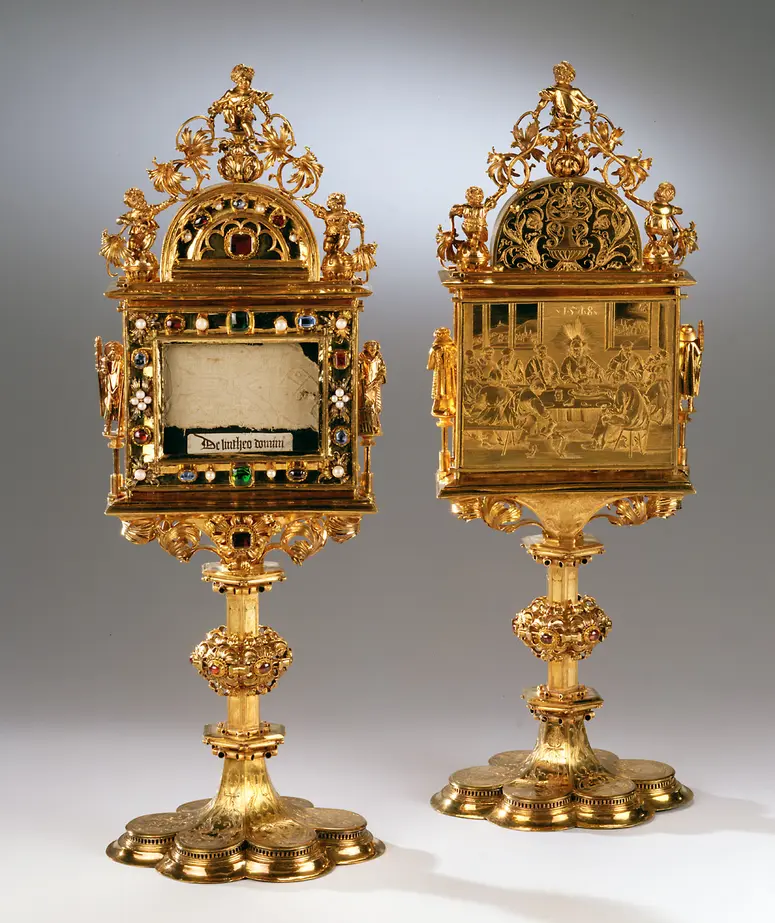
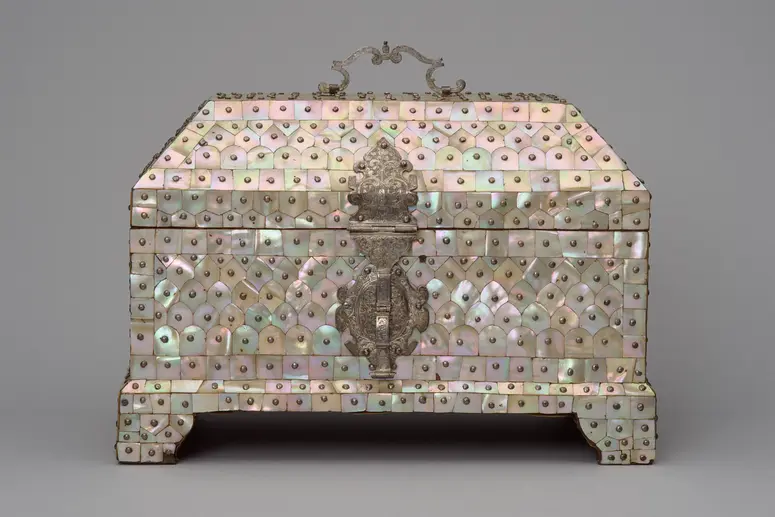
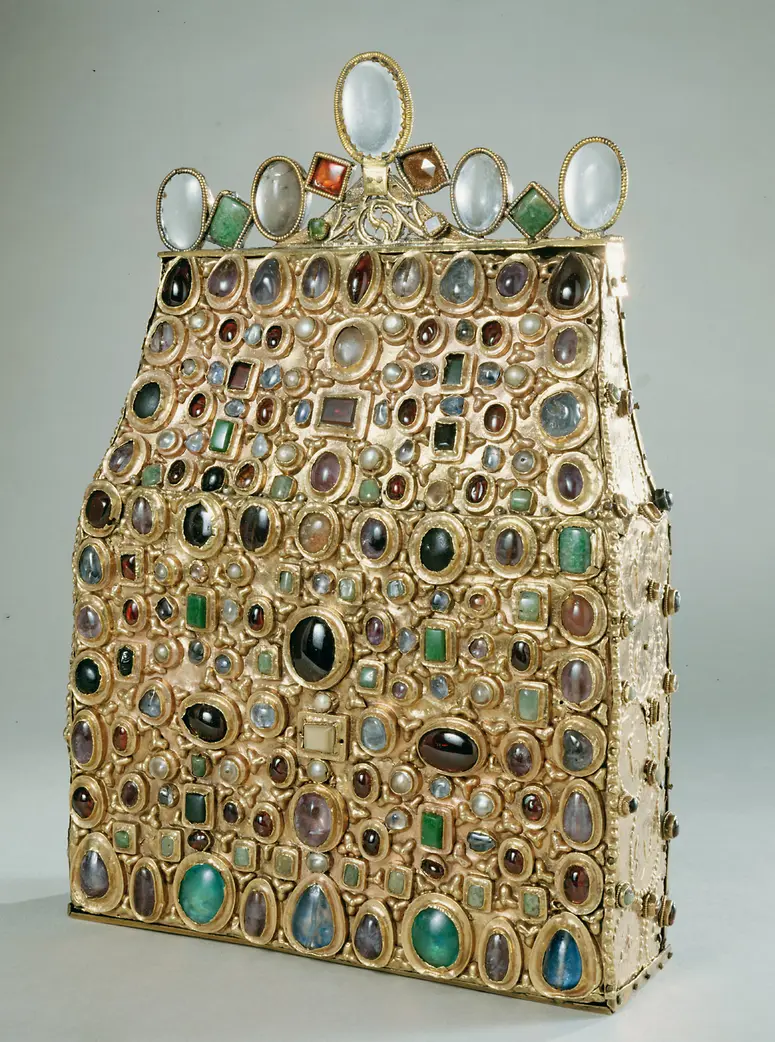
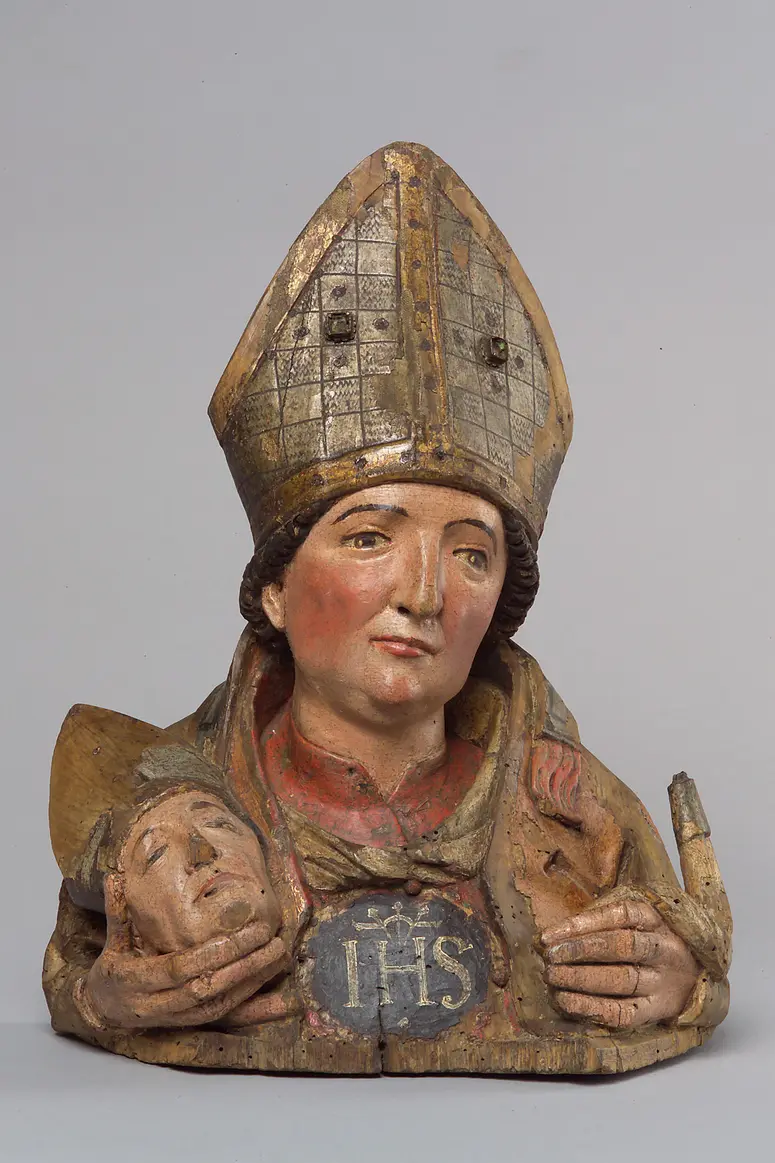
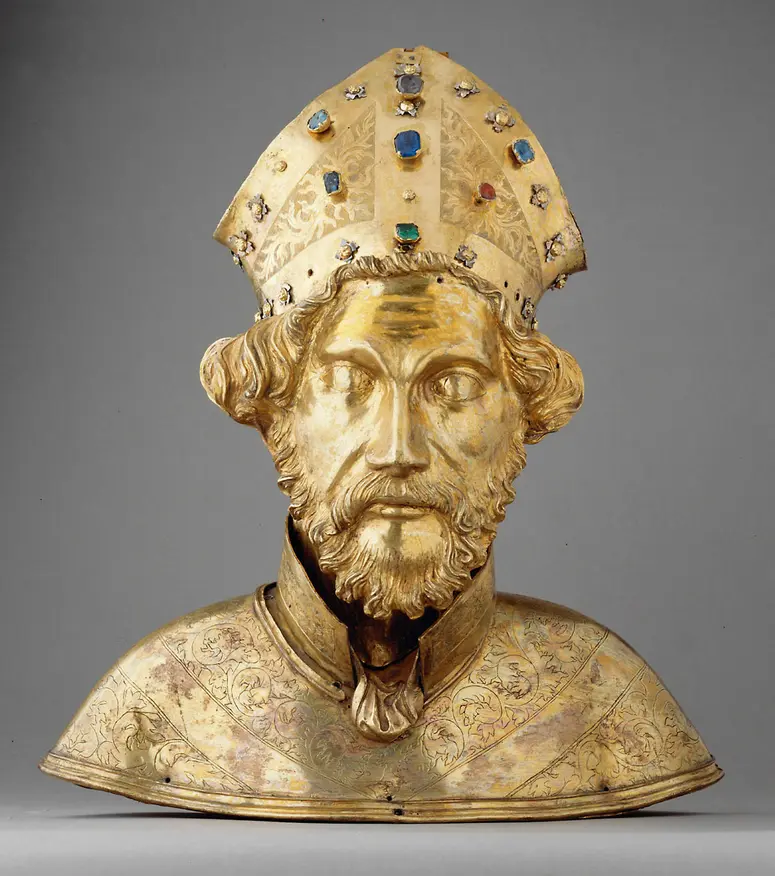
Bischof, Reliquienbüste, Kirchenvater Augustinus ?, Hl. Dionysius von Paris ? 16. Jahrhundert
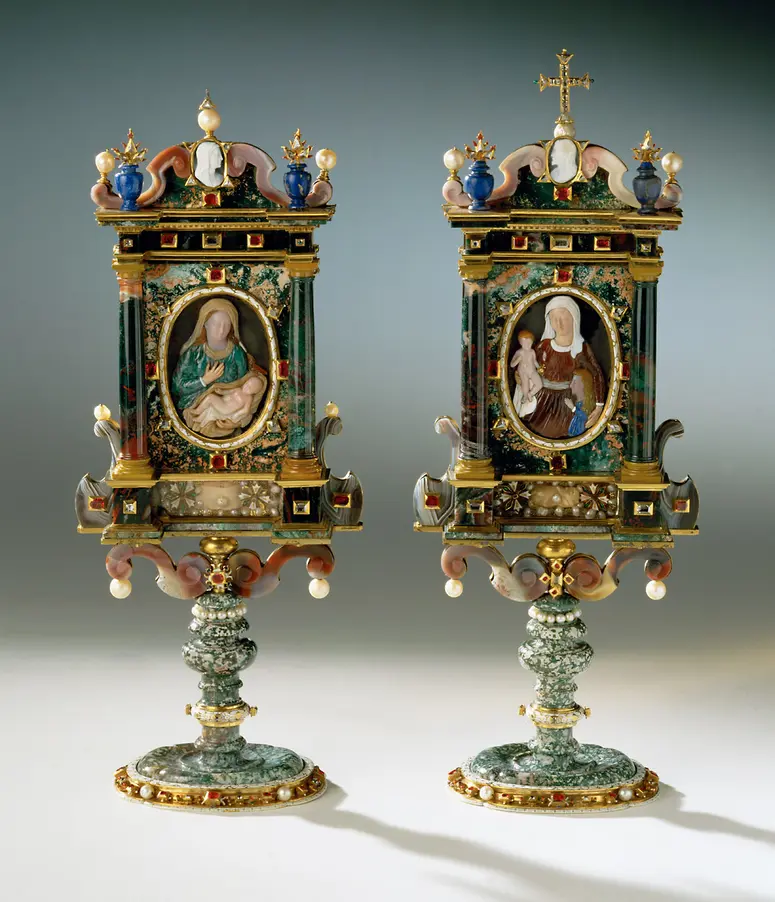
Zwei Reliquienmonstranzen Ottavio Miseroni um 1620
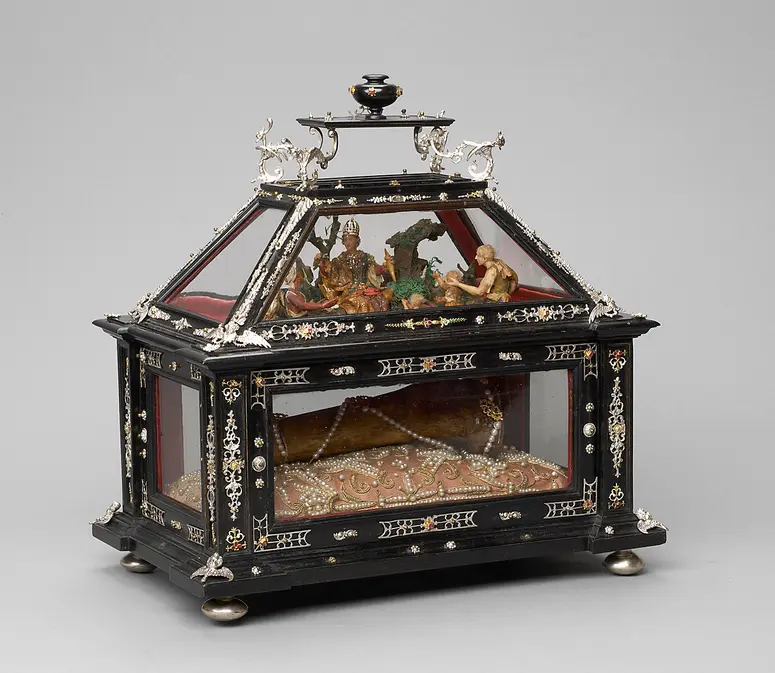
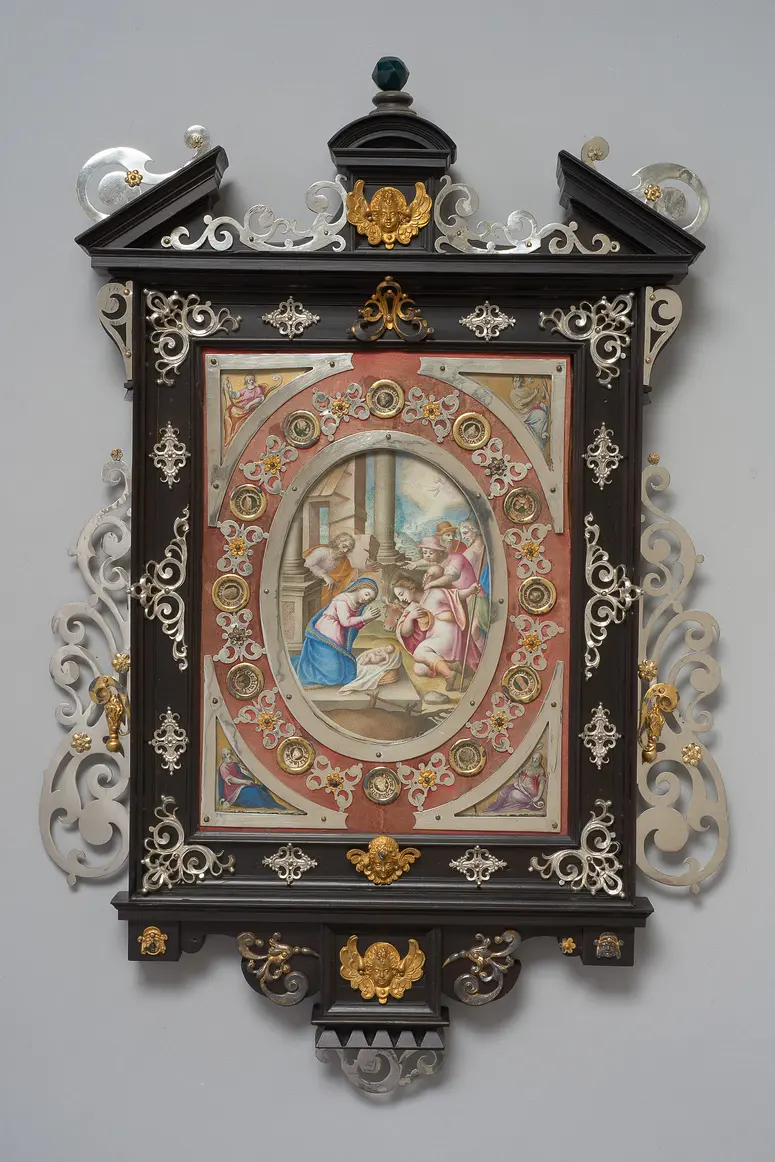
Bildreliquiar mit der Anbetung der Hirten Giovanni Battista Castello gen. Il Genovese um 1600
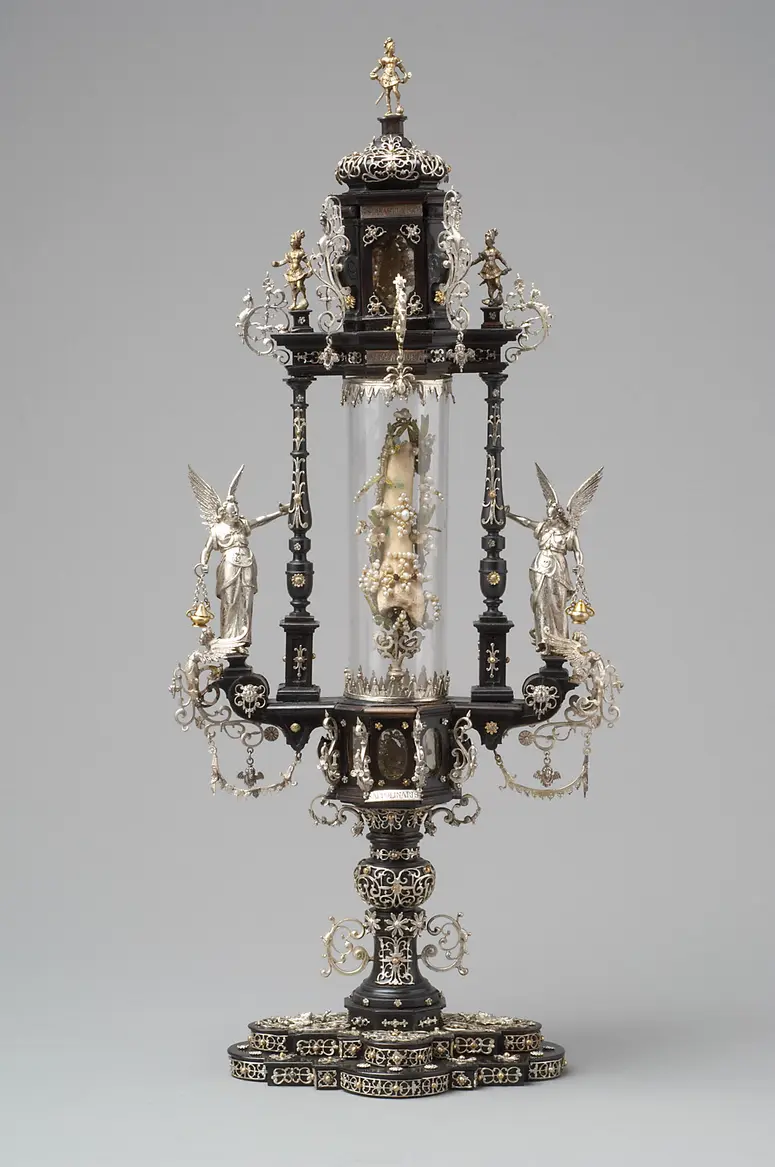
Reliquienostensorium Matthäus Walbaum Anfang 17. Jahrhundert
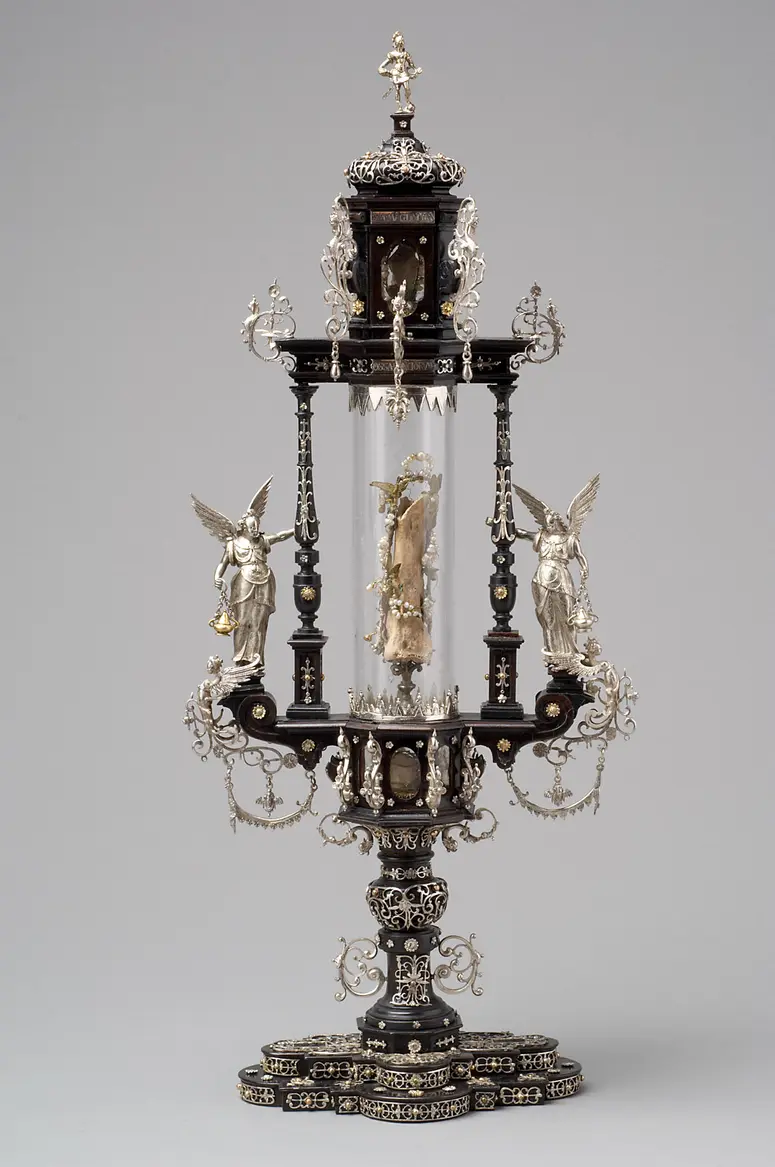
Reliquienostensorium Matthäus Walbaum Anfang 17. Jahrhundert
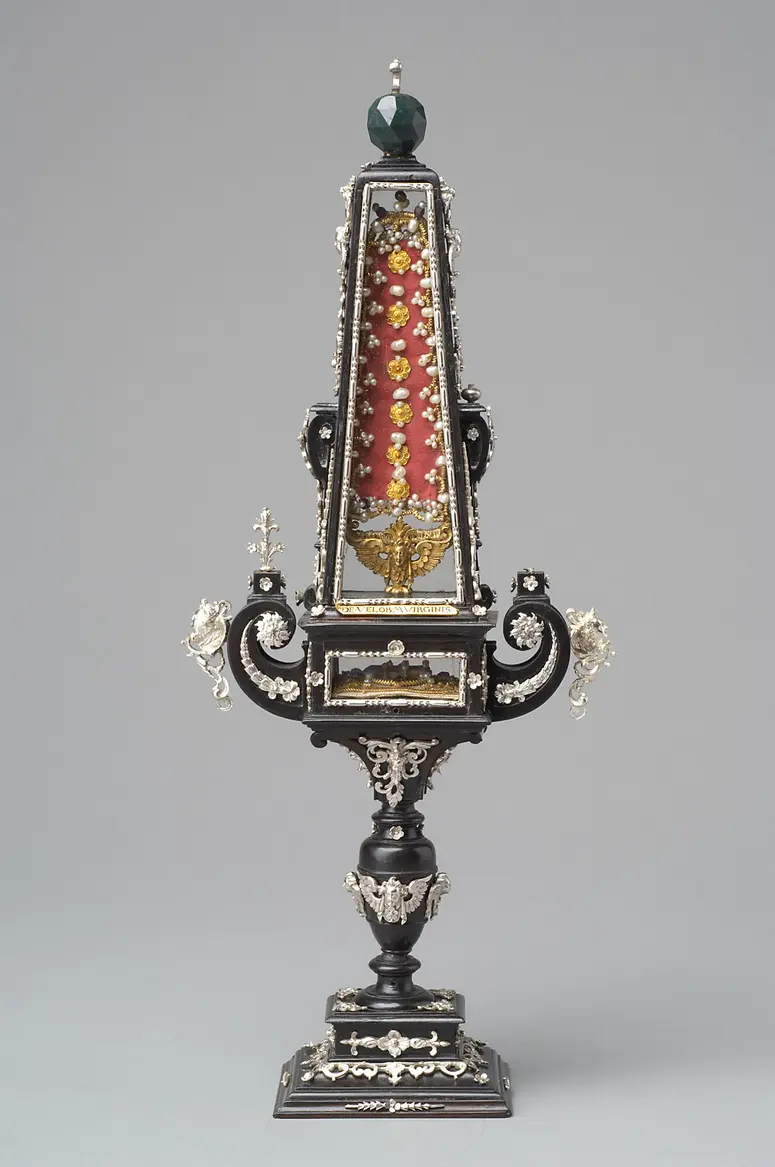
Reliquienostensorium in Gestalt eines Obelisken Matthäus Walbaum Anfang 17. Jahrhundert
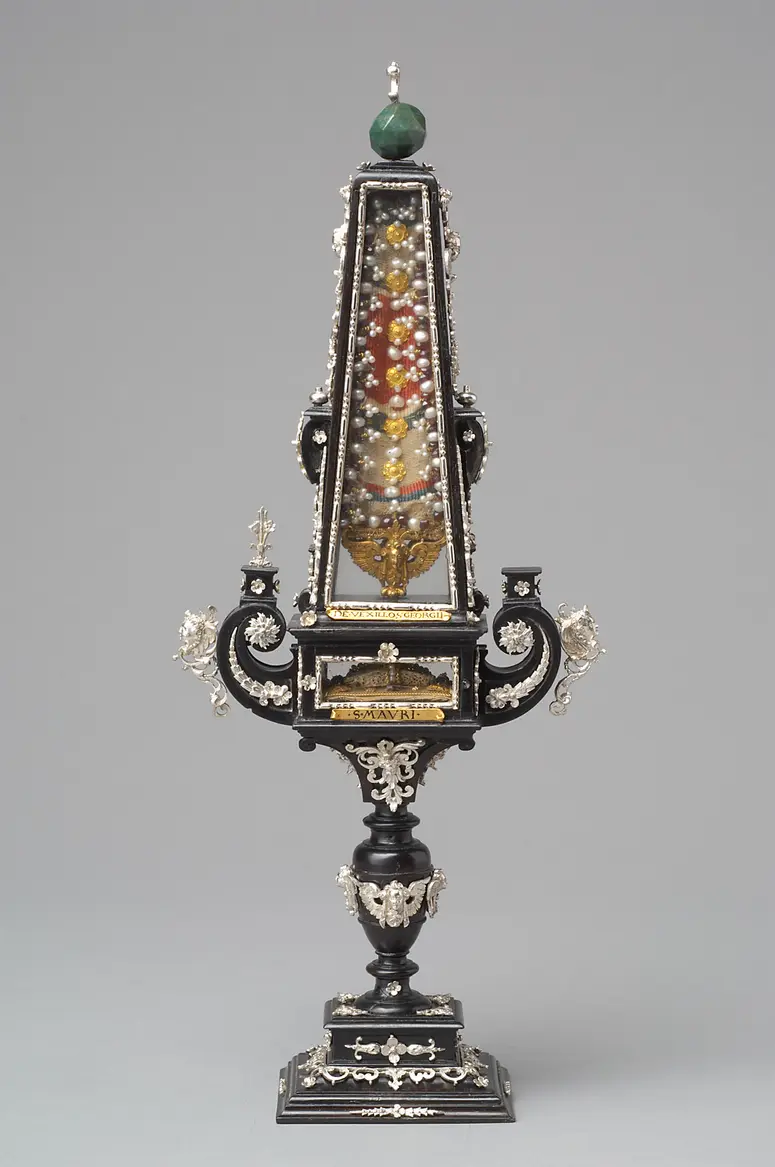
Reliquienostensorium in Gestalt eines Obelisken Matthäus Walbaum Anfang 17. Jahrhundert