Das Reichskreuz
um 1024/25 ,1325 datiert
The Imperial Cross was created during the reign of Emperor Conrad II (1024-1039) and is a masterpiece of the medieval goldsmith's art. Its front side is set with precious stones and pearls, while the back has a drawing in niello technique of the Twelve Apostles, the lamb of the apocalypse and the symbols of the four Evangelists. Like the Imperial Crown, the Imperial Cross has deep symbolic meaning. First, it is a symbol of Christian triumph, since Christ overcame the Crucifixion through his Resurrection. Because Emperor Constantine had been victorious at the Battle of the Milvian Bridge (in 312 AD) under the protection of the cross, it was also regarded as an emblem of the Roman Empire, a concept that was consciously continued by Charlemagne and also adopted by Ottonian and early Salian emperor. Thus the Imperial Cross is interpreted as a symbol of Christian triumph, victory and imperial power. It is one in a series of famous imperial endowments, starting with a triumphal cross (crux gemmata) set with precious stones, which Theodosius II had erected at Calvary before 450 AD. However, the present Imperial Cross is not only a triumphant crux gemmata but also a reliquary. Parts of the front consist of removable plates, which open to recesses on the inside that once held imperial relics: the Holy Lance (Inv. No. SK_WS_XIII_19) in the cross-beam and the Particle of the Cross (Inv. No. SK_WS_XIII_20) in the shaft. These precious relics of the Passion were regarded as tokens of sacred kingship and the ruler's victorious powers. The importance of the relics is perfectly reflected in the form of their protective cover, whose symbolic force exceeds any secular sign of power.
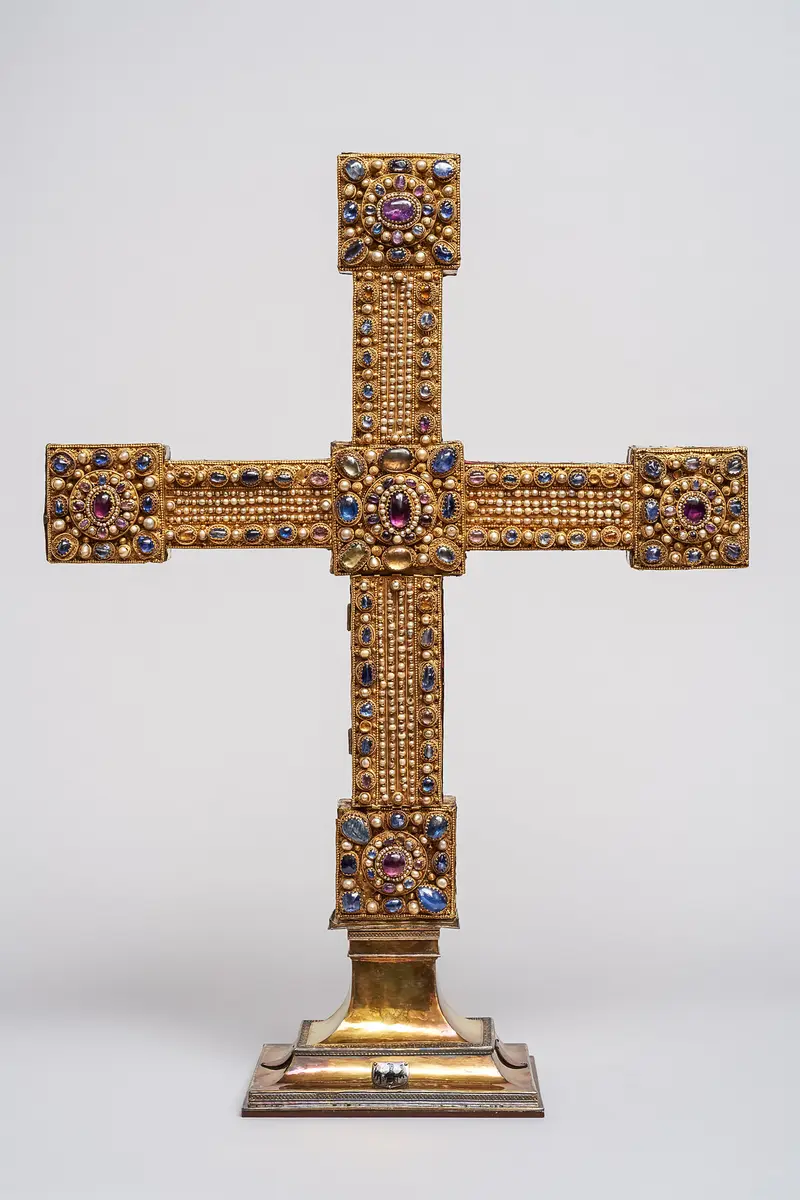
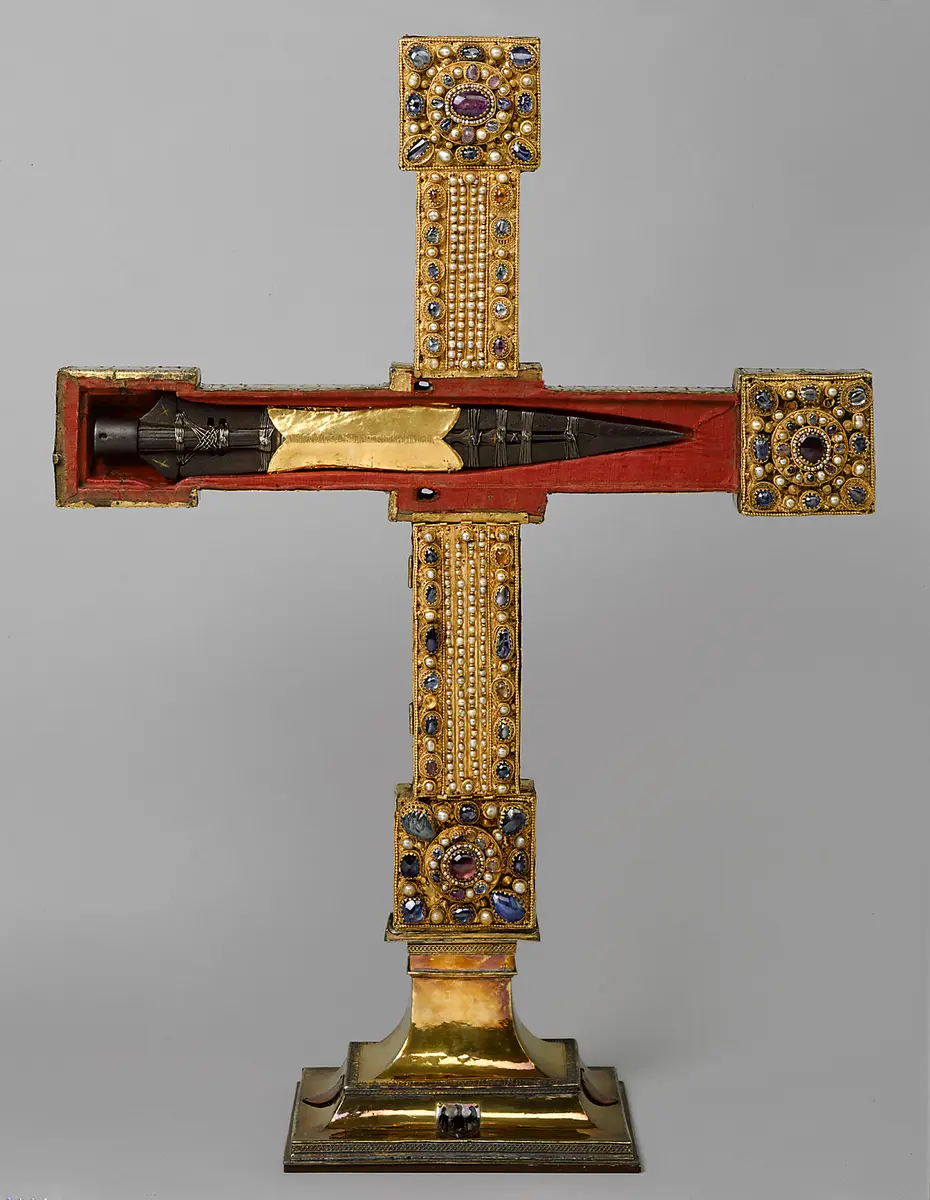
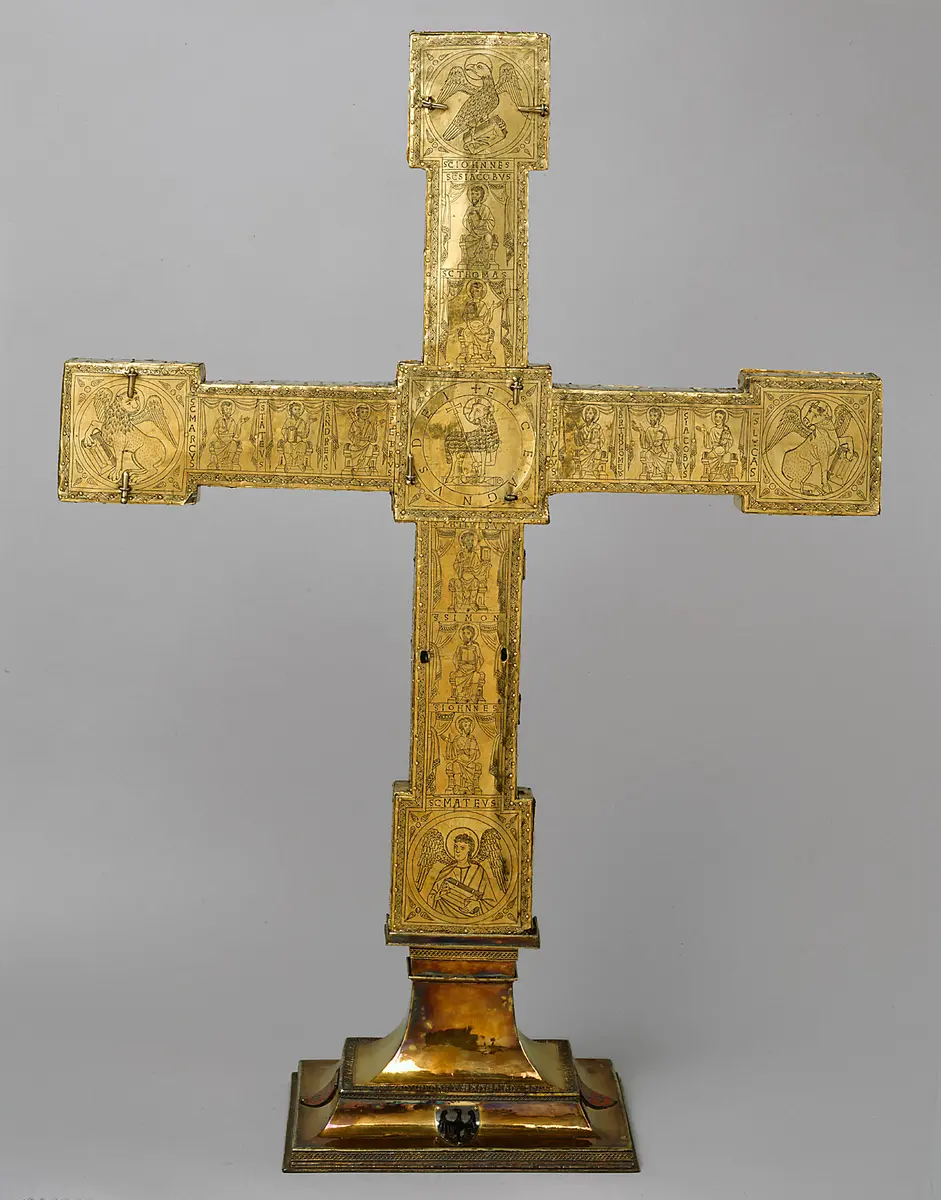
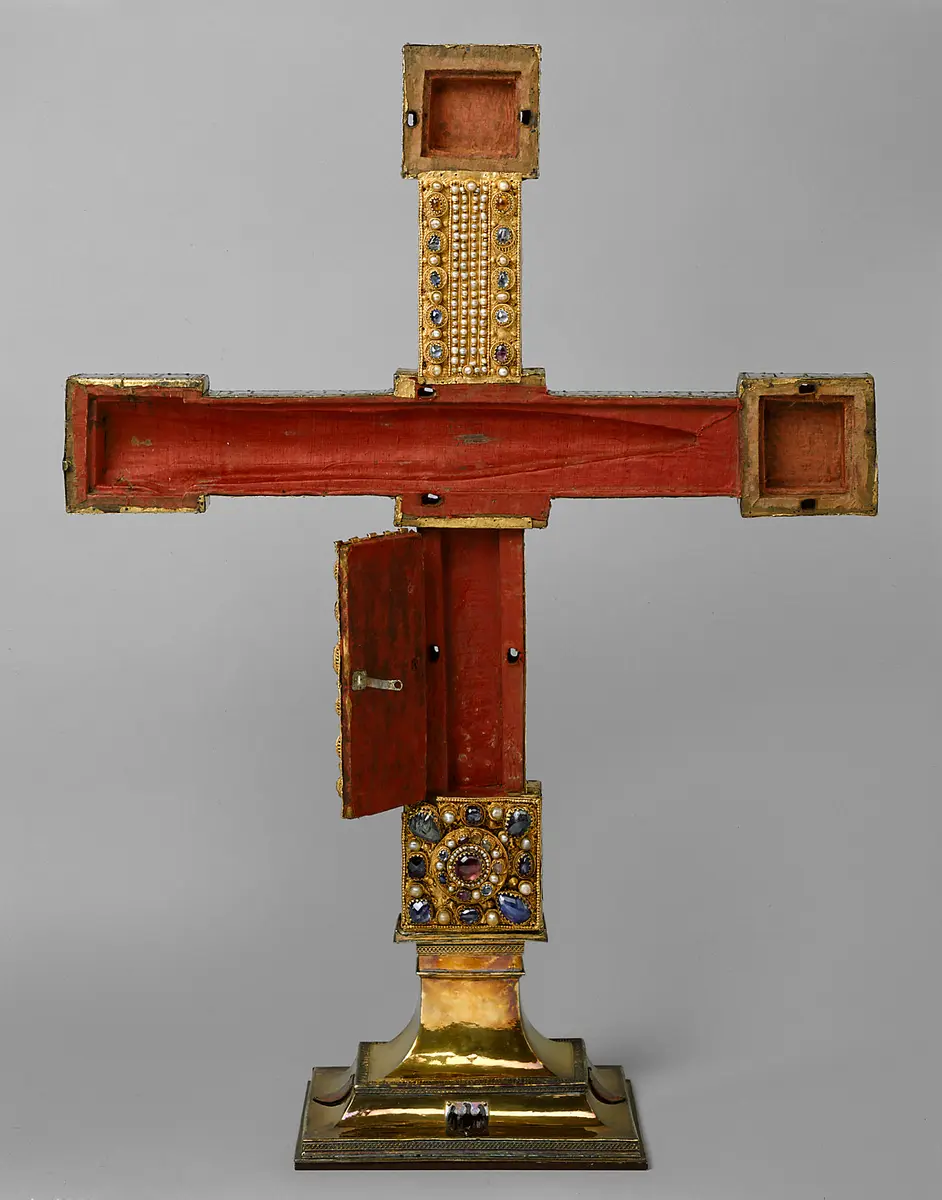
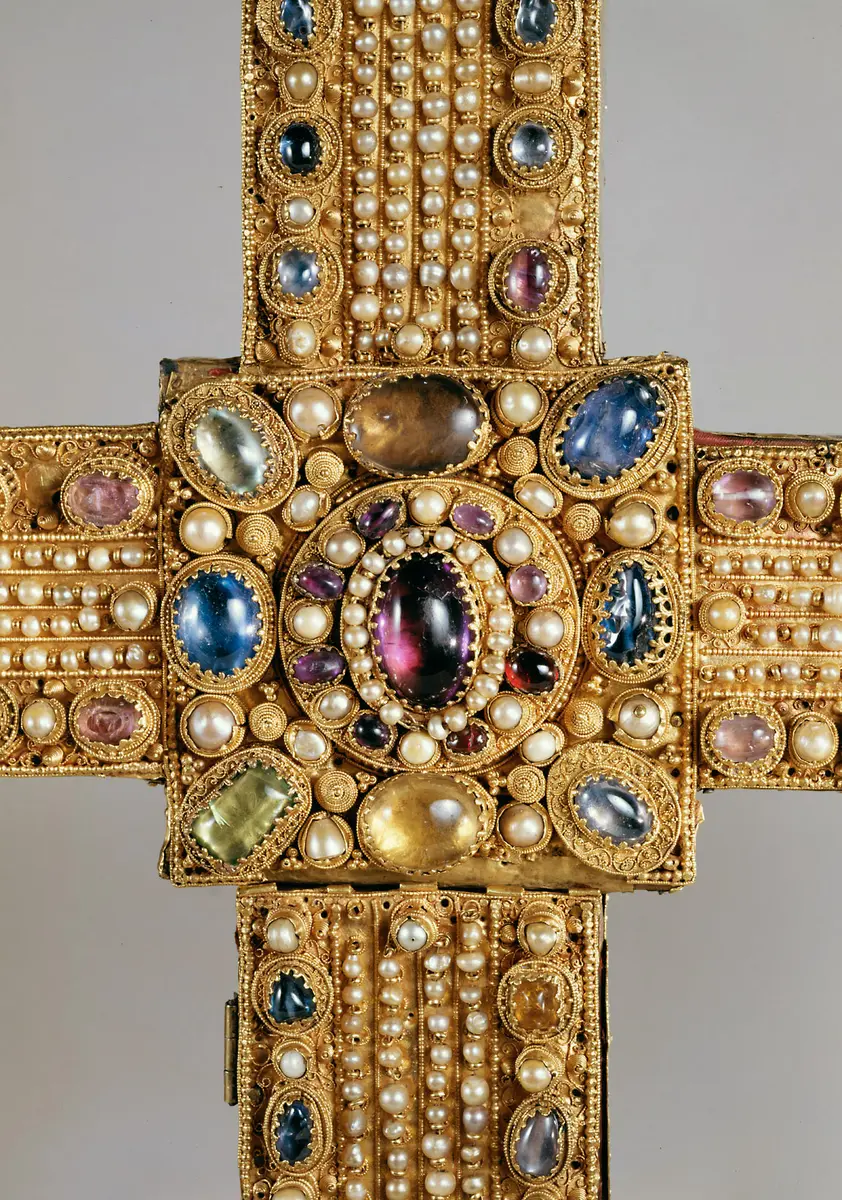
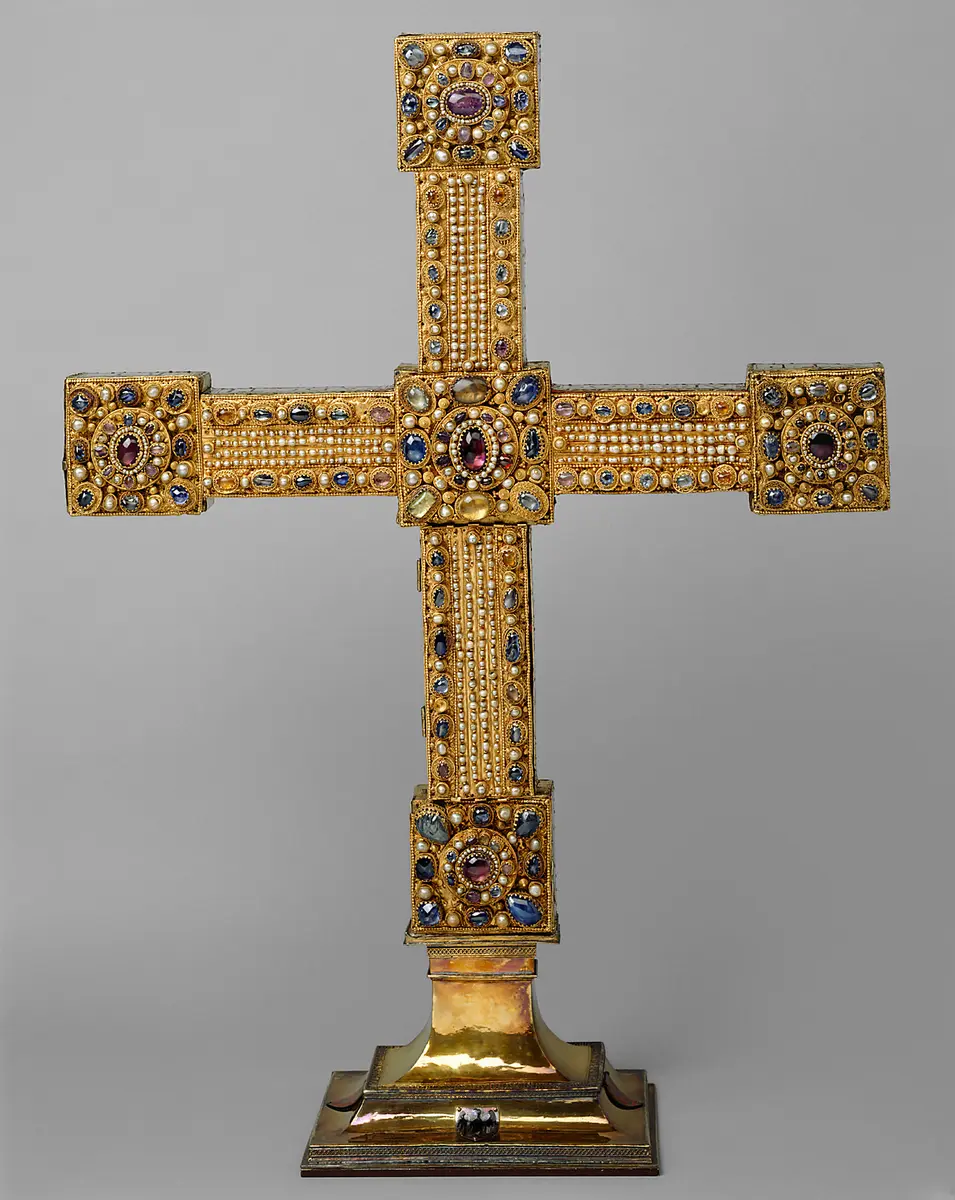
The Imperial Cross was created during the reign of Emperor Conrad II (1024-1039) and is a masterpiece of the medieval goldsmith's art. Its front side is set with precious stones and pearls, while the back has a drawing in niello technique of the Twelve Apostles, the lamb of the apocalypse and the symbols of the four Evangelists. Like the Imperial Crown, the Imperial Cross has deep symbolic meaning. First, it is a symbol of Christian triumph, since Christ overcame the Crucifixion through his Resurrection. Because Emperor Constantine had been victorious at the Battle of the Milvian Bridge (in 312 AD) under the protection of the cross, it was also regarded as an emblem of the Roman Empire, a concept that was consciously continued by Charlemagne and also adopted by Ottonian and early Salian emperor. Thus the Imperial Cross is interpreted as a symbol of Christian triumph, victory and imperial power. It is one in a series of famous imperial endowments, starting with a triumphal cross (crux gemmata) set with precious stones, which Theodosius II had erected at Calvary before 450 AD. However, the present Imperial Cross is not only a triumphant crux gemmata but also a reliquary. Parts of the front consist of removable plates, which open to recesses on the inside that once held imperial relics: the Holy Lance (Inv. No. SK_WS_XIII_19) in the cross-beam and the Particle of the Cross (Inv. No. SK_WS_XIII_20) in the shaft. These precious relics of the Passion were regarded as tokens of sacred kingship and the ruler's victorious powers. The importance of the relics is perfectly reflected in the form of their protective cover, whose symbolic force exceeds any secular sign of power.
Time:
um 1024/25 ,1325 datiert
Object Name
Insigne; Reliquiar
Culture
Westdeutsch; Fuß: Prag
Material/technology:
Eichenholzkern, Stoff, Goldblech, Edelsteine, antike Gemmen, Perlen; RS und Seiten: Niello, Eisenzapfen zum Gebrauch als Vortragekreuz; Fuß: Silber, vergoldet, Email
Dimensions:
H. 77,5, B. 70,8 cm
Gesamthöhe: 92,5 cm
Fuß: H. 17,3 cm
Inscribed
Seitenwände: "ECCE CRVCEM DOMINI FVGIAT PARS HOSTIS INIQVI. HINC, CHVONRADE, TIBI CEDANT OMNES INIMICI"; Kreuzfuß: "ANNO MILLENO TERCIO QVINQVAGENO SECVNDO KAROLVS AVGVSTVS ROMANVS REXQVE BOHEMVS HOC LIGNVM DOMINI TALI PEDE SIC DECORAVIT"
Copyright
Kunsthistorisches Museum, Weltliche Schatzkammer
Invs.
Schatzkammer, WS XIII 21