Danae
1540-1550 | Francesco Primaticcio
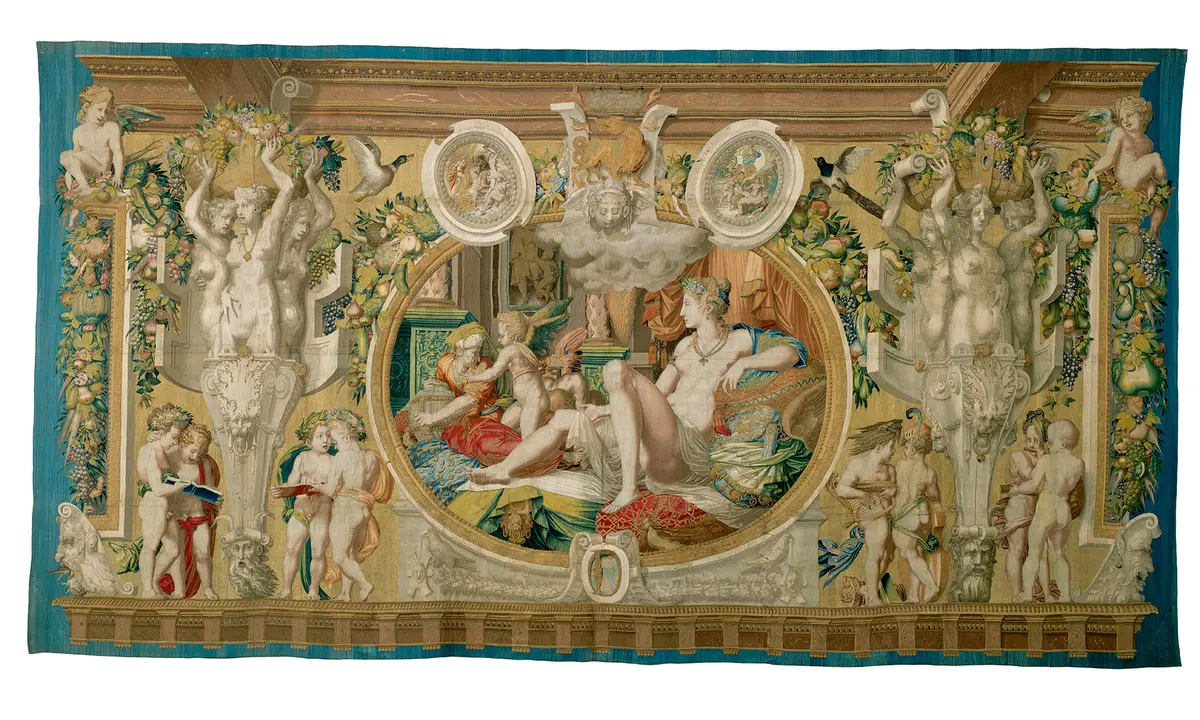
The wall tapestry with the scene of Danae forms part of a six-part series. The young woman was shut away with her nurse by her father King Acrisius of Argos on the Peloponnese, as the oracle of Delphi had predicted that the king would meet a violent death at the hands of his grandson. Zeus evaded Acrisius's precautions by entering Danae's chamber in the form of a shower of golden rain, impregnating the lovely Danae and conceiving Perseus. The series was commissioned by the French king François I. The pictures were not based on specially prepared cartoons but on scenes on the south wall of the Great Gallery in the château at Fontainebleau. When it was converted into the medium of textiles, the whole wall context was therefore taken into account. Each tapestry shows not only the fresco concerned but also the surrounding stucco work, the cornice and the start of the coffered ceiling. This makes the trompe l'œil effect unique among French tapestries in the sixteenth century. Aus: Das Kunsthistorische Museum in Wien, Prestel Museumsführer, München/Berlin/London/New York 2007, 118 (Katja Schmitz-von Ledebur).
The wall tapestry with the scene of Danae forms part of a six-part series. The young woman was shut away with her nurse by her father King Acrisius of Argos on the Peloponnese, as the oracle of Delphi had predicted that the king would meet a violent death at the hands of his grandson. Zeus evaded Acrisius's precautions by entering Danae's chamber in the form of a shower of golden rain, impregnating the lovely Danae and conceiving Perseus. The series was commissioned by the French king François I. The pictures were not based on specially prepared cartoons but on scenes on the south wall of the Great Gallery in the château at Fontainebleau. When it was converted into the medium of textiles, the whole wall context was therefore taken into account. Each tapestry shows not only the fresco concerned but also the surrounding stucco work, the cornice and the start of the coffered ceiling. This makes the trompe l'œil effect unique among French tapestries in the sixteenth century. Aus: Das Kunsthistorische Museum in Wien, Prestel Museumsführer, München/Berlin/London/New York 2007, 118 (Katja Schmitz-von Ledebur).
Draft:
Francesco Primaticcio (1504 Bologna - 1570 Paris) DNB
Manufactory:
Jean Le Bries (tätig in Fontainebleau vermutlich zwischen 1540 und 1550)
Time:
1540-1550
Object Name
Tapisserie
Culture
Fontainebleau
Material/technology:
Kette: Wolle, Schuß: Wolle/Seide, Gold und Silber
Kettfäden pro cm: 6 bis 8
Dimensions:
335 cm × 634 cm
Copyright
Kunsthistorisches Museum, Kunstkammer
Invs.
Kunstkammer, T CV 1
Browse more
Similar items you might be interested in
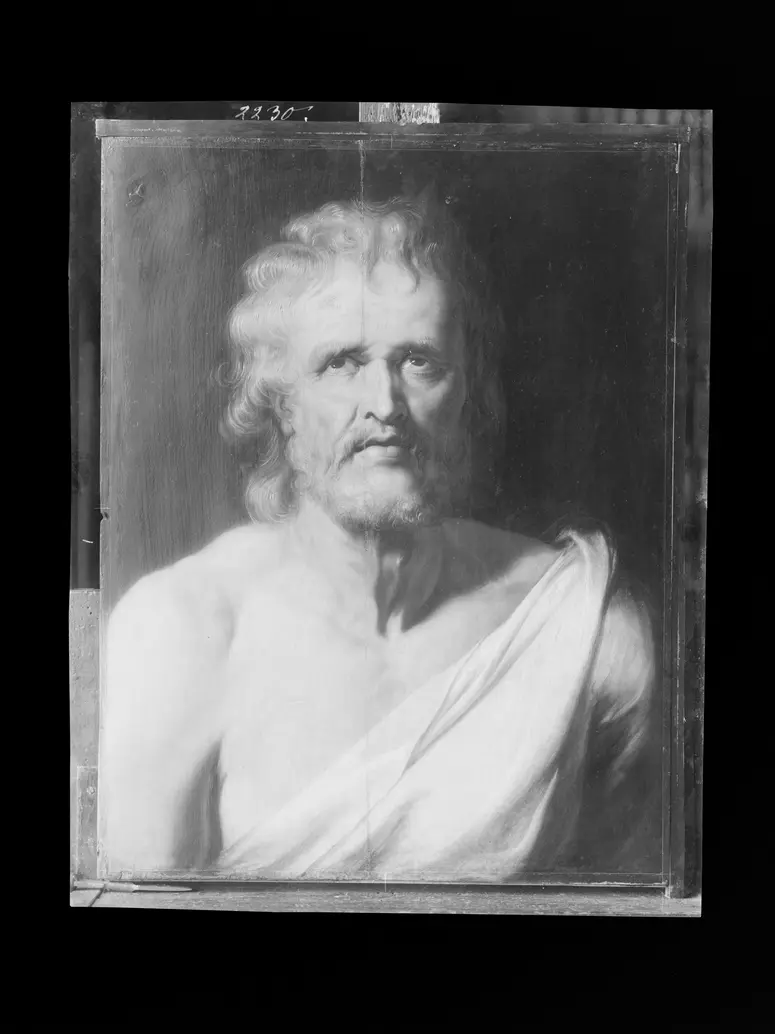
Greisenkopf J. Löwy, K. und K. Hof-Photograph, Kunst- und Verlagsanstalt (Wien) 1888 bis 1910

Das Traumgesicht der Nausikaa J. Löwy, K. und K. Hof-Photograph, Kunst- und Verlagsanstalt (Wien) 1888 bis 1910
Die Küchenmagd J. Löwy, K. und K. Hof-Photograph, Kunst- und Verlagsanstalt (Wien) 1888 bis 1910
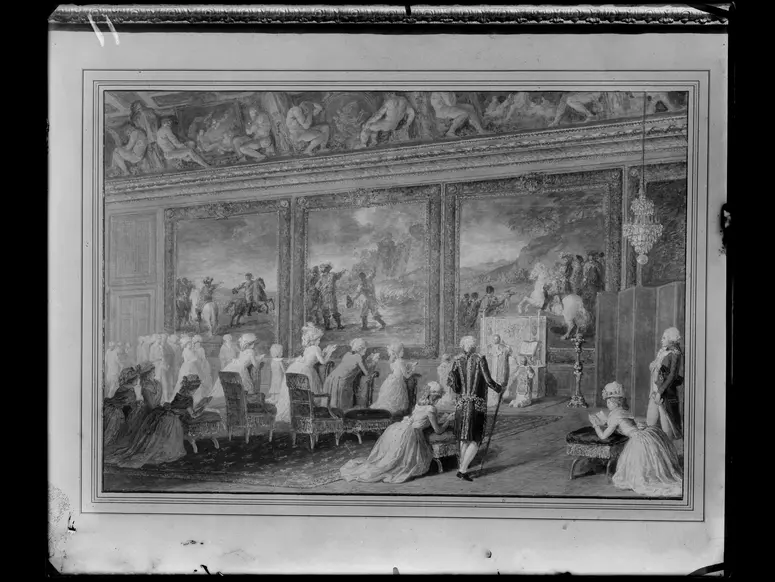
Die letzte Messe in Versailles J. Löwy, K. und K. Hof-Photograph, Kunst- und Verlagsanstalt (Wien) 1888 bis 1910
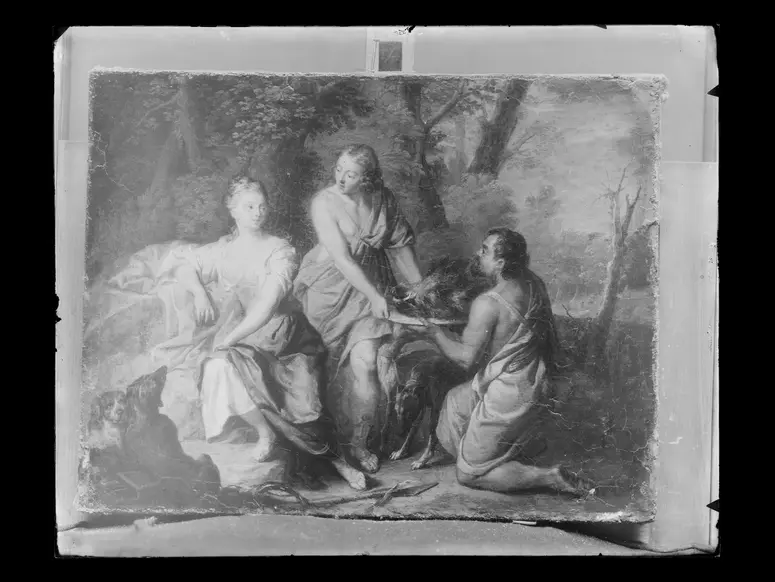
Jagdbeute der Diana (Nach der Eberjagd) J. Löwy, K. und K. Hof-Photograph, Kunst- und Verlagsanstalt (Wien) 1888 bis 1910
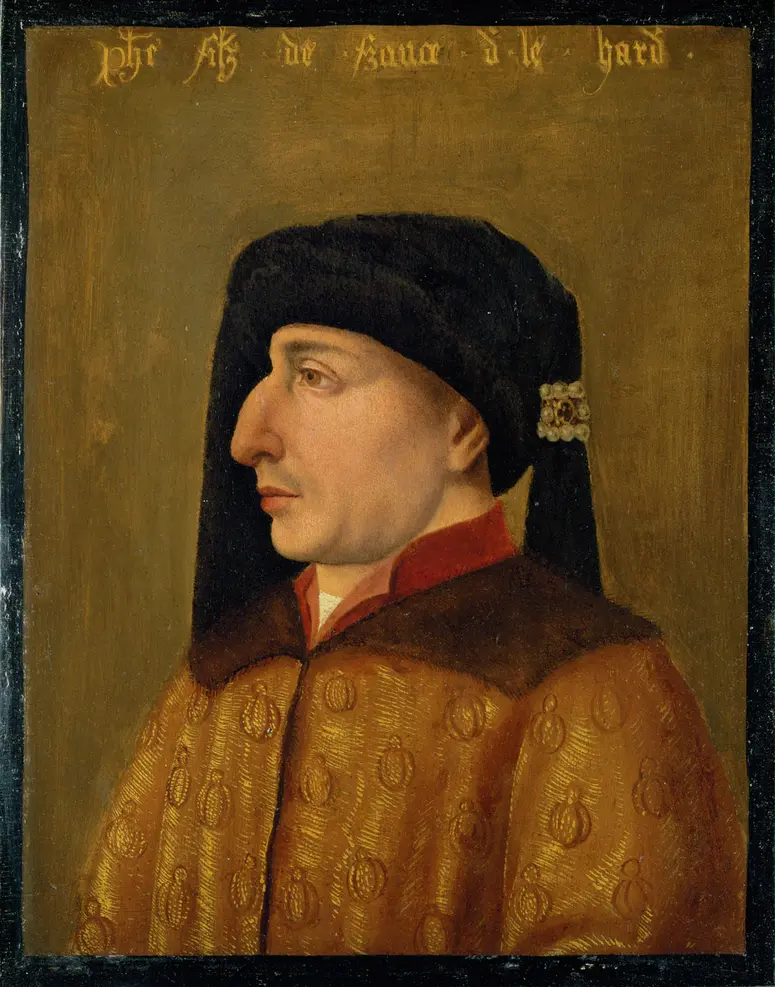
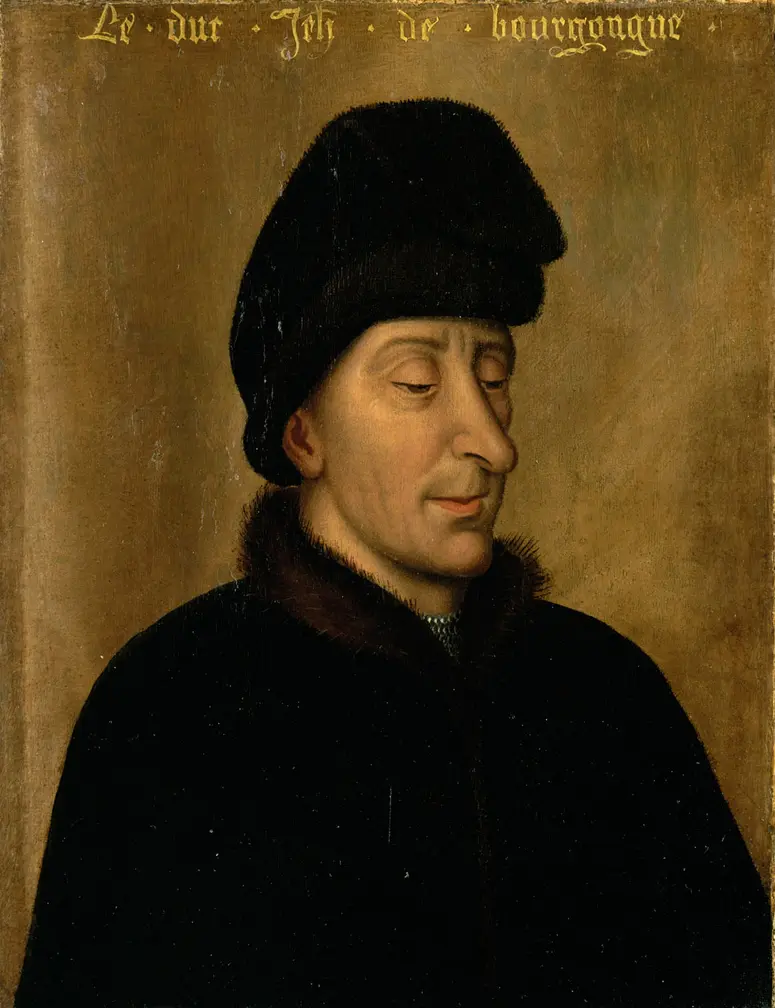
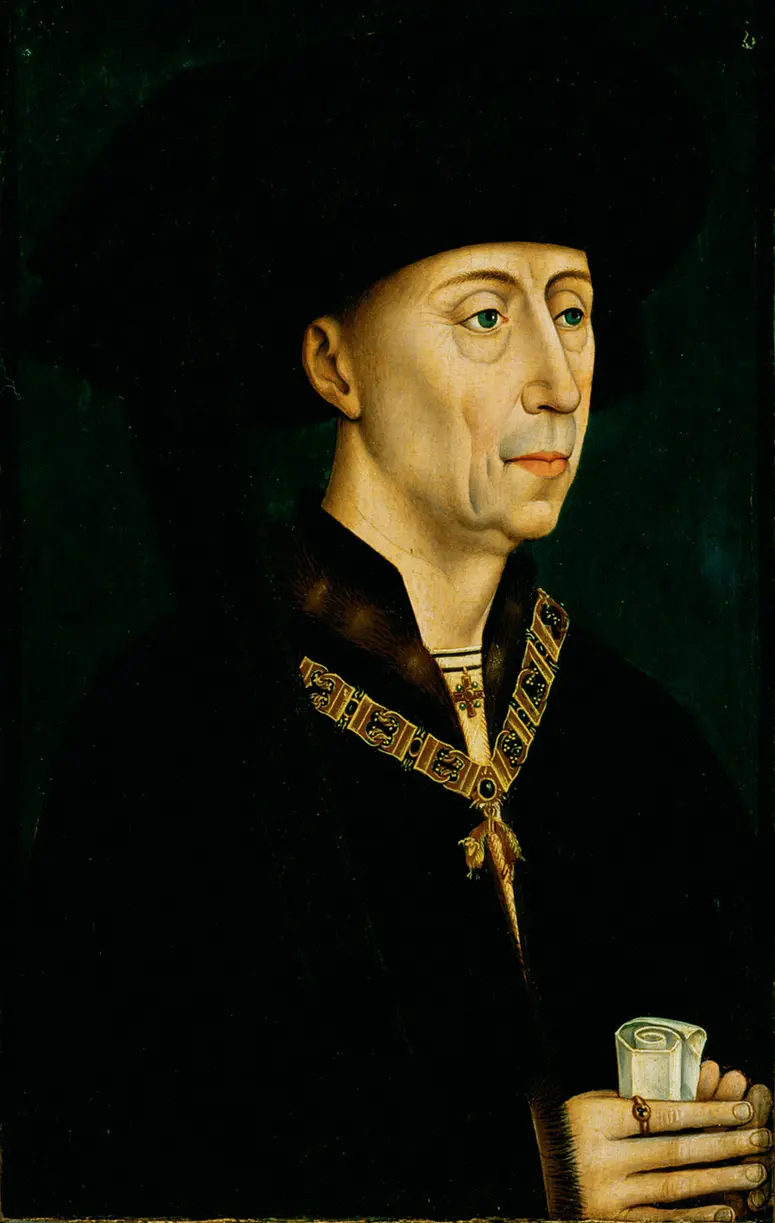
Herzog Philipp "der Kühne" (1342-1404) von Burgund im Profil Altniederländisch um 1500
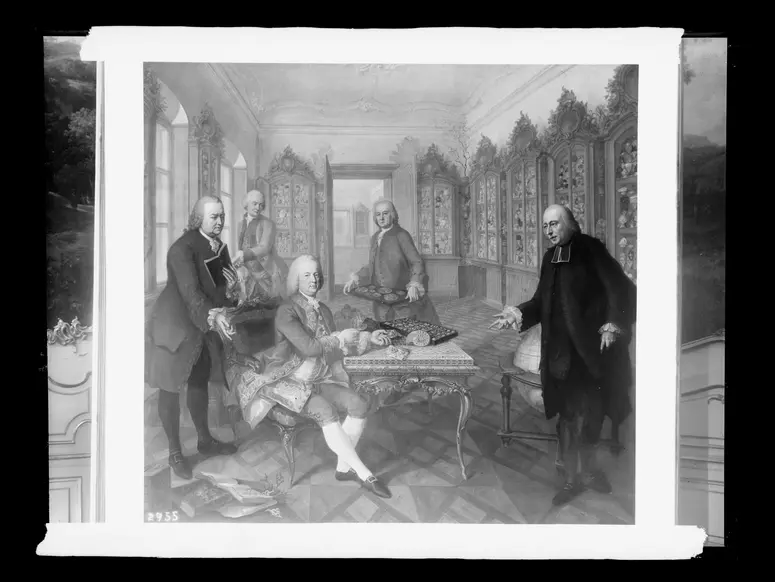
Kaiser Franz I. Stephan mit Gérard van Swieten, Jean de Baillou, Valentin Jamerey-Duval und Abbé Marcy J. Löwy, K. und K. Hof-Photograph, Kunst- und Verlagsanstalt (Wien) 1888 bis 1910