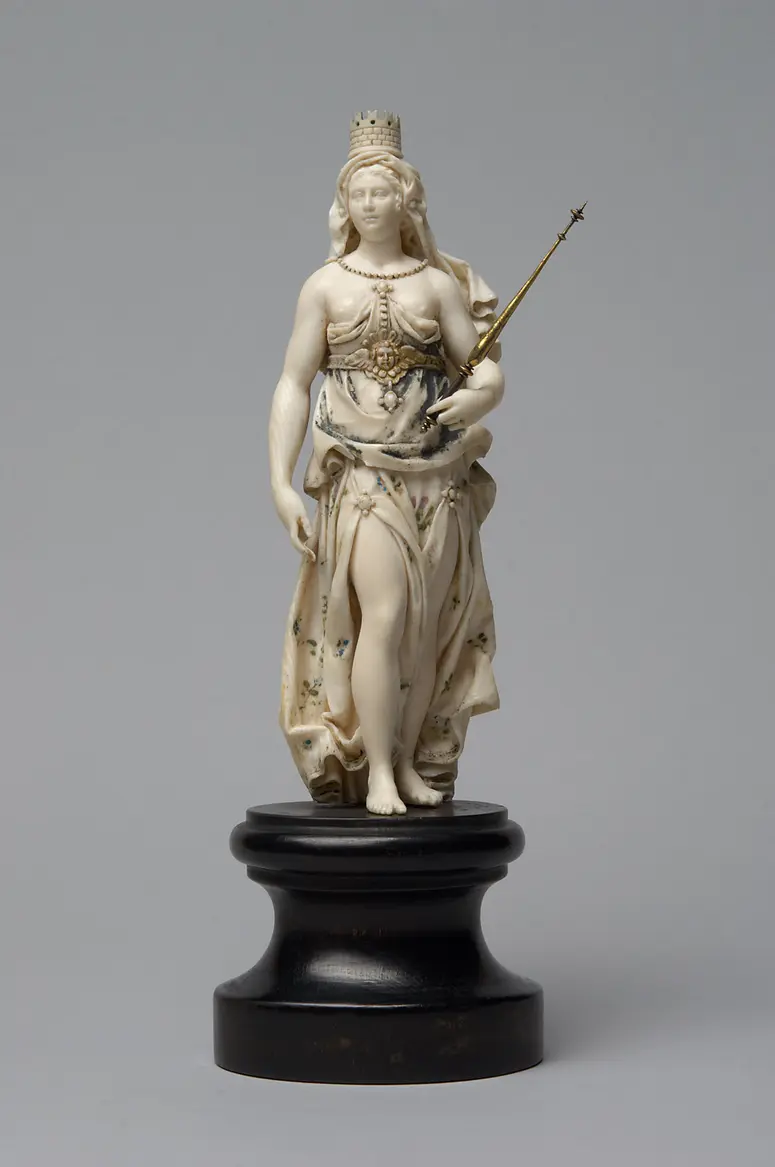
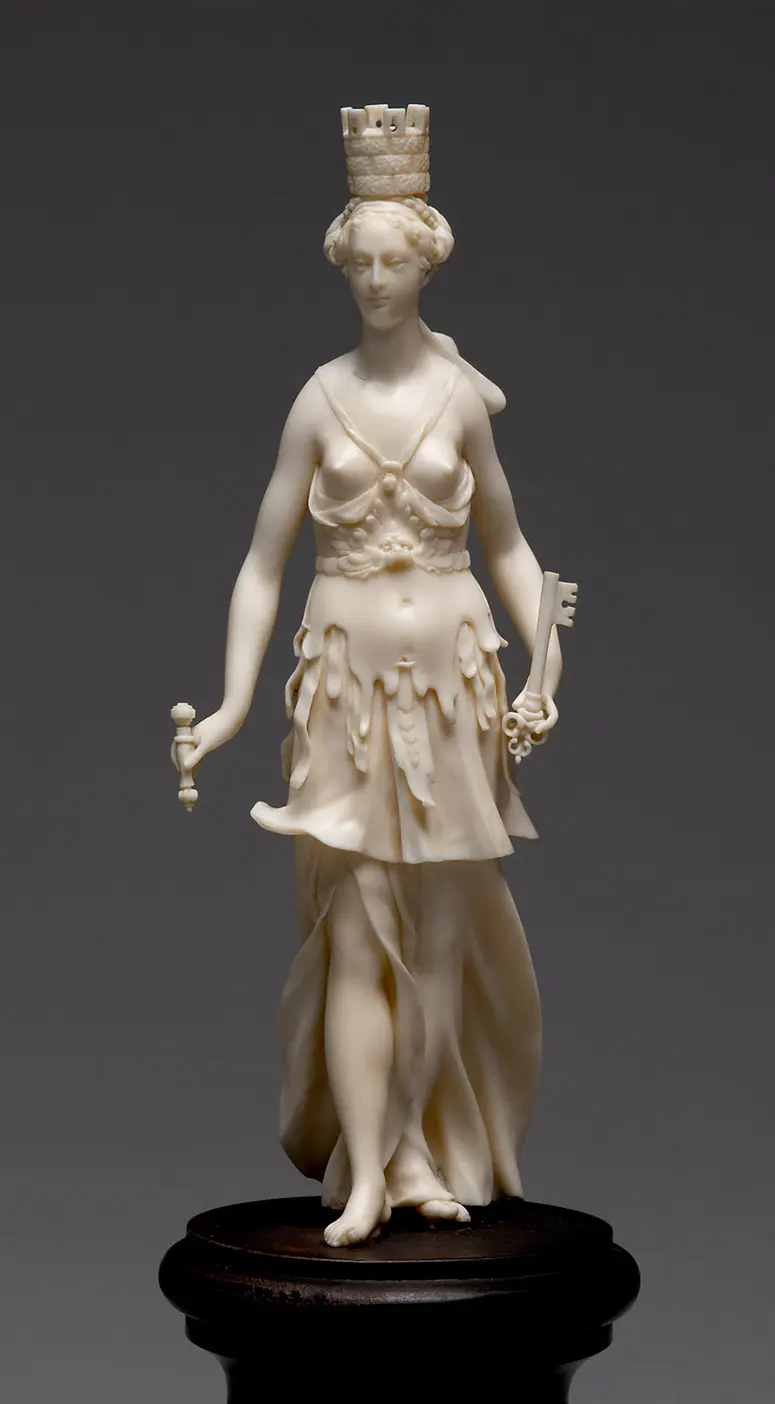
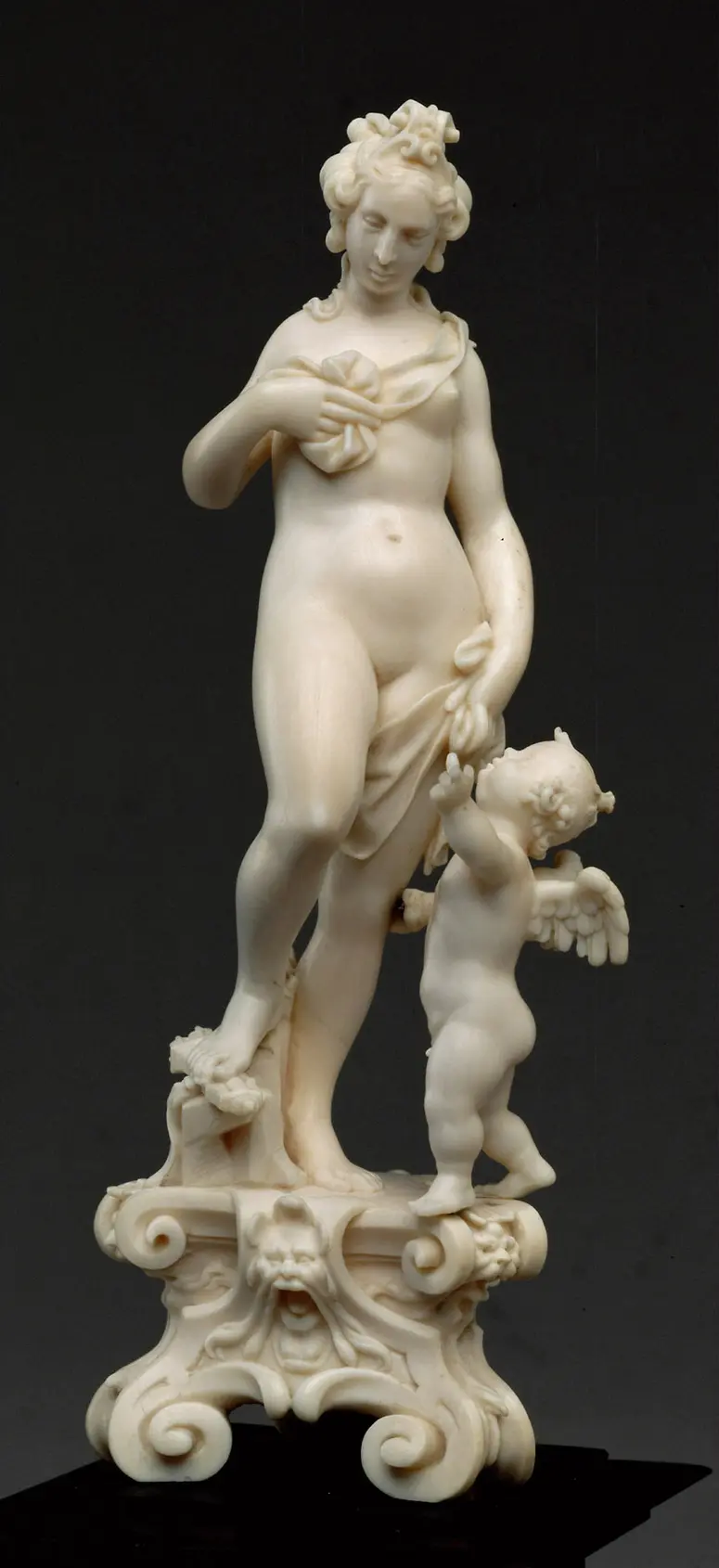
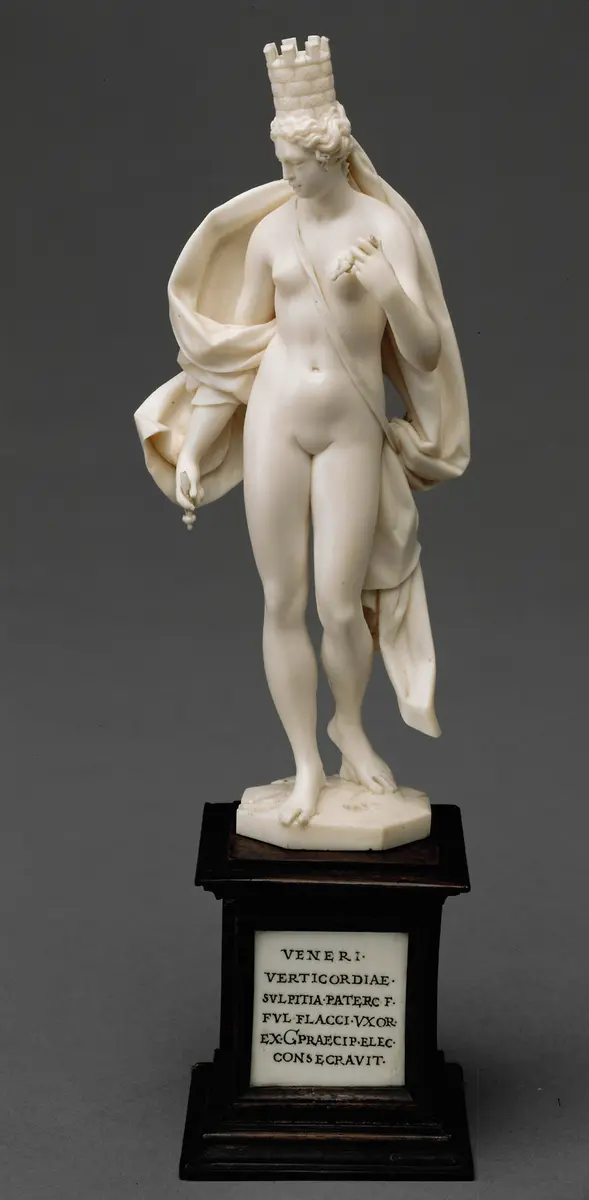
Cybele or Venus Verticordia
ca. 1605/12 | Nikolaus Pfaff
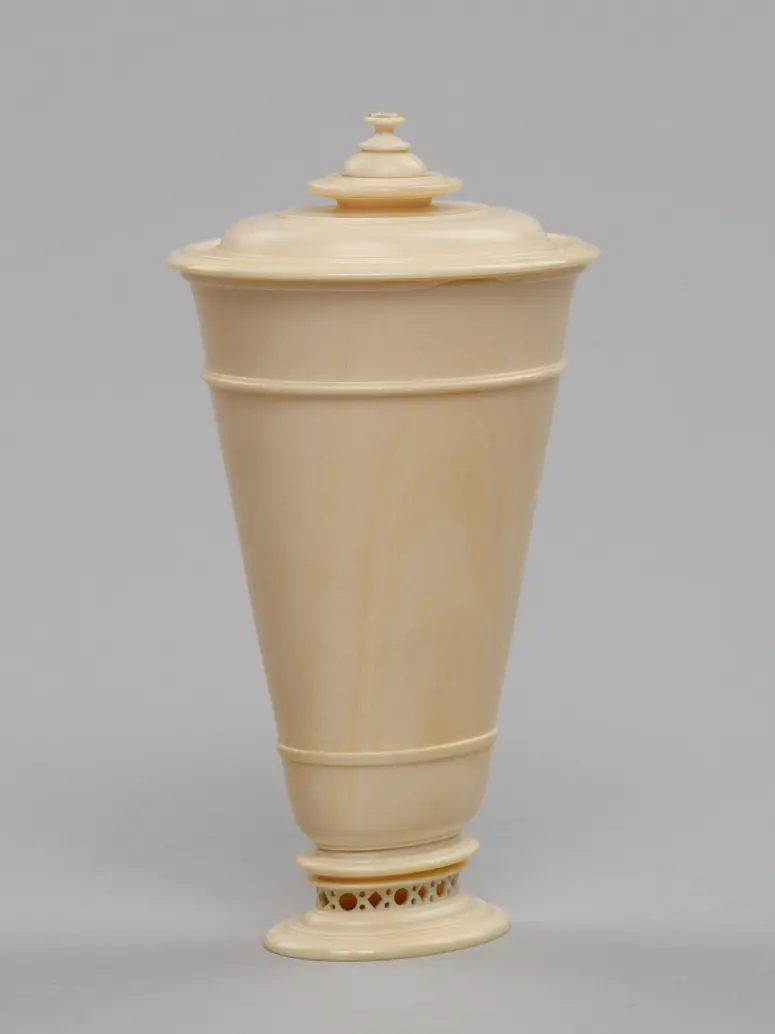
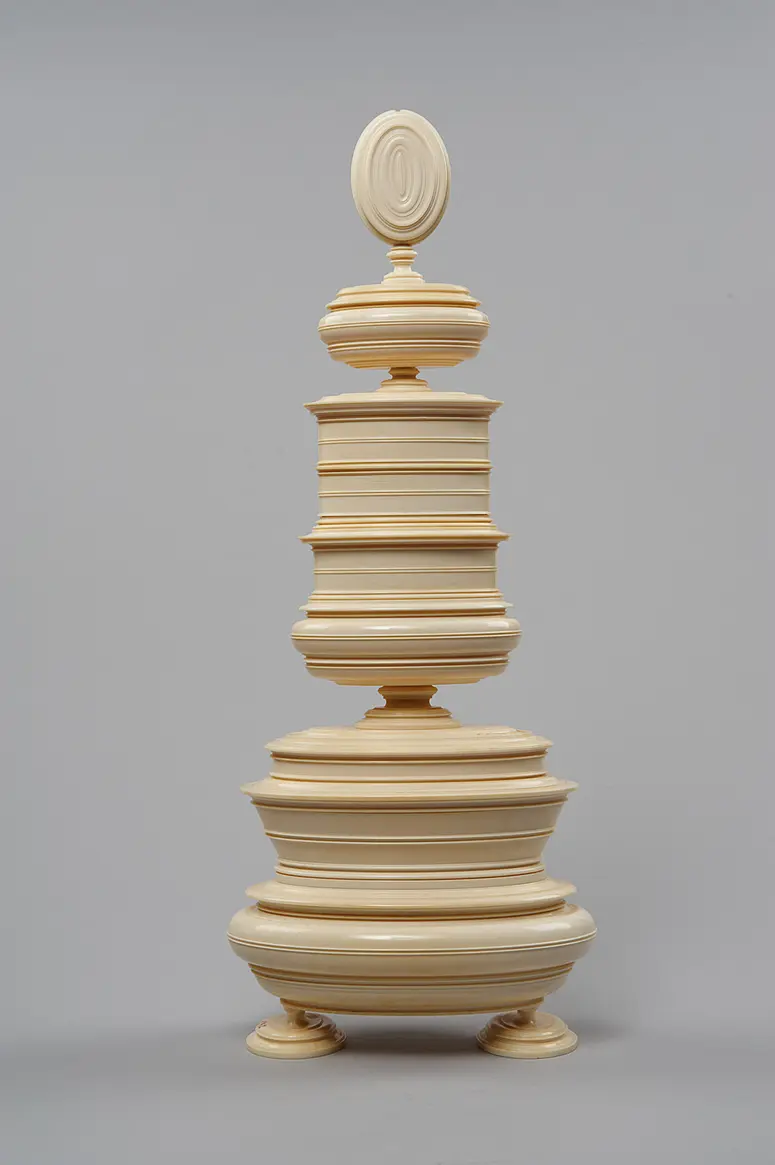
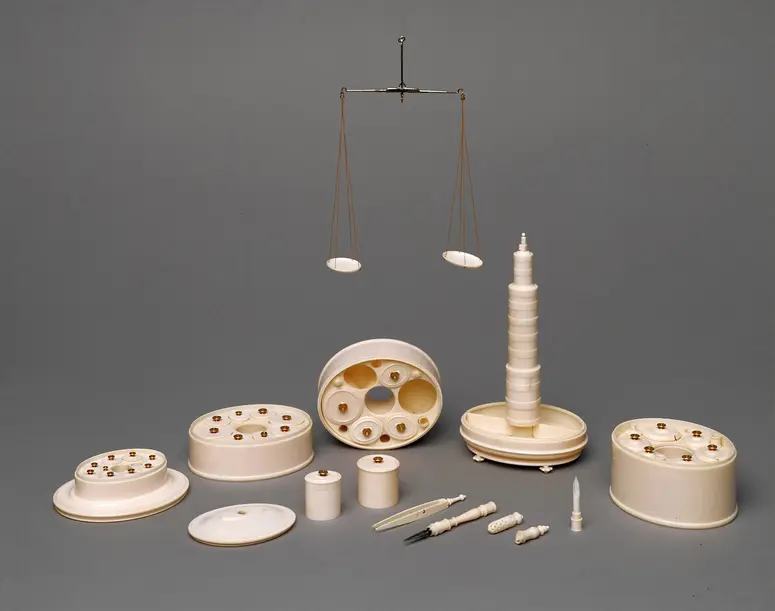
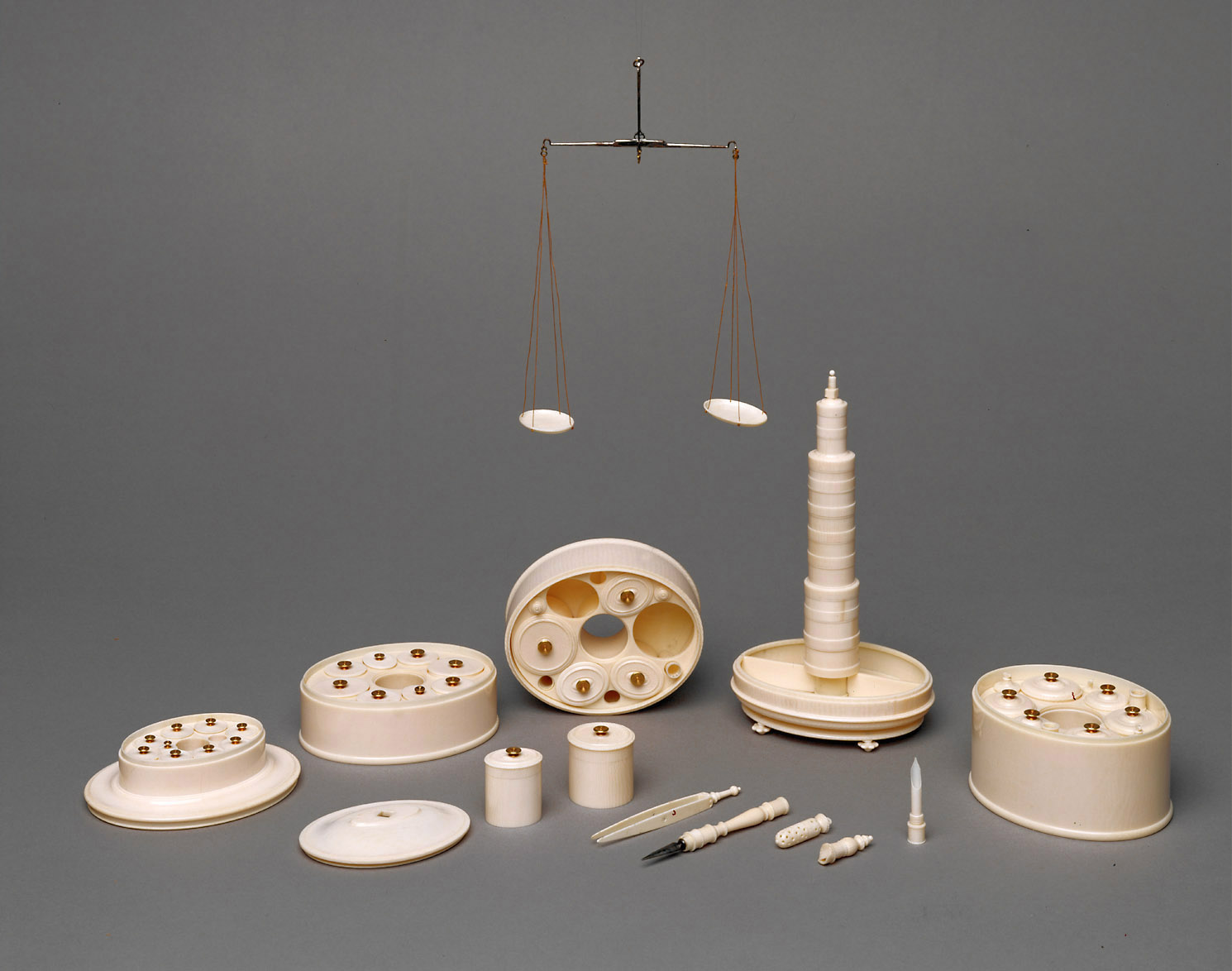
Around 1600 ivory began to regain its importance as artistic material in Europe. Turnery became the new fashion. Rudolf II received princely gifts of turned objects from Munich and Dresden and also employed his own court turner, Hans Wecker. Ivory sculptures remained rare, but the sculptor Nikolaus Pfaff created statuettes of great virtuosity and charm for the emperor.
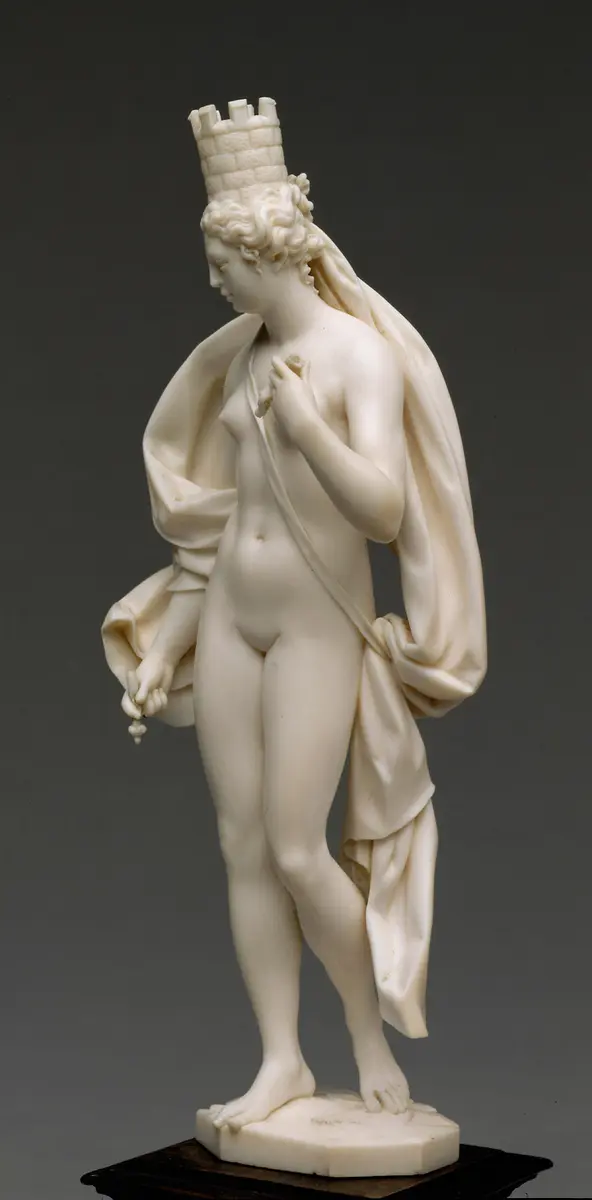
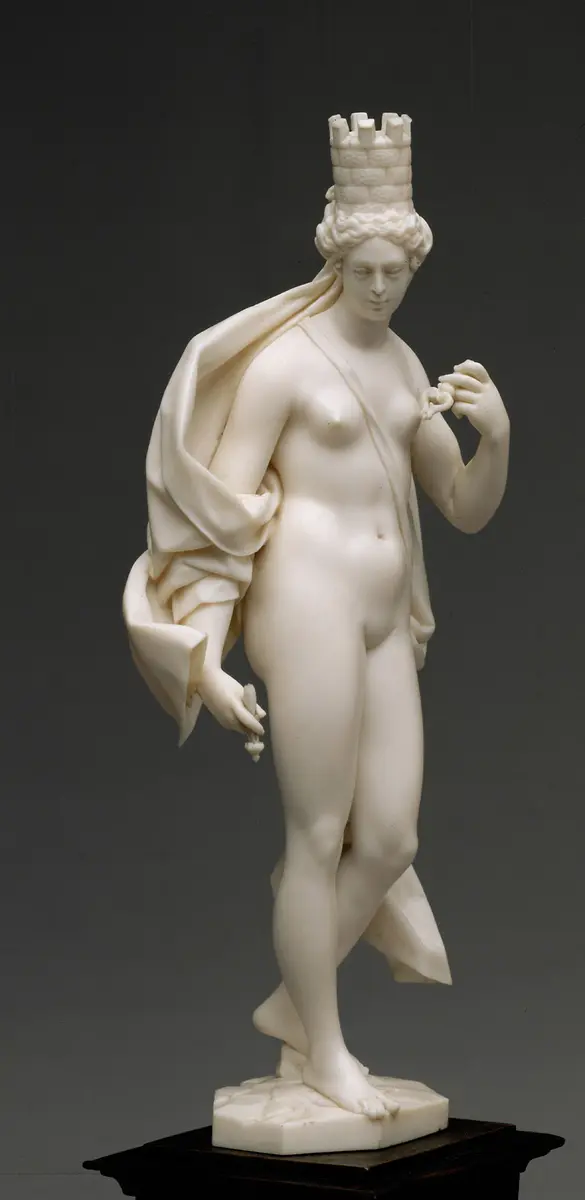
Around 1600 ivory began to regain its importance as artistic material in Europe. Turnery became the new fashion. Rudolf II received princely gifts of turned objects from Munich and Dresden and also employed his own court turner, Hans Wecker. Ivory sculptures remained rare, but the sculptor Nikolaus Pfaff created statuettes of great virtuosity and charm for the emperor.
Artist:
Nikolaus Pfaff (1556? Nürnberg - 1612 Prag) DNB
Time:
ca. 1605/12
Object Name
Statuette; ivory carving
Culture
Prague
Material/technology:
Ivory, ebony
Dimensions:
21,9 cm × 6,5 cm × 3 cm
Inscribed
Inschrift auf dem Sockel: "VENERI. VERTICORDIAE. SVLPITIA. PATERC(VLI). F.(ILIA) FVL(VII). FLACCI. VXOR. EX. C(YBELAE). PRAECIP(VO). ELEC(TA). CONSECRAVIT." ["Die durch die Gnade der Kybele erwähnte Sulpicia, Tochter des Paterculus, Frau des Fulvius Flaccus, weihte sie (diese Statuette) der Herzenswenderin"]
Neue Interpretation und Übersetzung nach Bartilla 2019:
"VENERI / VERTICORDIAE / SVLPITIA PATERC[VLI] F[ILIAE] / FVL[VII] FLACCI VXOR / EX C[ENTUM] PRAECIP[V ELEC[TA] / CONSECRAVIT"
["Der Venus Verticordia weihte [diese Statue] Sulpicia, die Tochter des Paterculus, Frau de Fulvius Flaccus, aus hundert als vorzügliche auserwählt."]
Copyright
Kunsthistorisches Museum, Kunstkammer
Invs.
Kunstkammer, 4621
Browse more
Similar items you might be interested in