The Flagellation of Christ
ca. 1510 | Moderno (Galeazzo Mondella)
The figure of Christ being scourged is based on Laocoön, which was dug up in Rome in 1506, while the two ruffians can be traced back to the tyrannicide figures placed in the courtyard at the Palazzo Madama in Rome in the early sixteenth century. However, it was not just for formal reasons that the artist chose these ancient figures as models for his composition. There were good thematic reasons as well. Pliny the Elder for example described the Laocoön group as an exemplum doloris, as an exemplary presentation of pain. Even the Counter-Reformation, which was generally rather hostile to antiquity, advised artists to use Laocoön as a model in depicting the suffering Christ.
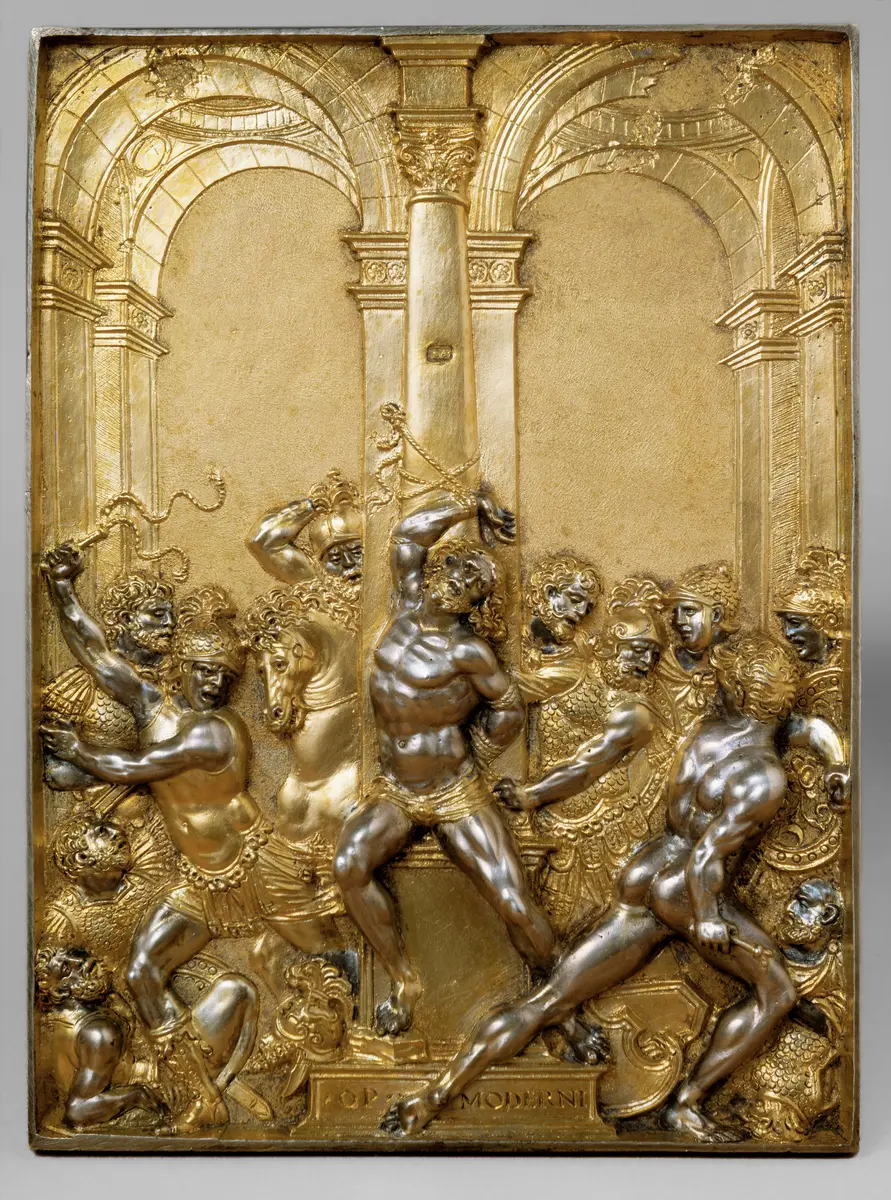
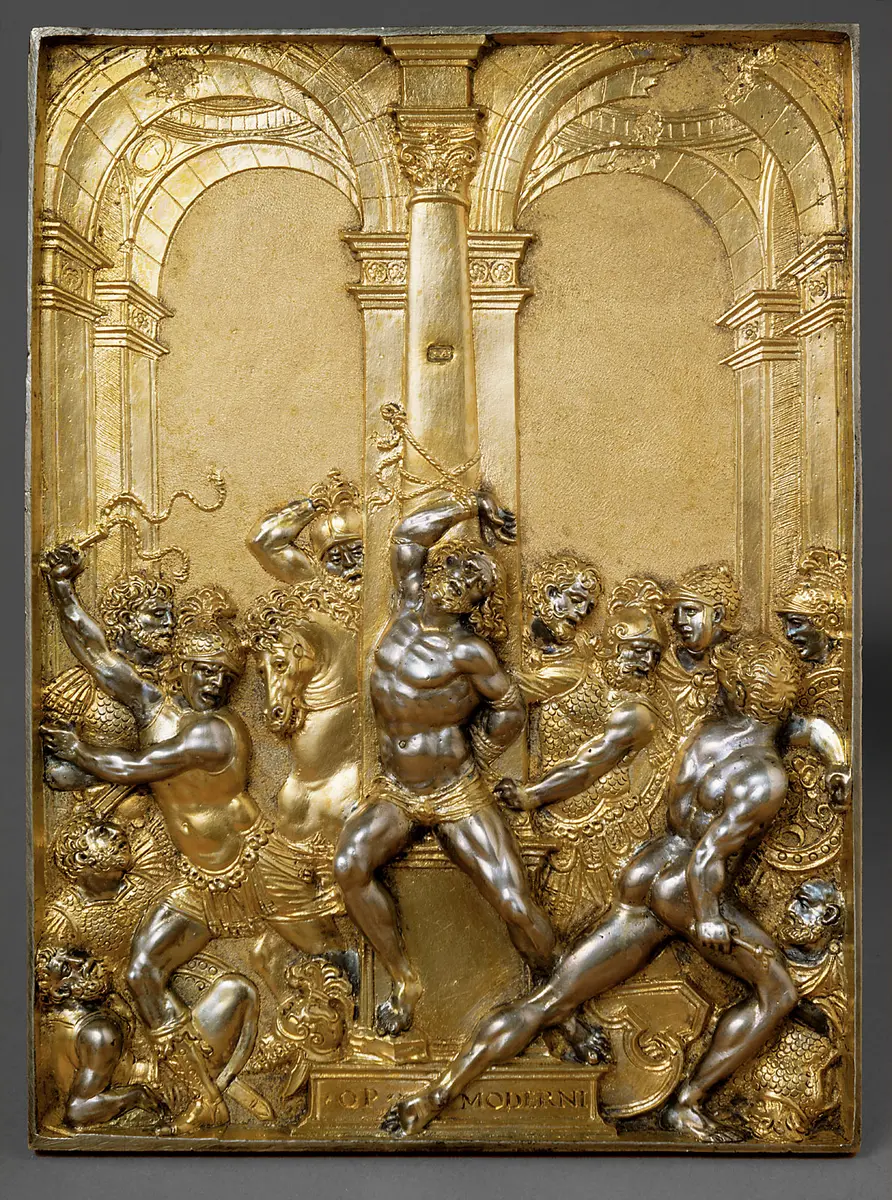
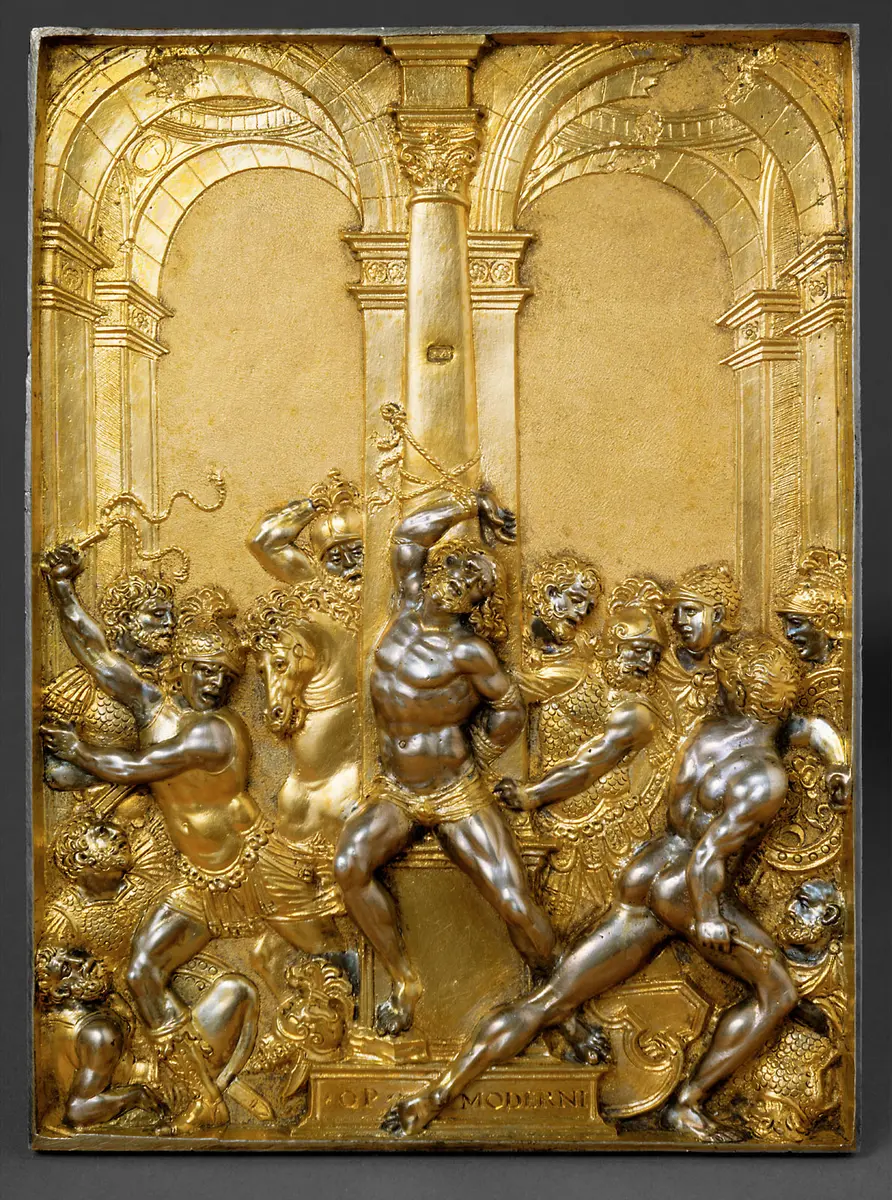
The figure of Christ being scourged is based on Laocoön, which was dug up in Rome in 1506, while the two ruffians can be traced back to the tyrannicide figures placed in the courtyard at the Palazzo Madama in Rome in the early sixteenth century. However, it was not just for formal reasons that the artist chose these ancient figures as models for his composition. There were good thematic reasons as well. Pliny the Elder for example described the Laocoön group as an exemplum doloris, as an exemplary presentation of pain. Even the Counter-Reformation, which was generally rather hostile to antiquity, advised artists to use Laocoön as a model in depicting the suffering Christ.
Artist:
Moderno (Galeazzo Mondella) (1467 Verona - 1528 Verona) DNB
Time:
ca. 1510
Object Name
Relief
Culture
Upper Italian
Material/technology:
Partially gilded silver
Dimensions:
H. 13,8 cm, B. 10,2 cm, T. 1 cm
Signed
OP MODERNI
Stamp / markings
Wr. Repunze
Copyright
Kunsthistorisches Museum, Kunstkammer
Invs.
Kunstkammer, 1105
Browse more
Similar items you might be interested in
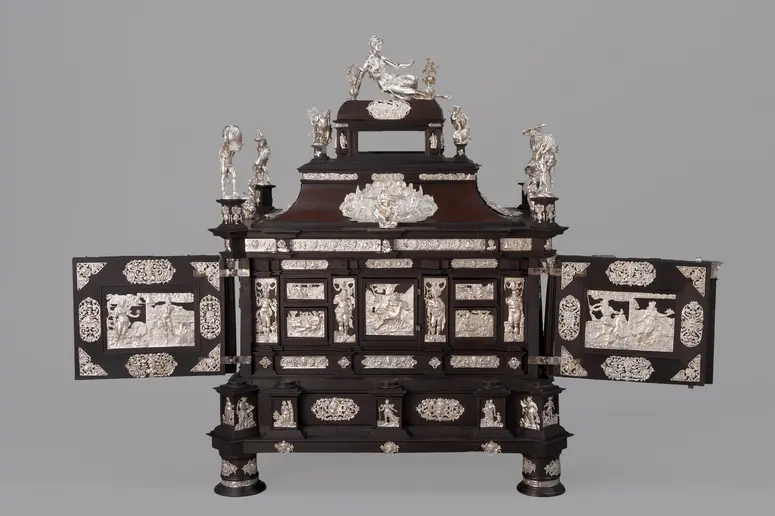
Table Cabinet of Archduke Ferdinand II Ferdinand II. (1564-1595), Erzherzog von Österreich und Landesherr von Tirol ca. 1582
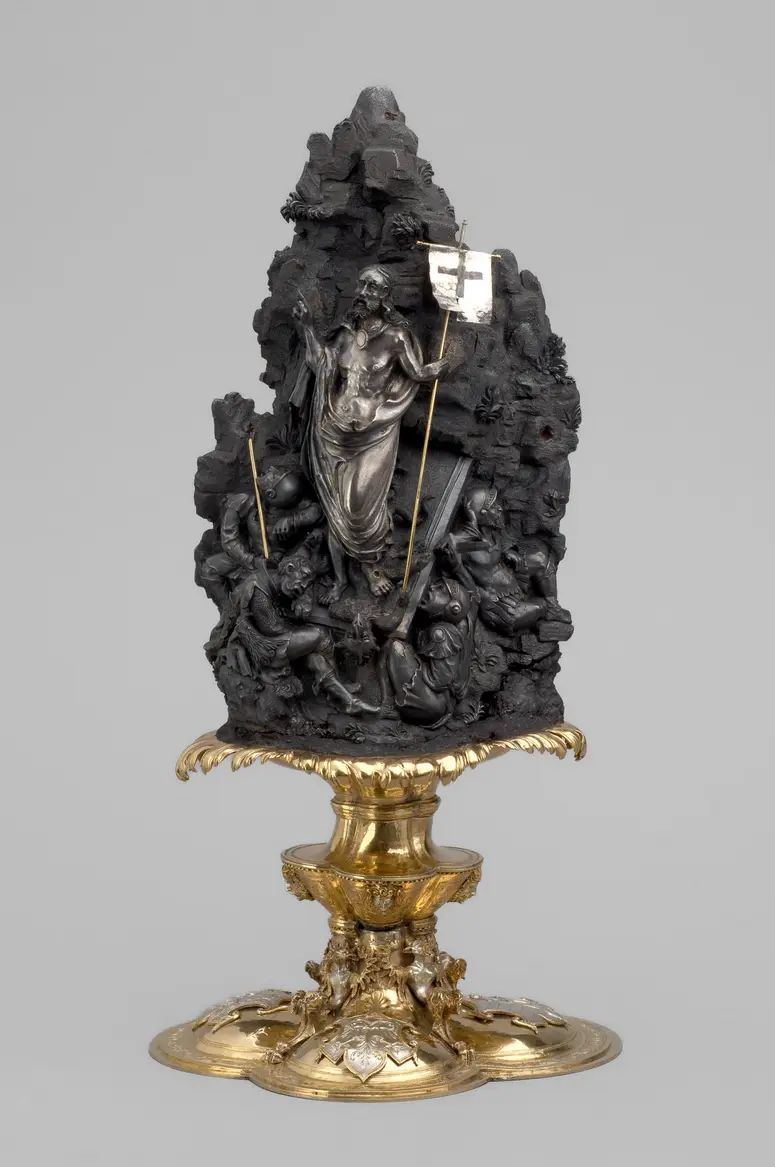
Handstone with the Resurrection and Emperor Charles V after the Battle of Pavia Caspar Ulich ca. 1560