Athlet
1. Jh. n. Chr., nach griech. Original um 330 v. Chr.
In 1896, at the onset of excavations at Ephesus, Austrian archaeologists made one of their most important finds: in the SW-corner of the palaestra of the Harbour Gymnasium they discovered 234 fragments of a broken bronze statue. Only its head and shoulders remained intact, allowing them to identify the type. It depicts an athlete who, after completing his workout in the gymnasium’s palaestra, is shown scraping off sweat, sand and the oil he had slathered himself with with a στλεγγίς (strigilis). We see him running his left thumb over the (now lost) scraper to clean it. Both the apparently spontaneous “snapshot” of someone lost in thought, and stylistic details point to a 4th-century BC model. Recently it has been suggested that the statue is a copy of Lysippos’ celebrated “Apoxymenos” (the scraper). Only very few antique bronze statues have survived as most were melted down for their precious material at some later date. Frequently we “owe” their survival to some catastrophe such as a shipwreck or, as is the case here, an earthquake that caused the statue to topple from its plinth before it was crushed by falling blocks and masonry. In Vienna, the sculptor Wilhelm Sturm painstakingly re-assembled the fragments, holding them in place with brass strips to create larger pieces that were then mounted on a skeleton made of iron rods, before the statue was filled up to the neck with a special type of cement that provides both stability and filled the remaining gaps. In 1996, a statue of the same type was discovered in the Adriatic Sea off Croatia (Muzej Apoksiomena, Mali Lošinj). This “twin” is in excellent condition, inviting both a direct comparison between the two bronze copies and a re-evaluation of the ancient tradition of copying.
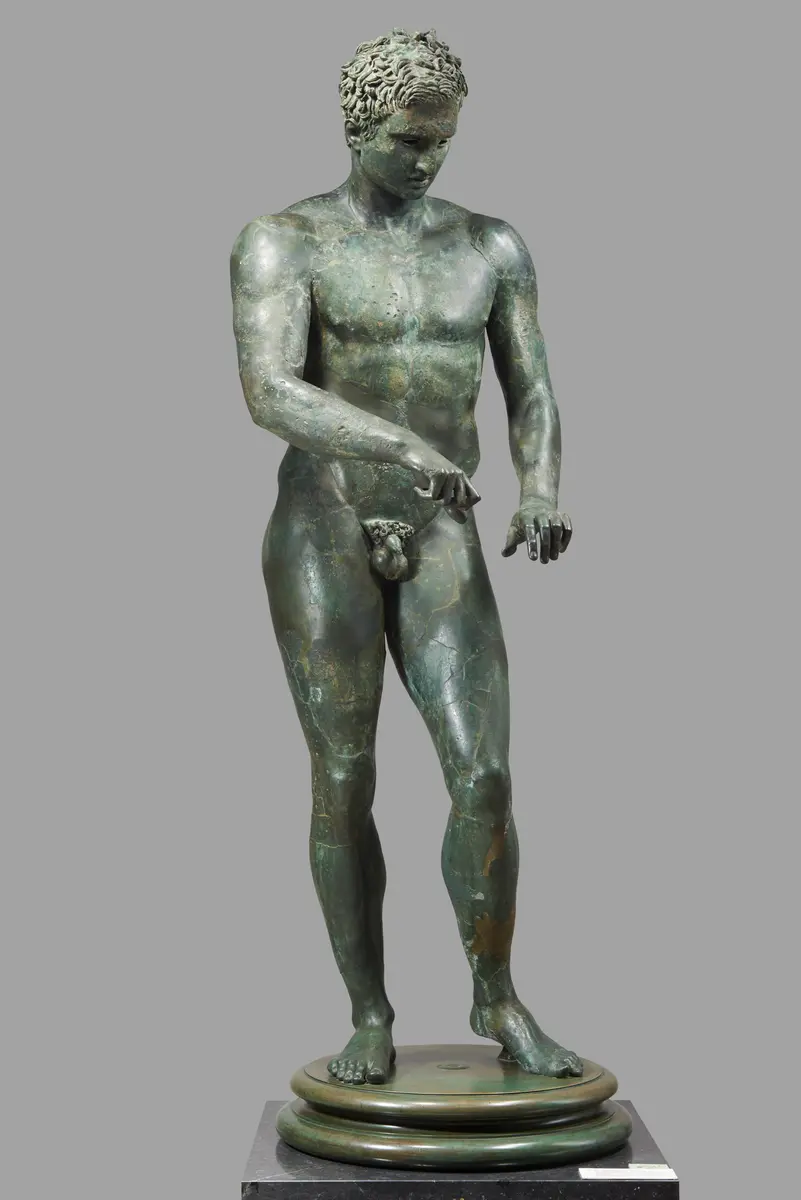
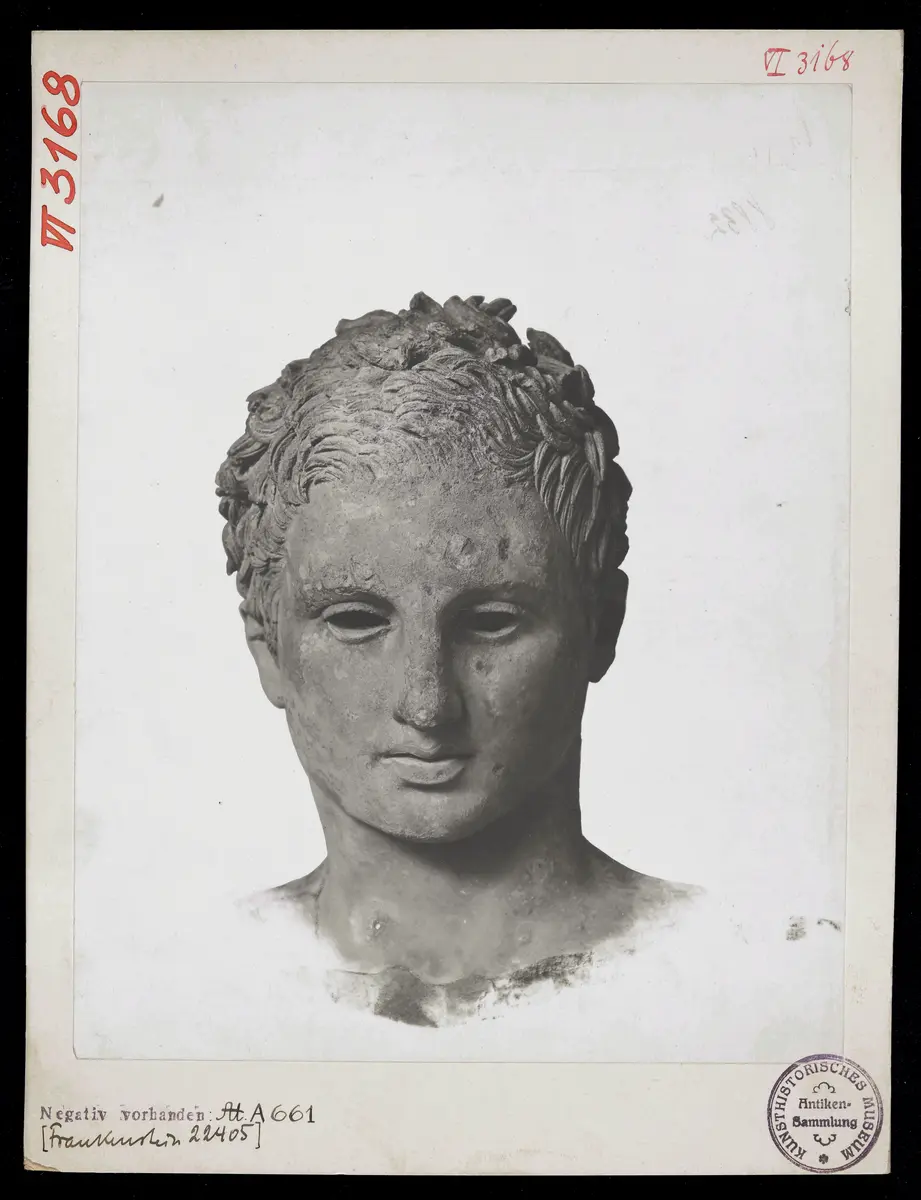
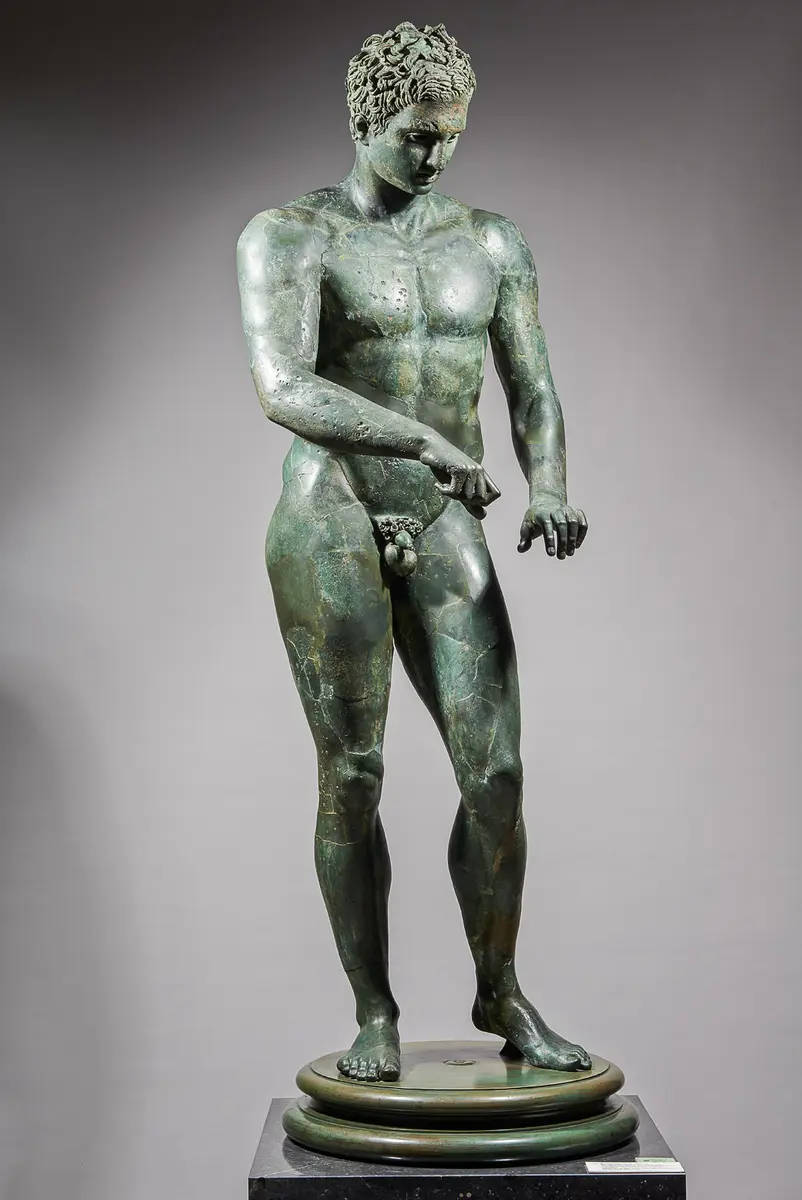
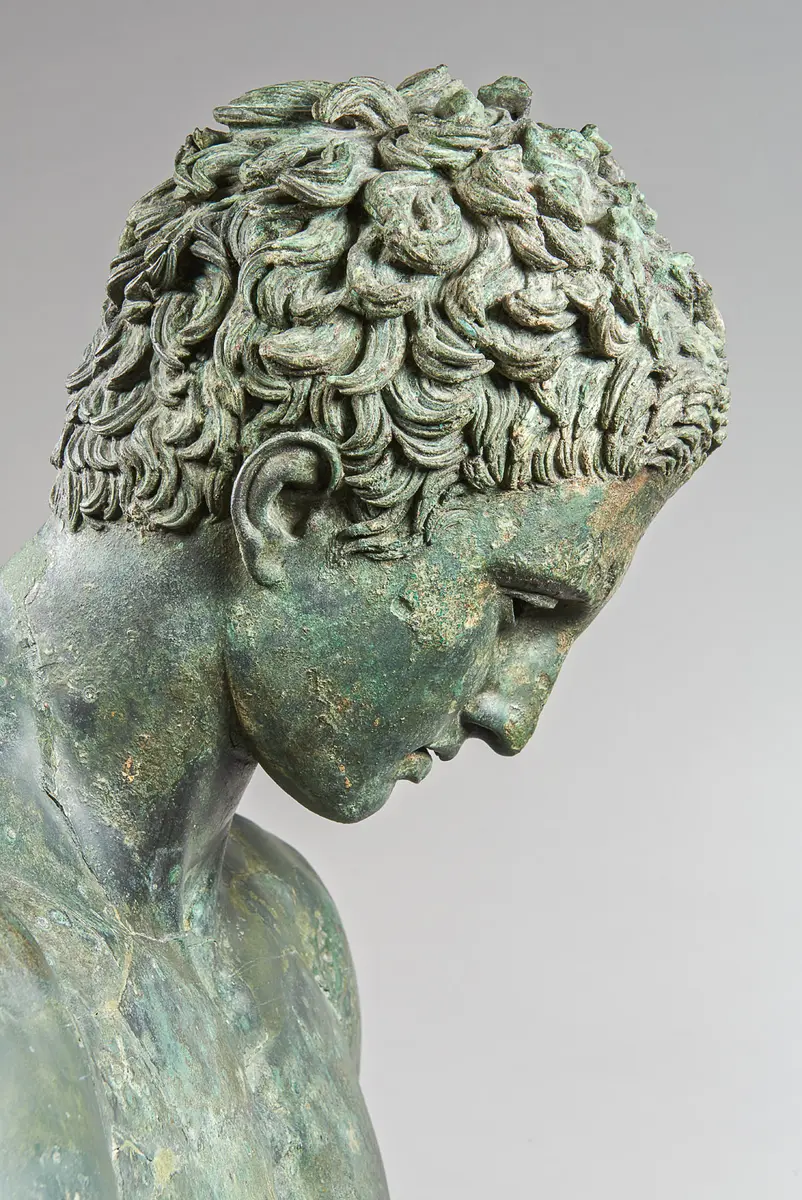
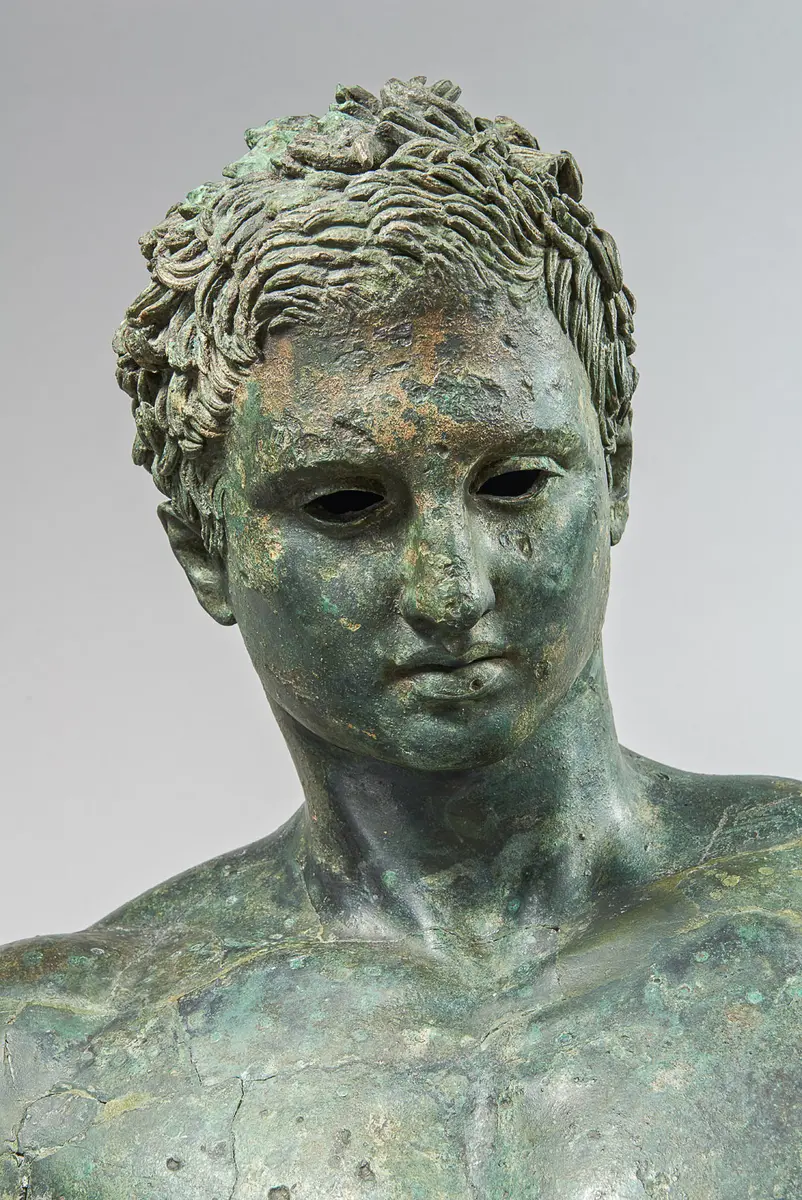
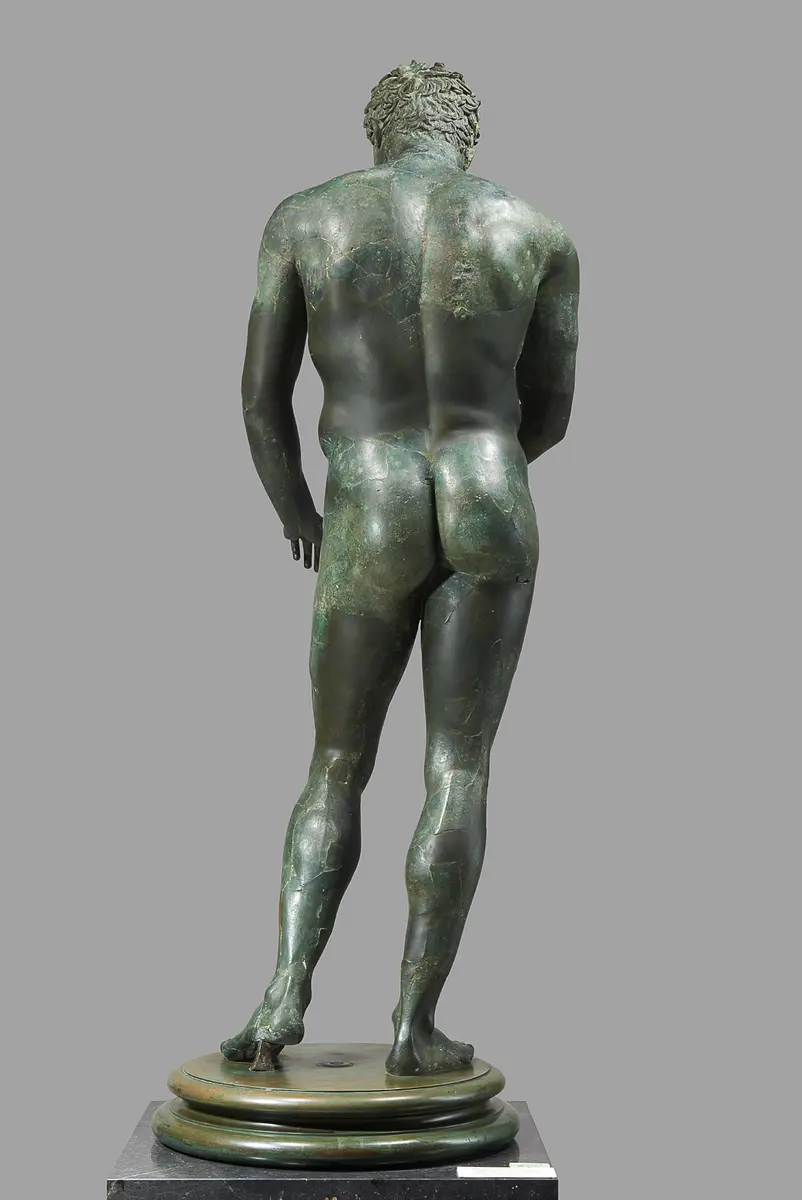
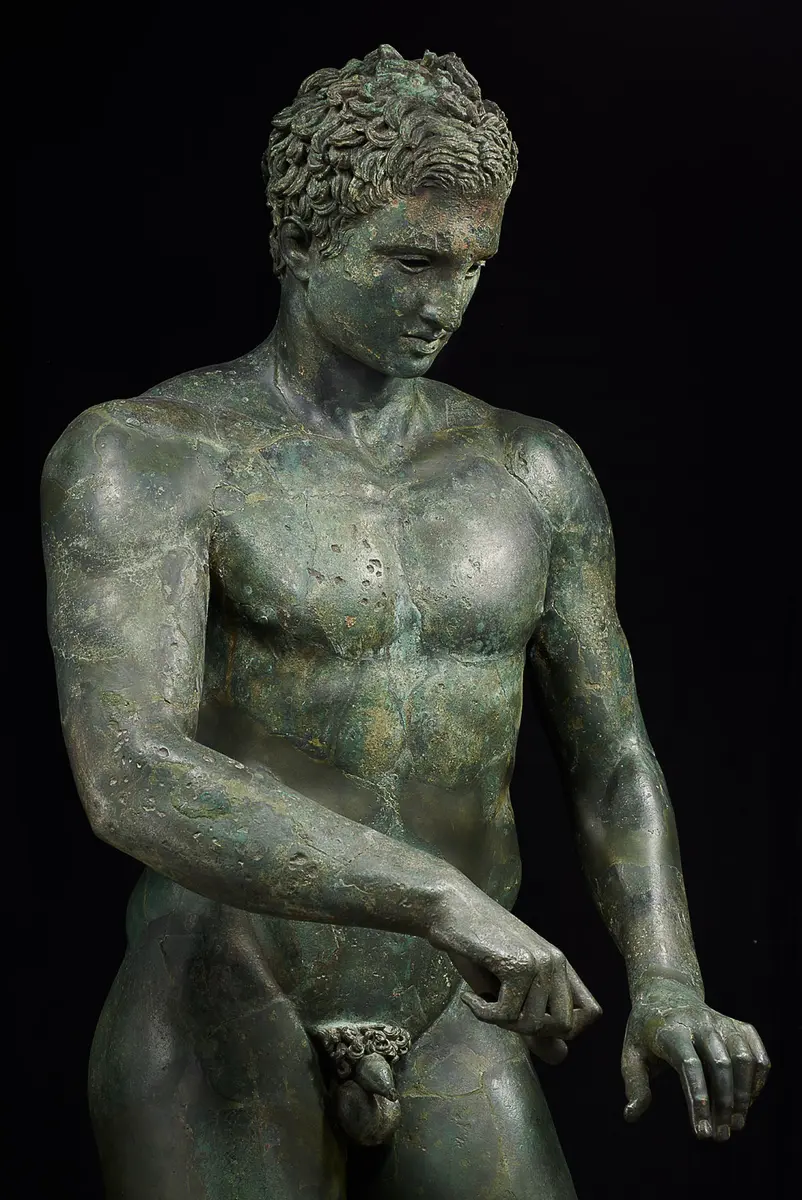
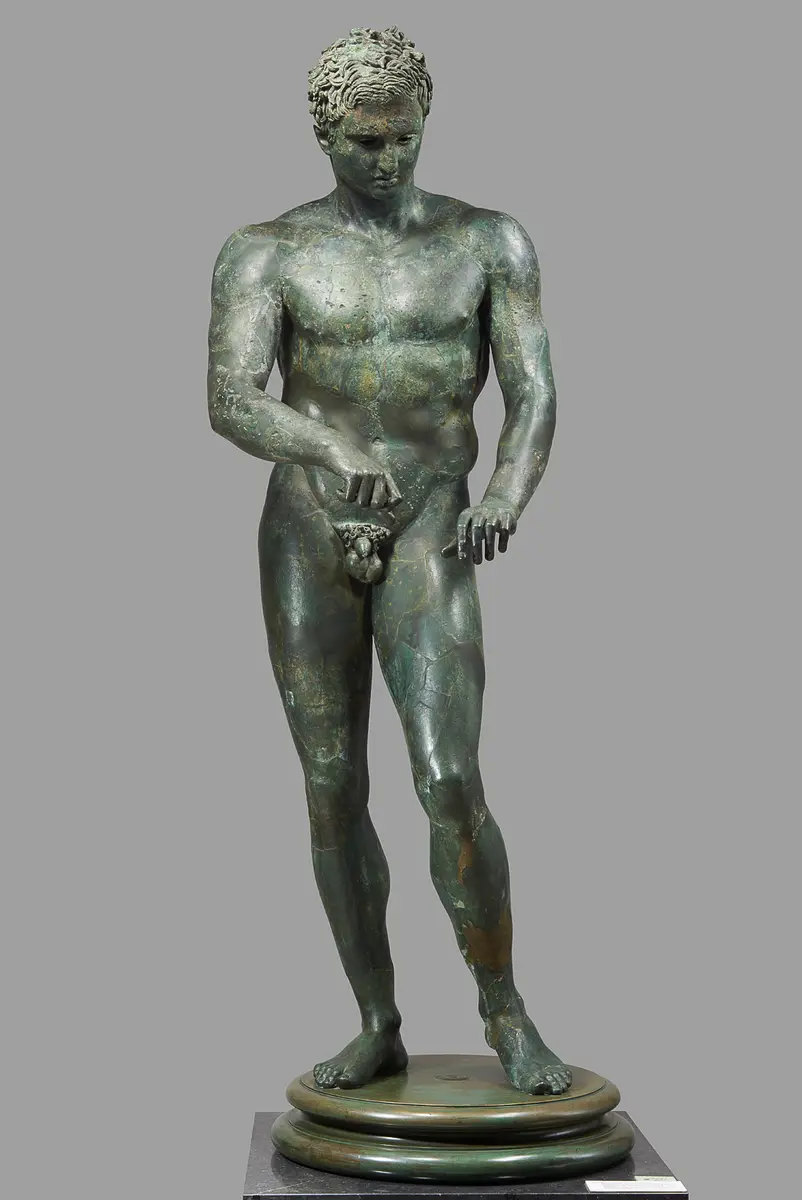
In 1896, at the onset of excavations at Ephesus, Austrian archaeologists made one of their most important finds: in the SW-corner of the palaestra of the Harbour Gymnasium they discovered 234 fragments of a broken bronze statue. Only its head and shoulders remained intact, allowing them to identify the type. It depicts an athlete who, after completing his workout in the gymnasium’s palaestra, is shown scraping off sweat, sand and the oil he had slathered himself with with a στλεγγίς (strigilis). We see him running his left thumb over the (now lost) scraper to clean it. Both the apparently spontaneous “snapshot” of someone lost in thought, and stylistic details point to a 4th-century BC model. Recently it has been suggested that the statue is a copy of Lysippos’ celebrated “Apoxymenos” (the scraper). Only very few antique bronze statues have survived as most were melted down for their precious material at some later date. Frequently we “owe” their survival to some catastrophe such as a shipwreck or, as is the case here, an earthquake that caused the statue to topple from its plinth before it was crushed by falling blocks and masonry. In Vienna, the sculptor Wilhelm Sturm painstakingly re-assembled the fragments, holding them in place with brass strips to create larger pieces that were then mounted on a skeleton made of iron rods, before the statue was filled up to the neck with a special type of cement that provides both stability and filled the remaining gaps. In 1996, a statue of the same type was discovered in the Adriatic Sea off Croatia (Muzej Apoksiomena, Mali Lošinj). This “twin” is in excellent condition, inviting both a direct comparison between the two bronze copies and a re-evaluation of the ancient tradition of copying.
Time:
1. Jh. n. Chr., nach griech. Original um 330 v. Chr.
Object Name
Statue
Culture
Römisch
Location of discovery:
Ephesos Hafengymnasium Palästra (Selçuk, Kleinasien, Türkei)
Material/technology:
Bronze
Dimensions:
192 cm
Copyright
Kunsthistorisches Museum, Antikensammlung
Invs.
Antikensammlung, VI 3168
Provenance
Sultan, Abdul, Hamid, II.; Österreichische Ausgrabungen in Ephesos; Geschenk an Kaiser Franz Joseph; 1911 nachträglich inventarisiert