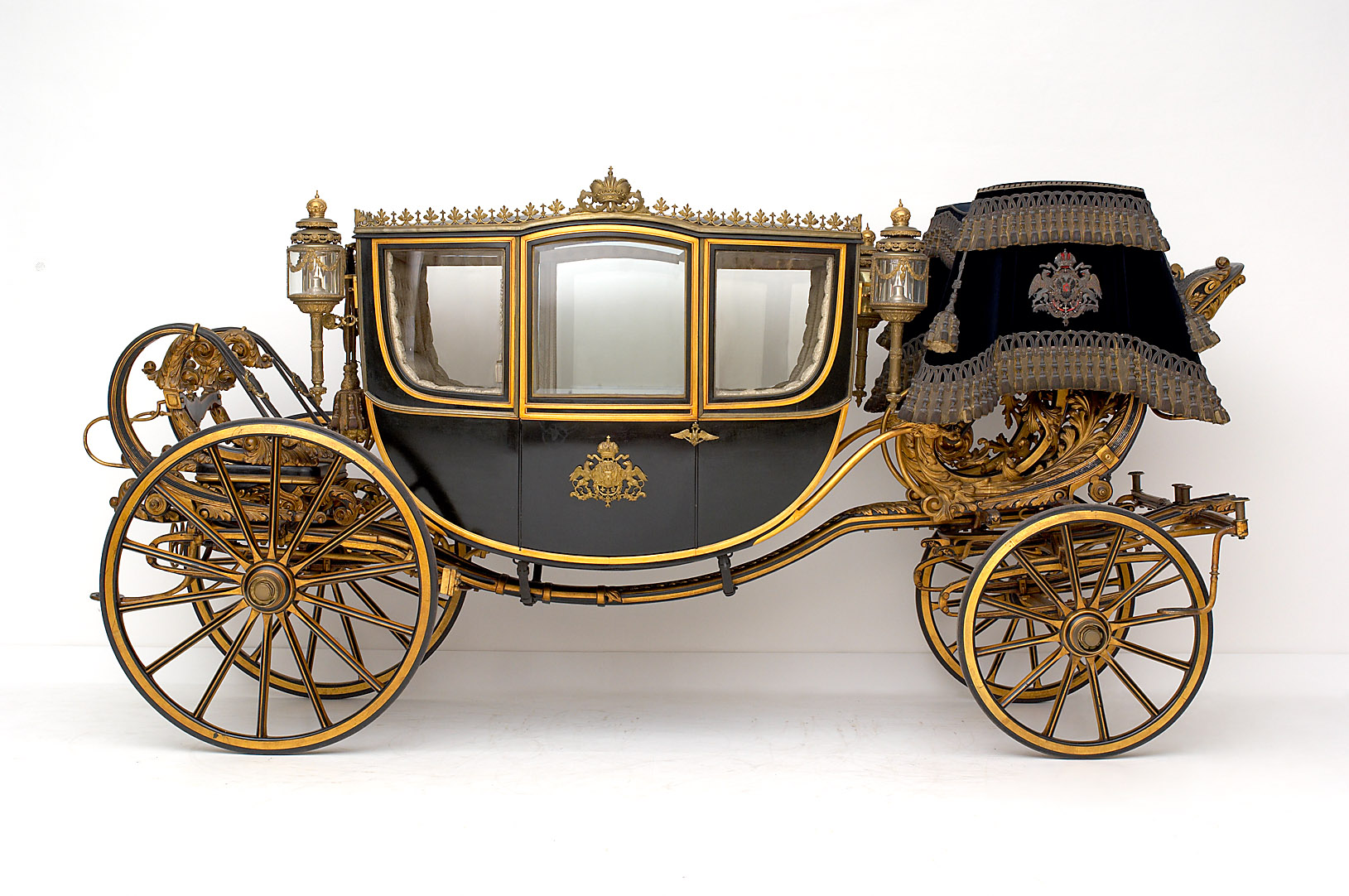
Imperial gala coach for court mourning
undercarriage around 1690, body around 1730/35, adapted in the 19th century
The originally gold-plated, high-ranking state coach was adapted to a mourning carriage in the early 19th century and was painted and fitted out in black. The allegorical paintings on the coach panels by Michelangelo Unterberger (dating from c. 1738/40) were only rediscovered under the black paint in 1930. This carriage was drawn by six or eight horses from the Kladrub imperial stud farm. The first proven use of this coach was at the coronation of the future Holy Roman Emperor Joseph II in Frankfurt on the Main, on 29th March, 1764. The formal entry parade into the city of Frankfurt is depicted in a painting by Johann Dallinger dating from 1766/67 (KHM, GG, Inv.-Nr. 7467). The original appearence of the coach body is clearly visible in this painting. (MKR)
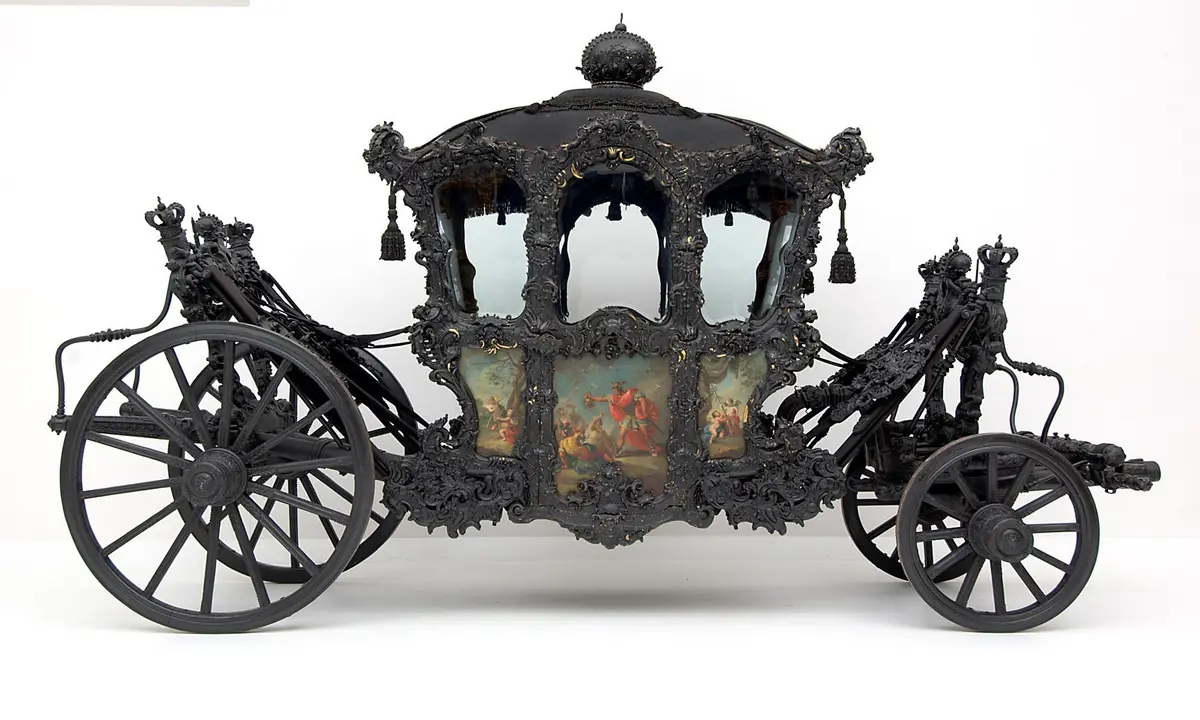
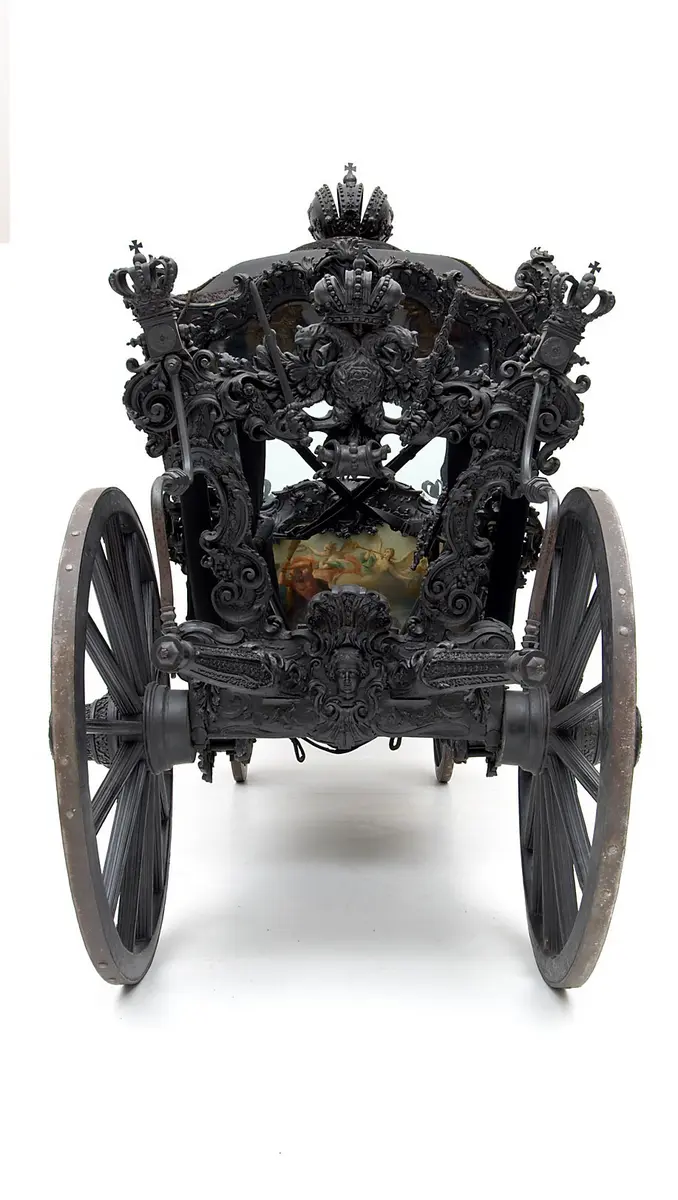
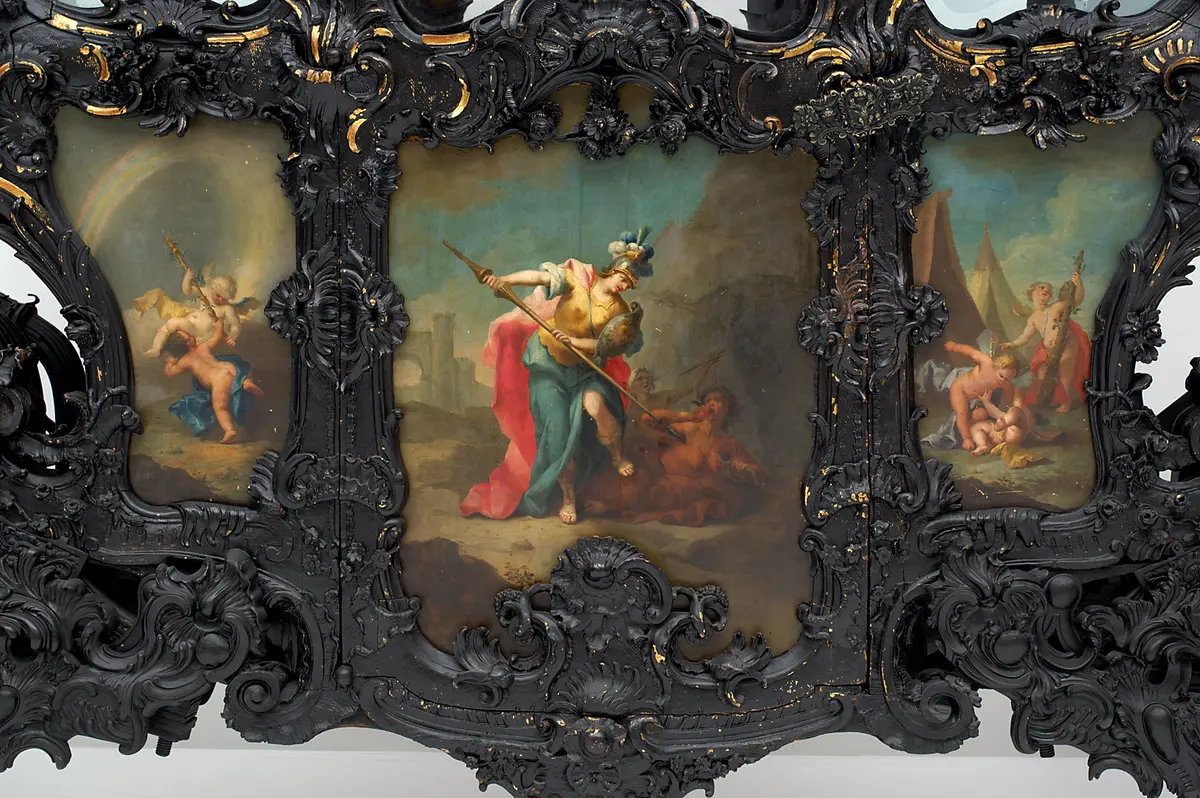
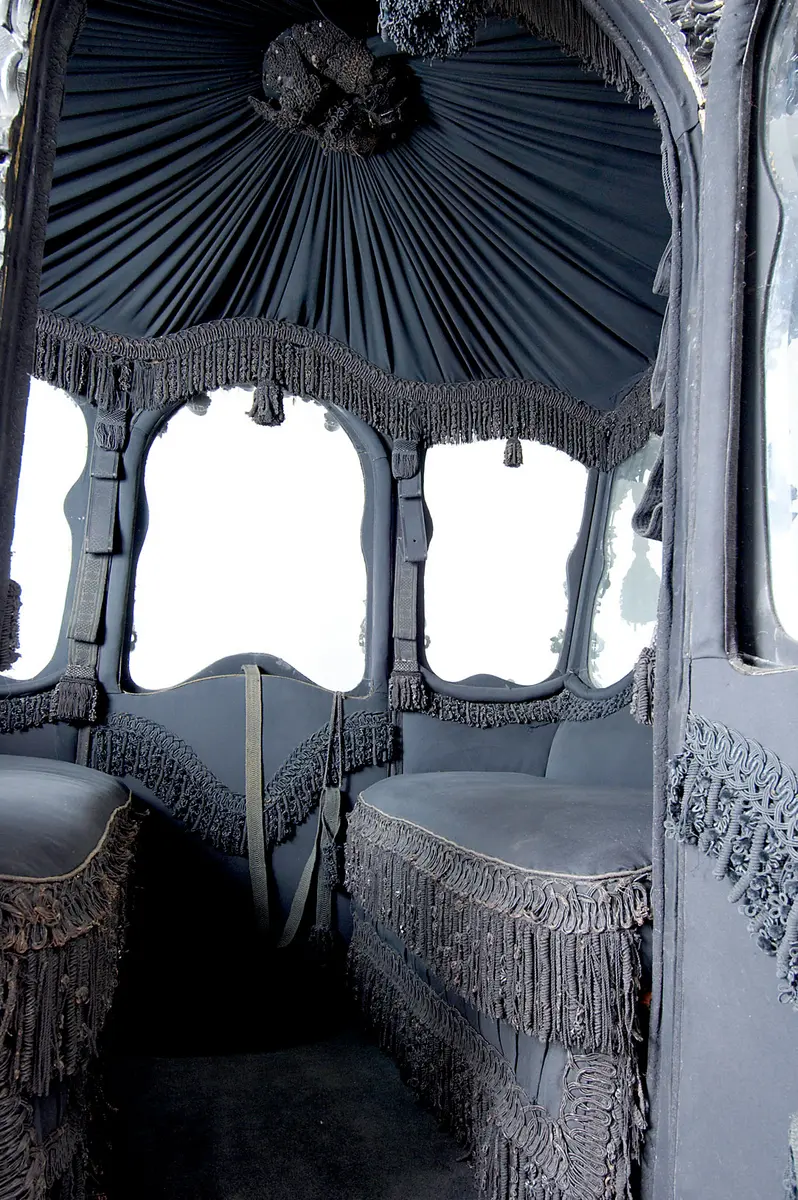
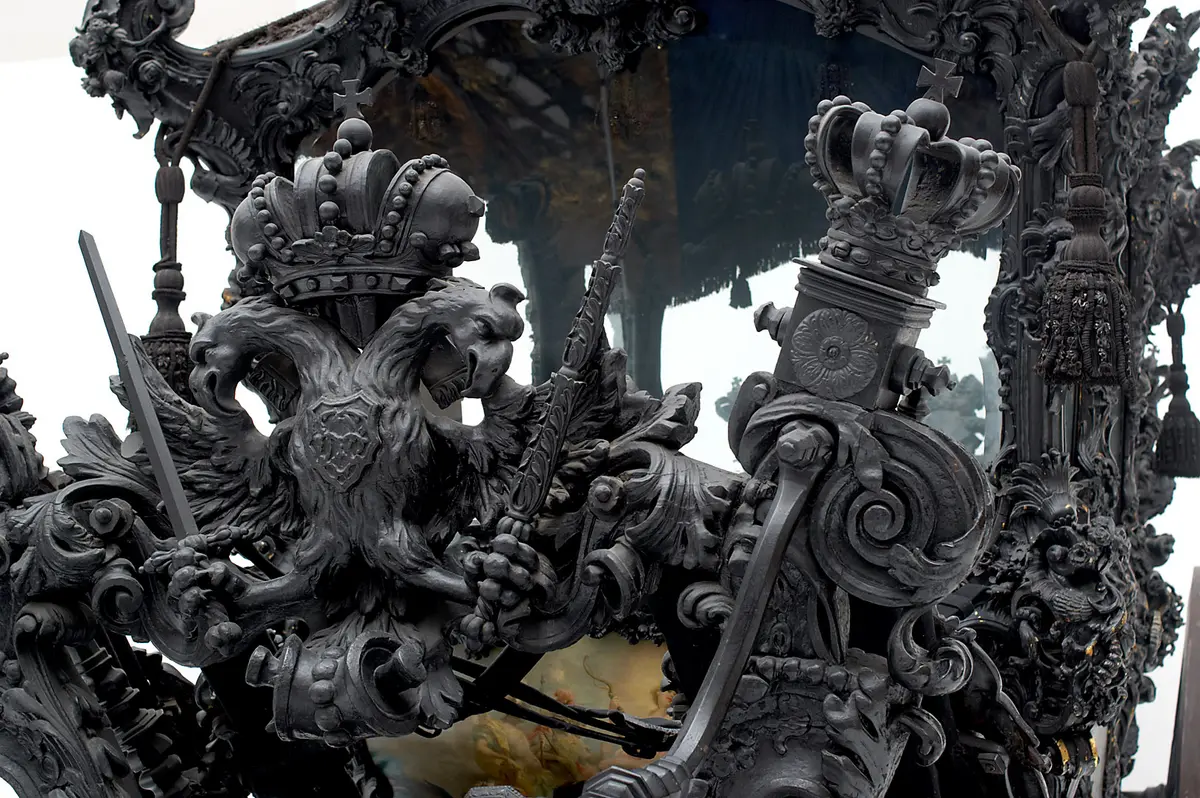
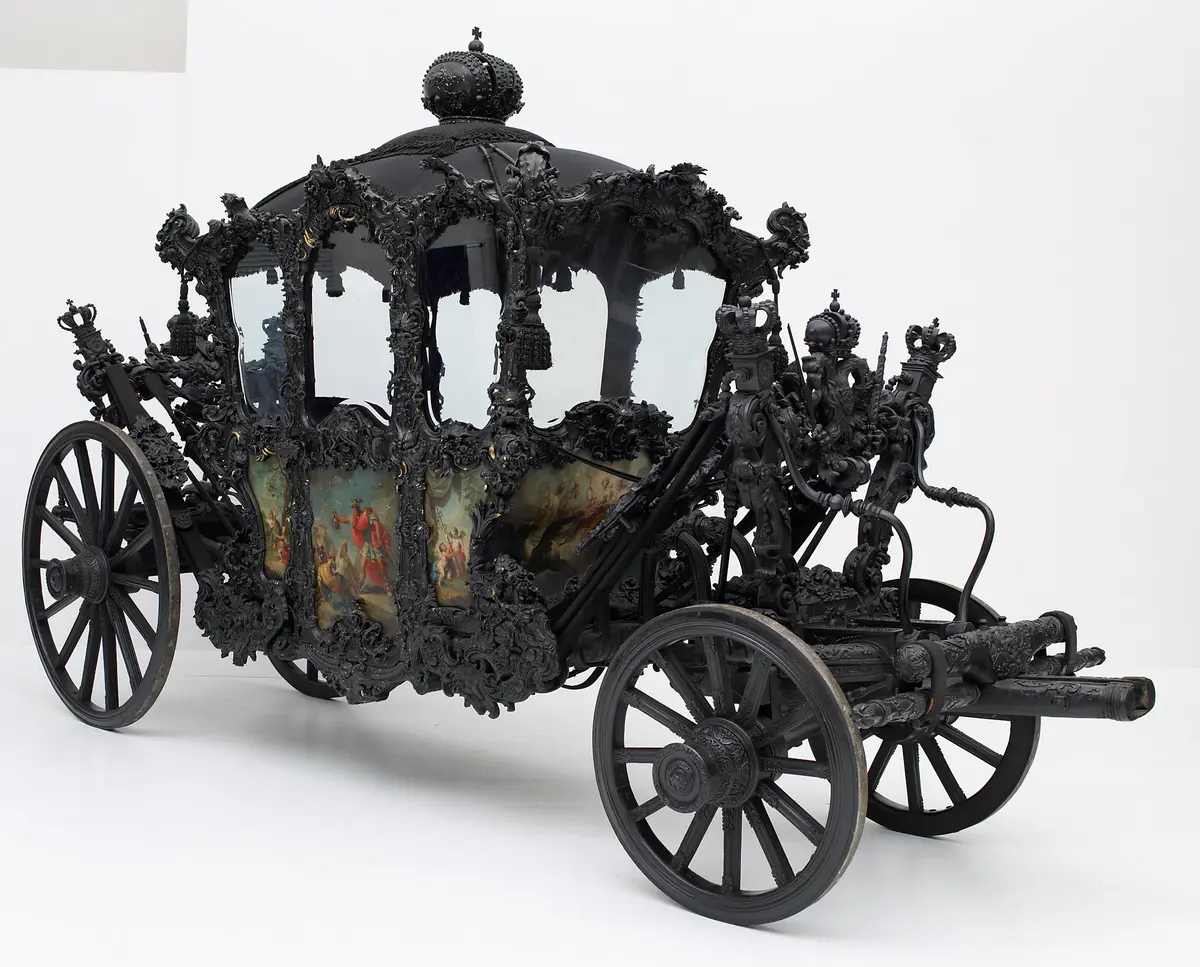
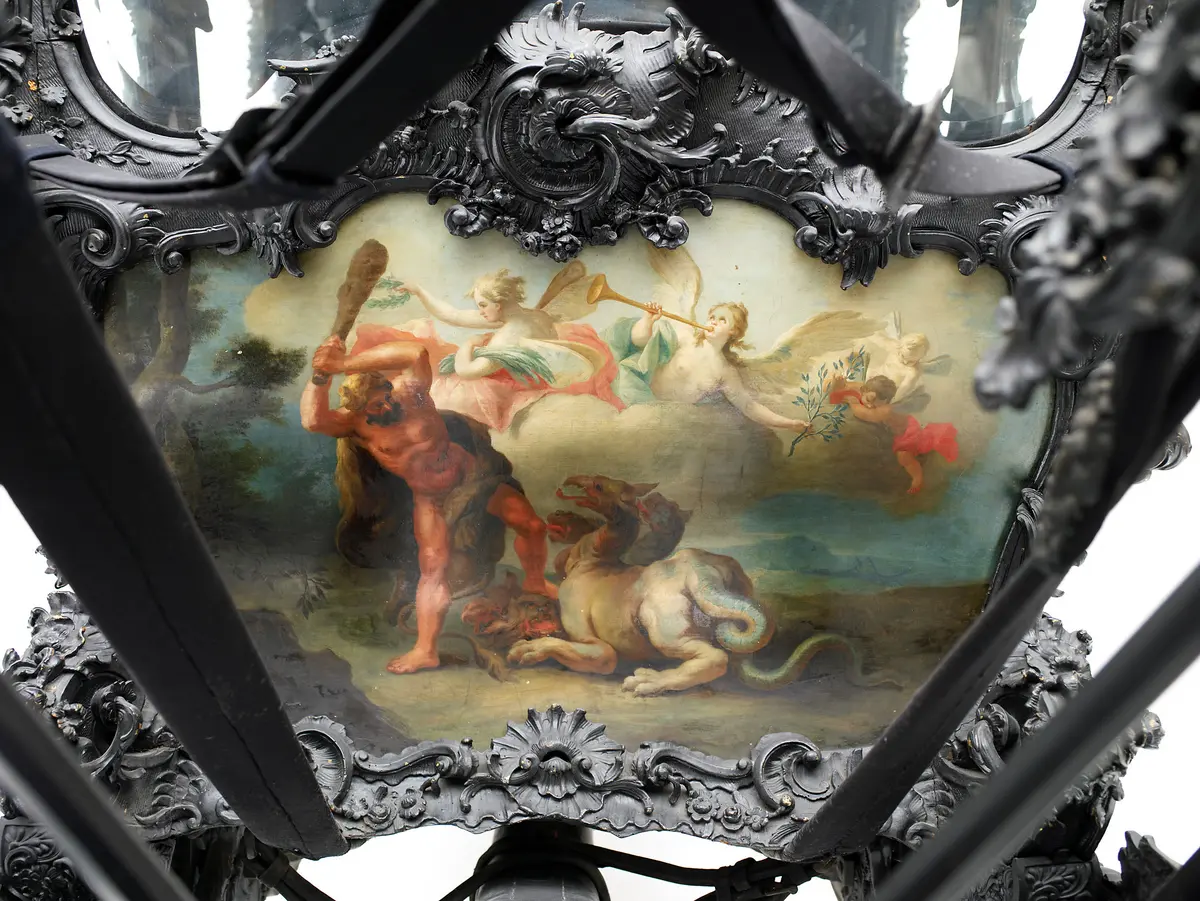
The originally gold-plated, high-ranking state coach was adapted to a mourning carriage in the early 19th century and was painted and fitted out in black. The allegorical paintings on the coach panels by Michelangelo Unterberger (dating from c. 1738/40) were only rediscovered under the black paint in 1930. This carriage was drawn by six or eight horses from the Kladrub imperial stud farm. The first proven use of this coach was at the coronation of the future Holy Roman Emperor Joseph II in Frankfurt on the Main, on 29th March, 1764. The formal entry parade into the city of Frankfurt is depicted in a painting by Johann Dallinger dating from 1766/67 (KHM, GG, Inv.-Nr. 7467). The original appearence of the coach body is clearly visible in this painting. (MKR)
Time:
undercarriage around 1690, body around 1730/35, adapted in the 19th century
Object Name
Imperial gala coach for court mourning
Dimensions:
614 cm × 351 cm × 192 cm
Copyright
Kunsthistorisches Museum, Wagenburg
Invs.
Wagenburg, W 2 1
Browse more
Similar items you might be interested in

State Chariot of the Princes Schwarzenberg Johann Georg Magis 1791

Kaiser Franz und seine Gemahlin Karoline Auguste im Kutschierwagen vor Schloss Schönbrunn Johann Baptist Clarot around 1832


Imperial Carriage in front of St.Stephen's Cathedral drawn by eight horses Johann Erdmann Gottlieb Prestel around/after 1851

Imperial gala coach during court mourning Johann Erdmann Gottlieb Prestel around 1848/50
Emperor Franz Joseph and his bride going out for a drive in Ischl Johann Erdmann Gottlieb Prestel around 1853/54
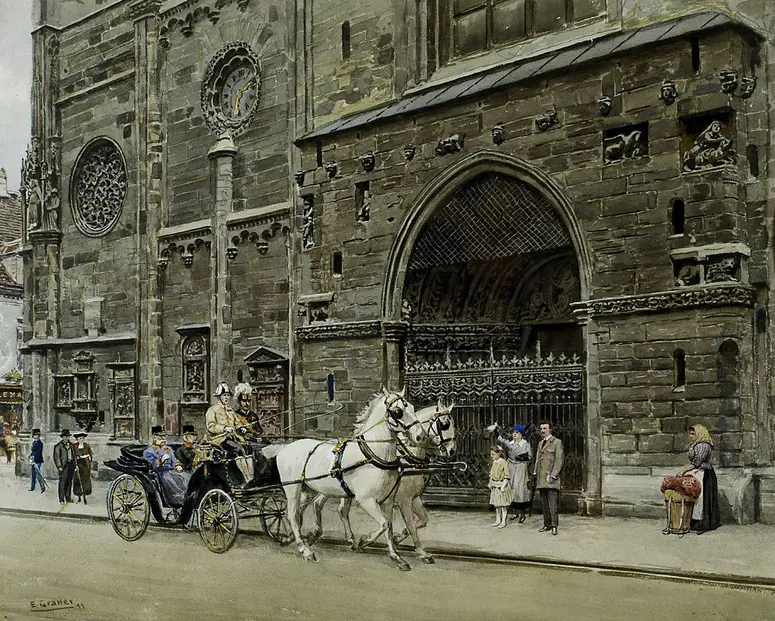
Emperor Franz Joseph and Count Edward Paar, adjutant general, in a Mylord drawn by two greys in front of St. Stephen's cathedral Ernst Graner 1911

Two Imperial phaetons Johann Erdmann Gottlieb Prestel around 1848/50
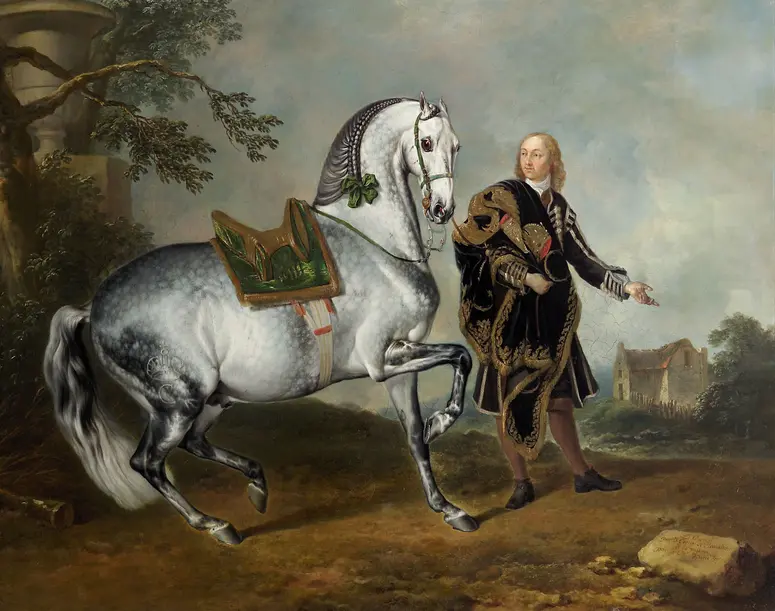
Kladruber Hengst "Scarramuie" mit einem Bereiter Johann Georg de Hamilton around 1721
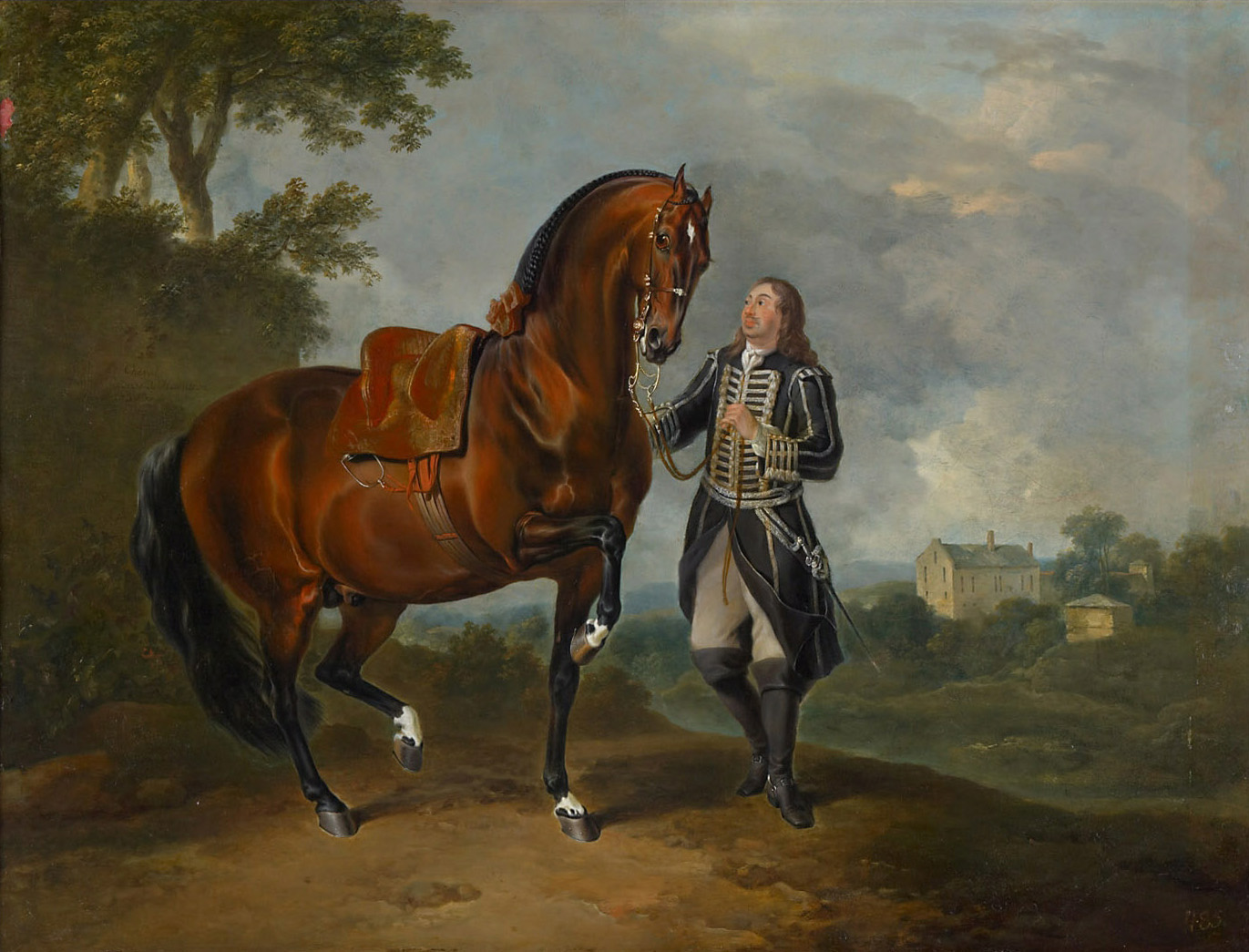
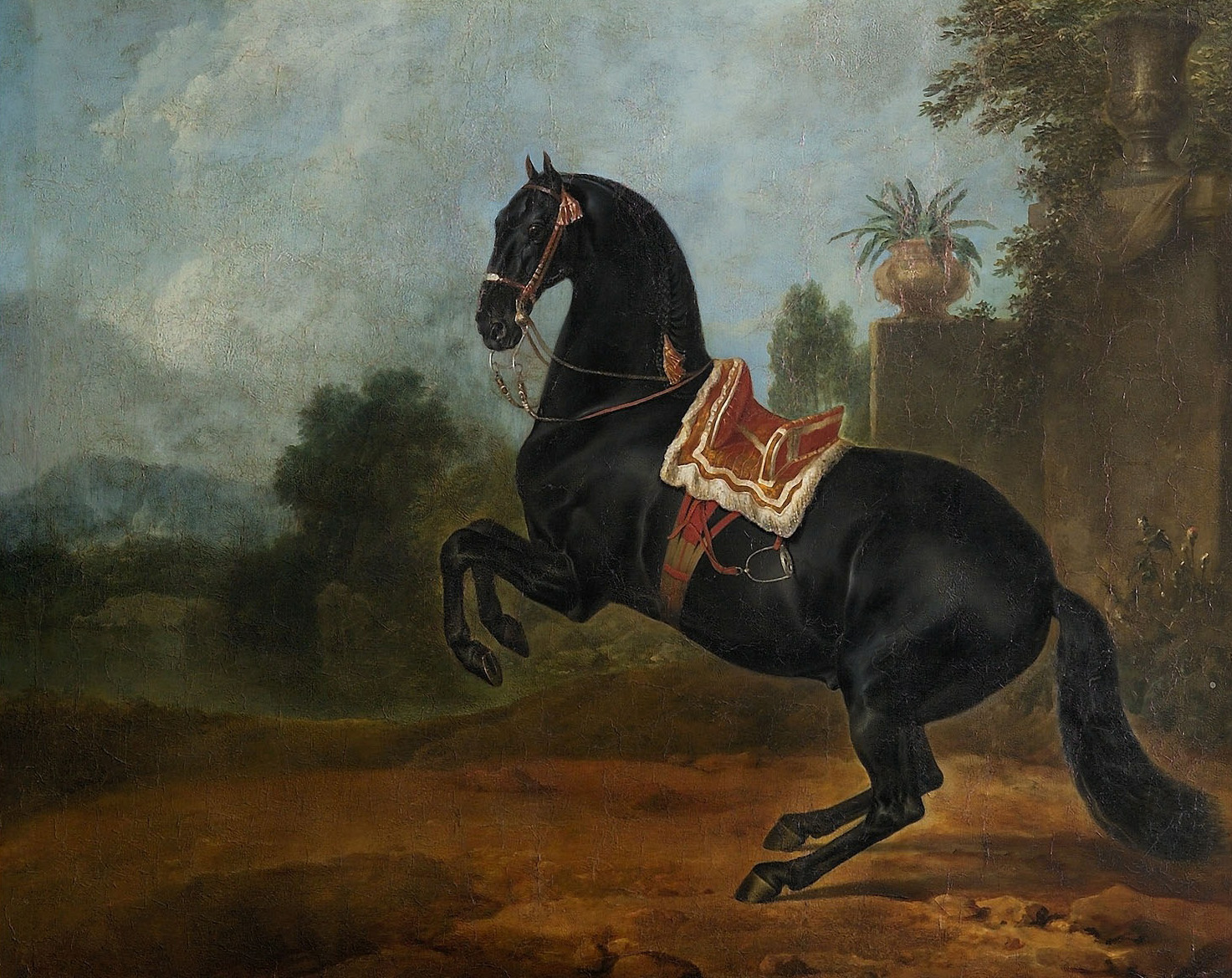
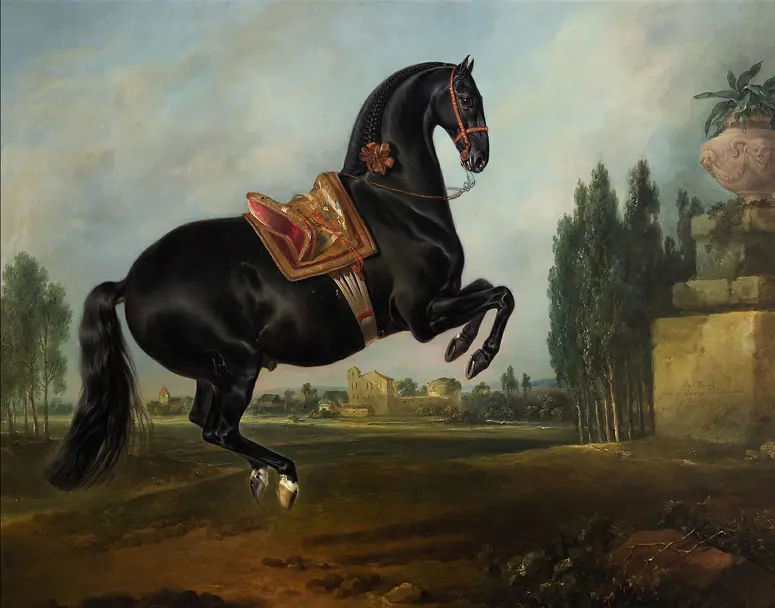
"Gitano", a stallion from the imperial stud Kladrub Johann Georg de Hamilton around 1721

Emperor Franz Joseph's ceremonial state carriage returning to the court studs Mariza Büngener 1912
Four-seater Ceremonial State Carriage Carl Marius 1865

Lavish Personal State Chariot Manufacturer: Cesare Sala 1857

Child’s Carriage of Crown Prince Rudolf Manufacturer: Cesare Sala around 1860