Das "Ainkhürn"- Schwert
2. Viertel 15. Jahrhundert | Gerard Loyet
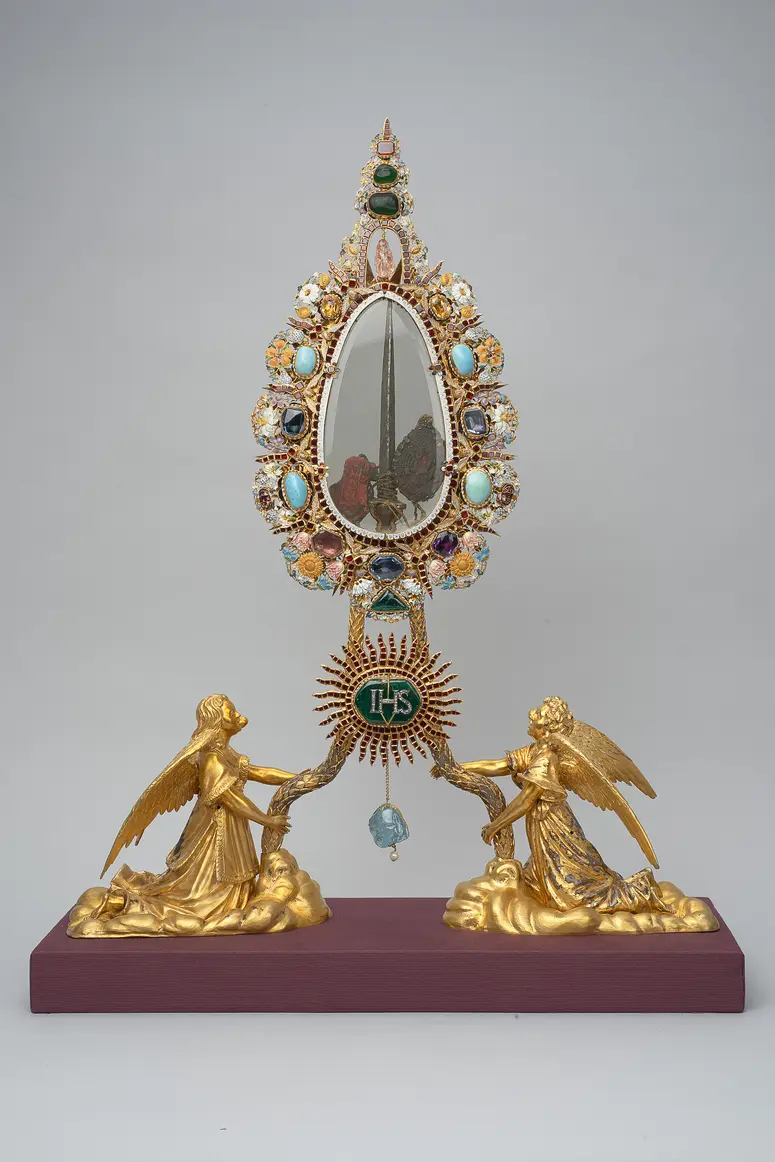
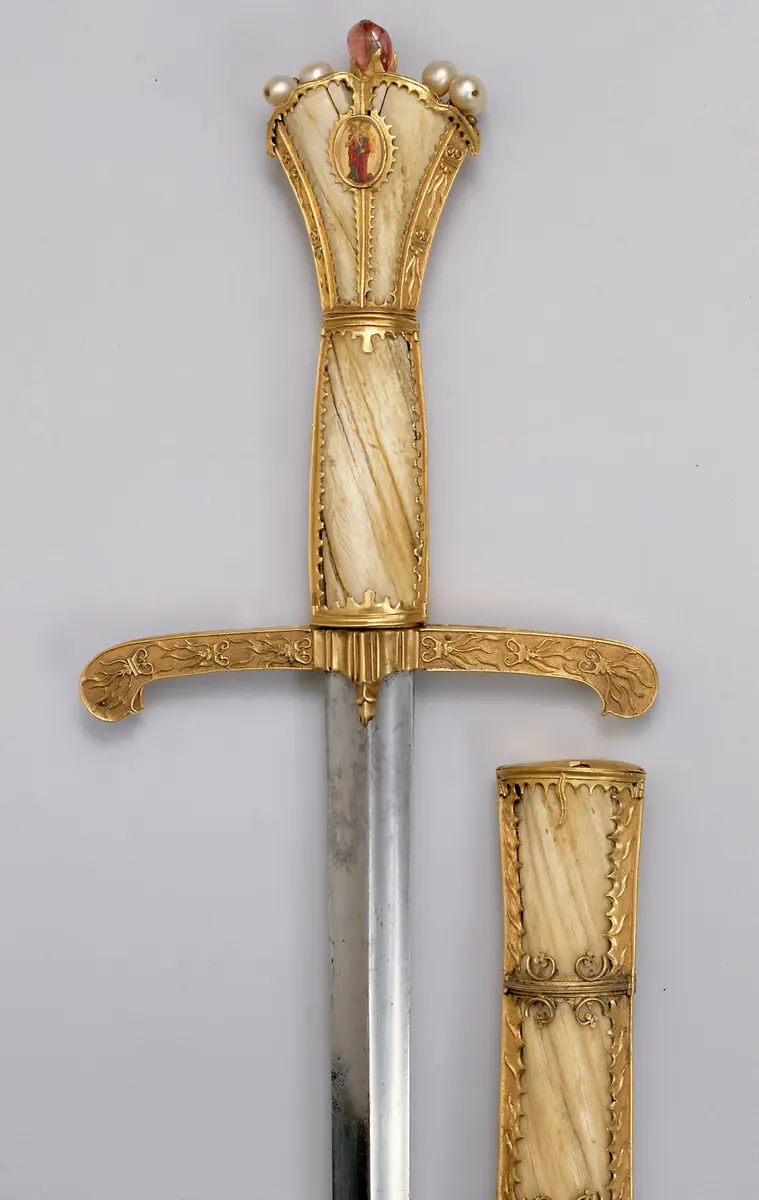
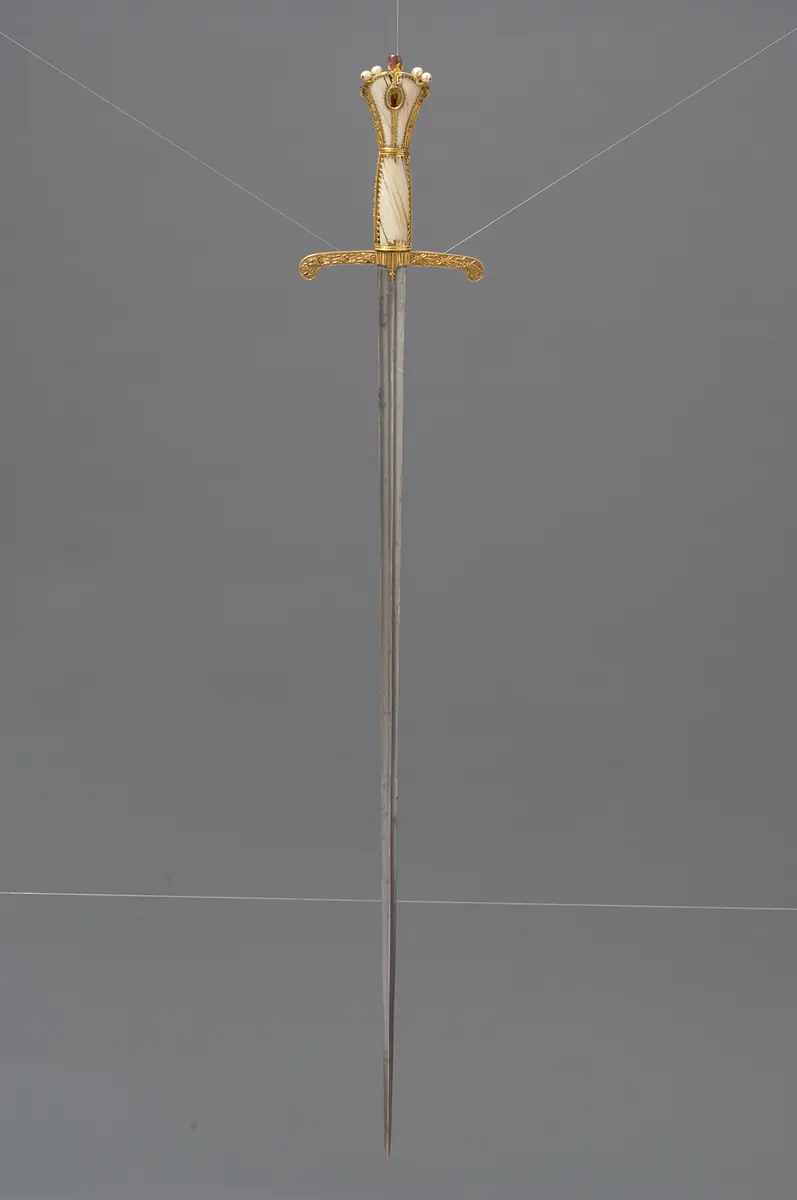
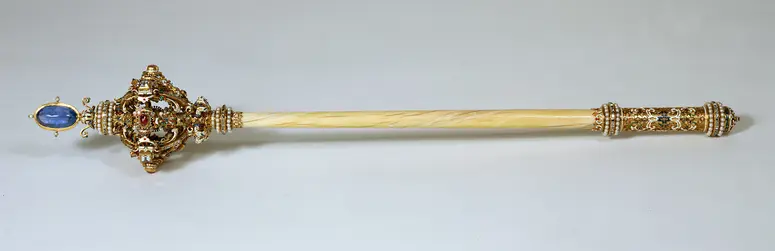
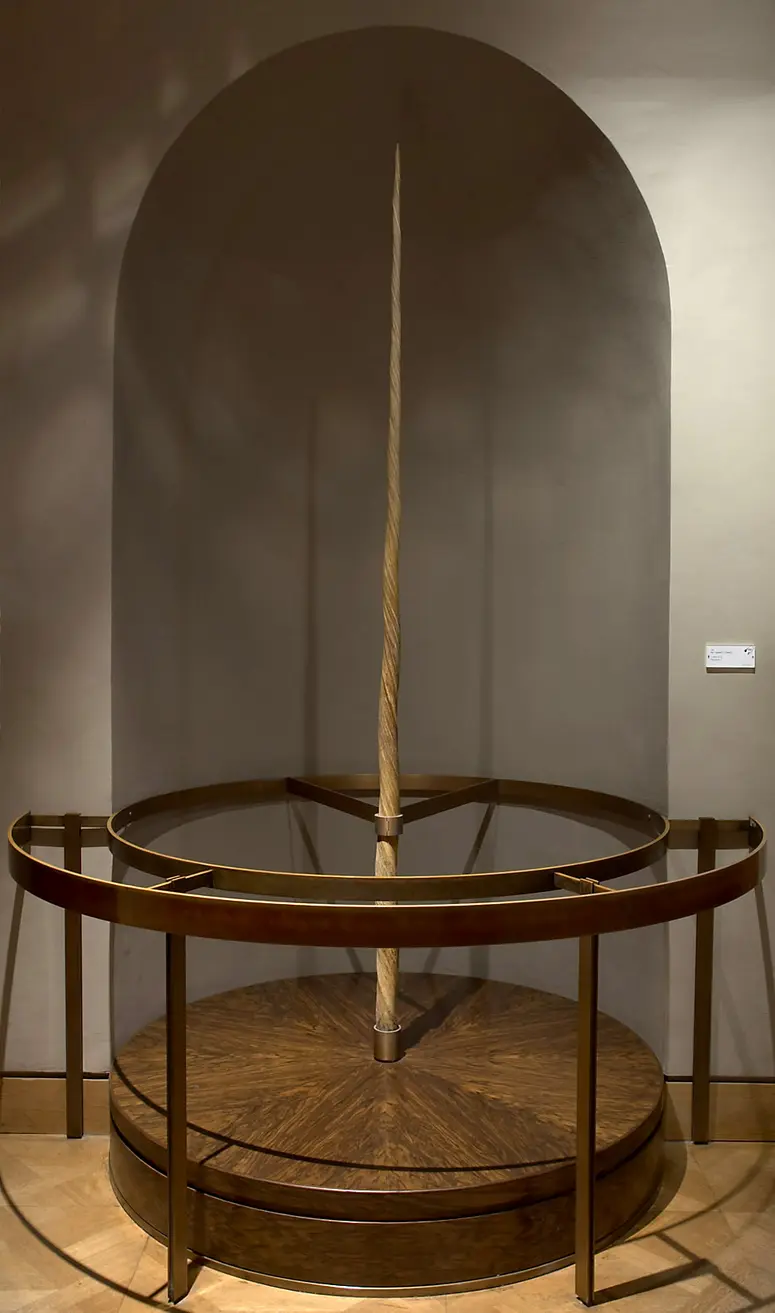
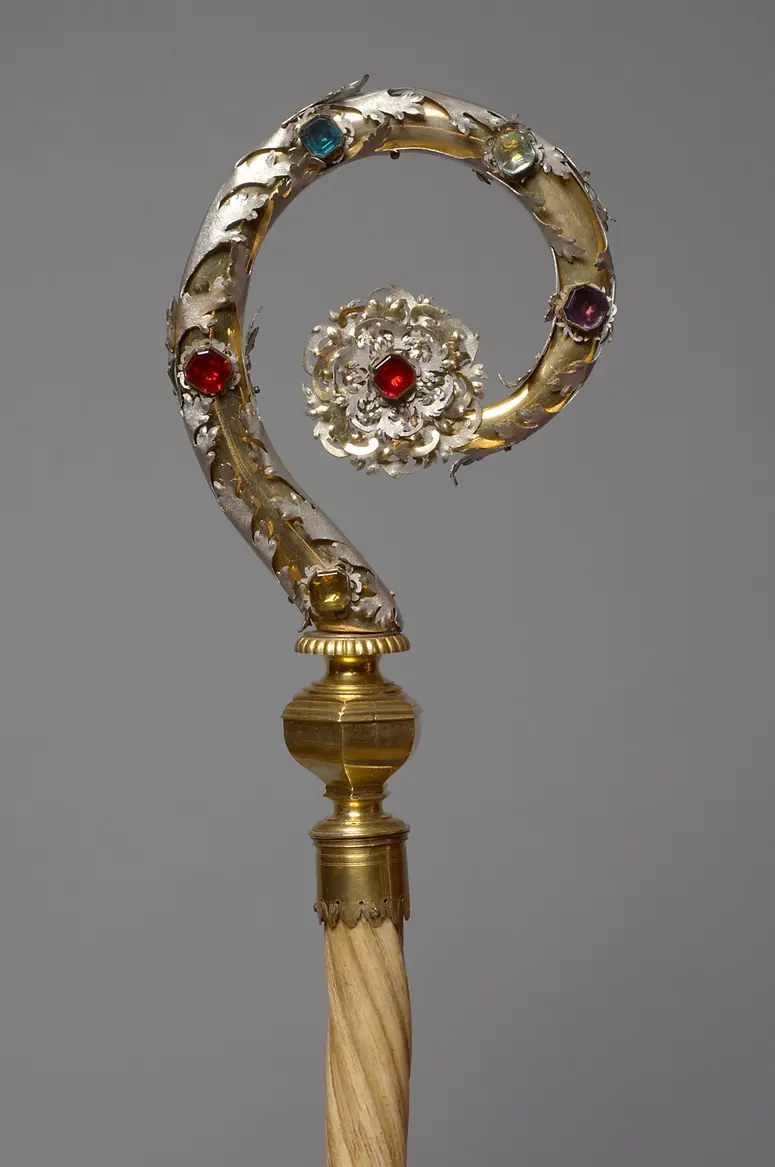
The preciousness of this elegant weapon with its relatively restrained golden decoration lies in the material of its scabbard and hilt: it was believed that the sword was made of the horn of the legendary unicorn. In fact, the scabbard and hilt are made of the tusk of a narwhal. From ca. 1200 such narwhal teeth, which often reached considerable lengths, were sold as "alicorns" for colossal sums. The horn of the legendary creature was considered to have great powers, and because of the Christian-allegorical interpretation of the unicorn myth, "alicorns" became a preferred material for both secular (e.g., sceptres - cf. Inv.No. SK_WS_XIa_2) and ecclesiastical emblems (e.g., bishop's crosiers). The symbolic power of the incomparably precious "alicorn" thus explains the restrained mounting with pearls, a ruby and simple gold bands. On the latter are found the emblems of Duke Philip the Good (fire-steel and sparking flint), executed on a matt background. From the estate of his heir, Charles the Bold, the sword came into the possession of his son-in-law, the later Emperor Maximilian I.
The preciousness of this elegant weapon with its relatively restrained golden decoration lies in the material of its scabbard and hilt: it was believed that the sword was made of the horn of the legendary unicorn. In fact, the scabbard and hilt are made of the tusk of a narwhal. From ca. 1200 such narwhal teeth, which often reached considerable lengths, were sold as "alicorns" for colossal sums. The horn of the legendary creature was considered to have great powers, and because of the Christian-allegorical interpretation of the unicorn myth, "alicorns" became a preferred material for both secular (e.g., sceptres - cf. Inv.No. SK_WS_XIa_2) and ecclesiastical emblems (e.g., bishop's crosiers). The symbolic power of the incomparably precious "alicorn" thus explains the restrained mounting with pearls, a ruby and simple gold bands. On the latter are found the emblems of Duke Philip the Good (fire-steel and sparking flint), executed on a matt background. From the estate of his heir, Charles the Bold, the sword came into the possession of his son-in-law, the later Emperor Maximilian I.
Time:
2. Viertel 15. Jahrhundert
Object Name
Insigne; Waffe; Schwert
Culture
Burgundisch - Niederländisch
Material/technology:
Schwert: Stahl, Ainkhürn (Narwalzahn), Gold, Email; Ergänzungen: Silber, vergoldet, Rubin, Perlen
Dimensions:
L. 106 cm
Klinge: L. 86,7 cm
Scheide: L. 92,3 cm
Copyright
Kunsthistorisches Museum, Weltliche Schatzkammer
Invs.
Schatzkammer, WS XIV 3
Browse more
Similar items you might be interested in
Das "Ainkhürn" (Einhorn) 1. Hälfte 16. Jahrhundert
Der Tod Kaiser Ferdinands III. als Sinnbild der Vergänglichkeit Daniel Neuberger um 1660
Kreuz des Militär-Maria-Theresien-Ordens Johann Michael Grosser 1757 datiert
Großkreuz des Militär-Maria-Theresien-Ordens J. A. Schöll 1765 datiert
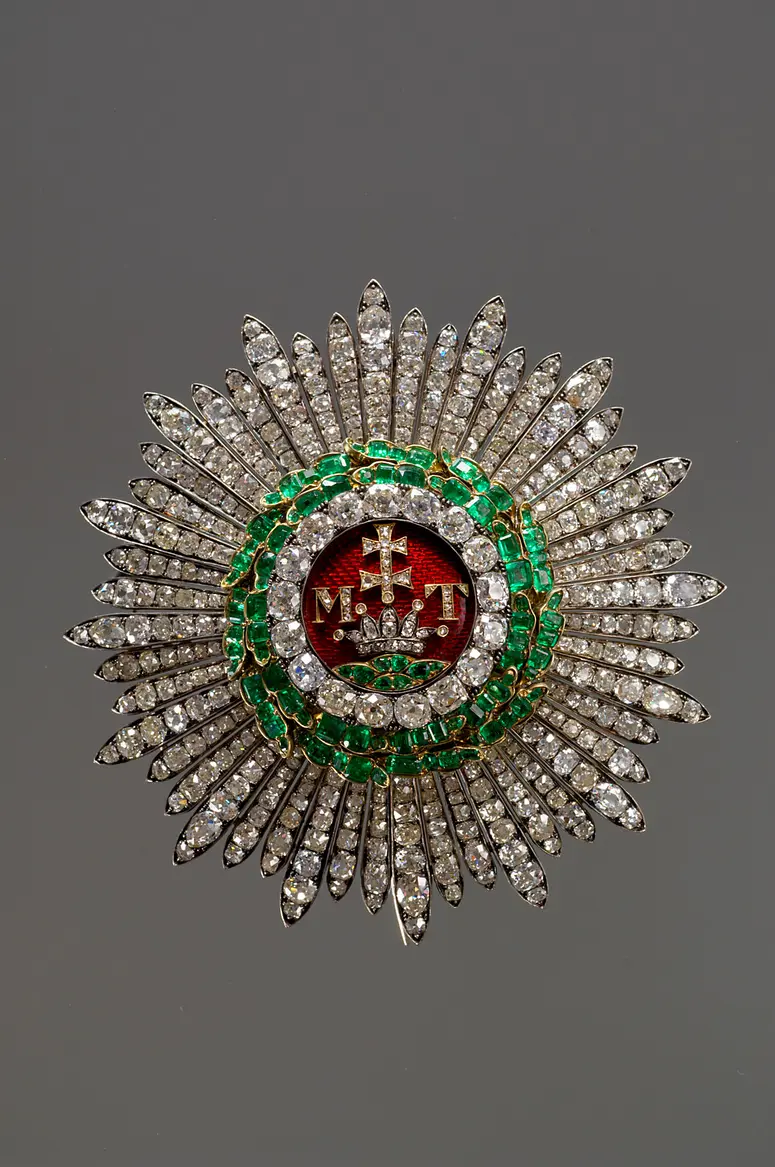
Stern des ungarischen St. Stephans-Ordens Joseph und Anton Biedermann 1. Hälfte 19.Jahrhundert
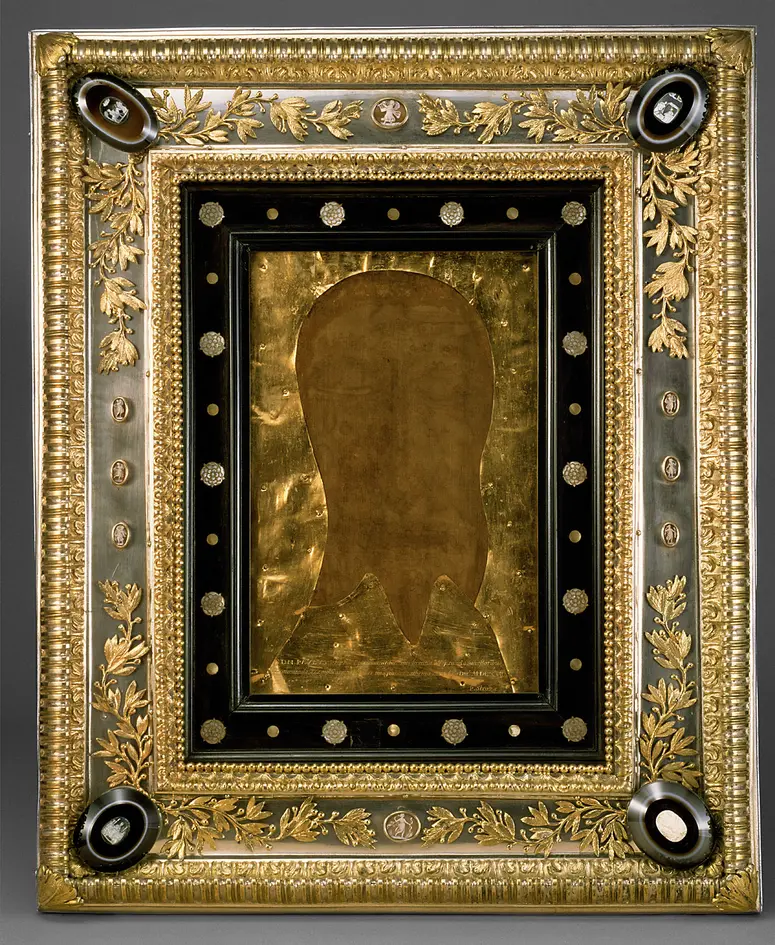
Das Schweißtuch der Veronika; Vera Icon 1617, um 1721
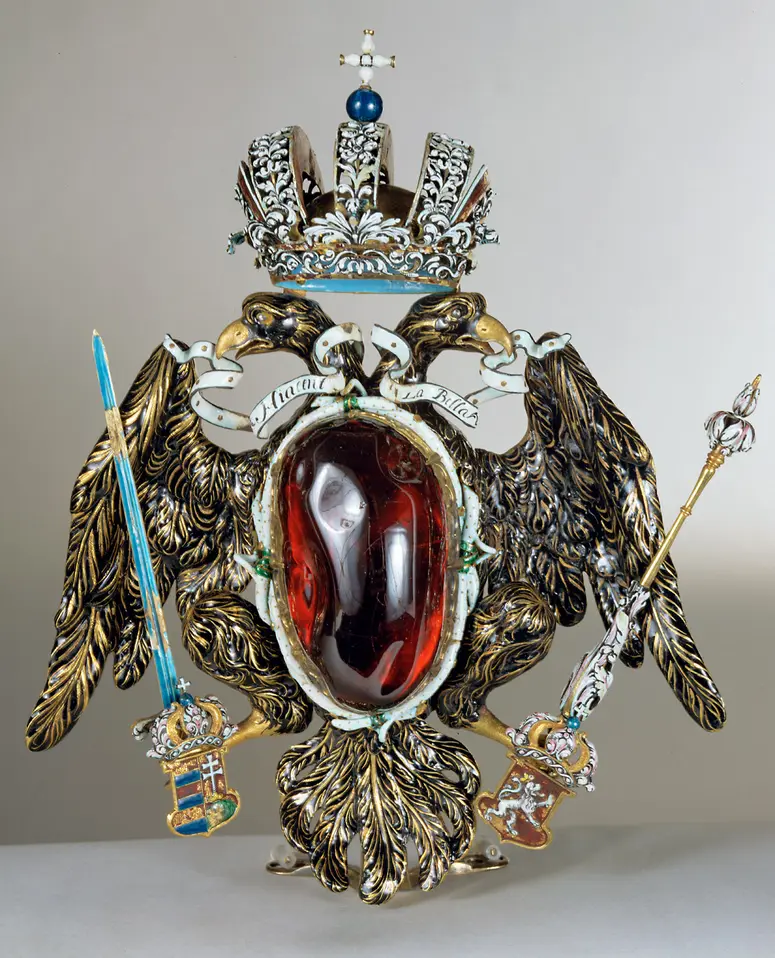
Hyazinth "La Bella" frühes 15. Jahrhundert (Fassung des Steines); 1687
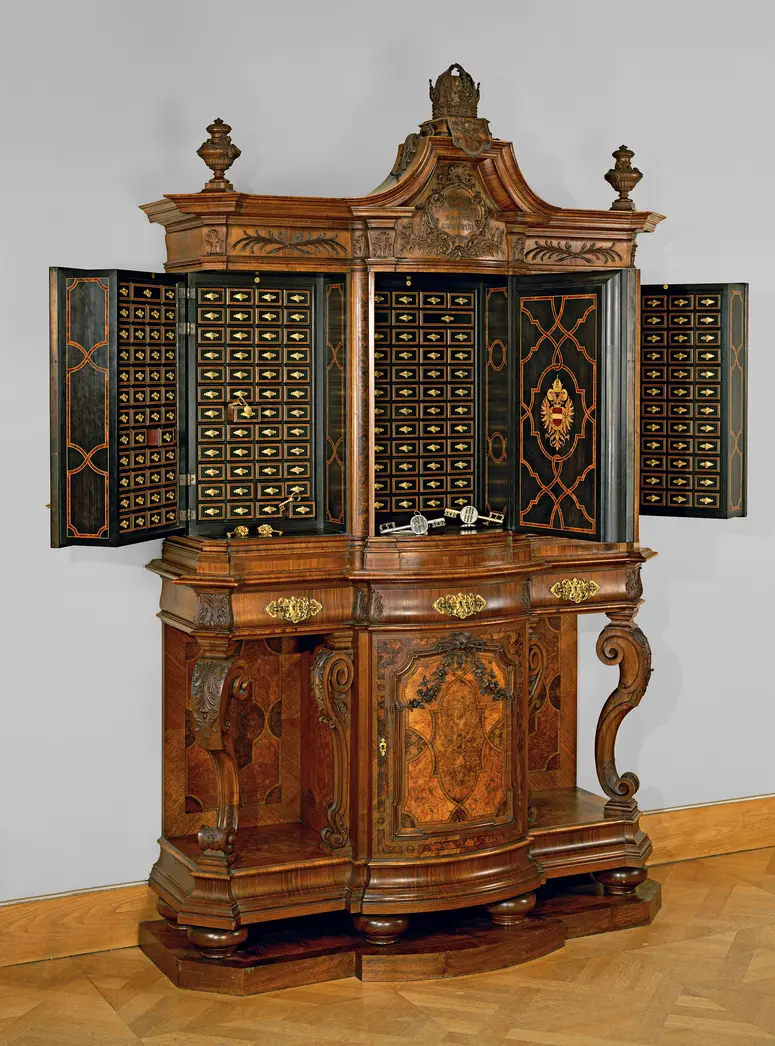
Schrank zur Aufbewahrung der Schlüssel zu den Särgen der Habsburger Alexander Albert 1895
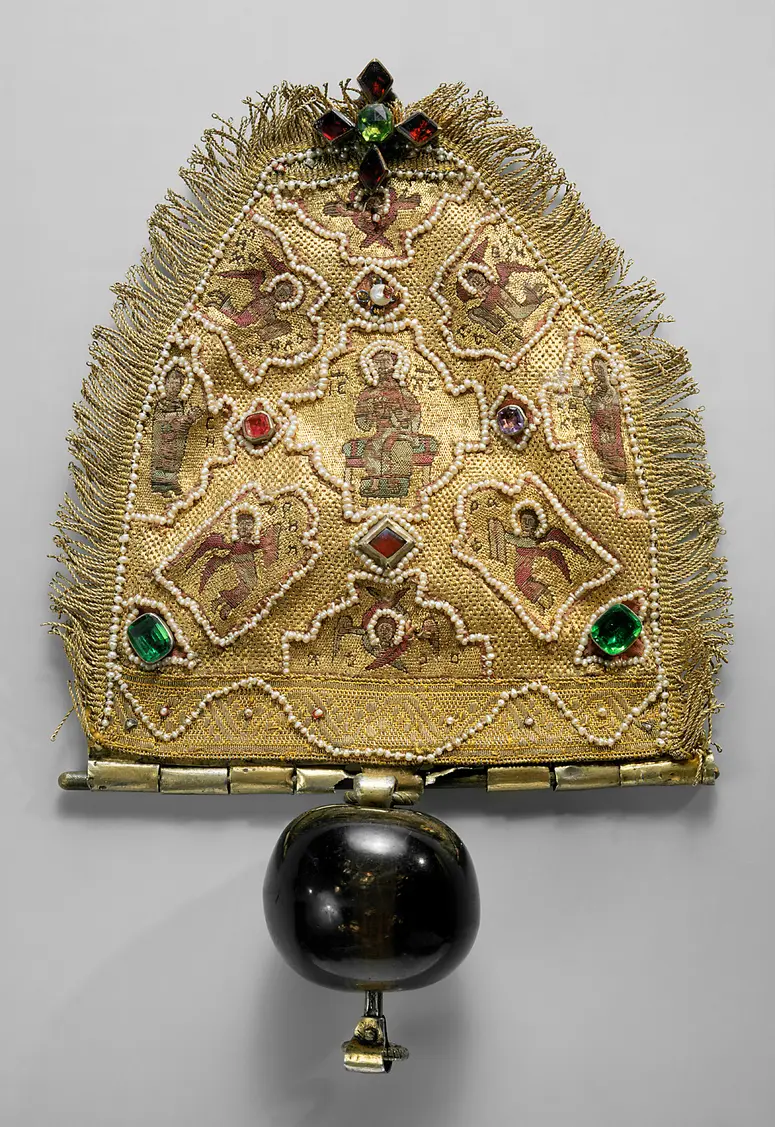
Sogenannter Beutel König Stephans von Ungarn 2. Hälfte 11. / 12.- Jahrhundert
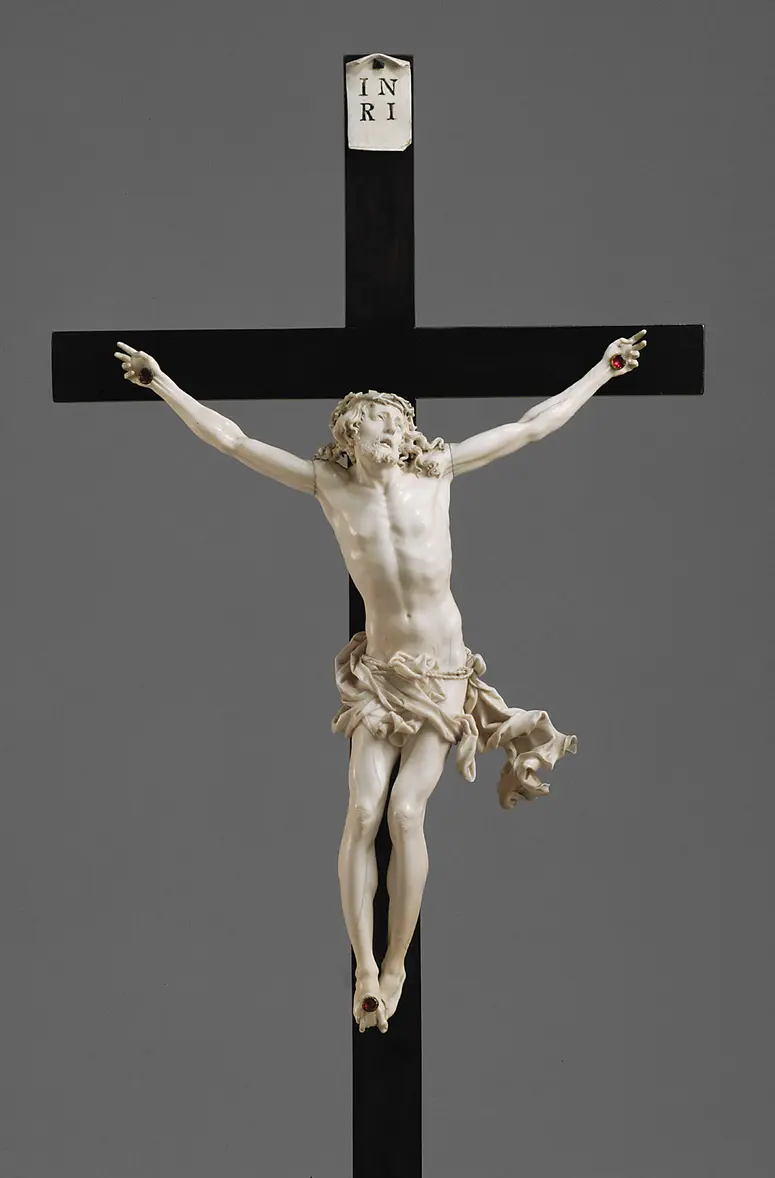
Kruzifix Gabriel Grupello Mitte 18. Jahrhundert