Kreuz des Militär-Maria-Theresien-Ordens
1757 datiert | Johann Michael Grosser
On the occasion of her troops' victory in 1757 over the armies of Frederick II of Prussia at the Battle of Kolín (in Bohemia, now in the Czech Republic), Maria Theresa established the first Austrian order of merit for military achievements and gave it her name. In 1764, to celebrate the election of her son Joseph II to be Holy Roman emperor, she founded the monarchy's highest civil order of merit, the Hungarian Order of St. Stephen. The orders' insignia kept in Vienna's Treasury are made of especially precious materials. Instead of being made of enamel, the crosses are set with diamonds, rubies and emeralds. The Cross of the Military Order of Maria Theresa, created in the year the order was founded, was probably worn as a decoration by the emperors themselves, starting with Francis I. The Grand Cross of the Order, which is laid on a laurel wreath of emeralds set in gold, was first owned by Emperor Joseph II. He gave it as a present to Field Marshal Gideon Laudon after the capture of Belgrade in 1789. It was purchased back from Laudon's widow in 1790 and, following another conferment and repurchase, it entered the Treasury. The Star and Cross of the Order of St. Stephen also entered the Imperial Treasury by means of repurchase. The two insignia, which bear the coat of arms of New Hungary and the initials of Maria Theresa in diamonds on their central discs, come from the estate of Field Marshal Joseph Wenzel, Count Radetzky, upon whom they were bestowed in 1854.
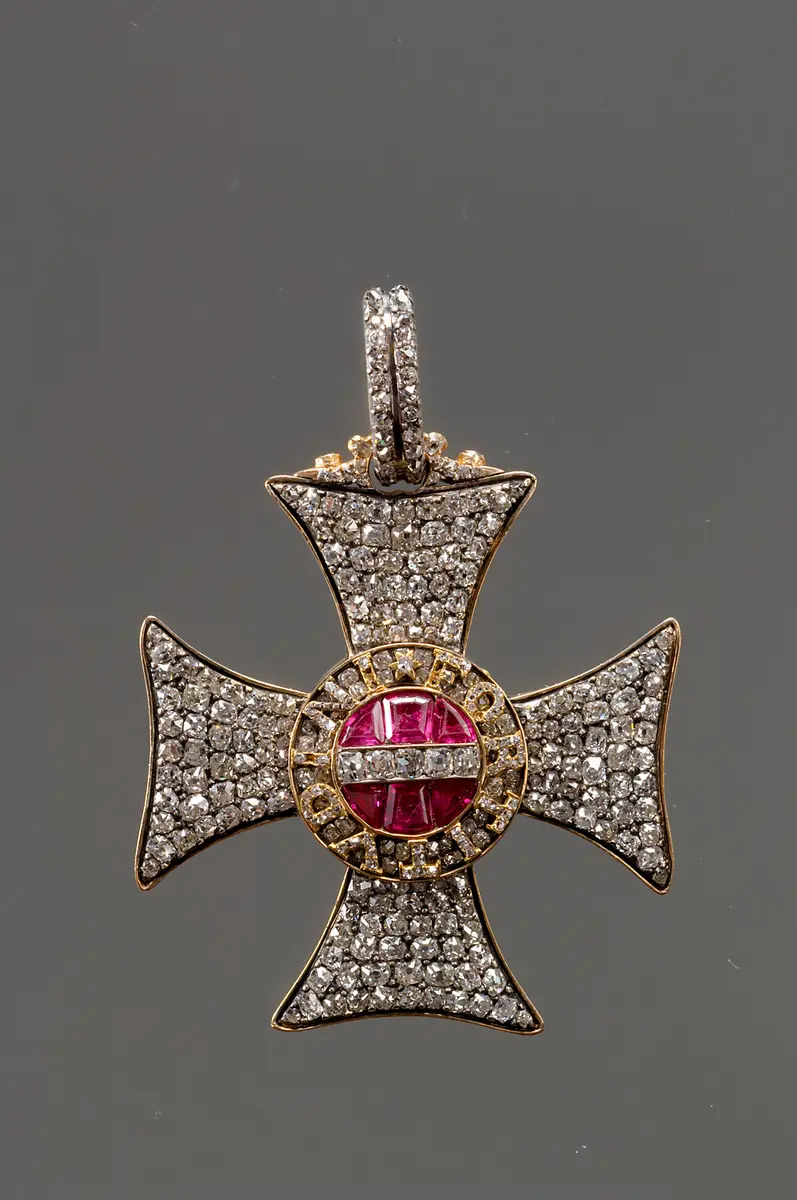
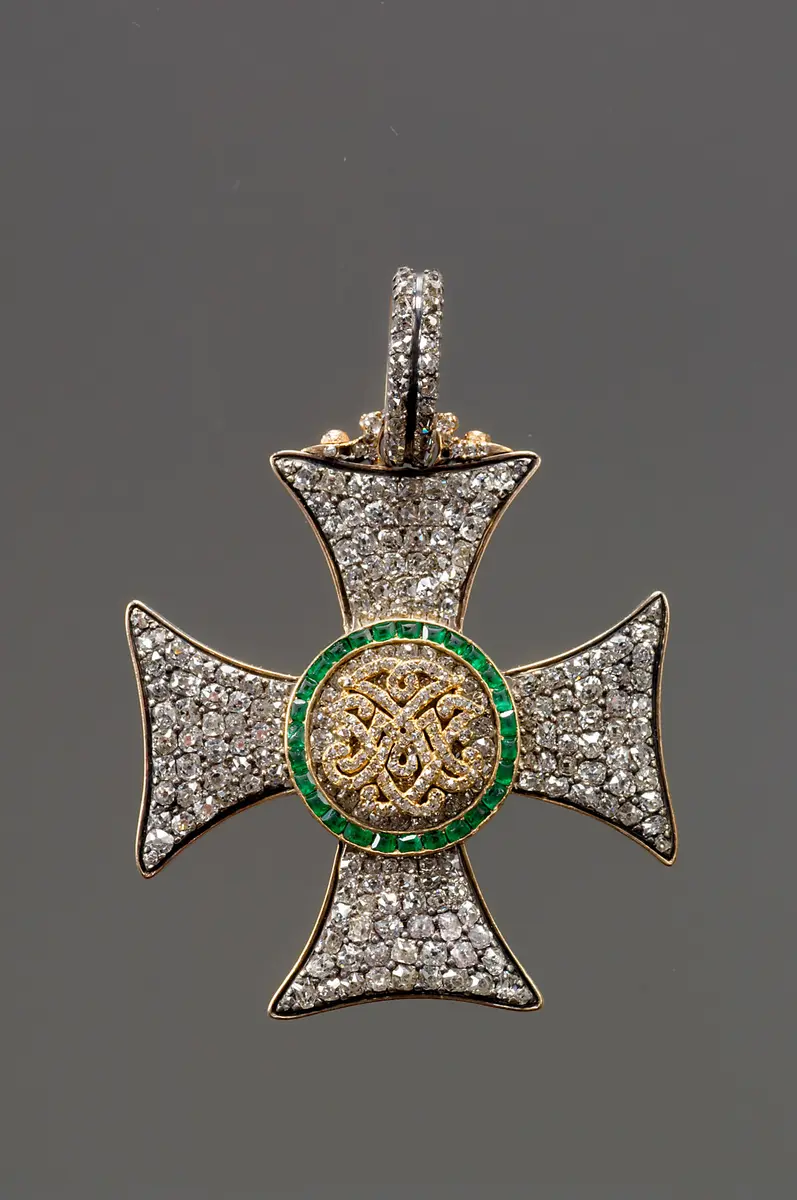
On the occasion of her troops' victory in 1757 over the armies of Frederick II of Prussia at the Battle of Kolín (in Bohemia, now in the Czech Republic), Maria Theresa established the first Austrian order of merit for military achievements and gave it her name. In 1764, to celebrate the election of her son Joseph II to be Holy Roman emperor, she founded the monarchy's highest civil order of merit, the Hungarian Order of St. Stephen. The orders' insignia kept in Vienna's Treasury are made of especially precious materials. Instead of being made of enamel, the crosses are set with diamonds, rubies and emeralds. The Cross of the Military Order of Maria Theresa, created in the year the order was founded, was probably worn as a decoration by the emperors themselves, starting with Francis I. The Grand Cross of the Order, which is laid on a laurel wreath of emeralds set in gold, was first owned by Emperor Joseph II. He gave it as a present to Field Marshal Gideon Laudon after the capture of Belgrade in 1789. It was purchased back from Laudon's widow in 1790 and, following another conferment and repurchase, it entered the Treasury. The Star and Cross of the Order of St. Stephen also entered the Imperial Treasury by means of repurchase. The two insignia, which bear the coat of arms of New Hungary and the initials of Maria Theresa in diamonds on their central discs, come from the estate of Field Marshal Joseph Wenzel, Count Radetzky, upon whom they were bestowed in 1854.
Time:
1757 datiert
Object Name
Orden
Culture
Wien
Material/technology:
Gold, Silber, Diamanten, Rubine, Smaragde
Dimensions:
H. 6 cm
Signed
Jo: Mich. grosser. hoff. Jubilir fecit 1757
Copyright
Kunsthistorisches Museum, Weltliche Schatzkammer
Invs.
Schatzkammer, WS XIa 17
Browse more
Similar items you might be interested in
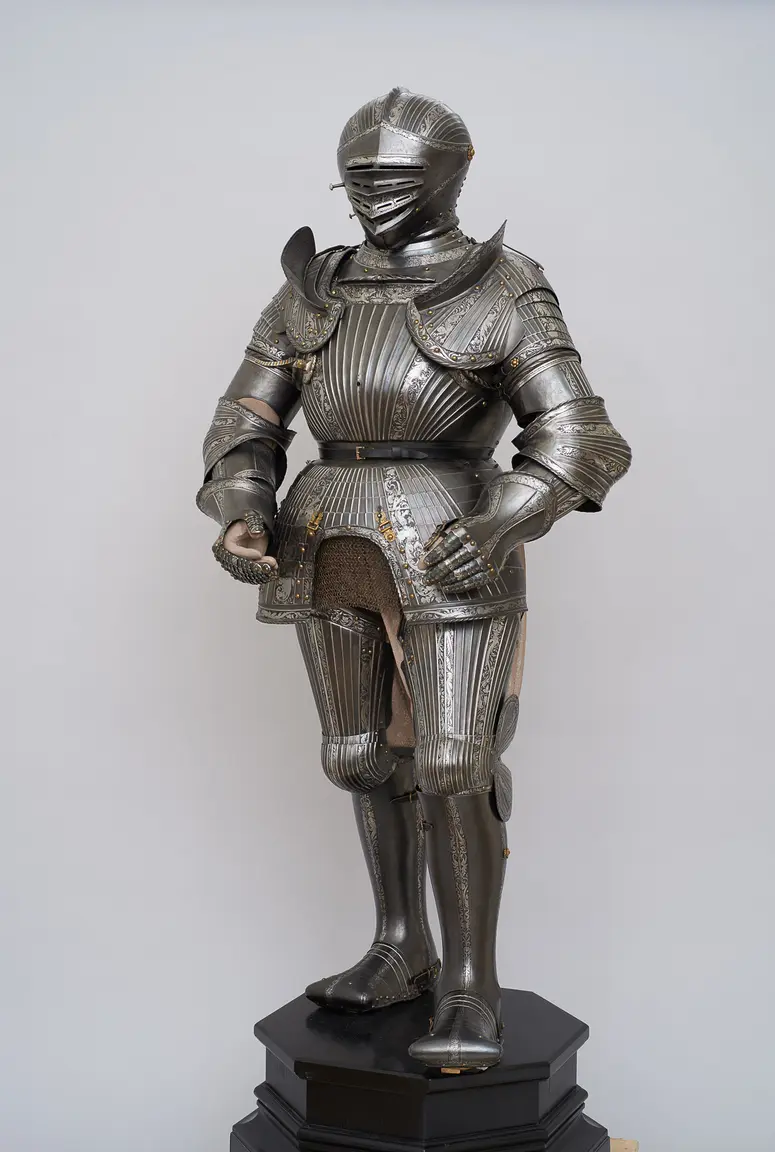
Riefelharnisch, Riefelküriss: Fluted field armour Johann Friedrich I. (1532-1547), Kurfürst von Sachsen Dated 1530
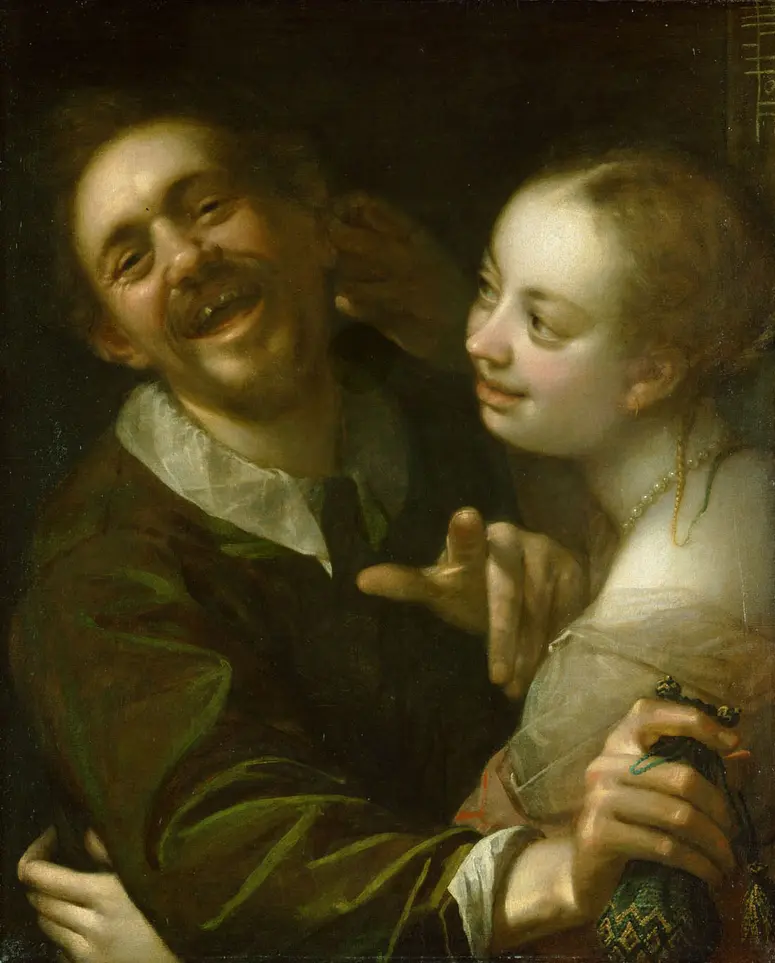
“Joking Couple”, Self-Portrait of the Artist with his Wife Hans von Aachen around 1596
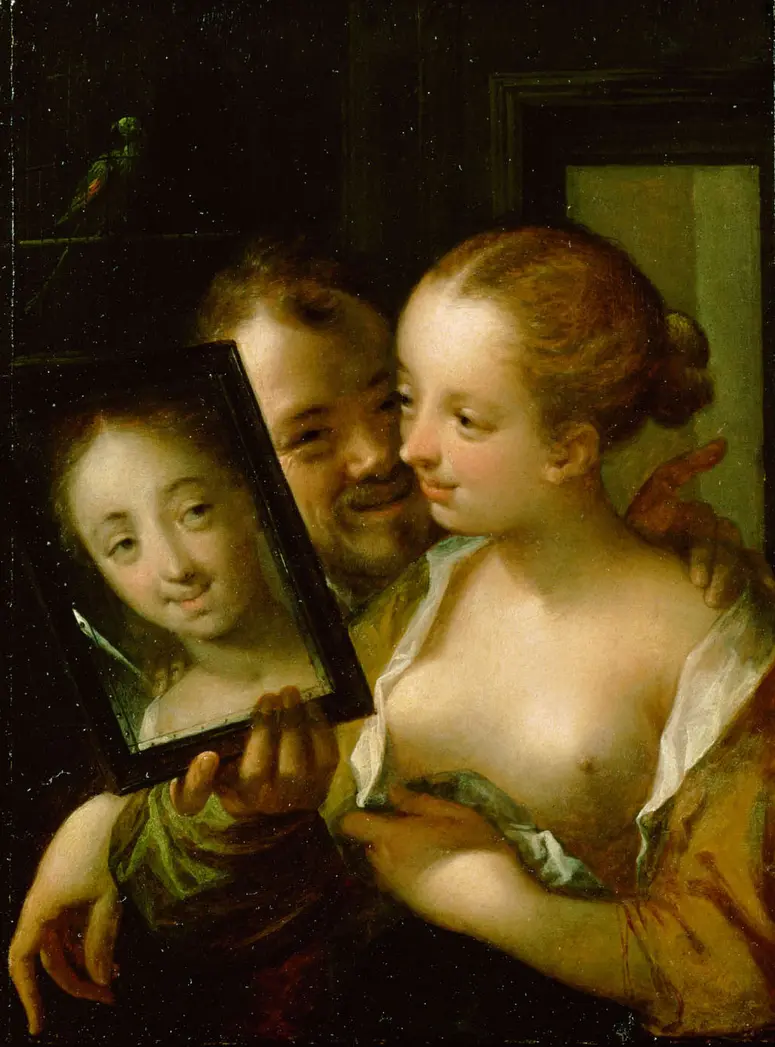
Leopold V. (1619-1632), Erzherzog und Graf von Tirol, Bischof von Passau und Straßburg 1628
Hans Becher d. Ä. Plattnerarbeiten spätes 16. Jahrhundert, Ätzung datiert 1618, tlw. Ergänzungen
Johann Friedrich I. (1532-1547), Kurfürst von Sachsen datiert 1530