Das Futteral für die Reichskrone
nach 1350
Leather cases exactly fitted to the objects they were designed to hold were made to store the imperial regalia and also to protect them while they were being transported to royal and imperial coronations in Aachen (Aix-la-Chapelle) or Rome as well as the annually staged public presentations that were held starting in 1350, the Feast of the Holy Lance and Nails. Leather lent itself to the manufacture of such cases because of its flexibility of form and material toughness as well as the varied possibilities it offered for decoration. The cases for the Imperial Crown and Ceremonial Sword have been preserved from the time of Emperor Charles IV. The decoration of the case of the Imperial Crown consists of framed panels of foliate tendrils and mythological beasts. The individual pieces of leather of which the case if sewn correspond to the panels into which the decoration is divided. Fastened to the lower part of the case by iron straps, the lid bears on its top the imperial arms with a black eagle on a yellow ground as well as the Bohemian arms with a white lion rampant on a red ground. On the side are loops through which a carrying strap could be drawn. Traditional forms of leather carving and blind-stamping were the techniques used for the decoration. The beaded ground provides an effective contrast to the smooth decorations of tendrils and animals. Like the rows of small ornaments along the framing bands and in the bodies of the animals, this pattern was embossed with small metal punches. The colours of the case were originally stronger, with an effective contrast of red and green supporting the structure provided by the framing bands of the surface and making the fabulous creatures and leaf motifs appear in greater contrast.
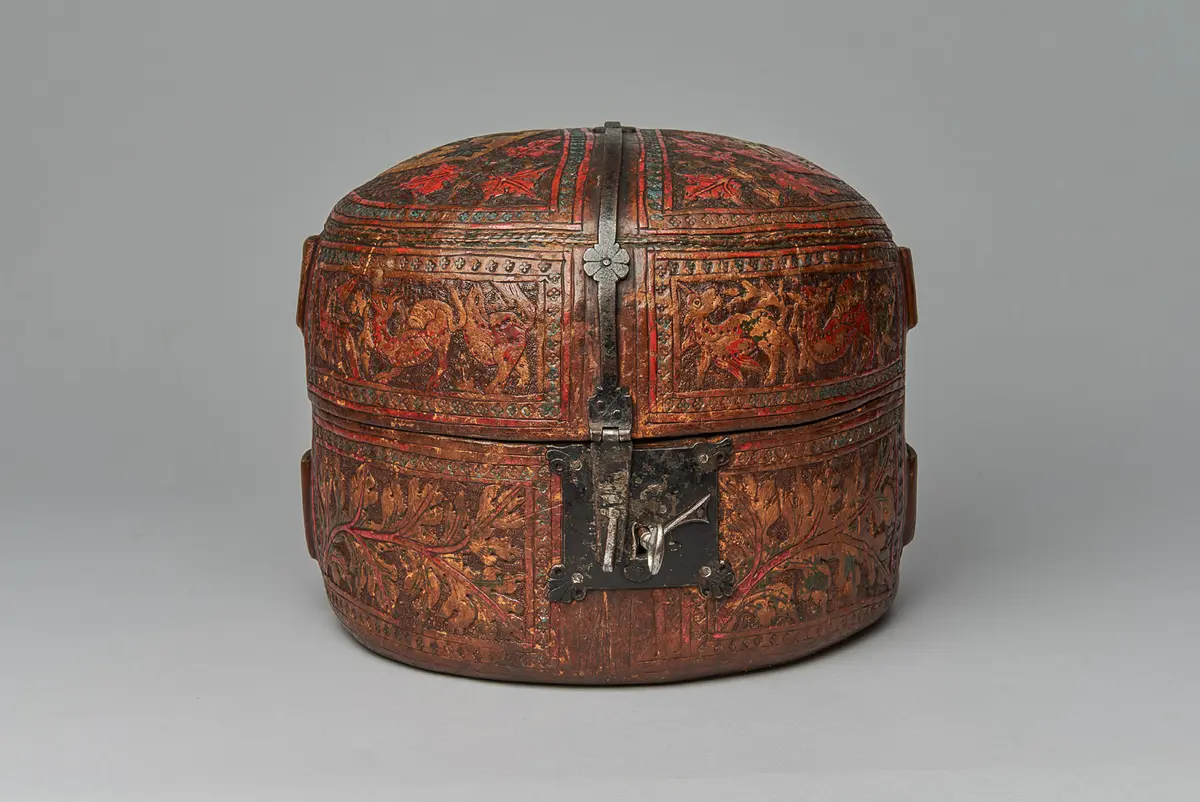
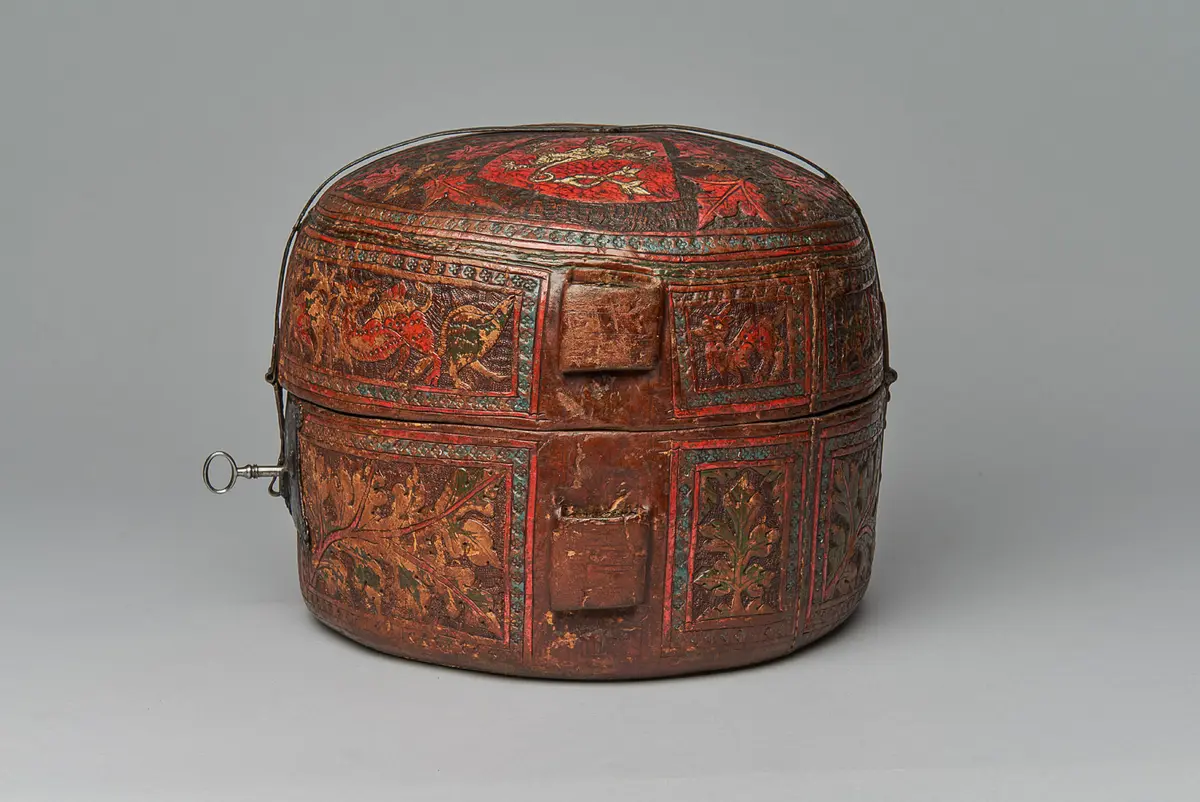
Leather cases exactly fitted to the objects they were designed to hold were made to store the imperial regalia and also to protect them while they were being transported to royal and imperial coronations in Aachen (Aix-la-Chapelle) or Rome as well as the annually staged public presentations that were held starting in 1350, the Feast of the Holy Lance and Nails. Leather lent itself to the manufacture of such cases because of its flexibility of form and material toughness as well as the varied possibilities it offered for decoration. The cases for the Imperial Crown and Ceremonial Sword have been preserved from the time of Emperor Charles IV. The decoration of the case of the Imperial Crown consists of framed panels of foliate tendrils and mythological beasts. The individual pieces of leather of which the case if sewn correspond to the panels into which the decoration is divided. Fastened to the lower part of the case by iron straps, the lid bears on its top the imperial arms with a black eagle on a yellow ground as well as the Bohemian arms with a white lion rampant on a red ground. On the side are loops through which a carrying strap could be drawn. Traditional forms of leather carving and blind-stamping were the techniques used for the decoration. The beaded ground provides an effective contrast to the smooth decorations of tendrils and animals. Like the rows of small ornaments along the framing bands and in the bodies of the animals, this pattern was embossed with small metal punches. The colours of the case were originally stronger, with an effective contrast of red and green supporting the structure provided by the framing bands of the surface and making the fabulous creatures and leaf motifs appear in greater contrast.
Time:
nach 1350
Object Name
Futteral
Culture
Prag
Material/technology:
Leder, blauer Samt, Eisen / in Schichten vernäht, Blindpressung, Lederschnitt, teilweise gefärbt
Copyright
Kunsthistorisches Museum, Weltliche Schatzkammer
Invs.
Schatzkammer, WS XIII 30
Browse more
Similar items you might be interested in
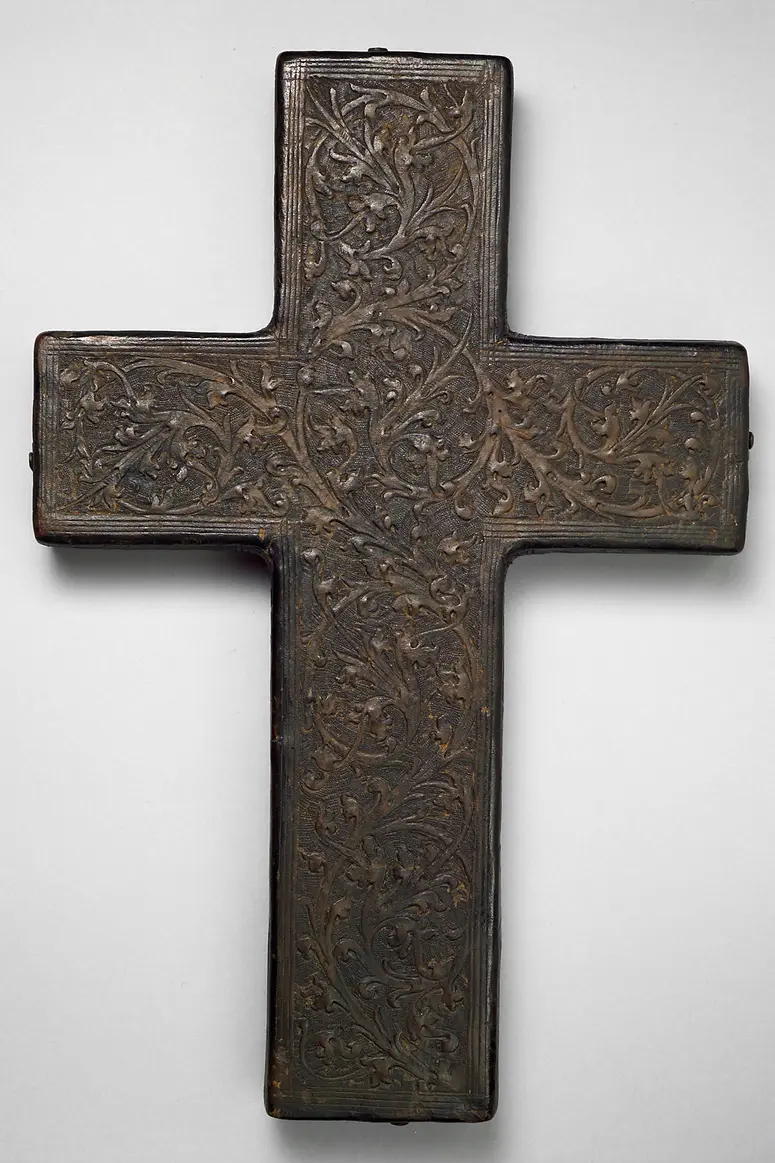
Das Futteral für das Reliquiar mit der Kreuzpartikel 1517 datiert
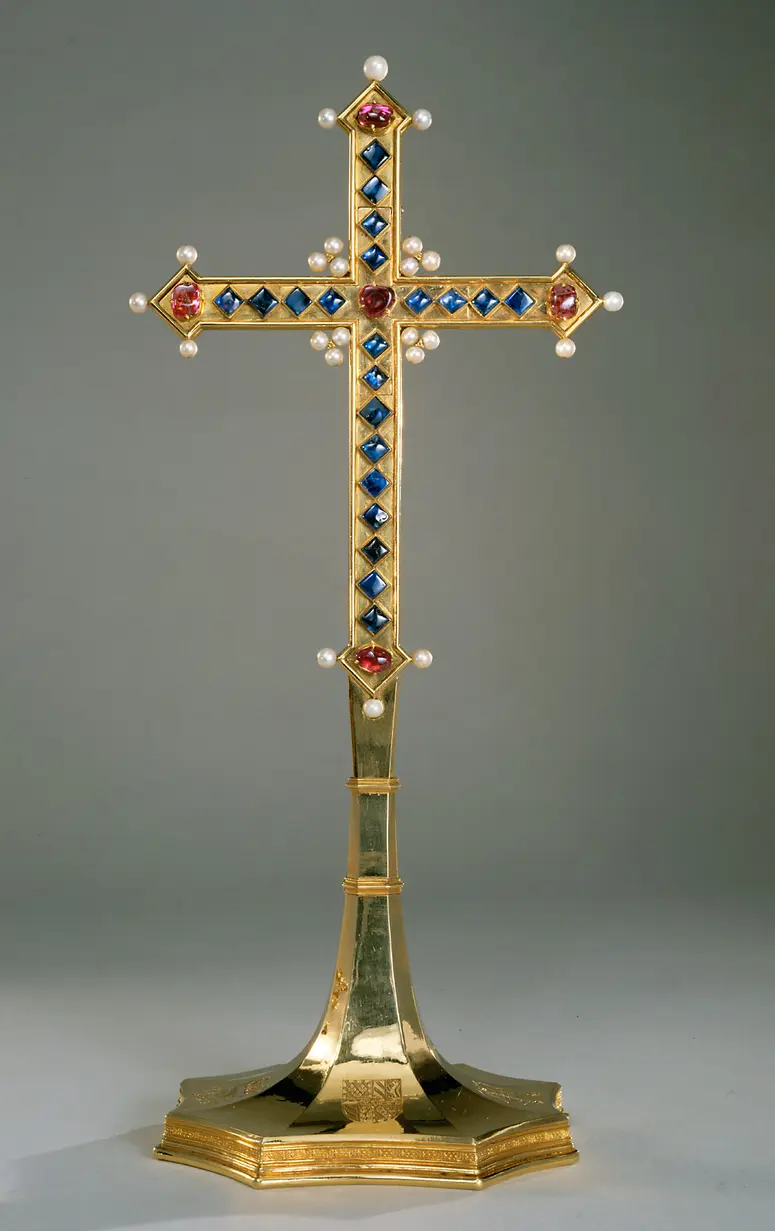
Schwurkreuz des Ordens vom Goldenen Vlies um 1400 (Kreuz), 1453/67 (Ständer)
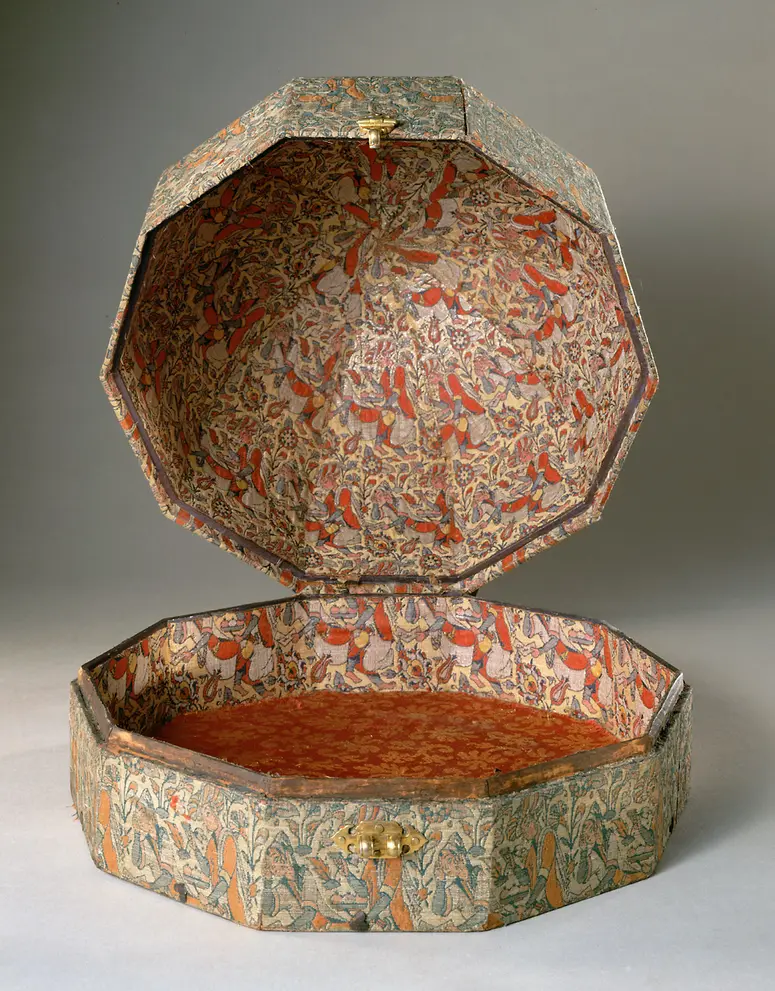
Das Futteral zur Krone Stefan Bocskais um 1605 ,um 1600 (Stoff)
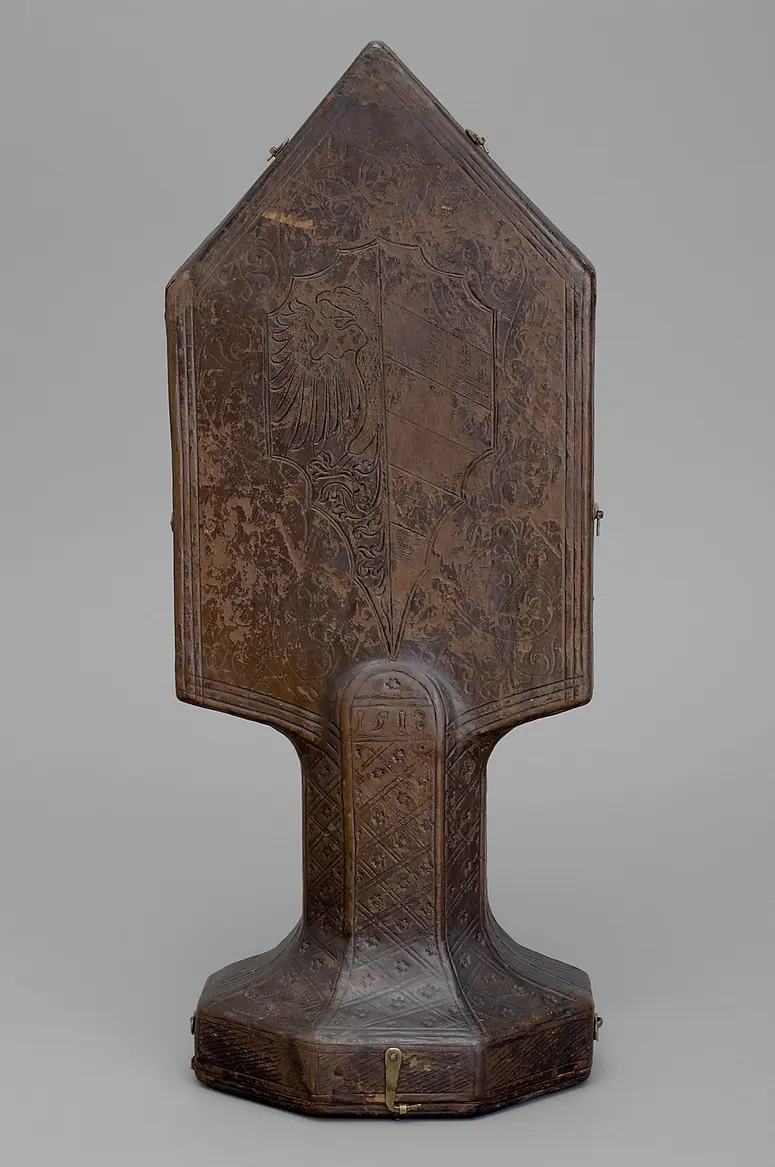
Das Futteral für das Tischtuch-Reliquiar 1518 datiert
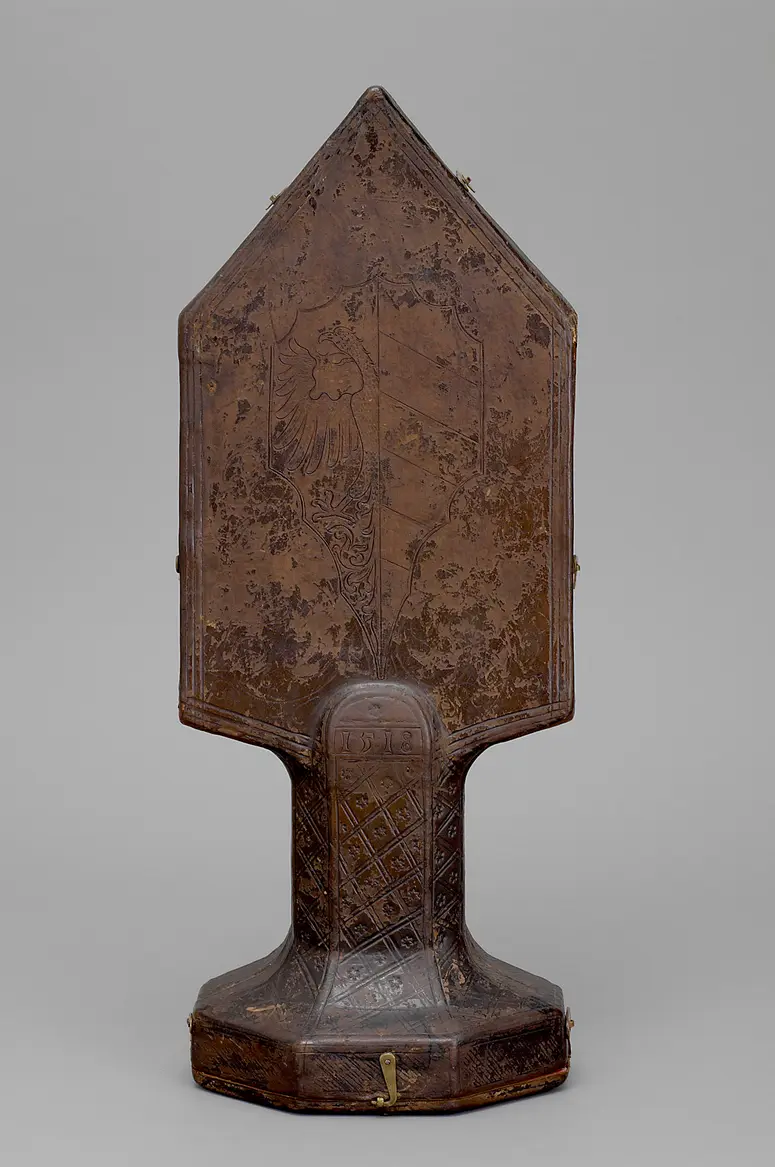
Das Futteral für das Schürztuch-Reliquiar 1518 datiert

Karl VI. (1711-1740), Kaiser datiert 1722
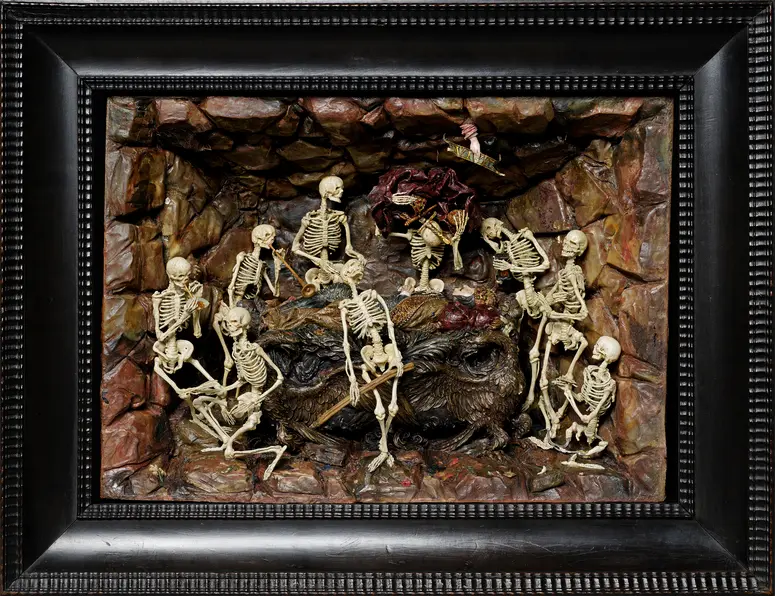
Der Tod Kaiser Ferdinands III. als Sinnbild der Vergänglichkeit Daniel Neuberger um 1660
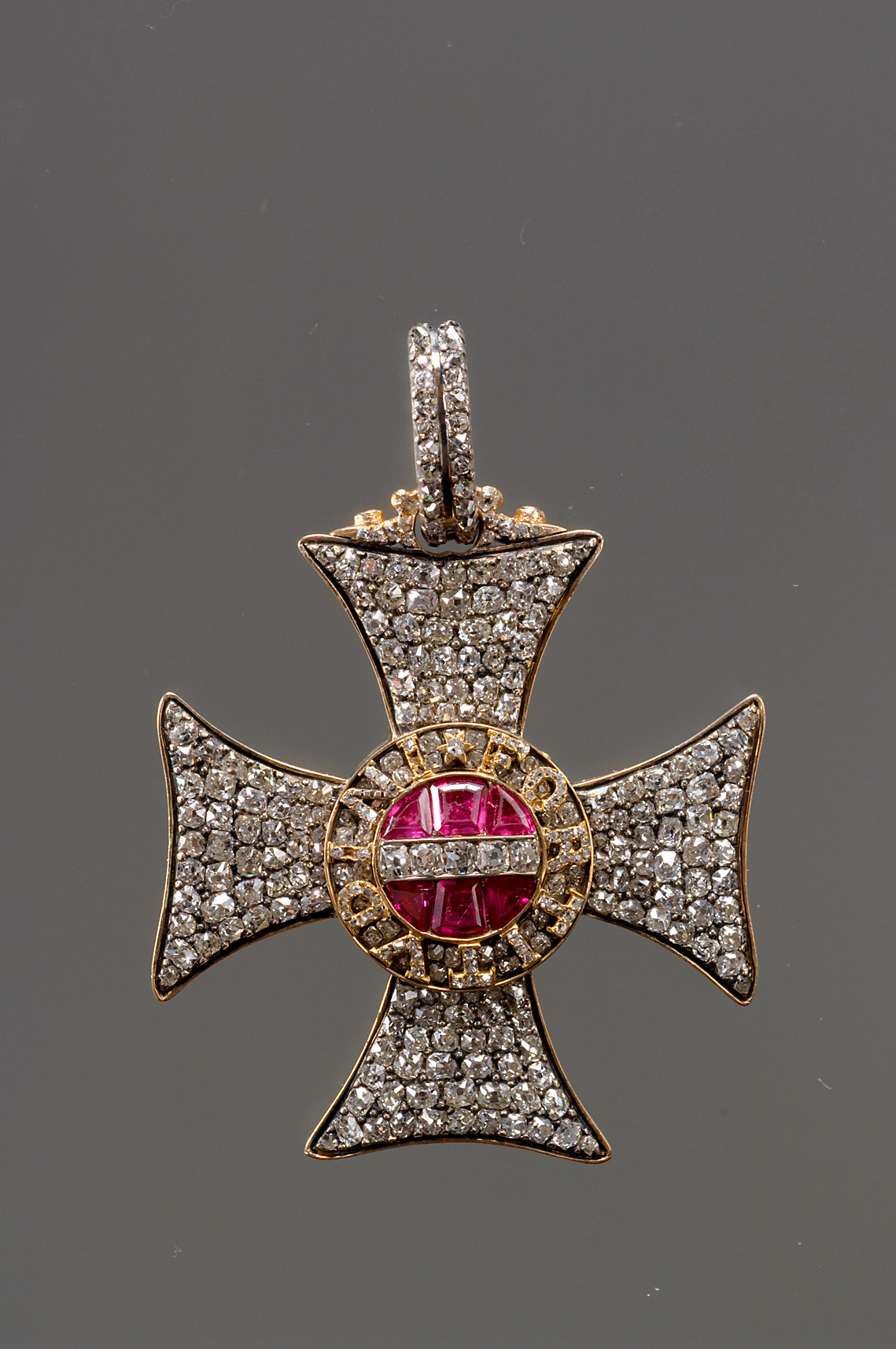
Kreuz des Militär-Maria-Theresien-Ordens Johann Michael Grosser 1757 datiert
Stern des ungarischen St. Stephans-Ordens Joseph und Anton Biedermann 1. Hälfte 19.Jahrhundert
Großkreuz des Militär-Maria-Theresien-Ordens J. A. Schöll 1765 datiert
Das Schweißtuch der Veronika; Vera Icon 1617, um 1721