Wappenrock für den Herold des Kaisertums Österreich
1830
Front and back: the double-headed eagle is represented in raised appliqué work, wearing the two crowns of Hungary and Bohemia, above which is the Imperial mitre crown. In one set of claws the eagle holds the sword and sceptre, in the other the orb. On the eagle's breast is the escutcheon of the House of Habsburg-Austria-Lorraine, hung with the neckchains of the Orders of the Empire: the Order of the Golden Fleece, the Military Order of Maria Theresia, the Hungarian Order of St. Stephen, the Austrian Order of Leopold and the Austrian Order of the Iron Crown. The hole is set with the escutcheons of the Austrian crown lands: Old and New Hungary, Bohemia, Galicia, Illyria, Austria below the Enns, Transylvania, Salzburg, Moravia-Silesia, Styria, Carinthia, Carniola and Tyrol. In the arms of Tyrol the embroiderer has made a mistake of colours, taking black and gold instead of red and silver.The herald's tabard was probably made by Johann Fritz in 1830, on the occasion of the coronation of Ferdinand I as the younger King of Hungary. Black silk lining.
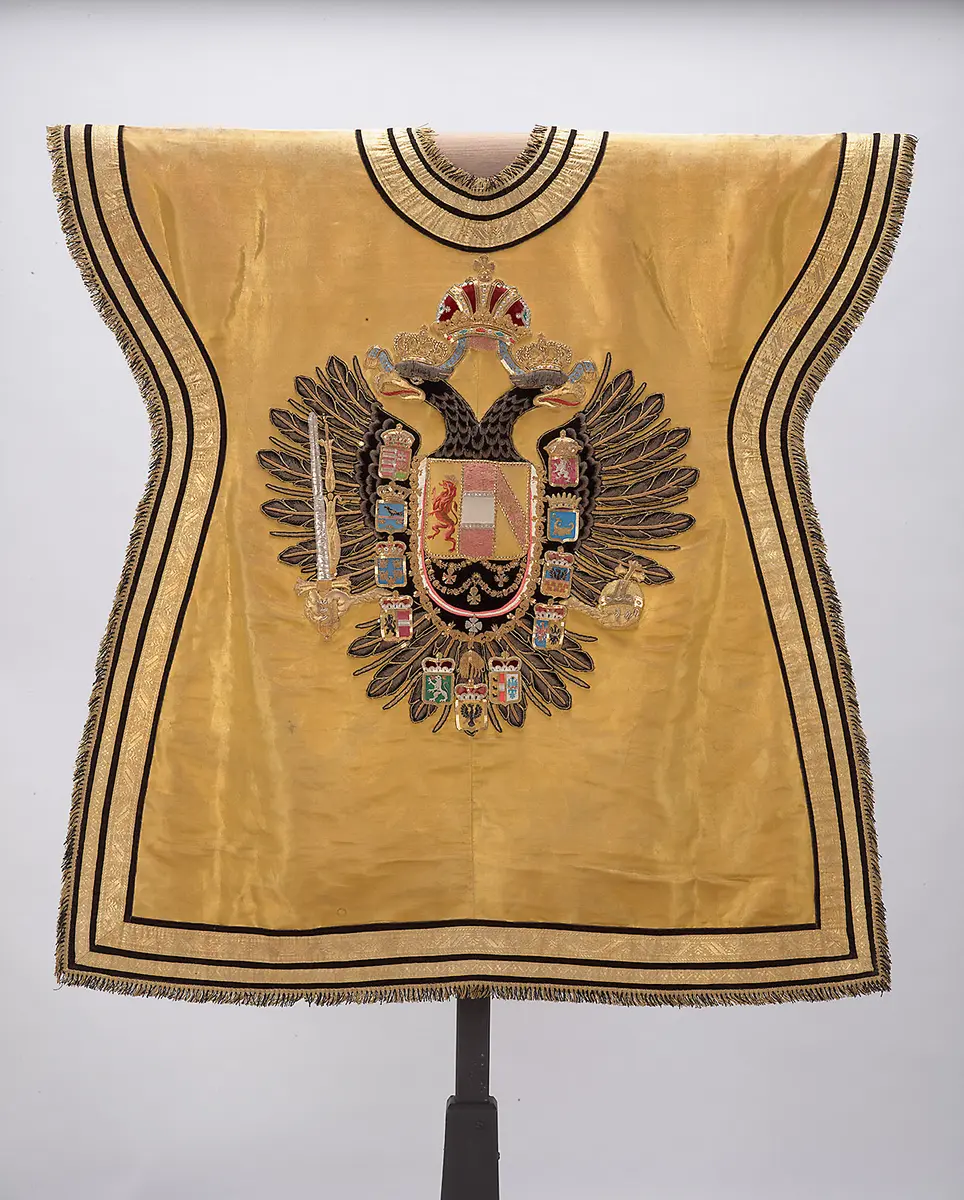
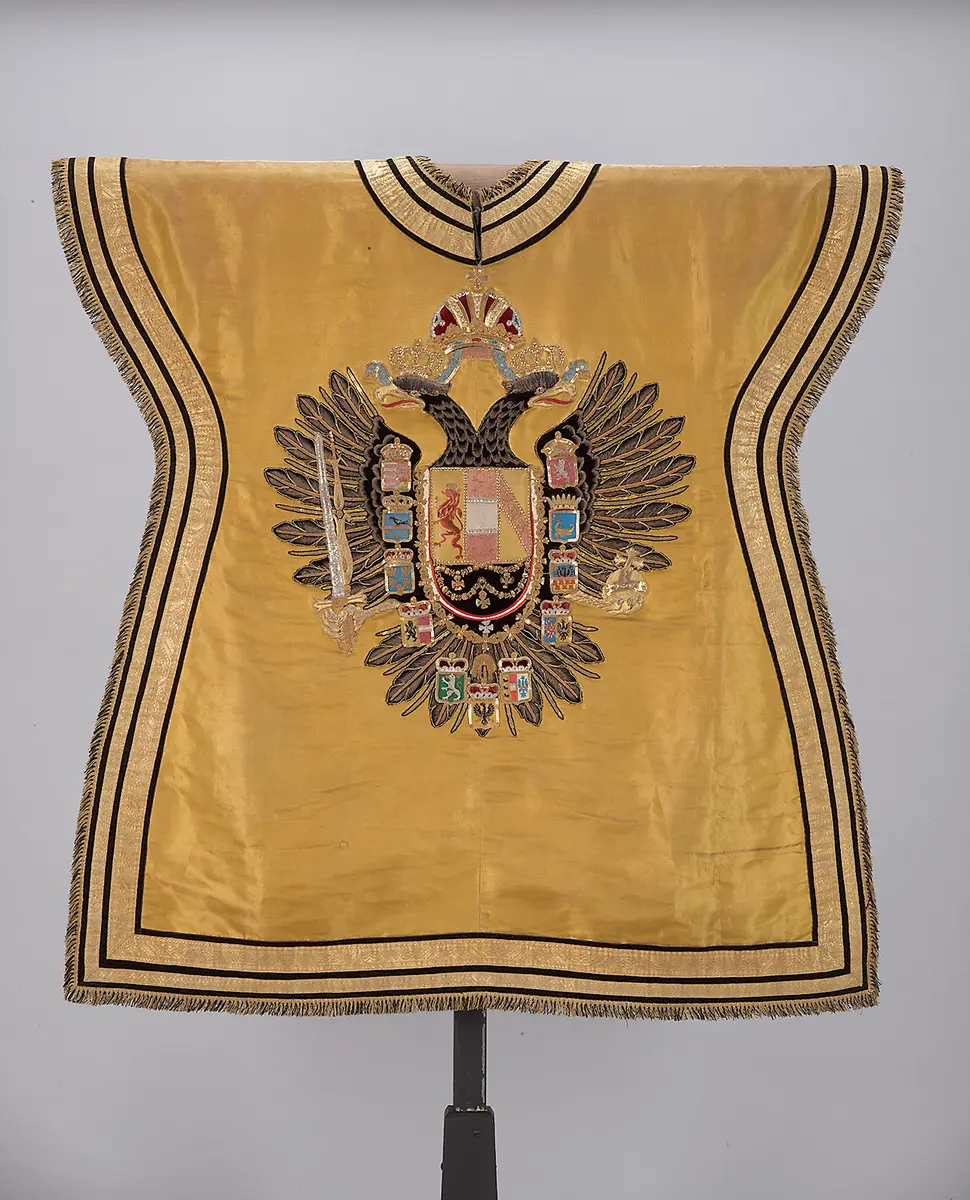
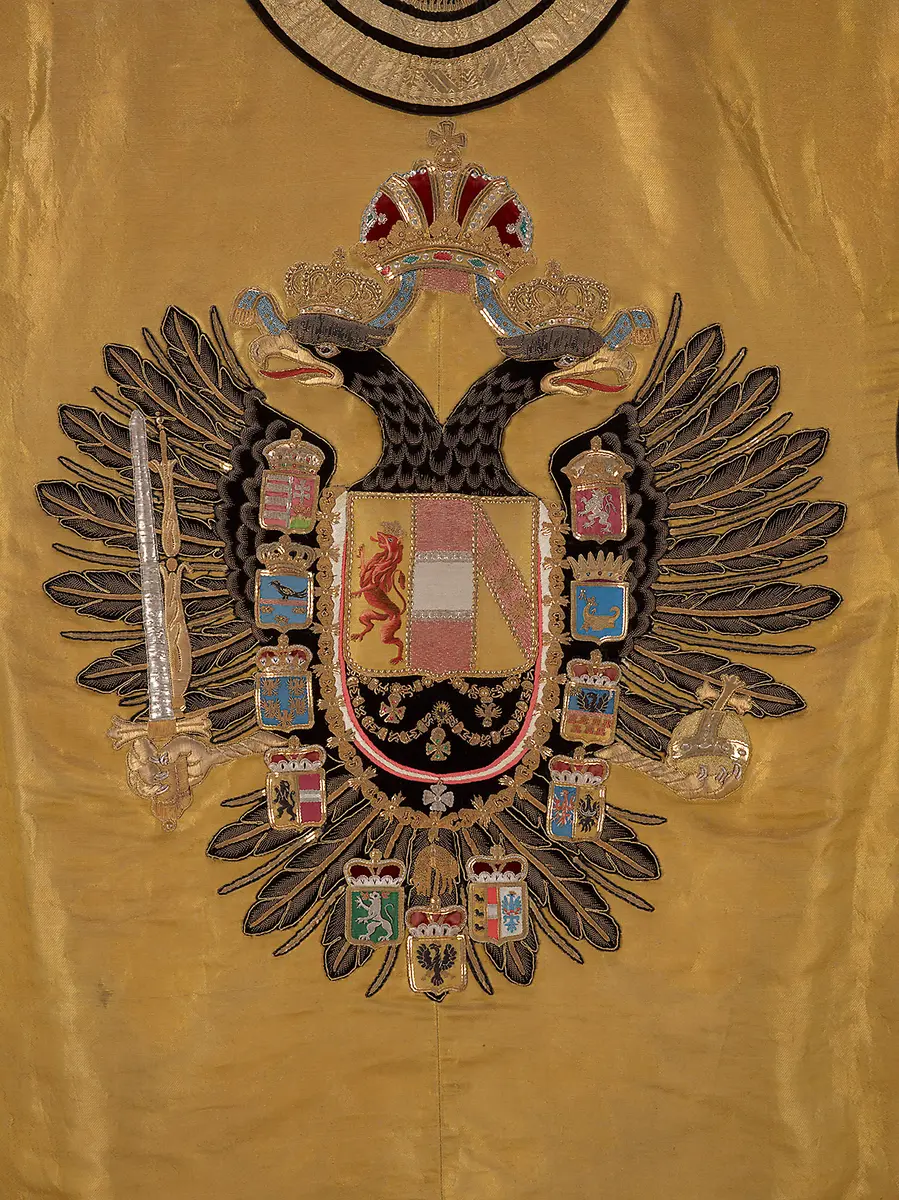
Front and back: the double-headed eagle is represented in raised appliqué work, wearing the two crowns of Hungary and Bohemia, above which is the Imperial mitre crown. In one set of claws the eagle holds the sword and sceptre, in the other the orb. On the eagle's breast is the escutcheon of the House of Habsburg-Austria-Lorraine, hung with the neckchains of the Orders of the Empire: the Order of the Golden Fleece, the Military Order of Maria Theresia, the Hungarian Order of St. Stephen, the Austrian Order of Leopold and the Austrian Order of the Iron Crown. The hole is set with the escutcheons of the Austrian crown lands: Old and New Hungary, Bohemia, Galicia, Illyria, Austria below the Enns, Transylvania, Salzburg, Moravia-Silesia, Styria, Carinthia, Carniola and Tyrol. In the arms of Tyrol the embroiderer has made a mistake of colours, taking black and gold instead of red and silver.The herald's tabard was probably made by Johann Fritz in 1830, on the occasion of the coronation of Ferdinand I as the younger King of Hungary. Black silk lining.
Time:
1830
Object Name
Textil; Insigne
Culture
Wien
Material/technology:
Textil; Goldlamé, Samt, Seide, Goldborten, Seidenstickerei, Pailletten, Folien
Dimensions:
H. 105 cm, B. 104 cm
Copyright
Kunsthistorisches Museum, Weltliche Schatzkammer
Invs.
Schatzkammer, WS XIV 55