Vanitas-Stillleben
1552 | Pieter Aertsen
Starting in the mid-16th century, Aertsen developed a new type of Netherlandish painting in his epictions of kitchens and markets. In most cases he integrated into them Christian scenes, which, however, are always conspicuously smaller and placed in the background of the composition. The objects of daily life placed in the foreground – bread, various pitchers and jugs, a leg of venison as the main motif, a bouquet of flowers, carefully folded documents and a money pouch – make this picture a vanitas still life.
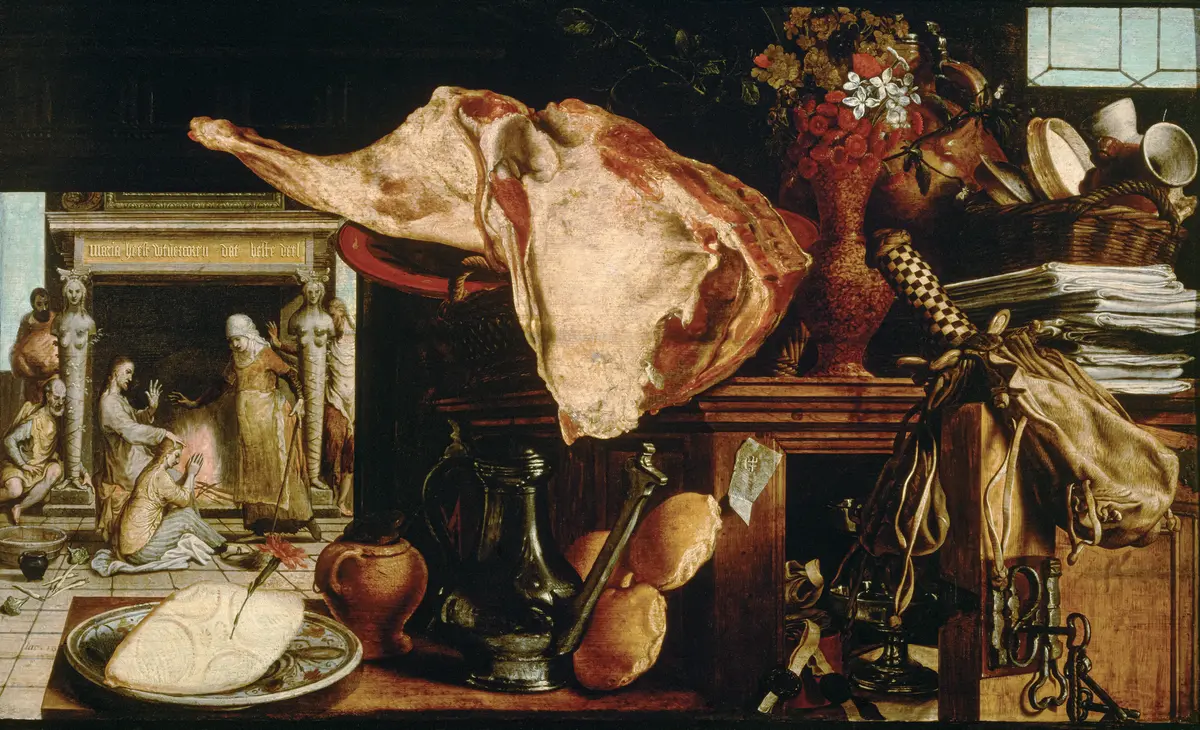
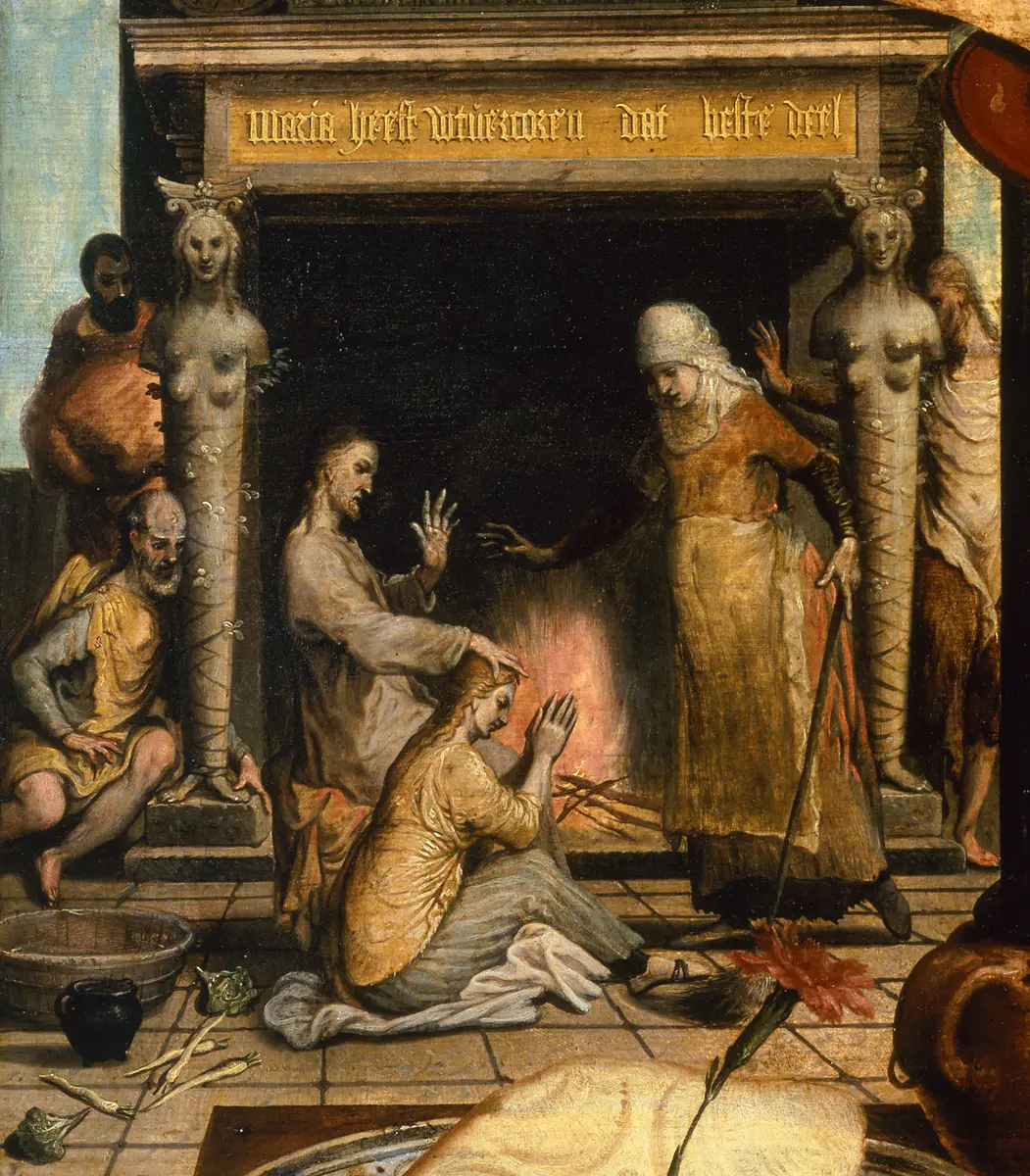
Starting in the mid-16th century, Aertsen developed a new type of Netherlandish painting in his epictions of kitchens and markets. In most cases he integrated into them Christian scenes, which, however, are always conspicuously smaller and placed in the background of the composition. The objects of daily life placed in the foreground – bread, various pitchers and jugs, a leg of venison as the main motif, a bouquet of flowers, carefully folded documents and a money pouch – make this picture a vanitas still life.
Artist:
Pieter Aertsen (1508/09 - 1575 Amsterdam) DNB
Time:
1552
Object Name
Painting
Culture
Netherlandish
Material/technology:
oak wood
Dimensions:
Overall: 61,5 cm × 101 cm
Framed: 83 cm × 121 cm × 5 cm
Signed
Inscribed with a trident in the centre of the label; dated at the top right below the window: 1552 25 Julj
Inscribed
auf dem Kamin die Inschrift: Maria heeft wtuercoren dat beste deel; links unten auf dem Paviment: Luk. 10
Copyright
Kunsthistorisches Museum, Gemäldegalerie
Invs.
Gemäldegalerie, 6927
Provenance
Coll. P. Stevens, Antwerp (until 1648); 1659 Coll. Leopold Wilhelm; re-acquired at the Figdor auction in Berlin in 1930