Tempelknabe
um 400 v. Chr.
The head with the elongated occiput belongs to a genre of votive statuettes typical of Cyprus. Known as „temple boys,“ they were consecrated in large numbers at the shrines between the fifth and second centuries B. C. The statuettes are generally carved in limestone although some are fashioned in clay. They depict boys crouching on the ground, generally clothed although with bare genitals, holding animals or toys in their hands. They are regarded as depictions of those presenting the votive offerings. They will undoubtedly have been connected with a fertility cult.
A. Bernhard-Walcher u. a., Die Sammlung zyprischer Antiken im KHM. Sammlungskataloge des KHM Bd. 2, Wien: 1999
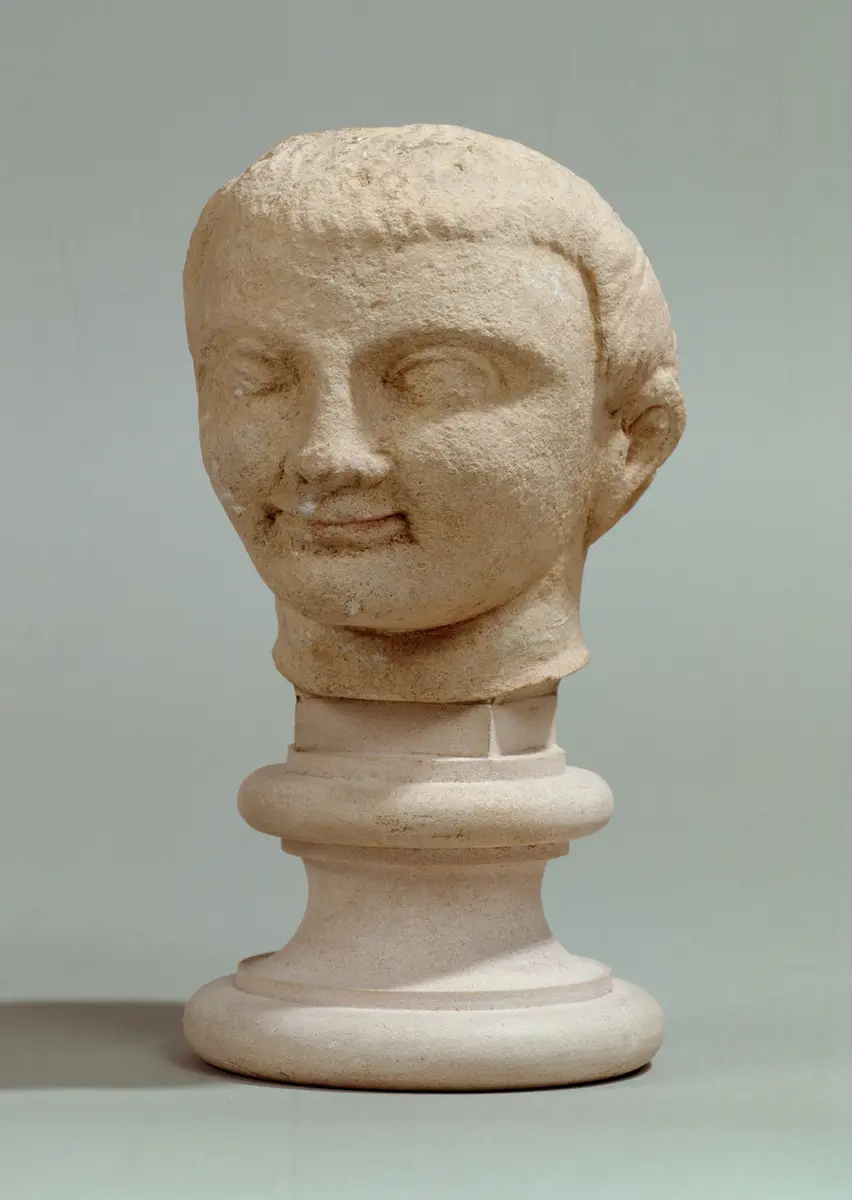
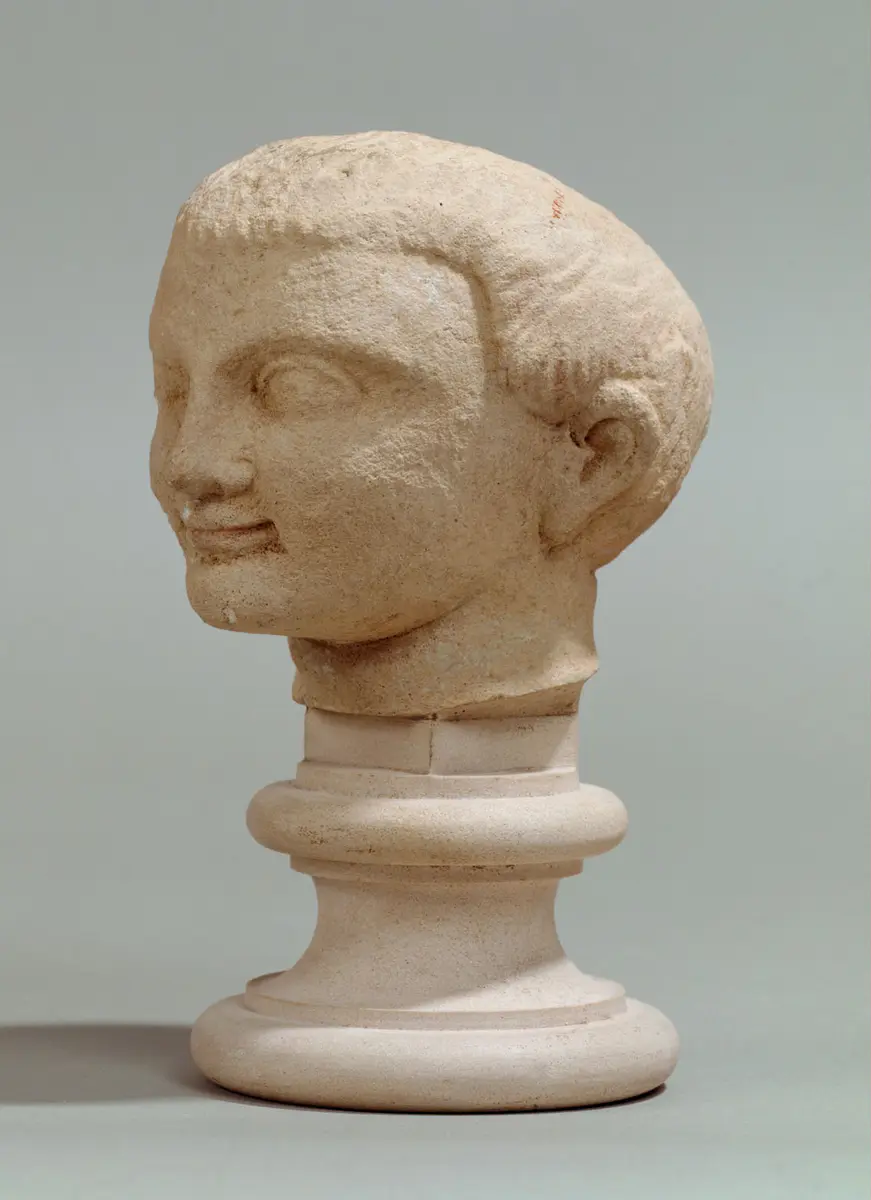
The head with the elongated occiput belongs to a genre of votive statuettes typical of Cyprus. Known as „temple boys,“ they were consecrated in large numbers at the shrines between the fifth and second centuries B. C. The statuettes are generally carved in limestone although some are fashioned in clay. They depict boys crouching on the ground, generally clothed although with bare genitals, holding animals or toys in their hands. They are regarded as depictions of those presenting the votive offerings. They will undoubtedly have been connected with a fertility cult.
A. Bernhard-Walcher u. a., Die Sammlung zyprischer Antiken im KHM. Sammlungskataloge des KHM Bd. 2, Wien: 1999
Time:
um 400 v. Chr.
Object Name
Kopf
Culture
Zyprisch
Location of discovery:
Idalion (Dhali, Zypern)
Material/technology:
Kalkstein; Reste von roter und schwarzer Bemalung
Dimensions:
H. 9,5 cm
Copyright
Kunsthistorisches Museum, Antikensammlung
Invs.
Antikensammlung, I 630
Provenance
Millosicz, Georg von, Wien; 1890 Kauf aus dem Nachlass