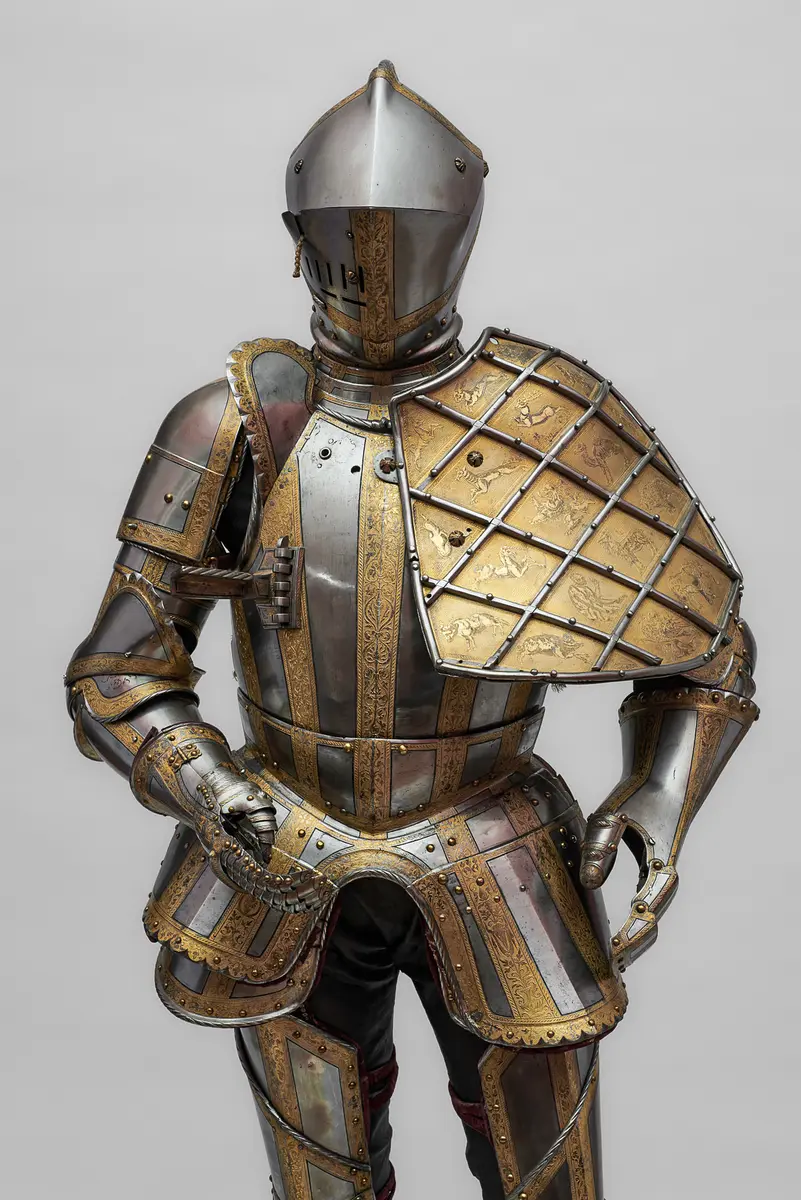
Stechküriss der Königsgarnitur Kaiser Maximilian II.
1549/1550 | Maximilian II. (1564-1576), Kaiser
In 1548, Emperor Ferdinand I ordered a large garniture for his eldest son, Maximilian. The reason for this commission was presumably Maximilian’s upcoming election as King of Bohemia. As the Bohemian estates were greatly weakened following the imperial victory over the Protestant princes in the Battle of Mühlberg in 1547, Ferdinand had no trouble forcing through the election of his son.
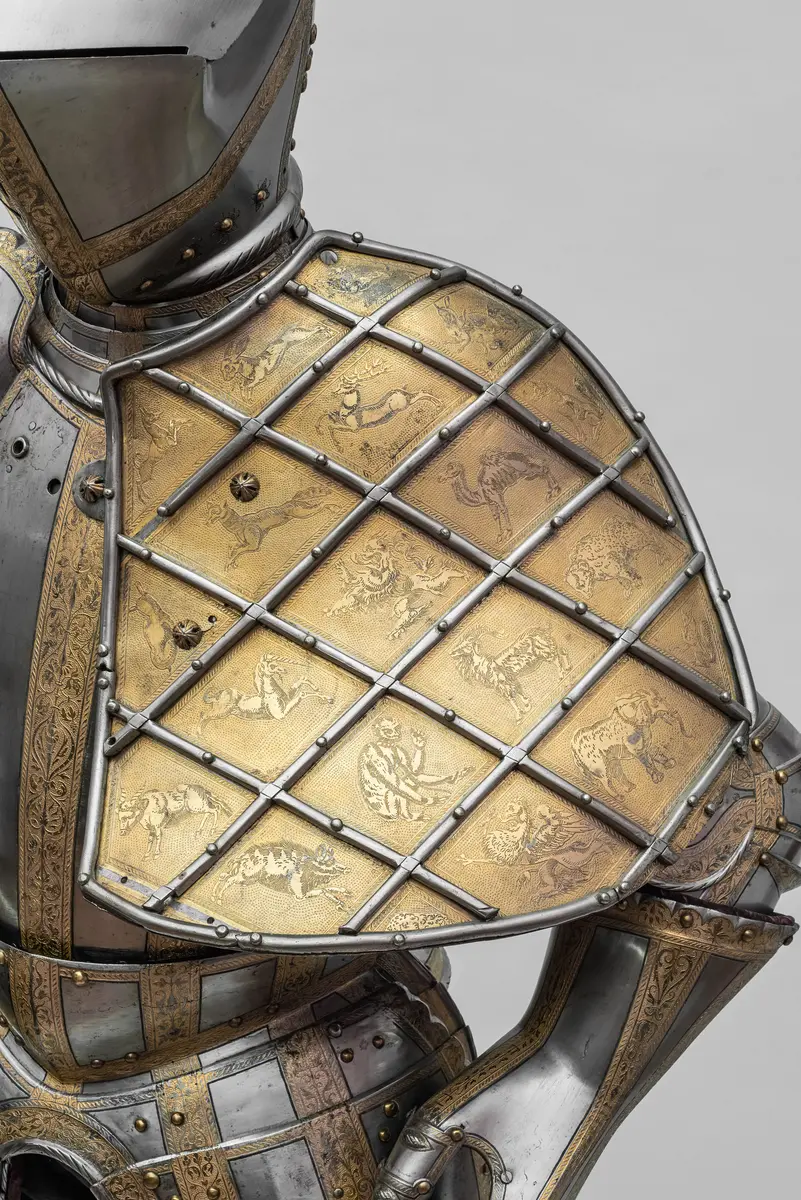
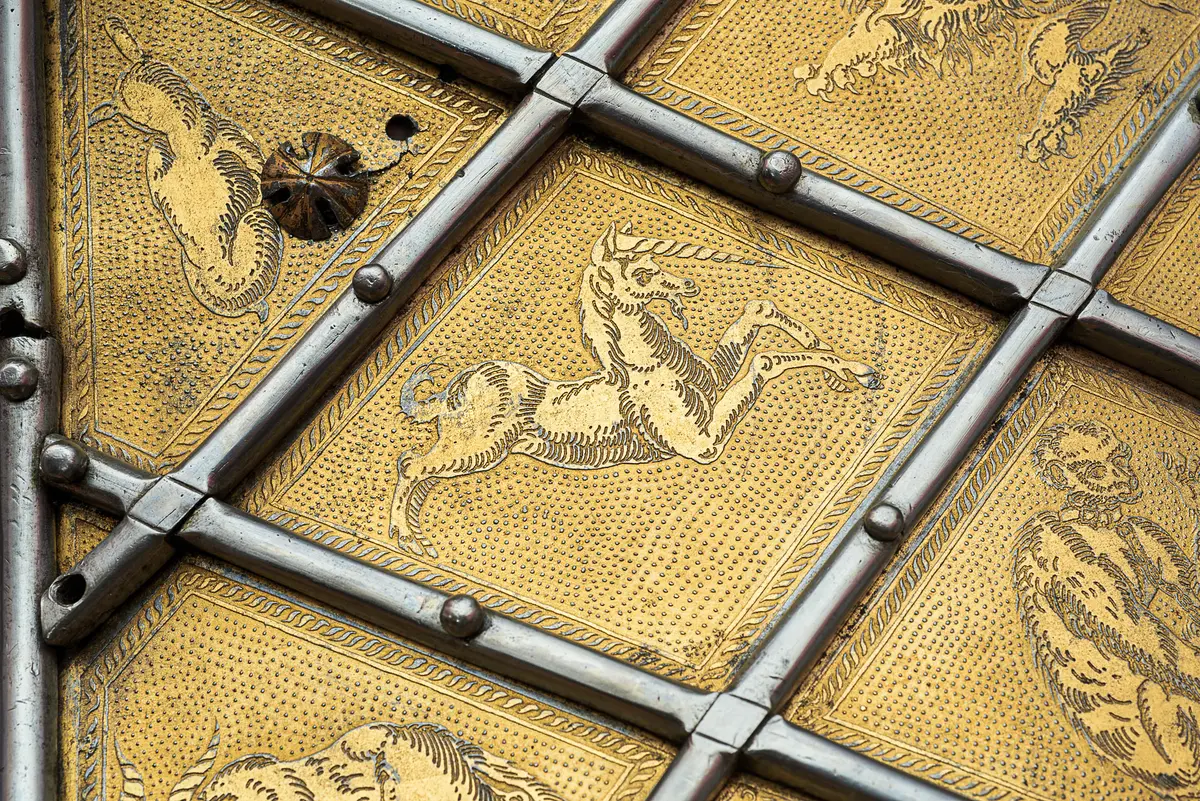
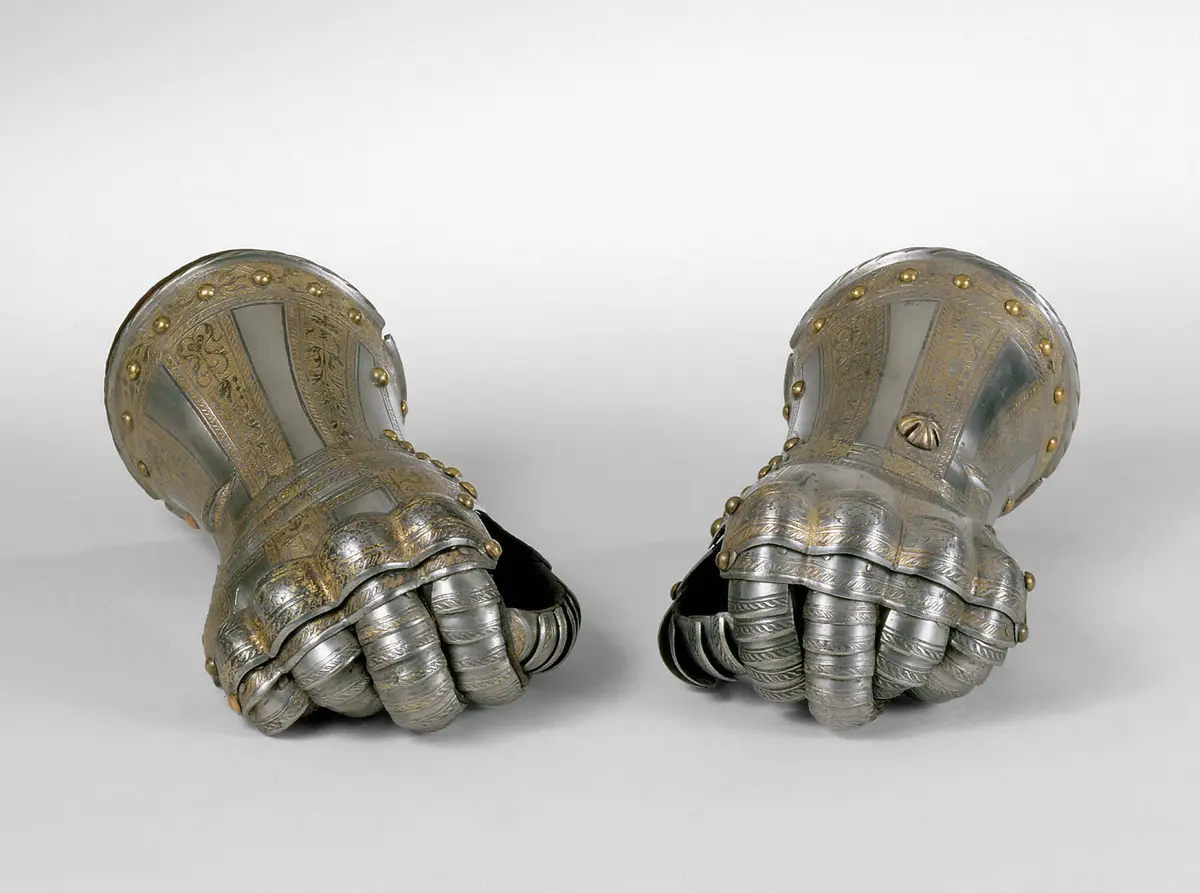
Matthäus Frauenpreiss the Elder, an armourer from Augsburg, was contracted to design and produce this garniture. Jörg Sörg the Younger, a specialist also working in Augsburg, executed the etched and gilt decoration. Known today as the Royal Garniture of Maximilian II, it comprises numerous individual pieces that could be assembled and configured as required – for combat on horse or on foot, for the field, or for different types of jousting.
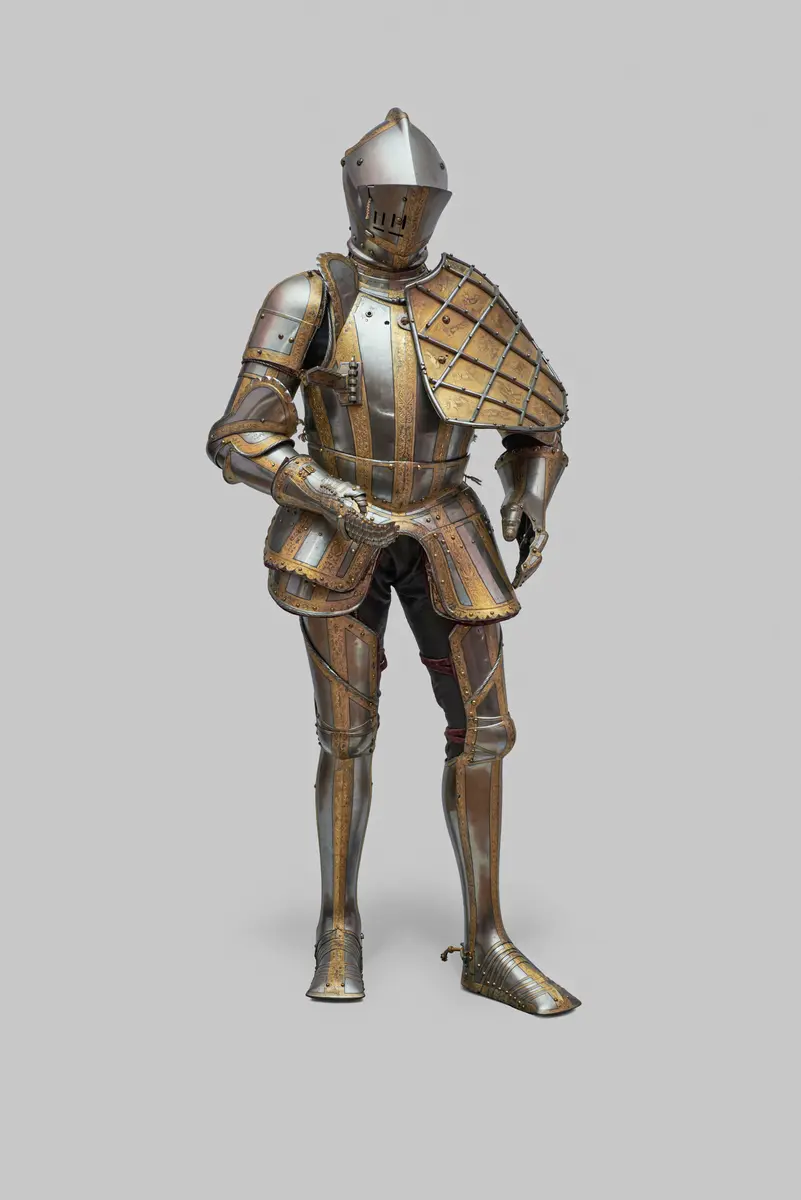
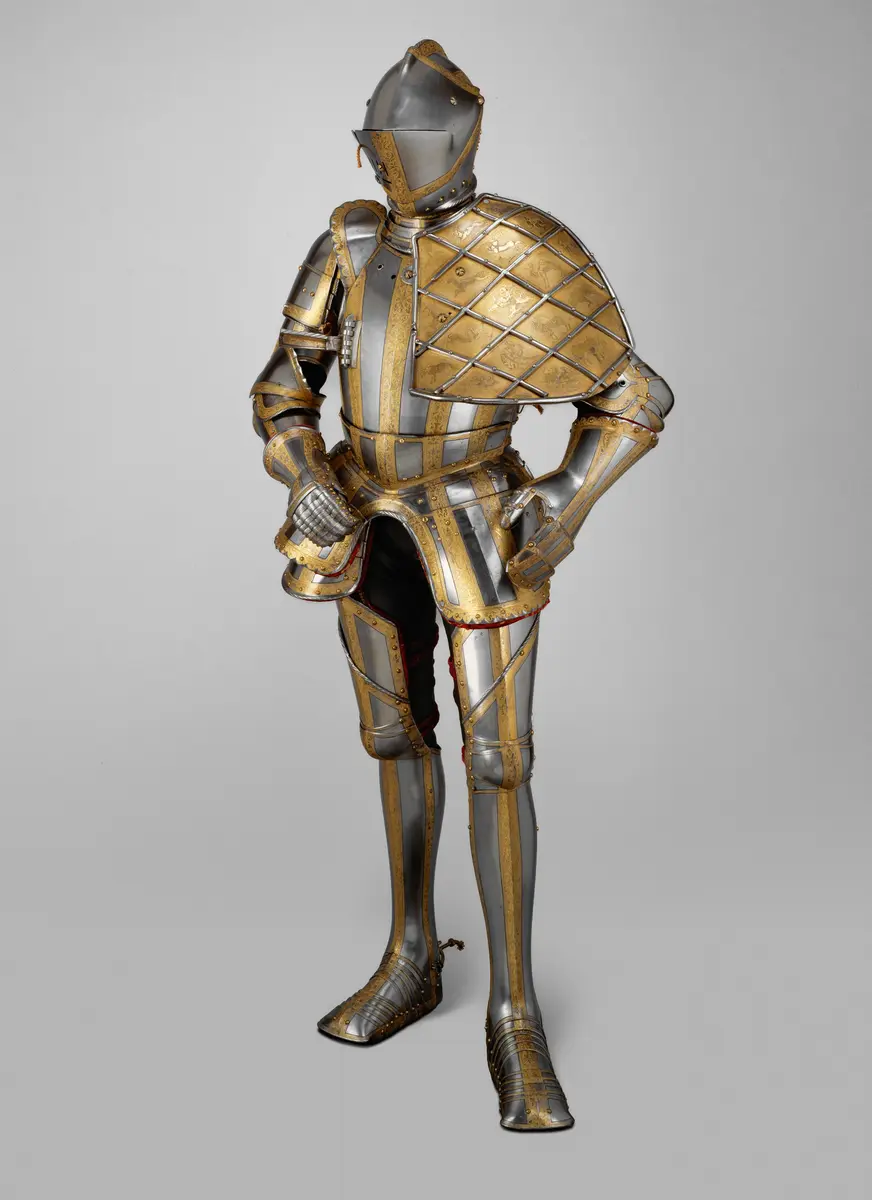
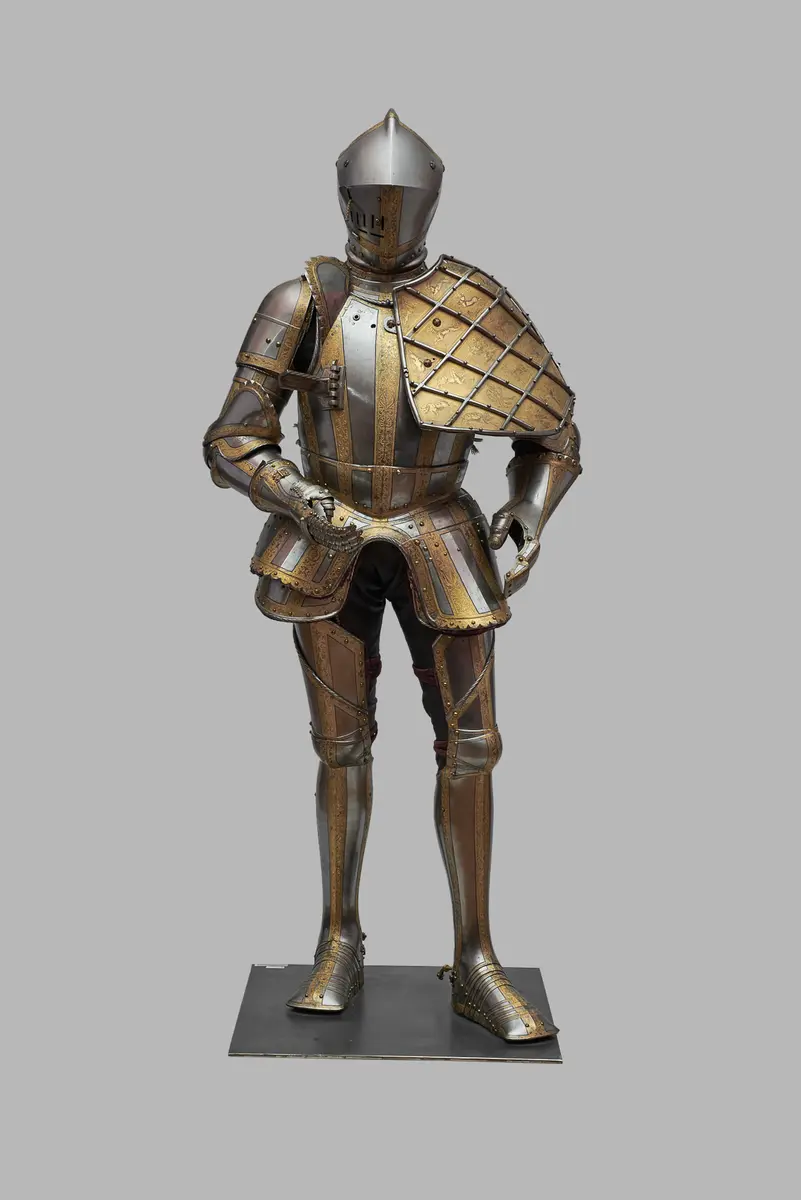
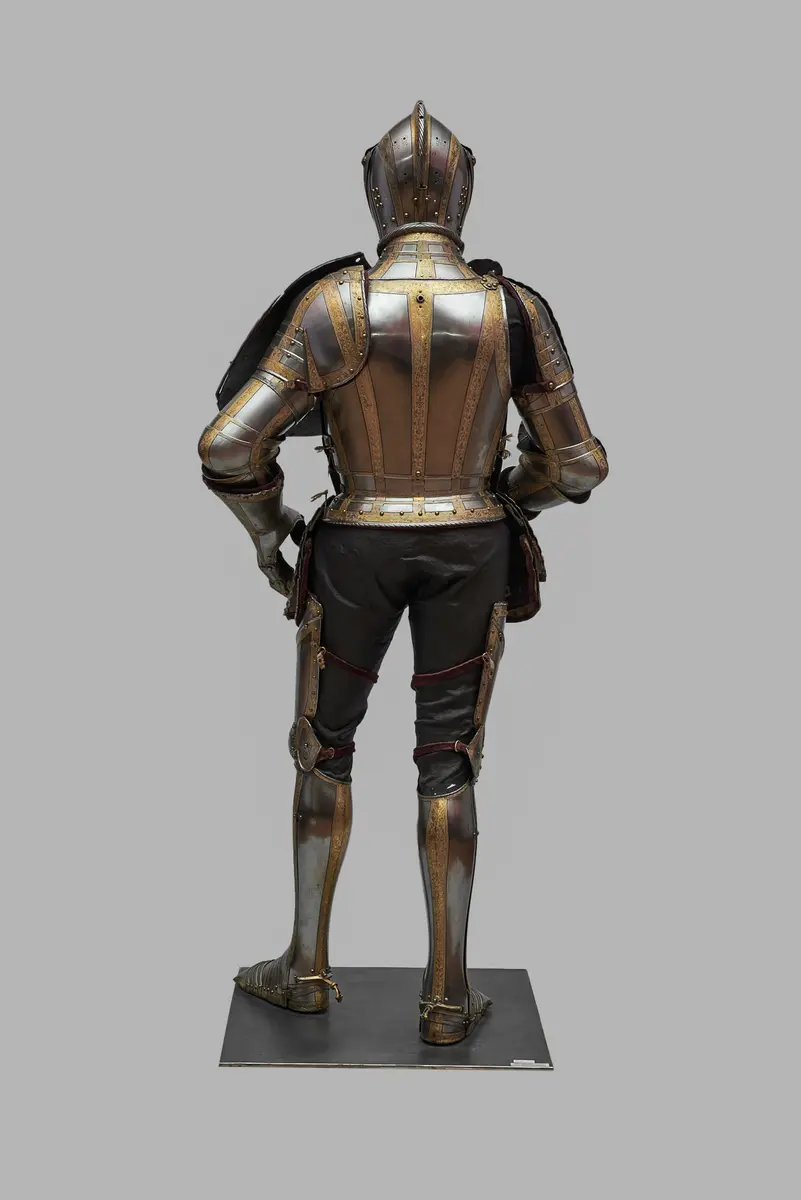
These two armours are the most important extant pieces of this garniture. They were designed to be worn for combat on foot (incl. a tonlet, inv. B 73) and the tilt (inv. A 610) respectively. Additional pieces are now dispersed among various museums, including collections in New York, Baltimore, Paris, St Petersburg, Florence, and London. The two armours were housed in the imperial armoury in Vienna. In 1678, the armour for foot combat was described as a ‘white cuirass with gilt bands and a tonlet, a close helmet with a grill visor’ (weißer khüriß mit vergulten strichen und einen khempfschurz, ein ganz helmblin mit ein gätterten vißier). At the time it was displayed together with a ‘small lion skin and the moth-eaten skin of a muskrat’ (kleine lewenhaut und ein zerfreßne bißemkaz heütl). In 1750, the two armours were moved to the imperial arsenal on Renngasse in central Vienna, where the armour for foot combat was erroneously displayed as made for Emperor Ferdinand II.
In 1548, Emperor Ferdinand I ordered a large garniture for his eldest son, Maximilian. The reason for this commission was presumably Maximilian’s upcoming election as King of Bohemia. As the Bohemian estates were greatly weakened following the imperial victory over the Protestant princes in the Battle of Mühlberg in 1547, Ferdinand had no trouble forcing through the election of his son.
Matthäus Frauenpreiss the Elder, an armourer from Augsburg, was contracted to design and produce this garniture. Jörg Sörg the Younger, a specialist also working in Augsburg, executed the etched and gilt decoration. Known today as the Royal Garniture of Maximilian II, it comprises numerous individual pieces that could be assembled and configured as required – for combat on horse or on foot, for the field, or for different types of jousting.
These two armours are the most important extant pieces of this garniture. They were designed to be worn for combat on foot (incl. a tonlet, inv. B 73) and the tilt (inv. A 610) respectively. Additional pieces are now dispersed among various museums, including collections in New York, Baltimore, Paris, St Petersburg, Florence, and London. The two armours were housed in the imperial armoury in Vienna. In 1678, the armour for foot combat was described as a ‘white cuirass with gilt bands and a tonlet, a close helmet with a grill visor’ (weißer khüriß mit vergulten strichen und einen khempfschurz, ein ganz helmblin mit ein gätterten vißier). At the time it was displayed together with a ‘small lion skin and the moth-eaten skin of a muskrat’ (kleine lewenhaut und ein zerfreßne bißemkaz heütl). In 1750, the two armours were moved to the imperial arsenal on Renngasse in central Vienna, where the armour for foot combat was erroneously displayed as made for Emperor Ferdinand II.
Owner:
Maximilian II. (1564-1576), Kaiser (1527 - 1576) DNB
Artist:
Matthäus Frauenpreiß d. Ä. , (Plattner) (um 1505 - 1549, tätig in Augsburg)
Time:
1549/1550
Object Name
Stechküriss der Königsgarnitur Kaiser Maximilian II.
Culture
Augsburg
Material/technology:
Eisen, geschmiedet, getrieben, teils geätzt. Ätzdekor: feuervergoldet. Nietkappen, Schnallen, Scharniere, Riemenzungen: Messing, teils feuervergoldet. Leder (teils modern). Textil ( teils originaler Seidensamt, teils moderne Textilien). Schrauben, teils geschnitten, teils feuervergoldet.
Dimensions:
Höhe exklusive Eisenplatte: 173,5 cm x B 79 cm x T 42 cm
Höhe inklusive Eisenplatte: 177,5 cm x B 79 cm x T 42 cm
Stamp / markings
Meistermarke von Matthäus Frauenpreis und Augsburger Beschau auf Brust und Rücken
Copyright
Kunsthistorisches Museum, Hofjagd- und Rüstkammer
Invs.
Hofjagd- und Rüstkammer, A 610