Pan mit Dionysoskind
2. Jh. n. Chr.
Der Hirtengott Pan, mit Beinen und dem Schwänzchen einer Ziege wiedergegeben, ist mit einer Nebris (Rehfell) bekleidet und hält in seiner Linken das Dionysoskind, das ihm zur Pflege überlassen wurde. Die an der Plinthe erhaltenen Hufe lassen noch die Schrittstellung erkennen. Pan reicht dem Kind eine Traube – ein Motiv, das von kaiserzeitlichen Münzen aus Zakynthos (Griechenland) bekannt ist. Der Panther als das Begleittier des Gottes sitzt zu seiner Rechten, der Baum dient als Statuenstütze.
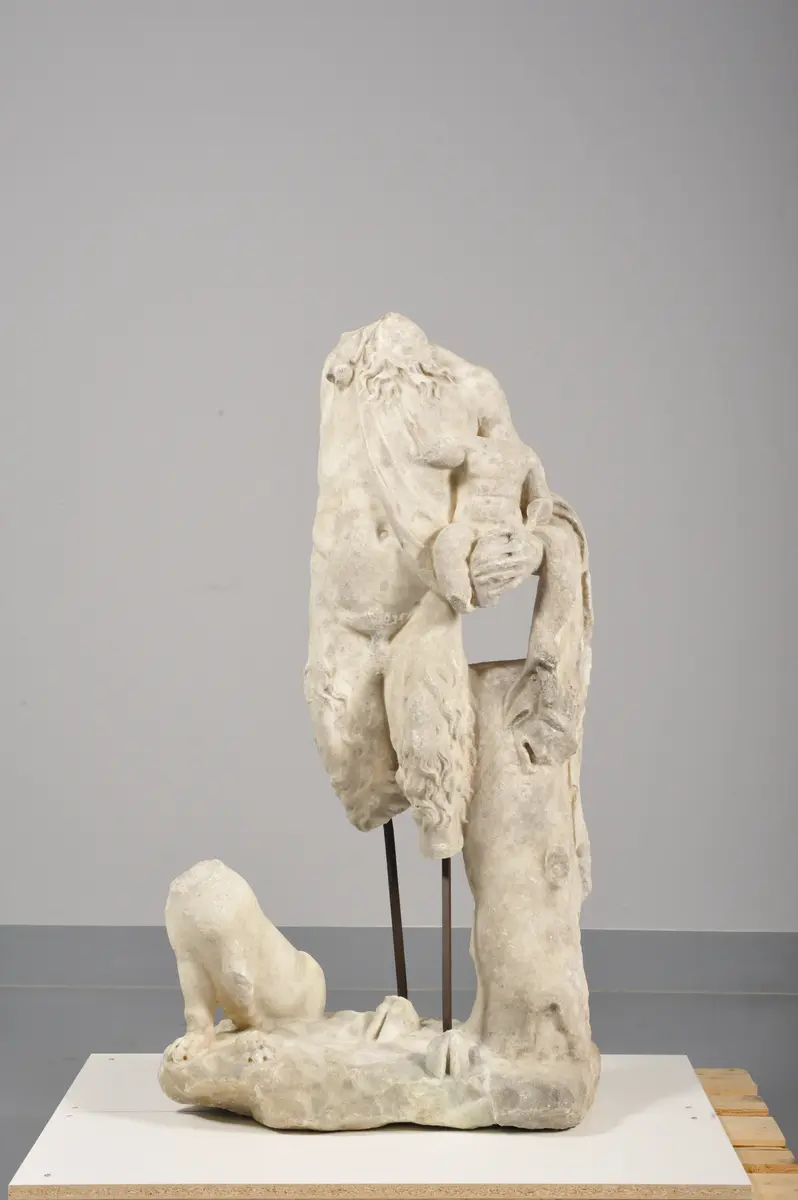
Der Hirtengott Pan, mit Beinen und dem Schwänzchen einer Ziege wiedergegeben, ist mit einer Nebris (Rehfell) bekleidet und hält in seiner Linken das Dionysoskind, das ihm zur Pflege überlassen wurde. Die an der Plinthe erhaltenen Hufe lassen noch die Schrittstellung erkennen. Pan reicht dem Kind eine Traube – ein Motiv, das von kaiserzeitlichen Münzen aus Zakynthos (Griechenland) bekannt ist. Der Panther als das Begleittier des Gottes sitzt zu seiner Rechten, der Baum dient als Statuenstütze.
Time:
2. Jh. n. Chr.
Object Name
Statuentorso
Culture
Römisch
Location of discovery:
Ephesos (Selçuk, Kleinasien, Türkei)
Material/technology:
Marmor
Dimensions:
132 cm × 75 cm × 36 cm
Copyright
Kunsthistorisches Museum, Antikensammlung
Invs.
Antikensammlung, I 844
Provenance
Sultan, Abdul, Hamid, II.; Österreichische Ausgrabungen in Ephesos; Geschenk an Kaiser Franz Joseph; 1911 nachträglich inventarisiert