Nautilus-Gehäuse, Nautlius, Meeresschnecke, Naturalie
2. Hälfte 16. Jahrhundert
Amongst the mollusc shells, the nautilus shells originating from the south-west Pacific were particularly appreciated after the Middle Ages. During the course of the 16th century, nautilus shells reached Europe in ever greater numbers via Dutch merchant ships; some of these carved and decorated by Chinese artists. The fragile, beautiful nautilus also became as a dead shell a popular symbol representing vanity. E.g. Margaret of Austria greatly valued natural objects – unworked or artistically carved – such as coral, shells and horn objects, which were kept in her palace at Mechelen.
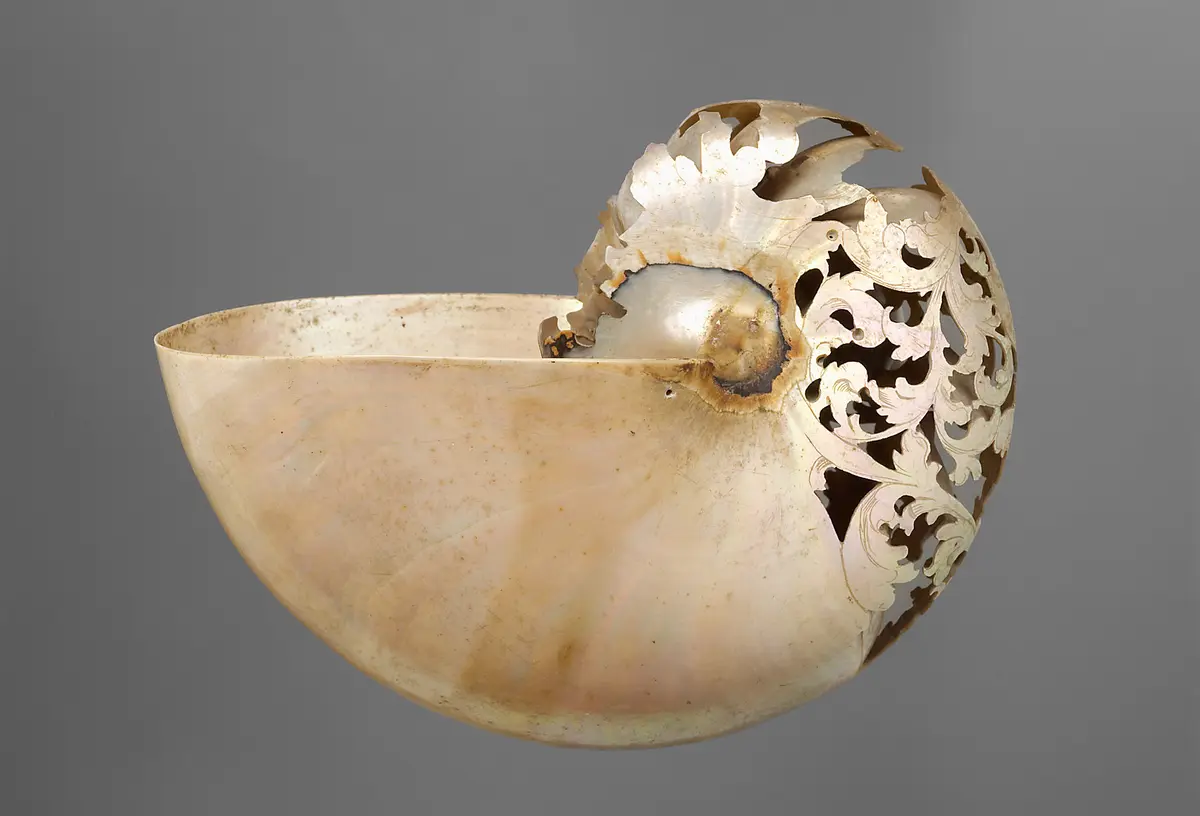
Amongst the mollusc shells, the nautilus shells originating from the south-west Pacific were particularly appreciated after the Middle Ages. During the course of the 16th century, nautilus shells reached Europe in ever greater numbers via Dutch merchant ships; some of these carved and decorated by Chinese artists. The fragile, beautiful nautilus also became as a dead shell a popular symbol representing vanity. E.g. Margaret of Austria greatly valued natural objects – unworked or artistically carved – such as coral, shells and horn objects, which were kept in her palace at Mechelen.
Time:
2. Hälfte 16. Jahrhundert
Object Name
Nautilus-Gehäuse, Nautlius, Meeresschnecke, Naturalie
Culture
Naturalie: westlicher Pazifik, indischer Ozean
Material/technology:
Schale einer Nautilus
Dimensions:
H. 12,5 cm × B. 16 cm
Copyright
Schloss Ambras Innsbruck
Invs.
Schloss Ambras Innsbruck, PA 796
Provenance
Inv.1596, fol .468