Narwhal Goblet
ca. 1600/05 | Jan Vermeyen
Rudolf II supported not only the arts but also the sciences. In his day these included astrology and alchemy, which the emperor valued very highly. Exotic natural specimens, metals and precious stones were believed to have special powers. In vessels of “unicorn horn” or bezoar stone, amulets and even table bells, these beliefs were expressed in the shape of exceptional showpieces.
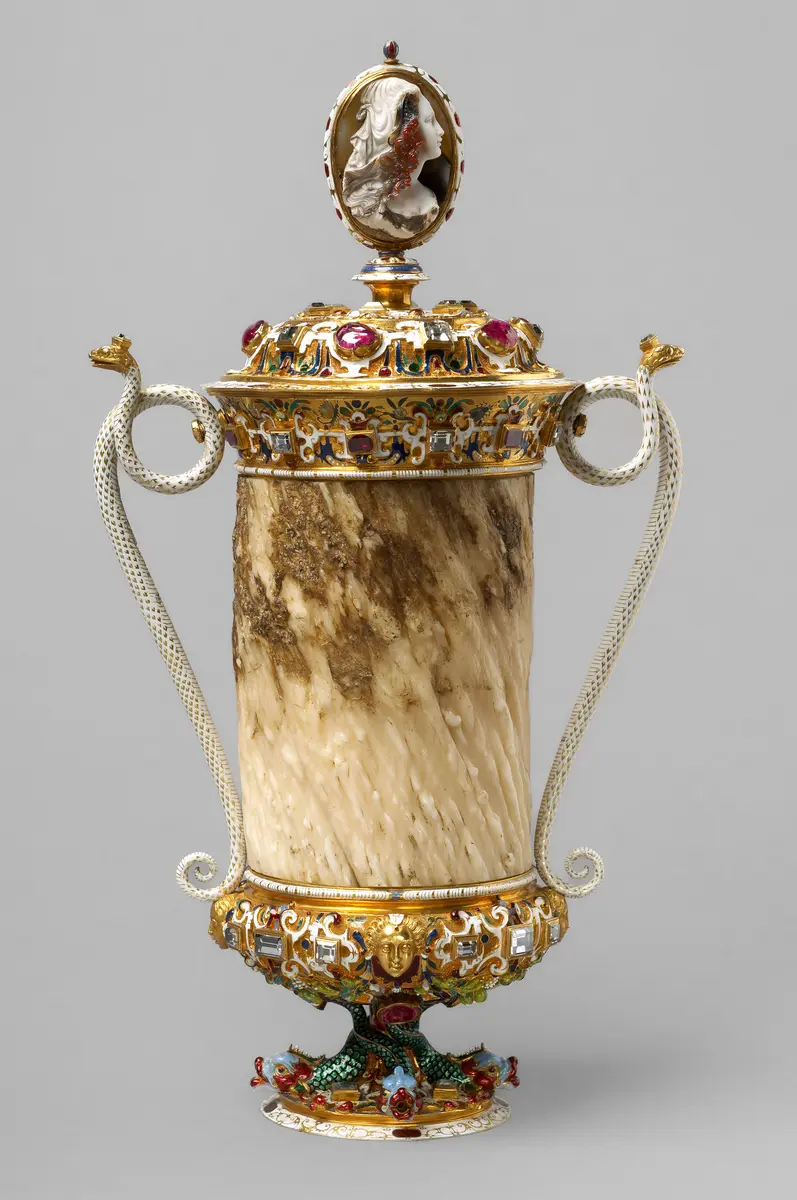
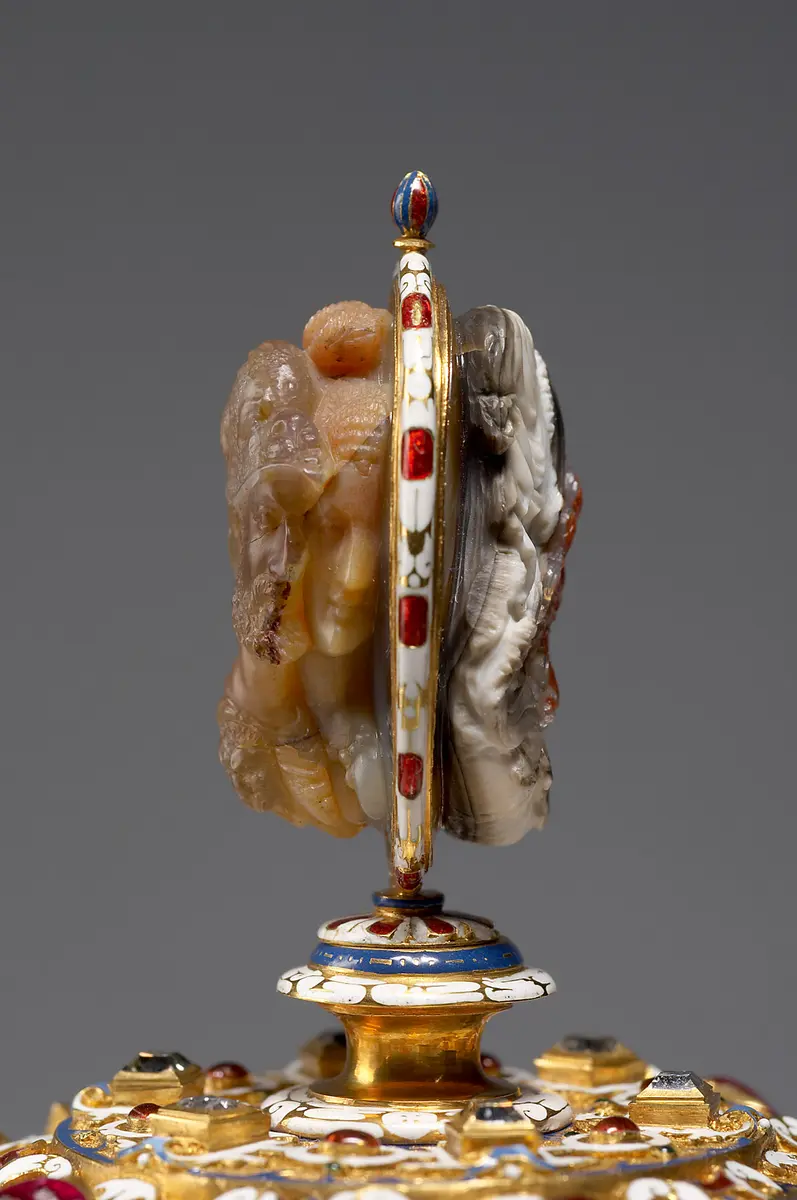
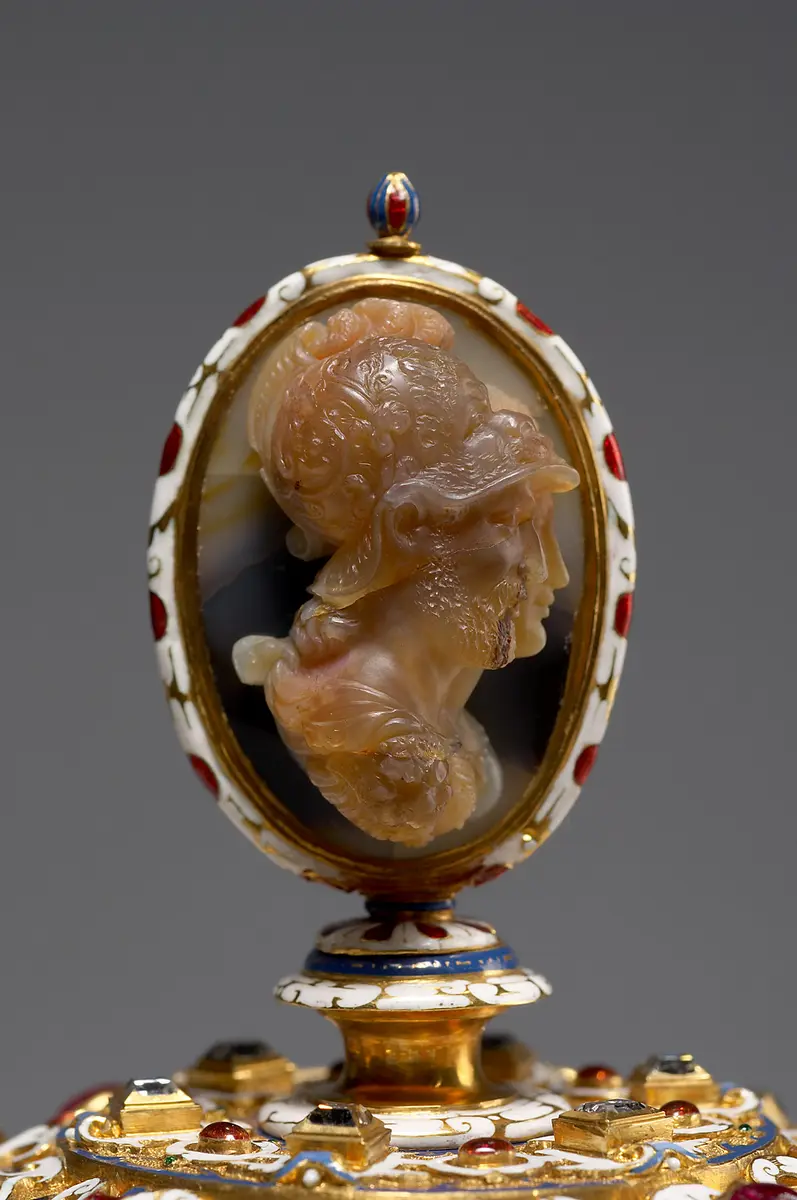
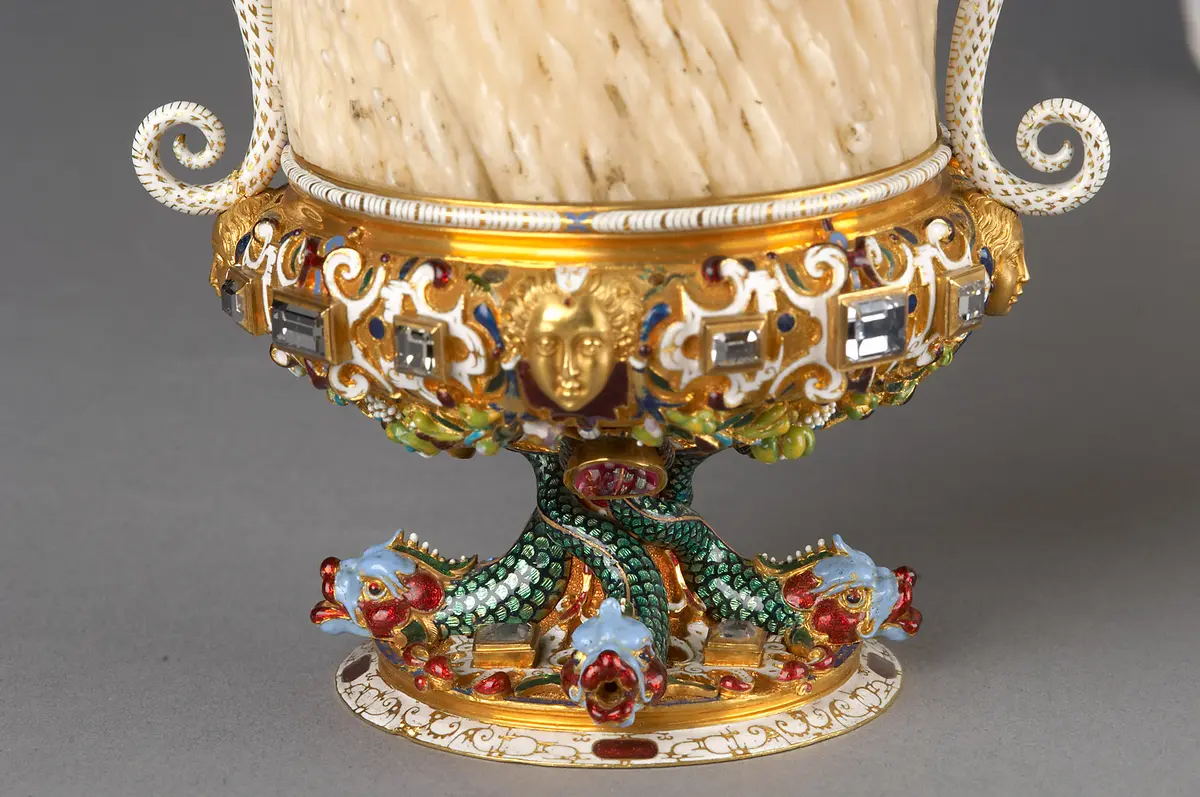
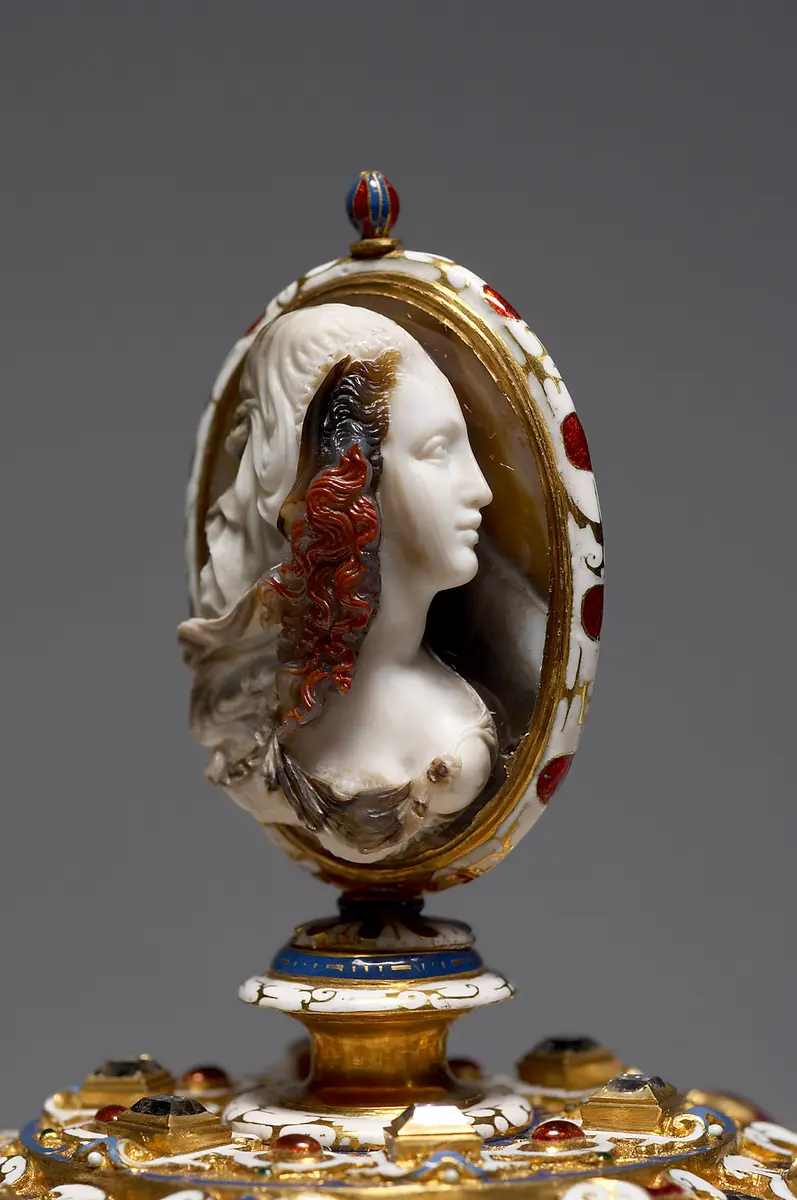
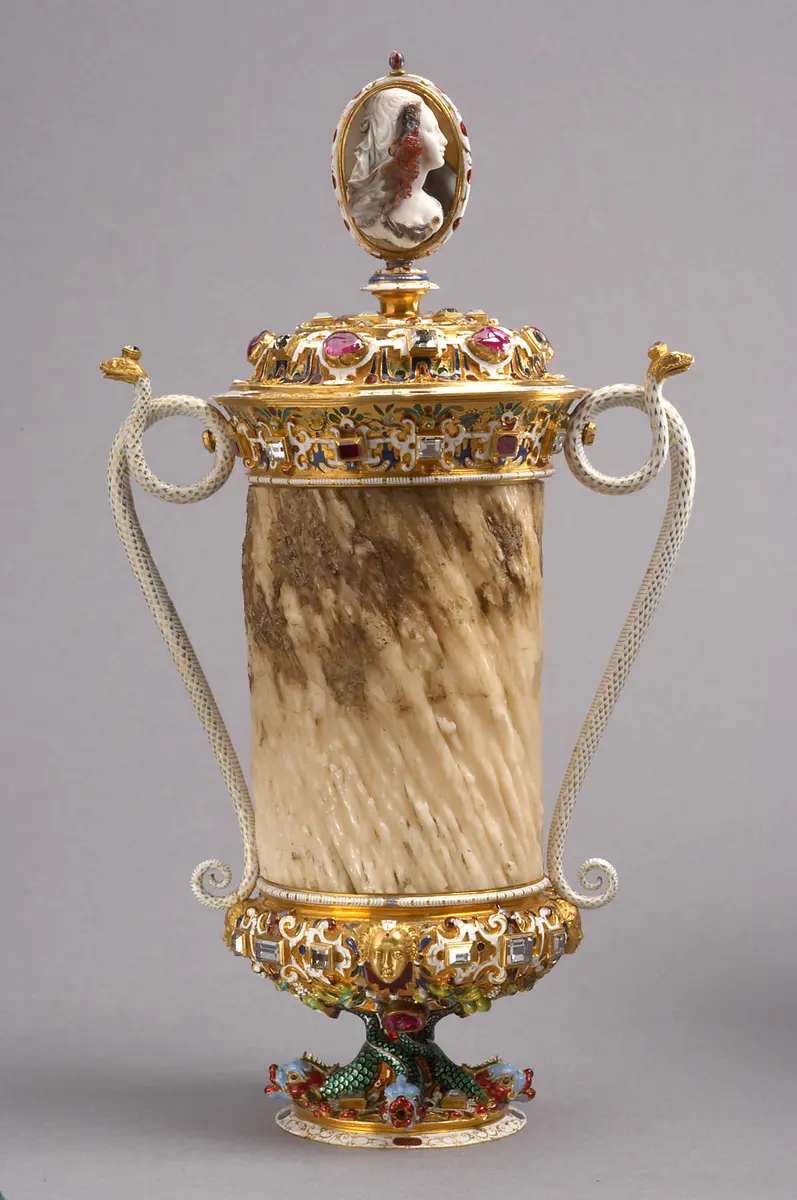
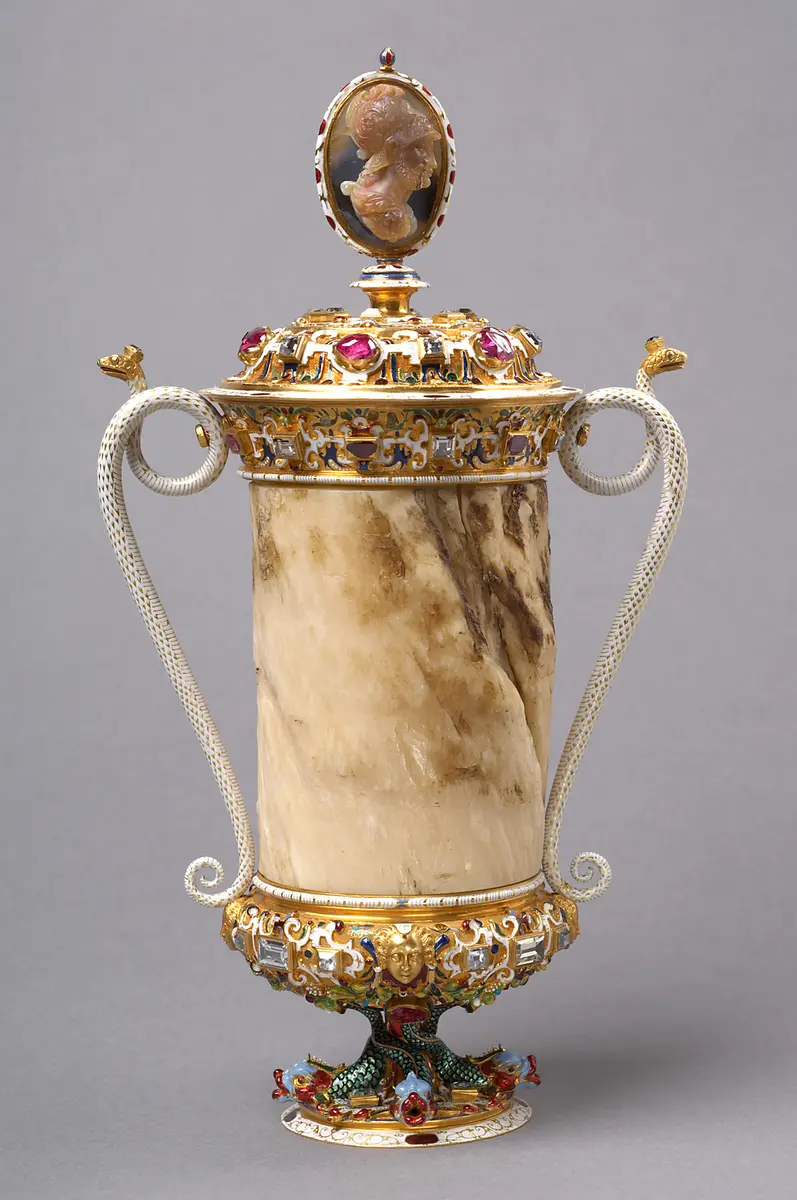
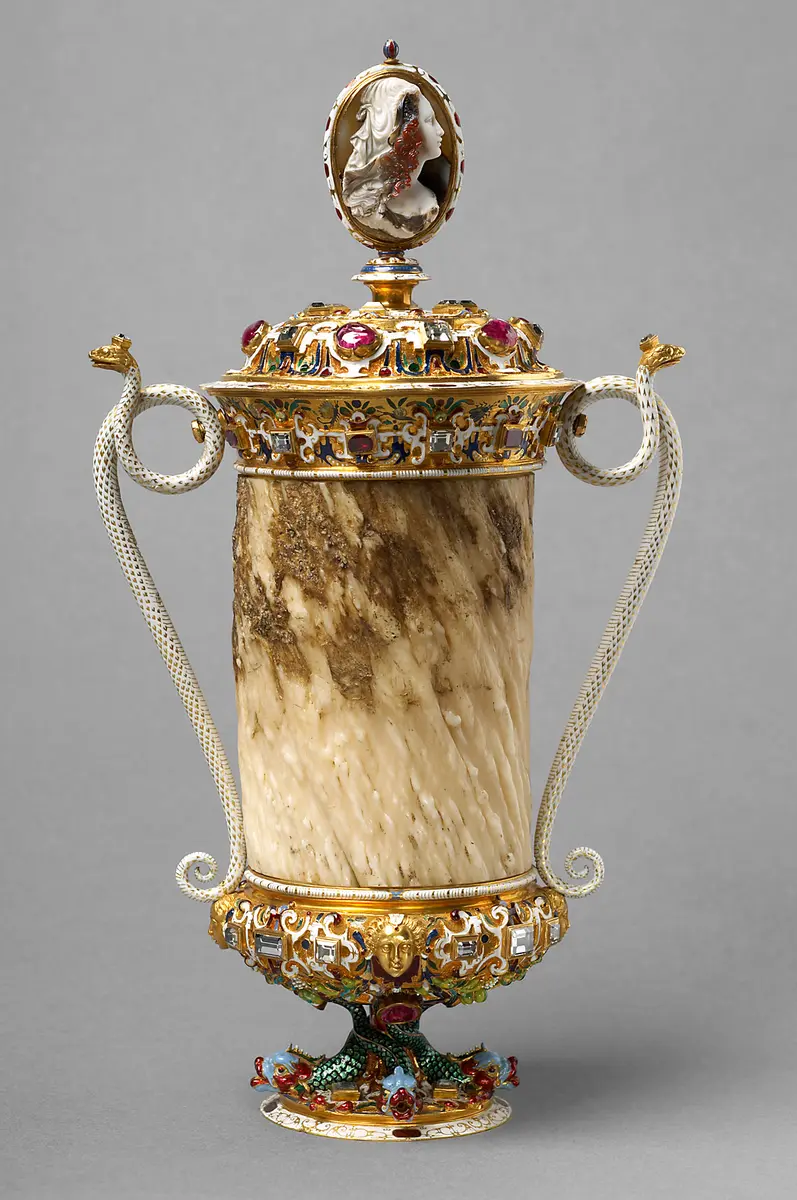
Rudolf II supported not only the arts but also the sciences. In his day these included astrology and alchemy, which the emperor valued very highly. Exotic natural specimens, metals and precious stones were believed to have special powers. In vessels of “unicorn horn” or bezoar stone, amulets and even table bells, these beliefs were expressed in the shape of exceptional showpieces.
Artist:
Jan Vermeyen (Goldschmiedearbeit) (vor 1559 Brüssel - 1608 Prag) DNB
Time:
ca. 1600/05
Object Name
container; lidded cup
Culture
Prague; Milan (cameos on the lid)
Material/technology:
Narwhal tusk, gold, enamel, diamonds, rubies, agate, ivory
Dimensions:
22,2 cm × 12,1 cm
Copyright
Kunsthistorisches Museum, Kunstkammer
Invs.
Kunstkammer, 1113