Save object
You may download and use the image for private purposes. Nutzungsbedingungen & AGBs
To request to use the image for commercial or academic purposes, please send us a reproduction request
Save object
You may download and use the image for private purposes. Nutzungsbedingungen & AGBs
To request to use the image for commercial or academic purposes, please send us a reproduction request
Save object
You may download and use the image for private purposes. Nutzungsbedingungen & AGBs
To request to use the image for commercial or academic purposes, please send us a reproduction request
Save object
You may download and use the image for private purposes. Nutzungsbedingungen & AGBs
To request to use the image for commercial or academic purposes, please send us a reproduction request
Save object
You may download and use the image for private purposes. Nutzungsbedingungen & AGBs
To request to use the image for commercial or academic purposes, please send us a reproduction request
Save object
You may download and use the image for private purposes. Nutzungsbedingungen & AGBs
To request to use the image for commercial or academic purposes, please send us a reproduction request
Save object
You may download and use the image for private purposes. Nutzungsbedingungen & AGBs
To request to use the image for commercial or academic purposes, please send us a reproduction request
Save object
You may download and use the image for private purposes. Nutzungsbedingungen & AGBs
To request to use the image for commercial or academic purposes, please send us a reproduction request
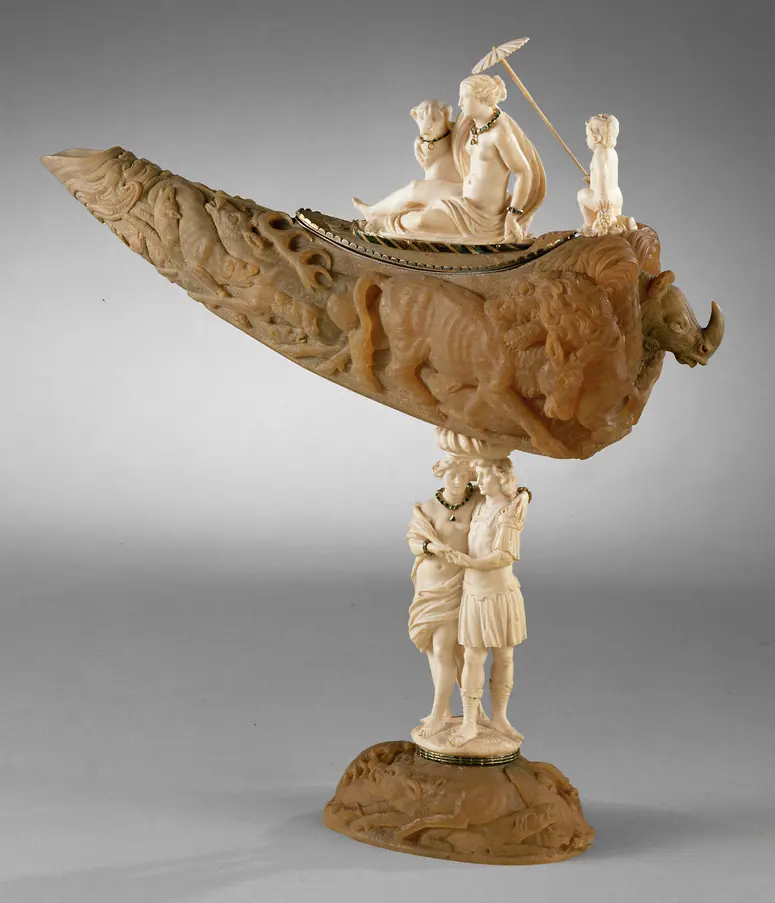
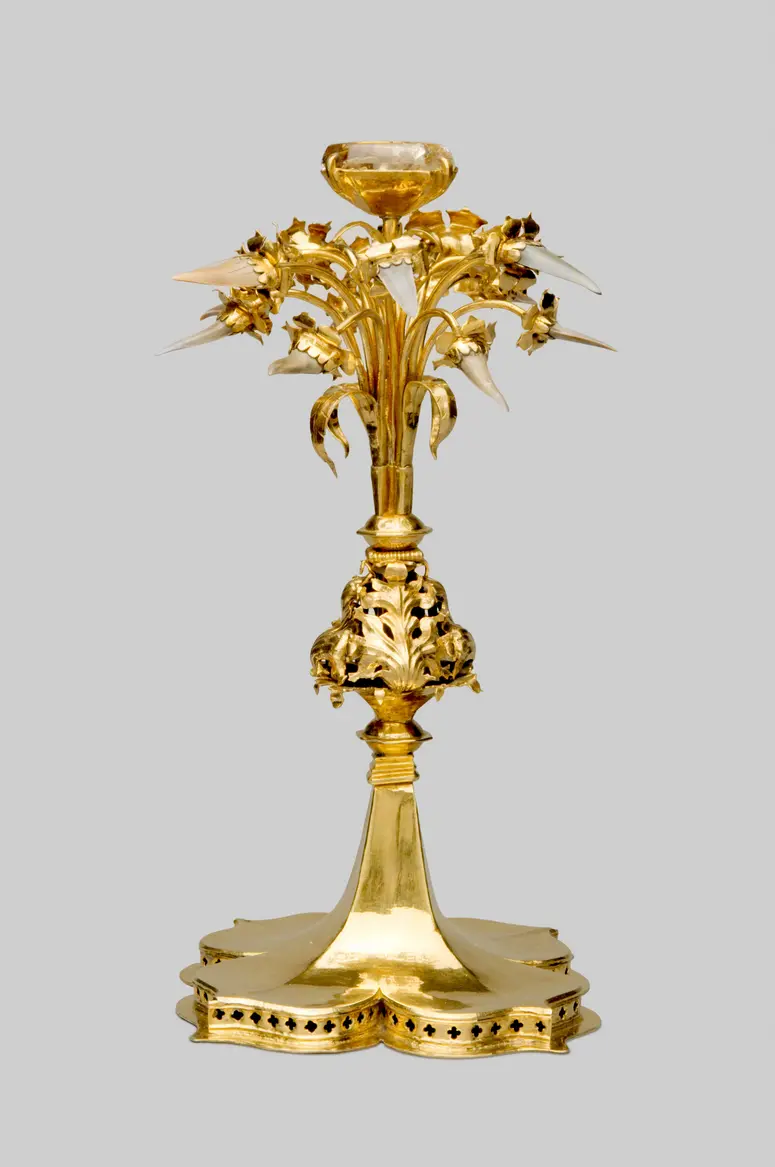
Narwhal Goblet
ca. 1600/05 | Jan Vermeyen
Rudolf II supported not only the arts but also the sciences. In his day these included astrology and alchemy, which the emperor valued very highly. Exotic natural specimens, metals and precious stones were believed to have special powers. In vessels of “unicorn horn” or bezoar stone, amulets and even table bells, these beliefs were expressed in the shape of exceptional showpieces.
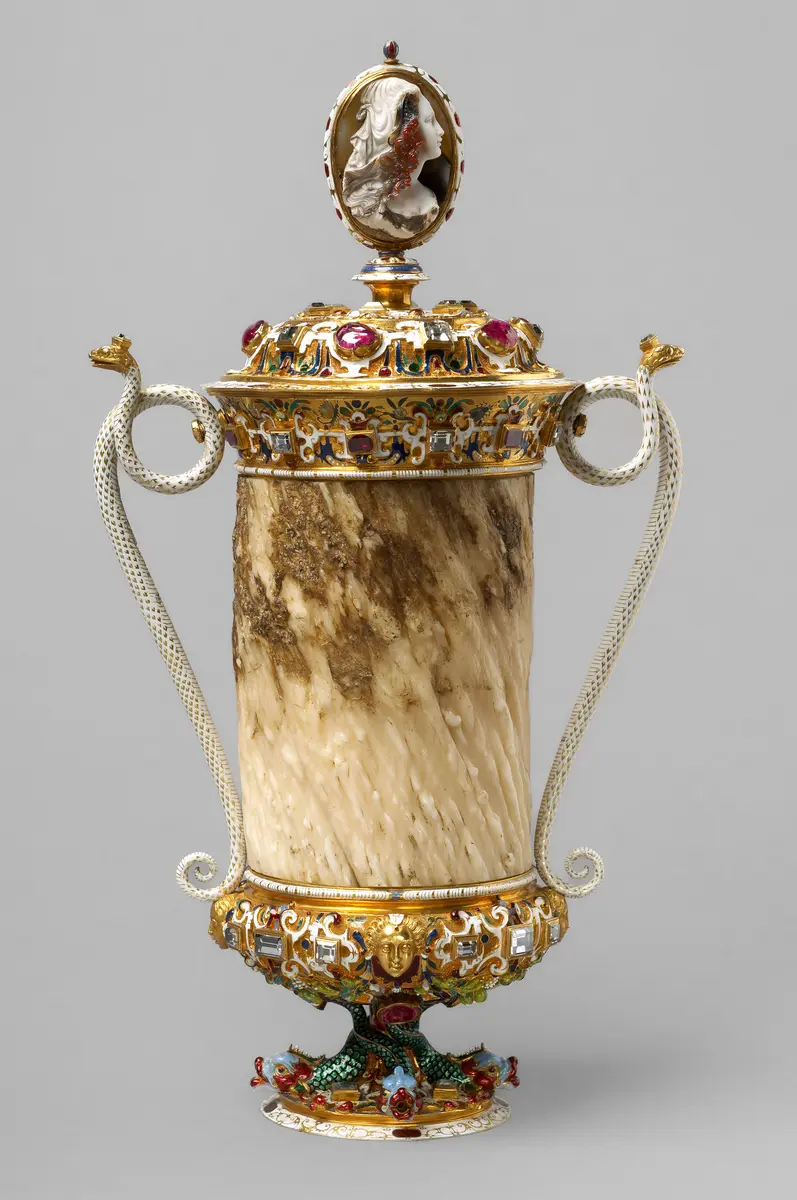
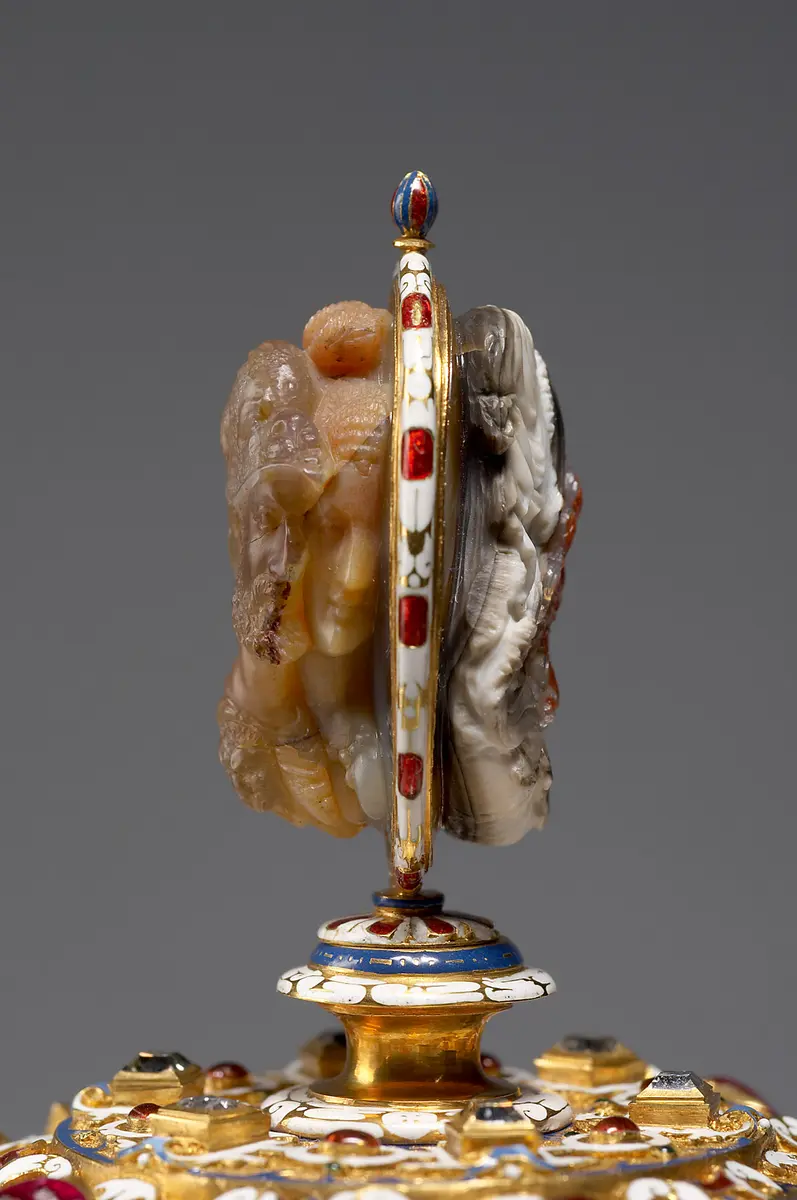
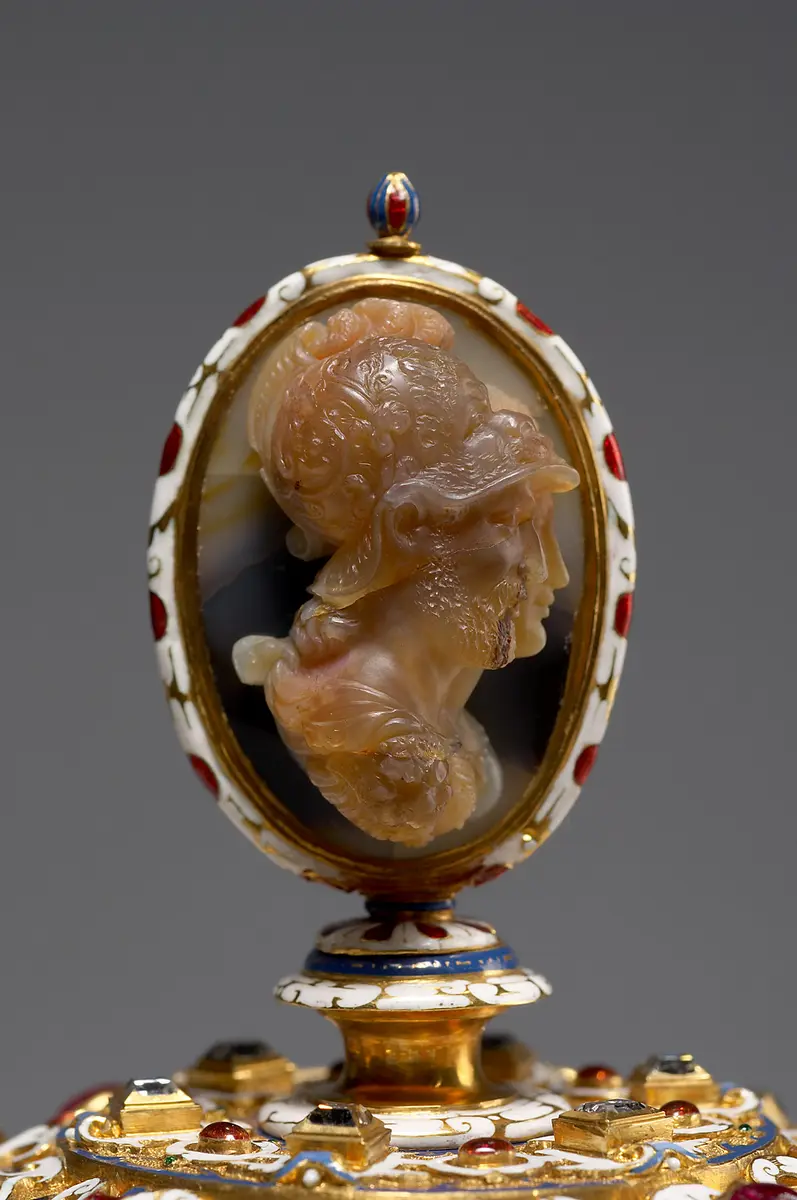
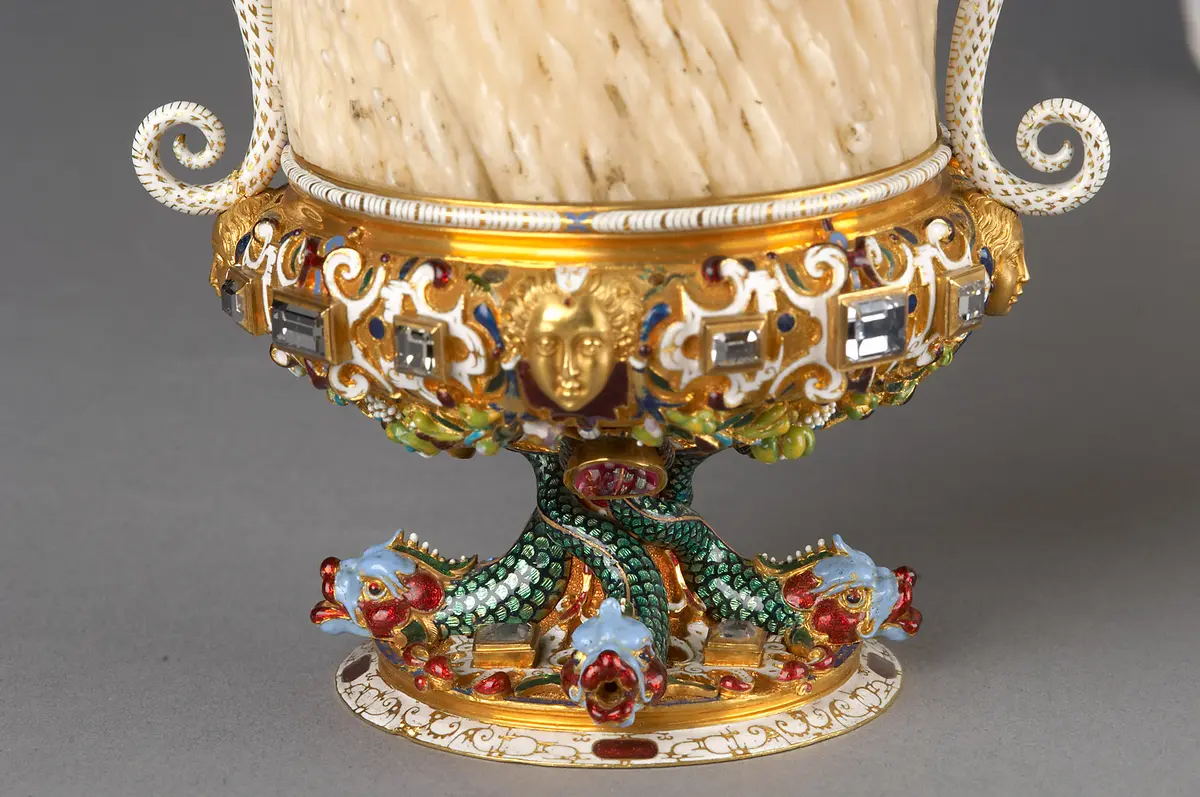
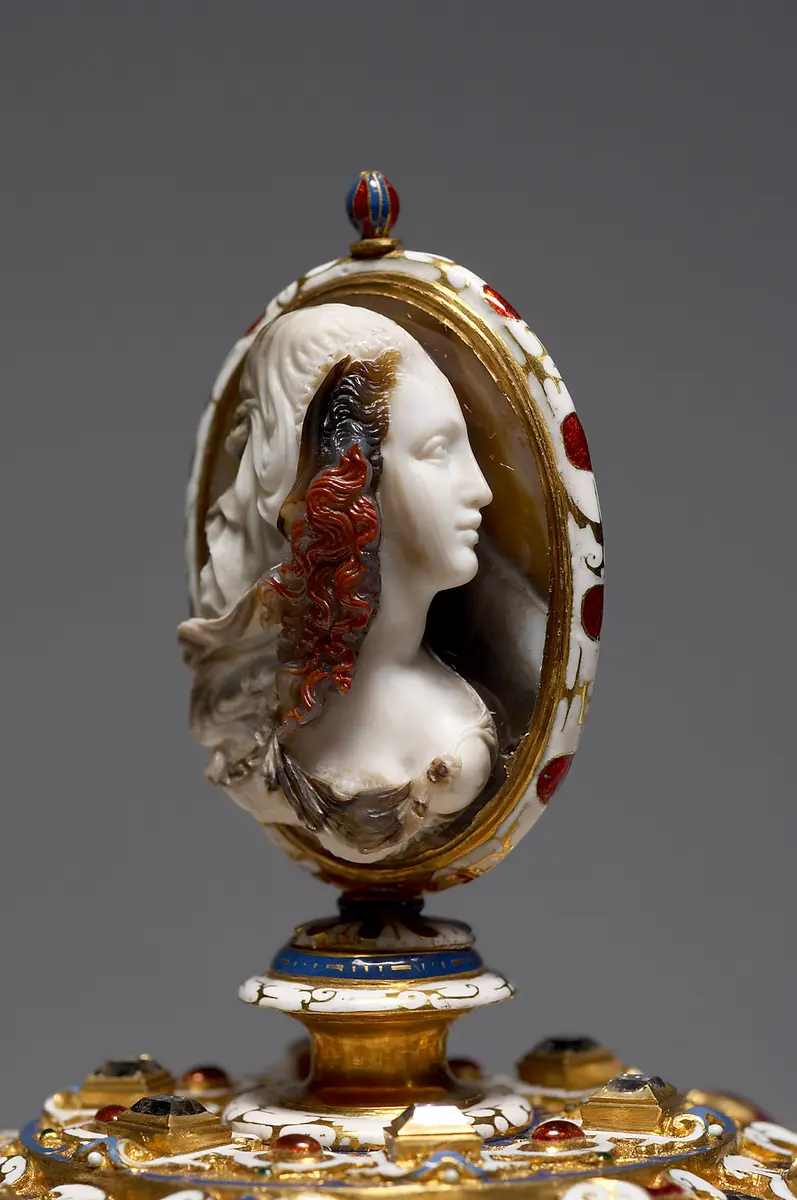
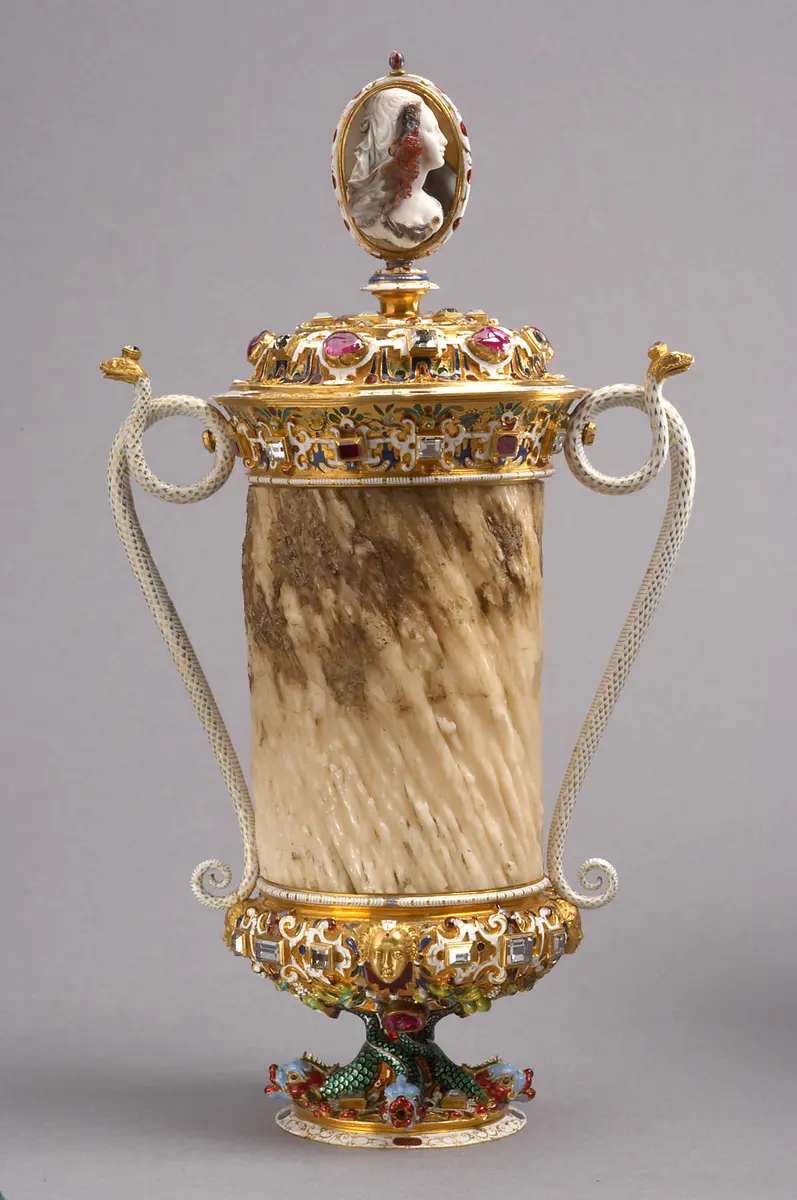
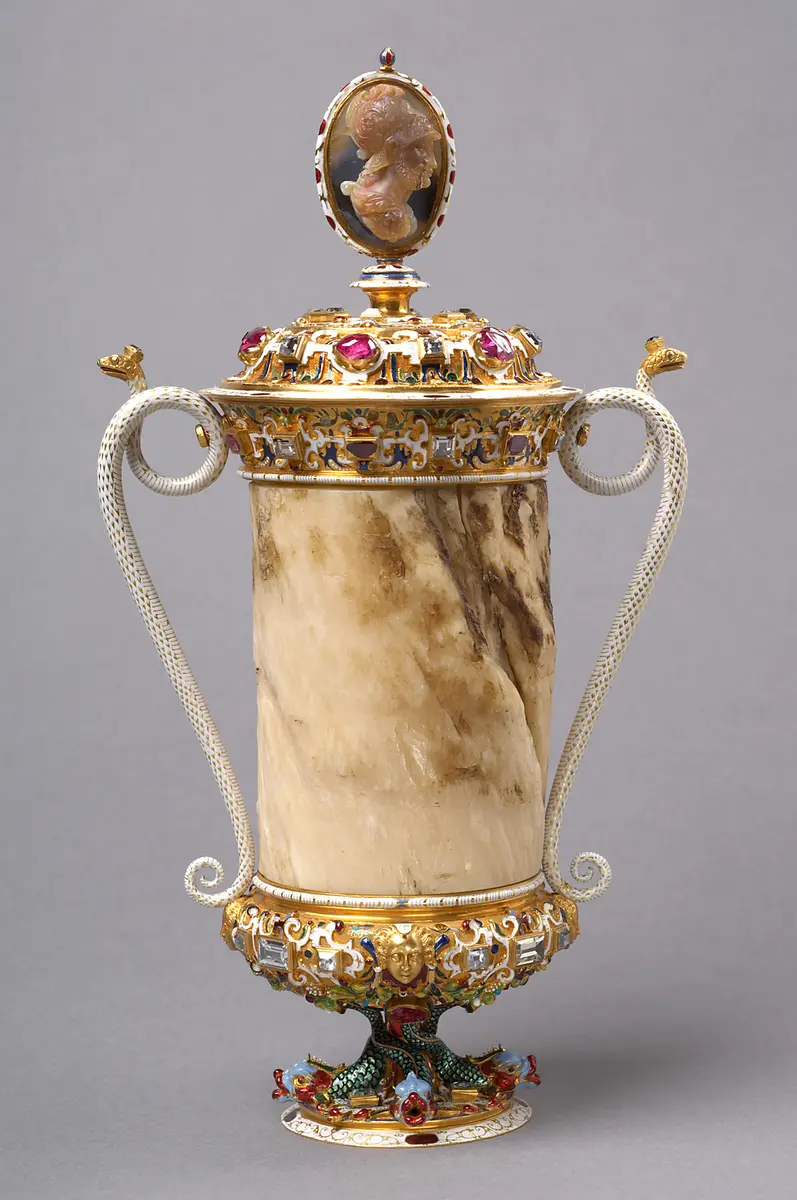
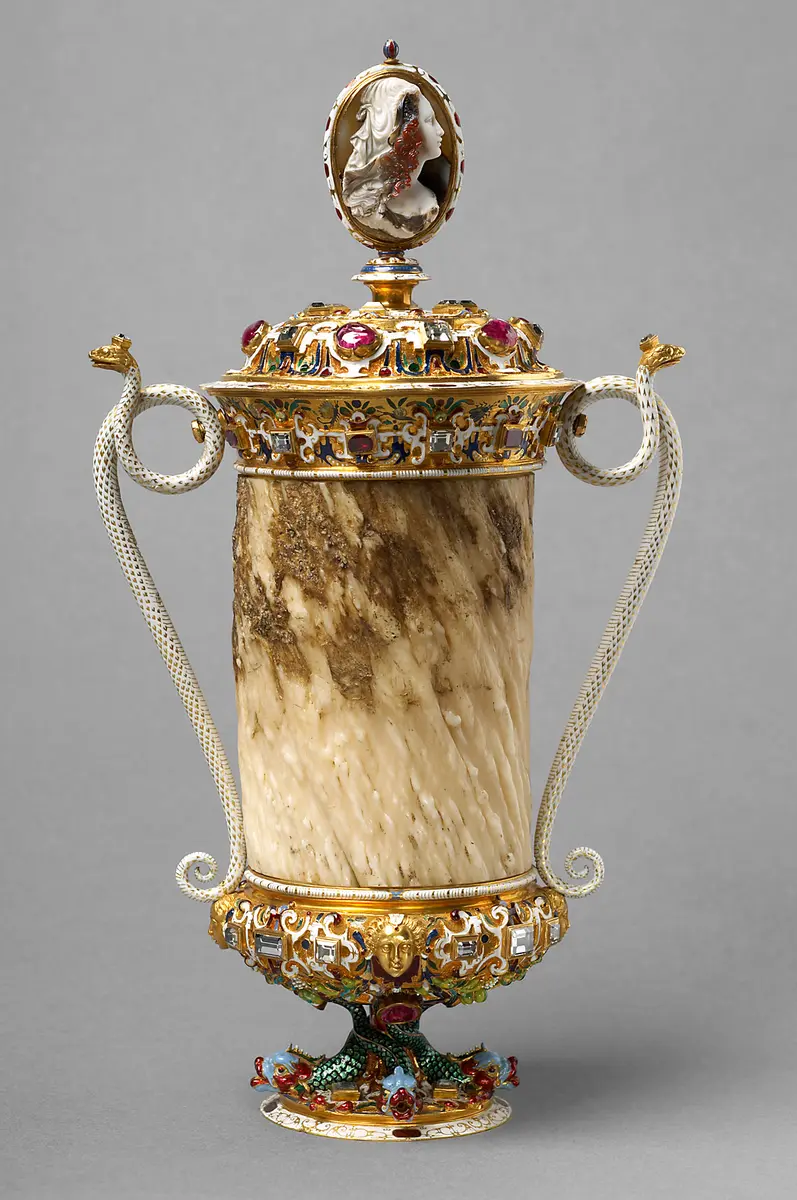
Rudolf II supported not only the arts but also the sciences. In his day these included astrology and alchemy, which the emperor valued very highly. Exotic natural specimens, metals and precious stones were believed to have special powers. In vessels of “unicorn horn” or bezoar stone, amulets and even table bells, these beliefs were expressed in the shape of exceptional showpieces.
Artist:
Jan Vermeyen (Goldschmiedearbeit) (vor 1559 Brüssel - 1608 Prag) DNBarrow_outward
Time:
ca. 1600/05
Object Name
container; lidded cup
Culture
Prague; Milan (cameos on the lid)
Material/technology:
Narwhal tusk, gold, enamel, diamonds, rubies, agate, ivory
Dimensions:
22,2 cm × 12,1 cm
Copyright
Kunsthistorisches Museum, Kunstkammer
Invs.
Kunstkammer, 1113
Browse more
Similar items you might be interested in
Fury Furienmeister ca. 1610/20

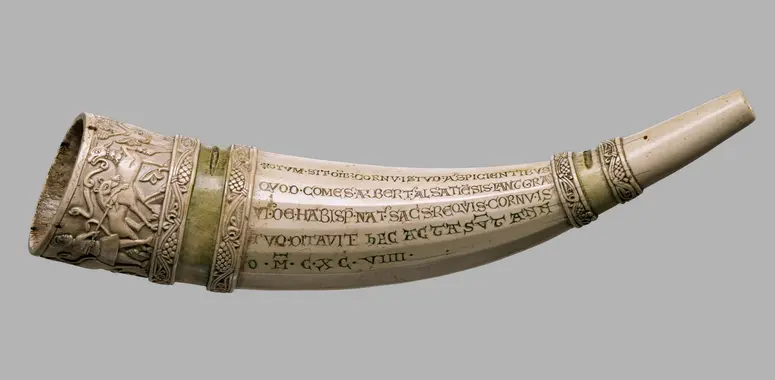
Hunting Horn (Oliphant) of Count Albrecht III of Habsburg 2nd half 11th c.

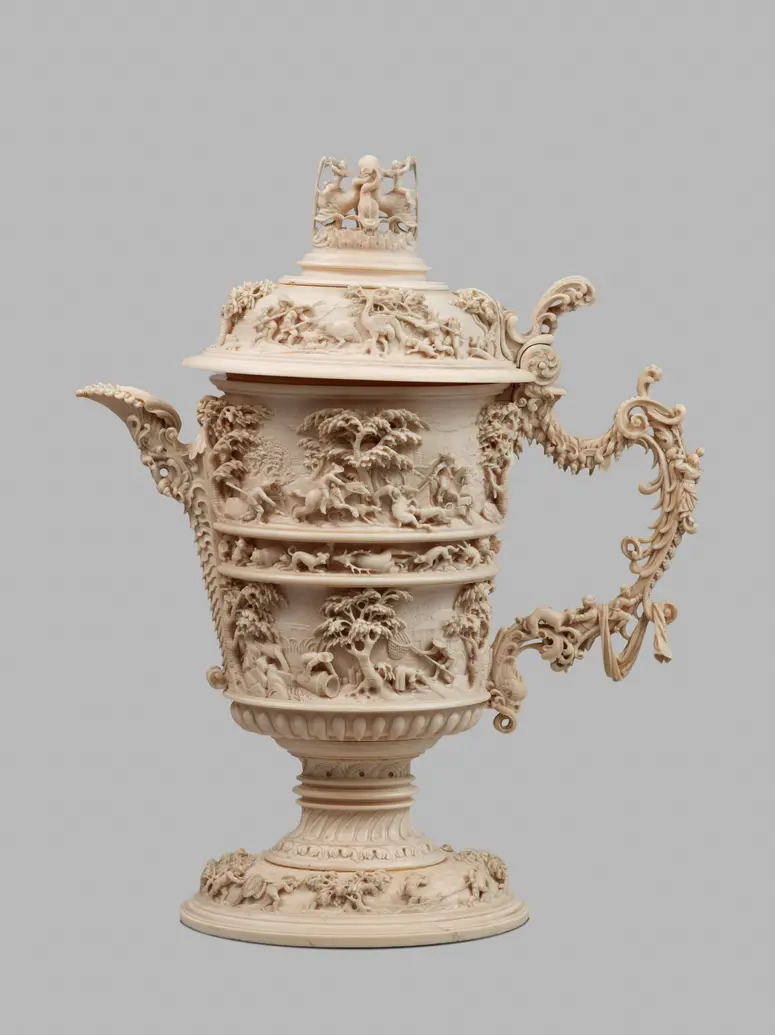
Lidded Ewer with Hunting and Fishing Scenes Balthasar Grießmann 3rd quarter 17th c.

Table Cabinet of Archduke Ferdinand II Ferdinand II. (1564-1595), Erzherzog von Österreich und Landesherr von Tirol ca. 1582