Matrone
um 40 v. Chr.
The life-size portrait of an old woman was perhaps part of a tomb statue and depicts the deceased as a venerable married woman and mother (Latin: matrona). Even without the (lost) inscription, the subject’s appearance tells us much about her. Every Roman citizen was recognisable in public by his or her clothing. The old woman is wearing a mantle pulled across her head. Beneath the mantle a visible hair-band lies tight across her forehead. Hair-bands were also worn by priestesses, and the portrait’s subject may have performed this function in a cult. Covering the head was regarded as a gesture of chastity (Latin: castitas). The portrait shows clear signs that the woman has aged, but they are not pronounced and underscore the high esteem and dignity of the elderly in the society of the Late Republic, familiar to us from numerous tomb portraits. The simple hairstyle is a development of a late-Hellenistic ideal and was in fashion for only a short time. This provides an important clue in dating the portrait to the time after the assassination of Caesar in 44 BC.
(M. Laubenberger)

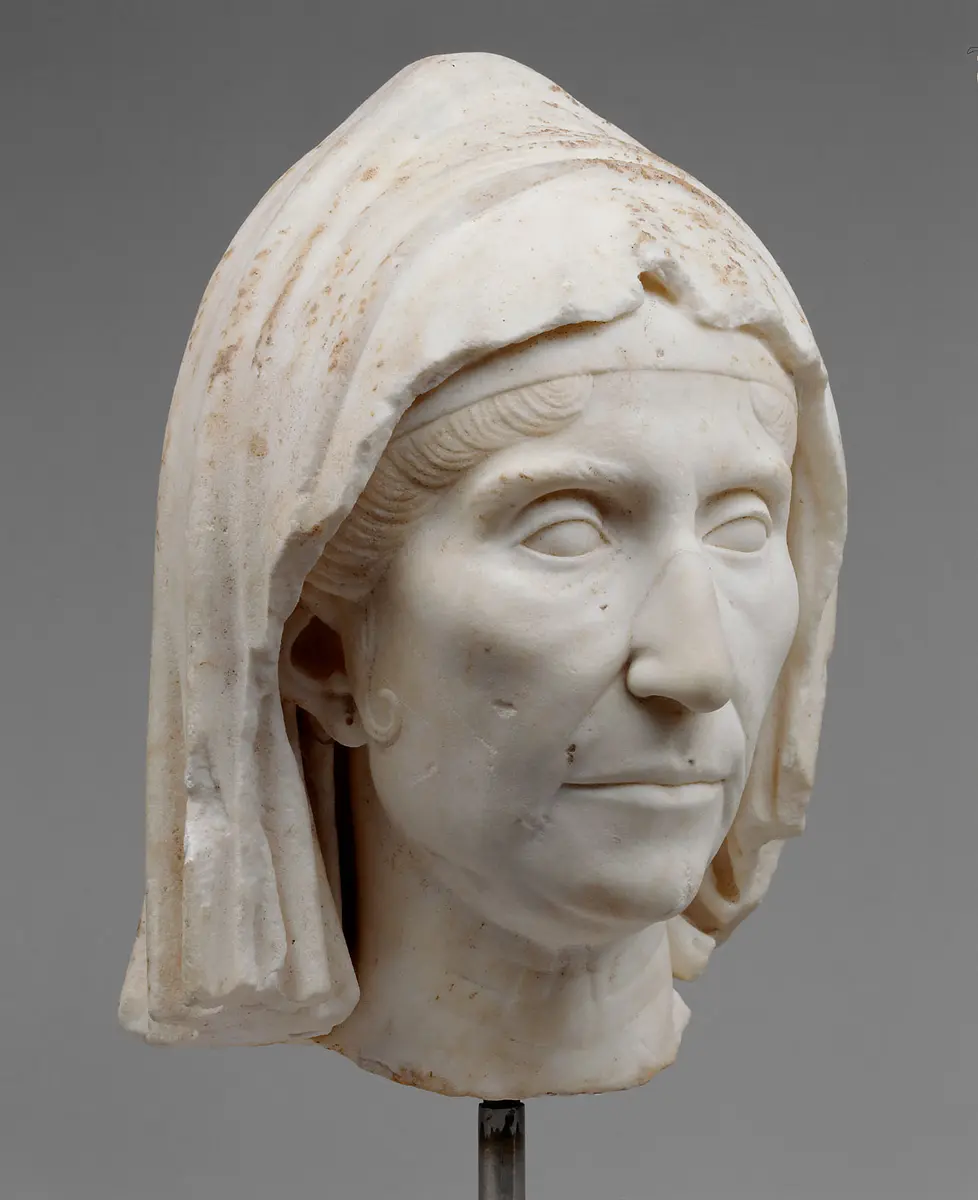
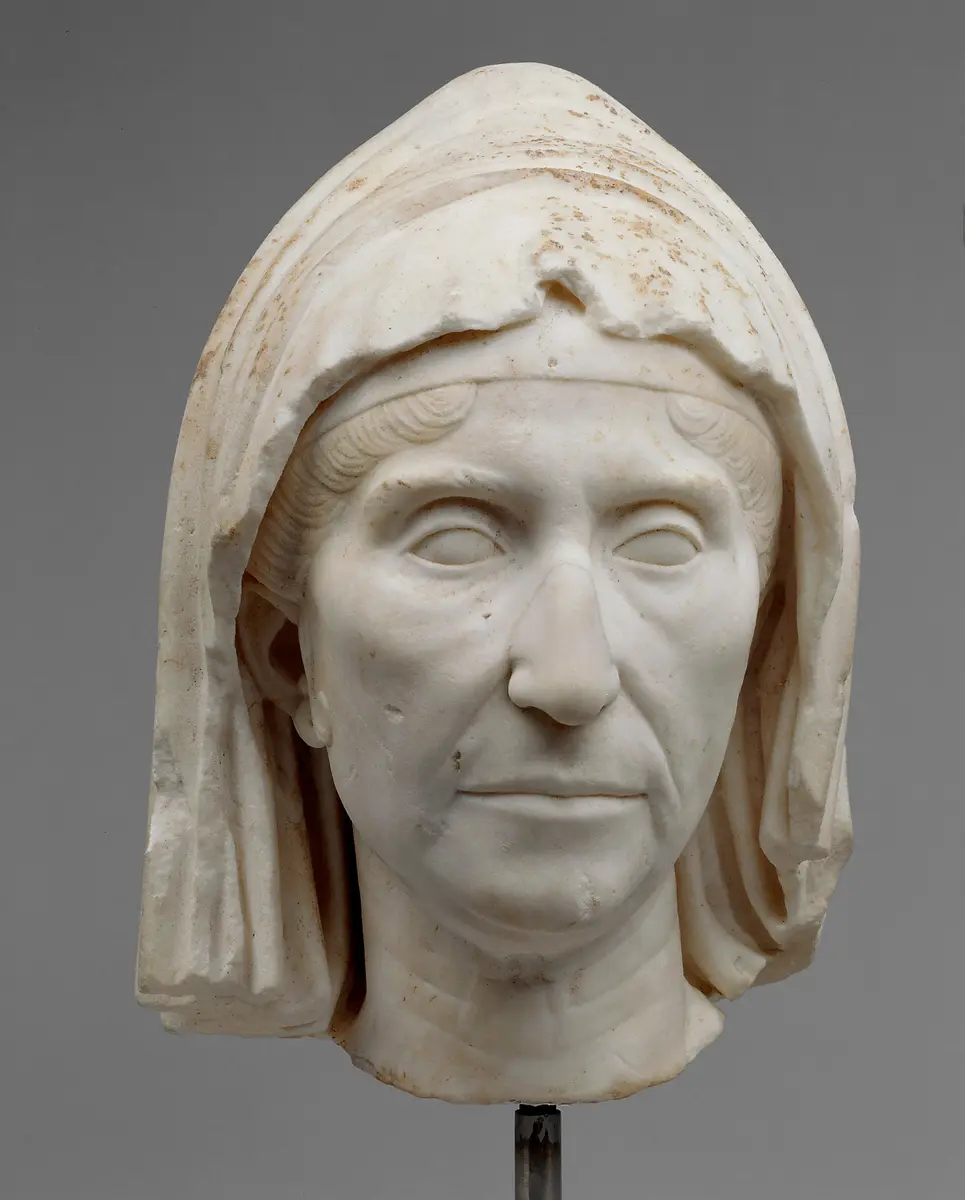
The life-size portrait of an old woman was perhaps part of a tomb statue and depicts the deceased as a venerable married woman and mother (Latin: matrona). Even without the (lost) inscription, the subject’s appearance tells us much about her. Every Roman citizen was recognisable in public by his or her clothing. The old woman is wearing a mantle pulled across her head. Beneath the mantle a visible hair-band lies tight across her forehead. Hair-bands were also worn by priestesses, and the portrait’s subject may have performed this function in a cult. Covering the head was regarded as a gesture of chastity (Latin: castitas). The portrait shows clear signs that the woman has aged, but they are not pronounced and underscore the high esteem and dignity of the elderly in the society of the Late Republic, familiar to us from numerous tomb portraits. The simple hairstyle is a development of a late-Hellenistic ideal and was in fashion for only a short time. This provides an important clue in dating the portrait to the time after the assassination of Caesar in 44 BC.
(M. Laubenberger)
Time:
um 40 v. Chr.
Object Name
Porträtkopf
Culture
Römisch
Location of discovery:
Unbekannt
Material/technology:
Marmor
Dimensions:
Höhe mit Manschette: 34 cm
Objekt: 32 cm x 23 cm x 23 cm
Copyright
Kunsthistorisches Museum, Antikensammlung
Invs.
Antikensammlung, I 145
Provenance
unbekannt; 1819 vorhanden
Browse more
Similar items you might be interested in
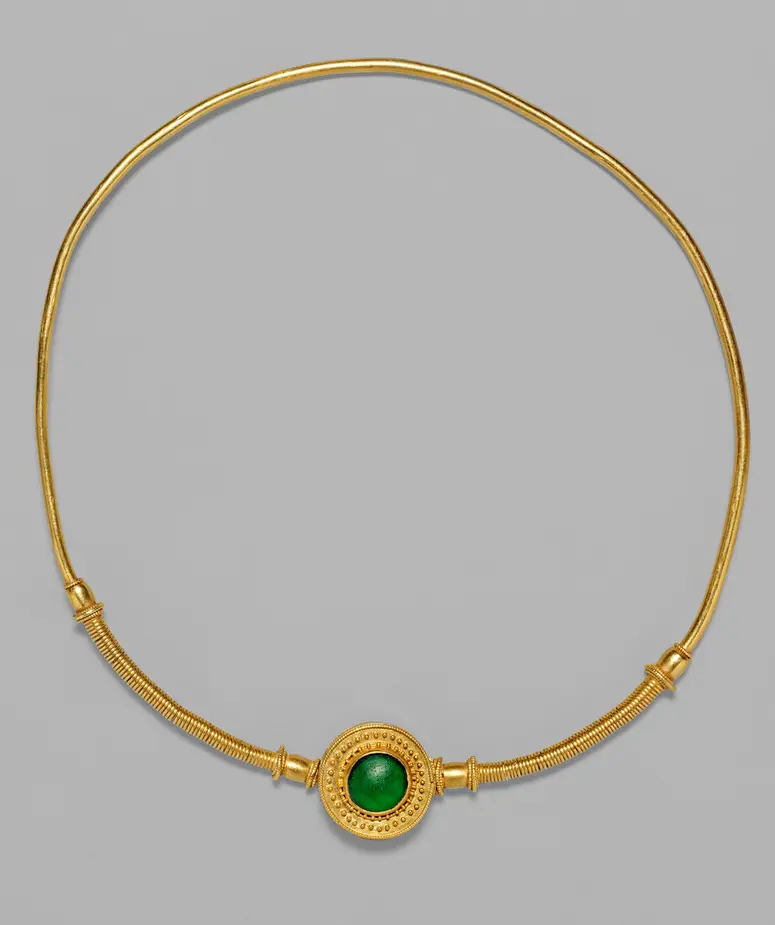
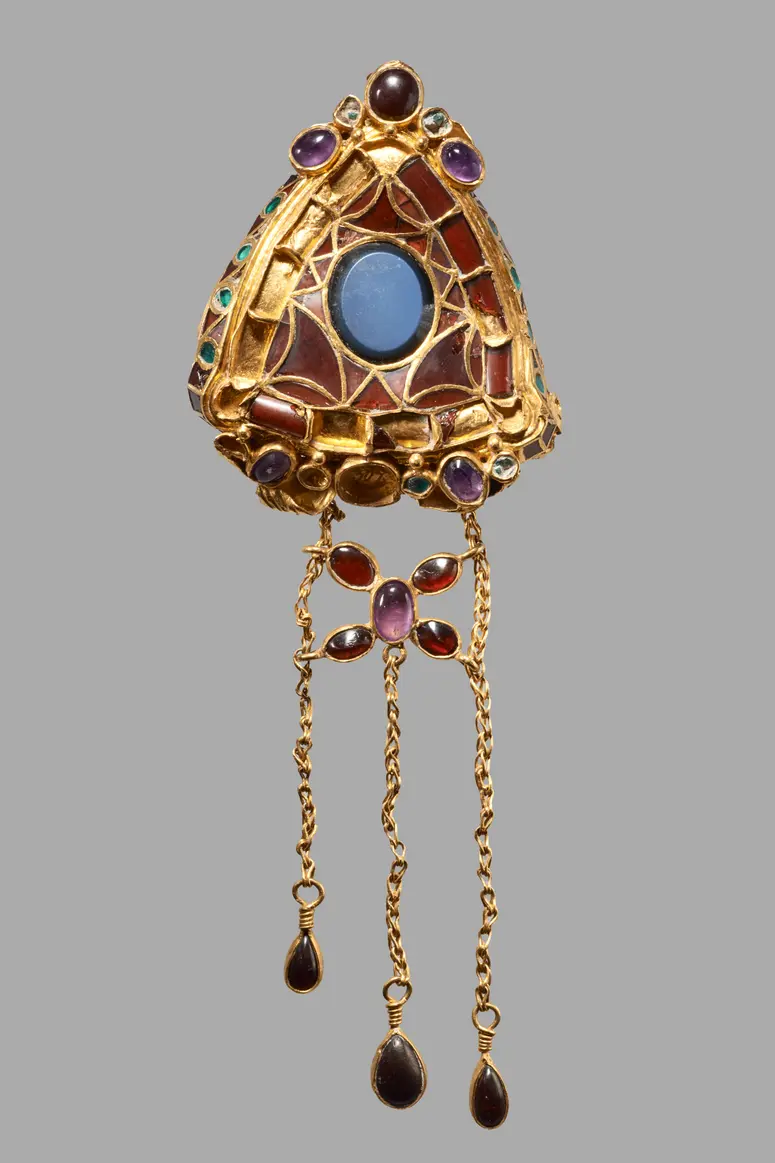
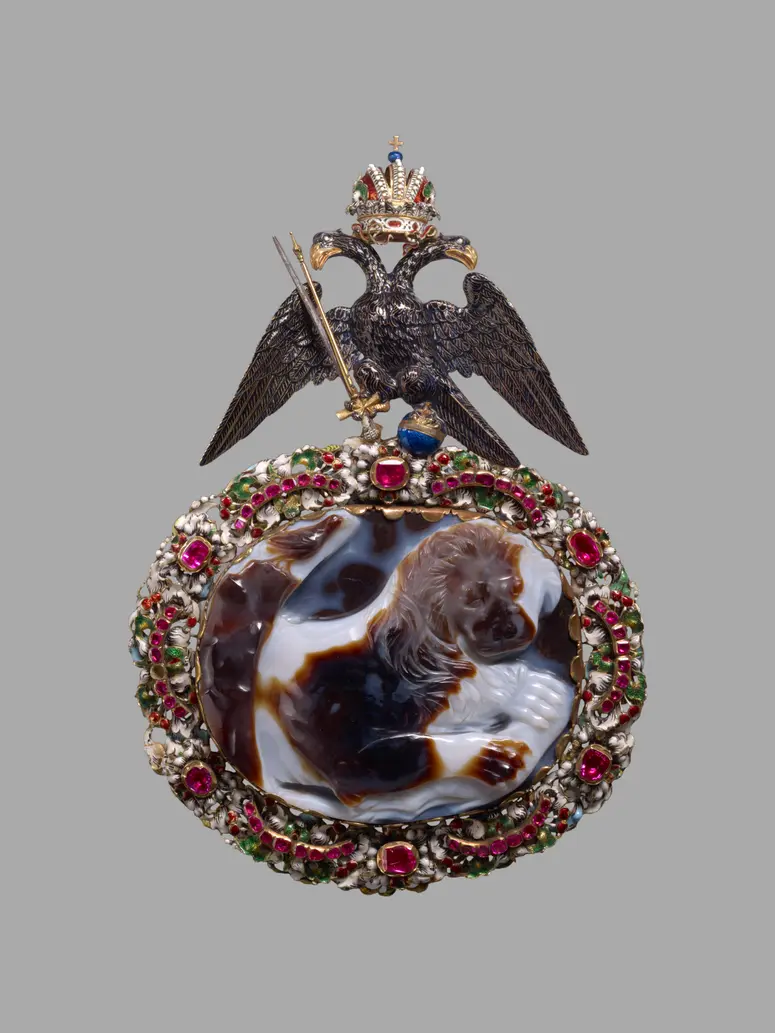
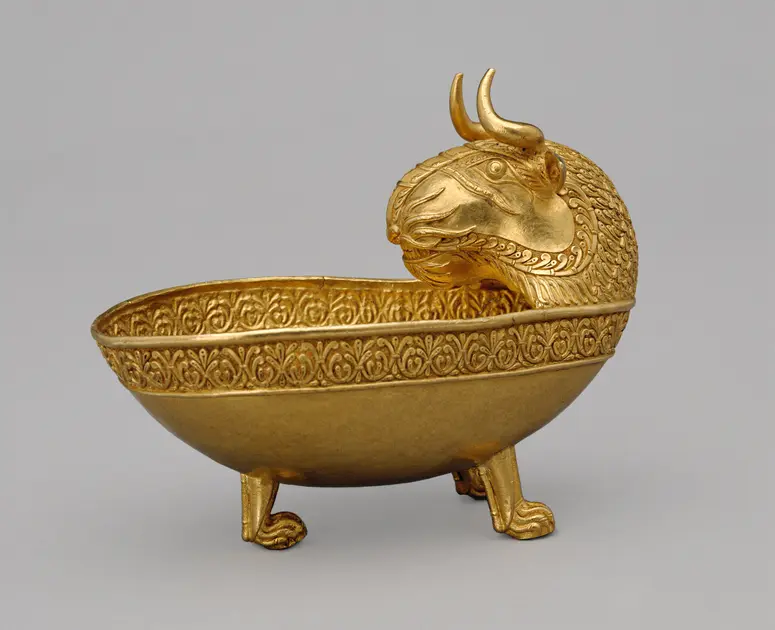
Stierkopfschale: Stierkopfschale Frühes Mittelalter 7. - 9. Jh. n. Chr. (2. Hälfte 8. Jh. n. Chr.?)
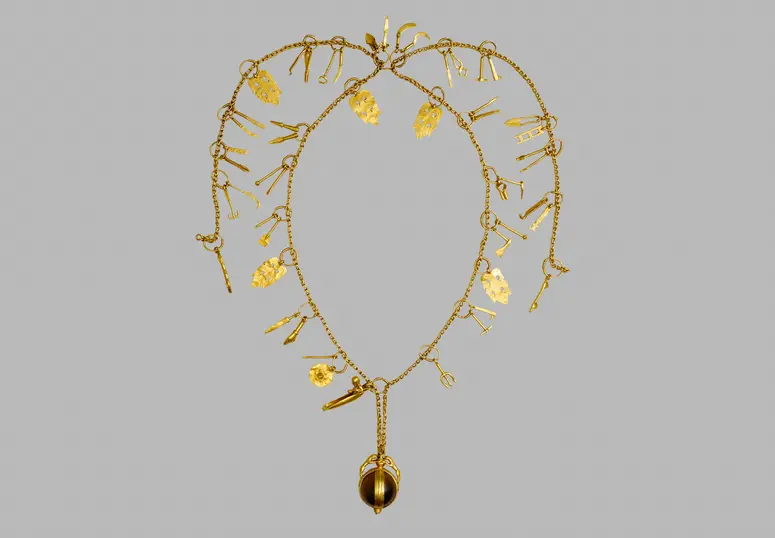
Goldkette mit 52 Anhängern: Goldkette mit 52 Anhängern Völkerwanderungszeit, Ostgermanisch (gepidisch?) Deponierung etwa 2. Viertel 5. Jh. n. Chr.
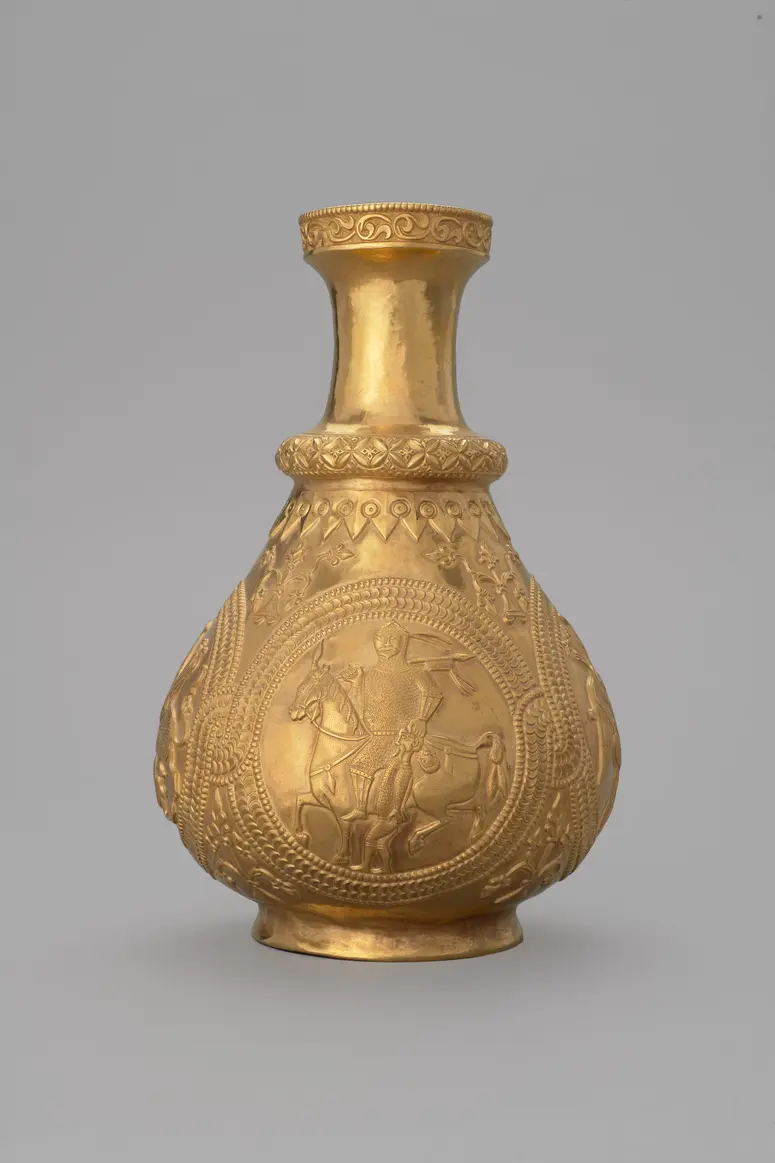
Medaillonkrug: Medaillonkrug Frühes Mittelalter 7. - 9. Jh. n. Chr. (1. Hälfte 8. Jh. n. Chr.?)

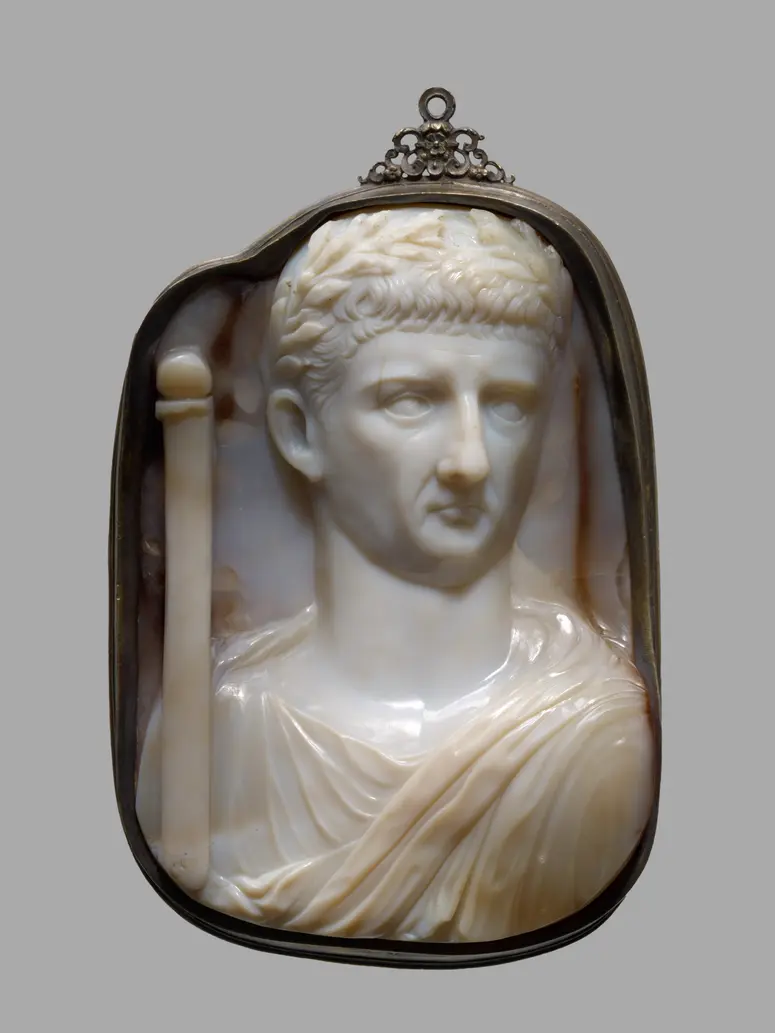
Glaskameo des Herophilos: Porträt des Drusus maior Römisch, Frühe Kaiserzeit um 20 n. Chr.