Lira da braccio
1511 | Giovanni d'Andrea
This lira da braccio by Giovanni d’Andrea is probably the most ornate instrument of its type. The arched back resembles the face of a man but it also suggests a human torso. The belly is reminiscent of the form of a female body. It is reasonable to suppose that this design is a reference to the close relationship between love and music. Dendrochronological analysis has revealed that the youngest growth ring of the front plate is from 1504, which coincides with the year of its making indicated in the signature. Traces of working on the body and especially on the edges of the belly and back suggest that the original contours of the instrument were possibly different and that it arrived at its present appearance at a later date. (rh)
Lit.: Rudolf Hopfner: Masterpieces from the Collection of Historic Musical Instruments. A Short Guide through the Kunsthistorisches Museum Vienna, Vol. 1, Vienna 2019
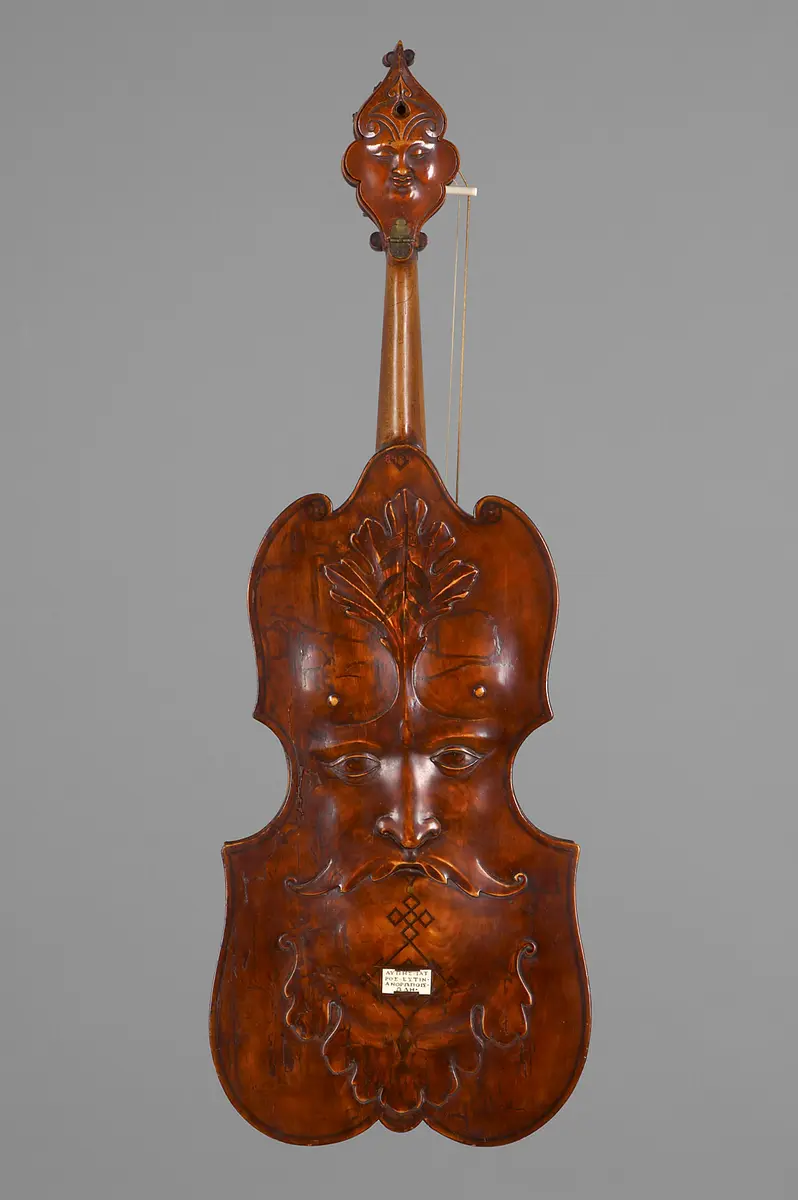
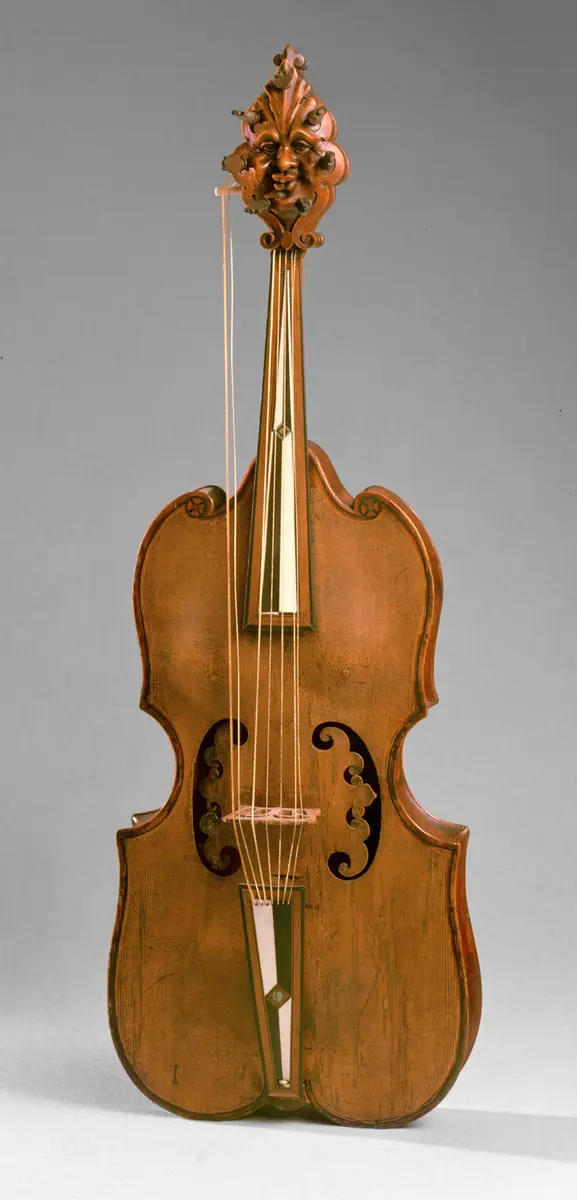
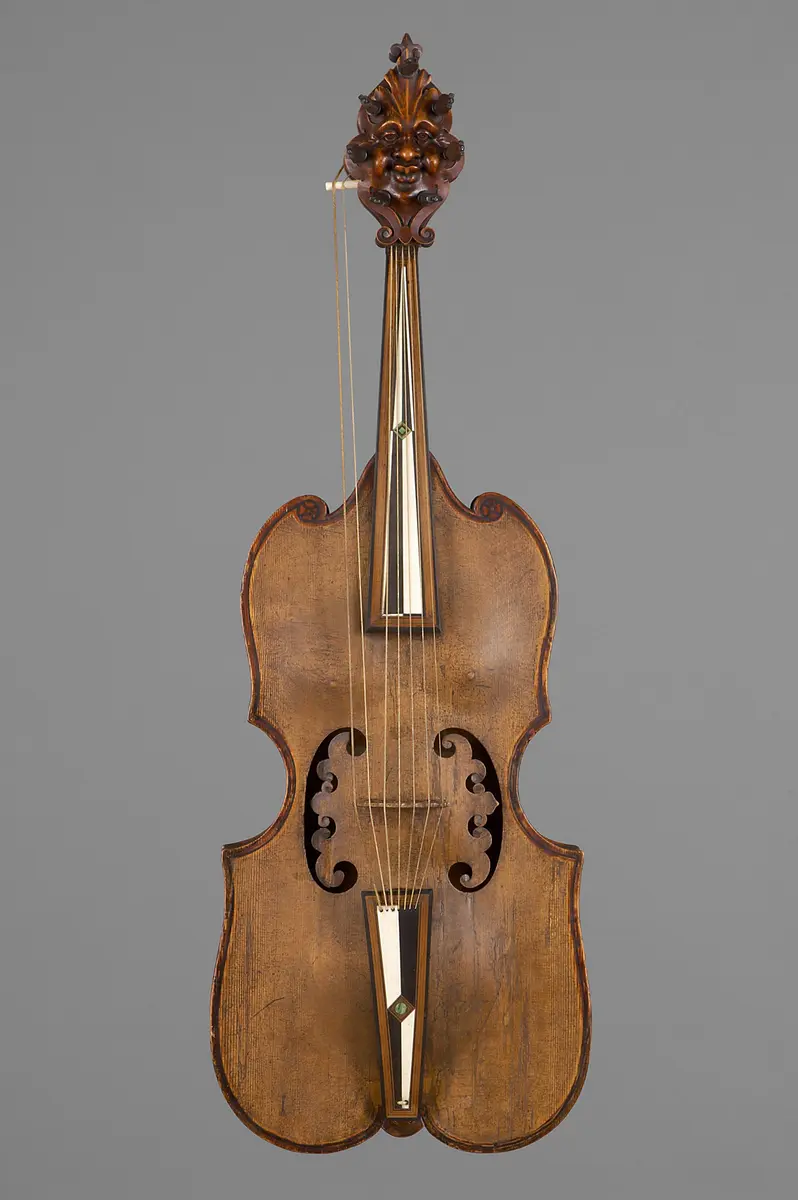
This lira da braccio by Giovanni d’Andrea is probably the most ornate instrument of its type. The arched back resembles the face of a man but it also suggests a human torso. The belly is reminiscent of the form of a female body. It is reasonable to suppose that this design is a reference to the close relationship between love and music. Dendrochronological analysis has revealed that the youngest growth ring of the front plate is from 1504, which coincides with the year of its making indicated in the signature. Traces of working on the body and especially on the edges of the belly and back suggest that the original contours of the instrument were possibly different and that it arrived at its present appearance at a later date. (rh)
Lit.: Rudolf Hopfner: Masterpieces from the Collection of Historic Musical Instruments. A Short Guide through the Kunsthistorisches Museum Vienna, Vol. 1, Vienna 2019
Manufacturer:
Giovanni d'Andrea
Time:
1511
Object Name
Lira da braccio
Culture
Italy, Verona
Material/technology:
lackiertes Nadel- und Ahornholz, Elfenbein, Ebenholz, Bein, Pergament, Messing, Darmsaiten
Dimensions:
810 mm x 260 mm x 70 mm
Copyright
Kunsthistorisches Museum, Sammlung alter Musikinstrumente
Invs.
Sammlung alter Musikinstrumente, 89
Alte Inv.Nr.:
KK_8484
Schlosser Nr.:
C 94