Imperator C. Julius Caesar
letztes Viertel 1. Jh. v. Chr.
C. Julius Caesar (100 - 44 BC) was a Roman statesman and military general who played a critical role in the decline of the Roman Republic and the rise of the Roman Empire. The only surviving contemporary portrait of Caesar from Tusculum, now at the Turin Museum, largely conforms to his profile on Roman coins. This portrait, however, is closer to the portraits commissioned by Augustus in honor of Divus Julius, the deified Caesar and his adoptive father Julius Caesar. Today around twenty-five replicas of the Pisa-Chiaramonti type (called after the storage place of the "key works") are known. Common features of this type repeated in the bust under discussion are the gaunt face with deep naso-labial folds and hollow cheeks, and the thin-lipped, closed mouth with its mocking, ironic expression. However, the hairstyle featuring short curls differs from the Pisa-Chiaramonti type: the hair is combed forward in a fringe over the originally bare forehead, reminiscent of Suetonius’s description of Caesar's habit of "combing his thin hair forward from the crown of his head" and taking advantage of his right "to wear a laurel wreath at all times."
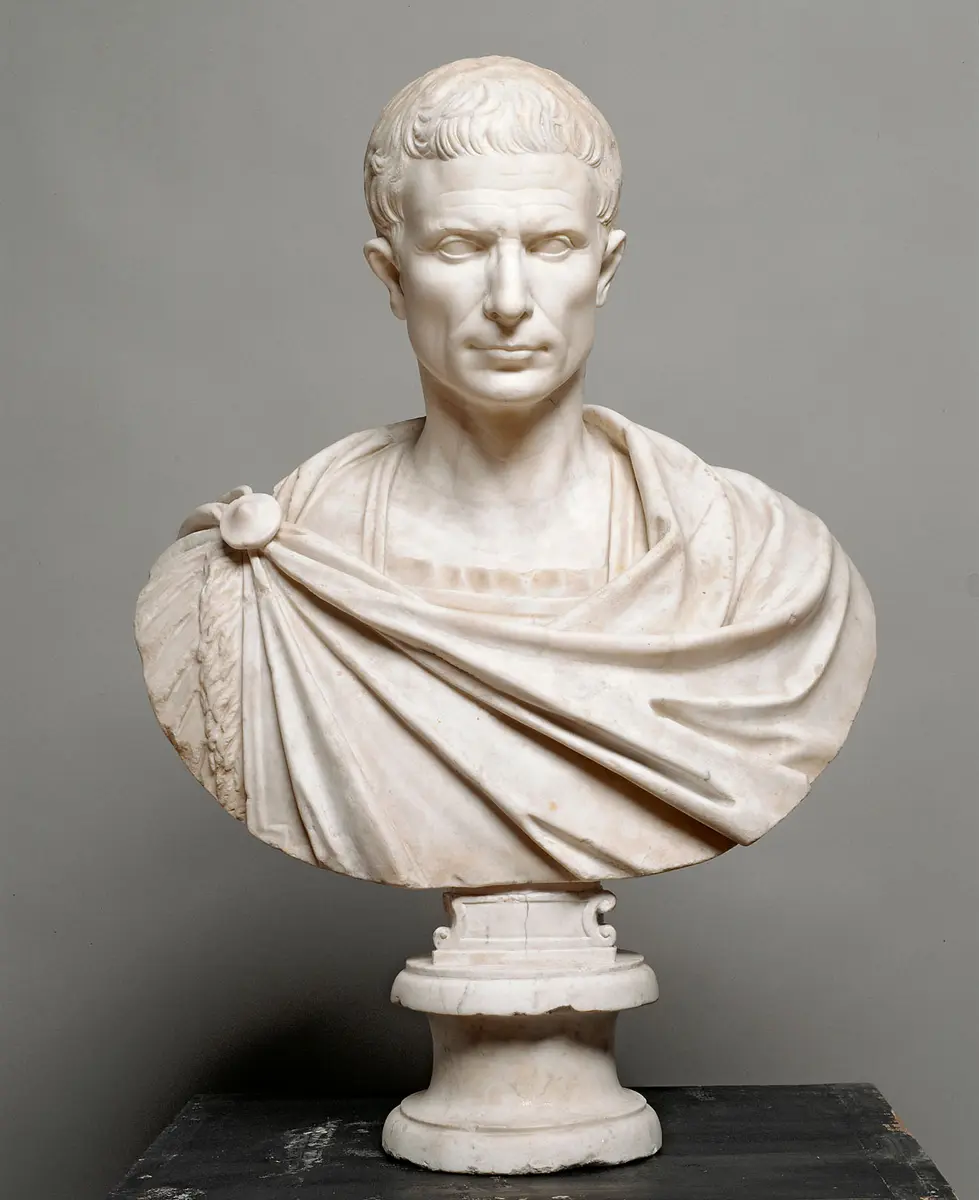
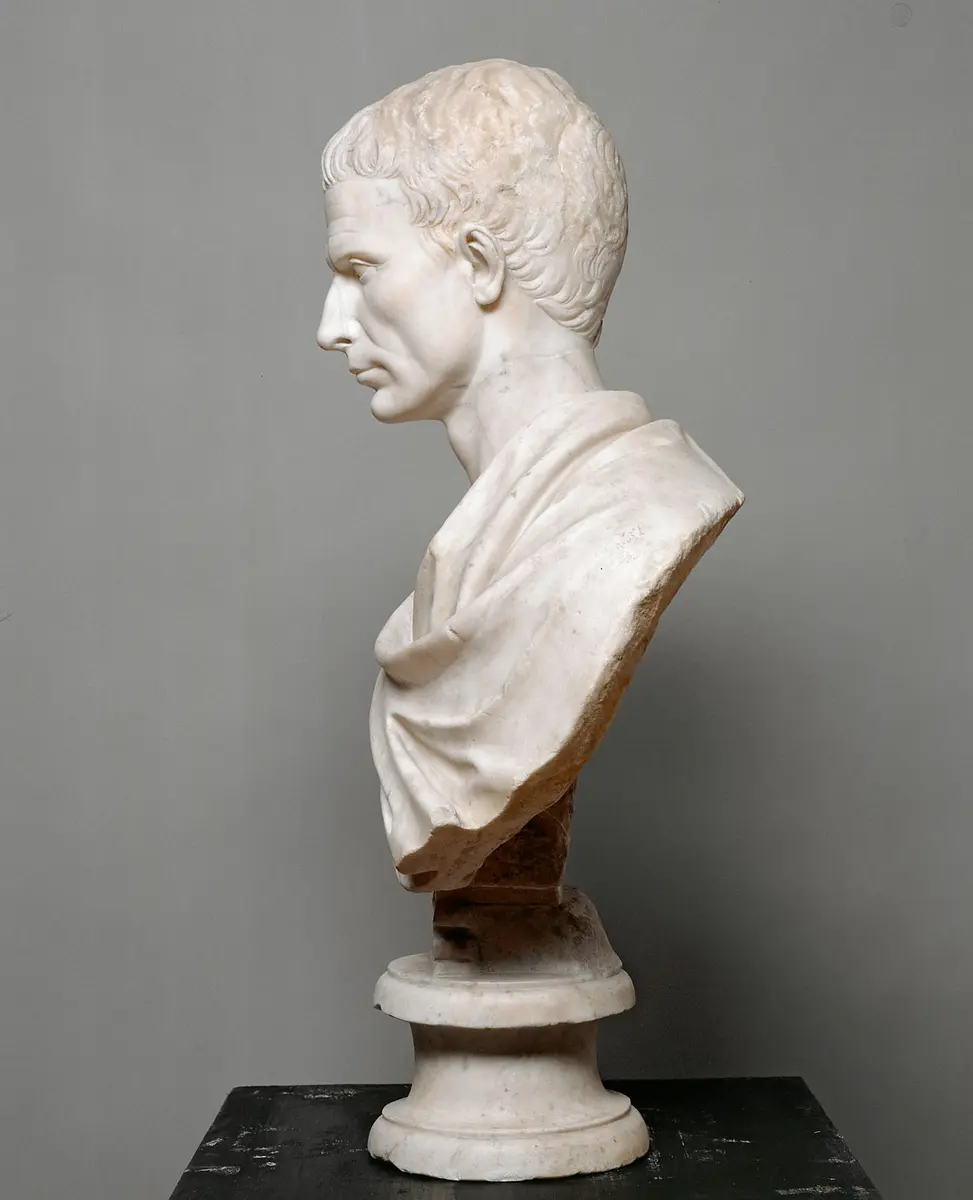
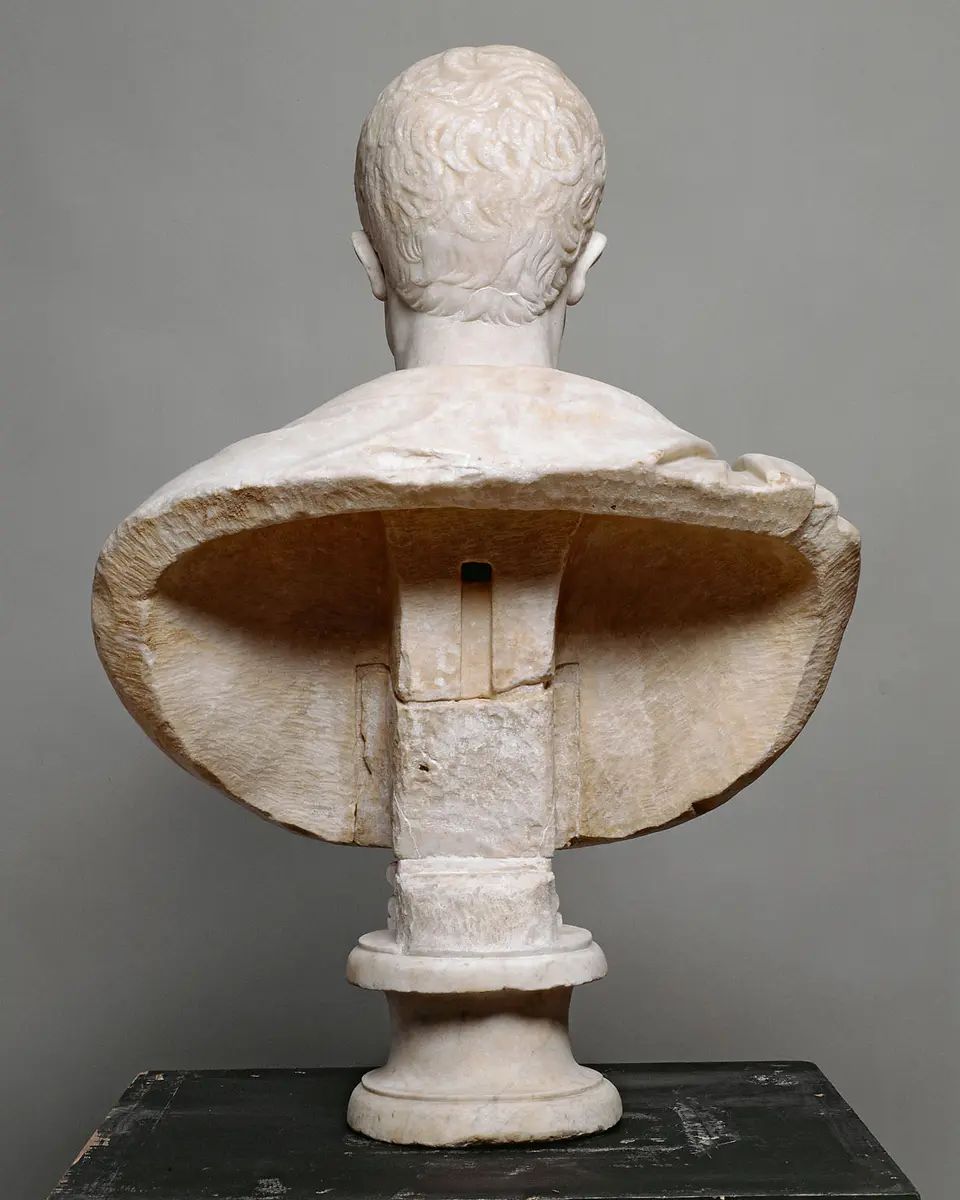
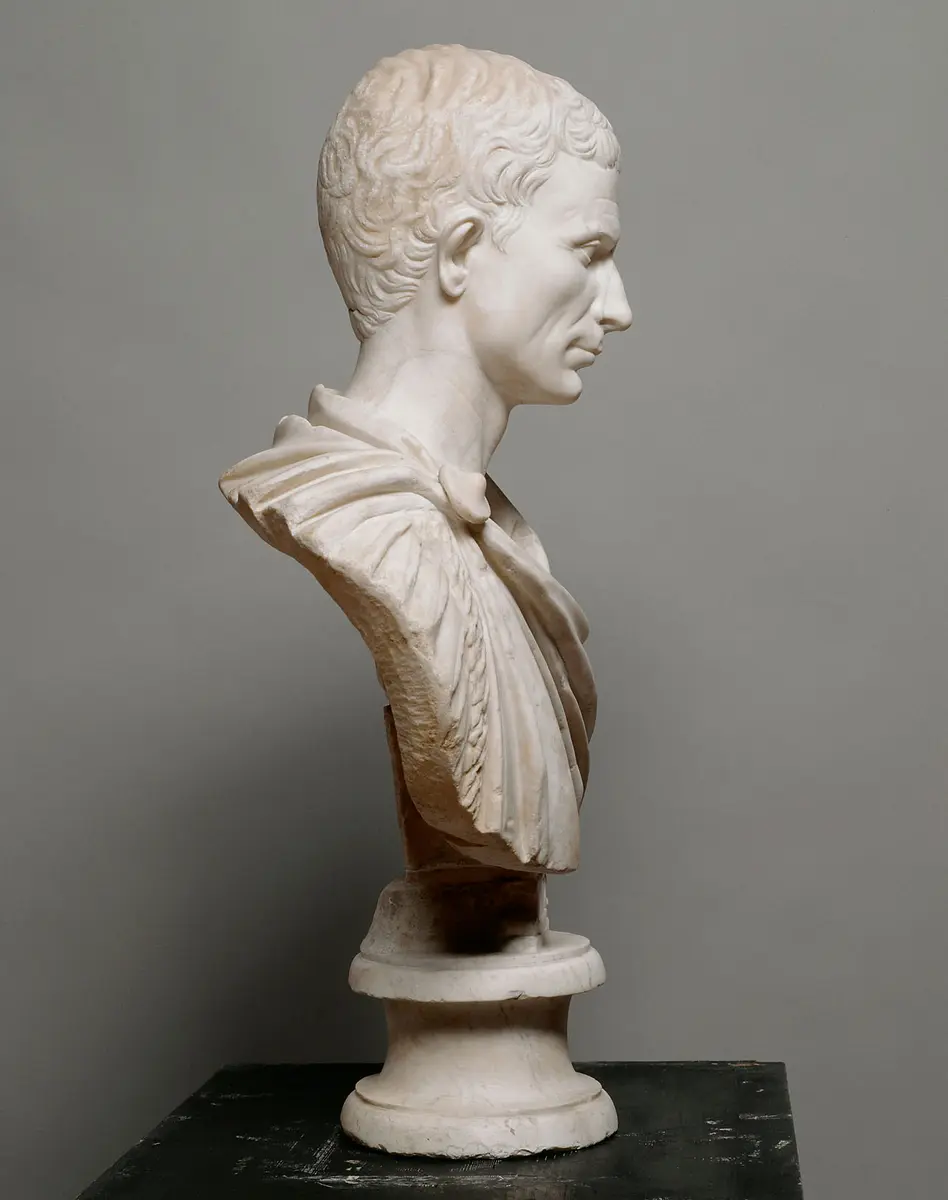
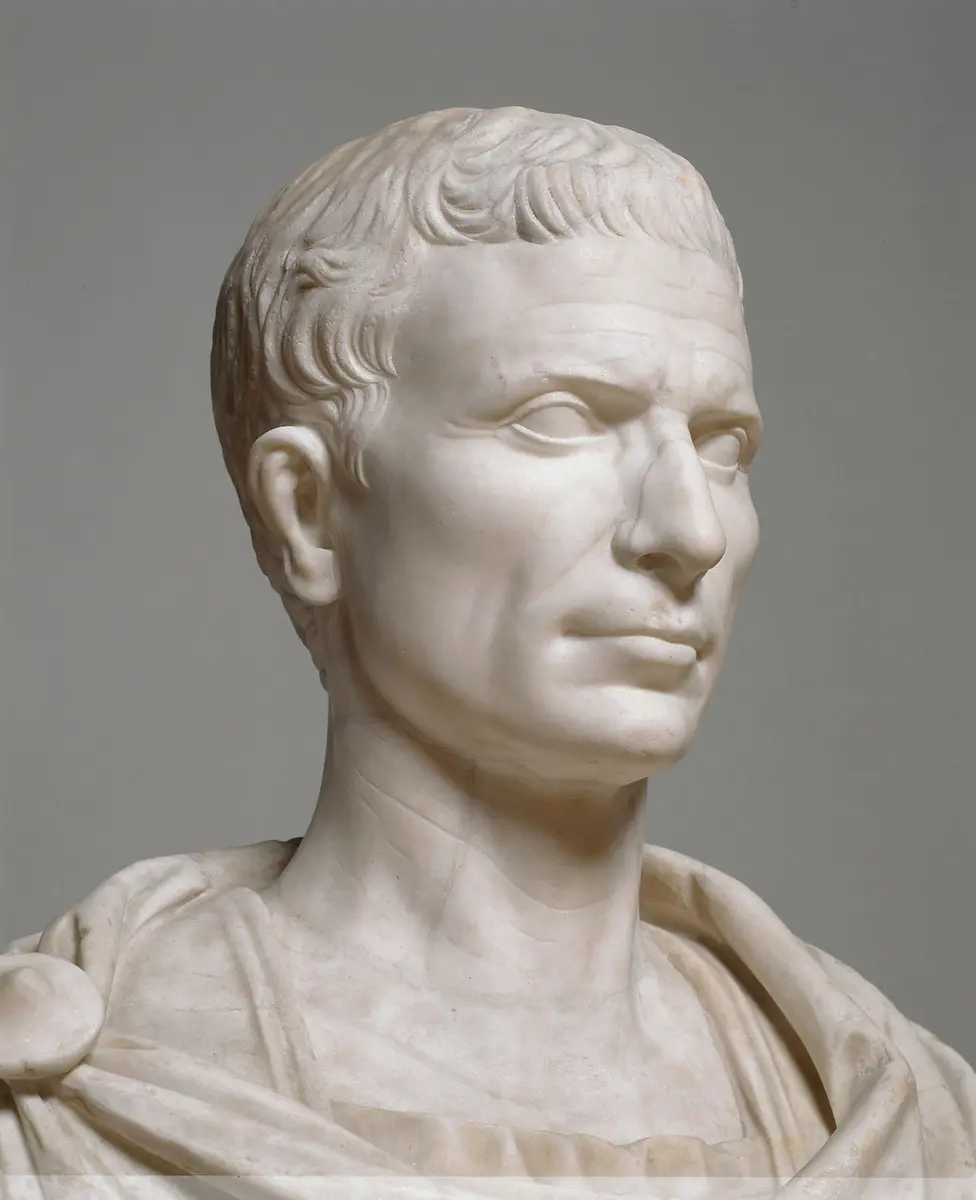
C. Julius Caesar (100 - 44 BC) was a Roman statesman and military general who played a critical role in the decline of the Roman Republic and the rise of the Roman Empire. The only surviving contemporary portrait of Caesar from Tusculum, now at the Turin Museum, largely conforms to his profile on Roman coins. This portrait, however, is closer to the portraits commissioned by Augustus in honor of Divus Julius, the deified Caesar and his adoptive father Julius Caesar. Today around twenty-five replicas of the Pisa-Chiaramonti type (called after the storage place of the "key works") are known. Common features of this type repeated in the bust under discussion are the gaunt face with deep naso-labial folds and hollow cheeks, and the thin-lipped, closed mouth with its mocking, ironic expression. However, the hairstyle featuring short curls differs from the Pisa-Chiaramonti type: the hair is combed forward in a fringe over the originally bare forehead, reminiscent of Suetonius’s description of Caesar's habit of "combing his thin hair forward from the crown of his head" and taking advantage of his right "to wear a laurel wreath at all times."
Time:
letztes Viertel 1. Jh. v. Chr.
Object Name
Porträtkopf, Büste ergänzt
Culture
Römisch
Location of discovery:
Unbekannt
Material/technology:
Marmor
Dimensions:
H. gesamt : 74 cm x 55 cm x 30 cm x 19 cm
nur Kopf: 23,5 cm
Copyright
Kunsthistorisches Museum, Antikensammlung
Invs.
Antikensammlung, I 1493
Provenance
Slg. Este - Catajo; im Besitz von Erzherzog Franz Ferdinand; 1923 inventarisch übernommen