Save object
You may download and use the image for private purposes. Nutzungsbedingungen & AGBs
To request to use the image for commercial or academic purposes, please send us a reproduction request
Save object
You may download and use the image for private purposes. Nutzungsbedingungen & AGBs
To request to use the image for commercial or academic purposes, please send us a reproduction request
Save object
You may download and use the image for private purposes. Nutzungsbedingungen & AGBs
To request to use the image for commercial or academic purposes, please send us a reproduction request
Save object
You may download and use the image for private purposes. Nutzungsbedingungen & AGBs
To request to use the image for commercial or academic purposes, please send us a reproduction request
Save object
You may download and use the image for private purposes. Nutzungsbedingungen & AGBs
To request to use the image for commercial or academic purposes, please send us a reproduction request
Save object
You may download and use the image for private purposes. Nutzungsbedingungen & AGBs
To request to use the image for commercial or academic purposes, please send us a reproduction request
Save object
You may download and use the image for private purposes. Nutzungsbedingungen & AGBs
To request to use the image for commercial or academic purposes, please send us a reproduction request
Save object
You may download and use the image for private purposes. Nutzungsbedingungen & AGBs
To request to use the image for commercial or academic purposes, please send us a reproduction request
Imhotep, sitzend
724-332 v. Chr.
Imhotep war im Alten Reich Hohepriester von Heliopolis. Er gilt als Erbauer der Stufenpyramide des Djoser. Seit dem Neuen Reich ist er Patron der Schreiber. Als Sohn des Gottes Ptah und der irdischen Mutter Cheredu-anch ist Imhotep halbgöttlich. Ab der Spätzeit wird er als göttlich angesehen und bekommt einen eigenen Tempel in der Nähe des Serapeums in Saqqara. Besonders in ptolemäischer und römischer Zeit wird er als Nothelfer und Heilsgott verehrt. Imhotep wird sitzend mit einem aufgerollten Papyrus dargestellt. Hier sind sein Name und die Namen seiner Eltern (Ptah und Cheredu-anch) eingraviert. Wie Ptah trägt Imhotep die eng anliegende Kappe. Er ist bartlos. Der wadenlange Schurz ist fein gefältelt. Als Schmuck trägt Imhotep einen detailliert wiedergegebenen Schmuckkragen.
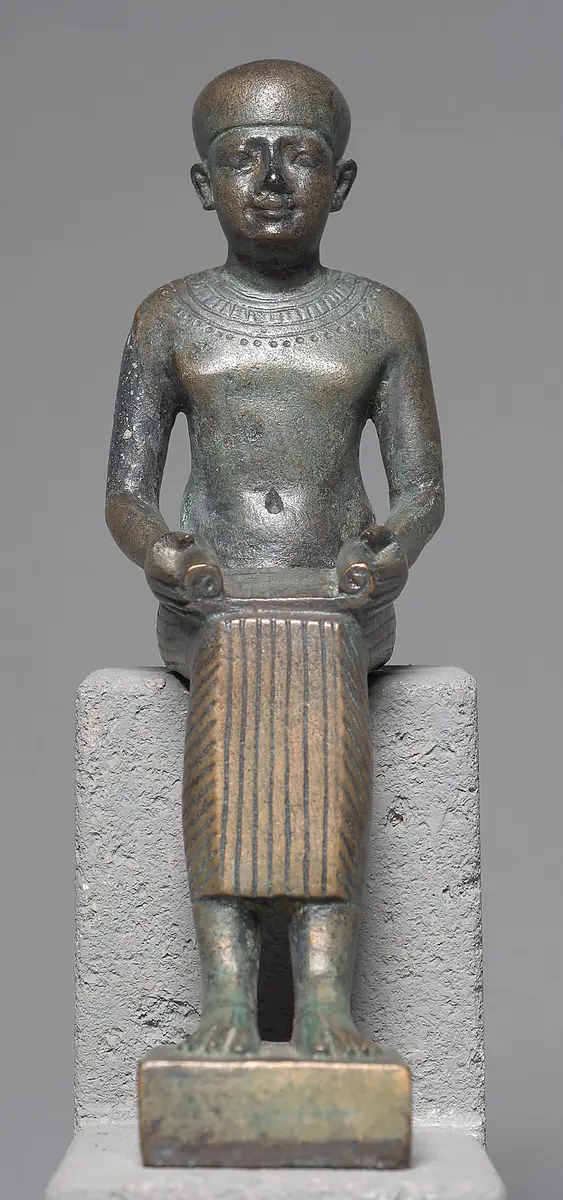
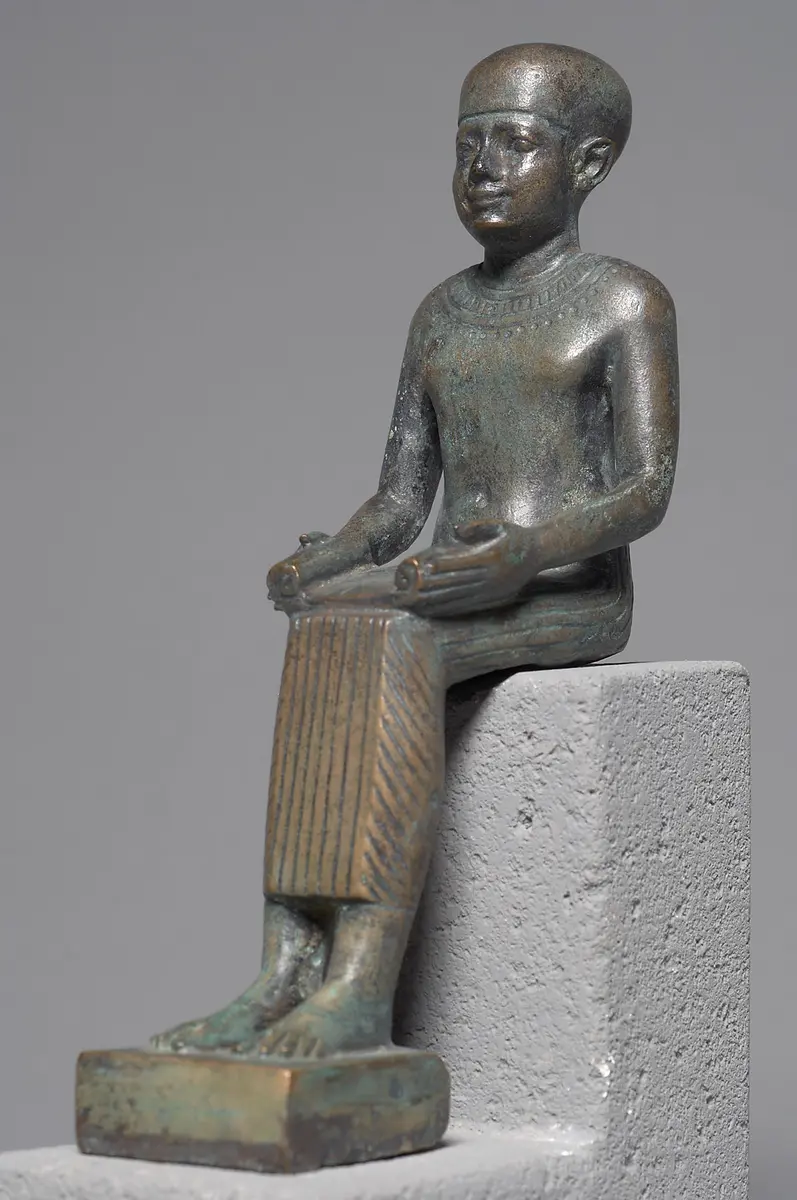
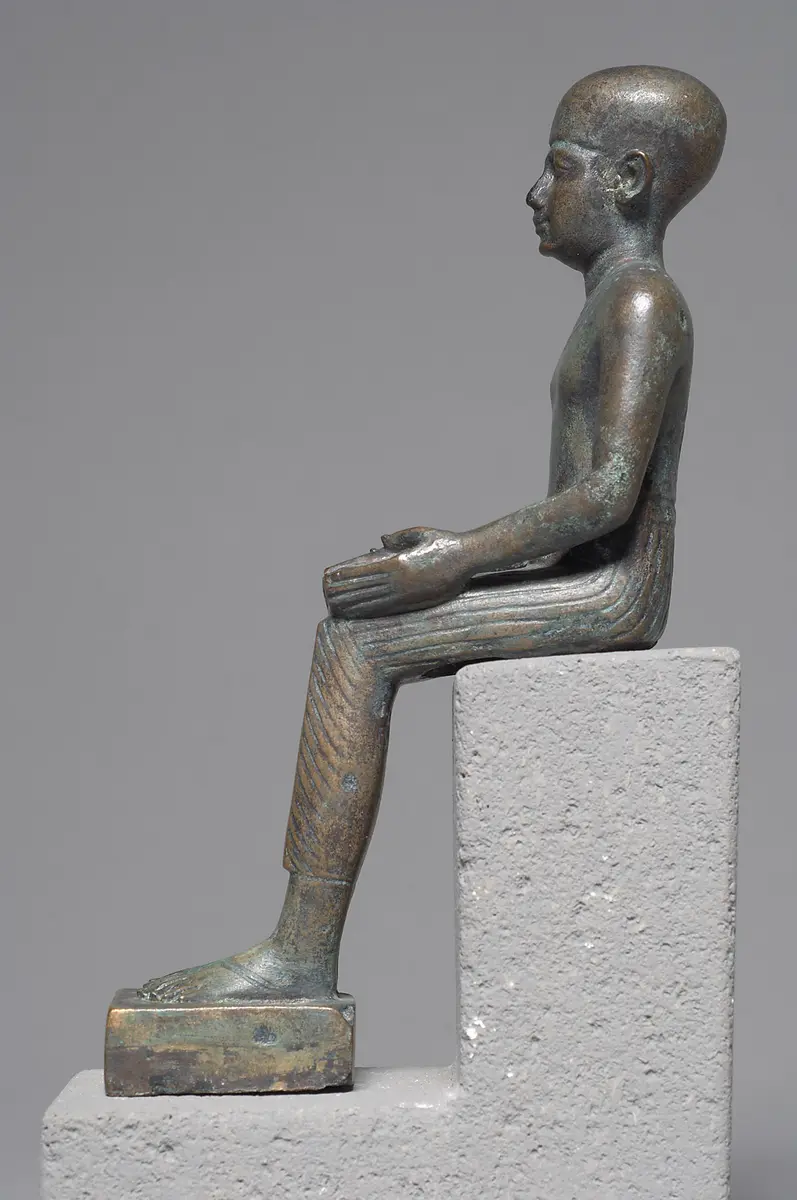
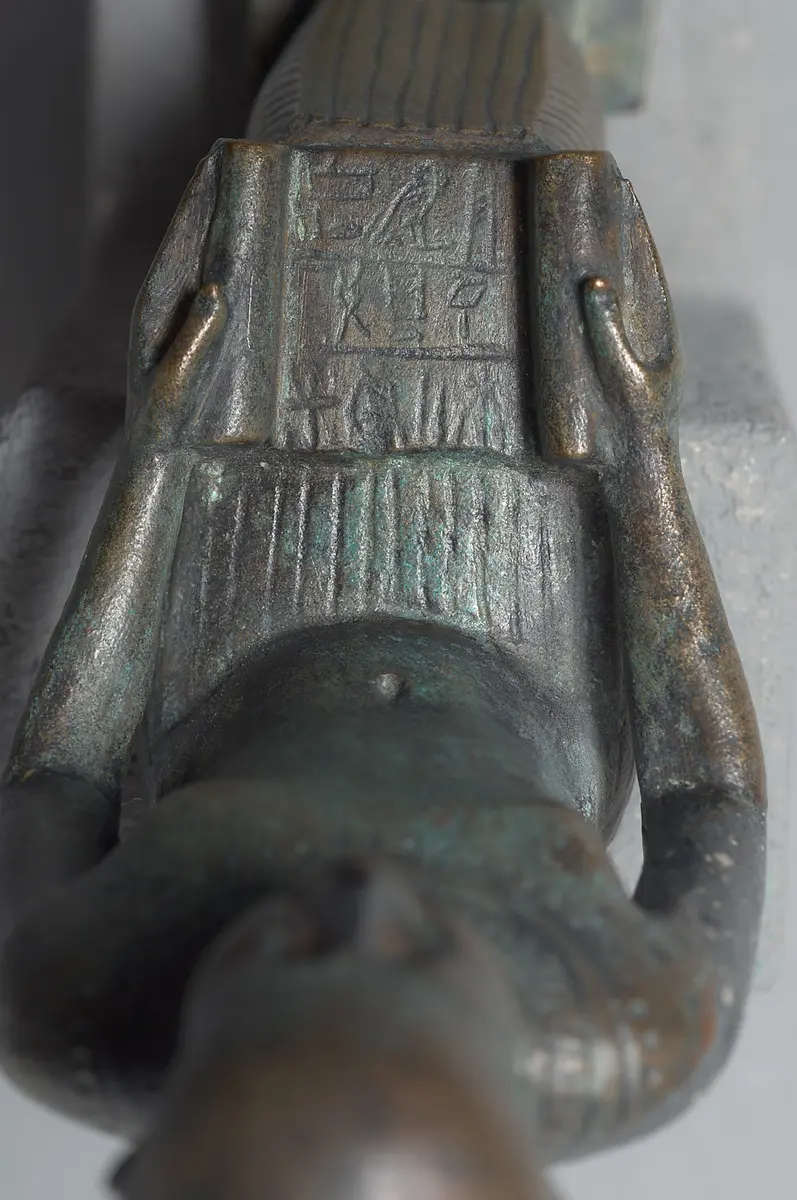
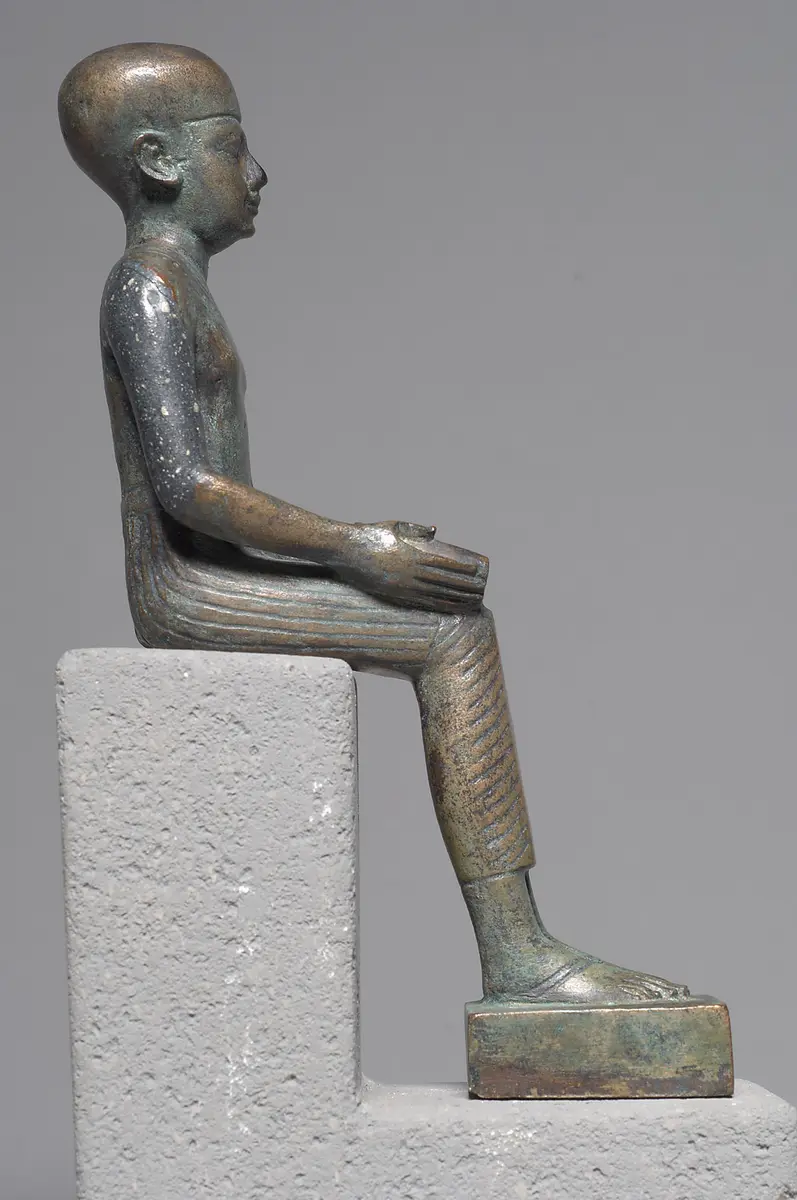
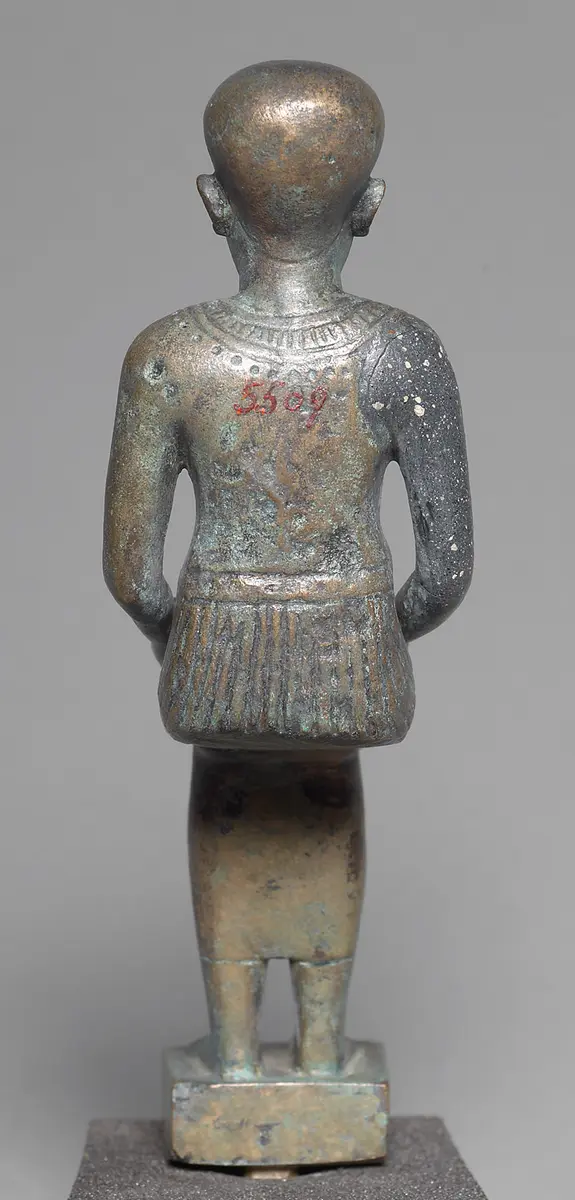
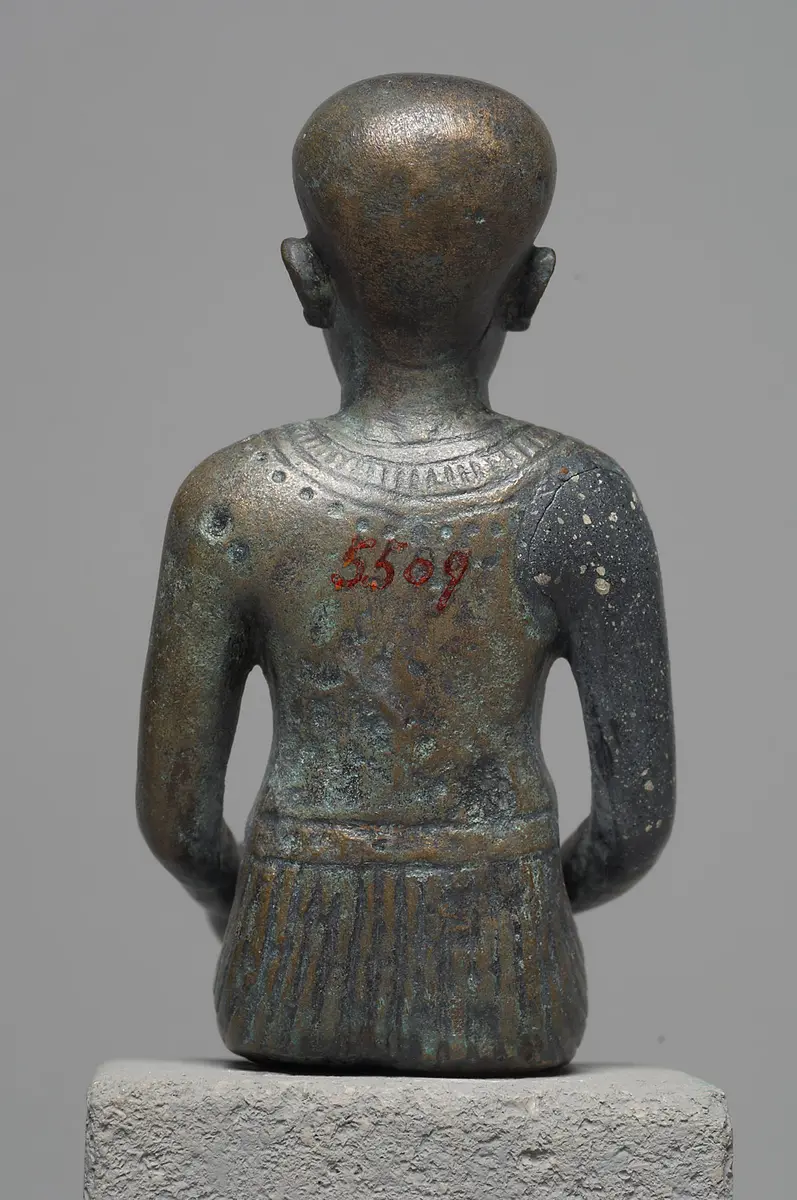
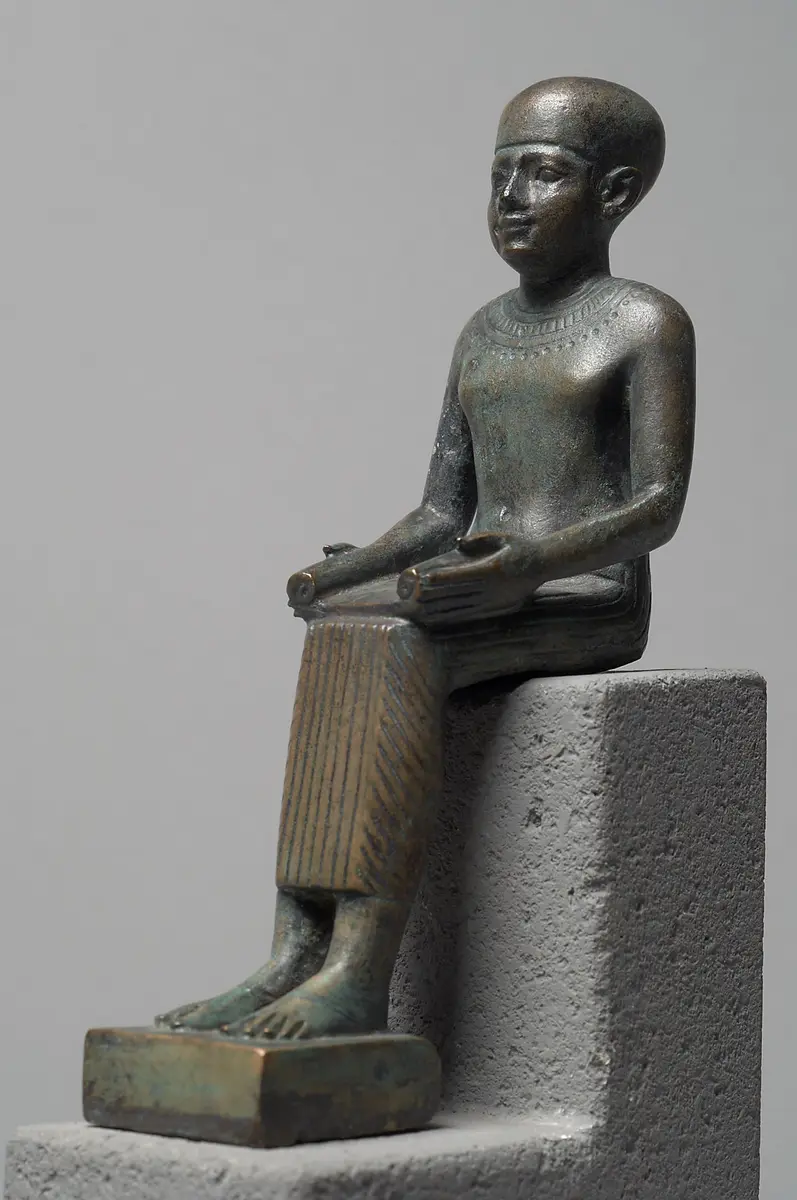
Imhotep war im Alten Reich Hohepriester von Heliopolis. Er gilt als Erbauer der Stufenpyramide des Djoser. Seit dem Neuen Reich ist er Patron der Schreiber. Als Sohn des Gottes Ptah und der irdischen Mutter Cheredu-anch ist Imhotep halbgöttlich. Ab der Spätzeit wird er als göttlich angesehen und bekommt einen eigenen Tempel in der Nähe des Serapeums in Saqqara. Besonders in ptolemäischer und römischer Zeit wird er als Nothelfer und Heilsgott verehrt. Imhotep wird sitzend mit einem aufgerollten Papyrus dargestellt. Hier sind sein Name und die Namen seiner Eltern (Ptah und Cheredu-anch) eingraviert. Wie Ptah trägt Imhotep die eng anliegende Kappe. Er ist bartlos. Der wadenlange Schurz ist fein gefältelt. Als Schmuck trägt Imhotep einen detailliert wiedergegebenen Schmuckkragen.
Time:
724-332 v. Chr.
Object Name
Statuette
Culture
Ägyptisch
Location of discovery:
Fundort unbekannt
Material/technology:
Bronze
Dimensions:
H 13 cm, B 4,1 cm, T 7,1 cm, G 388 g
Copyright
Kunsthistorisches Museum, Ägyptisch - Orientalische Sammlung
Invs.
Ägyptische Sammlung, INV 5509
Provenance
1878 aus der Sammlung Miramar übernommen
Browse more
Similar items you might be interested in

Ein Sonntag in der ägyptischen Abteilung des Kunsthistorischen Hofmuseums in Wien Wilhelm Gause 1893

Reliefbruchstück mit dem Namen König Mentuhoteps Theben-West, Deir el-Bahari, Totentempel des Mentuhotep 11. Dynastie, Zeit des Mentuhotep Nebhetepre, ca. 2061-2011 v. Chr.

Fragmentierter runder Deckel Tell el-Daba, A/II-m/n/12 13. Dynastie, ca. 1786-1665 v. Chr.

King Amenhotep III as a sphinx Fundort unbekannt 18th Dynasty, reign of Amenhotep III, 1410–1372 BC

Stele of Prince Seneb Abydos (vermutlich) 13th Dynasty, reign of Sebekhotep III, ca. 1749-1747 BC

Elephantine stele of King Amenhotep II Elephantine (vermutlich) 18th Dynasty, Year 3 of Amenhotep II, ca. 1451 BC

Standing figure of Shepses-ptah Giza, Mastaba des Schepses-ptah (S 338/339), westlicher Serdab late 6th Dynasty, ca. 2200-2191 BC

Ptah-Sokar-Osiris-Statuette der Ta-di-her-pa-chered Fundort unbekannt 7. Jh. v. Chr.

Kultbecken des Schepses-ptah II. Giza, Westfriedhof, S 4070 (Schepses-ptah II.) 6. Dynastie, ca. 2374-2191 v. Chr.

Statue group of Meri-ptah, Sa-aset, and Kafi Theben-West, Scheich Abd el-Qurna, TT 387 (vermutlich) 19th Dynasty, reign of Ramesses II, 1304–1237 BC

Ptah-Sokar-Osiris-Statuette der Hausherrin Anch-en-es-it-es auf Sockel Fundort unbekannt Ca. 7./6. Jh. v. Chr.

Korn mahlende Dienerin Giza, Mastaba des Schepses-ptah (S 338/339), westlicher Serdab Späte 6. Dynastie, ca. 2200-2191 v. Chr.

Stele of the High Priest of Ptah at Memphis Djed-her Saqqara (vermutlich) 223 BC

Statue group of Kai-pu-ptah and Ipep Giza, Mastaba des Kai-pu-ptah (G. 4461), Eingang zur Kultkammer late 5th Dynasty, ca. 2400 BC


