Harnisch
um 1576-1580 | Alessandro Farnese Herzog von Parma und Piacenza
This all’antica garniture for man and horse is one of the most elaborate sixteenth-century armours extant. It was made for Alessandro Farnese, son of Ottavio Farnese and Margaret of Parma, an illegitimate daughter of Emperor Charles V. The garniture was produced by a Milanese armourer, possibly Lucio Piccinino, and the designs are by Andrea Casalini, a goldsmith working for the court in Parma. Ten of Casalini’s detailed preparatory drawings for the garniture have survived and are now in Paris, New York, Hamburg, and Vienna. Sources suggest the garniture was ordered not by Alessandro but by his father, Ottavio.
The ensemble has survived almost intact. It consists of a cuirass with reinforcing pieces for the left shoulder (for jousting) and a bard with chanfron and saddle. A stylistically divergent oval shield, a burgonet, and a mace complete the garniture.
Alessandro Farnese succeeded John of Austria (Don Juan de Austria) as governor of the Spanish Netherlands following the latter’s death in October 1578. At the time – in 1577/78 – Archduke Ferdinand II was corresponding about receiving armour that had belonged to these two relatives, asking for the ‘dispatch of armour that had belonged to Master John of Austria as well as one that had belonged to Prince Alessandro Farnese’ (weillendt Herrn Don Johann von Österreich Leibharnisch sowohl auch des Prinzen von Parma Alexander Farneß haraufzeschicken).
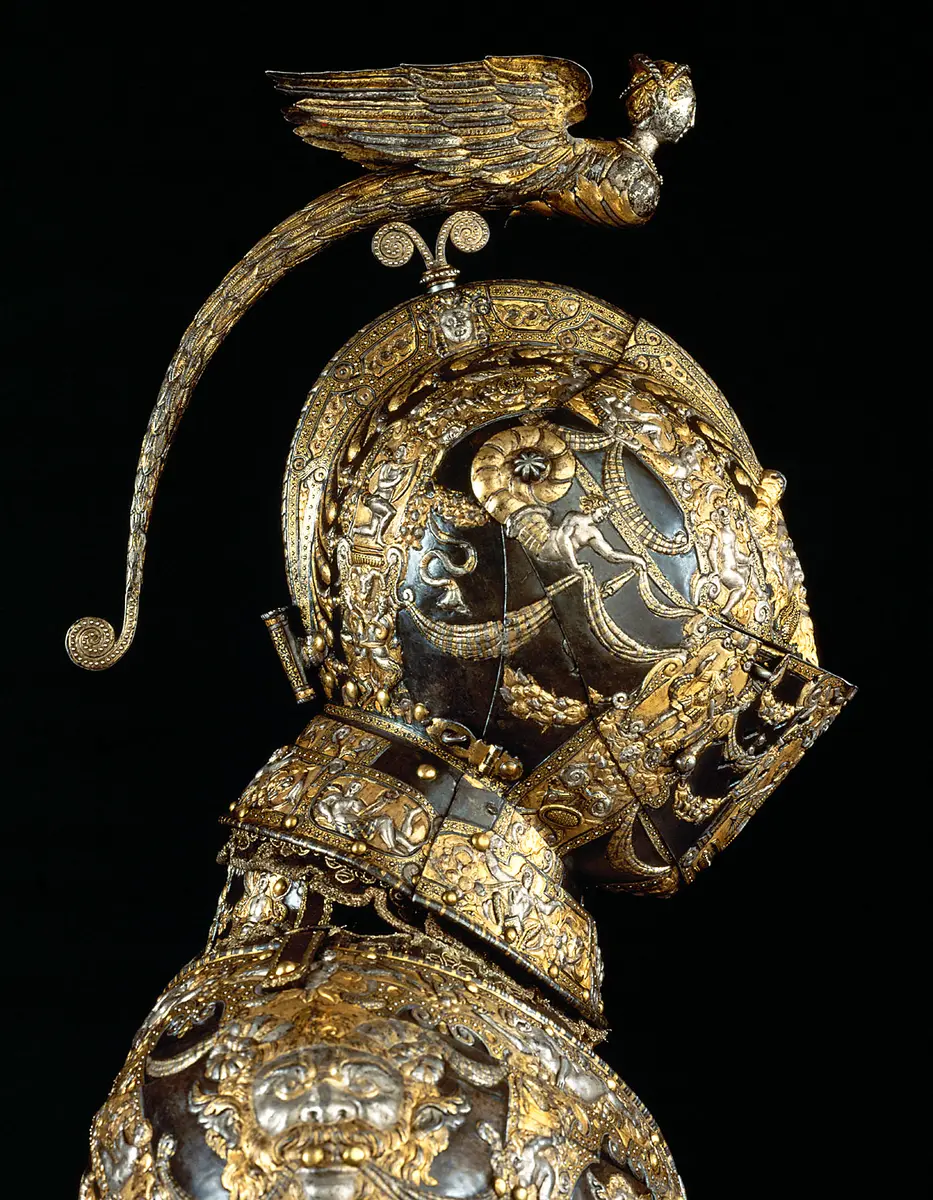
It seems that both armours finally arrived at Innsbruck in January 1580 (see cat. 67). At Ambras Castle the garniture was displayed in the second armoury, where it was described in 1596 as ‘an impressive armour for man and horse made for the Duke of Parma … on the head a harpy, silver and gilt’ (ain stattliche rüstung auf dem rosz vom herzog von Parma … auf dem kopf ain Harpia, so silbern und vergult).
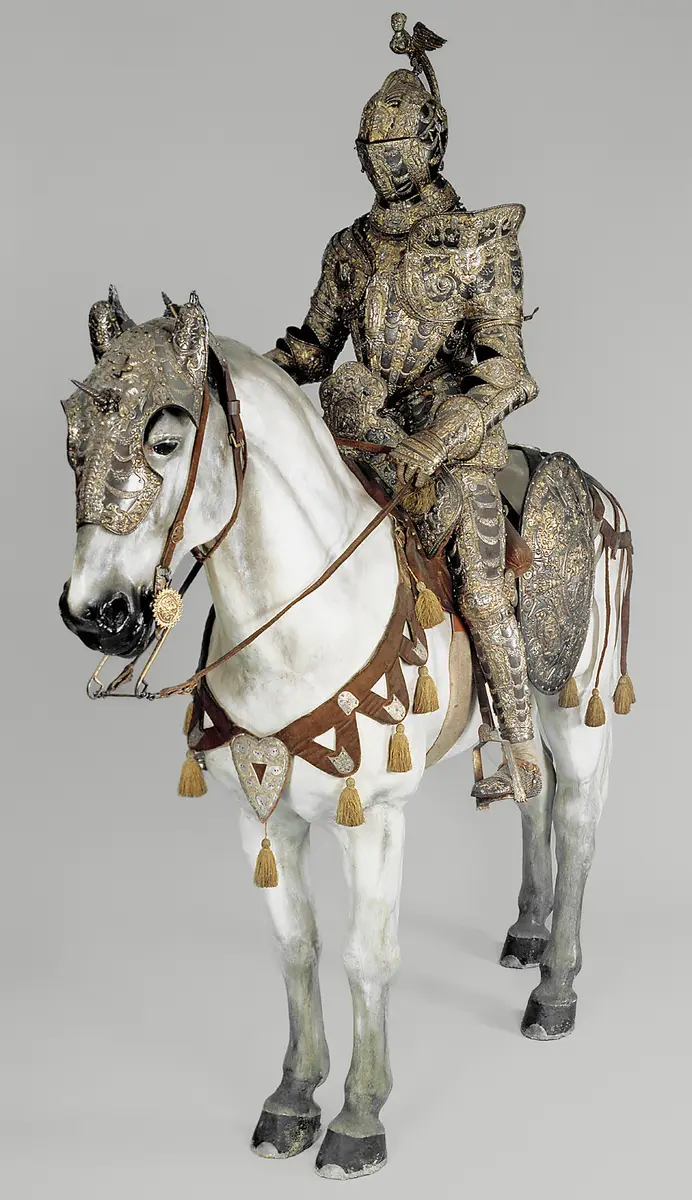
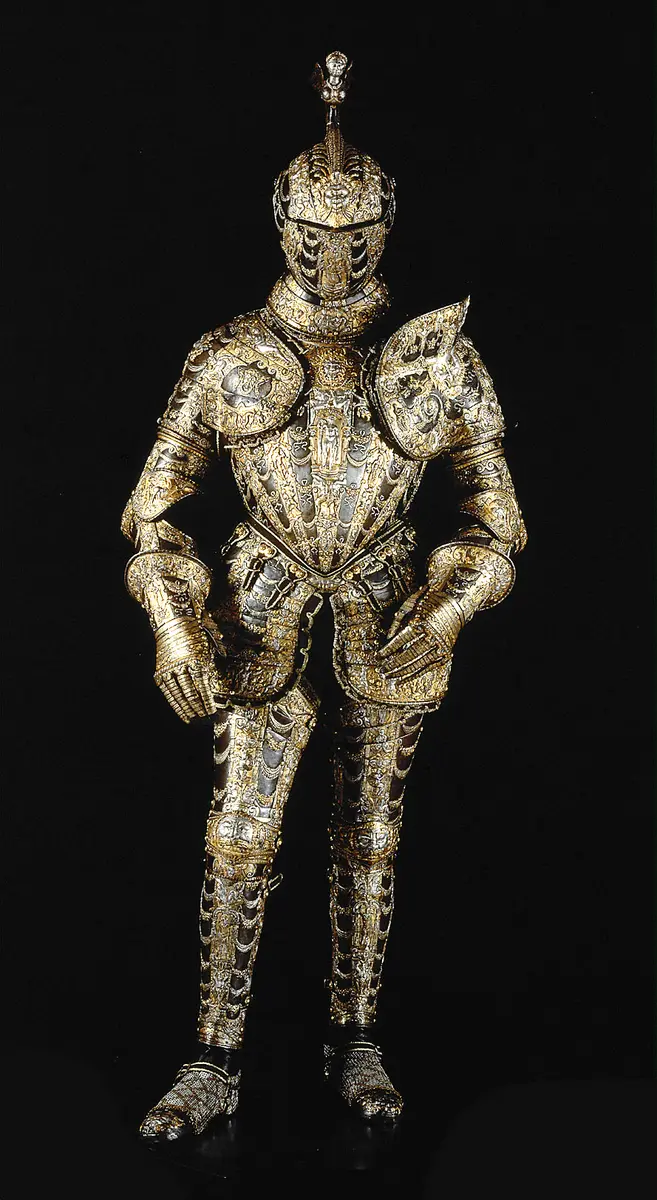
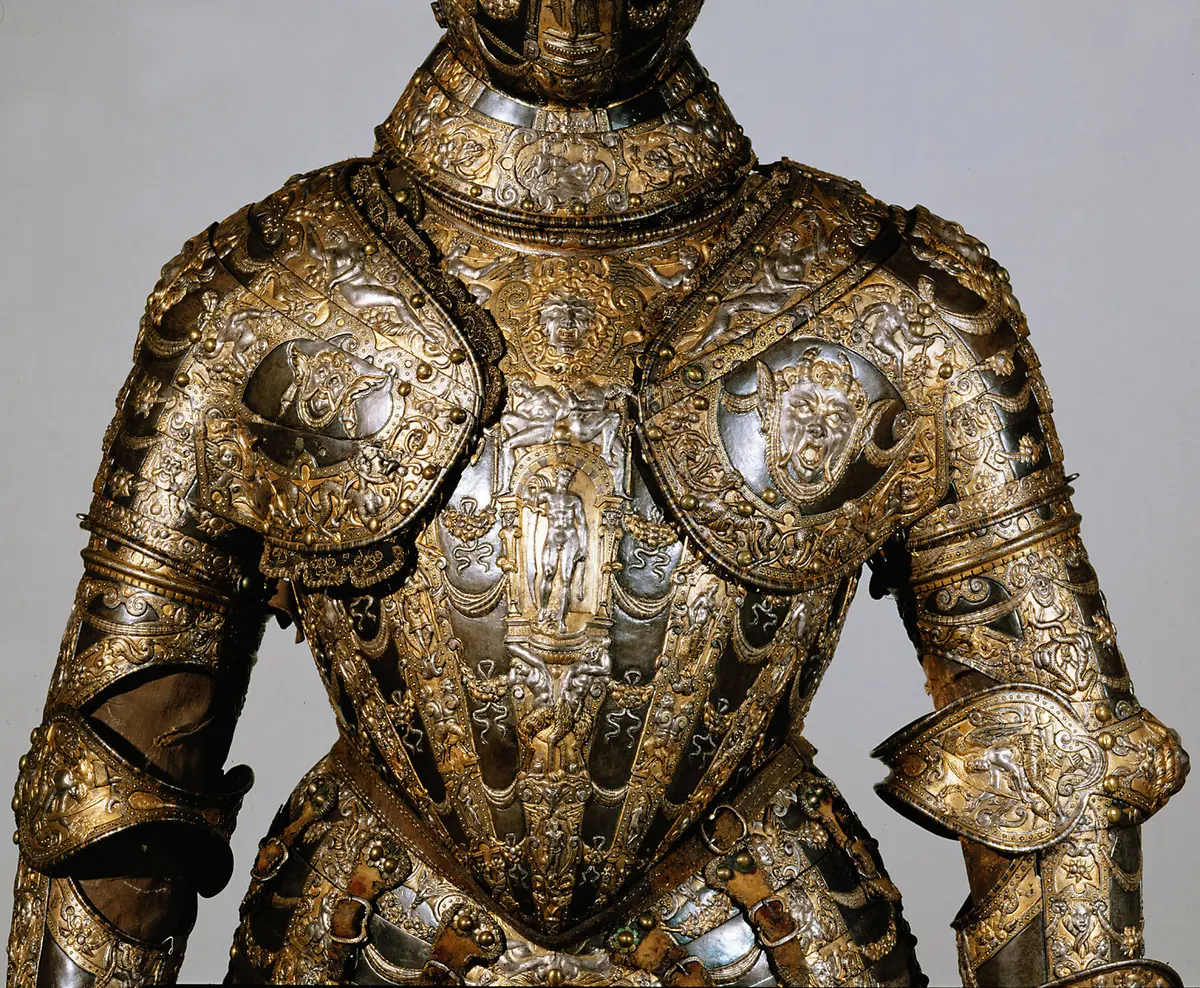
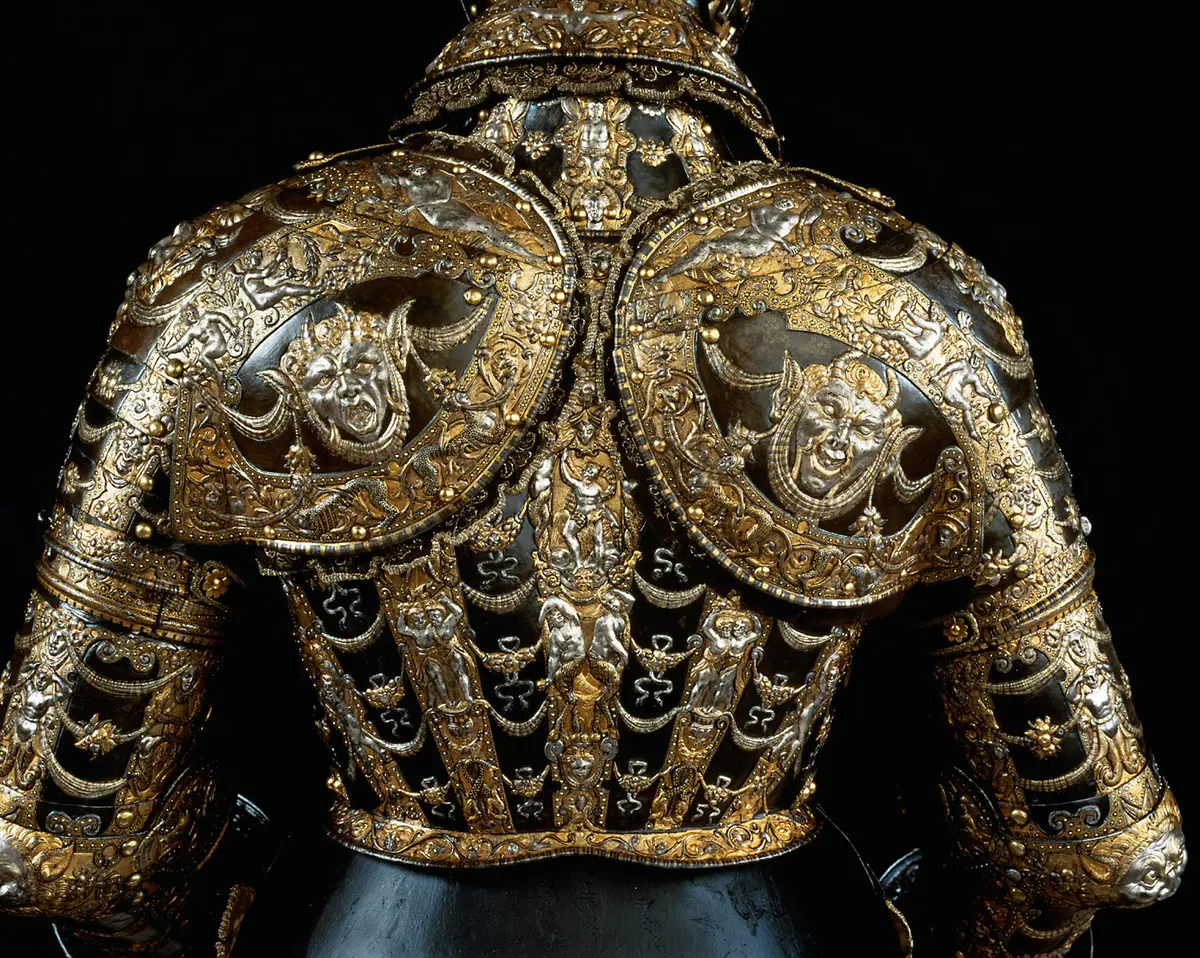
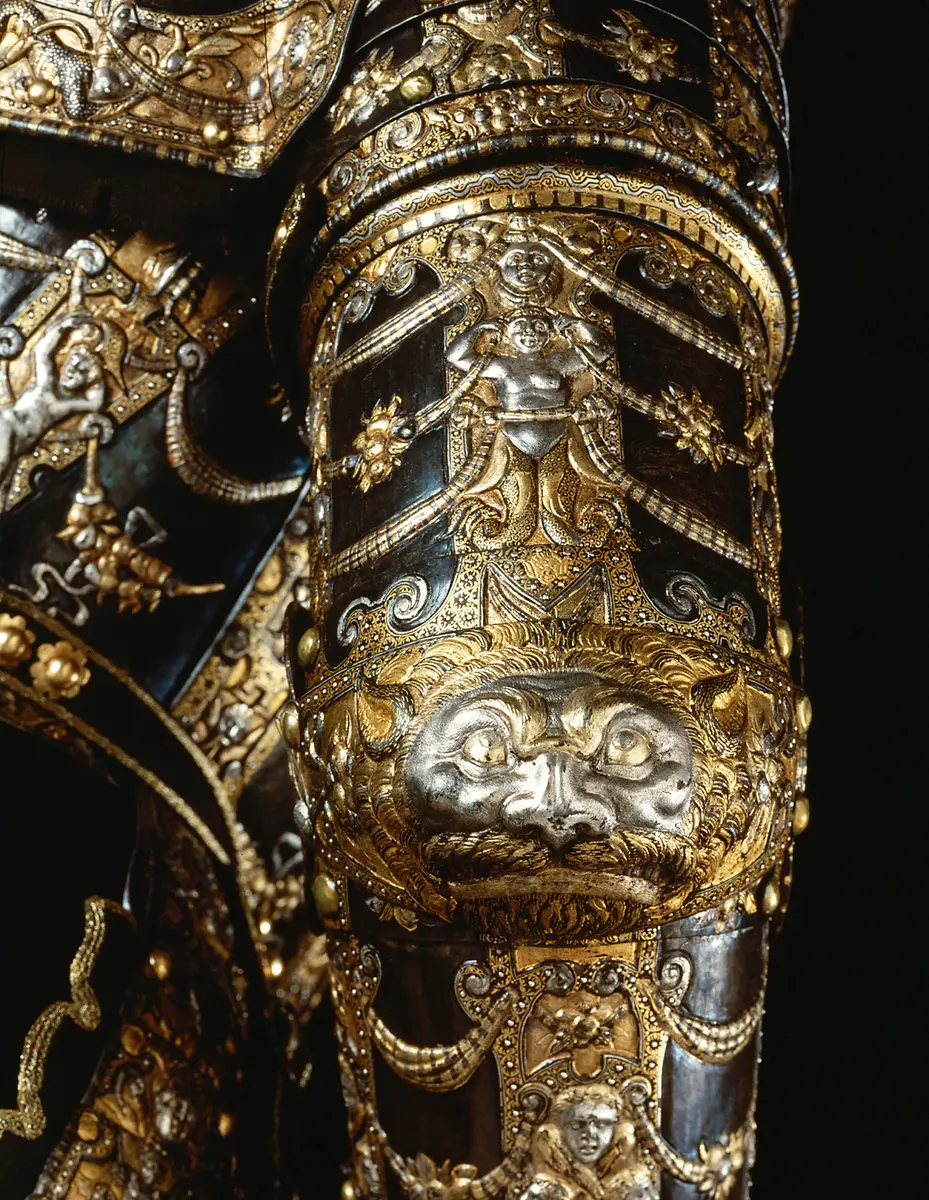
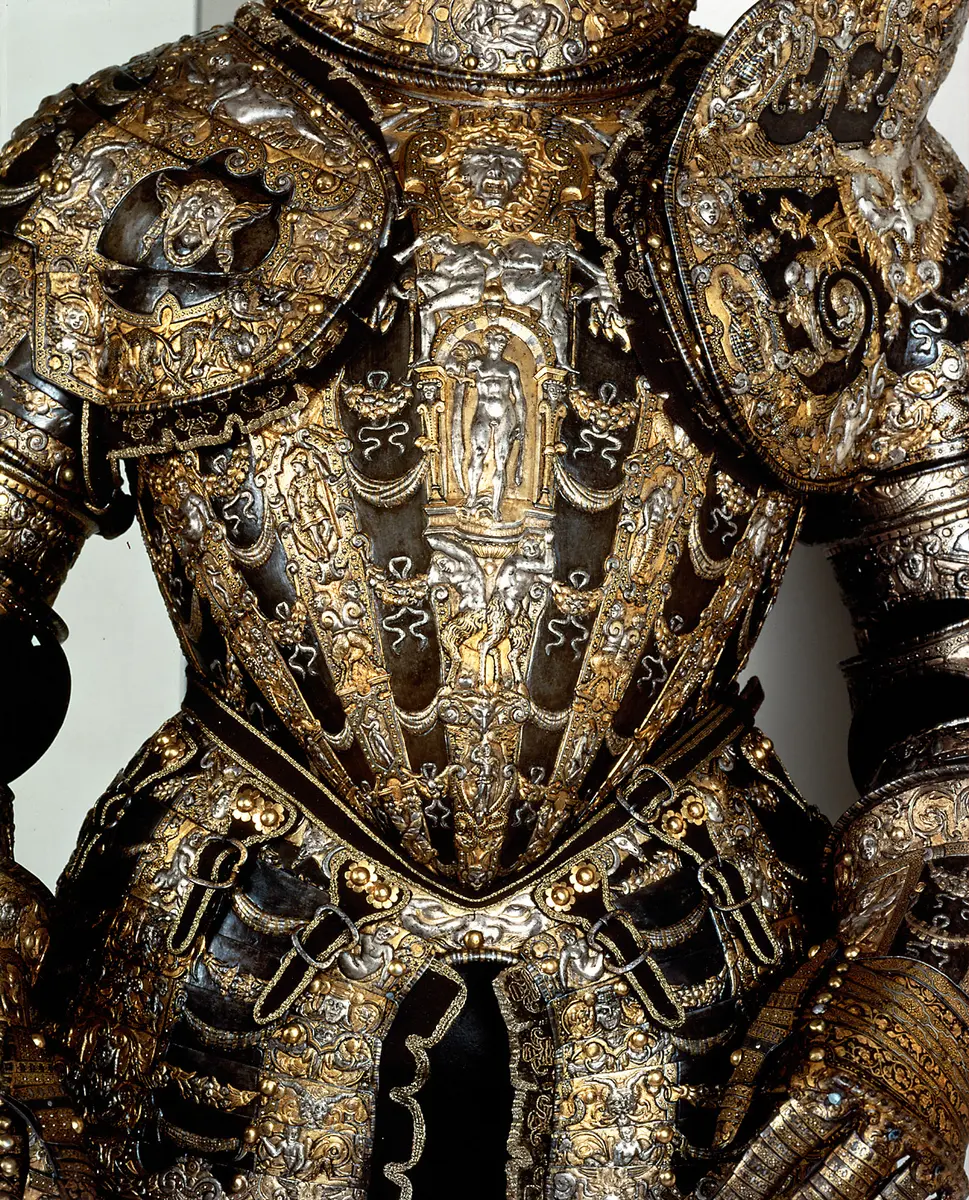
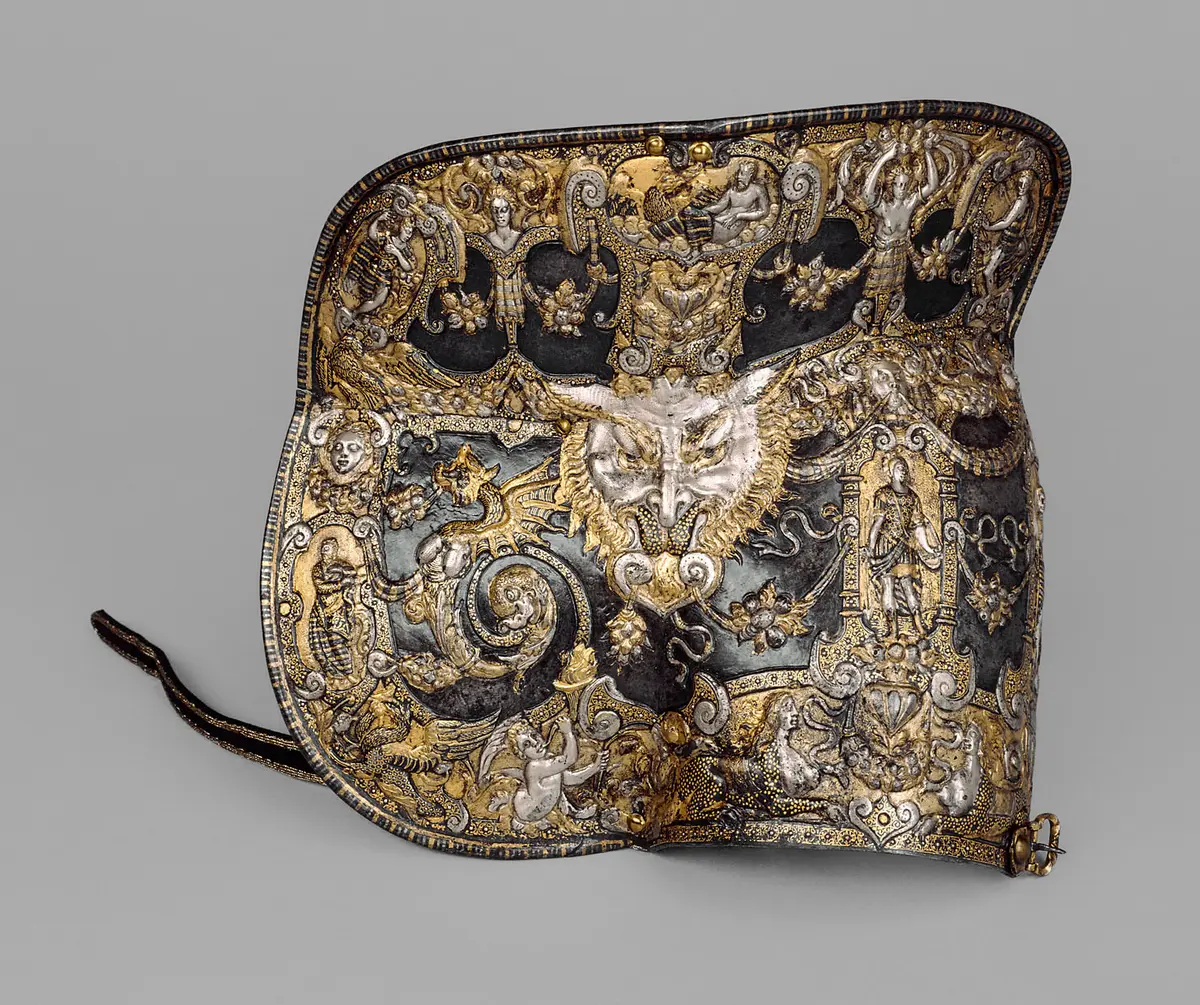
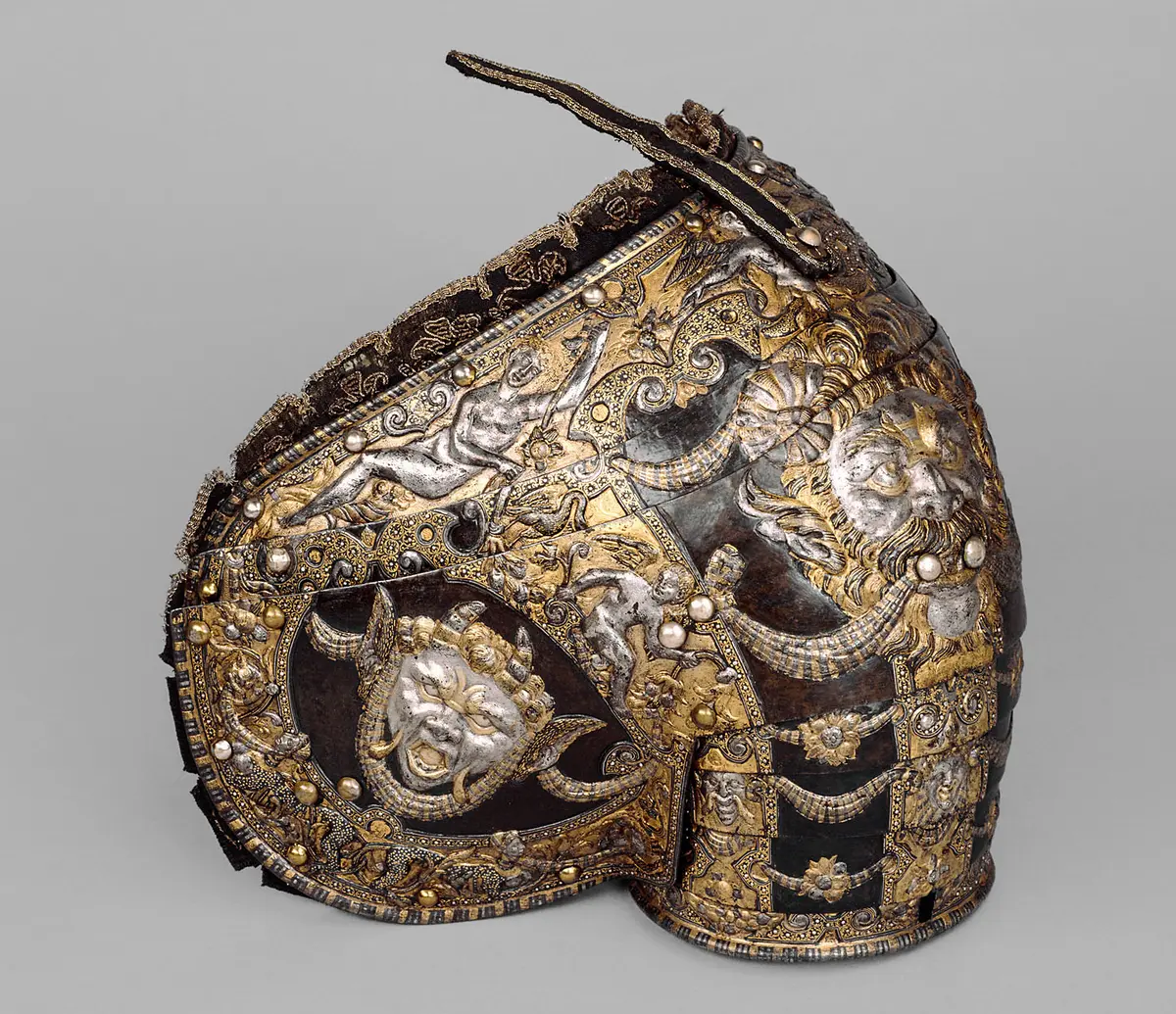
This all’antica garniture for man and horse is one of the most elaborate sixteenth-century armours extant. It was made for Alessandro Farnese, son of Ottavio Farnese and Margaret of Parma, an illegitimate daughter of Emperor Charles V. The garniture was produced by a Milanese armourer, possibly Lucio Piccinino, and the designs are by Andrea Casalini, a goldsmith working for the court in Parma. Ten of Casalini’s detailed preparatory drawings for the garniture have survived and are now in Paris, New York, Hamburg, and Vienna. Sources suggest the garniture was ordered not by Alessandro but by his father, Ottavio.
The ensemble has survived almost intact. It consists of a cuirass with reinforcing pieces for the left shoulder (for jousting) and a bard with chanfron and saddle. A stylistically divergent oval shield, a burgonet, and a mace complete the garniture.
Alessandro Farnese succeeded John of Austria (Don Juan de Austria) as governor of the Spanish Netherlands following the latter’s death in October 1578. At the time – in 1577/78 – Archduke Ferdinand II was corresponding about receiving armour that had belonged to these two relatives, asking for the ‘dispatch of armour that had belonged to Master John of Austria as well as one that had belonged to Prince Alessandro Farnese’ (weillendt Herrn Don Johann von Österreich Leibharnisch sowohl auch des Prinzen von Parma Alexander Farneß haraufzeschicken).
It seems that both armours finally arrived at Innsbruck in January 1580 (see cat. 67). At Ambras Castle the garniture was displayed in the second armoury, where it was described in 1596 as ‘an impressive armour for man and horse made for the Duke of Parma … on the head a harpy, silver and gilt’ (ain stattliche rüstung auf dem rosz vom herzog von Parma … auf dem kopf ain Harpia, so silbern und vergult).
Owner:
Alessandro Farnese Herzog von Parma und Piacenza , Herzog von Parma und Piacenza (1545 - 1592) DNB
Artist:
Lucio Piccinino , (Goldschmied und Treibkünstler), zugeschrieben (um 1575 - 1595, tätig in Mailand) DNB
Draft:
Andrea Casalini (Goldschmied) (gestorben 1597, tätig in Parma)
Time:
um 1576-1580
Object Name
Harnisch
Culture
Mailand
Material/technology:
Eisen, geschmiedet, getrieben, teils ziseliert, teils gebläut, teils geschwärzt, teils mit Gold, Silber, Silberperlen tauschiert. Schnallen: Eisen. Nietkappen: Messing, teils feuervergoldet. Kettengeflecht aus Eisen und Messing. Leder (teils modern). Textil (Original nur noch in Resten vorhanden): Seide. Samt. Silberlahn, Goldlahn (teils modern).
Sporen: Eisen, geschmiedet, teils geätzt. Ätzdekor: feuervergoldet. Schnalle: Eisen, teils feuervergoldet (fragmentarisch erhalten). Texil (modern).
Dimensions:
Gesamtmaß Harnisch mit Pferd: H 264 cm × B 92 cm × T 252 cm
Sturmhaube: H 45 cm × B 23 cm × T 39 cm
Copyright
Kunsthistorisches Museum, Hofjagd- und Rüstkammer
Invs.
Hofjagd- und Rüstkammer, A 1132