Eros mit Muschel und Kette
2. Hälfte 1. Jh. n. Chr.
Der kleine geflügelte Liebesgott Amor hält eine Muschel in der linken Hand. Einer mythologischen Erzählung nach ist er der Sohn von Venus und Mars, entsprang also der Verbindung der Liebesgöttin mit dem Kriegsgott. Die Ikonografie als geflügelter Knabe beeinflusste direkt die Engelsdarstellungen in der christlich S. Stoss, in: Seperate but Inseperable: Mythology and Culture of Ancient Greece and Rome. Ausstellungskatalog National Museum of Korea (Seoul 2023). en Religion. Die Lampenschnauze ist eckig und durch Voluten gestaltet. S. Stoss, in: Seperate but Inseperable: Mythology and Culture of Ancient Greece and Rome. Ausstellungskatalog National Museum of Korea (Seoul 2023).
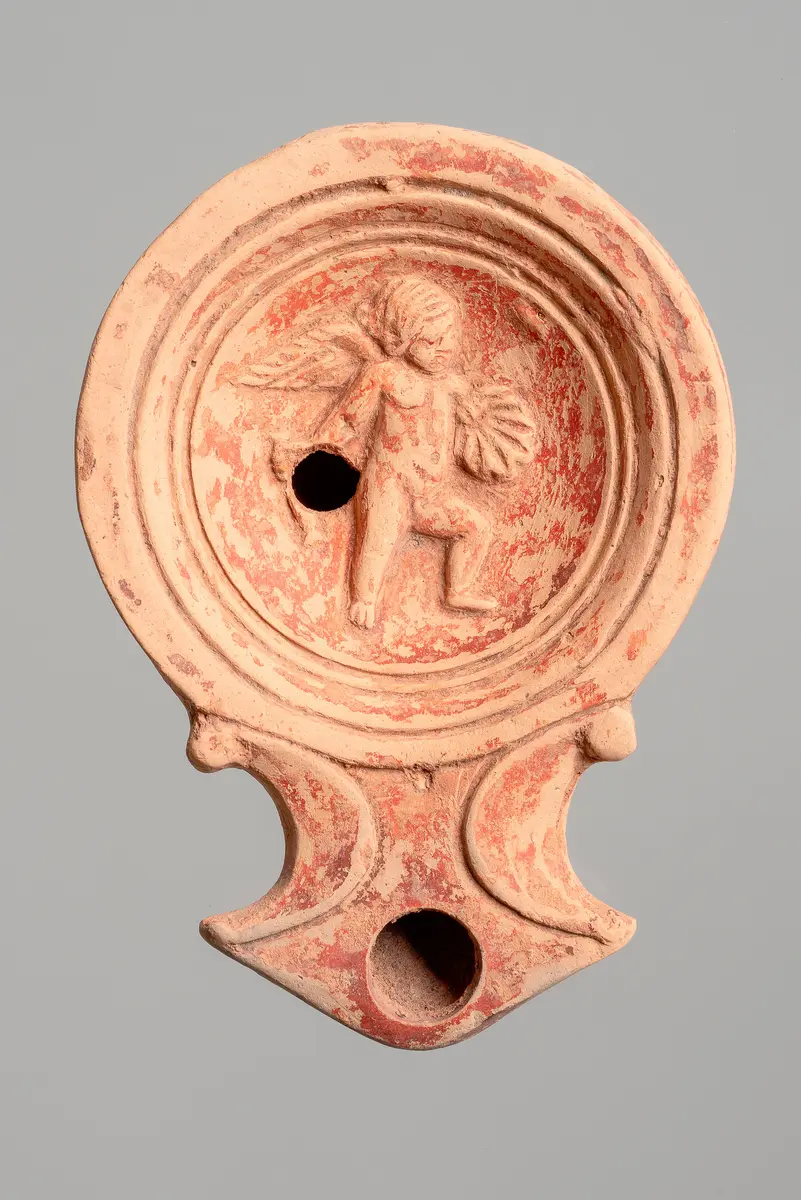
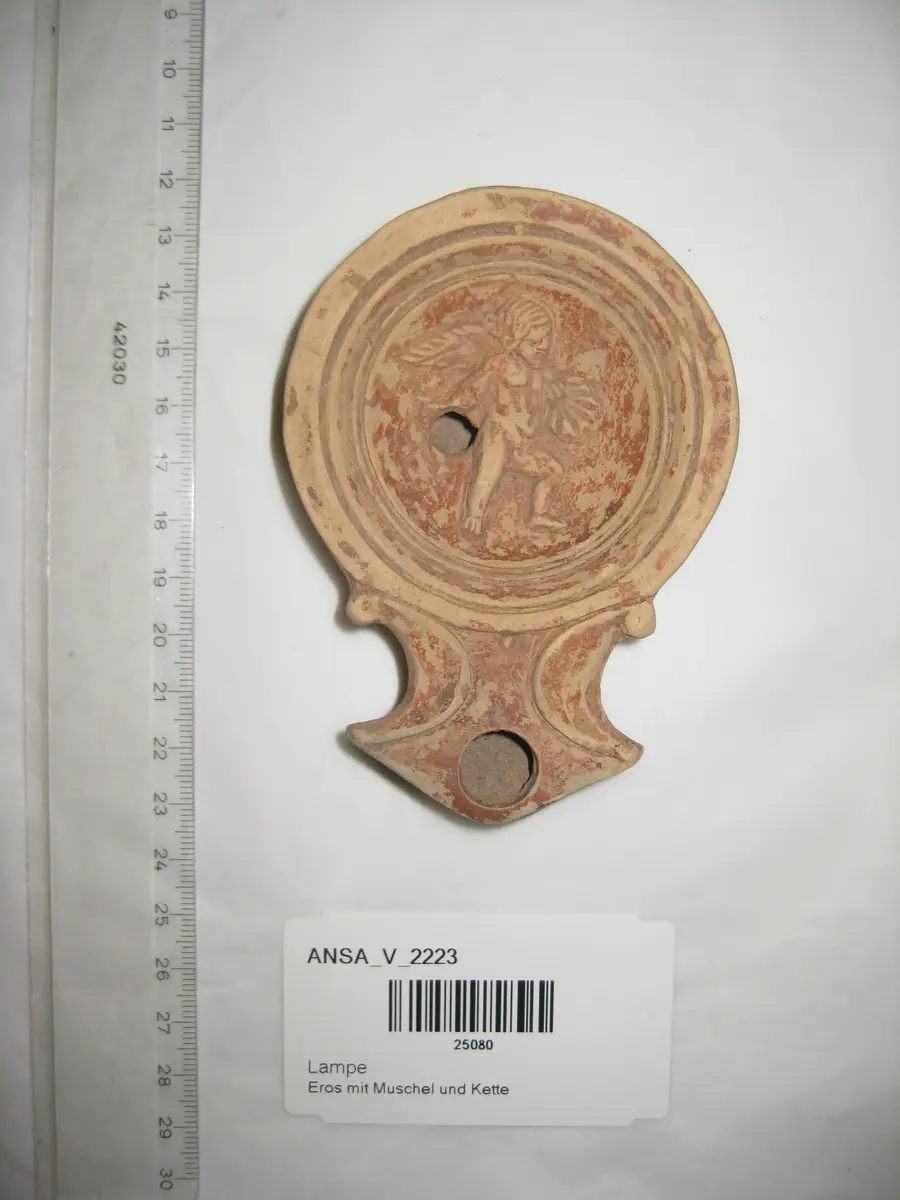
Der kleine geflügelte Liebesgott Amor hält eine Muschel in der linken Hand. Einer mythologischen Erzählung nach ist er der Sohn von Venus und Mars, entsprang also der Verbindung der Liebesgöttin mit dem Kriegsgott. Die Ikonografie als geflügelter Knabe beeinflusste direkt die Engelsdarstellungen in der christlich S. Stoss, in: Seperate but Inseperable: Mythology and Culture of Ancient Greece and Rome. Ausstellungskatalog National Museum of Korea (Seoul 2023). en Religion. Die Lampenschnauze ist eckig und durch Voluten gestaltet. S. Stoss, in: Seperate but Inseperable: Mythology and Culture of Ancient Greece and Rome. Ausstellungskatalog National Museum of Korea (Seoul 2023).
Time:
2. Hälfte 1. Jh. n. Chr.
Object Name
Lampe
Culture
Römisch
Location of discovery:
Ateste (Este, Italien)
Material/technology:
Ton hellrosa, Überzug dunkelrot
Dimensions:
L/H 2,7 × B 10,2 × D 7,2 cm
Copyright
Kunsthistorisches Museum, Antikensammlung
Invs.
Antikensammlung, V 2223
Provenance
Slg. Este - Catajo; im Besitz von Erzherzog Franz Ferdinand; 1923 inventarisch übernommen