Die Stola
2. Viertel 14. Jahrhundert
The Stola is sewn together from eight pieces of differing sizes cut from the same gold fabric. The black silk used for the eagles has largely fallen out; all that remains are the round medallions surrounded with double rows of pearls. These alternate with a total of 68 appliqués of gilt silver, which, as on the long side of the Stola, are set in double rows of pearls. To protect the precious silk fabric, all the rows of pearls and most of the appliqués are underlaid with parchment. The enamels in the appliqués are underlaid with several layers of paper, cut precisely to shape and covered with writing that can be dated to the 14th century. The Stola appears to have been modelled on its Norman predecessor, which may have been damaged, or on a Hohenstaufen version in between. Perhaps it was made for Louis of Bavaria. Its unusual length is remarkable; it is not possible to wear it like a liturgical stole. It seems to have been modelled on the loros that the Byzantine emperor wore, and which was imitated by the Normans. With the help of mosaic depictions of Roger II and William II in Palermo, the tradition of wearing the loros over the shoulder and around the hips can be reconstructed, and this also solves the puzzle about the various pieces out of which the Vienna Stola was sewn. In stitching the pieces together, attention was always paid to the attitude of the eagle, so that when the stole was correctly wrapped the eagle would always be visible with its head up. The memory of the imperial loros seems to have soon been lost, however; the Stola was then considered the equal of the priestly stole and was worn draped across the chest despite its great length.
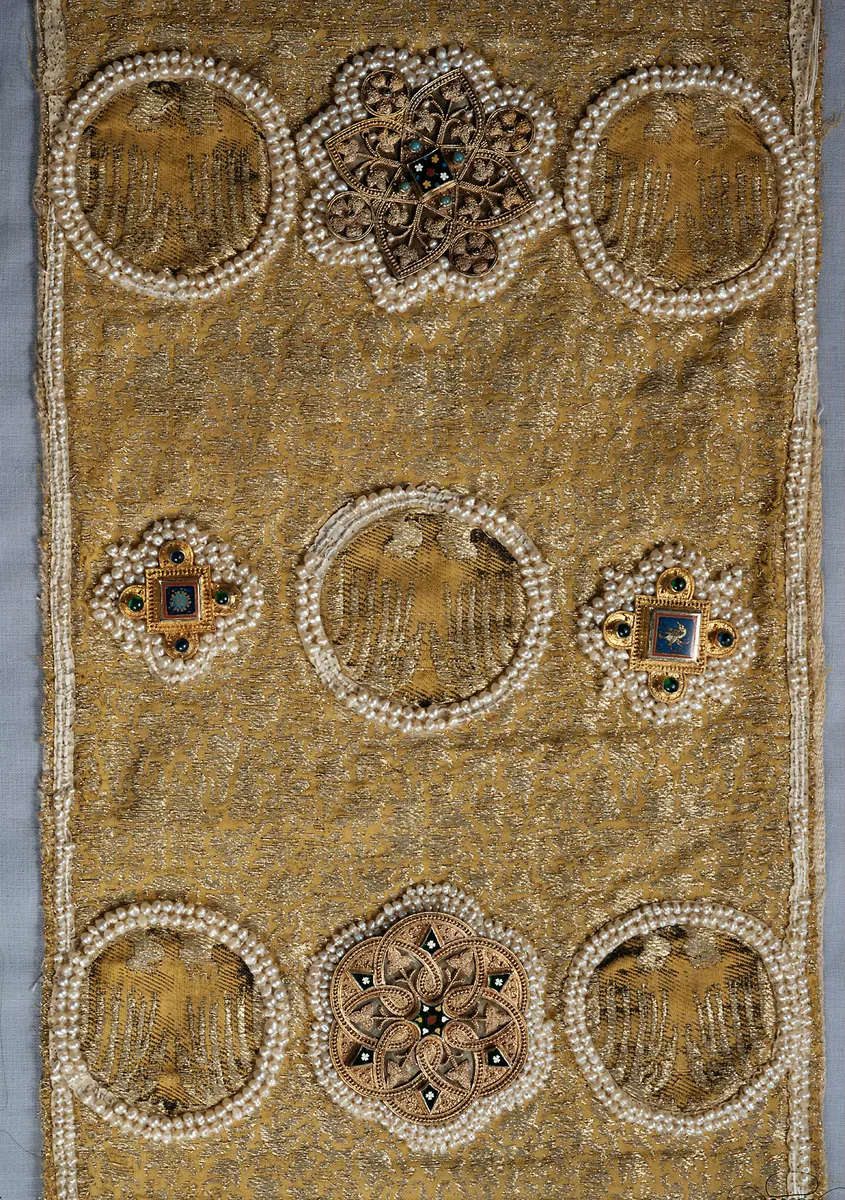
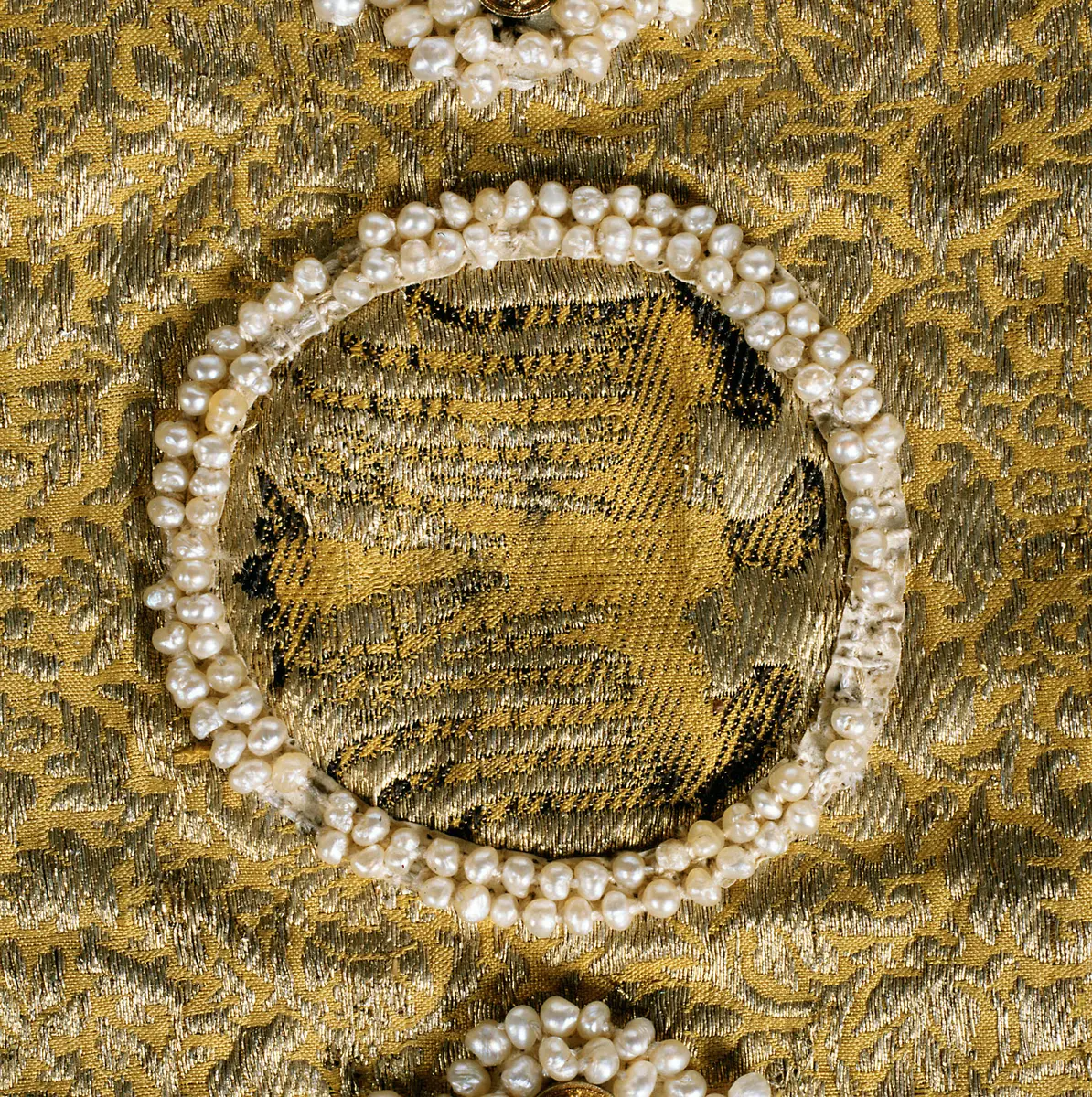
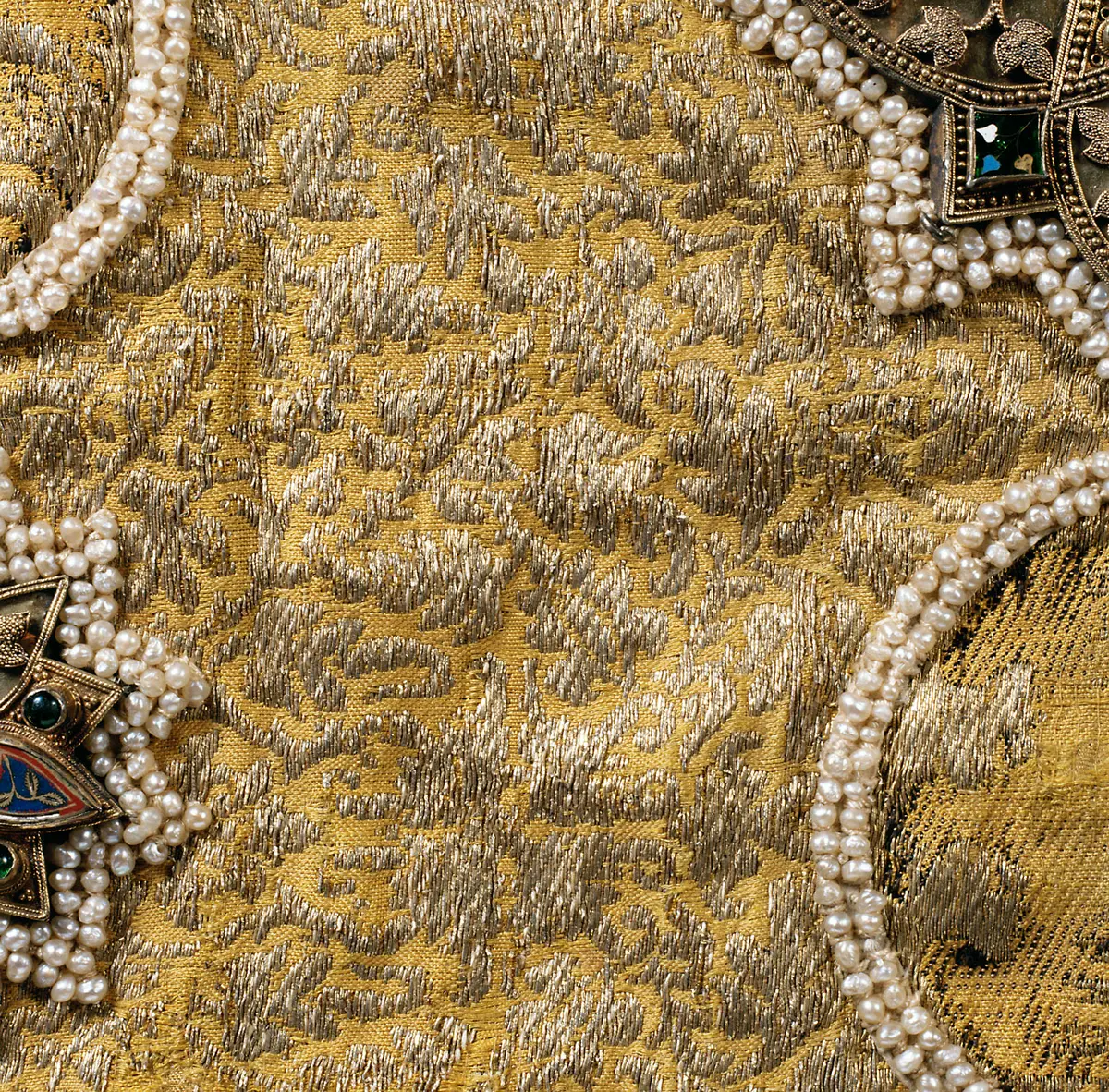
The Stola is sewn together from eight pieces of differing sizes cut from the same gold fabric. The black silk used for the eagles has largely fallen out; all that remains are the round medallions surrounded with double rows of pearls. These alternate with a total of 68 appliqués of gilt silver, which, as on the long side of the Stola, are set in double rows of pearls. To protect the precious silk fabric, all the rows of pearls and most of the appliqués are underlaid with parchment. The enamels in the appliqués are underlaid with several layers of paper, cut precisely to shape and covered with writing that can be dated to the 14th century. The Stola appears to have been modelled on its Norman predecessor, which may have been damaged, or on a Hohenstaufen version in between. Perhaps it was made for Louis of Bavaria. Its unusual length is remarkable; it is not possible to wear it like a liturgical stole. It seems to have been modelled on the loros that the Byzantine emperor wore, and which was imitated by the Normans. With the help of mosaic depictions of Roger II and William II in Palermo, the tradition of wearing the loros over the shoulder and around the hips can be reconstructed, and this also solves the puzzle about the various pieces out of which the Vienna Stola was sewn. In stitching the pieces together, attention was always paid to the attitude of the eagle, so that when the stole was correctly wrapped the eagle would always be visible with its head up. The memory of the imperial loros seems to have soon been lost, however; the Stola was then considered the equal of the priestly stole and was worn draped across the chest despite its great length.
Time:
2. Viertel 14. Jahrhundert
Object Name
Textil; liturgisches Gewand; Krönungsornat; Stola
Culture
Italienisch
Material/technology:
Textil; gelbe Seide: Louisine, gemustert mit schwarzer Seide (Adler) und Goldfäden, Perlen, vergoldete Silberappliken mit Granulation, Grubenschmelzemails in Silber, Zellenschmelzemails in Gold, Glassteine
Dimensions:
L. 599 - 602 cm, B. 21 - 23 cm
Copyright
Kunsthistorisches Museum, Weltliche Schatzkammer
Invs.
Schatzkammer, WS XIII 8