Save object
You may download and use the image for private purposes. Nutzungsbedingungen & AGBs
To request to use the image for commercial or academic purposes, please send us a reproduction request
Save object
You may download and use the image for private purposes. Nutzungsbedingungen & AGBs
To request to use the image for commercial or academic purposes, please send us a reproduction request
Save object
You may download and use the image for private purposes. Nutzungsbedingungen & AGBs
To request to use the image for commercial or academic purposes, please send us a reproduction request
Save object
You may download and use the image for private purposes. Nutzungsbedingungen & AGBs
To request to use the image for commercial or academic purposes, please send us a reproduction request
Save object
You may download and use the image for private purposes. Nutzungsbedingungen & AGBs
To request to use the image for commercial or academic purposes, please send us a reproduction request
Save object
You may download and use the image for private purposes. Nutzungsbedingungen & AGBs
To request to use the image for commercial or academic purposes, please send us a reproduction request
Save object
You may download and use the image for private purposes. Nutzungsbedingungen & AGBs
To request to use the image for commercial or academic purposes, please send us a reproduction request
Die Geburt Christi
8. - 9. Jh. n. Chr.
Die Pyxis (Schatulle) aus Elfenbein trägt im Relief die Szenen der Geburt Christi mit der Hebamme Salome (hält ihre verdorrte Hand) und die Anbetung des Kindes durch die drei Magier ("Hl. Drei Könige"). Im Zentrum die thronende Mutter Gottes.Das wahrscheinlich aus Trier stammende Gefäß gilt als karolingische Kopie nach einem spätantiken Vorbild.
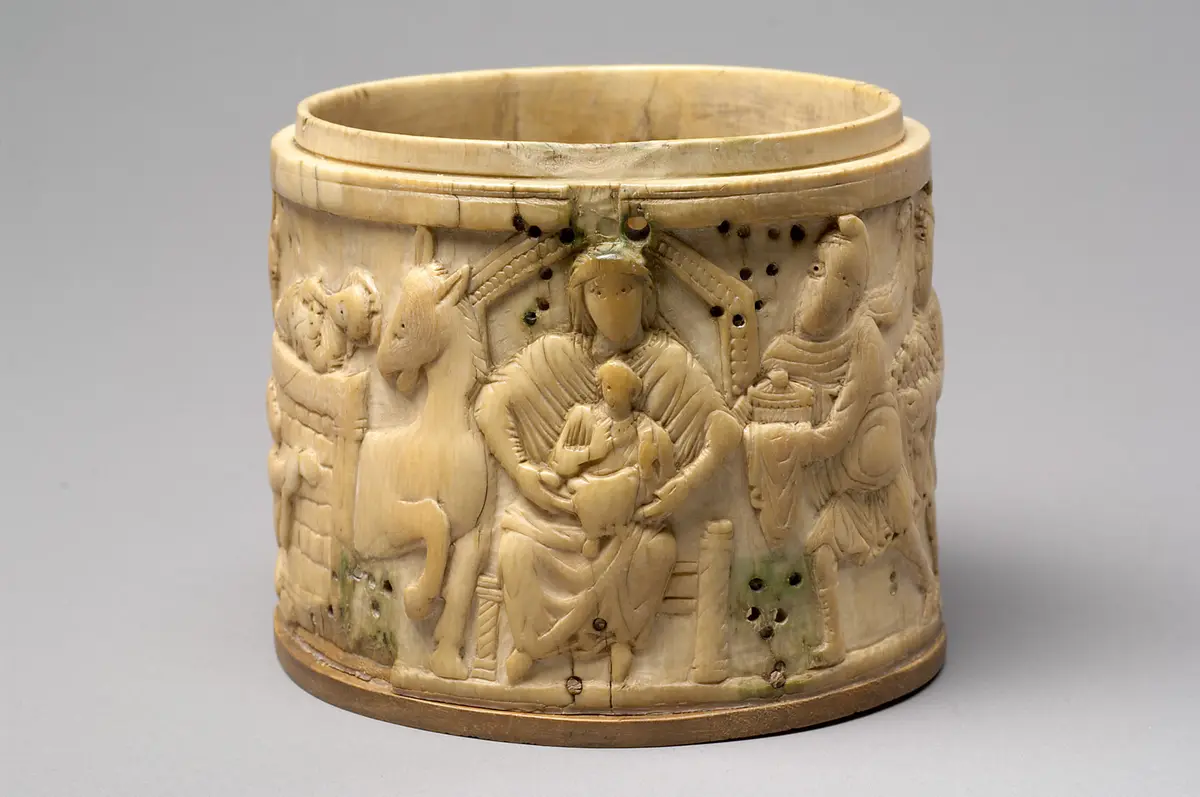
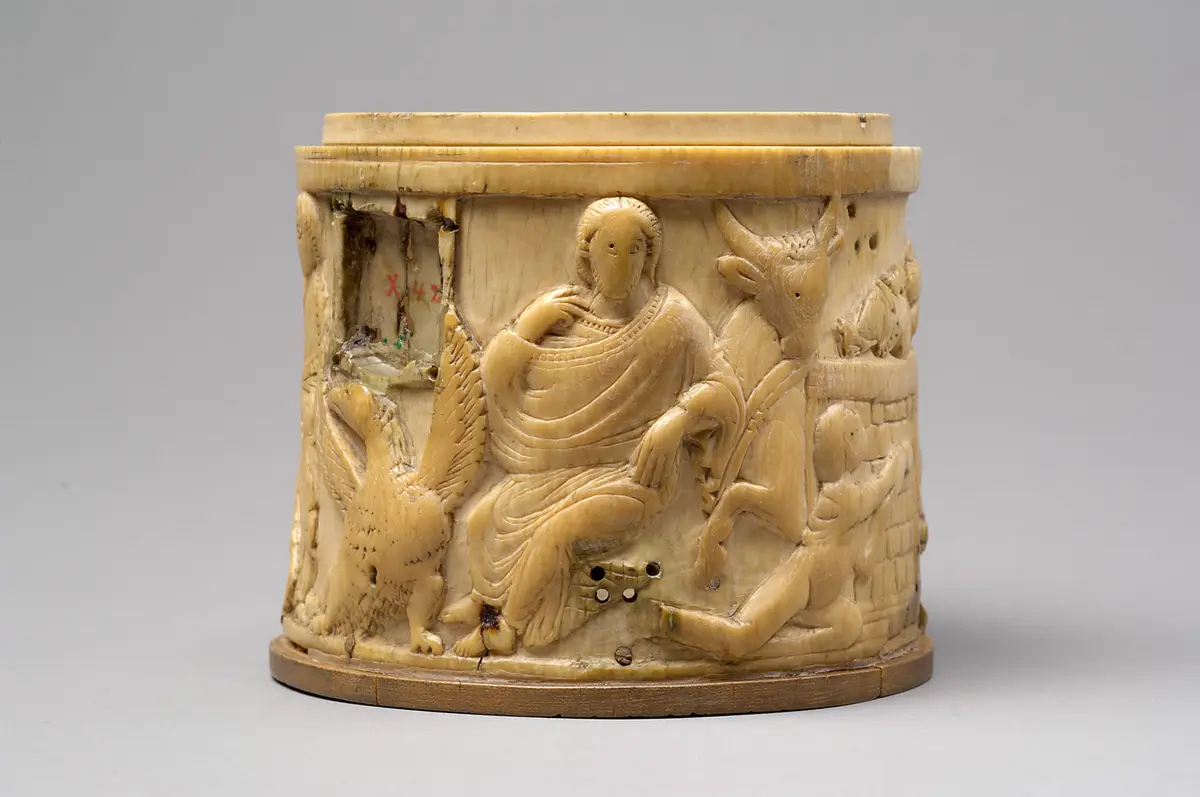
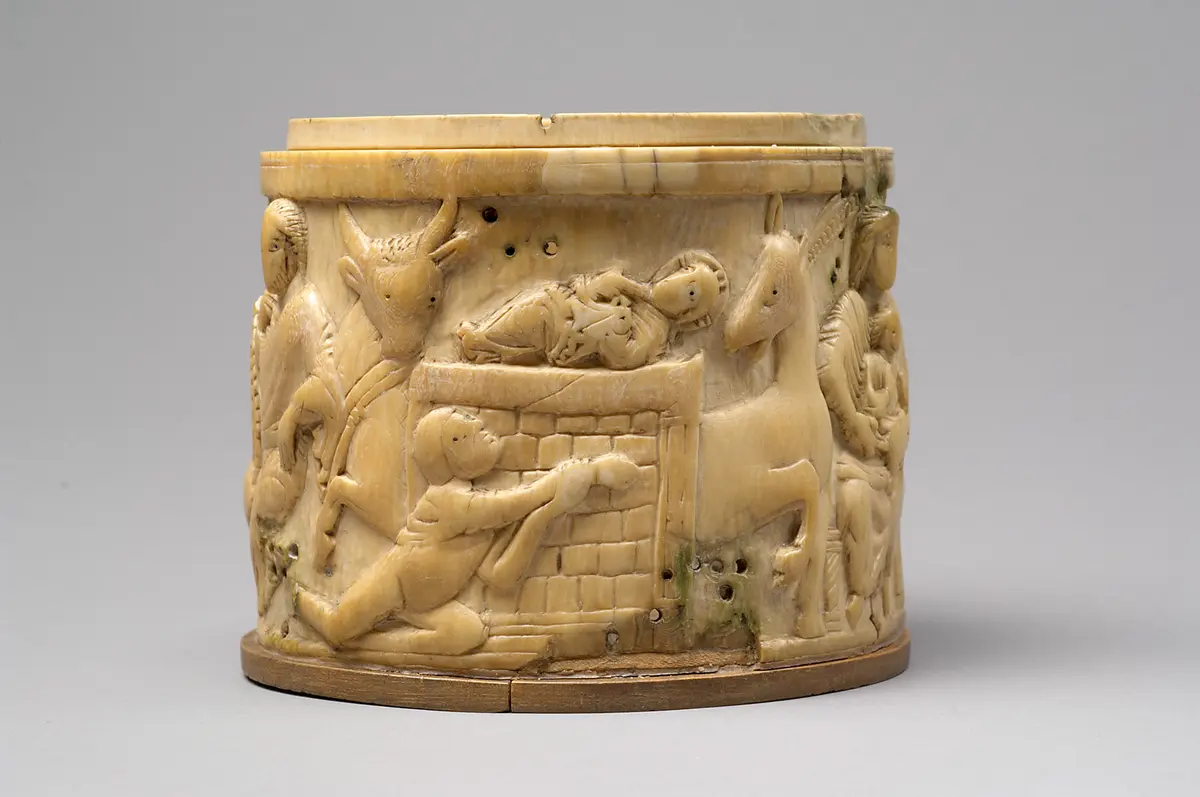
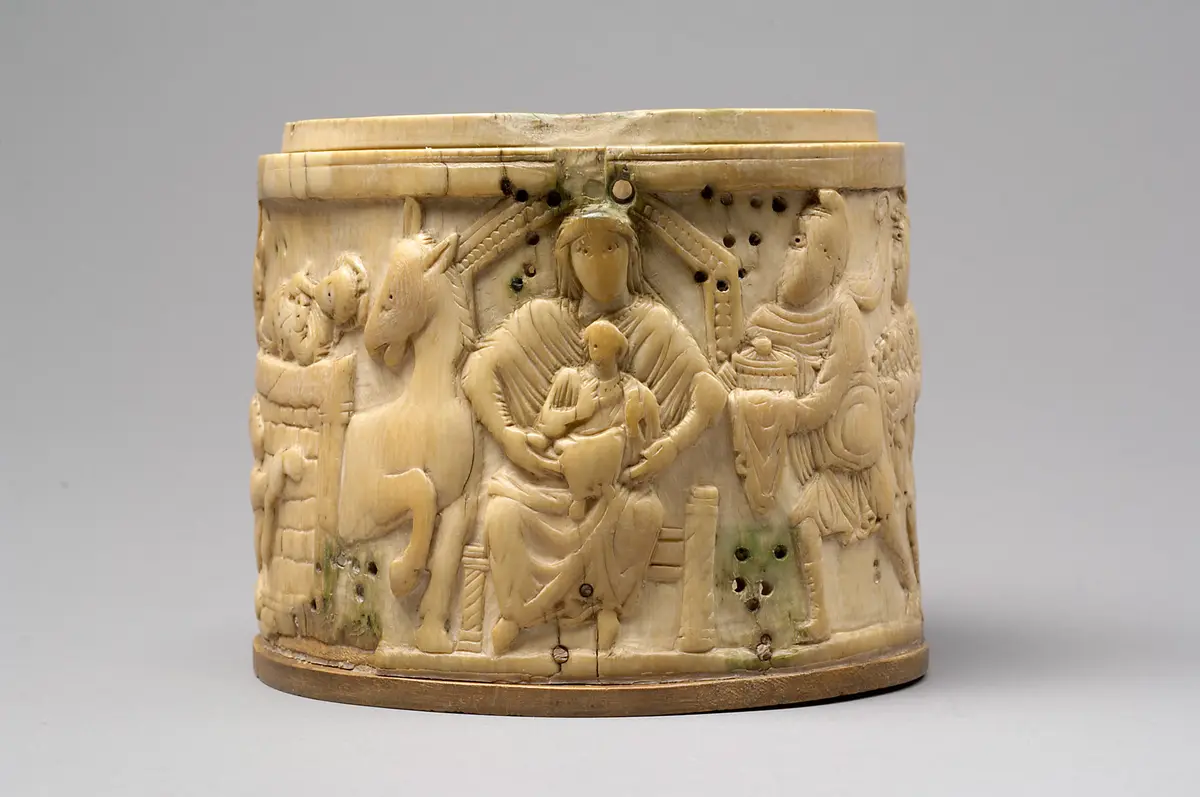
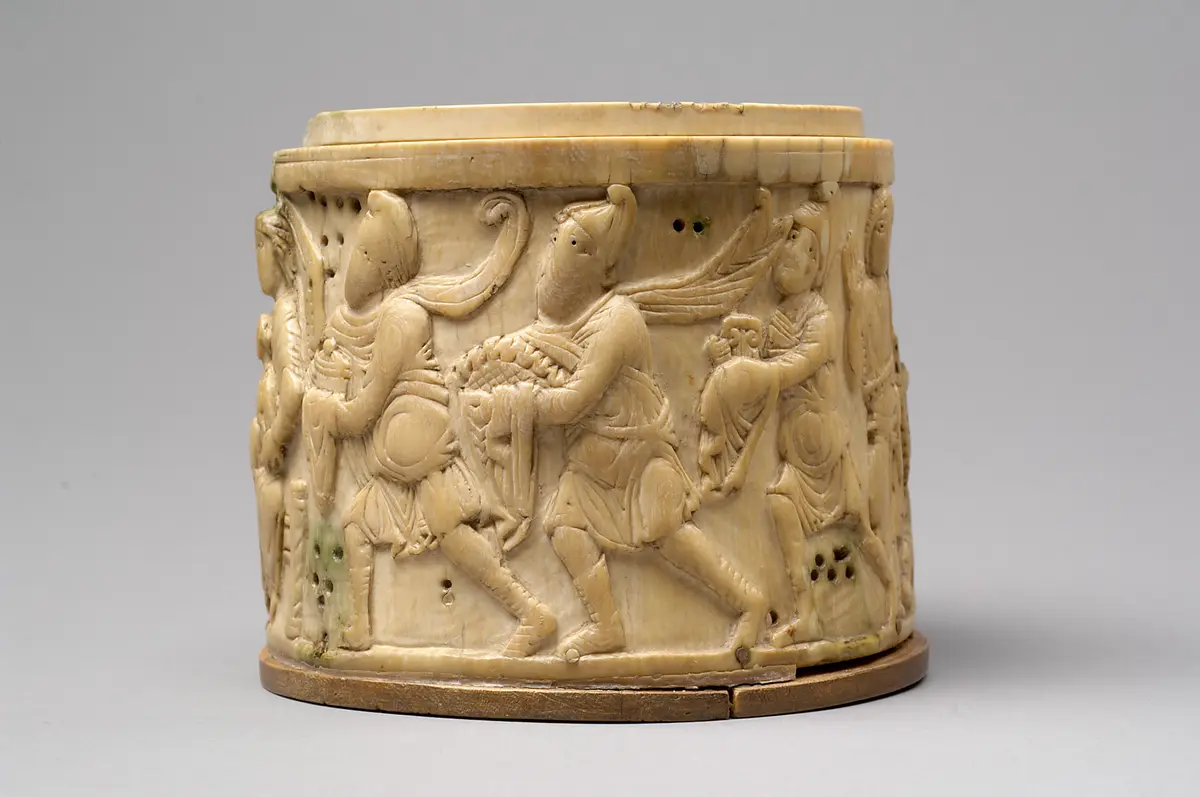
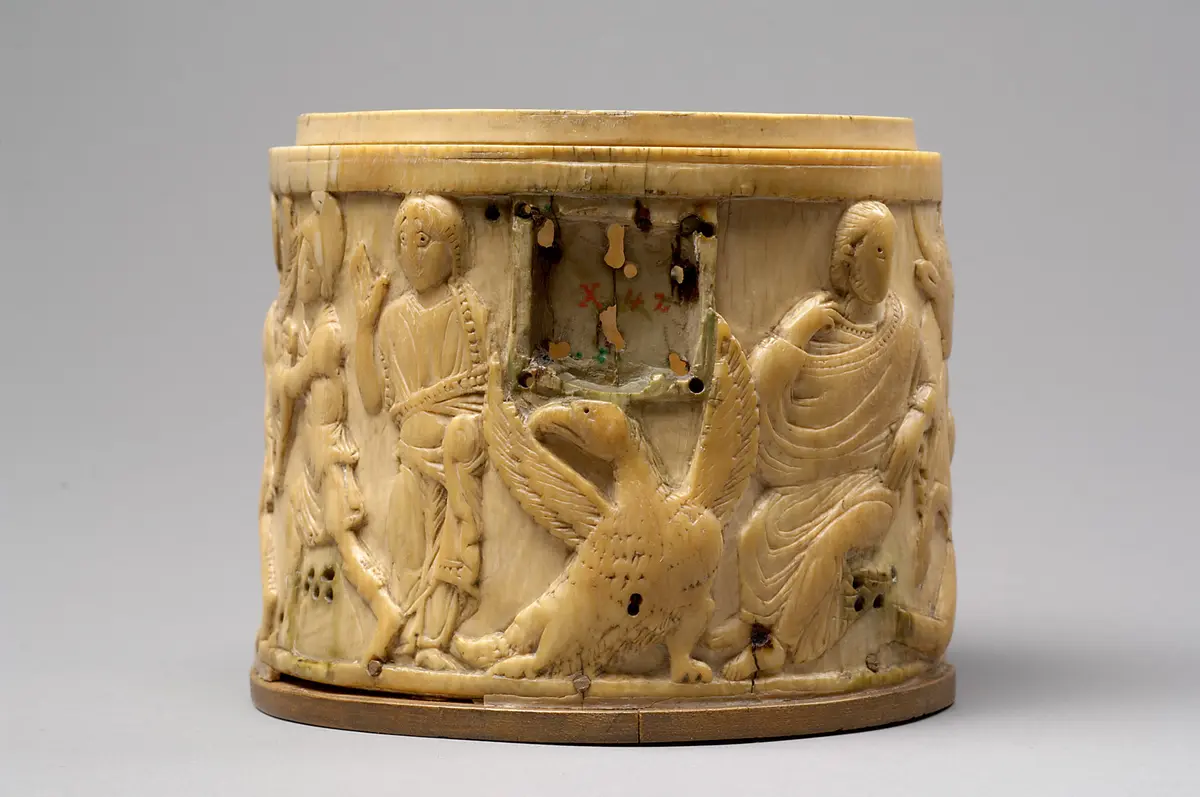
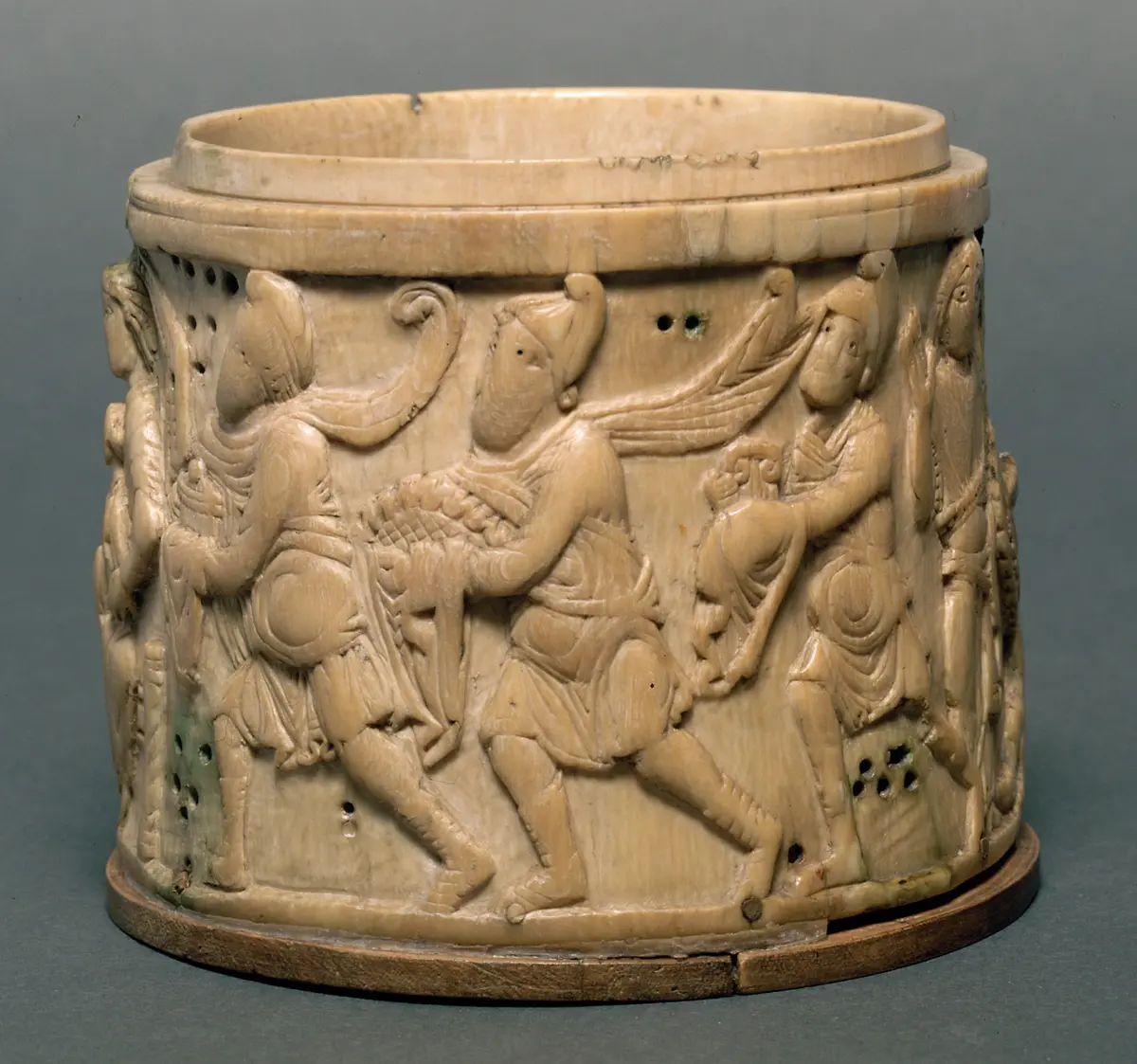
Die Pyxis (Schatulle) aus Elfenbein trägt im Relief die Szenen der Geburt Christi mit der Hebamme Salome (hält ihre verdorrte Hand) und die Anbetung des Kindes durch die drei Magier ("Hl. Drei Könige"). Im Zentrum die thronende Mutter Gottes.Das wahrscheinlich aus Trier stammende Gefäß gilt als karolingische Kopie nach einem spätantiken Vorbild.
Time:
8. - 9. Jh. n. Chr.
Object Name
Pyxis
Culture
Karolingisch
Location of discovery:
Trier aus der Mosel (Deutschland)
Material/technology:
Elfenbein
Dimensions:
H. x Dm.: 9,8 cm × 12,1 cm
Copyright
Kunsthistorisches Museum, Antikensammlung
Invs.
Antikensammlung, X 42
Provenance
Steinbüchel von Rheinwall, Anton von, Triest; 1839 in Köln erworben; 1872 Kauf
Browse more
Similar items you might be interested in

Die Heilige Lanze 8. Jh.,Silbermanschette: 2. Hälfte 11. Jh; Goldmanschette: 3. Viertel 14. Jh.

Friedrich IV. Sohn des Leopold III. von Habsburg um 1430

Das Krönungsevangeliar Hans von Reutlingen knapp vor 800, um 1500

Die Stephansbursa 1. Drittel 9. Jahrhundert

Deckelbüchse (Pyxis) der Red Polished III Ware: Ritzdekor Zyprisch, Bronzezeit, Früh- bis Mittelzyprisch 2000 - 1800 v. Chr.

Pyxis mit Deckel: Pferde Griechisch, Attisch, mittelgeometrisch 780 - 760 v. Chr.

Pyxis mit Deckel: Streifendekor Griechisch, Spätkorinthisch nach 550 v. Chr.

Pyxis: Kopf eines Jünglings mit Helm Griechisch, Attisch, rotfigurig 3. Viertel 5. Jh. v. Chr.

Reliquienbehälter: Goldreliquiar Frühchristlich, Spätantike 5. Jh. n. Chr.

Reliquienbehälter: Christus mit den Aposteln Frühchristlich, Spätantike Anfang 5. Jh. n. Chr.

Pyxis der Bichrome III Ware: Vogel Zyprisch, Eisenzeit, geometrisch 850 - 750 v. Chr.


