Der Reichsapfel
zwischen 1612 und 1615 | Andreas Osenbruck
The Imperial Orb follows the formal concept introduced in the Crown of Rudolph II (Inv. No. SK_WS_XIa_1). As in the Crown, the decoration consists of diamonds, rubies and pearls as well as a single large sapphire at the top of the cross. The wide, pearl-lined equatorial band of the Orb and the crown circlet are set with large diamonds, interspersed with pairs of pearls embedded in enamelled rosettes. The space between is filled with arabesques of enamelled gold. The enamelled bands with depictions of fruit and animals, which quarter the imperial orb vertically, are based on the bands enclosing the mitre of the Rudolphine crown, but are executed with less subtlety. The front of the cross is decorated with diamonds and rubies, while the back is covered with a rich trellis-work of enamelled gold. The crowning sapphire is drilled and without facets. It is an old jewel, perhaps from classical antiquity, and was reused here, thus suggesting the continuity of power throughout the ages. The globe of the Imperial Orb represents the world and is a symbol of the emperor's universal claim to power. Many details of the gold-work are in keeping with the style of the Sceptre (Inv. No. SK_WS_XIa_2), which bears the signature of Andreas Osenbruck. These parallels suggest the attribution of the Imperial Orb to the same goldsmith and permit the conclusion that Emperor Matthias had it made after 1612 in order to possess a uniform set of private insignia, along with the Rudolphine Crown and Sceptre. Osenbruck, the data of whose life are unknown, had previously worked for Emperor Rudolph II and was employed in November 1612 as court goldsmith to Rudolph's brother and successor, Emperor Matthias (1557-1619).
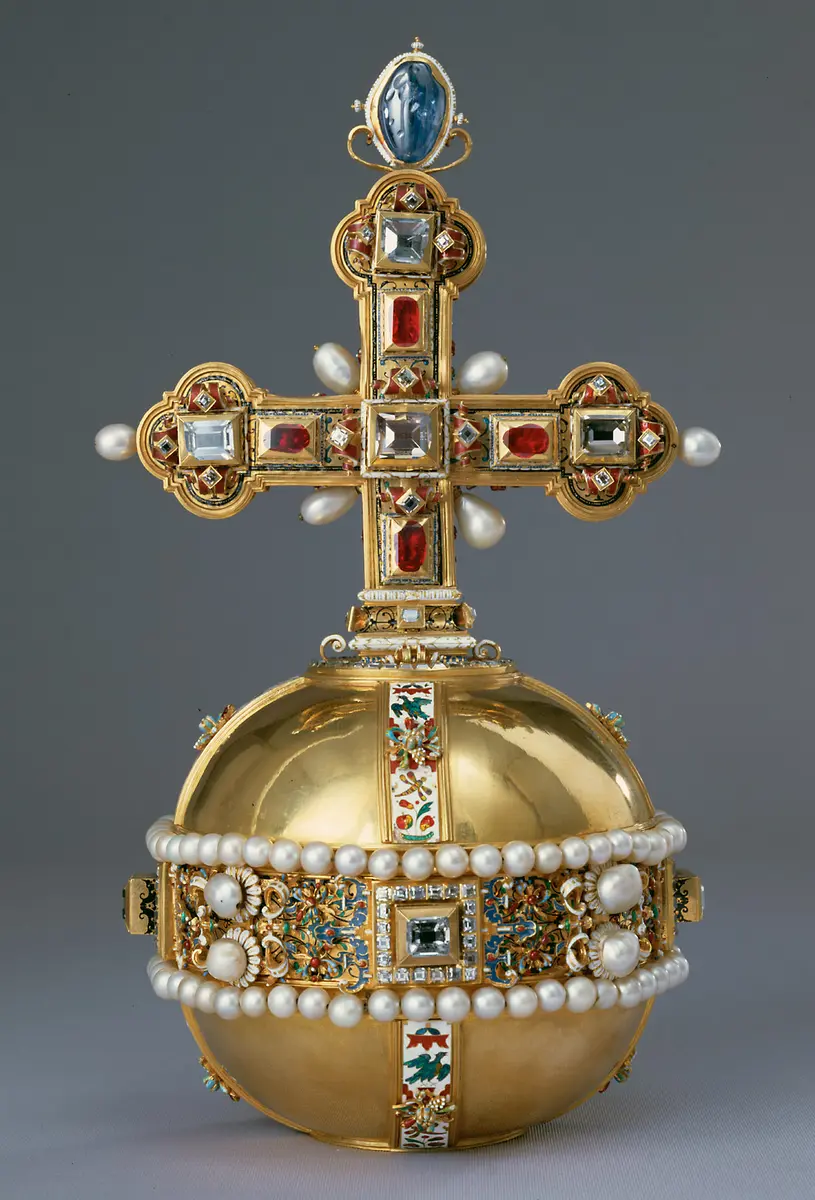
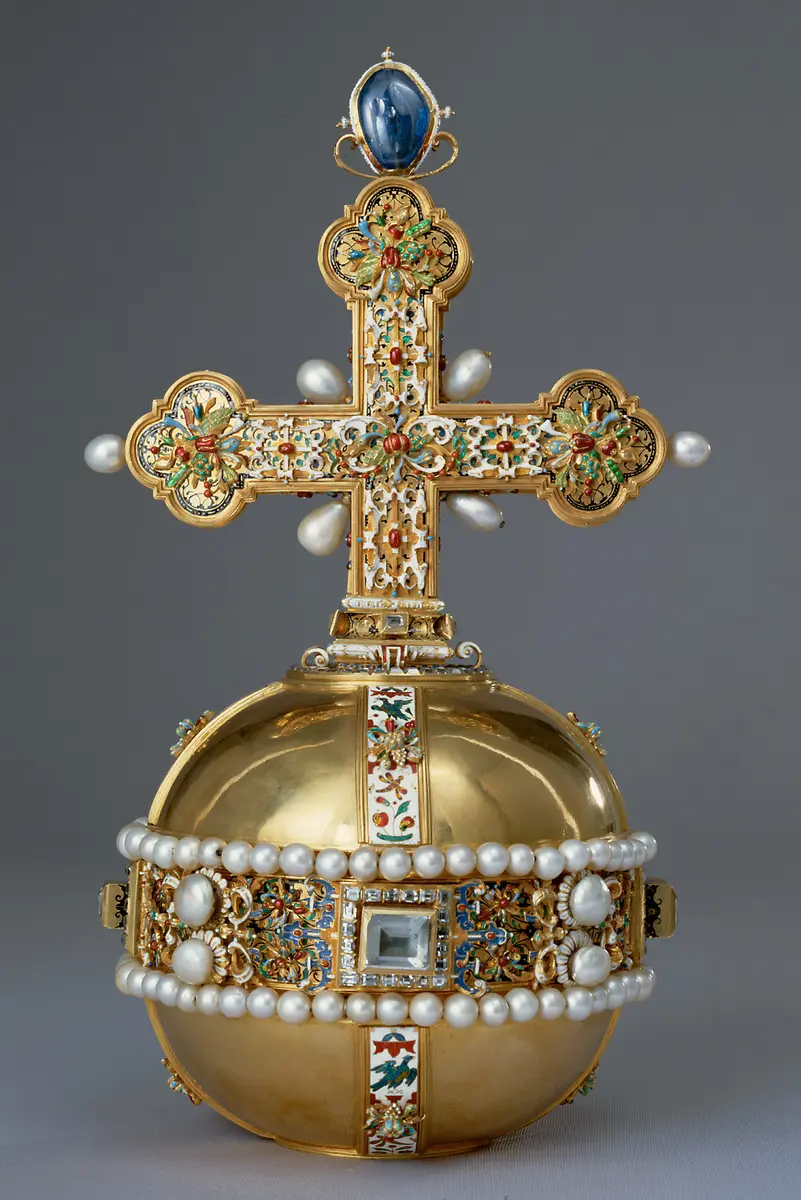
The Imperial Orb follows the formal concept introduced in the Crown of Rudolph II (Inv. No. SK_WS_XIa_1). As in the Crown, the decoration consists of diamonds, rubies and pearls as well as a single large sapphire at the top of the cross. The wide, pearl-lined equatorial band of the Orb and the crown circlet are set with large diamonds, interspersed with pairs of pearls embedded in enamelled rosettes. The space between is filled with arabesques of enamelled gold. The enamelled bands with depictions of fruit and animals, which quarter the imperial orb vertically, are based on the bands enclosing the mitre of the Rudolphine crown, but are executed with less subtlety. The front of the cross is decorated with diamonds and rubies, while the back is covered with a rich trellis-work of enamelled gold. The crowning sapphire is drilled and without facets. It is an old jewel, perhaps from classical antiquity, and was reused here, thus suggesting the continuity of power throughout the ages. The globe of the Imperial Orb represents the world and is a symbol of the emperor's universal claim to power. Many details of the gold-work are in keeping with the style of the Sceptre (Inv. No. SK_WS_XIa_2), which bears the signature of Andreas Osenbruck. These parallels suggest the attribution of the Imperial Orb to the same goldsmith and permit the conclusion that Emperor Matthias had it made after 1612 in order to possess a uniform set of private insignia, along with the Rudolphine Crown and Sceptre. Osenbruck, the data of whose life are unknown, had previously worked for Emperor Rudolph II and was employed in November 1612 as court goldsmith to Rudolph's brother and successor, Emperor Matthias (1557-1619).
Artist:
Andreas Osenbruck (tätig in Prag um 1610 - nach 1622) DNB
Time:
zwischen 1612 und 1615
Object Name
Insigne
Culture
Prag
Material/technology:
Gold, teilweise emailliert, Diamanten, Rubine, Saphir, Perlen
Dimensions:
H. 26,9 cm
Copyright
Kunsthistorisches Museum, Weltliche Schatzkammer
Invs.
Schatzkammer, WS XIa 3