4. Der Ausfall der Besatzung von Goleta wird zurückgeschlagen (= Horn Nr.7)
1712-21
In 1535, the Emperor Charles V sailed with his fleet to Africa in order to liberate the Kingdom of Tunis that had been conquered by the Turks. On bord his ship were not only historians and poets but also his court painter, Jan Cornelisz. Vermeyen who documented the campaign in pictures. Eleven years after the Imperial victory he produced the cartoons (now in the Kunsthistorisches Museum in Vienna) which served as the model for the series of monumental tapestries (Madrid, Patrimonio Nacional) that were woven in only six years in what was probably the most important contemporary manufactory, that of Willem de Pannemaker. The carefully detailed, turbulent action takes place on battlefields rendered with topographical verisimilitude. This tapestry depicts an unsuccessful Turkish sortie from the fortress of La Goletta, visible in the back on the right. The Viennese series was only commissioned in the 18th century by the Emperor Charles VI. Using the original cartoons it was woven in the manufactory of Jodocus de Vos in Brussels. This commission was politically motivated, because Charles VI was the first emperor since Charles V to lay claim to the crowns of both the Holy Roman Empire and the Kingdom of Spain.
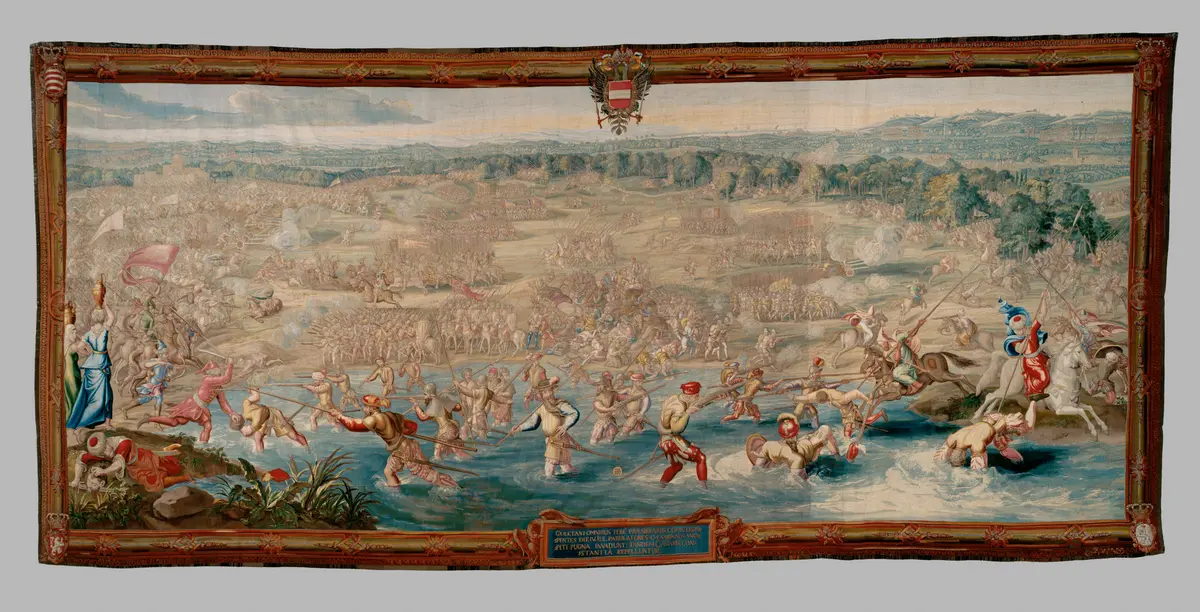
In 1535, the Emperor Charles V sailed with his fleet to Africa in order to liberate the Kingdom of Tunis that had been conquered by the Turks. On bord his ship were not only historians and poets but also his court painter, Jan Cornelisz. Vermeyen who documented the campaign in pictures. Eleven years after the Imperial victory he produced the cartoons (now in the Kunsthistorisches Museum in Vienna) which served as the model for the series of monumental tapestries (Madrid, Patrimonio Nacional) that were woven in only six years in what was probably the most important contemporary manufactory, that of Willem de Pannemaker. The carefully detailed, turbulent action takes place on battlefields rendered with topographical verisimilitude. This tapestry depicts an unsuccessful Turkish sortie from the fortress of La Goletta, visible in the back on the right. The Viennese series was only commissioned in the 18th century by the Emperor Charles VI. Using the original cartoons it was woven in the manufactory of Jodocus de Vos in Brussels. This commission was politically motivated, because Charles VI was the first emperor since Charles V to lay claim to the crowns of both the Holy Roman Empire and the Kingdom of Spain.
Time:
1712-21
Object Name
Tapisserie
Culture
Brüssel
Material/technology:
Kette: Wolle, Schuß: Wolle/Seide, spärl. Gold- und Silber
Kettfäden pro cm: 7
Dimensions:
531 cm × 1138 cm
Inscribed
GULETANI ONMNIBUS FERE PRAESIDIARIIS COPIIS ERUMPENTES DIE IV. JUL. PABULATORES CAESARIANOS ANCIPITI PUGNA INVADUNT: TANDEM CAESARIS CONSTANTIA REPELLUNTUR
Copyright
Kunsthistorisches Museum, Kunstkammer
Invs.
Kunstkammer, T X 4
Browse more
Similar items you might be interested in
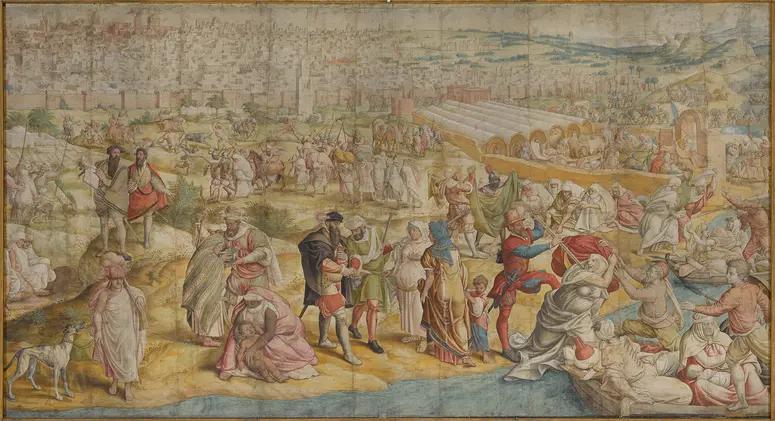
Kriegszug Kaiser Karls V. gegen Tunis (1535): Die Eroberung und Plünderung von Tunis Jan Cornelisz Vermeyen 1548/1550
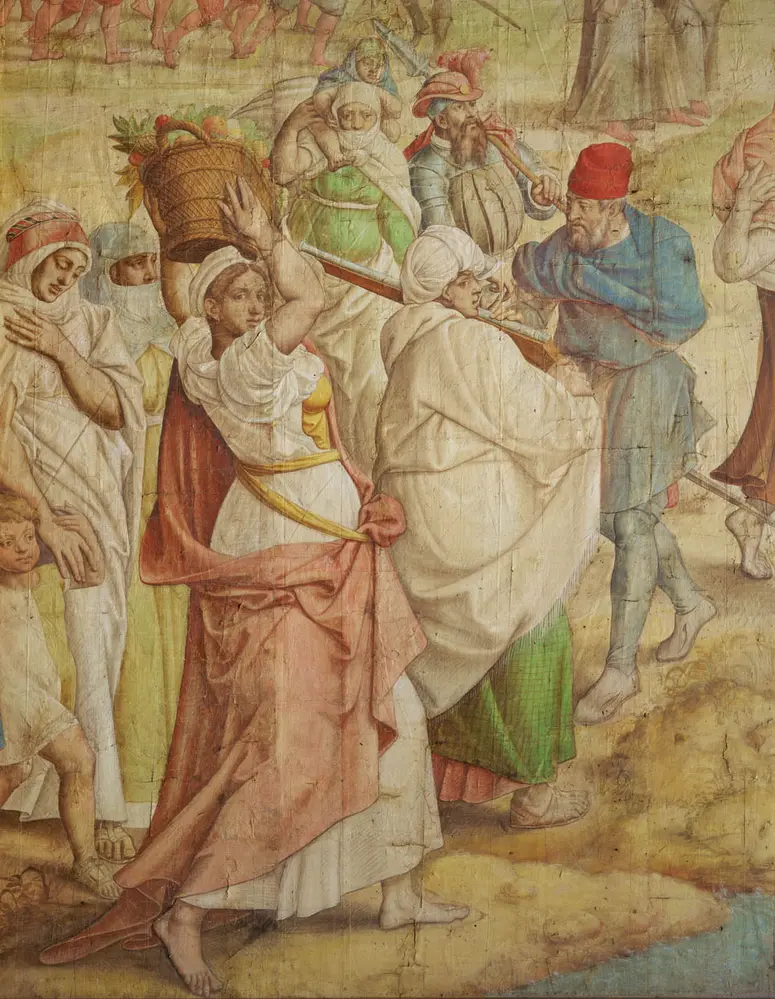
Kriegszug Kaiser Karls V. gegen Tunis (1535): Auszug des Heeres aus Tunis Jan Cornelisz Vermeyen 1548/1550
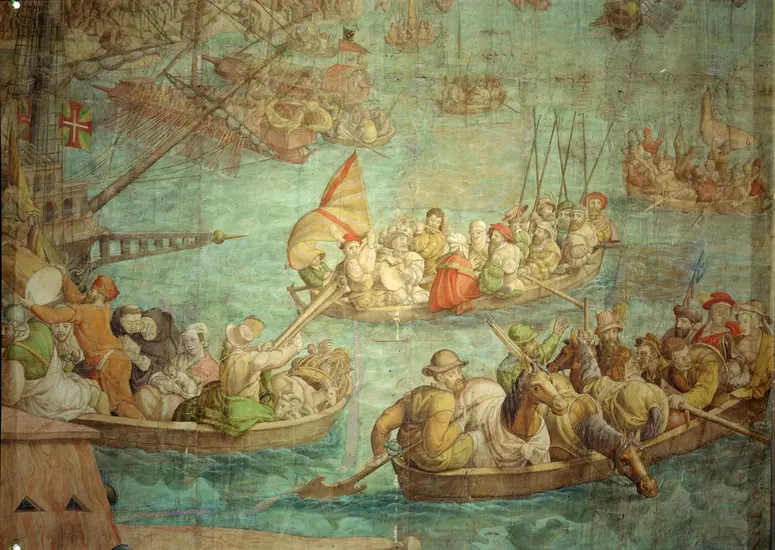
Kriegszug Kaiser Karls V. gegen Tunis (1535): Landung des Heeres im Hafen von Karthago Jan Cornelisz Vermeyen 1546/1548
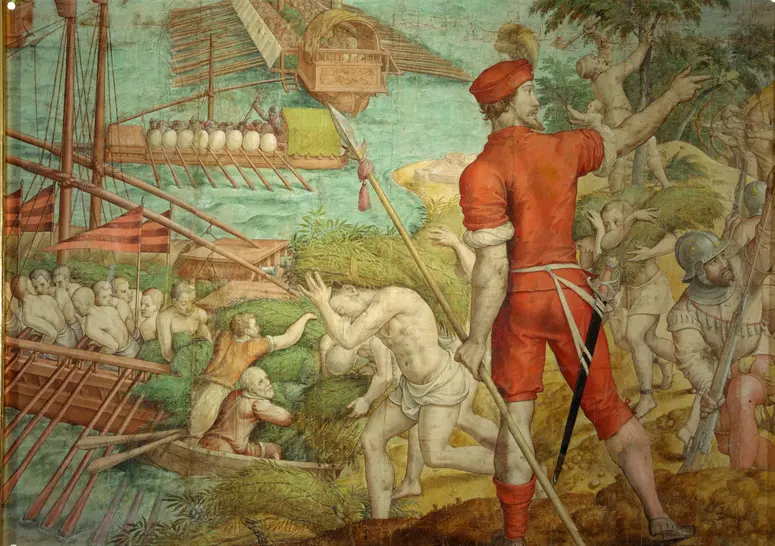
Kriegszug Kaiser Karls V. gegen Tunis (1535): Die Belagerung der Festung La Goletta Jan Cornelisz Vermeyen 1548/1550
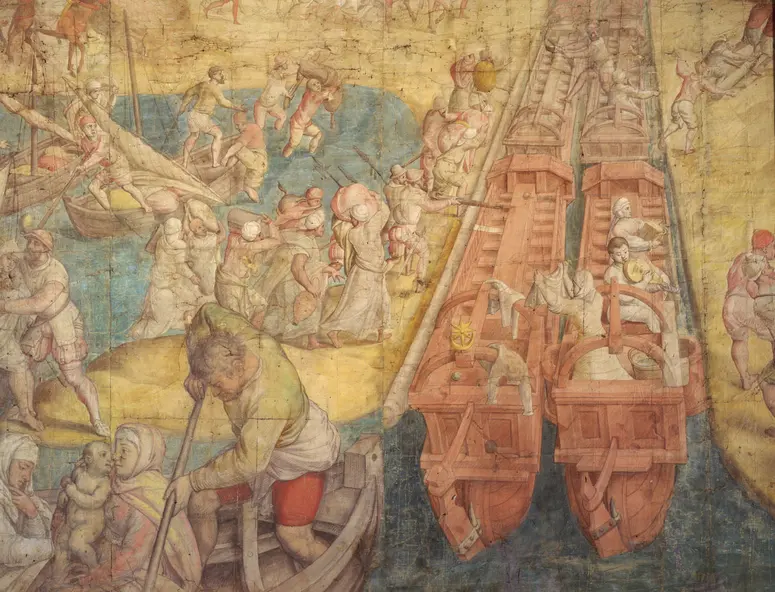
Kriegszug Kaiser Karls V. gegen Tunis (1535): Abbruch des Lagers und Einschiffung zur Rückfahrt Jan Cornelisz Vermeyen 1548/1550
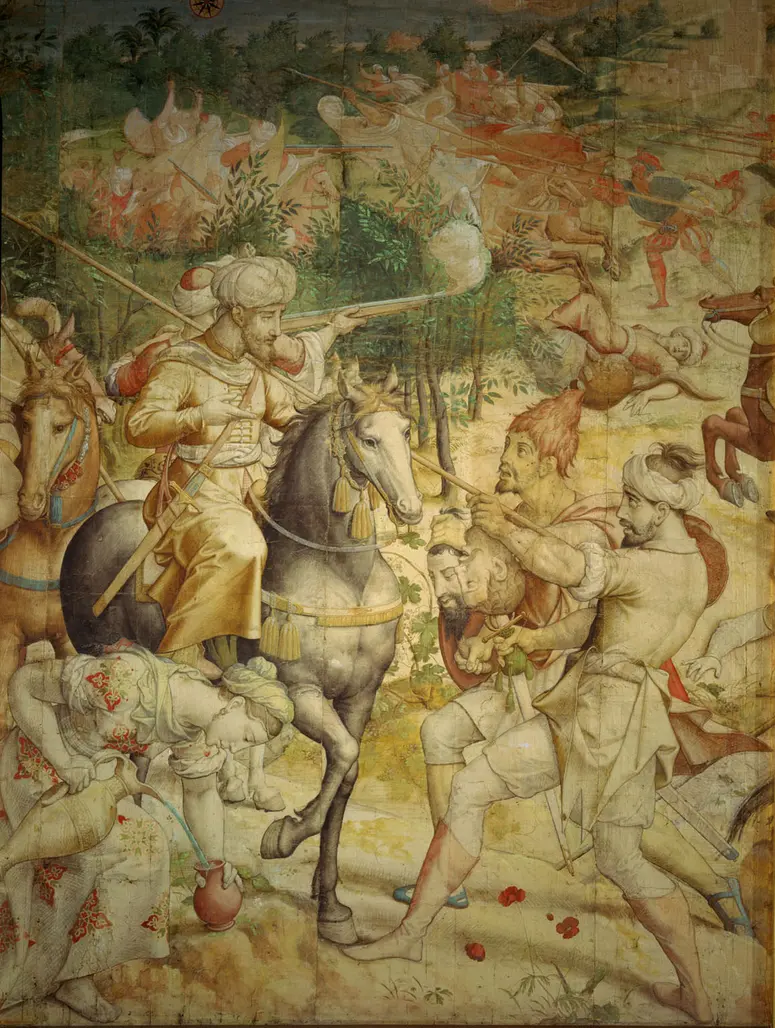
Kriegszug Kaiser Karls V. gegen Tunis (1535): Ein erfolgloser Ausfall der Türken aus La Goletta Jan Cornelisz Vermeyen 1548/1550
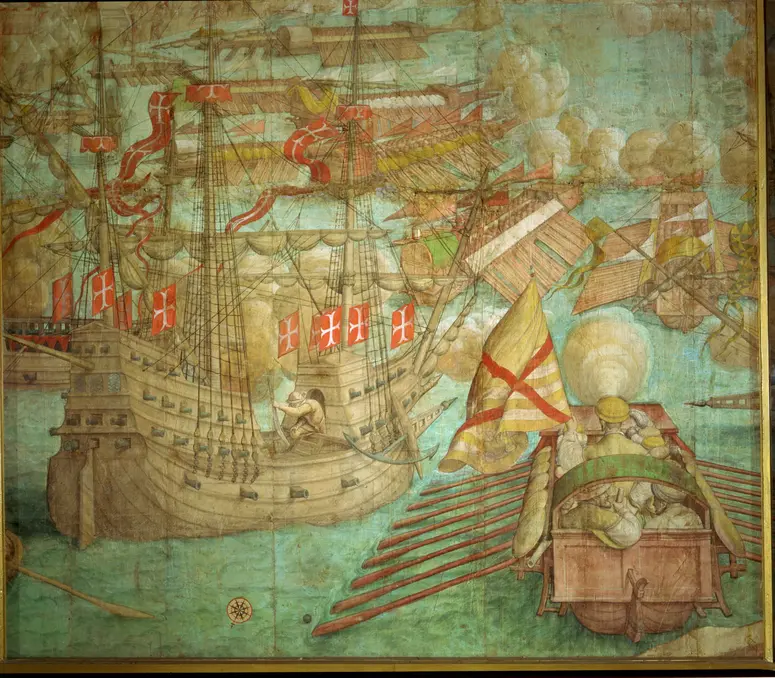
Kriegszug Kaiser Karls V. gegen Tunis (1535): Einnahme der Festung La Goletta durch Heer und Flotte Jan Cornelisz Vermeyen 1548/1550
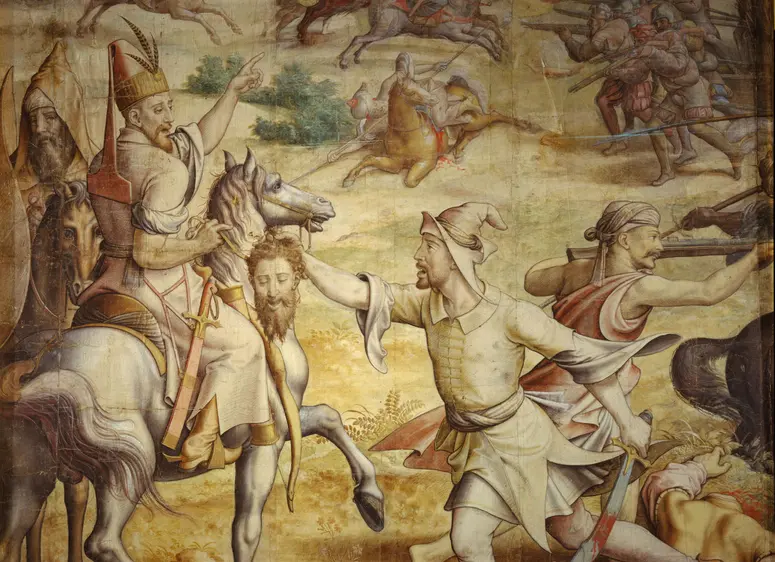
Kriegszug Kaiser Karls V. gegen Tunis (1535): Erste Reitergefechte am Kap von Karthago und Aufbruch nach La Goletta Jan Cornelisz Vermeyen 1546/1548
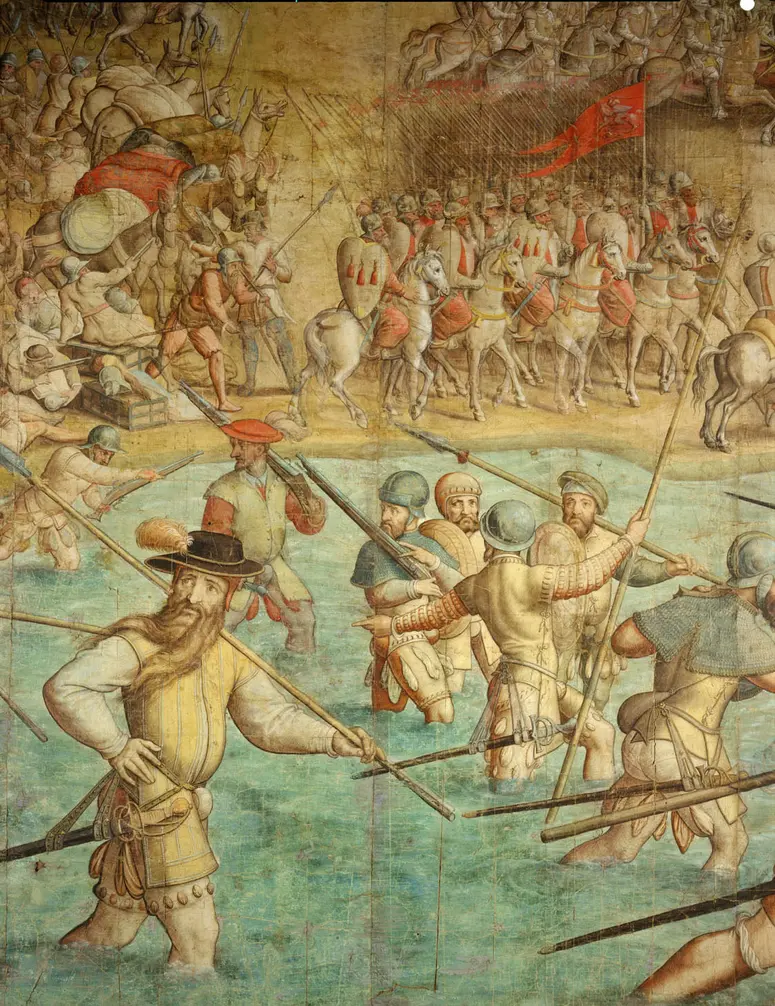
Kriegszug Kaiser Karls V. gegen Tunis (1535): Feldschlacht auf dem Marsch nach Tunis. Jan Cornelisz Vermeyen 1548/1550
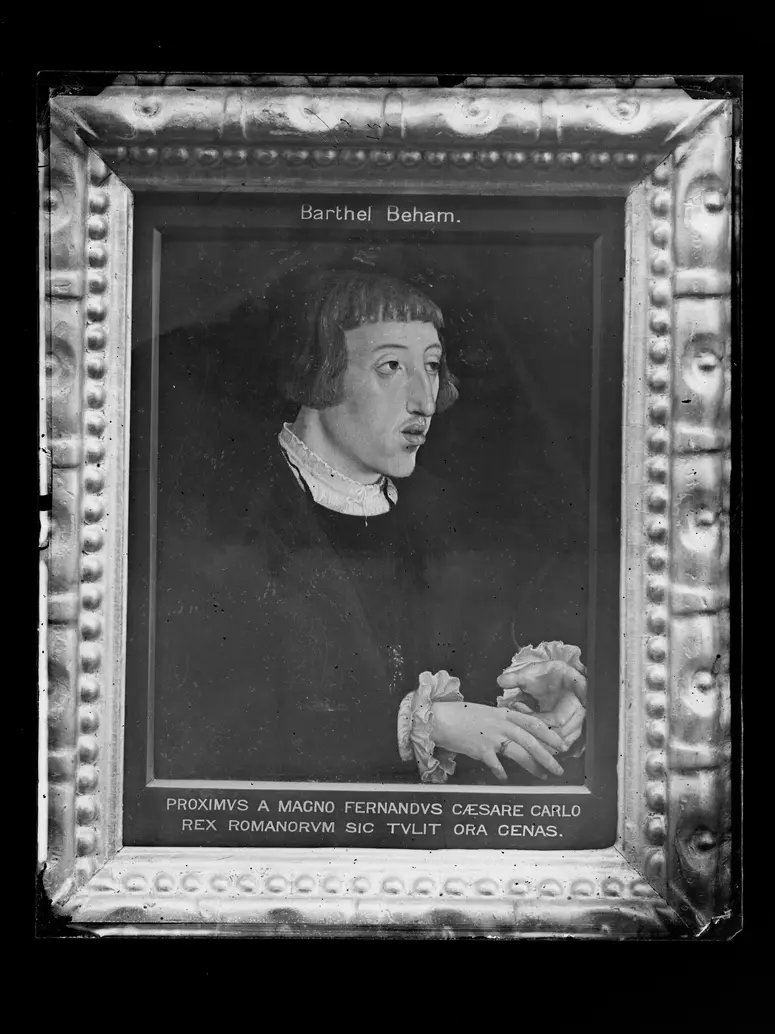
Kaiser Ferdinand I. (1503-1564), Bildnis in halber Figur J. Löwy, K. und K. Hof-Photograph, Kunst- und Verlagsanstalt (Wien) 1888 bis 1891
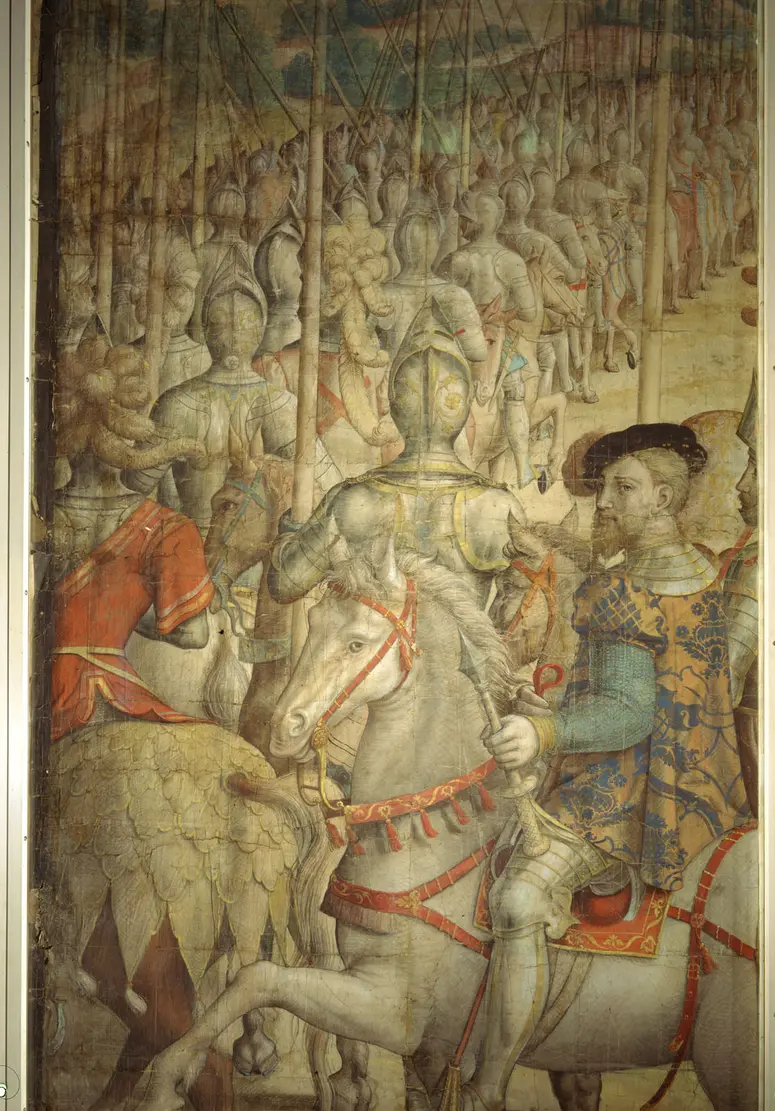
Kriegszug Kaiser Karls V. gegen Tunis (1535): Musterung des Heeres bei Barcelona durch den Kaiser Jan Cornelisz Vermeyen 1546/1548
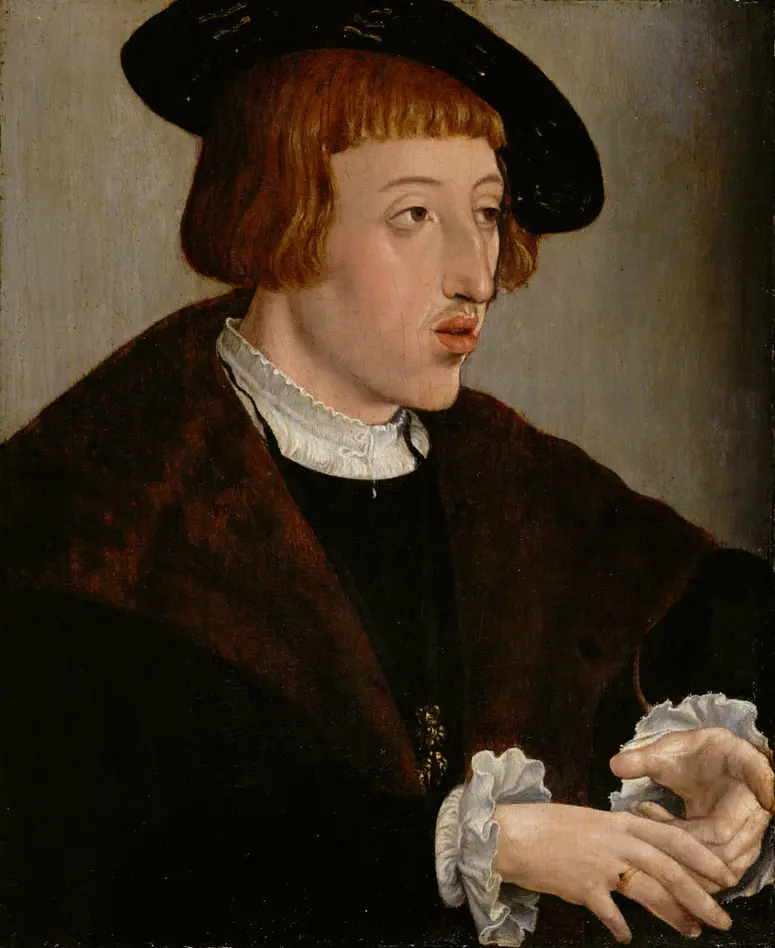
Kaiser Ferdinand I. (1503-1564), Bildnis in halber Figur Jan Cornelisz Vermeyen 1530

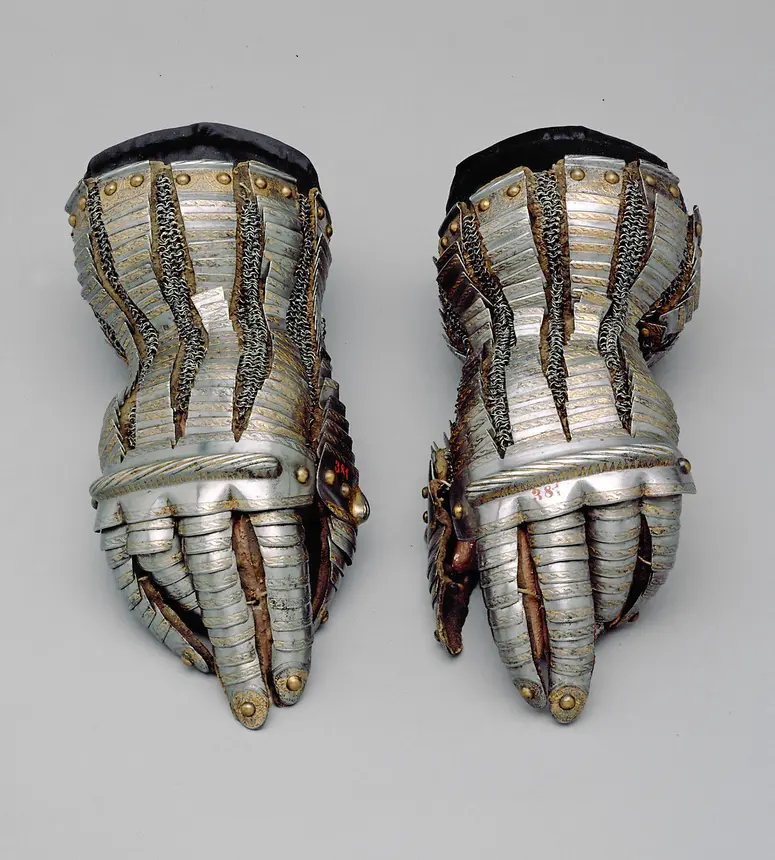
Karl I. (V.) (1516-1556), als Karl I. König von Spanien, ab 1519 deutscher König, ab 1520 Kaiser vor 1535
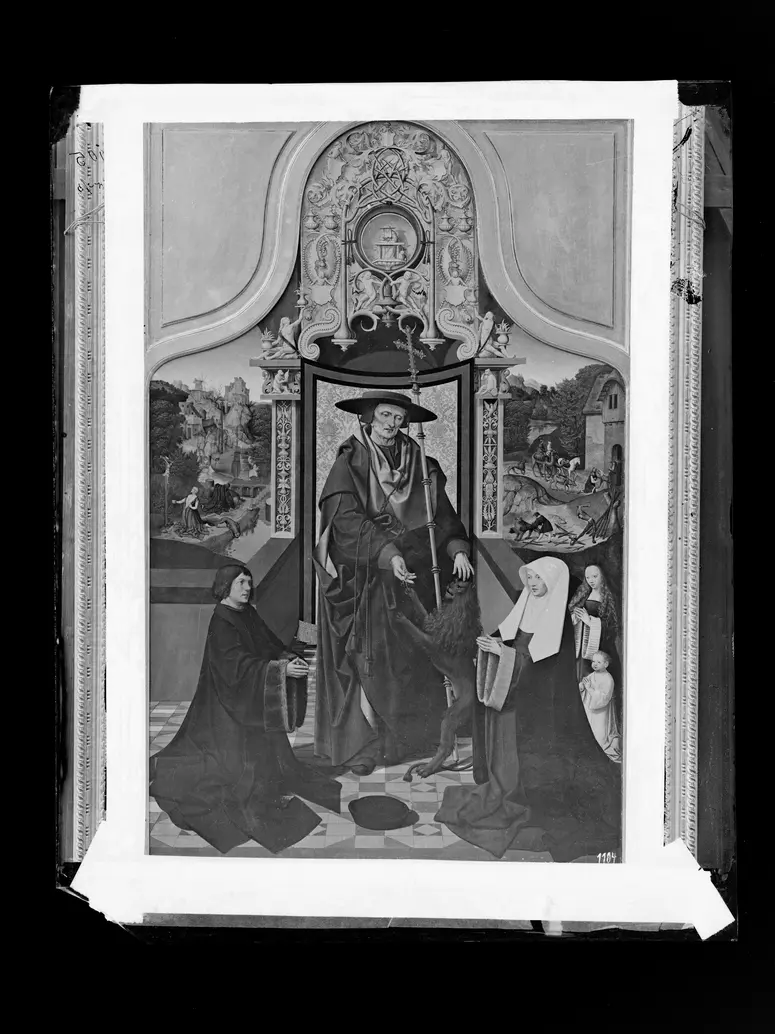
Hieronymusaltar J. Löwy, K. und K. Hof-Photograph, Kunst- und Verlagsanstalt (Wien) 1888 bis 1891
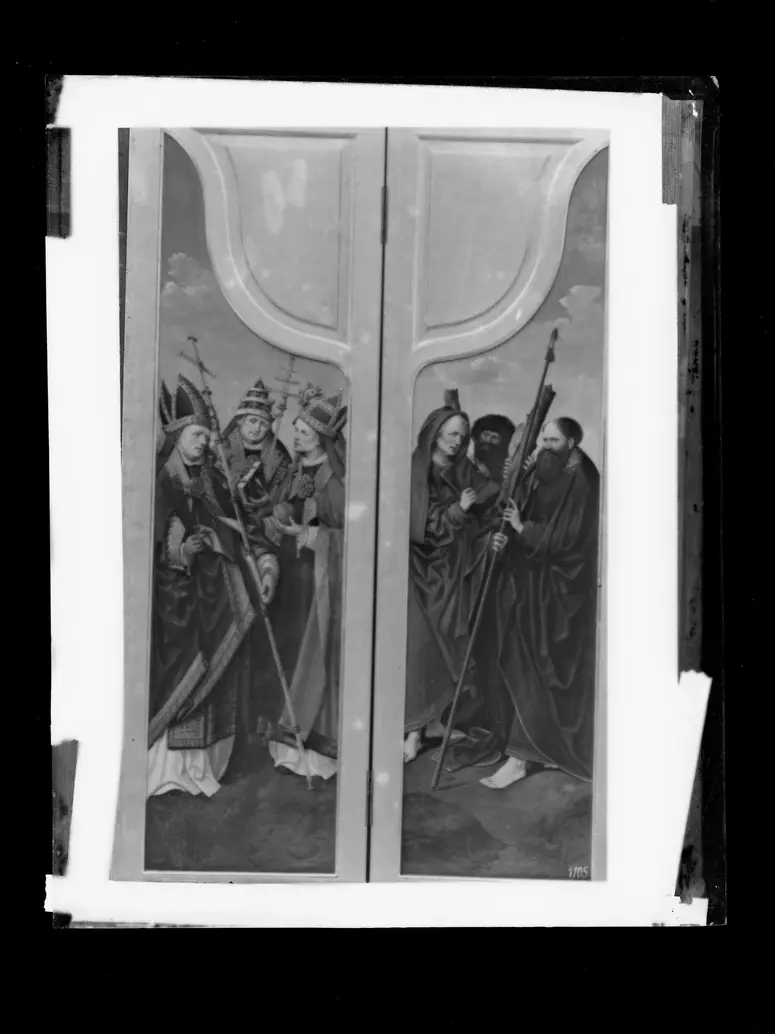
Hieronymusaltar J. Löwy, K. und K. Hof-Photograph, Kunst- und Verlagsanstalt (Wien) 1888 bis 1891
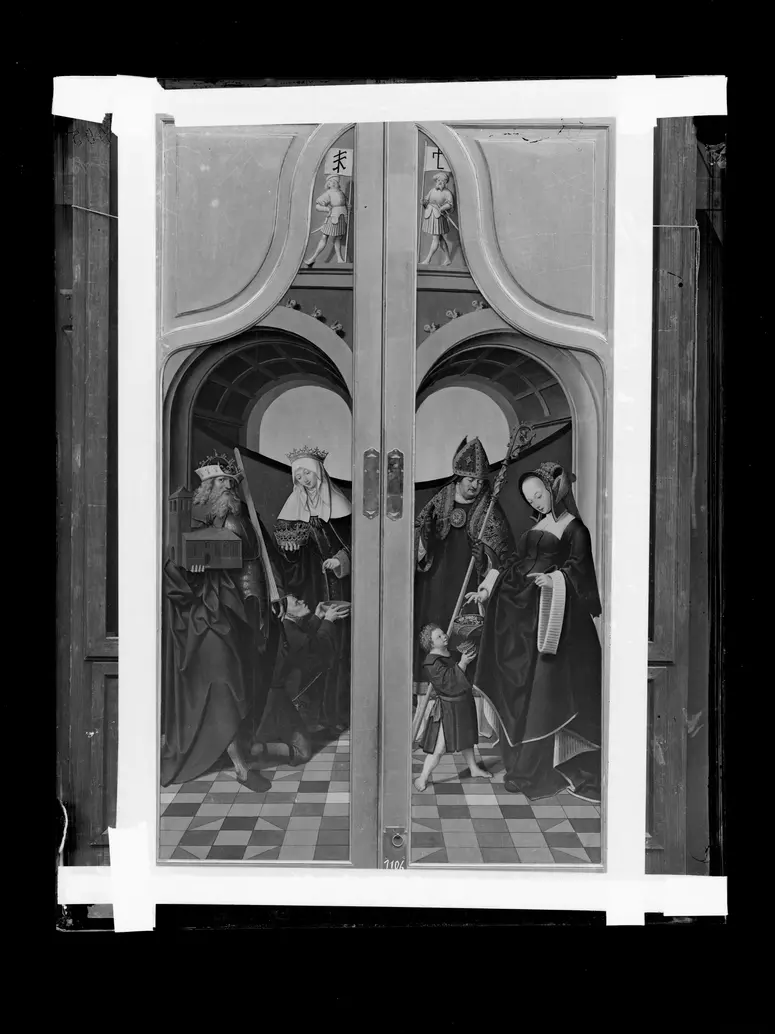
Hieronymusaltar J. Löwy, K. und K. Hof-Photograph, Kunst- und Verlagsanstalt (Wien) 1888 bis 1891
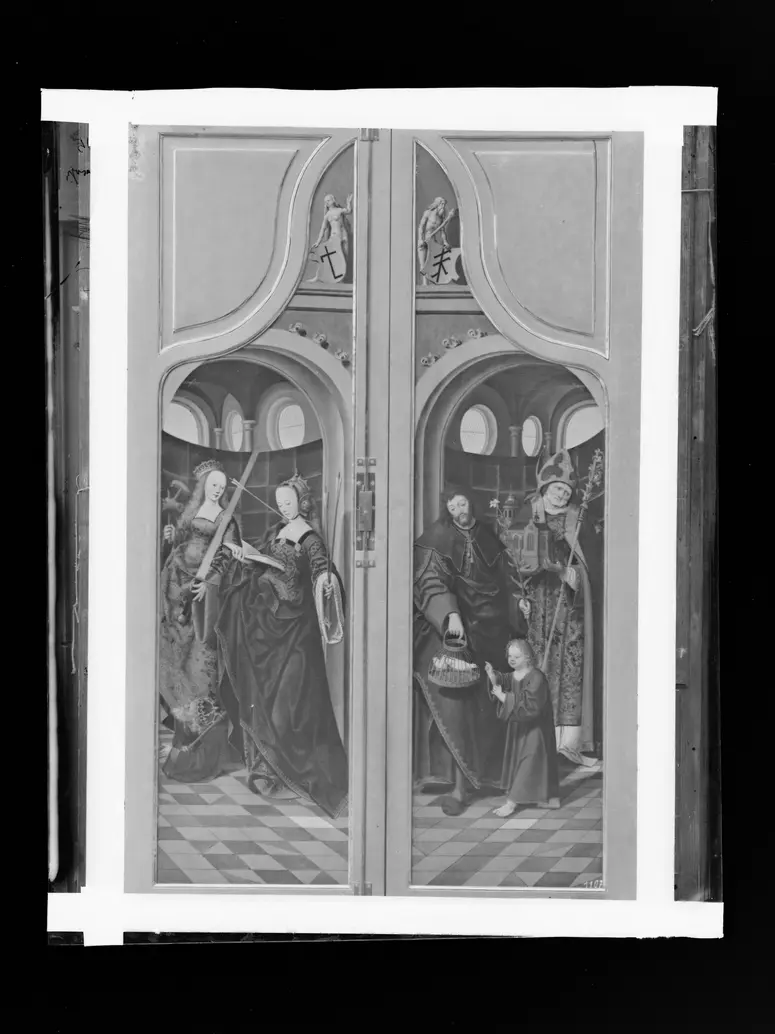
Hieronymusaltar J. Löwy, K. und K. Hof-Photograph, Kunst- und Verlagsanstalt (Wien) 1888 bis 1891
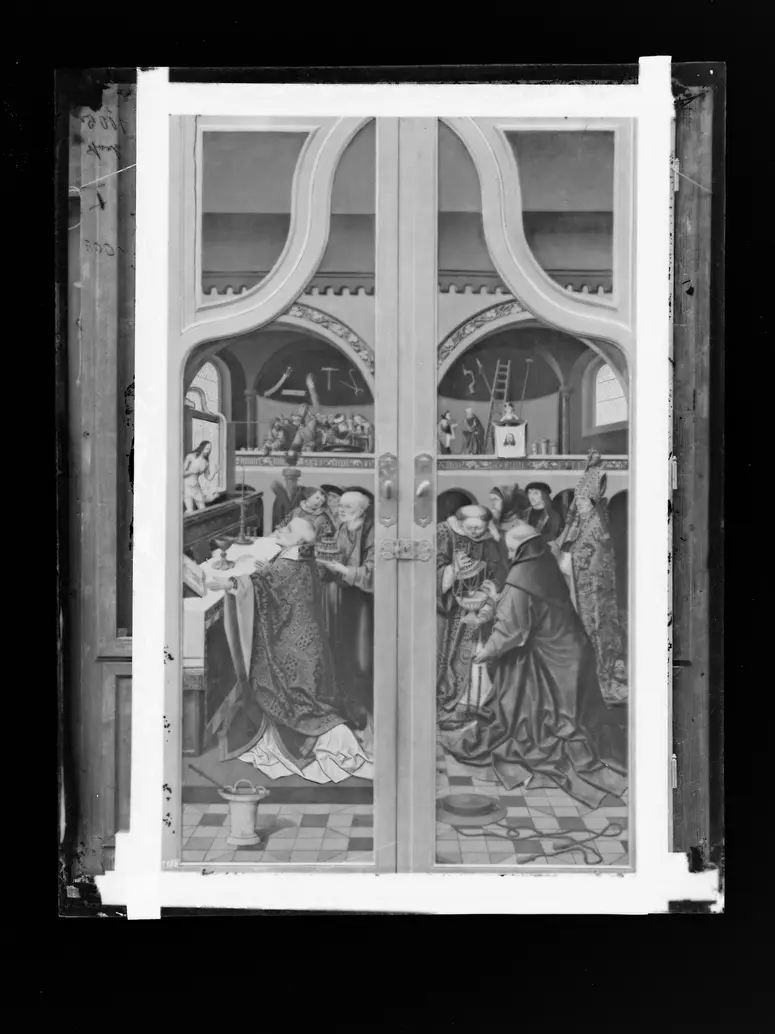
Hieronymusaltar J. Löwy, K. und K. Hof-Photograph, Kunst- und Verlagsanstalt (Wien) 1888 bis 1891
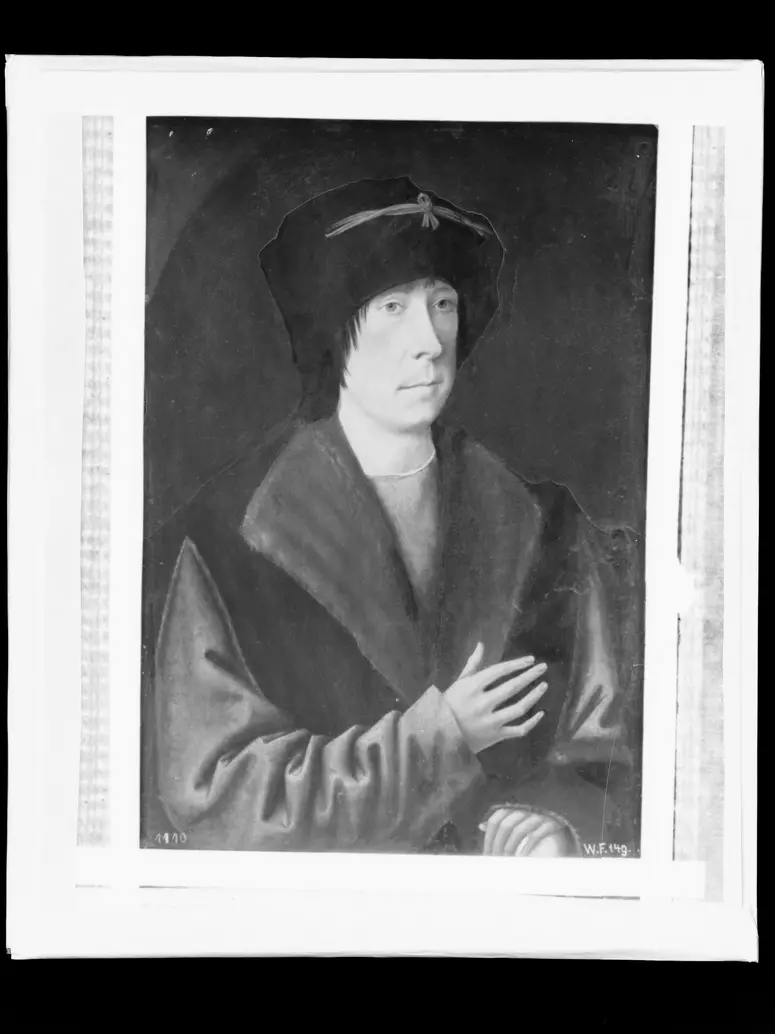
Bildnis eines vornehmen Bürgers J. Löwy, K. und K. Hof-Photograph, Kunst- und Verlagsanstalt (Wien) 1888 bis 1910