Death of the Virgin, so-called “Koimesis”
2nd half 10th c.
Byzantine ivory carving reached its zenith around the middle of the 10th century. The intercession inscribed on the panel depicting two apostles documents its connection to a Byzantine Emperor named Constantine. Soft soapstone (steatite) was also used from this period for small icons and pendants. The “Koimesis” relief is among the oldest extant works executed in this technique.
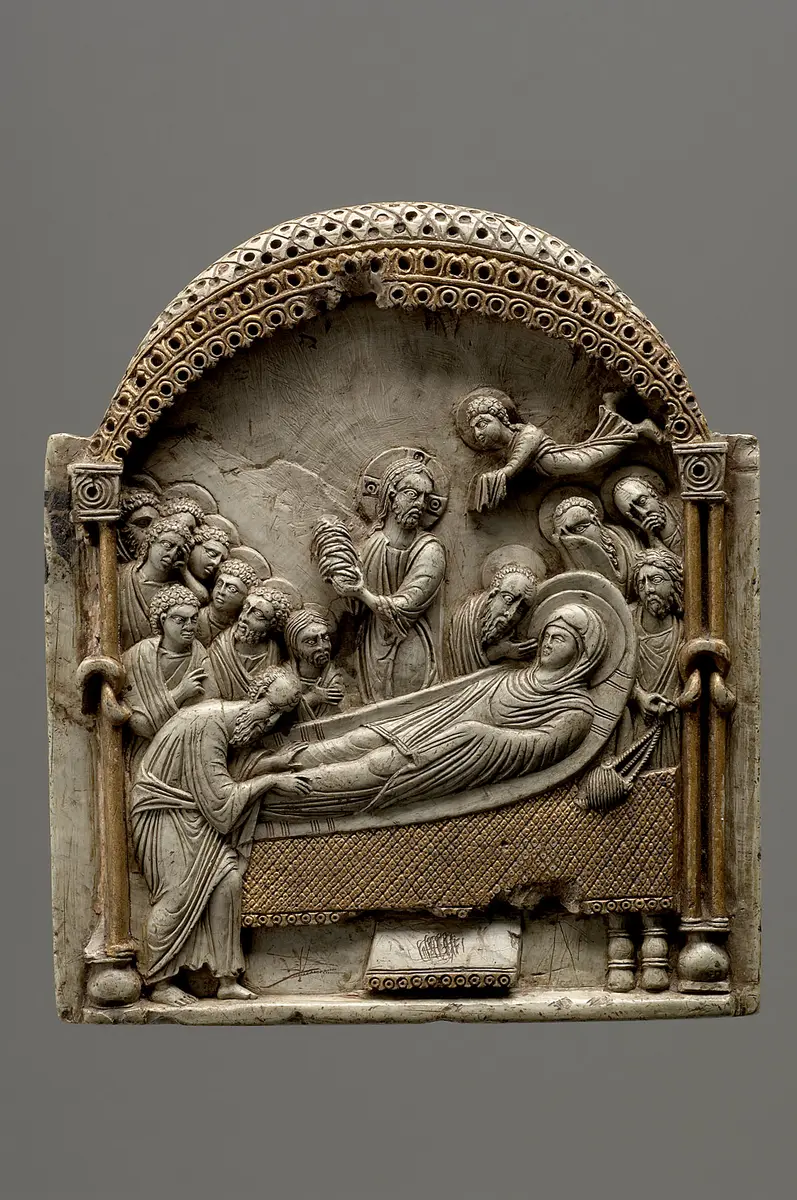
Byzantine ivory carving reached its zenith around the middle of the 10th century. The intercession inscribed on the panel depicting two apostles documents its connection to a Byzantine Emperor named Constantine. Soft soapstone (steatite) was also used from this period for small icons and pendants. The “Koimesis” relief is among the oldest extant works executed in this technique.
Time:
2nd half 10th c.
Object Name
Relief
Culture
Constantinople
Material/technology:
Ivory
Dimensions:
H. 13 cm, B. 11,2 cm, T. 1,5 cm
Copyright
Kunsthistorisches Museum, Kunstkammer
Invs.
Kunstkammer, 8797
Browse more
Similar items you might be interested in
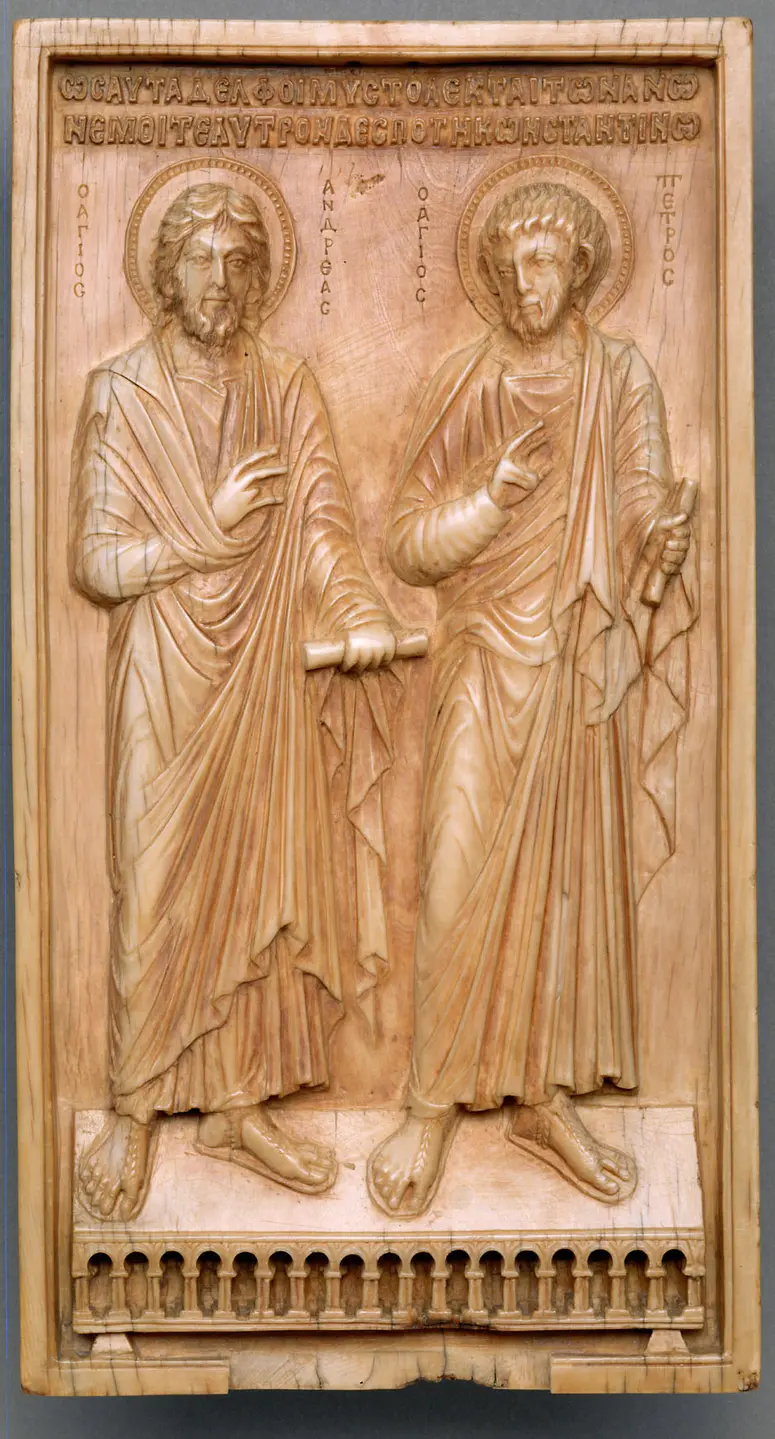
The Apostles Andreas and Peter Kaiserliche Hofwerkstatt für Kaiser Konstantin VII. mid-10th or 11th c.
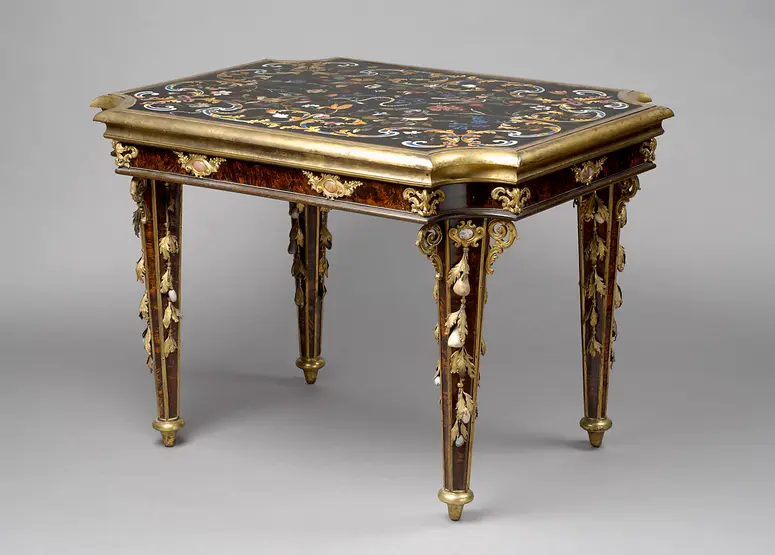
Table with Pietra Dura Inlays Großherzogliche Werkstatt (Galeria dei Lavori) ca. 1750

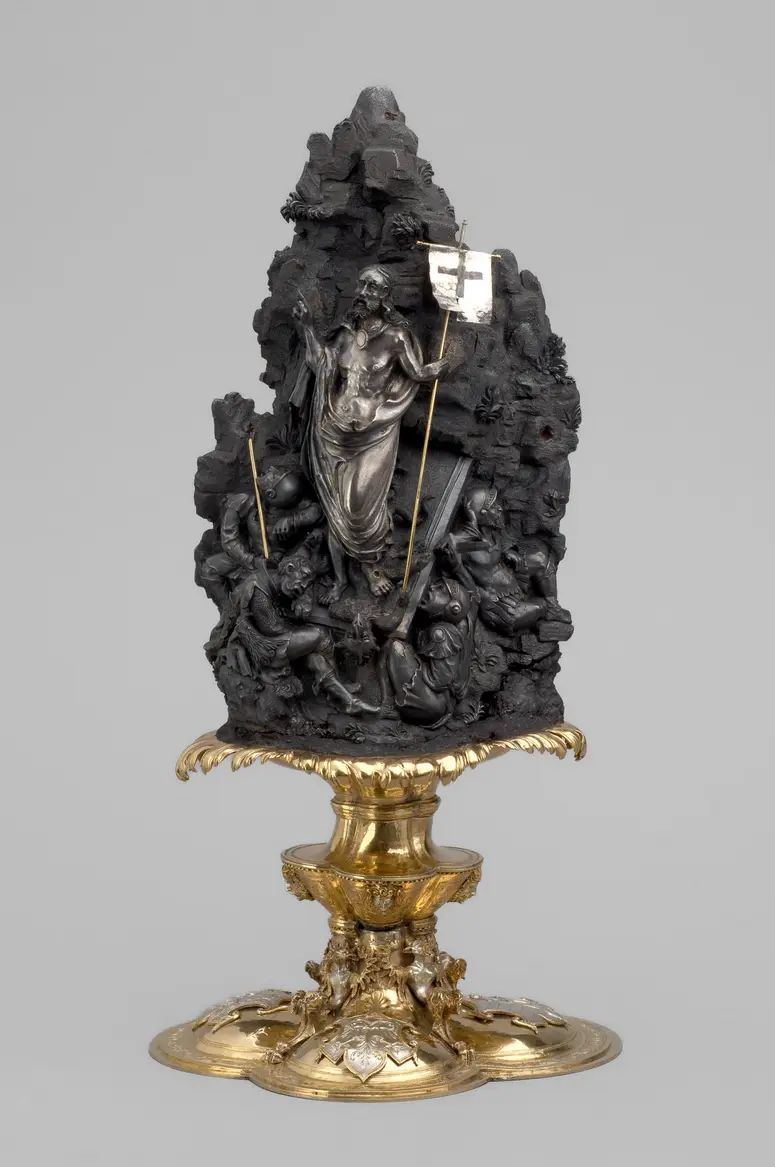
Handstone with the Resurrection and Emperor Charles V after the Battle of Pavia Caspar Ulich ca. 1560