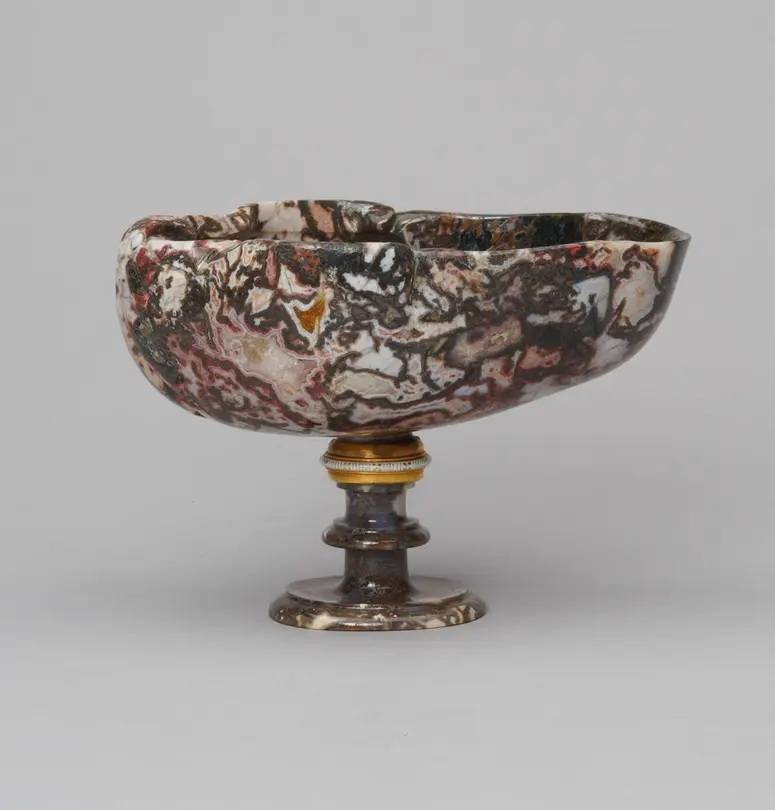
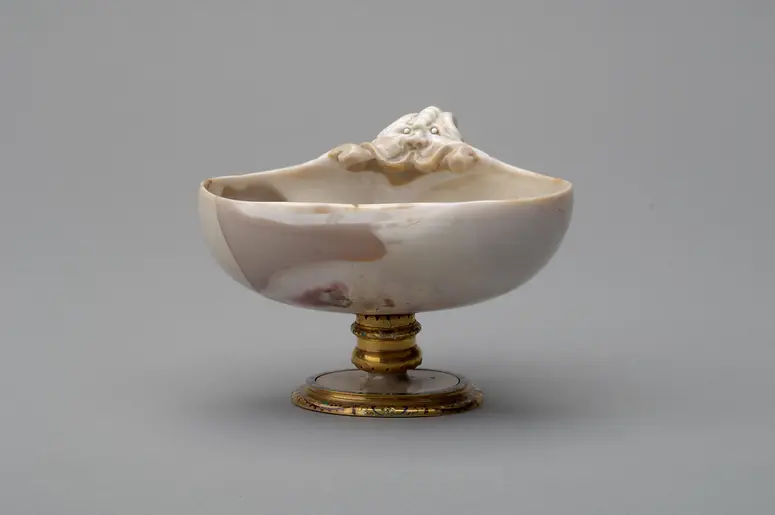
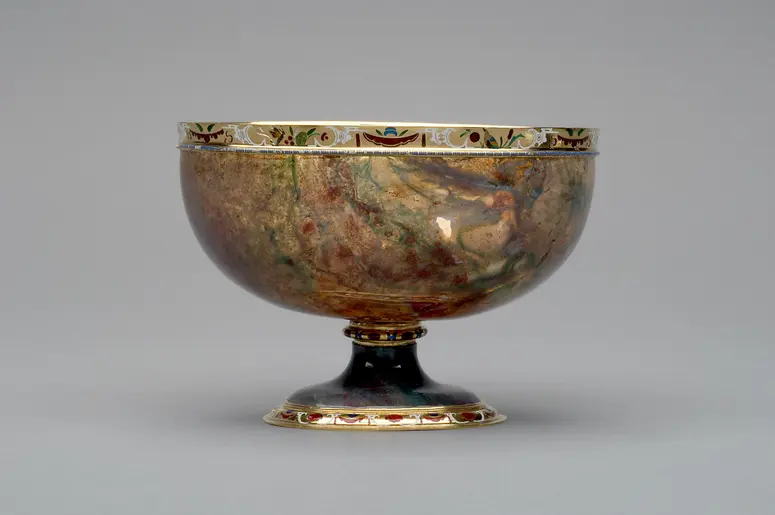
Cup
4th quarter 16th c. (mounting)
In hardly another genre do nature and art enter into a more fruitful relationship than in glyptics, the art of stonecutting. Here the very conception of an artwork is inspired by the natural colouration and pattern of the precious materials; they determine shape and appearance of the result. The great princely collections of glyptic art, such as that of Emperor Rudolf II, may be likened to collections of minerals ennobled by the skill of artists.
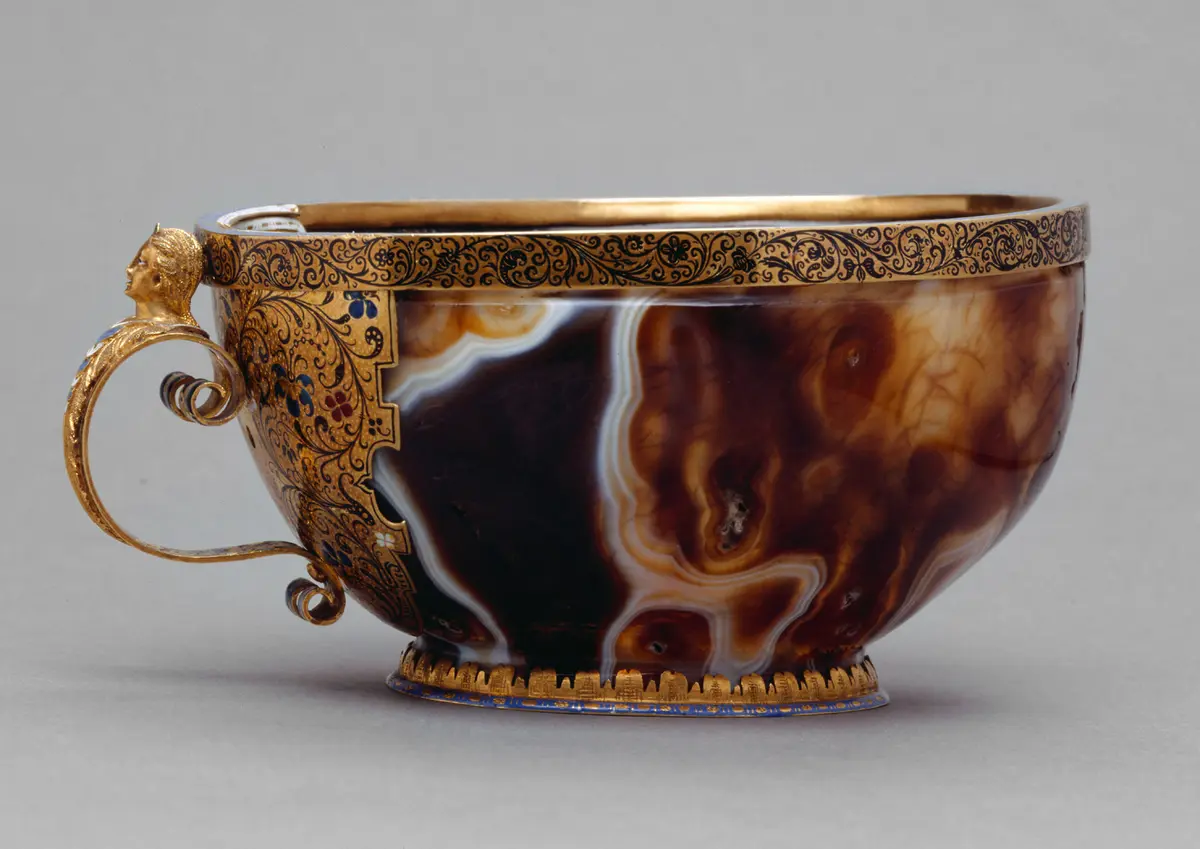
In hardly another genre do nature and art enter into a more fruitful relationship than in glyptics, the art of stonecutting. Here the very conception of an artwork is inspired by the natural colouration and pattern of the precious materials; they determine shape and appearance of the result. The great princely collections of glyptic art, such as that of Emperor Rudolf II, may be likened to collections of minerals ennobled by the skill of artists.
Time:
4th quarter 16th c. (mounting)
Object Name
Vessel; Bowl
Culture
Late antiquity or Byzantine (vessel); Southern German or French (mounting)
Material/technology:
Onyx, gold, enamel
Dimensions:
H. 5,6 cm, L. 11 cm, B. 8,2 cm
Copyright
Kunsthistorisches Museum, Kunstkammer
Invs.
Kunstkammer, 1761
Browse more
Similar items you might be interested in
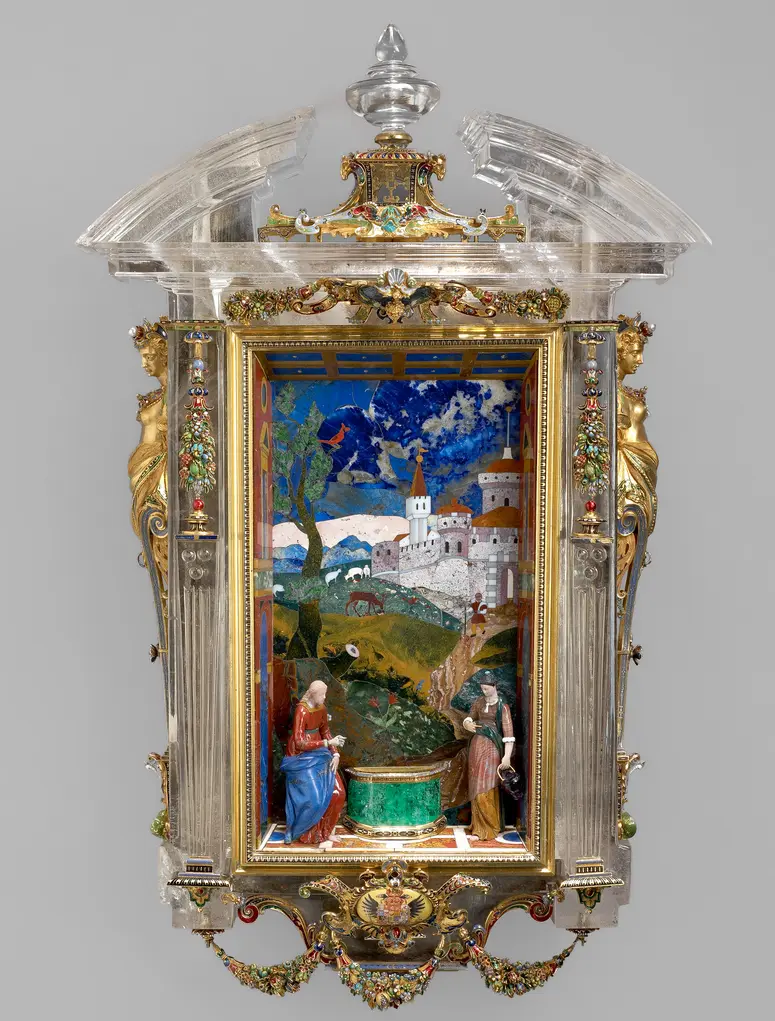
Small Private Altar with Christ and the Woman of Samaria Cristofano Gaffuri ca. 1590/1600
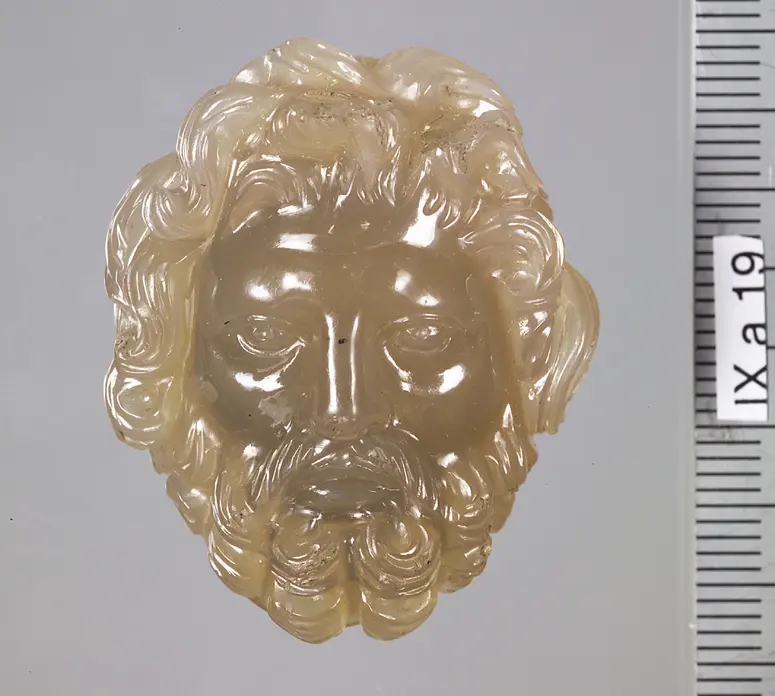
Kameo: Jupiterkopf Römisch, Republikanisch -Frühe Kaiserzeit 1. Jh. v. - 1. Jh. n. Chr.
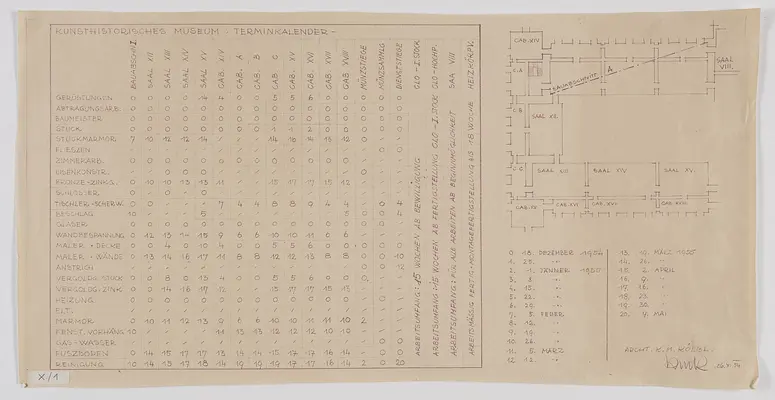
Terminkalender: Kunsthistorisches Museum. Terminkalender für Bauarbeiten Kunsthistorisches Museum Wien, Wien 26.10.1954
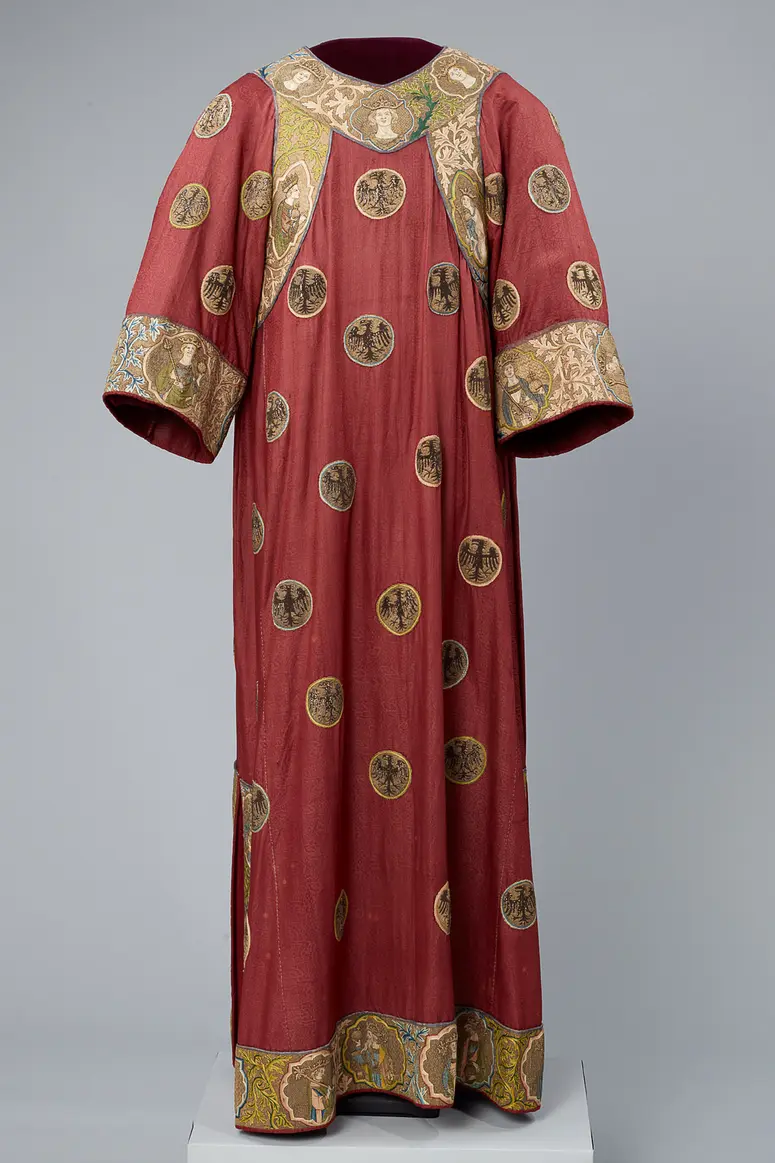
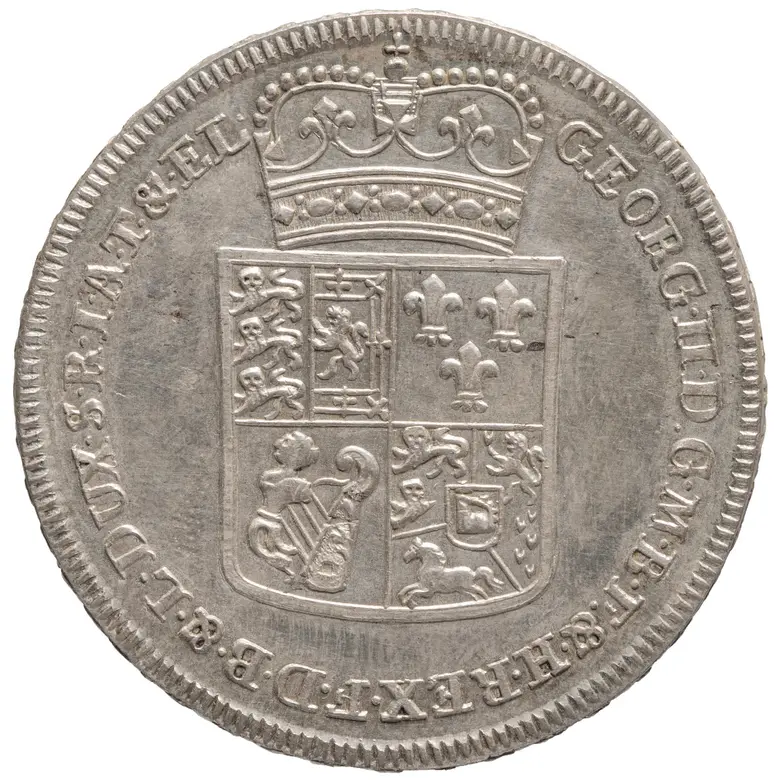
Georg II. (1727-1760), König von Großbritannien, Kurfürst von Braunschweig-Lüneburg 1760