Christus und die beiden Schächer
um 1626 | Leonhard Kern
Christ hangs on the cross, his body outstretched almost exactly along its vertical and horizontal axes. To his right, the repentant sinner seems to strain towards him gazing at him in expectation, while on his left the unrepentant thief turns away in a contortion of agony. Christ has wrenched his head to the right to announce to the repentant thief: "Today shalt thou be with me in Paradise" It is this moment - an uncommon motif in German art - on which Leonhard Kern bases his composition. He attempts to accentuate the spatiality of the composition by means of the diagonally placed crossbeams of the thieves' crosses. However it is the figures which form the focus of artistic concentration. They combine technical brilliance in the ivory carving with an extraordinary mastery of anatomy. One of Leonhard Kern's letters reveals that (his knowledge was based on an intensive study of live models. However, Kern does not lose himself in details, but works out basic general forms of an almost cubic structure. The sensitive rendering of the facial expressions and use of emphatic gesture establish the relations between the figures. Thus outstanding achievement of early Baroque German sculpture was made around a decade after the Lamentation relief and was one of the most important works of Kern's later years.
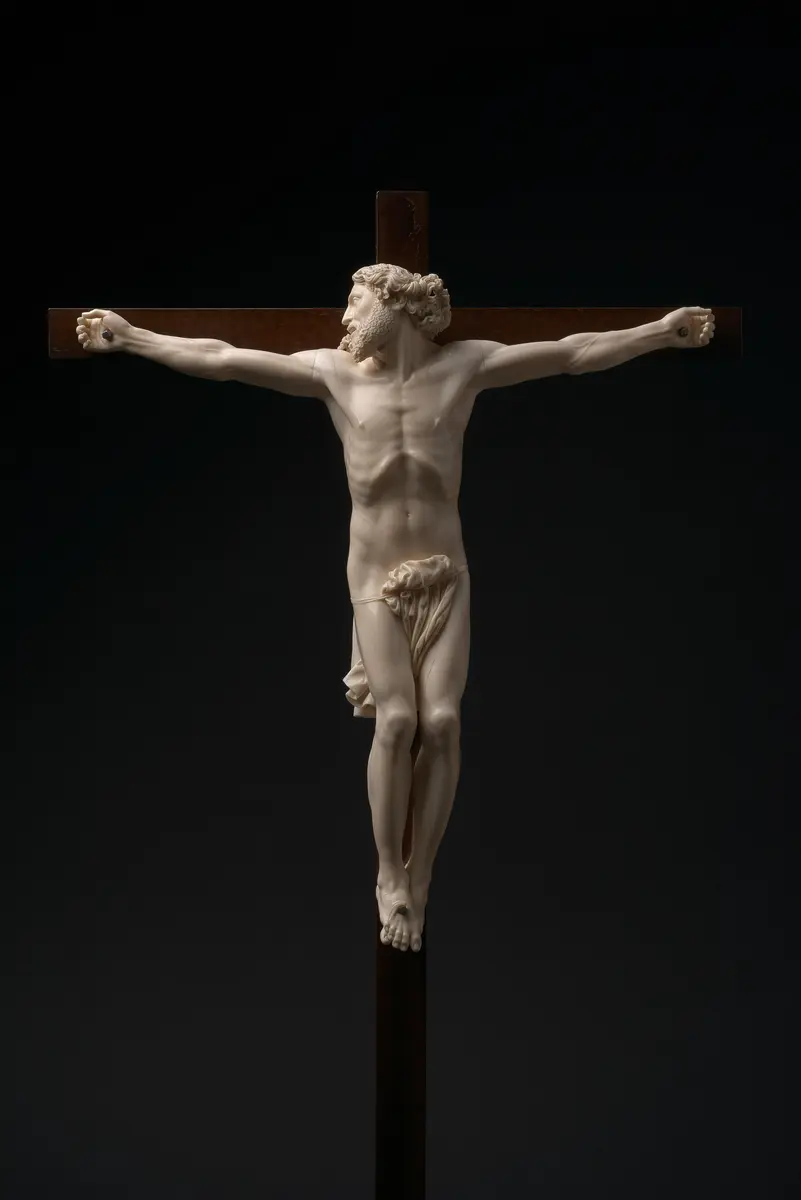
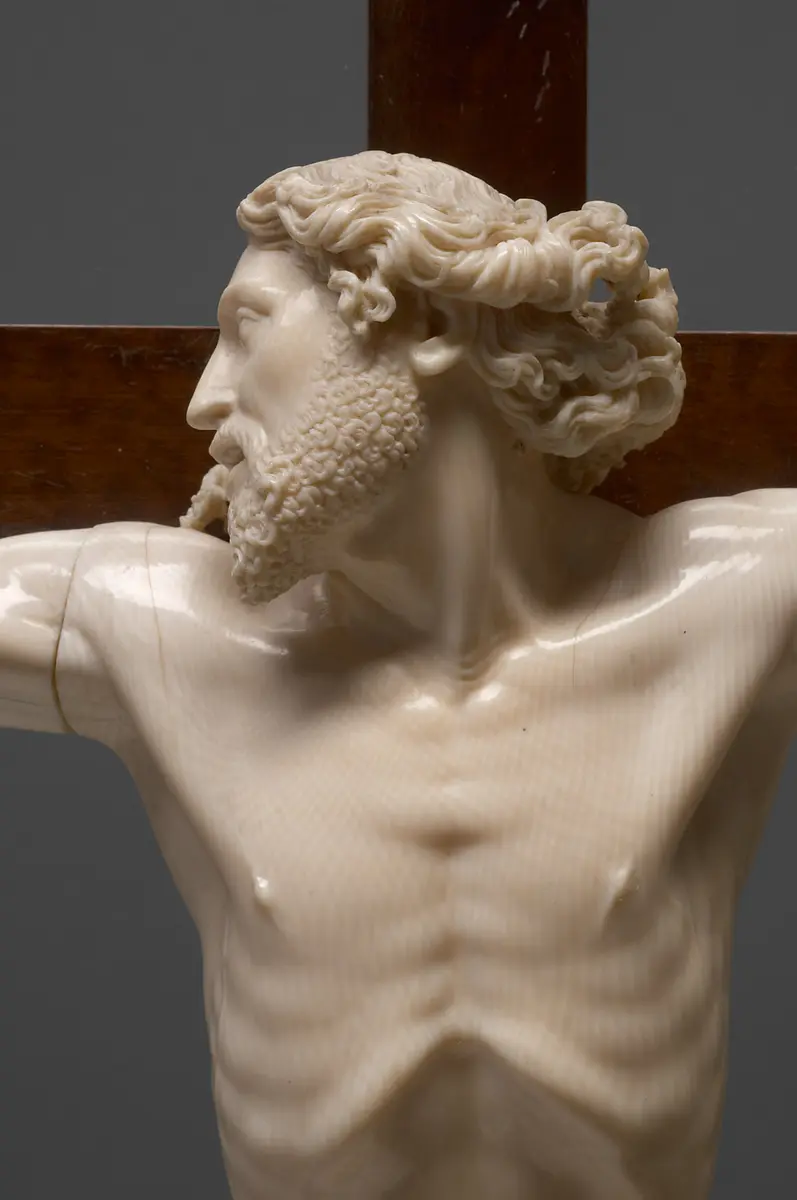
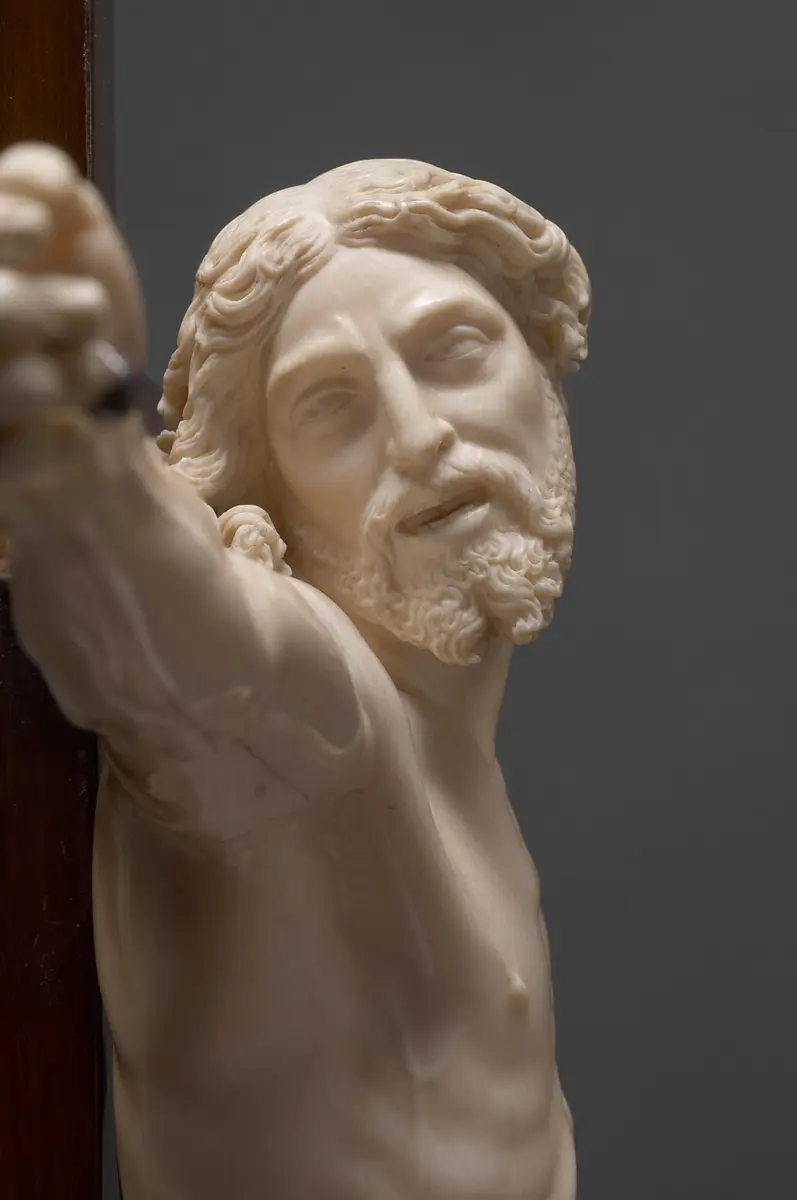
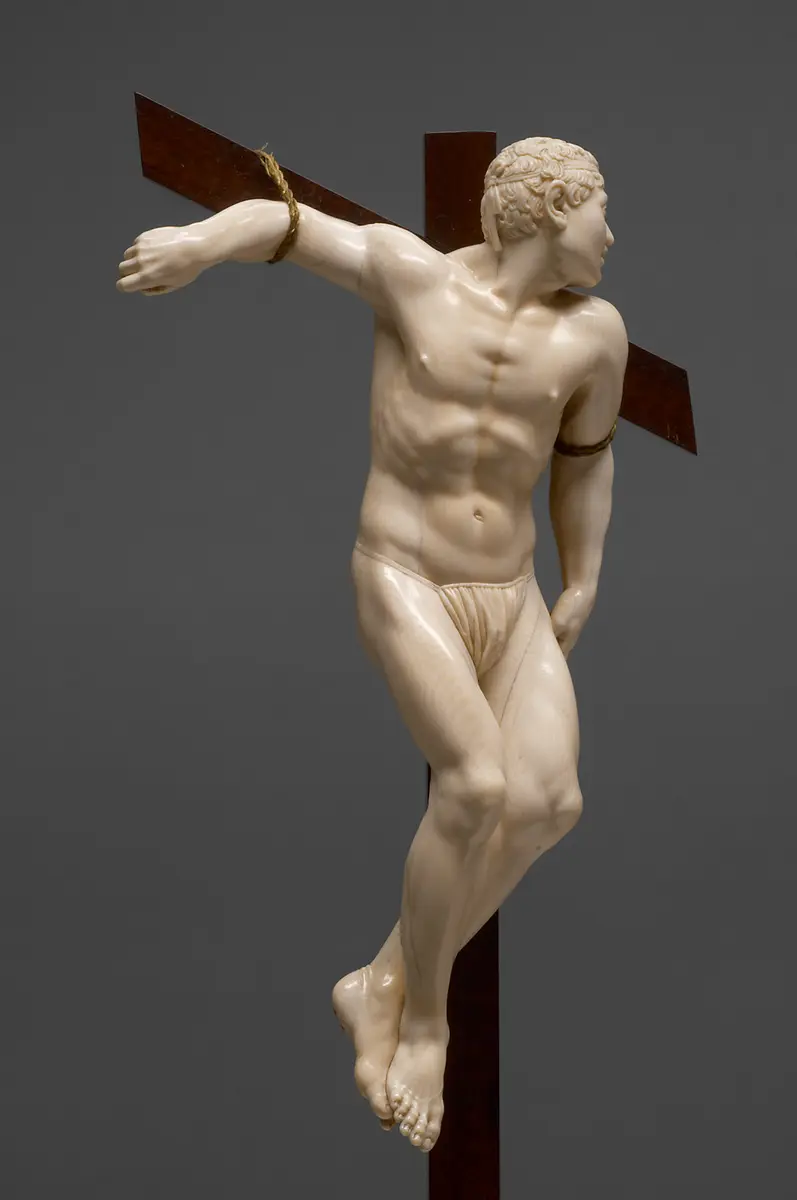
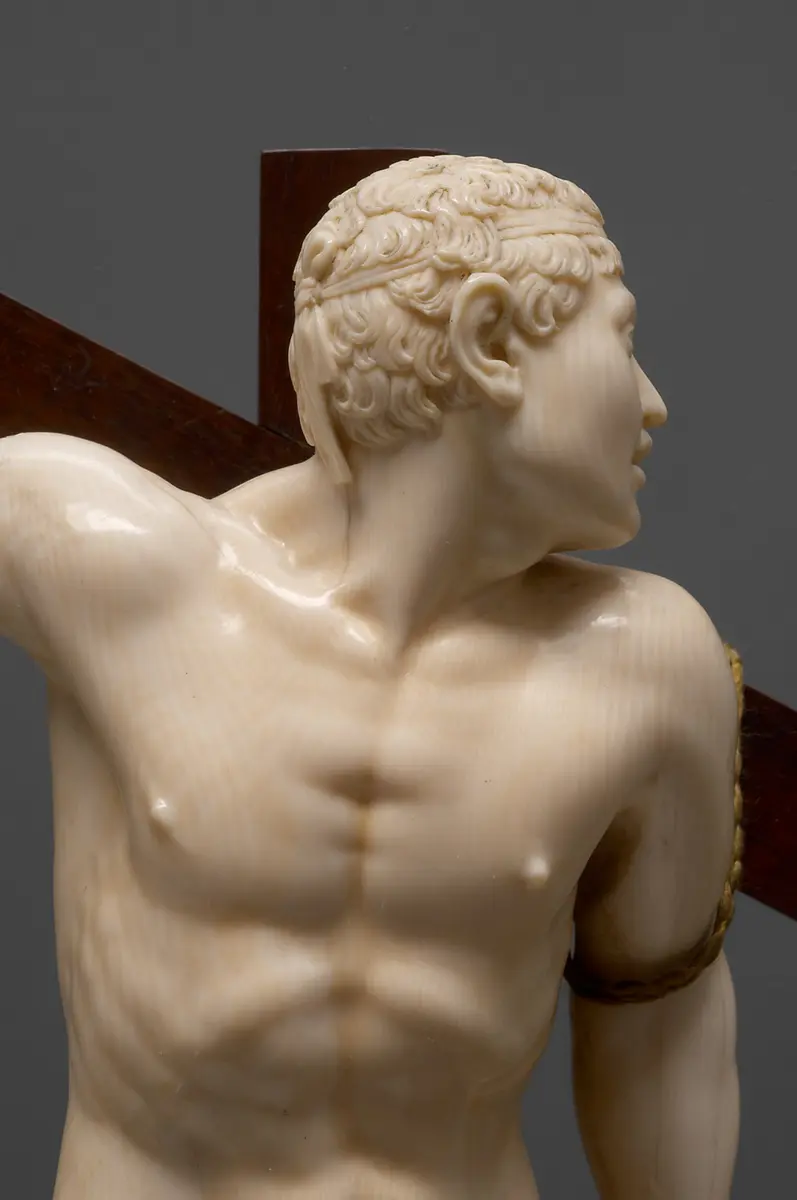
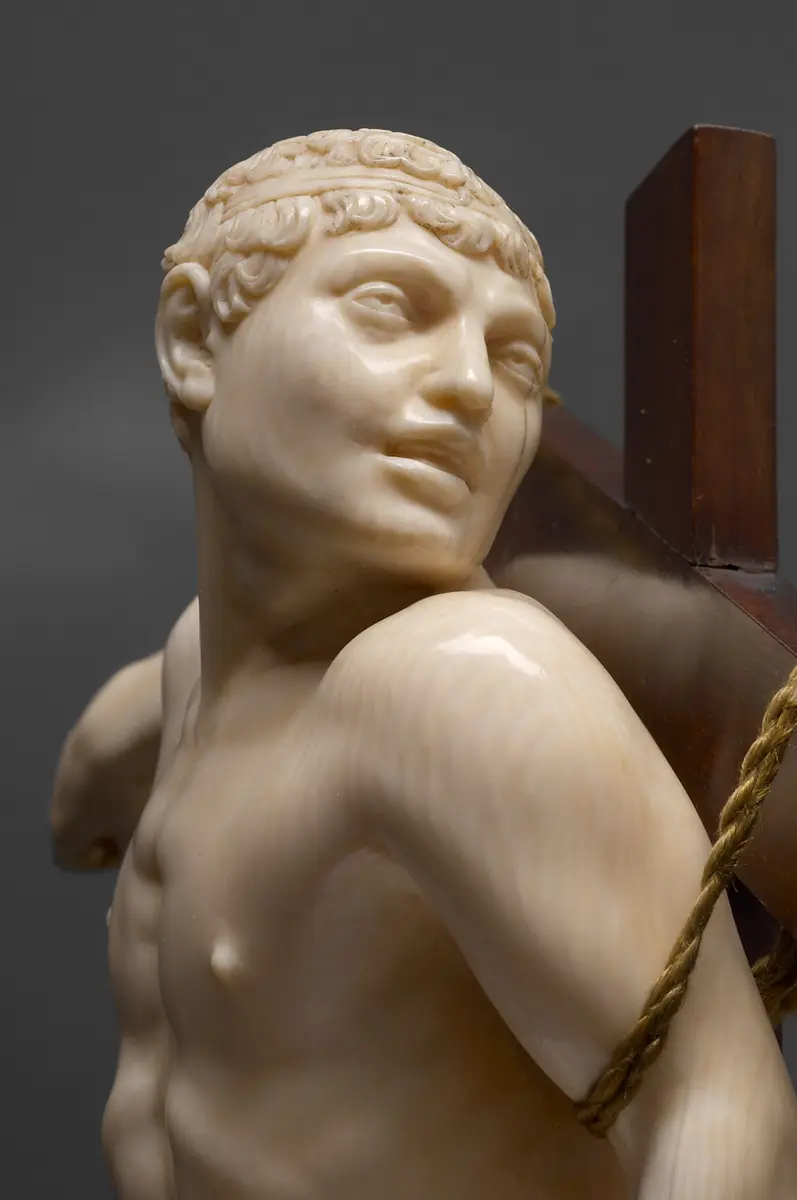
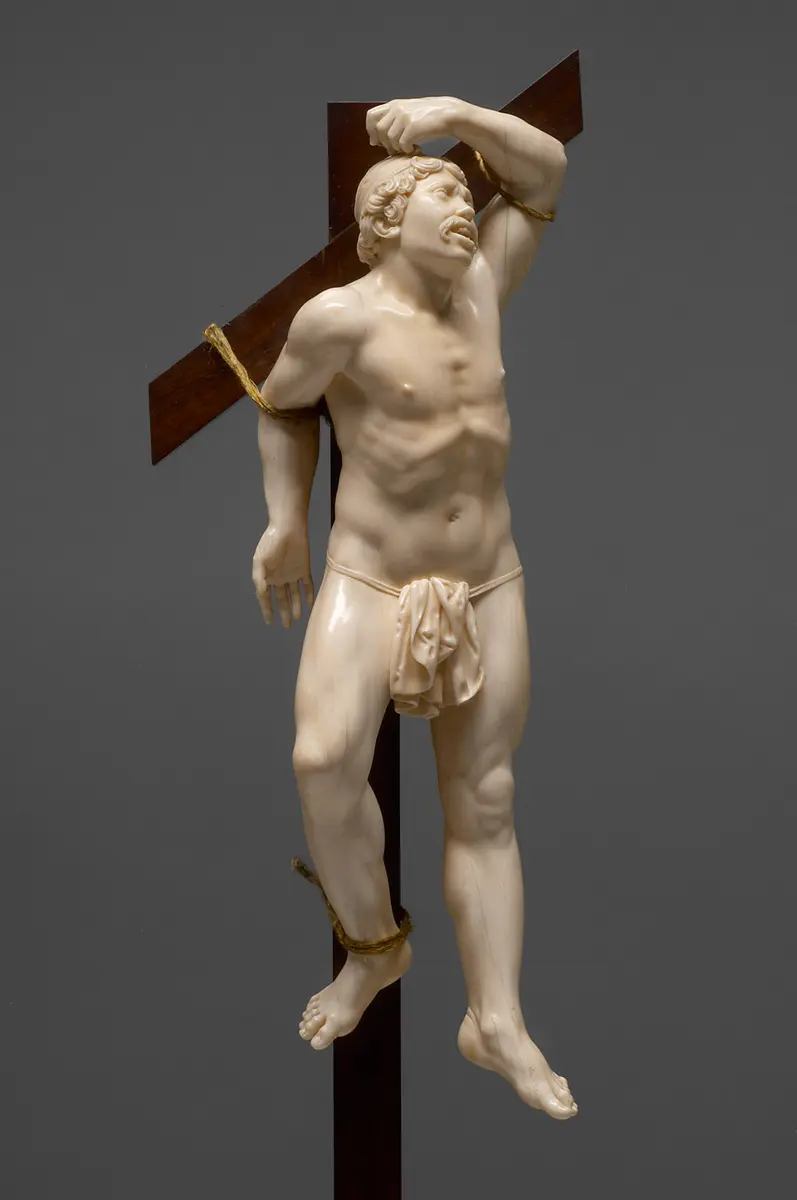
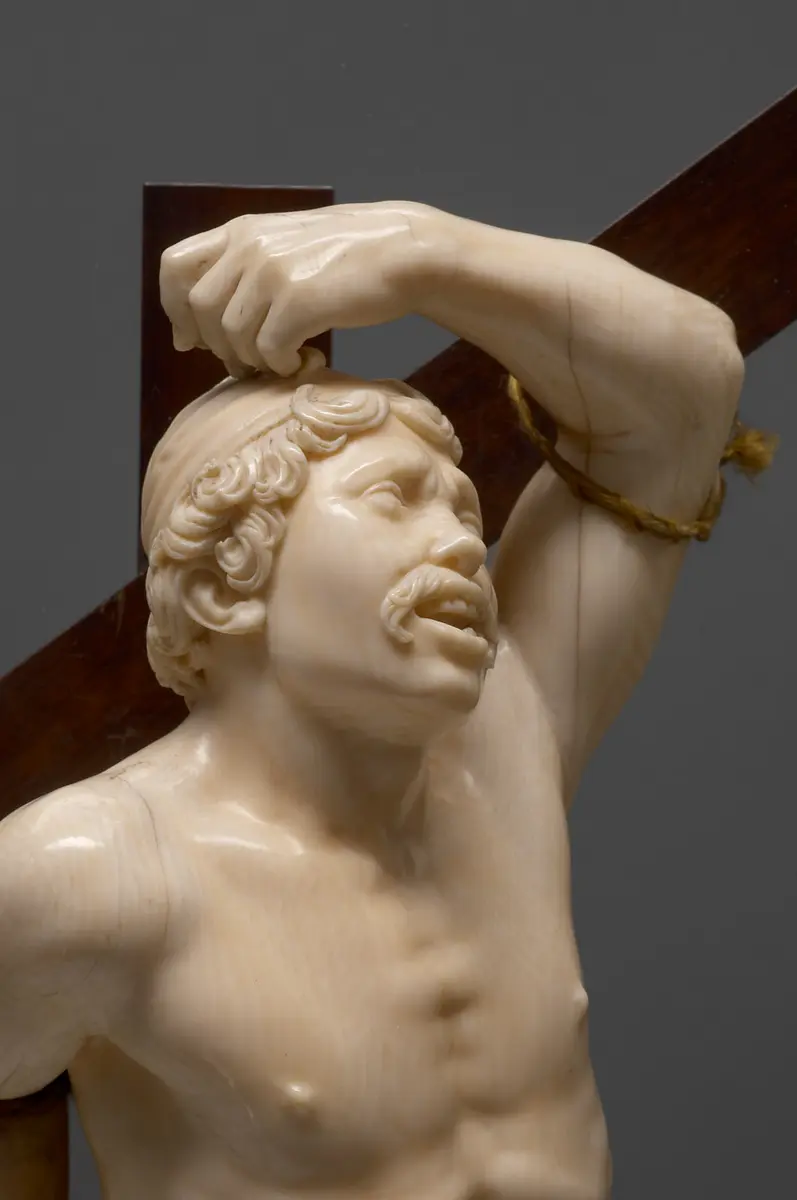
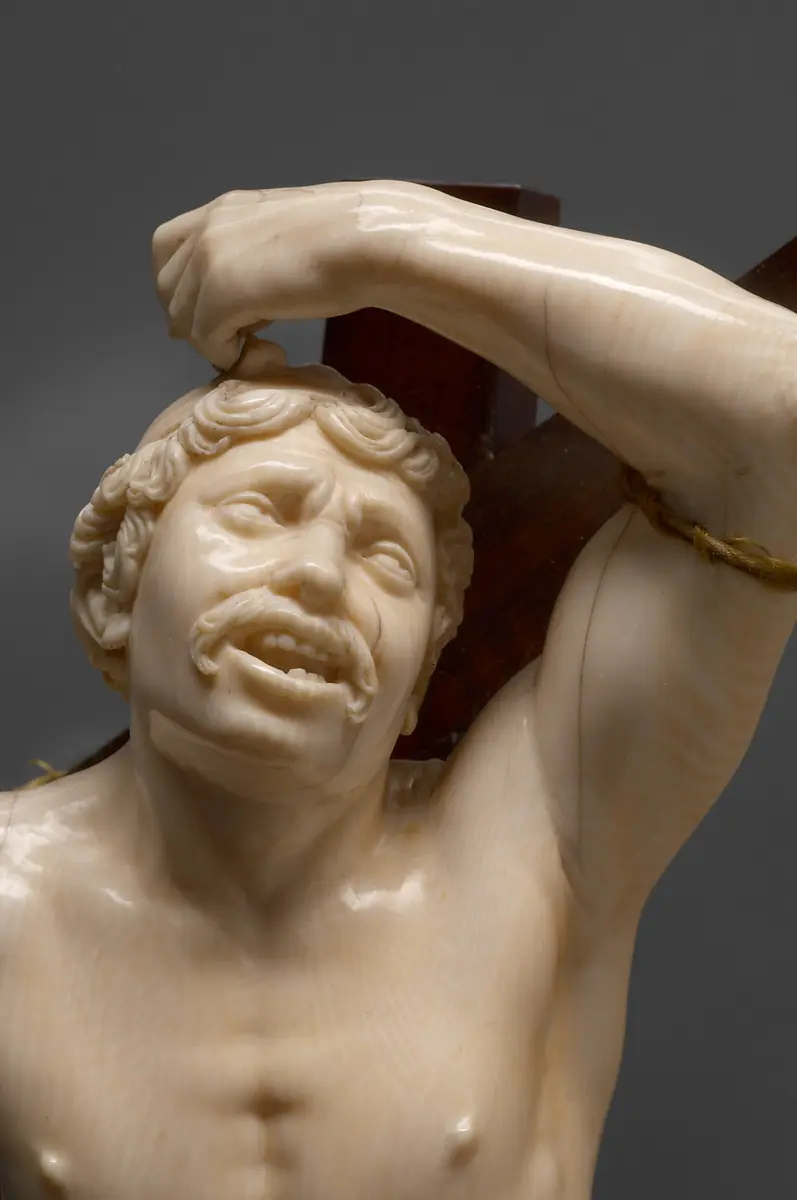
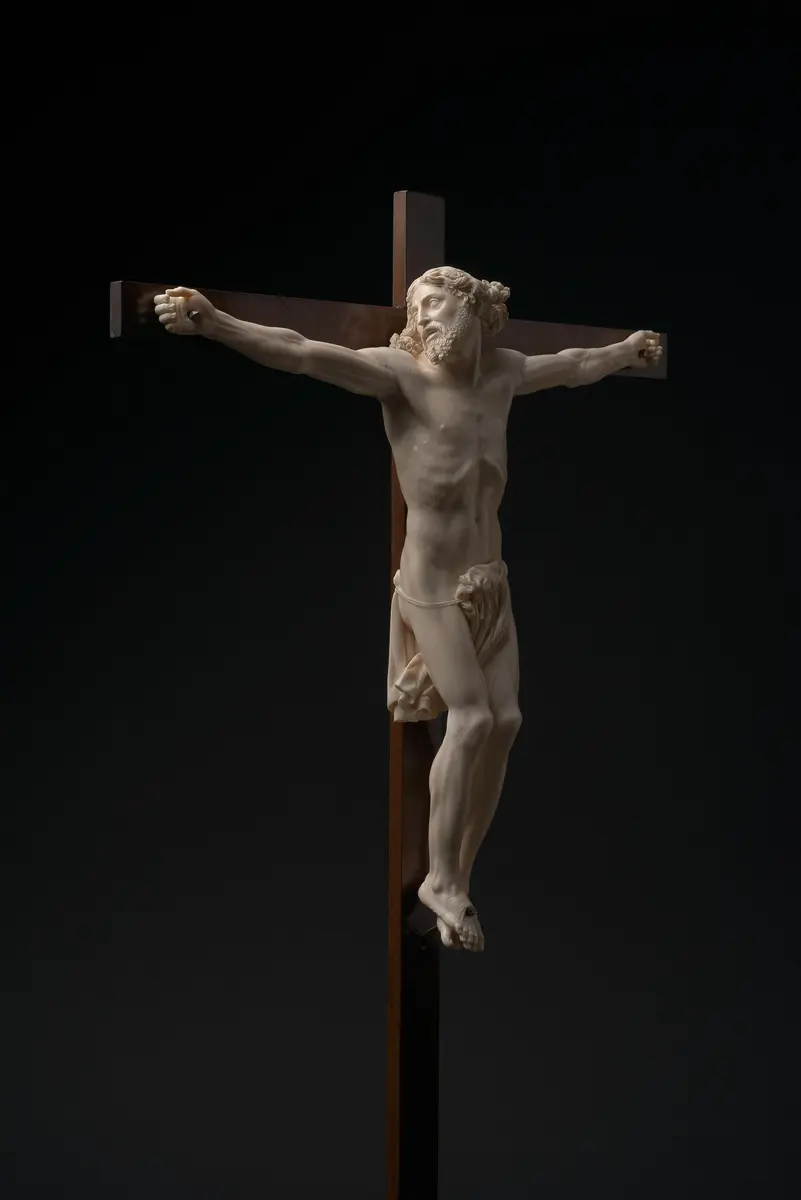
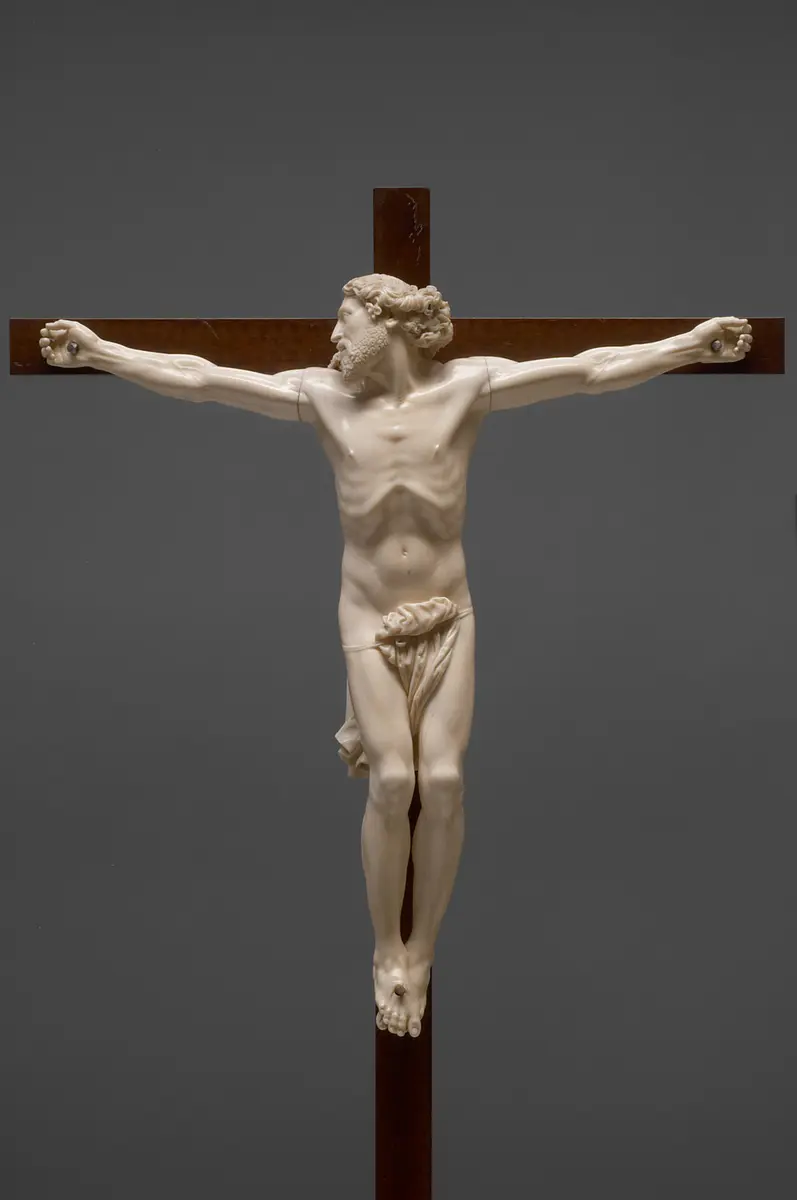
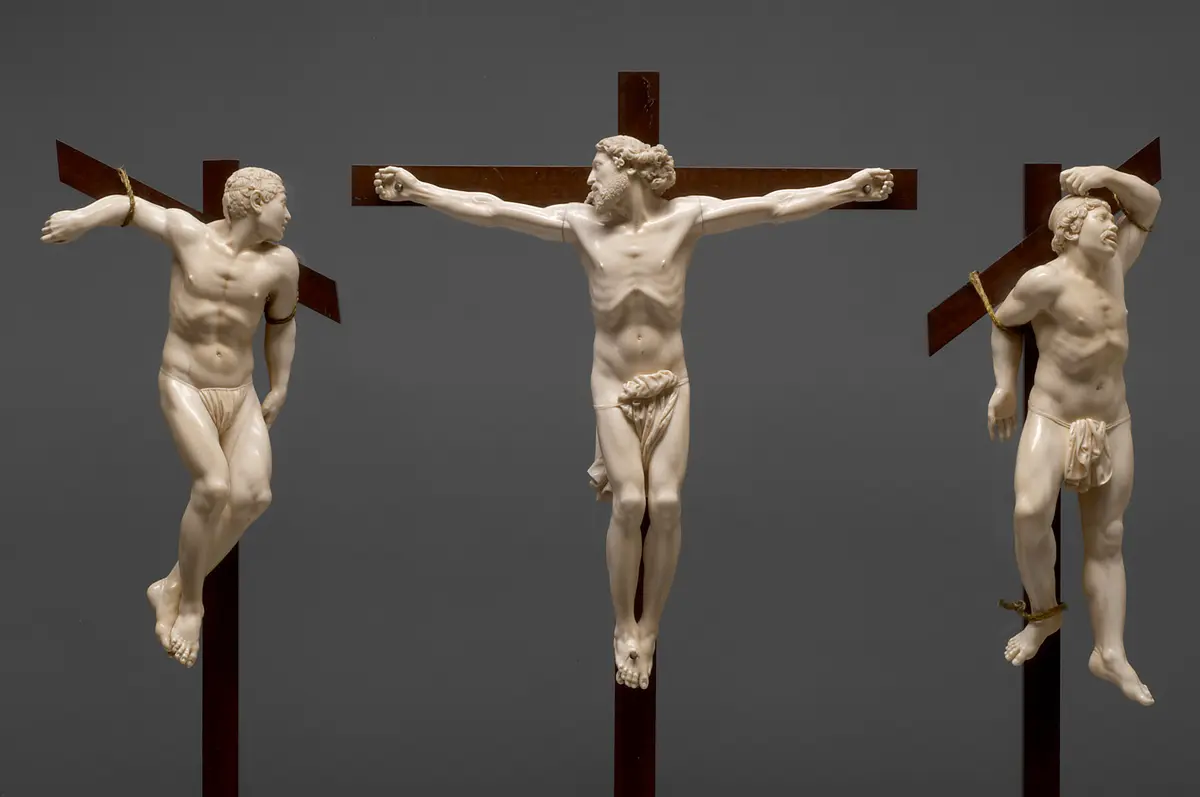
Christ hangs on the cross, his body outstretched almost exactly along its vertical and horizontal axes. To his right, the repentant sinner seems to strain towards him gazing at him in expectation, while on his left the unrepentant thief turns away in a contortion of agony. Christ has wrenched his head to the right to announce to the repentant thief: "Today shalt thou be with me in Paradise" It is this moment - an uncommon motif in German art - on which Leonhard Kern bases his composition. He attempts to accentuate the spatiality of the composition by means of the diagonally placed crossbeams of the thieves' crosses. However it is the figures which form the focus of artistic concentration. They combine technical brilliance in the ivory carving with an extraordinary mastery of anatomy. One of Leonhard Kern's letters reveals that (his knowledge was based on an intensive study of live models. However, Kern does not lose himself in details, but works out basic general forms of an almost cubic structure. The sensitive rendering of the facial expressions and use of emphatic gesture establish the relations between the figures. Thus outstanding achievement of early Baroque German sculpture was made around a decade after the Lamentation relief and was one of the most important works of Kern's later years.
Artist:
Leonhard Kern (1588 Forchtenberg - 1662 Schwäbisch Hall) DNB
Time:
um 1626
Object Name
Kruzifix; Statuetten; Elfenbeinschnitzerei
Culture
Schwäbisch Hall
Material/technology:
Elfenbein, Mahagoni
Dimensions:
Christus: 36,4 cm × 32,7 cm × 6,6 cm
guter Schächer: 32,6 cm × 18 cm × 6 cm
böser Schächer: 35 cm × 11,7 cm × 6,9 cm
Copyright
Kunsthistorisches Museum, Geistliche Schatzkammer
Invs.
Schatzkammer, GS E 4